

Written by: Matt Beucler, CEO, Plura AI
Updated June 2026
Key Takeaways
- AI scheduler TCPA compliance depends on consent verification, real-time DNC scrubbing, state quiet-hours rules, and immutable consent logging enforced at the carrier layer before every call or SMS.
- Generic AI schedulers built on third-party APIs create compliance gaps because their controls sit above the carrier rather than at origination.
- Plura AI owns its FCC-licensed carrier, so DNC, consent, quiet-hours, and STIR/SHAKEN authentication run before calls and texts originate, without application-layer add-ons.
- High-volume operators in healthcare, insurance, finance, and legal face $500–$1,500 statutory damages per violation, which makes carrier-level infrastructure central to scaling outreach with controlled risk.
- Operators can book a live demo with Plura AI to see how carrier-owned TCPA controls reduce compliance exposure while maintaining sub-60-second lead response.
The Problem: Fast Lead Response Under Growing TCPA Pressure
High-volume operators in healthcare, insurance, finance, and legal face a clear operational tension. Industry data published at plura.ai/calculator shows that contacting a lead within 60 seconds lifts conversions by 391%.3 The pressure to respond fast is real, and the legal exposure grows when the tools used to respond at that speed are not built for TCPA risk.
The Telephone Consumer Protection Act, codified at 47 U.S.C. § 227, governs automated outbound voice calls and text messages to wireless numbers.2 Building on this foundation, the FCC’s February 2024 ruling classified AI-generated voices as artificial voices under the TCPA, placing AI voice agents under the same prior express written consent standard that applies to robocalls. The regulatory pressure continues to intensify, as the FCC’s ongoing rulemaking under CG Docket No. 26-52 continues to tighten the perimeter around automated outreach.
Statutory damages under the TCPA range from $500 to $1,500 per unsolicited call or text, with no aggregate cap.2 A single outreach campaign targeting 100,000 consumers can create $50 million to $150 million in potential TCPA liability. TCPA filings through February 2026 were 26.8% above the prior-year year-to-date total, with class actions making up 72.3% of all TCPA filings.3
Generic AI schedulers built on third-party telecom APIs rarely carry the infrastructure to manage this exposure at scale. Many check DNC lists in batches, log consent in separate systems, and apply quiet-hours rules in application code that sits above the carrier. That architecture creates gaps, because enforcement depends on the application behaving correctly. Carrier-level enforcement closes those gaps by stopping non-compliant traffic before it originates.
What Defines a TCPA-Focused AI Scheduling Platform
A TCPA-focused AI scheduling platform differs from a generic AI scheduler with a compliance checklist bolted on. It treats consent verification, DNC scrubbing, quiet-hours enforcement, and caller ID authentication as carrier and infrastructure functions that run before a call originates or a message sends.
This structural difference matters for operators. Carrier-level controls sit in the network enforcement path and can block or filter traffic before delivery, while application-layer add-ons operate inside the software stack and depend on the platform to check rules before sending. An application-layer compliance tool can record consent and run a DNC scrub, but it cannot enforce those checks at origination the way a carrier can. A campaign can pass every application-side check and still be rejected or filtered at the carrier level.
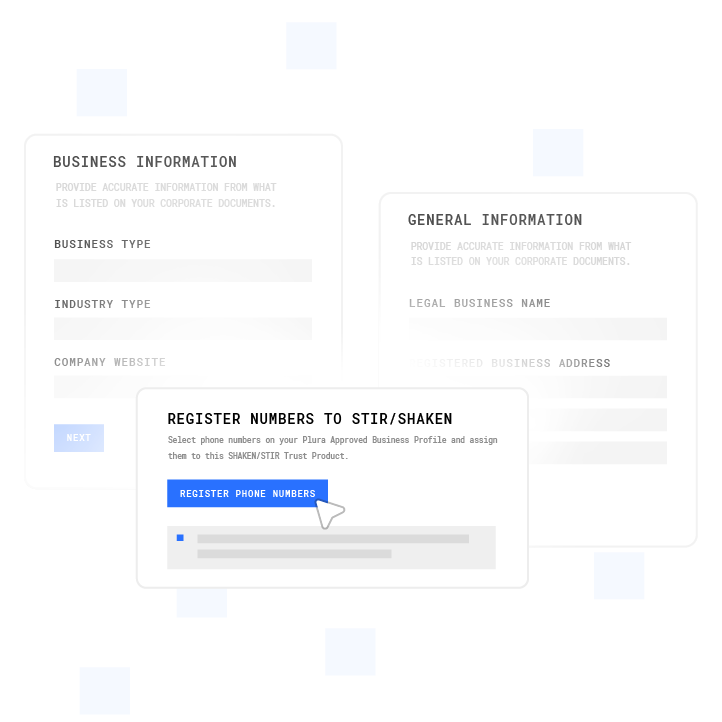
Plura AI owns its own FCC-licensed audio bridging carrier. Voice originates on Plura’s domestic infrastructure, not a third-party CPaaS (Communications Platform as a Service). This structure means DNC scrubbing, consent verification, quiet-hours enforcement, and STIR/SHAKEN authentication run at the layer where calls and messages actually originate. Operators avoid bolting these controls onto a platform that was not designed to carry them.
Book a live demo with Plura to see carrier-level TCPA controls in action.
Six Critical Capabilities for TCPA-Compliant AI Scheduling
1. Real-Time DNC and TCPA-Litigator Filtering Before Every Dial or SMS
Batch DNC scrubbing creates liability for high-volume outreach. Numbers are added to the National Do Not Call Registry daily, so scrubbing must happen at call initiation to avoid dialing numbers that were added after the last batch run. Over 258 million numbers are currently registered on the National DNC Registry, which raises the odds of accidental contact when scrubbing lags.
Plura’s compliance engine checks every outbound contact against federal and state DNC registries in real time before dial. It also integrates with The Blacklist Alliance for DNC screening and TCPA litigator list filtering.4 Non-compliant numbers are blocked before the first attempt. This process functions as a pre-origination gate, not a post-dial log review.
2. Immutable, Timestamped Consent Ledger That Survives Audits
TCPA consent attaches to the consumer, not only to the phone number. Consent records need to be queryable in real time at call initiation, with an auditable log of when consent was obtained, how, and for what purpose, so that calls are blocked if consent cannot be confirmed. If consent cannot be confirmed at origination, the call does not go out.
Plura’s consent records are timestamped, immutable, and audit-ready. The compliance dashboard exports audit-ready reports in one click for legal review, carrier requirements, or regulatory inquiries. Operators avoid reconstructing consent history from spreadsheets when a demand letter arrives.
3. Automatic State Quiet-Hours Enforcement via Time-Zone Detection
Federal TCPA rules prohibit calls before 8 a.m. or after 9 p.m. in the recipient’s local time zone. Several states apply stricter calling-hour limits, holiday restrictions, or emergency prohibitions. Managing those rules manually across a high-volume campaign is operationally impractical and creates exposure when even a single contact falls outside the allowed window.
Plura enforces quiet-hours rules automatically through time-zone detection on the contact. State-specific overrides are configurable at the campaign level. Operators avoid maintaining a manual matrix of 50-plus state calling windows and reduce the risk of human error in campaign setup.
4. Branded Caller ID and STIR/SHAKEN Authentication
Calls that present as “Spam Likely” rarely receive answers, which wastes lead spend and agent capacity. A-level STIR/SHAKEN attestation, where the carrier verifies the number is assigned to the user, produces higher call completion rates than the B-level attestation typically delivered by CPaaS platforms using shared number pools.
Plura issues branded caller ID directly through its FCC-licensed carrier and runs STIR/SHAKEN authentication on every outbound call at the carrier level. Calls present with the company’s name rather than an unfamiliar number. Platforms that rent from a third-party CPaaS inherit that provider’s caller ID reputation and typically cannot issue branded caller ID at the carrier level.
5. Stateful Conversation Memory Across Voice, SMS, RCS, and Webchat
A lead who received an SMS at 9 a.m. should not need to re-explain their situation when the AI calls at noon. Many AI scheduling tools run voice and SMS as separate products with separate memories, which creates friction and reduces conversion.
Plura’s AI Voice, AI SMS, AI RCS, and AI Webchat all share a Stateful Conversation Database. Every interaction is keyed to the customer by phone number, email, or ID. Every channel inherits the full memory of prior touchpoints, including pricing offers made, objections raised, and qualification status. The scheduling AI continues the conversation from the last interaction, on any channel.
6. 90-Day Opt-Out Window and Healthcare No-Show Reduction
Every Plura annual contract includes a 90-day opt-out window. If the deployment is not delivering, operators are not held to the annual term. This structure aligns the platform’s incentives with the operator’s performance expectations.
In healthcare, where appointment no-shows affect both revenue and capacity, Plura’s automated follow-up and confirmation workflows support up to 40% improvement in no-show rates.3 These workflows keep schedules tighter and reduce idle clinical time.
Book a live demo with Plura to review deployment timelines and the 90-day opt-out terms.
Carrier-Owned Infrastructure vs. Third-Party API Wrappers
The table below compares infrastructure characteristics that matter for TCPA-focused AI scheduling. Each row reflects documented platform architecture.
| Capability | Plura AI (FCC-Licensed Carrier) | Twilio-Based API Resellers4 |
|---|---|---|
| FCC carrier license | Yes, owns FCC-licensed audio bridging carrier | No, routes through third-party CPaaS |
| Real-time DNC scrubbing | Pre-origination, at carrier layer, every contact | Application-layer, timing and depth vary by vendor |
| Consent logging | Immutable, timestamped, queryable at call initiation | Varies, typically application-layer records outside the dialer |
| Quiet-hours enforcement | Automatic via time-zone detection, 50-plus state rule sets pre-loaded | Application-layer, requires operator configuration and maintenance |
| STIR/SHAKEN attestation | A-level, carrier verifies number is assigned to originator | Typically B-level from shared CPaaS number pools |
| Branded caller ID | Issued directly at carrier level | Dependent on third-party CPaaS, not issued at carrier level |
The structural point is clear. Carrier-level controls are authoritative and network-enforced, while application-layer add-ons are advisory controls that reduce risk but cannot replace carrier-level enforcement. Operators evaluating AI scheduling platforms should confirm whether compliance controls run before origination or after the call is already in flight.
Compare plans and rates side by side at plura.ai/pricing.
Frequently Asked Questions
What scheduling software is HIPAA compliant?
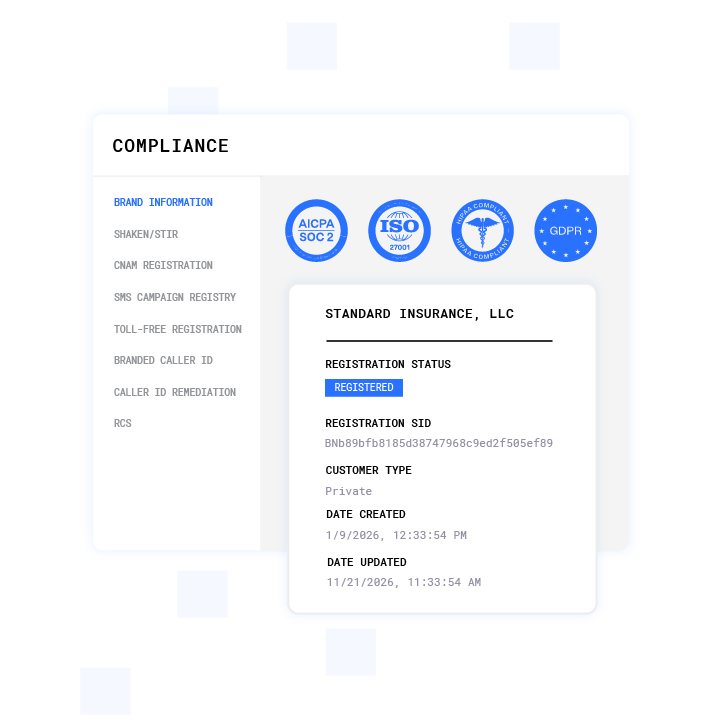
HIPAA compliance for scheduling software depends on the platform’s data handling architecture, not only on a feature checklist. Platforms that handle protected health information (PHI) in scheduling workflows typically use end-to-end encryption, access controls, audit logging, and a signed Business Associate Agreement (BAA) with covered entities. Plura supports HIPAA-aligned operations across voice, SMS, RCS, and webchat, with field-level redaction of sensitive data, encrypted data storage on 100% U.S. infrastructure, and audit-ready logging.1
Operators in healthcare should consult qualified counsel to evaluate whether any scheduling platform aligns with their specific HIPAA obligations. Plura provides the infrastructure, and the operator controls its downstream compliance posture.
Can you use AI for scheduling without TCPA risk?
No scheduling platform removes TCPA risk entirely. A carrier-owned, TCPA-focused AI scheduling platform enforces controls that reduce exposure before each contact, including real-time DNC scrubbing, consent verification at call initiation, state quiet-hours enforcement, and immutable consent logging. The FCC’s February 2024 ruling classified AI-generated voices as artificial voices under the TCPA, so AI scheduling tools fall under the same prior express written consent standard that applies to robocalls.
Operators using AI for outbound scheduling should consult legal counsel regarding their specific consent workflows, DNC obligations, and state-level requirements. Plura’s compliance engine is designed to support those workflows at the infrastructure layer, not to substitute for legal review.
What is the difference between a TCPA litigator list and the National DNC Registry?
The National Do Not Call Registry, maintained by the FTC, contains numbers of consumers who have requested not to receive telemarketing calls. TCPA litigator lists are separate databases that identify phone numbers associated with individuals or law firms known to file TCPA claims.
Scrubbing against the DNC Registry addresses one category of compliance risk. Scrubbing against a TCPA litigator list addresses a different category, which is the risk of contacting a number held by a party actively seeking to generate TCPA litigation. Plura integrates with The Blacklist Alliance for both DNC screening and TCPA litigator list filtering, and it runs both checks before every outbound contact.
How does carrier-level STIR/SHAKEN differ from application-layer caller ID tools?
STIR/SHAKEN (Secure Telephone Identity Revisited / Signature-based Handling of Asserted information using toKENs) is a framework for authenticating caller ID on outbound calls. A-level attestation, which requires the originating carrier to verify that the number is assigned to the calling party, often produces higher call completion rates than B-level attestation. B-level attestation is typically what CPaaS platforms deliver when using shared number pools.
Platforms that route calls through a third-party CPaaS inherit that provider’s attestation level and cannot issue A-level STIR/SHAKEN without owning the carrier relationship. Plura runs STIR/SHAKEN authentication at the carrier level on every outbound call because it owns the FCC-licensed carrier originating the traffic.
What should operators look for in an AI scheduling platform for regulated industries?
Operators in healthcare, insurance, finance, and legal should evaluate five infrastructure characteristics. First, confirm whether DNC scrubbing runs at call origination or as a batch process. Second, check whether consent records are immutable and queryable in real time before each contact. Third, review whether quiet-hours enforcement is automatic or requires manual configuration per state.
Fourth, determine whether the platform owns its carrier relationship or routes through a third-party CPaaS. Fifth, confirm whether conversation memory is shared across channels or siloed by product. Platforms that address all five at the infrastructure layer reduce the operational surface area where compliance gaps can develop. Operators should also confirm that any platform they evaluate carries SOC 2 certification, supports HIPAA-aligned data handling, and can produce audit-ready consent records on demand.
Conclusion and Next Steps
High-volume operators running outbound voice and SMS scheduling in regulated verticals face a consistent challenge. The speed required to convert leads conflicts with the compliance infrastructure that most AI scheduling tools lack. TCPA violations carry statutory damages of $500 to $1,500 per contact, with no aggregate cap, so generic AI schedulers built on third-party telecom APIs struggle to manage that risk because their compliance controls sit above the carrier, not inside it.
Six capabilities separate a TCPA-focused AI scheduling platform from a generic scheduler with compliance features added on top. These capabilities range from pre-origination DNC and litigator list scrubbing to carrier-level STIR/SHAKEN and branded caller ID, along with consent logging, quiet-hours enforcement, stateful conversation memory, and a deployment model that aligns incentives through a 90-day opt-out window.
Plura AI delivers these capabilities through its own FCC-licensed carrier infrastructure, with SOC 2, HIPAA-aligned operations, ISO certification, and 50-plus state rule sets enforced on every outbound contact.1
Compare plans and rates side by side at plura.ai/pricing.
1 Plura AI maintains SOC 2, HIPAA, ISO, and GDPR posture as part of its platform infrastructure. References to compliance frameworks in this article describe Plura’s platform capabilities and do not constitute a guarantee that any customer using Plura will themselves be compliant with applicable laws or standards. Customers remain solely responsible for their own regulatory obligations, certifications, consent management, recordkeeping, and the claims they make to their own end users. Consult qualified legal counsel for guidance specific to your use case.
2 This article describes regulatory frameworks at a general level and does not constitute legal advice. Laws and regulations vary by jurisdiction, change over time, and apply differently depending on facts and circumstances. Readers should consult qualified legal counsel before making compliance decisions.
3 Performance figures, customer outcomes, and industry statistics referenced in this article are drawn from cited third-party sources or Plura customer case studies. Individual results vary based on implementation, use case, industry, audience, and execution. Past or aggregate performance is not a guarantee of future results.
4 References to third-party products, services, companies, or research are made for informational and comparative purposes only. Plura AI is not affiliated with, endorsed by, or sponsored by any third party named in this article unless explicitly stated. Trademarks and product names referenced remain the property of their respective owners.
This article is provided for informational purposes only and reflects Plura AI’s understanding at the time of publication. Product capabilities, integrations, and specifications are subject to change. For the most current information, visit plura.ai.
This article was produced with the assistance of AI tools and reviewed by Plura AI prior to publication.