

Written by: Matt Beucler, CEO, Plura AI
Key Takeaways for High-Volume, Regulated Teams
-
Stateful AI agents maintain context across voice, SMS, RCS, and webchat, so customers never repeat themselves across channels.
-
Healthcare, insurance, financial services, and legal teams need sub-5-second response, cross-channel memory, and compliance guardrails aligned to SOC 2, HIPAA, TCPA, DNC, and state rules.1
-
Plura AI is the only FCC-licensed end-to-end platform that owns its carrier stack and enforces compliance controls at the infrastructure layer.1
-
Speed-to-lead benchmarks show that responding within five minutes makes prospects 100 times more likely to connect, and one-minute contact boosts conversion by 391%.3
-
See sub-5-second, stateful appointment booking across all channels in a regulated deployment, and watch Plura in a live demo.
Executive Summary and Evaluation Framework
AI appointment booking tools that work in regulated industries in 2026 combine sub-5-second response, stateful cross-channel memory, and built-in regulatory guardrails across voice, SMS, RCS, and webchat.5 Generic consumer scheduling tools and basic chatbots do not address these requirements. Plura AI is the only FCC-licensed platform in this category that owns its carrier stack, enforces SOC 2, HIPAA, ISO certification, GDPR, SHAKEN/STIR caller ID verification, TCPA compliance, and DNC compliance at the infrastructure level, and delivers 3x average ROI in 90 days for high-volume operators.1
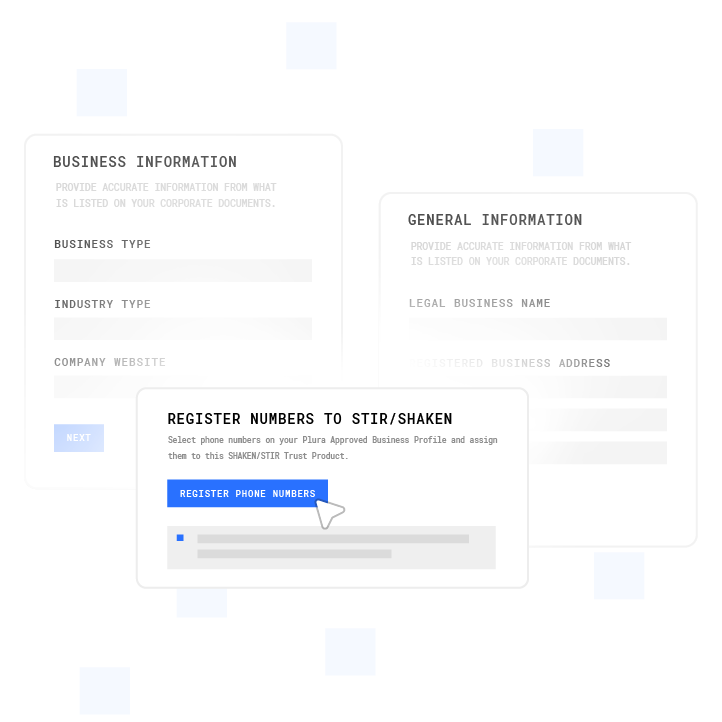
Leaders can evaluate any AI appointment booking tool against five criteria. These are speed, channel coverage, compliance posture, integration depth, and operational fit. Speed means time from lead capture to first contact. Channel coverage means support for voice, SMS, RCS, and webchat. Compliance posture covers SOC 2, HIPAA, TCPA, DNC, and applicable state rules. Integration depth includes CRM, calendar, payment, and enrichment connectors. Operational fit includes volume threshold, vertical alignment, and onboarding timeline.
Where AI Appointment Booking Fits in Today’s Industry Landscape
Four categories compete for high-volume appointment booking workloads in regulated verticals.
Human-only onshore contact centers carry payroll, taxes, benefits, commissions, real estate, and 30% to 50% annual front-desk turnover. They are reliable but cannot scale into peak seasons without expanding hiring budgets months in advance. The total cost of ownership runs $4 million to $7 million annually for mid-market operations, per Plura’s executive communications strategy guide.
Offshore BPOs (Business Process Outsourcing)reduced cost for two decades through wage arbitrage. That model now faces regulatory pressure. The FCC’s Notice of Proposed Rulemaking (NPRM, CG Docket No. 26-52) proposes capping offshore customer-service calls at 30% and limiting offshore handling of sensitive consumer data. Companion legislation, including the Keep Call Centers in America Act (S.2495) and the Foreign Robocall Elimination Act (S.2666), extends the federal regulatory perimeter. State laws in New York, New Jersey, Connecticut, Missouri, and Florida already restrict offshore handling of medical, financial, and consumer data.
The regulatory pressure on offshore BPOs has accelerated the adoption of domestic AI alternatives, but not all AI solutions operate at the same level.2 CPaaS-based AI wrappers (CPaaS means Communications Platform as a Service, the API-only telecom layer that providers like Twilio sell to AI vendors that do not own their own carrier) represent most AI voice and SMS tools released in the last two years.4 Most are API resellers. They do not own the carrier, cannot issue branded caller ID, cannot enforce real-time DNC scrubbing at origination, and cannot hold conversation context across more than a single channel.
End-to-end AI communication platforms own the full stack: carrier, conversation memory, compliance engine, and channel orchestration. This is the category where Plura operates as the only FCC-licensed carrier in the space. Plura’s TCO of $300,000 to $700,000 replaces the traditional $4 million to $7 million contact-center cost structure on equivalent volume.
The industry standard for first contact on an inbound lead is 47+ hours. Harvard Business Review research found that companies responding within five minutes are 100 times more likely to connect with a prospect than those waiting 30 minutes, and leads contacted within one minute are 391% more likely to convert than those contacted after 24 hours.
How to Choose an AI Appointment Booking Tool
The table below evaluates seven tool categories against four criteria that matter most for high-volume operators in regulated verticals. The comparison shows that only FCC-licensed, end-to-end platforms can enforce compliance at the carrier level and maintain stateful memory across all channels, while CPaaS wrappers and human contact centers rely on fragmented systems and manual controls. Every figure is drawn from published sources cited inline.
|
Tool Category |
Speed to First Contact |
Compliance Infrastructure |
Stateful Cross-Channel Memory |
|---|---|---|---|
|
Plura AI (FCC-licensed end-to-end platform) |
Shared Stateful Conversation Database across voice, SMS, RCS, webchat |
||
|
CPaaS-based AI wrappers (e.g., Twilio-reseller voice tools) |
Varies, dependent on third-party carrier routing |
Compliance added after build, no carrier-level DNC scrubbing |
Single-channel memory, no native cross-channel context |
|
Developer-first API platforms (e.g., Vapi)4 |
Dependent on customer-built infrastructure |
Customer responsible for all compliance configuration |
No managed stateful database, customer builds from scratch |
|
CRM-native scheduling agents (e.g., Salesforce agents)4 |
Asynchronous, calendar-booking focused, not outbound voice |
Inherits CRM compliance posture, no carrier-level enforcement |
CRM record only, no live cross-channel conversation memory |
|
CRM shell with piped AI (e.g., Go High Level with third-party APIs) |
Dependent on piped integrations, not native |
Patchwork, compliance depends on each connected vendor |
Fragmented, context does not persist natively across channels |
|
Offshore BPO contact centers |
Hours to days, human queue dependent |
Exposed to FCC NPRM CG Docket No. 26-52 offshore data restrictions |
Agent notes only, no automated cross-channel memory |
|
Onshore human contact centers |
Minutes to hours, shift and queue dependent |
Operator-managed, no automated DNC scrubbing or consent logging |
CRM notes, no automated stateful memory across channels |
Strategic Trade-offs for Contact Center and Marketing Leaders
Automation versus human oversight. AI appointment booking tools handle qualification, scheduling, reminders, and rescheduling at scale. Human oversight still fits high-stakes escalations, sensitive disclosures, and complex objection handling. Plura’s workflow engine includes explicit BATNA guardrails that define the floor and ceiling within which an AI agent negotiates. When a conversation falls outside defined parameters, the system warm-transfers to a U.S. agent.
Voice versus chatbot booking. Voice-first systems provide a scalability advantage for high-volume appointment setting because they handle real-time, stateful conversations at a speed and volume that asynchronous text-based chat follow-up cannot match. When call volume doubles, human staffing costs double while AI operating costs increase only marginally, which makes voice AI a stronger model for operators managing 500 or more daily interactions.
Regulated and high-volume environments. Operators in healthcare, insurance, financial services, and legal work within overlapping frameworks including TCPA (Telephone Consumer Protection Act, 47 U.S.C. § 227), HIPAA (Health Insurance Portability and Accountability Act, 45 CFR Parts 160, 162, 164), DNC registries, and 50+ state-level rule sets.2 TCPA violations can cost $500 to $1,500 per text or call. Generic AI scheduling tools do not enforce these frameworks at the infrastructure level. Operators should consult qualified counsel on their specific obligations under each applicable framework.
The most defensible AI scheduling assistant for regulated verticals treats compliance as a core layer of the platform, not a checkbox added after the build. Plura’s compliance engine checks every outbound contact against federal and state DNC registries in real time before dial, timestamps consent records as immutable and audit-ready, and enforces quiet-hours rules automatically through time-zone detection.
AI Scheduling Tools Built for Healthcare Operations
Healthcare operators face a specific mix of volume, sensitivity, and regulatory exposure that generic scheduling platforms do not address.
AI scheduling tools for healthcare handle PHI under HIPAA. When an AI scheduling platform creates, receives, maintains, or transmits PHI on behalf of a covered entity, it qualifies as a business associate under HIPAA and must implement administrative, physical, and technical safeguards aligned to the Privacy and Security Rules. Operators evaluating vendors should review BAA terms, access controls, encryption standards, and audit logging capabilities with qualified counsel.
AI scheduling systems can flag high-risk no-shows and support proactive interventions that reduce missed appointments. Plura’s healthcare deployments support up to 40% improvement in no-show rates3 through automated confirmation flows, multi-touch reminders, and stateful rescheduling across voice, SMS, and RCS. Healthcare operators also use Plura for 25-question health-history intakes that route only qualified patients to scheduling, with HIPAA-aligned encryption, sensitive-data redaction, and audit-ready logging built into every interaction.
Current Best Practices for AI Appointment Booking
Routing logic. Effective AI appointment booking workflows define clear escalation gates. When a conversation falls outside the AI’s defined parameters, the system warm-transfers to a human agent with full context intact. AI voice agents respond instantly on the first ring, capture required intake fields accurately through natural language understanding, and transfer full conversation context to human agents during escalation.
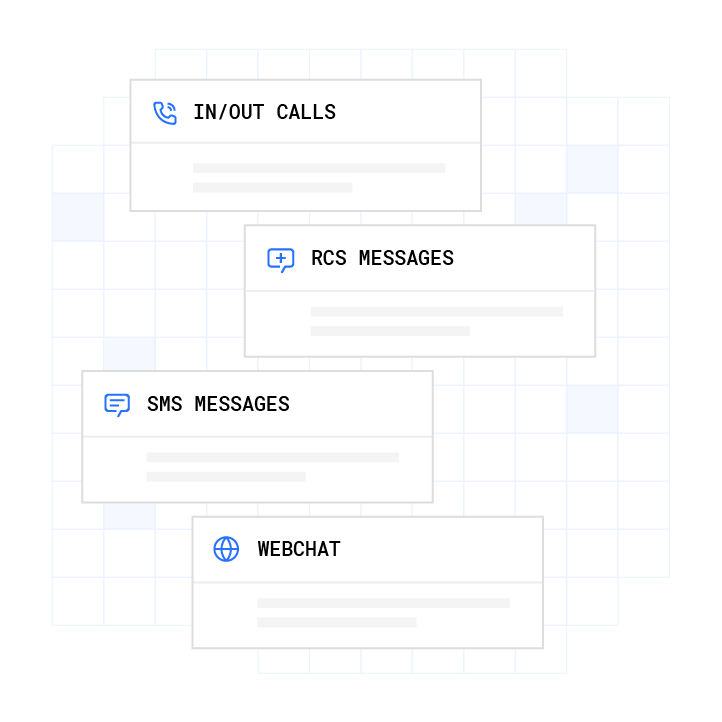
Shared context. Cross-channel memory requires a single stateful database, not separate systems for voice and SMS. An omnichannel inbox that unifies messaging channels into a single workspace enables teams to maintain shared context and avoid losing conversation history when customers switch channels. Plura’s Stateful Conversation Database keys every interaction to a customer token such as phone number, email, or ID and persists it across voice, SMS, RCS, and webchat.
Consent management. Every outbound AI contact in regulated verticals requires documented consent. Plura’s compliance engine timestamps consent records as immutable and audit-ready, with express written consent tracked per contact. Plura integrates with Blacklist Alliance for real-time TCPA litigator and DNC screening on outbound contacts across client accounts.
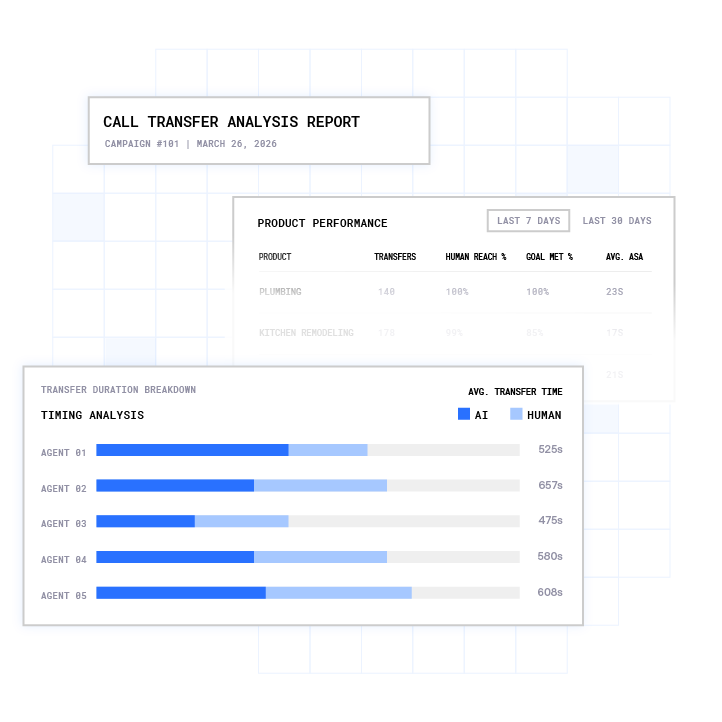
Performance monitoring. Key performance metrics for evaluating voice-first AI appointment setting include appointment booking rate, after-hours call capture rate, lost-call recovery rate, average speed of answer, call abandonment rate, automation containment rate, and data capture completeness. Plura’s AI Conversation Intelligence layer surfaces these metrics automatically and generates client-ready reports without manual export.
Top AI chatbots for appointment scheduling. The strongest performers in 2026 are not traditional chatbots. They are stateful AI agents that operate across voice, SMS, RCS, and webchat with shared memory. Platforms that handle only one channel, or that rely on separate products for voice and text, create context gaps that increase no-shows and reduce conversion. Plura, built for high-volume regulated operators, handles all four channels on one stateful database.
Free AI scheduling tools. Free AI scheduling tools target low-volume, single-channel, consumer use cases. They do not support TCPA compliance, DNC scrubbing, HIPAA-aligned data handling, or stateful cross-channel memory. For operators managing 500 or more daily interactions or $5,000 or more in monthly paid-media spend, the cost of a compliance gap or a missed lead quickly outweighs any savings from a free tool.
Implementation Readiness Assessment for AI Booking
Before deploying an AI appointment booking tool, operators should assess readiness across five dimensions. These dimensions determine whether the infrastructure investment will produce defensible ROI and whether the organization can roll out the platform without breaking existing workflows.
-
Interaction volume. AI agent platforms of this depth generate defensible ROI at 500 or more daily interactions or $5,000 or more in monthly paid-media spend because the fixed infrastructure cost spreads across high volume. Below that threshold, the per-interaction cost remains too high to justify the build.
-
Process maturity. AI agents follow defined workflows. Operators without documented qualification criteria, escalation rules, and consent processes need to build those before deployment, not after.
-
Data quality. Stateful memory is only as useful as the data it stores. CRM records with incomplete contact fields, duplicate entries, or stale phone numbers reduce AI performance from day one.
-
Compliance requirements. Operators in healthcare, insurance, financial services, and legal should inventory their applicable frameworks such as TCPA, HIPAA, DNC, and state-level rules and confirm that any vendor’s compliance infrastructure maps to those requirements. Qualified counsel should advise on specific obligations.
-
Integration needs. Teams should confirm that the platform connects natively to the CRM, calendar, and payment systems already in use. Plura integrates with 50 or more tools across CRM such as HubSpot, Salesforce, and Zoho, calendars such as Cal.com, Calendly, and Google Calendar, and payment processors such as Stripe and Shopify, per Plura’s full integration directory.
Common Pitfalls When Rolling Out AI Scheduling
Automating broken workflows. AI agents execute the workflow they are given with perfect consistency, which means any flaw in the underlying qualification logic, routing rules, or consent process gets replicated at scale. That is why workflow audits must happen before deployment. Fixing a broken process after it is running at hundreds of interactions per day creates operational chaos and compliance exposure.
Underestimating compliance complexity. Healthcare organizations cannot assume an AI tool supports HIPAA compliance simply because it is technically secure; each system must be individually evaluated against HIPAA Privacy, Security, and Breach Notification Rules, with appropriate contractual arrangements, technical configuration, and ongoing lifecycle oversight. The same principle applies to TCPA, DNC, and state-level frameworks. Operators are responsible for their own compliance posture downstream of any vendor’s infrastructure.
Measuring activity instead of outcomes. Call volume, SMS sends, and chat sessions are activity metrics. The metrics that matter are appointment booking rate, no-show rate, cost per qualified lead, and pipeline conversion. Plura’s AI Conversation Intelligence layer tracks outcome-based metrics automatically, so operators are not left tuning a dashboard with no operational signal.
AI Scheduling for Small Business and Scaling Operators
In this context, small business refers to operators who are high-volume relative to their headcount, not low-volume relative to the market. A 10-person insurance agency handling 600 inbound leads per day is a small business with an enterprise-scale conversation problem.
For these operators, the right AI scheduling tool scales logarithmically, not linearly. Voice AI scales nonlinearly, since human staffing costs double when call volume doubles while AI operating costs increase only marginally. Plura’s pricing starts at $5,000 per month for the Multi tier, with agent build fees of $2,500 to $2,750 per agent, per Plura’s published pricing page. Every annual contract includes a 90-day opt-out window.
Solar and home services companies using AI agents with property data, energy usage estimates, and home valuations achieved 2x to 3x improvements in appointment set rates. That outcome is driven by Plura’s AI Lead Intelligence layer, which enriches every lead with 30 or more data sources in real time during the conversation, across every channel.
For franchise networks, Plura answers 100% of inbound calls within two rings across all locations, contacts leads within 60 seconds via SMS or voice, and enforces identical greeting, qualification, and SLA at every unit, per Plura’s franchise communications guide. That consistency closes the 3x to 5x performance gap between best and worst locations that affects most multi-unit systems.
Conclusion and Next Steps for Decision-Makers
The evaluation framework for AI appointment booking tools in regulated industries centers on five criteria: speed, channel coverage, compliance posture, integration depth, and operational fit. Generic consumer scheduling tools and single-channel chatbots fail on at least three of those five. CPaaS-based AI wrappers fall short on compliance posture and stateful memory. Offshore BPOs struggle on speed, compliance exposure, and cost structure.
Plura operates as an FCC-licensed end-to-end platform with sub-5-second response, a Stateful Conversation Database shared across voice, SMS, RCS, and webchat, and a compliance engine that supports SOC 2, HIPAA, ISO certification, GDPR, SHAKEN/STIR caller ID verification, TCPA compliance, and DNC compliance at the carrier level. The platform delivers 3x average ROI in 90 days, 47% average pipeline growth, and the 40% no-show improvement documented in healthcare deployments.
Before selecting a platform, teams should conduct an internal workflow audit, document their compliance requirements with qualified counsel, and compare the projected AI cost structure against current contact-center economics.
Run your numbers through Plura’s calculator to check your ROI in real time: calculate your ROI now.
Compare plans and rates side by side: view pricing and plans.
Book a live demo to see the full stack deployed in a regulated environment.
Frequently Asked Questions
What makes an AI appointment booking tool suitable for regulated industries like healthcare or insurance?
Regulated industries need AI appointment booking tools that handle sensitive data with appropriate safeguards, enforce calling and messaging rules before each outbound contact, and maintain auditable records of every interaction. In healthcare, this means the platform handles Protected Health Information with HIPAA-aligned encryption, access controls, and audit logging, and the vendor relationship is covered by a Business Associate Agreement. In insurance and financial services, TCPA compliance and DNC scrubbing carry significant weight because violations bring per-contact financial exposure. The platform also needs to enforce state-level quiet-hours rules automatically, since those vary by jurisdiction and manual enforcement at scale is not practical. Generic scheduling tools are not built for these requirements. Operators should evaluate vendors against their specific compliance obligations with qualified counsel before deployment.
How does stateful cross-channel memory improve appointment booking conversion rates?
Stateful cross-channel memory means the AI agent retains the full history of every prior interaction with a lead, regardless of channel. When a lead texts to ask about pricing at 9 a.m. and then calls at noon, a stateful agent already knows what was discussed, what objections came up, and what the lead’s qualification status is. The agent does not ask the lead to repeat themselves. That continuity reduces friction, increases trust, and shortens the path to a booked appointment. Without stateful memory, each channel interaction starts from zero, which increases drop-off and forces leads to re-qualify themselves across touchpoints. For high-volume operators managing hundreds of daily interactions, the compounding effect of stateful memory on conversion rates is significant.
What is the difference between a CPaaS-based AI voice tool and an FCC-licensed AI communication platform?
A CPaaS-based AI voice tool is built as a wrapper on top of a third-party telecom carrier like Twilio. The vendor rents the carrier infrastructure, which means it cannot issue branded caller ID at the carrier level, cannot enforce DNC scrubbing at origination, and inherits the third-party carrier’s compliance posture rather than controlling it directly. An FCC-licensed AI communication platform owns its own carrier infrastructure. Voice originates on domestic infrastructure, branded caller ID is issued directly, DNC scrubbing runs at the carrier level before each dial, and STIR/SHAKEN, the caller ID authentication framework mandated by the TRACED Act, authenticates every outbound call at origination. The practical difference appears in pickup rates, compliance posture, and the ability to remediate spam labels without going through a third-party reseller. Plura is its own FCC-licensed audio bridging carrier. Most AI voice tools in the market are not.
How long does it take to deploy an AI appointment booking tool for a high-volume operation?
Deployment timelines depend on conversation complexity. A simple inbound qualification flow can be built in days. A complex multi-step intake, such as a 25-question health-history survey with conditional routing, runs closer to one to two months because the workflow logic requires design, validation, and pilot testing before full go-live. Plura’s onboarding sequence includes a discovery audit, intake of sample calls and existing scripts, an overnight build of a dynamic conversation mockup, a review and iteration session, engineering build of the production workflow, a pilot test on a subset of real calls, and full go-live. Every Plura annual contract includes a 90-day opt-out window, so operators are not held to the full term if the deployment is not delivering against agreed metrics.
What should operators measure to evaluate the ROI of an AI appointment booking tool?
Activity metrics like call volume and SMS sends are not sufficient for ROI evaluation. The metrics that matter are appointment booking rate, no-show rate, cost per qualified lead, pipeline conversion rate, and total cost of contact compared to the prior model. For a 15-agent operation paying $20 per hour with standard overhead, the monthly cost runs approximately $60,000. Replacing that team with Plura at $15 per hour and 100% talk utilization drops the monthly cost to $14,400, with 30-day savings of $45,600 and 12-month savings of $547,200, based on the default scenario at Plura’s ROI calculator. Operators should also track compliance-related metrics such as DNC scrubbing coverage, consent record completeness, and audit-export availability. These function as risk metrics and belong on the same dashboard as revenue outcomes.
1 Plura AI maintains SOC 2, HIPAA, ISO, and GDPR posture as part of its platform infrastructure. References to compliance frameworks in this article describe Plura’s platform capabilities and do not constitute a guarantee that any customer using Plura will themselves be compliant with applicable laws or standards. Customers remain solely responsible for their own regulatory obligations, certifications, consent management, recordkeeping, and the claims they make to their own end users. Consult qualified legal counsel for guidance specific to your use case.
2 This article describes regulatory frameworks at a general level and does not constitute legal advice. Laws and regulations vary by jurisdiction, change over time, and apply differently depending on facts and circumstances. Readers should consult qualified legal counsel before making compliance decisions.
3 Performance figures, customer outcomes, and industry statistics referenced in this article are drawn from cited third-party sources or Plura customer case studies. Individual results vary based on implementation, use case, industry, audience, and execution. Past or aggregate performance is not a guarantee of future results.
4 References to third-party products, services, companies, or research are made for informational and comparative purposes only. Plura AI is not affiliated with, endorsed by, or sponsored by any third party named in this article unless explicitly stated. Trademarks and product names referenced remain the property of their respective owners.
5 This article contains forward-looking statements regarding industry trends, technology adoption, and future capabilities. These statements reflect current expectations and are subject to change. Plura AI undertakes no obligation to update forward-looking statements except as required.
This article is provided for informational purposes only and reflects Plura AI’s understanding at the time of publication. Product capabilities, integrations, and specifications are subject to change. For the most current information, visit plura.ai.
This article was produced with the assistance of AI tools and reviewed by Plura AI prior to publication.