
Written by: Matt Beucler, CEO, Plura AI
Key Takeaways for VICIdial Replacement Decisions
- VICIdial relies on manual, operator-managed controls. When teams miss DNC scrubs, consent logging, or quiet-hours checks before dial, exposure increases.
- TCPA litigation volume is rising, and average settlements now reach multimillion-dollar levels, which changes the risk math for manual processes.2
- Plura AI, Convoso, and Readymode handle compliance controls differently.4 Only Plura AI bundles carrier-level DNC scrubbing, SHAKEN/STIR Level A attestation, and immutable consent logging through its own FCC-licensed carrier.
- Self-hosted stacks place every compliance layer on the operator, including DNC lists, audit trails, and liability. Managed platforms remove many mechanical failure points while the operator still owns consent and campaign lawfulness.
- Plura AI automates the mechanical half of TCPA compliance at the carrier level. See how carrier-level enforcement works before your team dials the next campaign.
Why Operators Leave VICIdial For Compliance Reasons
VICIdial is free and open source, and teams can bolt on compliance with third-party tools. The problem is that those tools are often manual. A CSV upload nobody owns, a DNC scrub that runs on a schedule instead of before dial, and a consent record that lives in a spreadsheet each create a different failure mode.
VICIdial’s DNC check runs at lead-load time rather than dial-time, so a lead already sitting in the hopper when a DNC flag is set can still be dialed. VICIdial’s compliance tooling is basic: it includes DNC list functionality and timezone restrictions, but does not include enterprise-grade consent management, real-time litigation risk scoring, or state-level compliance automation, according to a March 2026 ViciStack analysis.4 Operators needing those capabilities must source them from third-party tools, which can add $150 to $7,100 per month in compliance overhead on top of the platform’s zero license cost.
The trigger events that push operators toward a replacement decision are consistent. A demand letter, a carrier flag, a state attorney general inquiry, or a legal review often surfaces the gap between what the platform enforces and what the regulation describes. TCPA (Telephone Consumer Protection Act) class action filings surged 112% year-over-year in the first quarter of 2025, with 507 class actions filed in the first three months compared to 239 in the same period of 2024.2,3 Year-to-date through April 2026, 1,128 TCPA lawsuits were filed, a 28.2% increase over the same period in 2025.2,3 The manual-integration failure mode is a risk calculation that changes as litigation volume rises.
This article starts where Plura’s existing VICIdial settings guide ends. It focuses on the replacement decision itself, organized around what each platform enforces for you.
Walk through Plura live and see how the compliance mechanics work before dial.
What “TCPA Compliant Dialer” Actually Means
No dialer confers compliance. The platform enforces the mechanics, and the operator owns the law.
This division is the core frame for any replacement decision. The list below shows what a dialer can handle mechanically and what remains a legal obligation for your team.
What a dialer can enforce mechanically before dial:
- Real-time DNC scrubbing against federal and state registries before each call attempt
- Time-zone-based quiet-hours enforcement, applying the 47 CFR 64.1200(c)(1) prohibition on calls before 8:00 a.m. or after 9:00 p.m. local time at the called party’s location
- Abandoned-call rate capping at the FCC’s 3% threshold under 47 CFR 64.1200(a)(6)-(a)(7), measured over a 30-day period per campaign
- SHAKEN/STIR authentication on every outbound call, with Level A (Full Attestation) meaning the carrier has verified both the caller’s identity and their right to use the specific number
- Immutable, timestamped consent logging that produces an audit-ready record on demand
- TCPA-litigator list screening before dial
What remains the operator’s legal obligation:
- Capturing express written consent from the called party, as defined in 47 CFR 64.1200(f)(9)
- Honoring revocation requests within 10 business days under 47 CFR 64.1200(a)(10)
- Retaining call records and consent documentation for at least four years, since TCPA claims are subject to a four-year federal statute of limitations under 28 U.S.C. § 1658
- Ensuring the underlying calling campaign is lawful
Plura AI supports customer compliance; it does not absolve customers of their own obligations. Consult the regulation or qualified counsel for your specific obligations under 47 U.S.C. § 227 and the FCC’s implementing rules.
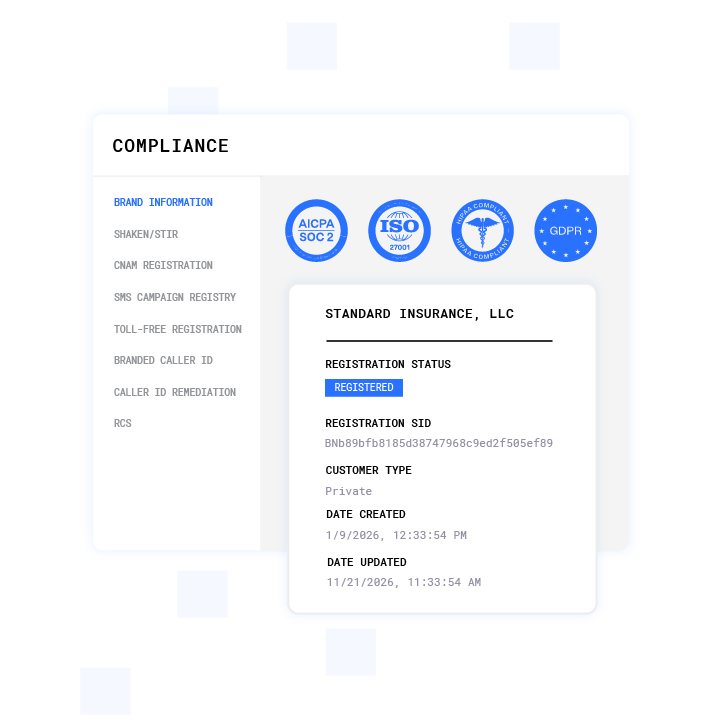
TCPA violations can cost $500 to $1,500 per text or call. The average TCPA class action settlement increased to $8.2 million in 2025, up from $6.5 million in 2024.3 The mechanical half of the compliance stack is where a platform earns its keep.
The Real Alternatives Compared: Plura, Convoso, Readymode
Three platforms come up repeatedly when operators search for a TCPA-focused VICIdial alternative: Plura AI, Convoso, and Readymode.4 The comparison below shows which compliance controls each platform enforces natively and which remain the operator’s obligation, so you can see where integration-dependent enforcement creates gaps.
Plura AI
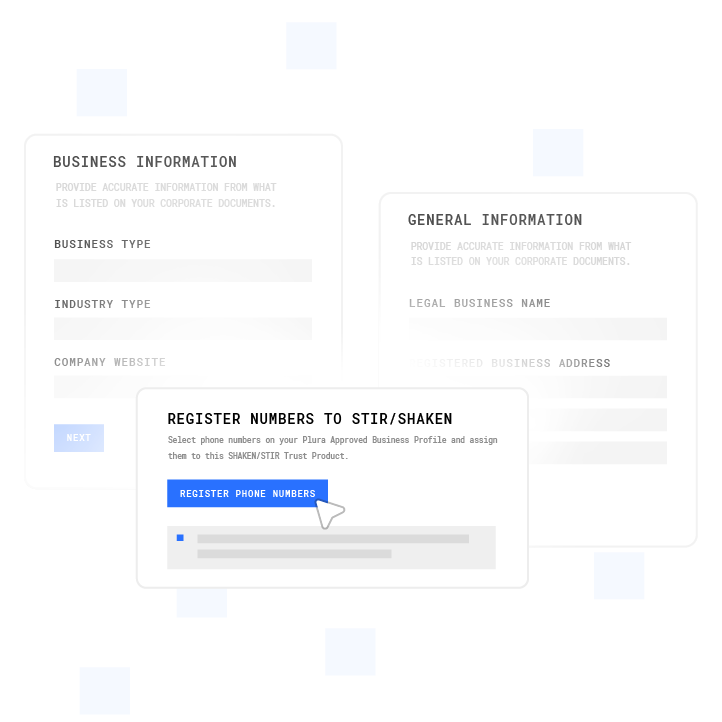
- What it enforces natively: Plura enforces real-time DNC scrubbing before dial, automated quiet-hours enforcement by time-zone detection, and immutable consent logging. It also provides SHAKEN/STIR authentication at Level A through Plura’s own FCC-licensed carrier, branded caller ID issued at the carrier level, and TCPA-litigator list screening on every outbound contact. Plura AI provides SOC 2 Type II certified, HIPAA-aligned infrastructure and enforces real-time DNC scrubbing, TCPA-litigator screening, automated quiet hours, and immutable consent logging inside its own platform.1 The AI Predictive Dialer includes list management, dynamic pacing, timezone logic, answer rate improvement tools, and compliance controls built into the dialing workflow.
- What remains the operator’s obligation: Capturing express written consent, honoring revocation requests, maintaining records, and ensuring campaign lawfulness. Plura supports customer compliance; it does not absolve customers of their own obligations.
Convoso
- What it enforces natively: Convoso’s Trust Center states its platform includes DNC scrubbing, reassigned number workflows, dynamic scripting, and state-level dialing controls, which the company says help contact centers support more consistent compliance processes. Convoso holds a SOC 2 Type 2 report.1 Its Attempt Control Manager lets teams define the maximum number of times the same phone number can be dialed within a set time window, applying that limit across every campaign.
- What remains the operator’s obligation: Consent capture, revocation handling, recordkeeping, and ensuring campaign lawfulness.
Readymode
- What it enforces natively: Internal DNC list management, state calling rules, and call recording. Readymode iQ provides caller ID reputation monitoring through its Autopilot and Assisted Remediation features.
- What remains the operator’s obligation: National DNC Registry scrubbing and litigator scrubbing are enabled through integrations rather than natively. Consent capture, revocation handling, and recordkeeping remain the operator’s responsibility.
The Free-Versus-Paid Math for VICIdial Replacement
VICIdial is free and open source. The real cost is the compliance exposure and the engineering time required to bolt on controls.
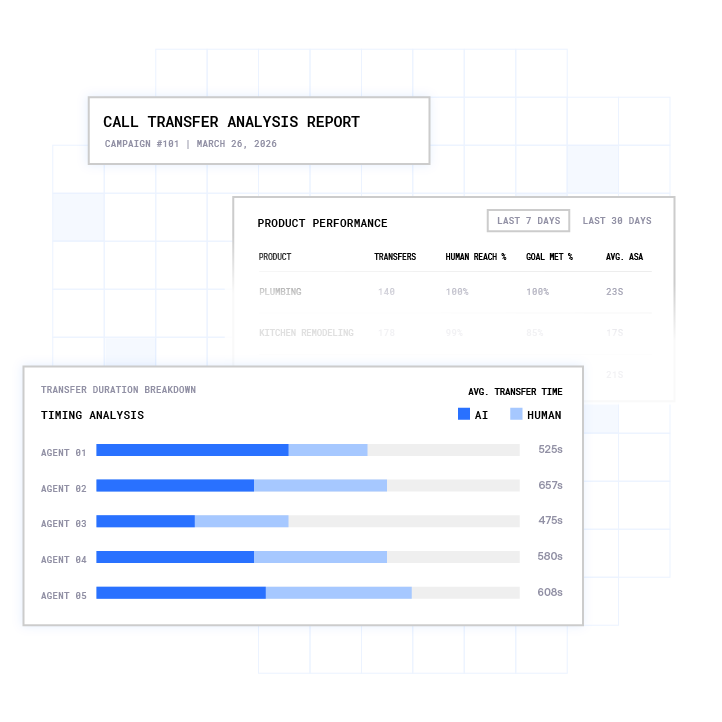
VICIdial carries no software license fee. Its total cost of ownership ranges from $195 to $728 per agent per month depending on scale and management quality, with compliance tooling representing $150 to $7,100 per month of that total. These costs appear because the open source platform lacks these capabilities natively. System administrators managing on-premise deployments spend 15 or more hours weekly on Linux server maintenance, security patches, and performance tuning.
A managed platform bundles compliance tooling into per-seat pricing. For operators evaluating the trade-off, the real question is total cost of ownership versus litigation exposure. A company sending 500,000 promotional texts without valid prior express written consent faces potential statutory damages of $250 million at $500 per text before any finding of willfulness.3
For current pricing and plans, see Plura’s published rates. Use the ROI calculator to model the cost difference against your current call volume.
Self-Hosted Versus Managed: DNC Ownership and Audit Trails
In a self-hosted VICIdial deployment, the operator owns every layer of the compliance stack: the DNC list, the consent record, the audit trail, and the liability.
The FTC describes that companies soliciting sales to consumers should scrub their calling lists against the National DNC Registry at least once every 30 days (with some sources citing a 31-day interval under FCC rules), so a one-time scrub is insufficient and a rolling compliance process is required. VICIdial’s auditability is limited: the platform logs which agent marked a number DNC and the disposition used, but the opt-out wording presented to the customer is the operator’s responsibility, not something the dialer records.
In a managed platform, the platform enforces the mechanics before dial. As noted earlier, the operator still owns consent and the lawfulness of the campaign. A managed platform removes the mechanical failure modes that create exposure, but it does not transfer liability. The operator receives any demand letter in either model. The difference is whether the platform provided a defensible audit trail before that letter arrived.
Caller ID Reputation And SHAKEN/STIR Controls
Caller ID reputation directly affects answer rates. Self-hosted numbers often degrade over time when teams lack carrier-level attestation, branded caller ID issuance, and spam-label remediation.
When carriers apply a spam or scam label, answer rates drop by 30% to 60%. Level A STIR/SHAKEN attestation calls are least likely to be flagged as spam, but attestation is assigned by the originating carrier, not by the caller. That means operators routing calls through a third-party CPaaS (Communications Platform as a Service) inherit that provider’s attestation posture, not their own.
Plura issues branded caller ID directly through its FCC-licensed carrier and runs SHAKEN/STIR authentication on every outbound call. Because Plura is its own carrier, calls originate with Level A attestation tied to Plura’s operating company number, not a reseller’s. Plura AI’s compliance framework includes SOC 2 Type II certified infrastructure, TCPA and STIR/SHAKEN enforcement, and real-time DNC scrubbing and TCPA-litigator screening inside its own platform.1
How to Size the VICIdial Replacement Decision
Two variables drive whether a self-hosted stack or a managed platform makes more sense: call volume and agent count.
Below a certain volume, the compliance overhead of a self-hosted stack may be manageable for an operator with in-house Linux, Asterisk, and compliance expertise across all four domains simultaneously. VICIdial’s learning curve spans Linux administration, Asterisk telephony, MySQL database management, and contact center operations, four domains that are difficult and expensive to staff. Above a threshold where that expertise gap creates audit-trail risk, the engineering time and liability exposure often favor a managed platform that enforces the mechanical half before dial. Consult qualified counsel to assess where your operation sits on that spectrum.
Talk with Plura about how carrier-level enforcement scales for your specific call volume.
Conclusion: Making a Defensible Dialer Choice
VICIdial is free, but the compliance duct tape becomes a liability as litigation volume and carrier scrutiny increase. Operators who understand the division of labor between platform-enforced mechanics and operator-owned obligations make defensible replacement decisions. Those who conflate “using a platform” with “being compliant” are the ones who receive demand letters.
The evaluation criteria stay simple. Identify what the platform enforces before dial and what remains your obligation. Plura enforces the mechanical half at the carrier level, including real-time DNC scrubbing, quiet-hours enforcement, abandoned-call rate capping, SHAKEN/STIR authentication, and immutable consent logging. The operator still owns consent, revocation handling, and campaign lawfulness.
Compare plans and rates side by side.
1 Plura AI maintains SOC 2, HIPAA, ISO, and GDPR posture as part of its platform infrastructure. References to compliance frameworks in this article describe Plura’s platform capabilities and do not constitute a guarantee that any customer using Plura will themselves be compliant with applicable laws or standards. Customers remain solely responsible for their own regulatory obligations, certifications, consent management, recordkeeping, and the claims they make to their own end users. Consult qualified legal counsel for guidance specific to your use case.
2 This article describes regulatory frameworks at a general level and does not constitute legal advice. Laws and regulations vary by jurisdiction, change over time, and apply differently depending on facts and circumstances. Readers should consult qualified legal counsel before making compliance decisions.
3 Performance figures, customer outcomes, and industry statistics referenced in this article are drawn from cited third-party sources or Plura customer case studies. Individual results vary based on implementation, use case, industry, audience, and execution. Past or aggregate performance is not a guarantee of future results.
4 References to third-party products, services, companies, or research are made for informational and comparative purposes only. Plura AI is not affiliated with, endorsed by, or sponsored by any third party named in this article unless explicitly stated. Trademarks and product names referenced remain the property of their respective owners.
This article is provided for informational purposes only and reflects Plura AI’s understanding at the time of publication. Product capabilities, integrations, and specifications are subject to change. For the most current information, visit plura.ai.
This article was produced with the assistance of AI tools and reviewed by Plura AI prior to publication.