

Written by: Matt Beucler, CEO, Plura AI
Updated July 4, 2026
Key Takeaways for Contact-Center and Revenue Leaders
- Embedding compliance checks (TCPA, DNC, GDPR, ADA, FTC) directly into sub-5-second lead-response workflows reduces violation risk while preserving conversion velocity.
- Each compliance requirement maps to a specific workflow node: consent capture at form submission, DNC scrubbing at pre-dial, accessibility tagging at content delivery, claim verification at message composition, and audit export at campaign close.
- Conversion performance and compliance work together: fast, relevant outreach only delivers ROI when it runs inside a legally defensible architecture that avoids $500 to $1,500 TCPA penalties per call.
- Single-stack, 100% U.S.-based platforms reduce fragmented audit trails and offshore data exposure from point-tool stacks, creating one consent ledger and one DNC log across every channel.
- Plura AI supplies the infrastructure that keeps these workflows fast and audit-ready; see how the 5-step checklist maps to your current workflow.
Compliance Tactics That Protect Conversion Velocity
| Area | Non-Compliant Tactic | Compliant Tactic | Source |
|---|---|---|---|
| Consent mechanics | Shared lead-generator consent applied across multiple sellers | One-to-one consent specific to a single seller, captured with timestamp, IP address, and exact consent language | FCC one-to-one consent rule (vacated before its January 2025 effective date) |
| TCPA/SMS lead response | Dialing without pre-dial DNC scrub; ignoring internal opt-out requests | Real-time federal and state DNC scrub before every dial; internal opt-out processed same call or same business day | FTC Telemarketing Sales Rule; 2,788 TCPA cases filed in 2024, up 67% from 2023 |
| ADA accessibility | Webchat and voice flows with no screen-reader support or accommodation process | Interactive accommodation process for employees and customers, screen-reader-compatible interfaces, call recording disclosure at call start | ADA interactive process requirements for contact centers |
| Truthful claims | AI-generated marketing content published without human review or audit trail; dark-pattern opt-out flows | Human review routing for high-risk claims, one-click consent withdrawal, timestamped UI snapshots per consent event | FTC 2026 dark patterns framework; CCPA symmetry-of-choice requirements |
How Conversion and Compliance Work Together
Conversion is the rate at which a prospect completes a desired action such as submitting a form, answering a call, booking an appointment, or signing a contract. Conversion optimization reduces friction in that path through faster response, better qualification, and more relevant messaging. Contacting a lead within 60 seconds lifts conversions by 391%3.
Compliance is the set of legal and regulatory obligations that govern how operators may contact, collect data from, and communicate with prospects. In the U.S. lead-response context, the primary frameworks are TCPA (47 U.S.C. § 227), the FTC Telemarketing Sales Rule, federal and state DNC registries, HIPAA (45 CFR Parts 160, 162, 164) for health data, and the ADA for accessibility. GDPR (Regulation (EU) 2016/679) applies when EU residents are in scope.
2
When you place these two definitions side by side, the practical difference becomes clear. Conversion optimization focuses on “how fast and how relevant?” while compliance focuses on “with what permission and under what constraints?” The two are not opposites. TCPA statutory damages run $500 to $1,500 per call, with class-action settlements routinely reaching $20 to $60 million, which means a non-compliant conversion workflow destroys the economics it was designed to improve. The goal is a single workflow architecture where compliance checks run in parallel with, not after, the response sequence.
The 5 C’s Framework for Audit-Ready Compliance
The 5 C’s of compliance give operators a practical checklist for building audit-ready lead-response workflows.
1. Consent. Prior express written consent forms the foundation of TCPA-aligned outbound contact. Consent records should include timestamp, IP address, user agent, and exact consent language tied to the phone number. The FCC’s one-to-one consent rule was scheduled to take effect January 27, 2025, but was vacated by the Eleventh Circuit before that date.
2. Clarity. Disclosures stay unambiguous and easy to understand. The FTC’s 2026 dark patterns framework states that labels on data-collection flows should clearly describe the purpose of collection without misleading wording, and that opt-out mechanisms should carry equal visual prominence to opt-in mechanisms.
3. Control. Consumers need simple ways to revoke consent and opt out at any point. Internal opt-out requests are treated as absolute and processed quickly, then fed from a centralized suppression list into every outbound campaign.
4. Consistency. Compliance rules apply uniformly across every channel, campaign, and time zone. Calling-window enforcement uses the recipient’s local time zone to apply a hard block outside 8 AM to 9 PM, with state overlays applied automatically.
5. Corroboration. Every compliance decision generates an auditable log. Each AI call can produce a court-defensible artifact containing the full recording, transcript, structured consent record, time-zone and calling-window check log, DNC scrub log, and campaign metadata. Operators should consult qualified counsel to confirm their specific corroboration obligations.
Seven Conversion Principles for Regulated Workflows
Seven principles govern high-performing conversion workflows in regulated environments.
1. Speed. Contacting a lead within 5 minutes makes them up to 100x more likely to connect. Sub-5-second response is the operational target when you embed automation.
2. Relevance. Messaging should match the prospect’s intent signal at the moment of contact. Real-time lead enrichment from 30+ data sources during the conversation replaces post-hoc list scoring.
3. Clarity. Offers, disclosures, and next steps stay unambiguous. AI-generated content that produces hallucinated claims can conflict with FTC advertising standards and degrade conversion quality at the same time.
4. Trust. Branded caller ID, STIR/SHAKEN (Secure Telephone Identity Revisited/Signature-based Handling of Asserted information using toKENs) authentication, and AI disclosure at call start build the credibility that drives pickup rates.
5. Continuity. A prospect who texted at 9 AM should not re-explain themselves when the call comes at noon. Stateful conversation memory across channels preserves context and reduces friction.
6. Qualification. Not every lead deserves the same follow-up investment. Real-time AI lead scoring routes only qualified handoffs to human agents, which protects conversion economics.
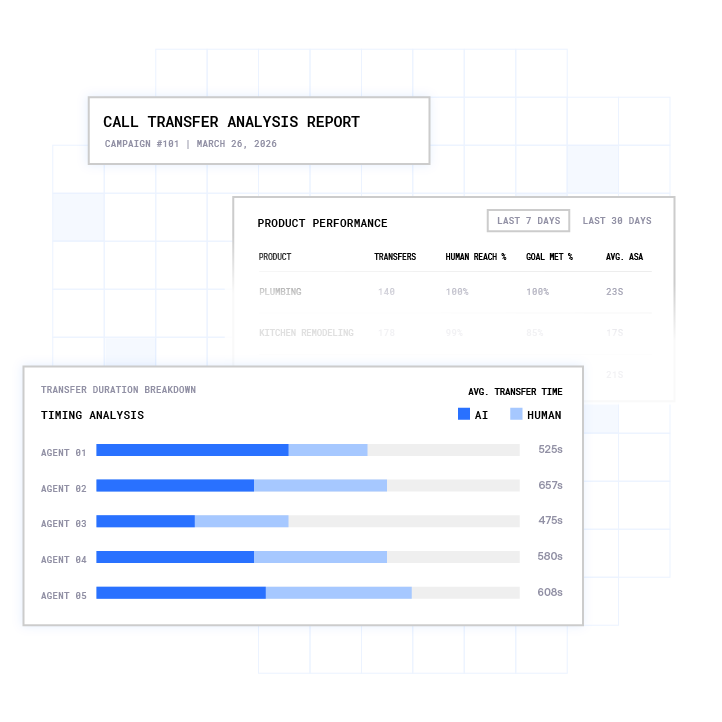
7. Measurement. Post-launch monitoring of AI-generated and AI-reviewed content is described as a focus area for regulators in 2026. To make this monitoring actionable, conversion metrics and compliance metrics should share the same reporting layer so operators can see when a compliance issue also hurts conversion performance.
5-Step Checklist To Embed Compliance in Your Workflow
Step 1: Capture Consent at the Form Submission Node
Objective: Collect prior express written consent before any outbound contact attempt.
Required configuration: Consent language specific to your organization, a clickwrap or e-signature mechanism, and a data store that records timestamp, IP address, user agent, and exact consent text per phone number.
Operator decision: Confirm with counsel whether your vertical (healthcare, insurance, financial services, legal) requires additional consent language beyond the TCPA baseline. The FCC’s one-to-one consent rule was scheduled to take effect January 27, 2025, but was vacated by the Eleventh Circuit before that date.
Step 2: Run DNC Scrubbing at the Pre-Dial Node
Objective: Block every outbound contact attempt against federal and state DNC registries before the dial fires.
Required configuration: API-based scrubbing against the federal DNC registry (updated at maximum 5-day staleness), all applicable state registries, your internal suppression list, and the Reassigned Numbers Database (RND) for any number where consent is more than 45 days old. Modern API-based scrubbing delivers 200 to 500 ms latency.
Operator decision: As of 2025, eleven states maintain separate DNC registries with distinct access processes and penalty structures. Confirm with counsel which state lists apply to your campaigns. Plura’s compliance engine runs real-time DNC scrubbing and integrates with the Blacklist Alliance’s TCPA Litigation Firewall for litigator-list filtering on every outbound contact.
Step 3: Tag Accessibility Requirements at the Content Delivery Node
Objective: Ensure voice, SMS, RCS, and webchat interactions align with ADA accessibility expectations.
Required configuration: Screen-reader-compatible webchat interfaces, call recording disclosure at call start, and an interactive accommodation process for any customer or employee request.
Operator decision: Call recording in contact centers requires all-party consent in California, Connecticut, Delaware, Florida, Illinois, Maryland, Massachusetts, Montana, New Hampshire, Pennsylvania, and Washington. Confirm your state-specific recording disclosure obligations with counsel before go-live.
Step 4: Verify Claims at the Message Composition Node
Objective: Keep unsubstantiated or misleading claims out of AI-generated messaging before it reaches prospects.
Required configuration: A human review routing layer for high-risk content such as performance claims, testimonials, and pricing, an audit trail that logs prompts, outputs, model versions, and review decisions, and a post-launch monitoring process across all active channels.
Operator decision: FINRA’s 2026 Annual Regulatory Oversight Report identifies AI agents as a new risk area in marketing compliance due to their ability to act autonomously and create auditability challenges if actions are not logged. Regulated verticals often route performance claims to legal review before deployment.
Step 5: Export Audit Records at the Campaign Close Node
Objective: Produce a defensible compliance record for every campaign before it closes.
Required configuration: Immutable consent logs, DNC scrub logs with timestamps and results, call recordings and transcripts, opt-out flags, and campaign metadata retained for a minimum of five years.
Operator decision: Operators document the consent source, disclosure script, opt-out trigger phrases, and calling window in writing and retain records for at least five years. Plura’s compliance dashboard exports audit-ready reports in one click for legal review or regulatory inquiries.
Infrastructure Choices: Build vs. Buy and Single-Stack vs. Point Tools
Infrastructure decisions determine whether your conversion workflow can support compliance at scale. Operators choosing between building a compliant conversion workflow in-house and buying a purpose-built platform face a straightforward infrastructure audit. Building requires an FCC-licensed audio bridging carrier, STIR/SHAKEN-authenticated origination, branded caller ID issuance, real-time DNC scrubbing against federal and state registries, immutable TCPA consent logging, HIPAA-aligned encryption, SOC 2 controls, 50+ state rule-set enforcement, and a stateful database that holds context across channels. An FCC carrier license alone takes roughly two years to obtain4. That timeline is the build cost many operators do not price in.
Point-tool stacks that use a separate dialer, separate SMS platform, separate compliance bolt-on, and separate analytics distribute the audit trail across vendors. This fragmentation creates inconsistent consent records and rule enforcement. Each vendor contract also becomes a separate compliance consideration under the FCC NPRM (CG Docket No. 26-52), which proposes limits on offshore handling of sensitive consumer data.
Single-stack U.S.-only infrastructure reduces that exposure. Plura runs voice origination, model hosting, data storage, and call recording on 100% U.S. infrastructure by architecture. The compliance engine, the stateful conversation database, and the audit export layer share the same platform, so there is one consent ledger, one DNC scrub log, and one audit trail across every channel. Total cost of ownership runs $300,000 to $700,000 per year, replacing the $4M to $7M traditional contact-center cost structure on equivalent volume.
Troubleshooting Common Compliance Bottlenecks
Fragmented consent records. When consent is captured in one system and dialing happens in another, the audit trail breaks. The fix is a single consent ledger that the dialer reads before every outbound attempt. If your current stack cannot produce a timestamped, per-number consent record on demand, the gap is architectural, not procedural.
Slow lead handoff. Compliance checks are often cited as the cause of slow response, but the actual cause is sequential processing: consent check, then DNC scrub, then dial. The latency described in Step 2 runs in parallel with lead enrichment inside a sub-5-second response window when the workflow is properly structured. If your workflow is sequential, restructure the nodes to run compliance checks in parallel with qualification scoring.
Inconsistent quiet-hours enforcement. Mobile number portability means a number’s area code does not reliably indicate the recipient’s time zone. Calling-window enforcement uses the recipient’s local time zone, accounting for mobile number portability, to apply a hard block outside 8 AM to 9 PM, with state overlays applied automatically. Plura’s compliance engine applies time-zone detection on every outbound contact, with state-specific overrides configurable at the campaign level.
ROI Calculator for AI-Driven, Compliant Lead Response
A 15-agent operation paying $20 per hour with standard taxes, benefits, and commissions at 40% talk utilization costs $60,000 per month. Replacing that team with Plura at $15 per hour, 100% talk utilization, and 6 Plura agents doing the work of 15 humans drops the monthly cost to $14,400. Savings stack to $45,600 in the first 30 days, $547,200 over 12 months, and $2,736,000 over 60 months.3 That math assumes zero TCPA violations. A single class-action settlement at the levels described earlier erases years of operational savings.
Walk through your call volume and compliance stack with our team to calculate your specific savings.
The same calculation applies to compliance infrastructure costs. Full DNC compliance infrastructure involves registry access and scrubbing services, which stays modest relative to TCPA exposure per violation under the Telemarketing Sales Rule civil penalty. Operators running 500 or more daily interactions without embedded compliance infrastructure are carrying unpriced liability on every campaign.
Review your workflow nodes against the compliance engine before you commit to a build or a platform switch.
Frequently Asked Questions
How long does it take to go live with a compliant AI lead-response workflow?
A simple inbound qualification flow typically deploys in days. A complex multi-step intake, such as a 25-question health-history survey with HIPAA-aligned field-level redaction, runs closer to one to two months. That timeline reflects the design, validation, and pilot testing on real calls before full go-live. Plura’s onboarding sequence includes a discovery audit, a dynamic conversation mockup built overnight, an iteration session, an engineering build, a pilot test, and full go-live. Every annual contract includes a 90-day opt-out window if the deployment is not delivering. Operators should confirm their specific compliance configuration requirements with qualified counsel before the pilot test begins.
What prerequisites does an operator need before embedding compliance in a conversion workflow?
Three prerequisites apply before any compliant outbound workflow goes live. You need a documented consent source for every lead in the campaign, including the exact consent language, timestamp, and IP address. You also need a centralized internal DNC suppression list that feeds into every campaign, and a confirmed calling-window policy that accounts for state-specific overlays beyond the federal 8 AM to 9 PM window. Operators in healthcare, insurance, financial services, and legal verticals should also confirm with counsel whether their specific data types trigger HIPAA, state privacy law, or FTC obligations beyond the TCPA baseline.
What does a compliant AI lead-response workflow cost compared to a non-compliant one?
The cost difference is asymmetric. A compliant workflow adds DNC scrubbing infrastructure, consent management tooling, and audit export configuration. A non-compliant workflow carries TCPA exposure of $500 to $1,500 per violation with no statutory cap, plus class-action settlement risk that averaged $6.6 million (a figure from 2018 studies). The FTC Telemarketing Sales Rule provides for civil penalties per violation. Operators should treat compliance infrastructure as a fixed cost of the workflow, not an optional add-on.
What are the risks of using a point-tool stack instead of a single-stack platform for compliance?
Point-tool stacks distribute the consent ledger, DNC scrub log, and audit trail across multiple vendors. When a TCPA demand letter arrives, operators must reconstruct the compliance record from multiple systems, each with different data formats and retention policies. The FCC NPRM (CG Docket No. 26-52) also proposes limits on offshore handling of sensitive consumer data, which means any vendor in the stack with foreign infrastructure dependencies becomes a compliance consideration. A single-stack platform with U.S.-only infrastructure produces one audit trail, one consent ledger, and one DNC log across every channel. Operators should consult counsel to assess their specific vendor stack exposure.
How does Plura integrate with existing CRM and marketing automation systems?
Plura integrates with 50+ tools across CRM (HubSpot, Salesforce, Zoho), marketing automation (Go High Level, Make, Zapier), calendars (Cal.com, Calendly, Google Calendar), attribution platforms (Cometly, Retreaver, Ringba), and validation tools (IP Quality Score, Reassigned Numbers Database, TrestleIQ).4 The stateful conversation database writes back to the CRM after every interaction, so consent records, DNC scrub logs, and conversation transcripts are available in the operator’s existing reporting environment. The full integration directory is at plura.ai/integrations.
How do operators measure whether a compliant workflow is also a high-converting workflow?
The measurement layer tracks four metrics in parallel. Contact rate equals calls connected divided by dials attempted. Conversion rate equals desired actions completed divided by contacts made. Compliance rate equals contacts cleared through all pre-dial gates divided by total attempts. Audit readiness equals the percentage of contacts with a complete, retrievable compliance record. Plura’s AI Conversation Intelligence layer surfaces all four metrics from the same dataset, so operators can identify whether a conversion drop comes from a compliance gate, a script issue, or a channel timing problem. Operators should establish baseline metrics before go-live and review them weekly during the first 90 days.
Conclusion: Treat Compliance as Core Infrastructure
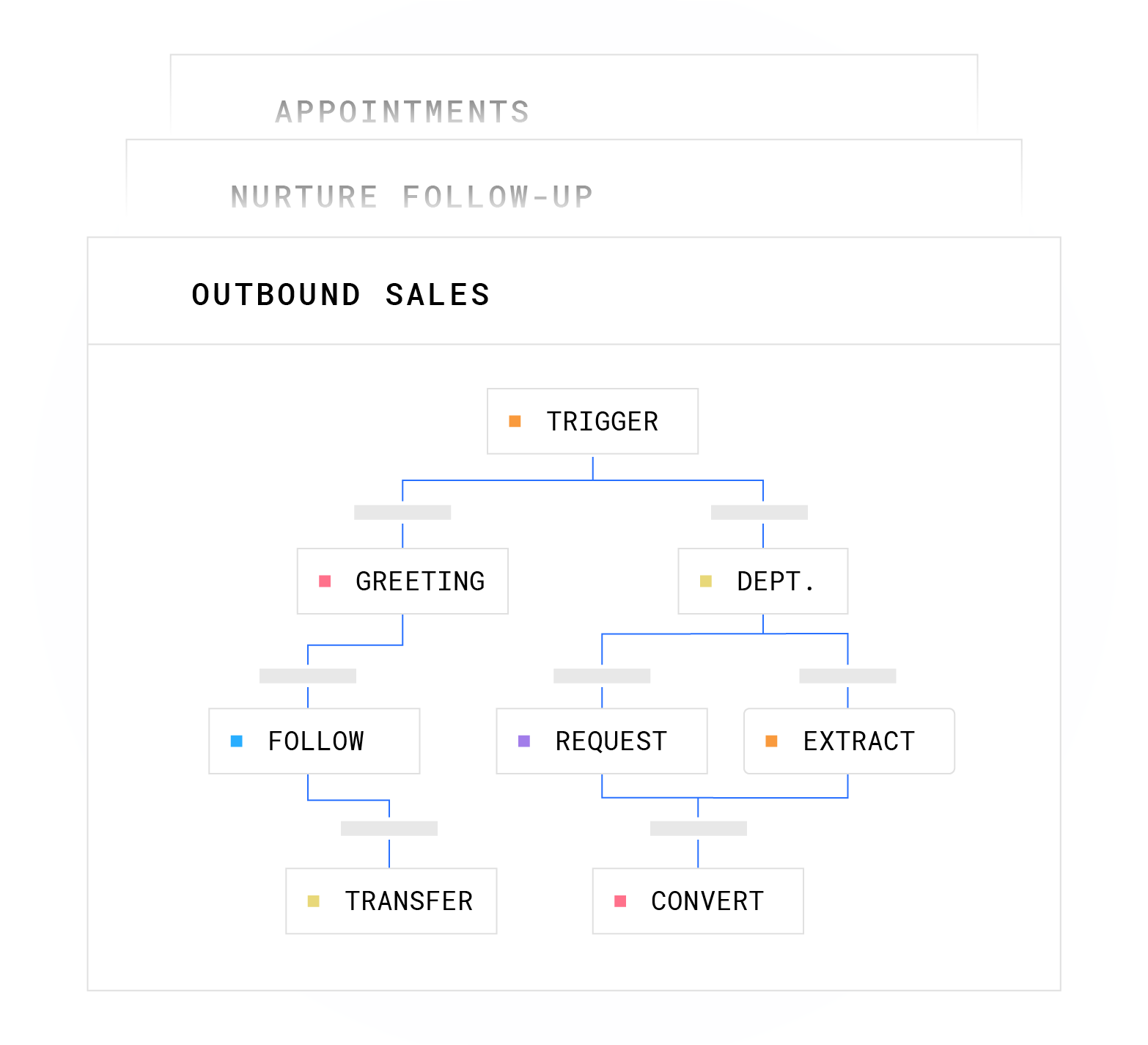
Embedding compliance in conversion optimization functions as an infrastructure decision, not a policy decision. The 5-step checklist maps each requirement to a specific workflow node: consent at form submission, DNC scrubbing at pre-dial, accessibility tagging at content delivery, claim verification at message composition, and audit export at campaign close. Each node runs in parallel with the response sequence, not after it, which preserves the response velocity that drives the conversion lift described earlier.
Operators who bolt compliance on after the fact carry $500 to $1,500 per-violation TCPA exposure on every campaign, fragmented audit trails across point-tool stacks, and offshore infrastructure risk under the FCC NPRM (CG Docket No. 26-52). Operators who build compliance into the workflow architecture from the first node protect conversion velocity and produce a defensible audit record on every contact.
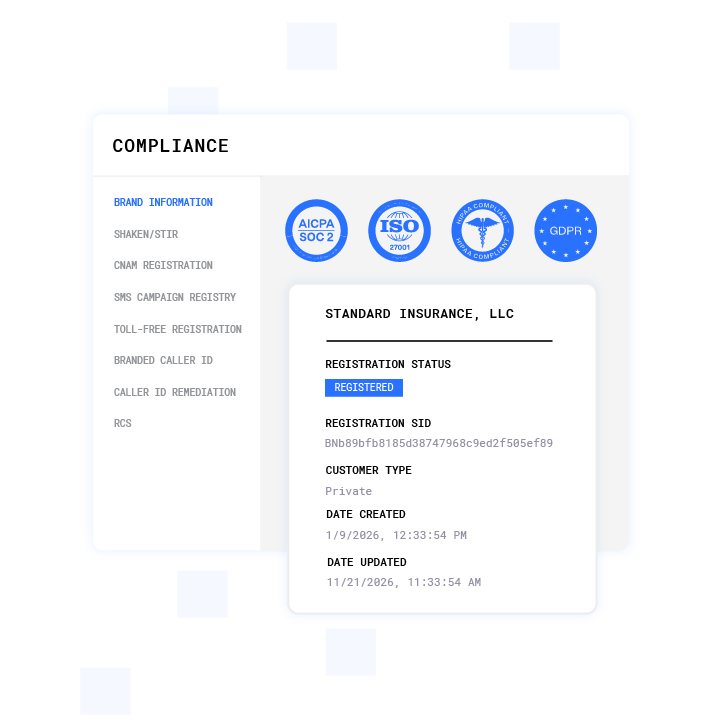
Plura AI supplies the 100% U.S. infrastructure that keeps those workflows fast and audit-ready: an FCC-licensed carrier, real-time DNC scrubbing, immutable consent logging, STIR/SHAKEN authentication, SOC 2, HIPAA, ISO certification, GDPR coverage, and one-click audit export across voice, SMS, RCS, and webchat.1 Operators remain responsible for consulting qualified counsel on their specific compliance obligations.
Identify where compliance gaps are costing you conversion velocity by mapping your workflow to the 5-step framework.
1 Plura AI maintains SOC 2, HIPAA, ISO, and GDPR posture as part of its platform infrastructure. References to compliance frameworks in this article describe Plura’s platform capabilities and do not constitute a guarantee that any customer using Plura will themselves be compliant with applicable laws or standards. Customers remain solely responsible for their own regulatory obligations, certifications, consent management, recordkeeping, and the claims they make to their own end users. Consult qualified legal counsel for guidance specific to your use case.
2 This article describes regulatory frameworks at a general level and does not constitute legal advice. Laws and regulations vary by jurisdiction, change over time, and apply differently depending on facts and circumstances. Readers should consult qualified legal counsel before making compliance decisions.
3 Performance figures, customer outcomes, and industry statistics referenced in this article are drawn from cited third-party sources or Plura customer case studies. Individual results vary based on implementation, use case, industry, audience, and execution. Past or aggregate performance is not a guarantee of future results.
4 References to third-party products, services, companies, or research are made for informational and comparative purposes only. Plura AI is not affiliated with, endorsed by, or sponsored by any third party named in this article unless explicitly stated. Trademarks and product names referenced remain the property of their respective owners.
This article is provided for informational purposes only and reflects Plura AI’s understanding at the time of publication. Product capabilities, integrations, and specifications are subject to change. For the most current information, visit plura.ai.
This article was produced with the assistance of AI tools and reviewed by Plura AI prior to publication.