
Written by: Matt Beucler, CEO, Plura AI | Last updated: August 28, 2026
Key Takeaways
- Enterprise conversational AI delivers results when the platform owns its FCC-licensed carrier stack, enforces real-time compliance before dial, and maintains stateful memory across voice and SMS channels.
- Twilio-based wrappers expose operators to FCC NPRM and state onshoring risk because they cannot issue branded caller ID or enforce DNC/TCPA compliance at origination.
- Plura AI’s Stateful Conversation Database keeps context intact across voice, SMS, RCS, and webchat, which supports under-5-second first contact and measurable talk-time gains.
- Operators that follow Plura’s five-phase rollout consistently reach 60-80% containment and the ROI targets outlined above while shifting agents to higher-value escalations.3
- See Plura AI in a live demo to review the carrier-owned stack and stateful architecture in action.
5-Phase Implementation Framework for Enterprise Conversational AI
- Audit historical voice and SMS interactions and map top intents.
- Configure the platform with real-time DNC and TCPA compliance and SHAKEN/STIR caller ID verification.
- Build workflows with tool calling and escalation paths, then pilot on one queue.
- Tune and refine based on pilot results and conversation intelligence.
- Scale to all queues with continuous tuning and audit exports.
Executive Summary and Framework
Enterprise contact centers in 2026 face a structural problem. Most conversational AI tools are Twilio-based API resellers that lose cross-channel context, cannot enforce compliance before a call leaves the network, and expose operators to FCC (Federal Communications Commission) NPRM (Notice of Proposed Rulemaking) and state onshoring liability. The result is a platform that sounds like AI but operates like a CPaaS (Communications Platform as a Service) wrapper with a chatbot on top.
Plura AI addresses this by owning its FCC-licensed audio bridging carrier. Voice originates on Plura’s domestic infrastructure, not a third-party CPaaS. Every outbound contact is checked against federal and state DNC registries in real time before dial. Consent records are timestamped and immutable. Every channel, including AI voice agents, AI SMS, RCS, and AI webchat, shares a single Stateful Conversation Database so context stays intact between touchpoints.
The five-phase rollout framework below connects each implementation stage to measurable Plura metrics such as under-5-second first contact, talk-time improvements, and the ROI targets outlined above. These metrics matter because operators that follow this structured sequence consistently outperform those that deploy AI on a single channel. The difference comes from cross-channel memory architecture and carrier-level compliance enforcement, which both require deliberate implementation planning rather than ad-hoc rollout.
See Plura’s carrier-owned stack in a live walkthrough.
Industry Landscape and Regulatory Pressure
Eighty-eight percent of contact centers use some form of AI in 2026, yet only 25% have integrated AI automation at scale. The gap between adoption and integration is where most enterprise implementations stall.
Gartner projects conversational AI will reduce contact center agent labor costs by $80 billion in 2026, and a 2025 Forrester study commissioned by PolyAI reported a three-year ROI of 391% for a composite organization.3 The economics are clear. The architectural path to reach those economics is not.
On the regulatory side, the FCC’s NPRM under CG Docket No. 26-52 proposes capping offshore customer-service calls at 30% and limiting offshore handling of sensitive consumer data. The FCC’s February 2024 declaratory ruling confirmed that AI-generated voices count as an “artificial or prerecorded voice” under the TCPA, so AI voice calls fall under existing federal robocall rules.2 Operators evaluating conversational AI platforms in 2026 should consult qualified counsel to understand how these frameworks apply to their specific deployment.2
State laws in New York, New Jersey, Connecticut, Missouri, and Florida introduce additional constraints on offshore handling of medical, financial, and consumer data. Platforms with foreign infrastructure dependencies carry compliance exposure that carrier-owned, 100% U.S.-infrastructure solutions do not. Given this landscape, the architectural decisions behind your AI platform directly influence your compliance posture and offshore exposure.
Carrier Ownership vs. Twilio Wrappers
The central architectural decision in any enterprise conversational AI deployment is whether the platform owns its carrier stack or rents it. Most AI voice and SMS tools on the market today are built as wrappers on top of Twilio or another CPaaS. Building a production-ready AI voice agent on Twilio APIs typically takes 6 to 12 months and costs $300,000 to $500,000 or more in first-year engineering and infrastructure, with ongoing maintenance requiring 2 to 3 full-time engineers.
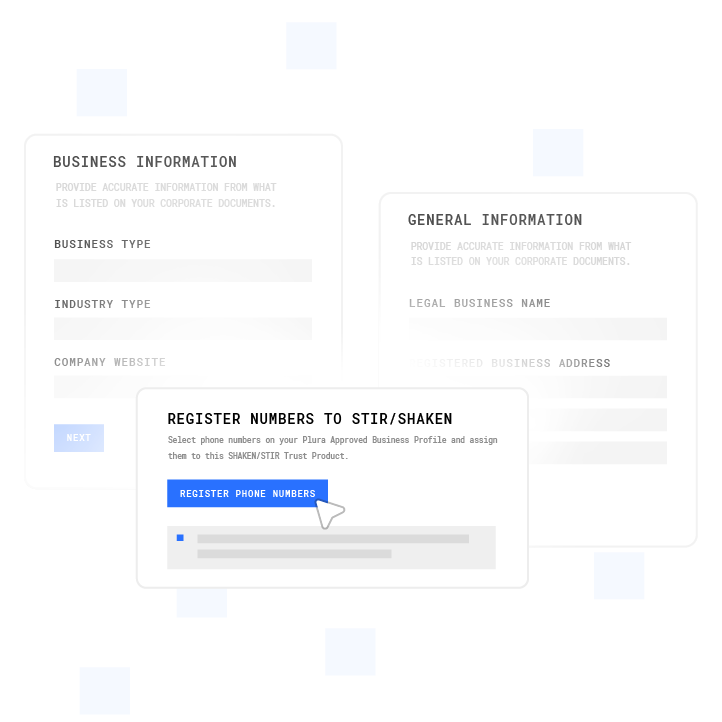
Carrier-owned platforms like Plura issue branded caller ID at the carrier level, support compliance enforcement before the call leaves the network, and authenticate every outbound call through SHAKEN/STIR without relying on a third-party reseller. Synthflow, for example, depends on Twilio and operates as a software layer without a carrier license.4 In practice, operators on Twilio-based wrappers cannot issue branded caller ID under their own carrier identity and cannot enforce compliance at origination.
| Architecture | Compliance Enforcement | Cross-Channel Memory | Branded Caller ID |
|---|---|---|---|
| Carrier-owned (Plura AI): FCC-licensed audio bridging carrier, voice originates on domestic infrastructure (Plura AI vs. Synthflow) | Real-time DNC scrubbing, TCPA compliance support, and SHAKEN/STIR authentication enforced before dial, inside the platform (plura.ai/products/compliance) | Single Stateful Conversation Database shared across voice, SMS, RCS, and webchat, so context persists across channels by default (Plura AI vs. Vapi4) | Issued at the carrier level under Plura’s own FCC carrier identity, not dependent on a third-party reseller (Plura AI vs. Synthflow) |
| Twilio-based wrapper: API reseller riding on top of a third-party CPaaS, no owned carrier license (Plura AI vs. Twilio) | Compliance added after the fact, DNC scrubbing and consent logging handled by the operator outside the platform | Cross-channel context often breaks between voice and SMS, with separate products from separate vendors and separate memories | Caller ID issued through a third-party reseller, inheriting the reseller’s reputation instead of the operator’s own carrier identity |
Stateful Memory as a Core Requirement
Stateful memory is the defining architectural requirement for enterprise conversational AI in 2026. Context continuity across voice and SMS requires a shared conversation log and state that both systems read from and write to, so the lead never has to repeat information when channels switch. Platforms that run voice and SMS as separate products with separate memories cannot meet this requirement by design.
Plura’s Stateful Conversation Database keys every interaction to a customer token, such as phone number, email, or ID, and persists it across voice, AI SMS, RCS, and AI webchat. An agent that texted a lead at 9 a.m. can pick up the call at noon already knowing what was said, what was offered, and what objections were raised. Plura uses stateful AI architecture that remembers previous interactions, preferences, and outcomes across channels for more precise personalization and follow-ups.
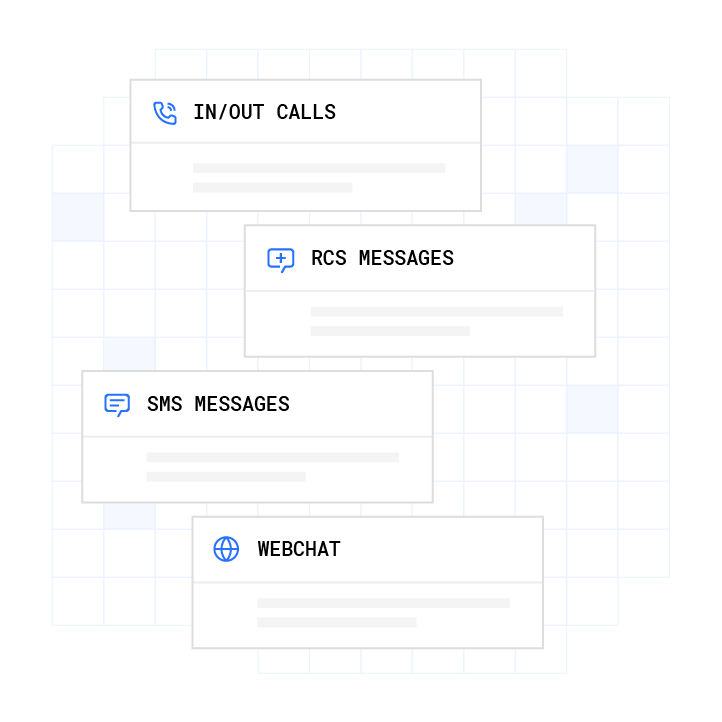
Voice-first and SMS-first strategies both appear in the market, yet only 19% of Americans answer calls from unknown numbers, which makes SMS the stronger initial engagement channel before escalating to voice AI once intent is established. Plura’s managed workflows support smart fallback logic that sequences channels to maximize engagement without simultaneous multi-channel blasting. Compliance considerations for SMS deployments, including TCPA consent requirements and 10DLC (10-digit long code) registration, should be reviewed with qualified counsel before campaign launch.
Implementation Readiness by Phase
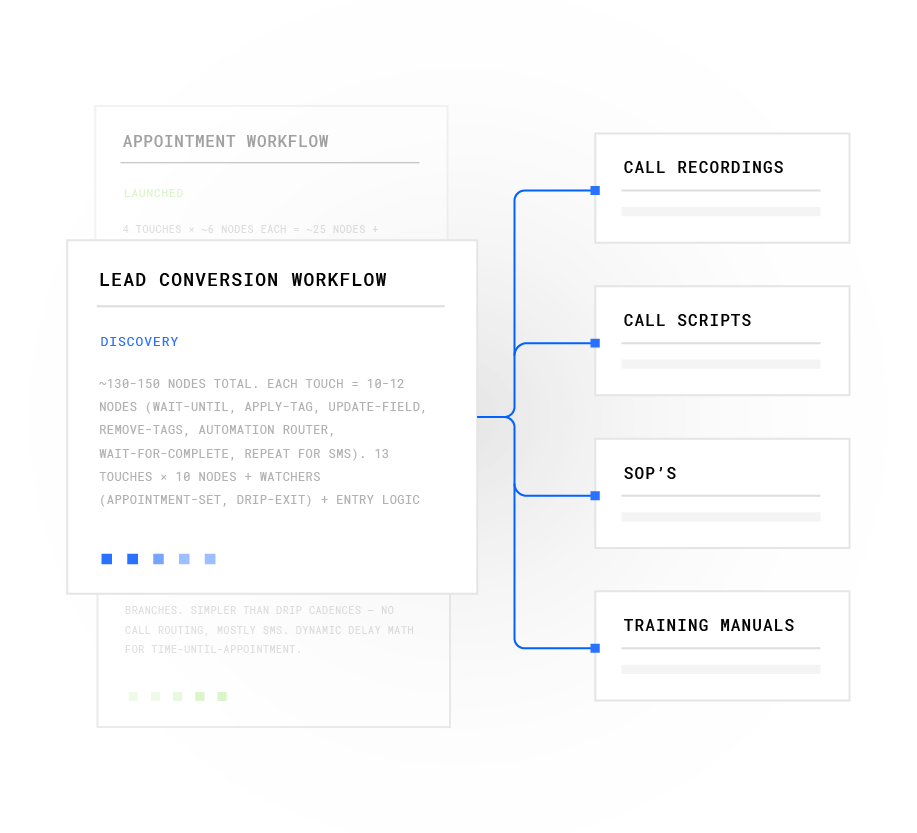
The table below maps each phase of a Plura deployment to its duration, the primary metric it targets, and the key deliverable operators can expect at the end of each phase.
| Phase | Duration | Plura Metric | Key Deliverable |
|---|---|---|---|
| 1. Audit and Intent Mapping | Weeks 1-2 | Baseline AHT (Average Handle Time) and containment rate established | Top-intent list, consent record inventory, and call-economics baseline |
| 2. Platform Configuration | Weeks 2-4 | Under-5-second first contact activated | DNC and TCPA compliance support configured, SHAKEN/STIR caller ID verification live, branded caller ID issued at carrier level |
| 3. Workflow Build and Pilot | Weeks 4-6 | Sixty to eighty percent containment is typical for mature enterprise conversational AI deployments, while pilots commonly achieve 45-65% blended rates (2026 voice AI benchmarks) | No-code workflow live on one queue, escalation paths tested, audit exports verified |
| 4. Tuning and Optimization | Weeks 6-10 | Talk-time improvements | Script refinements from conversation intelligence, objection-handling tuned, transfer accuracy confirmed |
| 5. Full-Scale Rollout | Weeks 10-12 and ongoing | 3x average ROI (90-day target) (plura.ai/calculator) | All queues live, monthly audit exports, quarterly recalibration of containment targets |
Calculate your specific ROI using Plura’s interactive calculator.
How AI Changes Agent Work
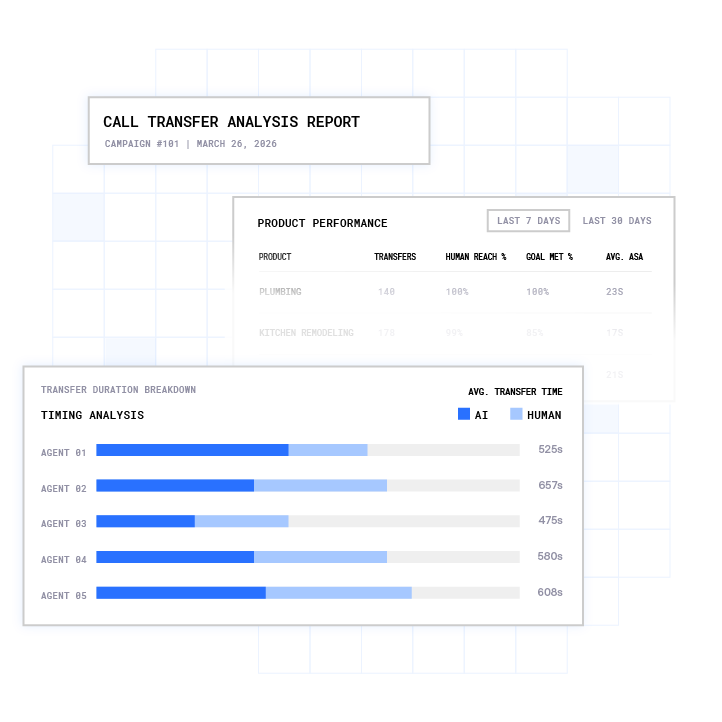
Contact Center Leaders often ask whether AI replaces agents. Data from Plura deployments shows a different pattern. Agents move from low-value queue work to higher-value interactions.
The talk-time improvements Plura supports come from removing the dead time that defines many human contact-center shifts. Contact centers allocate 60-70% of operating costs to agent labor, and a significant portion of that labor is idle time between calls, manual dialing, and repetitive Tier-1 resolution. The AInora Voice AI Adoption Report 2026 notes that 70% of routine inbound calls can be resolved by AI voice agents without human intervention. When AI handles Tier-1 volume, agents focus on escalations, complex negotiations, and relationship-sensitive interactions that require human judgment.
Only 20% of customer service leaders have reduced agent headcount due to AI, according to a Gartner October 2025 survey of 321 leaders. The more common pattern is reallocation. The same team covers more volume, handles harder cases, and operates from a conversation intelligence layer that surfaces what is working and what is not. Plura’s Unified Inbox consolidates voice transcripts, SMS threads, RCS exchanges, and webchat sessions per customer in a single screen, so agents work with full context on every escalation instead of starting from zero.
Common Pitfalls in Enterprise Deployments
Context loss between channels. The most common failure mode in enterprise conversational AI deployments is running voice and SMS as separate products. When channels do not share a stateful database, customers repeat themselves on every handoff and conversion rates drop. The practical fix is selecting a platform where cross-channel memory is architectural, not a bolt-on integration.
Compliance gaps at origination. TCPA violations carry statutory damages of $500 to $1,500 per unsolicited call or text, with class action settlements averaging $6.6 million in 2023. Platforms that add compliance after the fact, rather than supporting enforcement before the call leaves the network, leave operators exposed. Operators should consult qualified counsel on their specific TCPA and DNC obligations before deploying any outbound AI program.
Latency above the 500 ms threshold. Voice-based conversational AI systems commonly target end-to-end latency budgets of 500 to 800 ms for natural conversation, with sub-500 ms being an ambitious threshold achieved only in optimized pipelines. Plura’s carrier-owned infrastructure supports under-5-second first contact and sub-500 ms in-conversation response by running voice origination on its own FCC-licensed carrier instead of routing through a third-party CPaaS.
Watch a live escalation flow through Plura’s stateful architecture by booking a demo.
FAQ
How does conversational AI maintain state across voice and SMS channels?
Stateful cross-channel memory relies on a shared database that both the voice and SMS systems read from and write to in real time. Every qualifying detail, intent signal, and message exchanged over SMS must be available to the voice channel before it dials. The same unified record must then update after the call completes.
Plura’s Stateful Conversation Database keys every interaction to a customer token, such as phone number, email, or ID, and persists it across all four channels: voice, SMS, RCS, and webchat. When a lead texts at 9 a.m. and receives a call at noon, the AI already knows what was said, what was offered, and what objections were raised. Platforms that run voice and SMS as separate products with separate memories cannot deliver this continuity by design.
What is the difference between a carrier-owned AI platform and a Twilio-wrapper solution?
A carrier-owned platform like Plura holds its own FCC carrier license and originates voice traffic on its own domestic infrastructure. Branded caller ID is issued under the operator’s own carrier identity. DNC and TCPA compliance support run before the call leaves the network, and SHAKEN/STIR caller ID verification runs at origination.
A Twilio-wrapper solution is an API reseller that rents the carrier layer from a third party. The wrapper cannot issue branded caller ID under its own carrier identity, cannot enforce compliance at origination, and inherits the third-party carrier’s reputation rather than the operator’s own. The practical consequences appear in pickup rates, compliance posture, and FCC NPRM exposure for operators with offshore infrastructure dependencies.
How does Plura support compliance with TCPA, DNC, HIPAA, and SOC 2?
Plura’s compliance engine functions as a core layer of the platform, not a checkbox. Every outbound contact is checked against federal and state DNC registries in real time before dial. Consent records are timestamped, immutable, and audit-ready. Quiet-hours rules apply automatically through time-zone detection.
HIPAA-aligned encryption, access controls, and audit logging cover protected health information across all four channels. SOC 2 certification covers the underlying infrastructure with continuous monitoring and third-party audits.1 The compliance dashboard exports audit-ready reports in one click. Operators are responsible for their own regulatory obligations and should consult qualified counsel to confirm how these frameworks apply to their specific programs. Plura provides the infrastructure, and compliance posture downstream remains the operator’s responsibility.
What ROI should enterprises expect from a conversational AI implementation?
Plura’s default ROI calculator scenario models a 15-agent operation paying $20 per hour with standard taxes, benefits, and commissions at a 40% talk-utilization rate, which costs $60,000 per month. Replacing that team with Plura at $15 per hour, 100% talk utilization, and 6 Plura agents doing the work of 15 humans drops the monthly cost to $14,400.
Savings reach $45,600 in the first 30 days, $547,200 over 12 months, and $2,736,000 over 60 months. For higher-volume operations, the same model produces a total cost of ownership of $700,000 per year against a traditional contact-center benchmark of $7 million. Plura’s platform average aligns with the ROI benchmarks established in the framework above. Operators can run their own numbers at the ROI calculator.
How long does it take to deploy conversational AI across voice and SMS in an enterprise environment?
A focused deployment targeting two or three high-volume query types can go live in four to eight weeks. A full enterprise deployment with deep CRM integration and multi-channel support typically takes three to six months.
Plura’s onboarding sequence follows a consistent path. The team starts with a discovery audit of call economics and existing scripts. An overnight build of a dynamic conversation mockup follows. A second meeting refines the mockup, then engineering builds the production workflow. A pilot test runs on a subset of real calls, followed by full go-live. Every annual contract includes a 90-day opt-out window, so if the deployment is not delivering, operators are not locked into the annual term.
Conclusion and Next Steps
Conversational AI implementation for enterprise call centers and SMS in 2026 is not primarily a software problem. It is a carrier and architecture problem. Platforms that rent their telecom layer from a third-party CPaaS cannot enforce compliance at origination, cannot issue branded caller ID under their own carrier identity, and cannot maintain stateful context across voice and SMS by default. The result is a deployment that looks like AI but operates with the compliance exposure and context gaps of a legacy multichannel stack.
Plura resolves these gaps at the infrastructure level. Carrier-owned voice origination, real-time DNC and TCPA compliance support before dial, SHAKEN/STIR caller ID verification at origination, and a Stateful Conversation Database shared across all four channels are not features added on top of the platform. They form the platform. The five-phase rollout framework above gives Contact Center Leaders, COOs, and Compliance heads a prescriptive path from audit to full-scale deployment, with measurable Plura metrics at each stage, including under-5-second first contact and talk-time improvements that support the ROI benchmarks established in the framework.
Run your numbers through Plura’s calculator to see your projected savings.
1 Plura AI maintains SOC 2, HIPAA, ISO, and GDPR posture as part of its platform infrastructure. References to compliance frameworks in this article describe Plura’s platform capabilities and do not constitute a guarantee that any customer using Plura will themselves be compliant with applicable laws or standards. Customers remain solely responsible for their own regulatory obligations, certifications, consent management, recordkeeping, and the claims they make to their own end users. Consult qualified legal counsel for guidance specific to your use case.
2 This article describes regulatory frameworks at a general level and does not constitute legal advice. Laws and regulations vary by jurisdiction, change over time, and apply differently depending on facts and circumstances. Readers should consult qualified legal counsel before making compliance decisions.
3 Performance figures, customer outcomes, and industry statistics referenced in this article are drawn from cited third-party sources or Plura customer case studies. Individual results vary based on implementation, use case, industry, audience, and execution. Past or aggregate performance is not a guarantee of future results.
4 References to third-party products, services, companies, or research are made for informational and comparative purposes only. Plura AI is not affiliated with, endorsed by, or sponsored by any third party named in this article unless explicitly stated. Trademarks and product names referenced remain the property of their respective owners.
This article is provided for informational purposes only and reflects Plura AI’s understanding at the time of publication. Product capabilities, integrations, and specifications are subject to change. For the most current information, visit plura.ai.
This article was produced with the assistance of AI tools and reviewed by Plura AI prior to publication.