
Written by: Matt Beucler, CEO, Plura AI
Key Takeaways
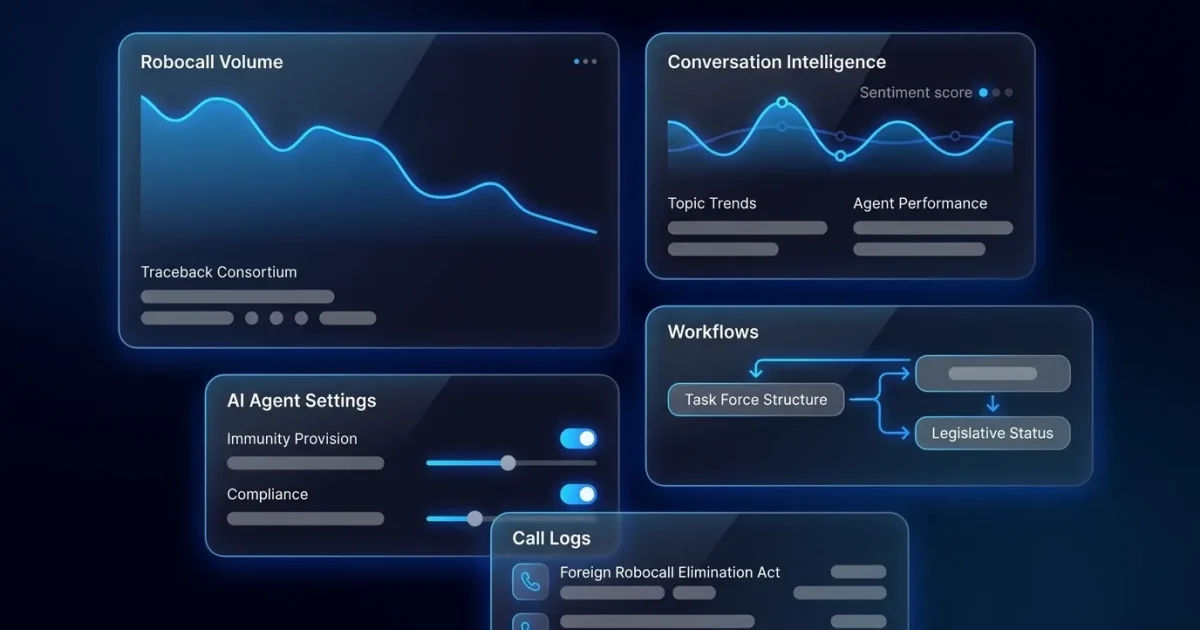
- The Foreign Robocall Elimination Act traceback consortium is the FCC-designated private entity that coordinates provider-by-provider tracing of suspected illegal robocalls under the TRACED Act.2
- S.2666 extends the FCC’s renewal cadence for the consortium from annually to once every three years, which increases operational stability and reduces administrative churn.
- The bill adds statutory immunity that protects the consortium when it receives, shares, or publishes covered traceback information such as call detail records and provider identities.
- S.2666 also creates an interagency task force on unlawful robocalls that includes a representative from the traceback consortium, which connects day-to-day operations to enforcement policy discussions.
- High-volume communicators should confirm that their voice service provider participates in traceback and responds within 24 hours.
How S.2666 Changes the Traceback Consortium Framework
S.2666 makes three structural changes to the traceback consortium framework established under the TRACED Act.
- Renewal term extended from one year to three years. Section 3 of S.2666 amends §13(d)(2) of the Pallone-Thune TRACED Act by striking “annually” and inserting “once every 3 years,” which changes the FCC’s notice requirement from an annual to a triennial obligation.
- Immunity scope for the consortium. Section 4(a) adds a new paragraph (3) to §13(d) that states no cause of action shall lie or be maintained in any court against the registered consortium for receiving, sharing, or publishing covered information or information derived from covered information.
- Interagency task force composition. Section 2 requires the FCC, after consultation with the FTC and the Attorney General, to establish an interagency task force on unlawful robocalls within 270 days of enactment, with seven private-sector representatives including one from the consortium.
How the Foreign Robocall Elimination Act Traceback Consortium Operates
The Foreign Robocall Elimination Act traceback consortium is the single private entity designated by the FCC to conduct private-led efforts to trace back the origin of suspected unlawful robocalls, as required by §13(d) of the Pallone-Thune TRACED Act. The current registered consortium is the Industry Traceback Group (ITG), operated by USTelecom, The Broadband Association, and first selected by the FCC on July 27, 2020.3
The provider-by-provider traceback process follows a consistent sequence.
- A provider identifies illegal robocall traffic through consumer complaints, provider reports, law-enforcement referrals, or internal analytics.
- The provider initiates a traceback request through the consortium’s Secure Traceback Portal.
- The consortium coordinates with upstream providers to trace the call path hop by hop. Each provider identifies the upstream provider from whom it received the call and enters that information into the portal.
- Findings are shared with the FCC and law enforcement. The originating provider must then investigate whether its customer violated the law.
The ITG consists of hundreds of telecommunications service providers, including AT&T, Verizon, T-Mobile, Comcast, and Cox.3 All voice service providers must cooperate with ITG traceback requests within 24 hours under FCC rules (47 C.F.R. §64.6305), with 47 C.F.R. §64.1200(n)(1) governing who may initiate a traceback request.2
See how Plura AI supports traceback readiness at call-center scale.
With that foundation in place, the most immediate structural change in S.2666 involves the consortium’s renewal term.
The Renewal-Term Change From One Year To Three Years
Section 3 of S.2666 amends §13(d)(2) of the Pallone-Thune TRACED Act by striking “annually” and inserting “once every 3 years.” Under current law, the FCC must annually seek applications from industry groups to serve as the designated traceback consortium. S.2666 shifts that cadence to once every three years.
The practical effect for the Foreign Robocall Elimination Act traceback consortium is greater operational stability. A three-year renewal cycle reduces the administrative churn of annual re-designation and gives the consortium a longer planning horizon for traceback infrastructure, provider onboarding, and enforcement coordination. For providers that participate in traceback, the longer window reduces uncertainty about whether the consortium’s designation will be renewed in any given year.
The change also affects how often the FCC can revisit the designation. Under a one-year cycle, the Commission had an annual opportunity to reconsider the consortium’s status. Under a three-year cycle, that opportunity arises less frequently, which may reduce regulatory uncertainty while also reducing the frequency of formal review. Readers should consult qualified counsel on how this cadence change affects their specific vendor relationships and compliance planning.
The Immunity Provision Under S.2666
Section 4(a) of S.2666 adds a new paragraph (3) to §13(d) of the Pallone-Thune TRACED Act, titled “Immunity for receiving, sharing, and publishing trace back information.” Under new §13(d)(3)(B), no cause of action shall lie or be maintained in any court against the registered consortium for receiving, sharing, or publishing covered information or information derived from covered information.
“Covered information” includes three categories.
- Call detail records of suspected fraudulent, abusive, or unlawful robocalls and illegally spoofed calls
- The names and identifying information of voice service providers that originated, carried, routed, and transmitted those calls
- Information about the entities that made the calls, including contact information provided to the originating voice service provider
The Congressional Budget Office’s May 26, 2026 cost estimate for S.2666 states that the immunity provision would impose a private-sector mandate by limiting a right of action of a private entity that could otherwise seek redress or recover damages for the sharing or publishing of traceback information.3 CBO stated it had no basis to estimate the number of lawsuits or related awards the bill would preclude.
Operationally, the immunity provision shields the Foreign Robocall Elimination Act traceback consortium from litigation risk when it receives, shares, or publishes traceback information within the scope of covered information. Readers should consult qualified counsel on their own obligations, as this brief describes the statutory framework without interpreting its application.
The Interagency Task Force Structure
Section 2 of S.2666 requires the FCC, after consultation with the FTC and the Attorney General, to establish an interagency task force on unlawful robocalls not later than 270 days after enactment. The task force must include a representative of each appropriate federal agency plus seven private-sector representatives:
- Three with expertise in combating unlawful robocalls, such as voice service providers, analytics providers, technologists, and technology experts
- One from the consortium described in §13(d) of the TRACED Act
- One from a marketing business that communicates with consumers by telephone
- One from a business or nonprofit that communicates with consumers for non-marketing purposes
- One from a customer advocacy organization with relevant robocall-combating experience
The task force must submit a report to Congress not later than 360 days after establishment and terminates 90 days after submitting that report. The report must study, among other matters, the volume of foreign-origin unlawful robocalls versus domestic ones, the foreign countries serving as top points of departure, and whether requiring periodic public disclosure of the consortium’s traceback results would affect the integrity and effectiveness of the traceback process.
The consortium representative on the task force gives the Foreign Robocall Elimination Act traceback consortium a formal role in interagency coordination, which connects traceback operations directly to enforcement policy development.
Legislative Status Of S.2666
S.2666, the Foreign Robocall Elimination Act, was introduced by Sen. Ted Budd (R-NC) on August 1, 2025 and referred to the Senate Committee on Commerce, Science, and Transportation. The committee reported the bill on June 1, 2026, by Senator Cruz with an amendment in the nature of a substitute, accompanied by written report No. 119-122.
The Senate passed S.2666 with an amendment by unanimous consent on August 3, 2026, according to the official Senate floor activity record for that date. Senator Peter Welch’s office announced the passage in a press release dated August 5, 2026. As of August 10, 2026, S.2666 was held at the desk in the House of Representatives, awaiting House action.
Comparison Table: Pre-S.2666 Vs. S.2666 Regime For The Foreign Robocall Elimination Act Traceback Consortium
The table below summarizes the three structural changes S.2666 makes to the traceback consortium framework, comparing the current regime with the proposed regime.
| Attribute | Pre-S.2666 Regime | S.2666 Regime |
|---|---|---|
| Renewal term | FCC seeks applications annually (§13(d)(2) of the TRACED Act, pre-amendment) | FCC seeks applications once every 3 years (S.2666 §3) |
| Immunity scope | No statutory immunity for receiving, sharing, or publishing traceback information | Statutory bar on causes of action against the registered consortium for receiving, sharing, or publishing covered information (S.2666 §4(a)) |
| Task force framework | No interagency task force on unlawful robocalls | Interagency task force that includes federal agencies and seven private-sector representatives, including one from the consortium (CBO May 26, 2026 estimate) |
What This Means Operationally For High-Volume Communicators
For high-volume outbound operators, the Foreign Robocall Elimination Act traceback consortium’s renewal-term change and immunity provision shape vendor contracts and traceback participation in concrete ways.
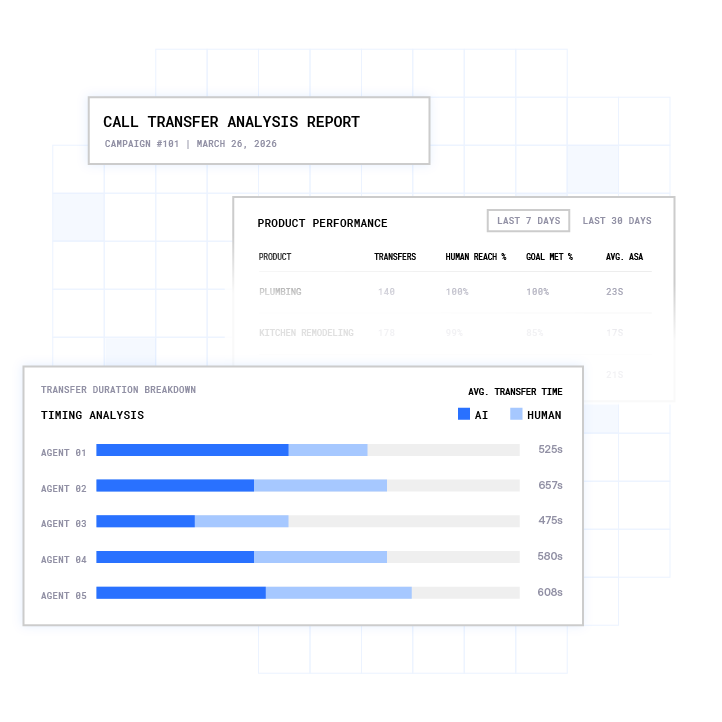
Key items to review in vendor contracts include the following.
- Confirm whether your voice service provider participates in the ITG’s traceback process and can respond to traceback requests within 24 hours, as the FCC’s July 2026 Further Notice of Proposed Rulemaking proposes adding a certification to Robocall Mitigation Database filings requiring providers to certify they will respond to traceback requests within 24 hours and cooperate with traceback investigations.2 This forms the baseline expectation for providers that handle high-volume traffic.
- Ask whether your provider owns its carrier infrastructure or resells another carrier’s. Ownership matters because providers that own their infrastructure can participate directly in traceback and issue branded caller ID at the carrier level, rather than depending on a third party.
- Review whether your provider’s Robocall Mitigation Database filing includes a commitment to respond to traceback requests and cooperate with investigations. A filing that omits this commitment may signal a provider that does not prioritize traceback cooperation.
Traceback participation also requires attention.
- The FCC’s July 2026 Further Notice of Proposed Rulemaking asks whether all providers should be required to participate in the ITG’s automated traceback response process as a condition of RMD listing.
- Providers that fail to cooperate with traceback requests risk removal from the Robocall Mitigation Database, after which other providers must refuse to accept their traffic.
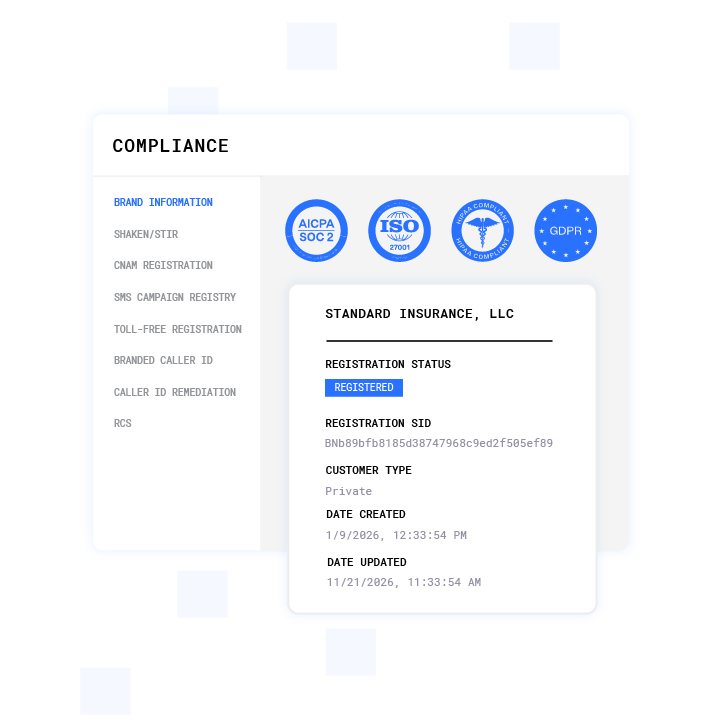
Plura AI is an FCC-licensed audio bridging carrier. Its infrastructure is 100% U.S.-based, and it issues branded caller ID at the carrier level. Every outbound call is authenticated with STIR/SHAKEN, and real-time DNC scrubbing and TCPA-litigator screening are enforced inside the platform before dial.1 Plura’s carrier infrastructure supports traceback readiness for high-volume communicators. This brief does not state or imply that using Plura makes any customer compliant with any standard, and readers should consult qualified counsel on their legal obligations.
Walk through how Plura’s carrier-level infrastructure fits your traceback and compliance workflow.
Frequently Asked Questions
How Often Must the FCC Renew the Traceback Consortium?
Under current law, the FCC must annually seek applications from industry groups to serve as the designated traceback consortium. S.2666 changes that cadence to once every three years by striking “annually” and inserting “once every 3 years” in §13(d)(2) of the Pallone-Thune TRACED Act. As noted earlier, this creates a longer planning horizon for the consortium and reduces annual administrative uncertainty for participating providers.
What Legal Immunity Does the Traceback Consortium Receive Under S.2666?
S.2666 adds §13(d)(3) to the TRACED Act, which provides that no cause of action shall lie or be maintained in any court against the registered consortium for receiving, sharing, or publishing covered information or information derived from covered information. “Covered information” includes call detail records of suspected illegal robocalls, identifying information of providers in the call path, and information about the entities that initiated the calls. The Congressional Budget Office’s May 26, 2026 estimate states that this limits a private entity’s right of action to seek redress or recover damages for the sharing or publishing of traceback information.
Who Sits on the Foreign Robocall Elimination Act Task Force?
The task force includes a representative of each appropriate federal agency plus seven private-sector representatives: three with robocall-combating expertise, one from the §13(d) consortium, one from a marketing business that calls consumers, one from a non-marketing business or nonprofit that calls consumers, and one from a customer advocacy organization. The seven private-sector members are jointly appointed by the FCC Chairman, FTC Chairman, and Attorney General.
What Is the Difference Between the ITG and the S.2666 Consortium?
The Industry Traceback Group (ITG) is the current FCC-designated traceback consortium, operated by USTelecom and first selected in July 2020. The “S.2666 consortium” refers to the same §13(d) entity. S.2666 amends the statutory framework governing the consortium’s renewal cadence and adds immunity protections, but does not create a new entity or replace the ITG.
How Does the Foreign Robocall Elimination Act Traceback Consortium Affect High-Volume Callers?
High-volume callers should confirm that their voice service providers participate in traceback and can respond to requests within 24 hours. The FCC’s July 2026 Further Notice of Proposed Rulemaking proposes adding a certification to Robocall Mitigation Database filings that would require providers to certify they will respond to traceback requests within 24 hours and cooperate with traceback investigations. Providers that fail to cooperate with traceback requests risk removal from the RMD, which would prevent other providers from accepting their traffic. Readers should consult qualified counsel on their specific compliance obligations under the amended framework.
Conclusion And Next Steps For Contact Centers And Brands
The Foreign Robocall Elimination Act traceback consortium functions as the operational backbone of U.S. robocall enforcement. S.2666 extends the renewal term to three years, adds immunity for receiving, sharing, and publishing traceback information, and creates an interagency task force that includes a consortium representative. The bill passed the Senate by unanimous consent on August 3, 2026, and awaits House action as of August 10, 2026.
For high-volume communicators, practical next steps include reviewing vendor contracts for traceback participation commitments, confirming whether your provider owns its carrier infrastructure, and consulting qualified counsel on compliance obligations under the amended framework. Plura is an FCC-licensed carrier with 100% U.S. infrastructure and carrier-level traceback readiness built into the platform.
Compare plans and rates side by side. Run your numbers through Plura’s ROI calculator to check your cost savings in real time. Or schedule a live demo to see how carrier-grade infrastructure supports traceback readiness at scale.
1 Plura AI maintains SOC 2, HIPAA, ISO, and GDPR posture as part of its platform infrastructure. References to compliance frameworks in this article describe Plura’s platform capabilities and do not constitute a guarantee that any customer using Plura will themselves be compliant with applicable laws or standards. Customers remain solely responsible for their own regulatory obligations, certifications, consent management, recordkeeping, and the claims they make to their own end users. Consult qualified legal counsel for guidance specific to your use case.
2 This article describes regulatory frameworks at a general level and does not constitute legal advice. Laws and regulations vary by jurisdiction, change over time, and apply differently depending on facts and circumstances. Readers should consult qualified legal counsel before making compliance decisions.
3 References to third-party products, services, companies, or research are made for informational and comparative purposes only. Plura AI is not affiliated with, endorsed by, or sponsored by any third party named in this article unless explicitly stated. Trademarks and product names referenced remain the property of their respective owners.
This article is provided for informational purposes only and reflects Plura AI’s understanding at the time of publication. Product capabilities, integrations, and specifications are subject to change. For the most current information, visit plura.ai.
This article was produced with the assistance of AI tools and reviewed by Plura AI prior to publication.