

Written by: Matt Beucler, CEO, Plura AI | Last updated: August 27, 2026
Updated August 2026
Key Takeaways
- Define your agent floor first. Predictive dialing is statistically unreliable below 10 concurrent agents and can push abandonment above the FCC’s 3% cap.
- Run a 500–1,000-lead pilot that tracks abandonment under 3%, right-party contact rate above 40%, and dials per agent-hour above 80 before committing to any vendor.
- Audit every cost layer. Per-minute fees, AMD charges, seat minimums, and porting fees can add 20–40% or more to advertised seat pricing.
- Verify real-time CRM sync, DNC scrubbing, and consent propagation. Any lag creates compounding compliance exposure across campaigns.
- Plura AI is the only platform that owns its FCC-licensed carrier, supports compliance at the network level, and shares stateful cross-channel memory. Book a live demo to see the full 7-step protocol in action.
Dialer Selection Starts With Volume Math
Define your volume math before you evaluate any vendor. The pacing algorithm inside a predictive dialer depends on statistical modeling of agent availability, average handle time, and answer rate. Below a certain agent floor, that model produces unreliable predictions and abandonment rates can rise above the FCC’s 3% cap under 47 CFR 64.1200(a)(7).
Calculate three numbers before any vendor demo:
- Required concurrent agents on the floor during peak hours
- Expected dials per hour at your target list segment and answer rate
- Target talk-time ratio (total talk time divided by total logged-in time)
If those numbers do not support predictive pacing, a progressive or AI predictive dialer is the operationally correct choice. The seven-step protocol below walks you through that volume math first, then guides you through testing every other dimension that determines whether a dialer will perform and support compliance at your scale. Step 1 establishes the foundational agent-floor requirements.
Step 1: Set Your Agent Floor and Volume Thresholds
Predictive dialing generally requires a minimum number of concurrent agents for the pacing algorithm to produce reliable predictions and stay within the FCC’s 3% abandonment cap. Below that threshold, statistical variance can push abandonment higher even with conservative pacing. Five seats is typically insufficient for meaningful prediction.
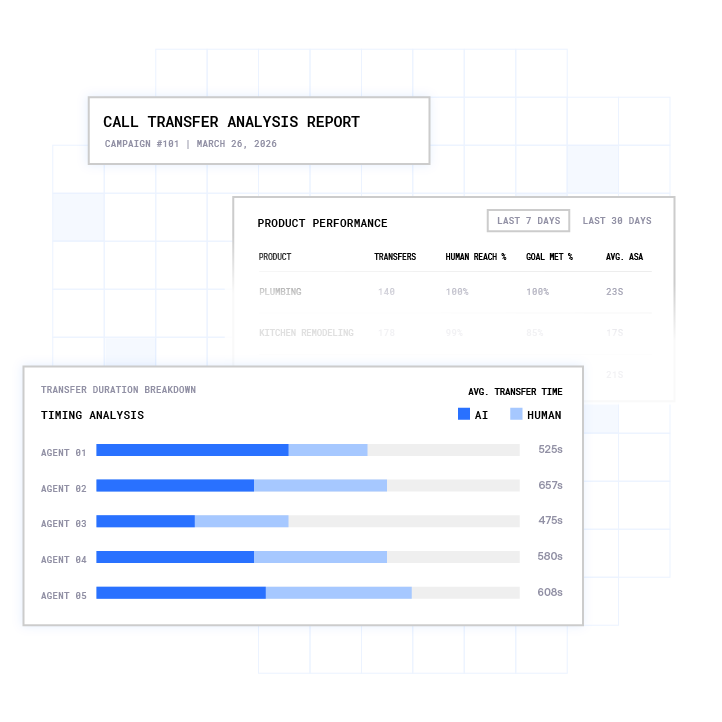
Use these benchmarks to size your team before selecting a dialer mode:
- 5 agents: Predictive pacing is statistically unreliable. A power dialer at a 20–25% answer rate can generate connected conversations per agent per 8-hour shift without added abandonment exposure.
- 10 agents: Borderline. Predictive mode is possible only with conservative pacing ratios and real-time abandonment monitoring every 5–10 minutes.
- 15 agents: Predictive mode can deliver throughput advantages with improved talk-time ratios.
- 25+ agents: Optimized predictive dialing can achieve 80–110 connected calls per hour and agent talk-time ratios of 40–55% (good) or above 55% (excellent) at scales including 25+ agents.3
The causal chain is straightforward. Dials per hour multiplied by contact rate equals contacts per hour. Contacts per hour multiplied by conversion rate equals leads per hour. If your agent floor cannot sustain the pacing model, the math breaks before you ever reach the conversion step.
Step 2: Run a 500–1,000 Lead Pilot on a Real List
A pilot campaign on a validated, DNC-scrubbed list segment that matches your real campaign data provides a reliable basis for predictive dialer evaluation. Capture these metrics during the test:
- Abandon rate: Set a hard alert at 2% and a working ceiling at 2.8–3%. Any result above 2% during a pilot signals a pacing or agent-floor problem before it becomes a regulatory exposure.
- Right-party contact rate: Target 40% or higher on validated lists. Below that threshold, list quality is the bottleneck, not the dialer.
- Dials per agent-hour: Benchmark against 80 or more in predictive mode. Results below 60 indicate misconfigured pacing or agent-state integration gaps.
- Agent talk-time percentage: Target at least 40% of the shift in predictive mode.
- STIR/SHAKEN attestation rate: Higher full A-level attestation is desirable. Low attestation can quietly depress answer rates because major carriers downgrade or block calls lacking full attestation.
Document every metric in raw call detail records (CDRs). These records support the compliance audit in Step 5.
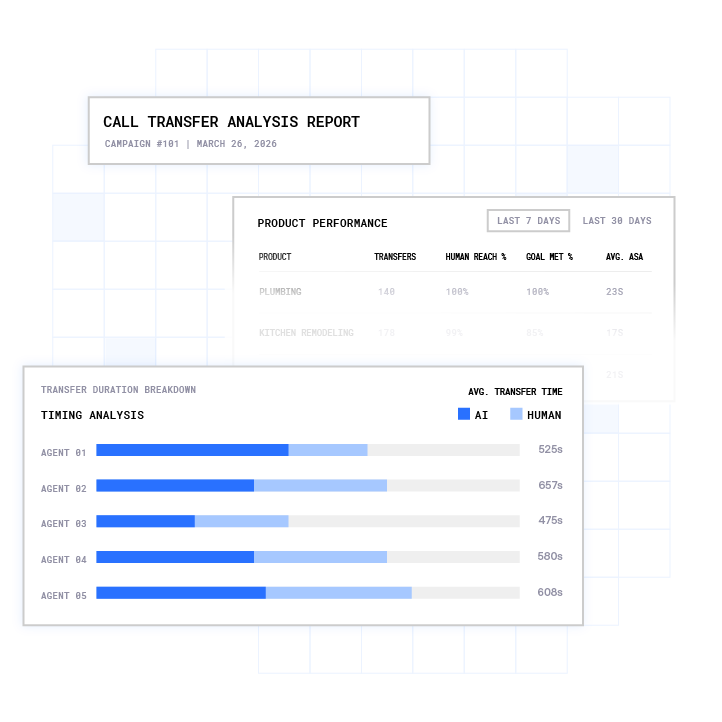
Run your numbers through Plura’s calculator to check your ROI in real time.
Step 3: Expose Hidden Telecom and Platform Costs
Advertised seat prices rarely reflect total cost. Per-minute rates, phone-number rentals, and local-presence add-ons often add 20–40% or more on top of the advertised seat price for CRM dialers, sometimes doubling the monthly bill. Audit every cost layer before signing:
- Per-minute telecom fees: Per-minute charges on most hosted platforms can add substantially to overall costs depending on volume. Vendors that bundle minutes into seat pricing make the per-minute cost invisible and non-negotiable.
- AMD (Answering Machine Detection) fees: Some vendors bill AMD detection as a separate per-call charge. Confirm whether AMD is included or metered.
- Seat minimums: Predictive dialers typically require 8+ agents to operate effectively and remain compliant, while parallel dialers have no documented seat minimums.
- Contract length and renewal terms: Some enterprise dialers require multi-year contracts that auto-renew and may include price increases upon renewal.
- Number porting fees: DIDs provisioned under a vendor’s carrier account create switching costs. Numbers may not move on your preferred timeline when leaving the platform.
- Compliance add-ons: In-house compliance infrastructure for TCPA and DNC requirements can add significantly to ongoing costs for real-time scrubbing, state-level calling restrictions, consent documentation, and call recording retention. Vendors that bolt compliance on as an add-on typically pass that cost to you.
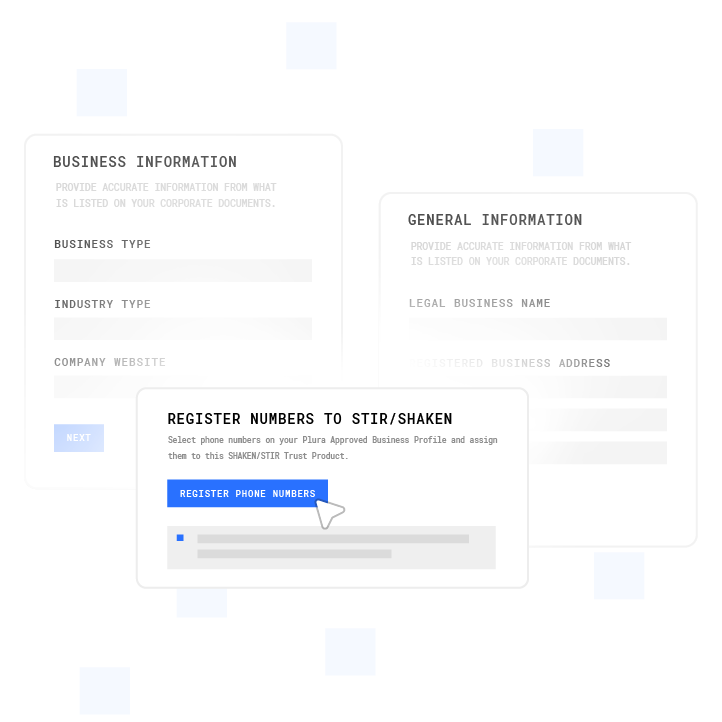
Plura’s AI Predictive Dialer runs on Plura’s own FCC-licensed carrier. Compliance support, branded caller ID, and STIR/SHAKEN caller ID verification function as platform-level capabilities, not separate line items.
Step 4: Confirm CRM Sync, Suppression, and Consent Flow
A dialer that does not sync dispositions in real time creates list management errors that compound into compliance exposure. Use this checklist when evaluating CRM integration:
- Real-time disposition sync: Does a completed call update the CRM record before the next dial attempt on that number?
- DNC opt-out propagation: Does a verbal or keypress opt-out suppress the number across all active campaigns within the platform immediately?
- Consent record handoff: Does the dialer write timestamped consent records to the CRM, or does consent live only inside the dialer?
- List refresh cadence: Can the dialer pull updated suppression lists from the CRM on a schedule shorter than 31 days?
- Reassigned Numbers Database (RND) check: Does the platform query the FCC’s Reassigned Numbers Database before dialing to reduce reassigned-number exposure?
Plura integrates with HubSpot, Salesforce, Zoho, and more than 50 other tools. Every disposition writes back to the stateful conversation database shared across voice, SMS, RCS, and AI webchat, so suppression and consent records stay consistent across every channel.
Predictive Dialer TCPA Compliance Evaluation Table
Use this table to score any vendor’s compliance support before signing a contract. Consult qualified legal counsel regarding your specific obligations under TCPA, the FTC Telemarketing Sales Rule, and applicable state laws.
| Requirement | Regulatory Reference | Plura AI Enforcement | Typical Vendor Approach |
|---|---|---|---|
| Abandonment rate under 3% per campaign per 30-day period | 47 CFR 64.1200(a)(7) | Real-time pacing controls with per-campaign measurement, hard cap configurable at 2.5% | Platform-level average, per-campaign enforcement varies by configuration |
| Real-time DNC scrubbing (federal and state registries) | 47 CFR 64.1200; FTC TSR | Every outbound contact checked before dial, internal suppression lists enforced at the carrier level | Scheduled batch scrub, suppression applied at campaign launch, not per-dial |
| TCPA-litigator screening | 47 U.S.C. § 227 | Real-time litigator list filtering applied before every outbound contact | Not included, requires third-party add-on |
| SHAKEN/STIR caller ID verification | FCC STIR/SHAKEN rules under the TRACED Act | A-level attestation on every outbound call via Plura’s own FCC-licensed carrier | Attestation level depends on upstream CPaaS, often B or C level for resellers |
| Quiet-hours enforcement (8 a.m.–9 p.m. local time; state overrides) | 47 CFR 64.1200(a)(10); state mini-TCPA laws | Automatic time-zone detection, state-specific overrides pre-loaded (e.g., Oklahoma 8 p.m. cutoff, Florida 8 p.m. cutoff) | Federal window only, state overrides require manual configuration |
| Consent ledger (timestamped, immutable, audit-ready) | 47 U.S.C. § 227; 47 CFR 64.1200(a)(2) | Timestamped consent records written per contact, four-year retention, one-click audit export | Consent stored in CRM, audit trail depends on CRM configuration |
| Audit export (CDRs, AMD dispositions, abandonment rate calculations) | 28 U.S.C. § 1658 (four-year statute of limitations); FTC TSR 24-month record requirement | One-click export from compliance dashboard, raw CDRs available | Export available but requires IT support, format varies by vendor |
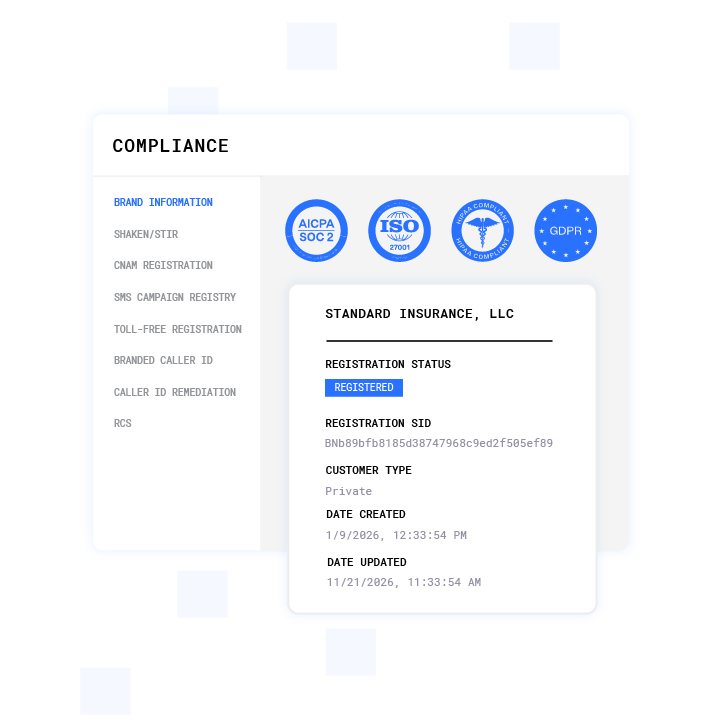
| SOC 2, HIPAA, ISO certification, GDPR | AICPA Trust Services Criteria; 45 CFR Parts 160, 162, 164; Regulation (EU) 2016/679 | SOC 2 Type II certified, HIPAA-aligned, ISO certified, GDPR coverage for European operations1 | Varies, many vendors carry SOC 2 only, HIPAA alignment often requires enterprise tier |
Step 5: Score Each Vendor’s Compliance Support
Score each vendor on the checklist above using a simple rubric. Assign 2 points for platform-level enforcement with no manual configuration required, 1 point for configurable enforcement that requires setup, and 0 points for features that are not available or require a third-party add-on.
A vendor scoring below 12 out of 16 carries meaningful compliance gaps. Pay particular attention to three rows:
- STIR/SHAKEN attestation level: In 2025, 85% of all voice traffic between Tier-1 carriers was signed and verified with STIR/SHAKEN, with 93% at A-level attestation.4 Vendors routing through a third-party CPaaS often deliver B or C-level attestation, which carriers use to downgrade or block calls.
- Per-campaign abandonment measurement: The 3% cap applies separately to each campaign, not across the entire dialer or by pooling multiple campaigns. A vendor that measures abandonment as a platform-wide average is not enforcing the rule at the campaign level.
- Revocation processing: Effective April 11, 2025, FCC revocation rules describe honoring consumer opt-outs made through any reasonable means. Confirm the vendor’s opt-out propagation speed across all active campaigns.
TCPA violations carry statutory damages of $500 to $1,500 per unsolicited call or text, with class action settlements averaging $6.6M in 2023.2 Compliance support should be evaluated before go-live, not after.
Predictive vs. Progressive Dialers for Smaller Teams
The choice between predictive and progressive dialing depends primarily on agent count and campaign type, not vendor preference. A progressive dialer paces calls according to real-time team-wide agent availability rather than individual rep readiness, while still guaranteeing zero abandoned calls and full TCPA coverage by design.
| Metric | Predictive Dialer | Progressive Dialer |
|---|---|---|
| Minimum agent floor | 8+ agents to operate effectively and remain compliant | 2+ agents, no statistical floor |
| Abandonment risk | Present, requires real-time monitoring and per-campaign measurement | Zero, one call dialed per available agent |
| Dials per agent-hour | 80–110 connected calls at larger scales | 50–90 typical |
| Talk-time ratio | 40–55% (good) or above 55% (excellent) | 40–50 minutes per hour |
| TCPA compliance complexity | High, requires per-campaign abandonment tracking, AMD accuracy, and real-time agent-state sync | Lower, no abandonment exposure by design |
| Best fit | High-volume consumer outreach at sufficient scale | Teams under 10 agents, B2B outreach, high-value deals |
When deal size is high, preview or power dialers are often preferable even at scale. For lower-value high-volume campaigns, predictive dialing can be the economically superior choice.
Step 6: Watch Pacing and Red Flags During the Pilot
During your 500–1,000 lead test, monitor these red-flag signals regardless of team size:
- Abandonment rate above 2% in the first hour: The pacing ratio is too aggressive for your current agent availability. Reduce the dial ratio immediately and recalibrate.
- Agent occupancy above 90% sustained for more than 30 minutes: Sustained occupancy above 90% correlates with burnout and turnover. Target 80–90% for outbound predictive dialing.
- Right-party contact rate below 25%: List quality or STIR/SHAKEN attestation is the bottleneck, not pacing. Audit the list and check attestation rates before adjusting the dialer.
- CRM disposition lag above 60 seconds: The feedback loop is too slow for dynamic reprioritization. This delay creates over-dialing on numbers that have already been dispositioned.
- AMD misclassification rate above 5%: Answering machine detection errors waste agent time and inflate apparent contact rates. Test AMD accuracy on a sample of known mobile and landline numbers before full campaign launch.
To hit the throughput benchmarks established in Step 1, configure your dial ratio between 1.5:1 and 2.5:1 agents to lines at 15+ agents. This range helps keep abandonment below the 2% working target while maintaining agent occupancy between 80% and 90%.
Step 7: Use a Weighted Decision Matrix Before You Buy
Score each vendor on the criteria below before any contract negotiation. Weight each criterion by its operational importance to your team. A total weighted score below 70 out of 100 indicates the vendor does not meet the threshold for a production deployment.
| Criterion | Weight | Plura AI Score | Vendor X Score |
|---|---|---|---|
| Volume math: supports your agent floor with reliable pacing | 20% | 20 / 20: dynamic pacing with list management, timezone logic, and answer rate tuning built in | Score your vendor here |
| Hidden cost audit: no per-minute, AMD, or porting surprises | 20% | 20 / 20: FCC-licensed carrier, compliance support and branded caller ID are platform-level, not add-ons | Score your vendor here |
| Compliance enforcement: per-campaign abandonment, real-time DNC, STIR/SHAKEN, consent ledger | 25% | 25 / 25: carrier-level enforcement; SOC 2, HIPAA alignment, ISO certification, GDPR coverage, TCPA and DNC compliance support | Score your vendor here |
| CRM integration: real-time disposition sync, consent record handoff, list refresh | 20% | 20 / 20: 50+ integrations including HubSpot, Salesforce, Zoho, stateful conversation database shared across all channels | Score your vendor here |
| Audit readiness: CDR export, consent records, abandonment rate calculations available on demand | 15% | 15 / 15: one-click audit export, four-year retention, immutable consent ledger | Score your vendor here |
| Total weighted score | 100% | 100 / 100 | Your total here |
Conclusion: Why Infrastructure Ownership Matters
Every step in this protocol filters for the same underlying requirement: a platform that owns its infrastructure rather than renting it. Vendors built on top of third-party CPaaS providers cannot issue branded caller ID at the carrier level, cannot support STIR/SHAKEN at A-level attestation, and cannot apply real-time DNC scrubbing before the call leaves the network. Those gaps show up first in pickup rates, then in compliance exposure, then in the cost-per-connected-call math that finance will eventually ask you to defend.
Plura’s AI Predictive Dialer runs on Plura’s own FCC-licensed carrier. Compliance support, SHAKEN/STIR caller ID verification, TCPA and DNC compliance support, and stateful cross-channel memory function as platform-level capabilities. The The TCO of $700,000 replaces the traditional $7M contact-center cost structure on equivalent volume.3 The 90-day opt-out window in every annual contract means the iteration commitment sits on the line, not just in the sales deck.
Run the seven steps above against any vendor you are evaluating. Then run your specific numbers.
Run your numbers through Plura’s calculator to check your ROI in real time.
Frequently Asked Questions
What is the minimum team size for a predictive dialer to work within the FCC’s 3% abandonment cap?
Predictive dialers generally require sufficient concurrent agents on the floor during active dialing for the pacing algorithm to produce reliable predictions. Below certain thresholds, there may not be enough agents to absorb the statistical variance in answer rates and handle times. The result can be abandonment spikes above the FCC’s 3% cap under 47 CFR 64.1200(a)(7), even with conservative pacing settings.
For teams of 2–7 agents, a power dialer or progressive dialer is the operationally correct choice. These modes deliver substantial agent talk time per hour without the abandonment exposure that comes from predictive over-dialing at low agent counts. At higher agent counts, predictive mode can deliver throughput advantages over manual dialing.
How does Plura AI support TCPA compliance and DNC scrubbing at the carrier level?
Plura operates its own FCC-licensed audio bridging carrier rather than routing calls through a third-party CPaaS. That architecture allows compliance controls to run before the call leaves the network, instead of as a software layer added later. Every outbound contact is checked against federal and state DNC registries in real time before dial.2 TCPA-litigator screening runs on every campaign.
Quiet-hours rules apply automatically through time-zone detection, with state-specific overrides pre-loaded for jurisdictions like Oklahoma, Florida, and Texas that define stricter calling windows than the federal 8 a.m.–9 p.m. standard. Consent records are timestamped, immutable, and available for audit export in one click. SHAKEN/STIR caller ID verification runs at A-level attestation on every outbound call because Plura holds its own operating company number and carrier identity.
Vendors routing through a third-party CPaaS typically deliver B or C-level attestation, which major carriers use to downgrade or block calls. Plura supports customer compliance, and customers remain responsible for their own regulatory obligations and should consult qualified legal counsel regarding their specific TCPA, DNC, and state-law requirements.
What hidden costs should I audit before signing a predictive dialer contract?
The advertised seat price is rarely the total cost. Audit these categories before any contract negotiation. Per-minute telecom fees are frequently the largest recurring expense and are often invisible when bundled into seat pricing. AMD (Answering Machine Detection) may be billed as a separate per-call charge on some platforms.
Seat minimums can force smaller teams to pay for unused licenses. Contract auto-renewal terms on some enterprise dialers can lock you into multi-year commitments with renewal price increases. Number porting fees create switching costs when DIDs are provisioned under the vendor’s carrier account rather than your own.
Compliance add-ons for real-time DNC scrubbing, consent documentation, and call recording retention can add to ongoing costs on platforms that treat compliance as a separate product tier. Workforce management, quality management, and advanced analytics are often feature-gated behind premium tiers or available only as additional per-seat add-ons. The total cost of a predictive dialer deployment includes all of these layers, not just the license fee on the proposal.
What is the difference between predictive dialing and progressive dialing, and which fits my contact center?
A predictive dialer simultaneously dials more lines than there are available agents, using statistical modeling of average handle time, answer rate, and agent idle time to predict when an agent will be free. This approach maximizes throughput but creates abandonment risk when the model’s predictions are wrong. A progressive dialer dials one line per available agent, which eliminates abandonment by design but reduces raw throughput compared to predictive mode.
The right choice depends on three variables: agent count, campaign type, and compliance infrastructure. Teams under 10 agents should use progressive or power dialing. Teams at larger scales running high-volume consumer outreach can benefit from predictive mode. Teams running B2B outreach or high-value deals typically perform better with progressive or preview dialing regardless of team size, because the value of each conversation justifies the lower throughput. Plura’s AI Predictive Dialer includes dynamic pacing controls, list management, timezone logic, and answer rate optimization.
1 Plura AI maintains SOC 2, HIPAA, ISO, and GDPR posture as part of its platform infrastructure. References to compliance frameworks in this article describe Plura’s platform capabilities and do not constitute a guarantee that any customer using Plura will themselves be compliant with applicable laws or standards. Customers remain solely responsible for their own regulatory obligations, certifications, consent management, recordkeeping, and the claims they make to their own end users. Consult qualified legal counsel for guidance specific to your use case.
2 This article describes regulatory frameworks at a general level and does not constitute legal advice. Laws and regulations vary by jurisdiction, change over time, and apply differently depending on facts and circumstances. Readers should consult qualified legal counsel before making compliance decisions.
3 Performance figures, customer outcomes, and industry statistics referenced in this article are drawn from cited third-party sources or Plura customer case studies. Individual results vary based on implementation, use case, industry, audience, and execution. Past or aggregate performance is not a guarantee of future results.
4 References to third-party products, services, companies, or research are made for informational and comparative purposes only. Plura AI is not affiliated with, endorsed by, or sponsored by any third party named in this article unless explicitly stated. Trademarks and product names referenced remain the property of their respective owners.
This article is provided for informational purposes only and reflects Plura AI’s understanding at the time of publication. Product capabilities, integrations, and specifications are subject to change. For the most current information, visit plura.ai.
This article was produced with the assistance of AI tools and reviewed by Plura AI prior to publication.