

Written by: Matt Beucler, CEO, Plura AI
Lead Qualification Checklist: Key Takeaways for Operators
- A lead qualification checklist built on Need, Authority, Budget, Timing, and Fit creates a repeatable standard that routes prospects to sales, nurture, or disqualification based on a 0-10 scoring model.
- AI agents can execute the full checklist consistently across every inbound and outbound channel in under 5 seconds, eliminating script drift and manual delays that limit human teams.3
- Real-time enrichment from 30+ data sources combined with stateful conversation memory allows AI agents to qualify leads accurately without requiring prospects to repeat information across channels.
- Compliance controls including TCPA consent checks, DNC scrubbing, SHAKEN/STIR authentication, and SOC 2 certification are embedded at the carrier level to support high-volume automated outreach.1
- Plura AI turns static qualification frameworks into always-on AI SMS and AI voice agents that run the complete checklist at scale; book a live demo to see it in action.
Lead Qualification Questions That Map to AI Workflows
Building a lead qualification checklist starts with defining the right criteria. The five core criteria below map directly to the questions an AI agent asks on the first touch, with a data source Plura enriches in real time and a routing threshold for each.
1. Need
Need confirms the prospect has a specific, quantifiable problem your solution addresses. Unquantified need is a disqualification signal, not a nurture signal.
- What specific problem are you trying to solve right now?
- Can you put a number on it in dollars, hours, or leads lost?
- What have you already tried to fix it?
- What happens if you do nothing for the next six months?
Plura enrichment: Plura enriches Need assessment in real time by pulling intent signals, content engagement history, and behavioral data from 30+ sources, so the AI agent can see whether the prospect has engaged with problem-related content before the conversation begins.
Threshold: Named and quantified need = qualified. Vague or exploratory = nurture. No problem identified = disqualify.
2. Authority
Authority confirms the contact can influence or approve the purchase. Gartner’s 2024 survey of 632 B2B buyers found buying groups ranging from five to 16 people4, so identifying the economic buyer early prevents stalled deals.
- Who else is involved in this decision?
- Who owns the budget for this initiative?
- What does your approval process look like?
- Have we named the person who can sign the purchase order?
Plura enrichment: Contact title, seniority, org chart signals, and firmographic role data help the AI agent understand where the contact sits in the buying group.
Threshold: Decision-maker or confirmed champion = qualified. Influencer with named buyer = nurture. No access to authority = disqualify.
3. Budget
Budget confirms the prospect has allocated or can access funds. Many initial leads lack either budget allocation or purchasing authority, so this criterion becomes a primary filter in high-volume operations.
- Is there budget already allocated for this type of solution?
- Most teams your size are investing in the $X to $Y range for this category. Does that align with where you are?
- Is solving this problem a funded priority this quarter?
- What would need to be true internally for this to get approved?
Plura enrichment: Company revenue band, funding stage, employee count, and firmographic proxies give the AI agent a realistic budget range before the call starts.
Threshold: Confirmed budget or clear path to funding = qualified. Budget exists but not allocated = nurture. No budget and no path = disqualify.
4. Timing
Timing pins the prospect to a decision window. Timelines beyond 90 days with no interim commitment are a disqualification signal for high-velocity sales cycles.
- What calendar event or deadline is driving this conversation?
- What is your timeline for making a decision?
- Is this a real priority this quarter, or something you are exploring?
- What would need to happen for you to move forward in the next 30 days?
Plura enrichment: CRM stage velocity, prior interaction history, and trigger event signals help the AI agent separate active projects from casual research.
Threshold: Decision within 90 days with named driver = qualified. Exploring with no urgency = nurture. No timeline and no trigger = disqualify.
5. Fit
Fit confirms the prospect matches your Ideal Customer Profile on firmographic and operational dimensions. Negative scoring can reduce lead volume while lifting win rates through early disqualification of poor-fit accounts.
- Does the company match your target industry, revenue band, and geography?
- Does their technology stack integrate with your solution?
- Does their operational scale match your minimum volume threshold?
- Does the contact’s role align with the buyer persona you serve?
Plura enrichment: IP data, property data, email validation, business firmographics, and technographic signals from 30+ real-time data sources give a clear Fit picture before outreach.
Threshold: ICP match on industry, size, and role = qualified. Partial match = nurture. Structural mismatch = disqualify.
Lead Qualification Scoring System for Sales and Contact Centers
The table below assigns 0 to 2 points per criterion for a maximum score of 10. Routing thresholds sit at the score level where conversion rates increase materially, consistent with hybrid scoring best practices for B2B SaaS teams.
| Criterion | 0 Points | 1 Point | 2 Points |
|---|---|---|---|
| Need | No problem identified | Problem named, not quantified | Problem named and quantified |
| Authority | No access to decision-maker | Influencer with named buyer | Economic buyer confirmed |
| Budget | No budget, no path to funding | Budget exists, not allocated | Budget allocated or clear approval path |
| Timing | No timeline, no trigger | Exploring, no urgency driver | Decision within 90 days, named driver |
| Fit | Structural ICP mismatch | Partial ICP match | Full ICP match on industry, size, role |
Routing thresholds:
- 8 to 10: Sales Qualified Lead. Route immediately to a human rep or live transfer.
- 5 to 7: Marketing Qualified Lead. Enter targeted nurture sequence with monitoring.
- 0 to 4: Disqualify or archive. Remove from active pipeline.
Run your numbers through Plura’s ROI calculator to see what a lead qualification scoring system like this saves your team in cost per qualified lead.
BANT Checklist for Sales Teams Using AI Agents
The five-criteria scoring model above builds on BANT (Budget, Authority, Need, Timeline), the most widely used lead qualification framework originally developed at IBM and documented across decades of B2B sales practice. The model adds Fit as a fifth dimension so you enforce ICP alignment before any live conversation.
The limitation of BANT as a manual process is execution consistency. 61% of B2B marketers send all leads directly to sales without qualification, even though only 27% are actually sales-ready3. The checklist sits in the playbook, but it does not get run on every lead.
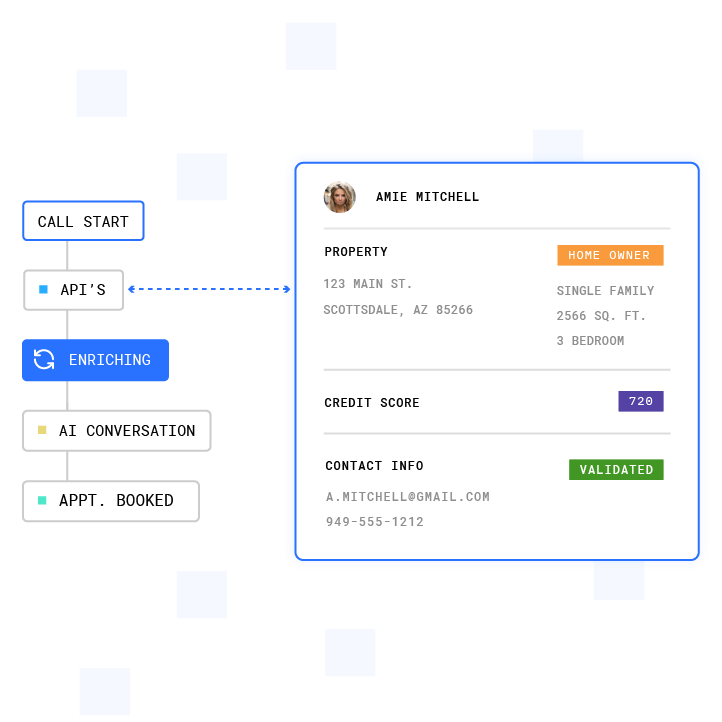
Plura’s AI voice agents and AI SMS agents execute the BANT checklist automatically on every inbound and outbound contact. The agent asks the qualification questions in sequence, adapts to the prospect’s answers in real time, scores the lead against the five criteria, and routes the outcome to the CRM without manual intervention. The same script runs on the first contact at 8 a.m. Monday and the last contact at 11 p.m. Friday, with no script drift, no cherry-picking, and no leads dropped because a rep was busy.
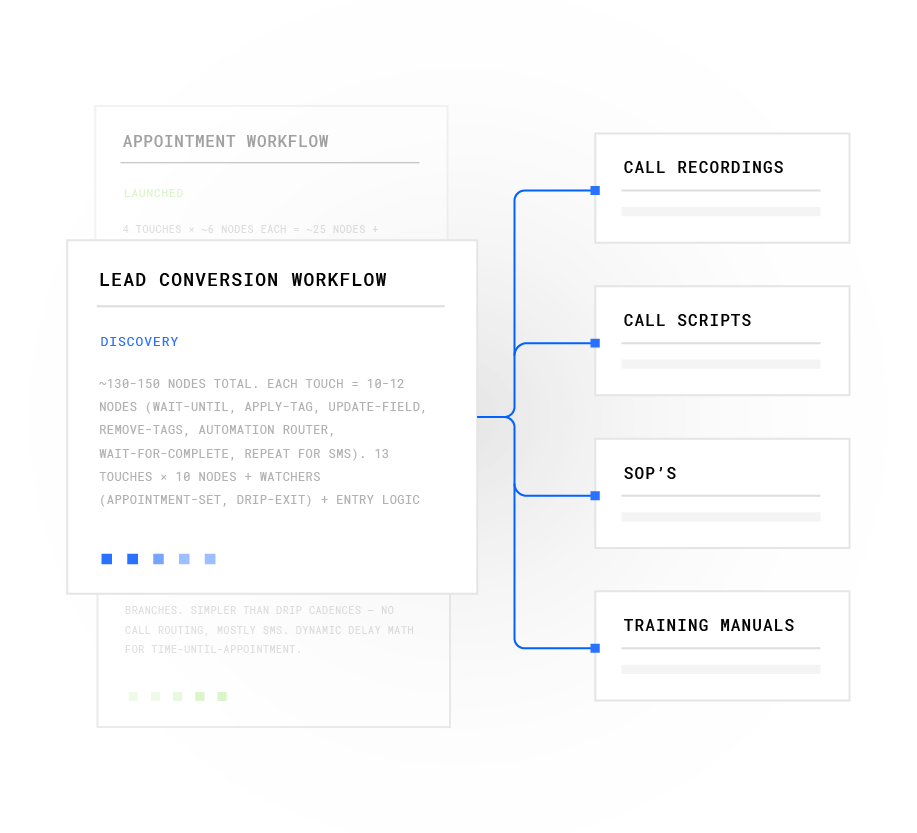
Plura’s business intelligence layer surfaces patterns across qualification conversations, including which criteria are failing most often and which lead sources produce the highest-scoring prospects, so the BANT checklist improves over time instead of staying static.
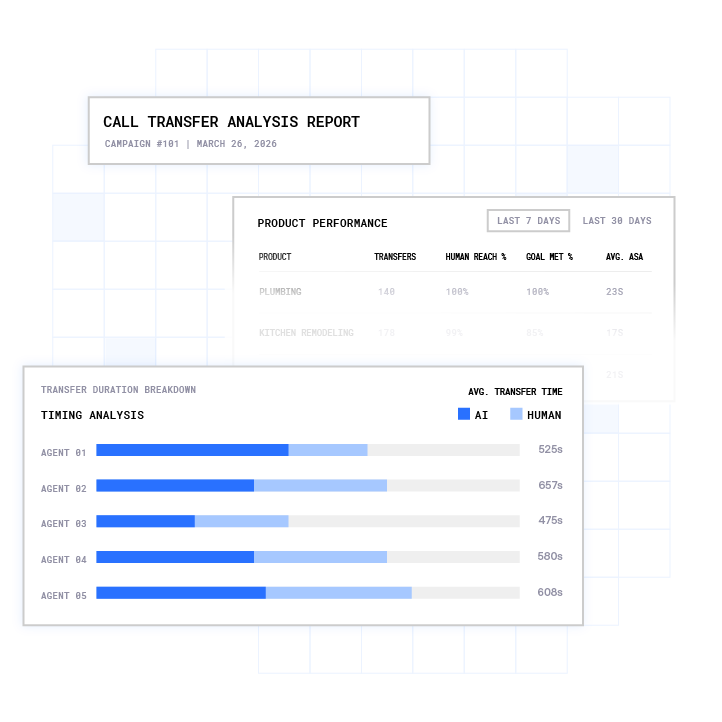
See the BANT checklist running live across AI Voice and AI SMS in a demo.
How AI Automates Lead Qualification at Scale
Manual lead qualification has a structural ceiling. Sales reps spend only 35.2% of their time on revenue-generating activities, with the rest consumed by administrative tasks such as lead research and qualification.3 At high volume, that ratio stays flat even when you add headcount.
AI qualification changes the ratio by running the checklist on every lead simultaneously, across every channel, without a queue. As noted in Harvard Business Review research on speed-to-lead4, speed of response directly affects connection and conversion rates. Plura contacts leads in under 5 seconds.3
The table below compares manual and AI-executed qualification on the dimensions that matter to contact center and sales operations leaders.
| Dimension | Manual Execution | Plura AI Execution |
|---|---|---|
| Time to first contact | Industry standard: 47+ hours | Under 5 seconds |
| Checklist consistency | Varies by rep, day, and call volume | Identical execution on every contact |
| Channel coverage | One channel at a time per rep | Voice, SMS, RCS, and webchat in parallel |
| Cross-channel memory | Requires manual CRM lookup | Stateful database shared across all channels |
| Real-time enrichment | Post-call batch research | 30+ data sources queried during the conversation |
| Compliance enforcement | Rep-dependent, audit trail incomplete | TCPA, DNC, SHAKEN/STIR on every contact |
Plura’s Stateful Conversation Database is the operational backbone of this execution model. A lead that received an AI SMS at 9 a.m. is recognized when the AI voice agent calls at noon. The qualification score, the objections raised, the offers made, and the channel history all sit in the same conversation context, so no lead has to repeat themselves and no agent starts from zero.
Disqualify Leads Checklist for Protecting Pipeline Quality
According to Gleanster Research, 50% of leads are qualified enough to buy but not yet ready to do so.3 These leads need to be routed to nurture or removed from the active pipeline before they consume rep time. Disqualification acts as a filter that protects pipeline quality.
The following signals trigger disqualification or nurture routing in Plura’s qualification workflows.
Hard disqualification signals (archive immediately):
- Disposable or invalid email address confirmed by real-time validation
- Company size below minimum ICP threshold after enrichment
- Geography outside served markets
- Domain belongs to a known competitor
- Contact explicitly states no interest or requests removal
- No identifiable problem after three qualification turns
- Score of 0 to 4 on the five-criteria scoring model
Soft disqualification signals (route to nurture):
- Problem named but not quantified
- Influencer identified but economic buyer not named
- Budget exists but not allocated this quarter
- Timeline beyond 90 days with no interim commitment
- Partial ICP match on one or two dimensions
- Score of 5 to 7 on the five-criteria scoring model
Topo’s three-strike disqualification rule provides a practical gate before any discovery call: Strike 1 if the lead cannot name a specific current problem, Strike 2 if there is no timeline or urgency driver, and Strike 3 if they must check with others but cannot name those people. Plura’s AI agents apply equivalent logic in real time, routing leads before a human rep ever picks up the phone.
Schedule a demo to see disqualification routing in action inside a live qualification workflow.
Compliance Requirements for AI-Driven Lead Qualification
Running a lead qualification checklist through AI agents at scale means contacting thousands of prospects across voice and SMS channels, and that volume interacts with specific regulatory frameworks. The descriptions below outline the compliance landscape operators often review when automating qualification outreach. This section describes Plura’s platform features and does not constitute legal advice. Operators should consult qualified counsel regarding their specific obligations under applicable law.
TCPA (Telephone Consumer Protection Act, 47 U.S.C. § 227): This framework governs outbound voice and SMS contacts to mobile numbers.2 Under the FCC’s 2024 ruling, AI-generated voice calls are classified as artificial or prerecorded, which affects how organizations interpret consent requirements. Plura’s compliance engine checks every outbound contact against TCPA consent records before dial and logs consent timestamps in an immutable audit trail.
DNC (Do Not Call Registry): Federal and state DNC registries relate to outbound contacts to numbers that have opted out of solicitation.2 Plura scrubs every outbound contact against federal and state DNC registries in real time before the call or message is initiated. Non-compliant numbers are blocked before the first attempt.
SHAKEN/STIR: The FCC’s caller ID authentication framework verifies that outbound calls originate from a legitimate source.2 Plura runs SHAKEN/STIR authentication on every outbound voice call through its own FCC-licensed audio bridging carrier, not through a third-party CPaaS. This functions as a carrier-level control.
SOC 2: Plura holds SOC 2 Type II certification with continuous monitoring, penetration testing, and third-party audits covering the underlying infrastructure.1
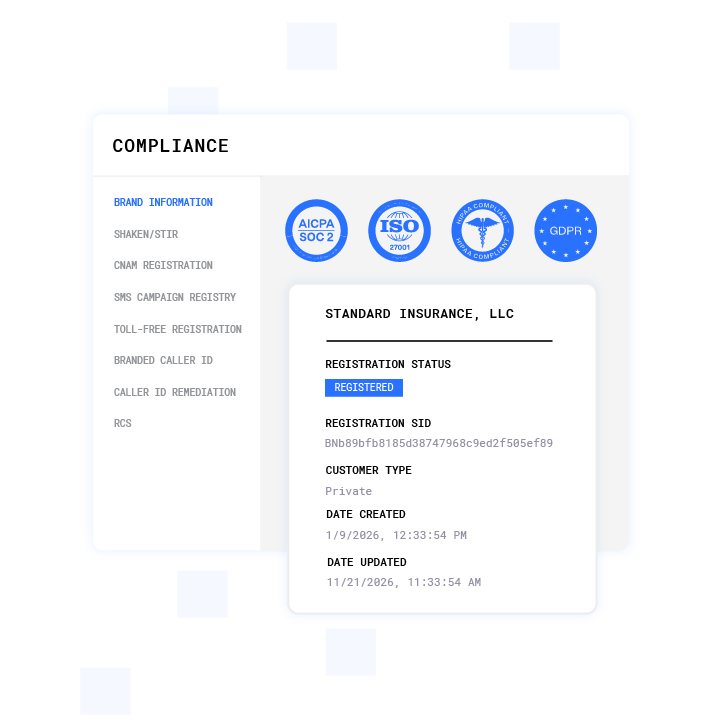
HIPAA: For healthcare and regulated verticals, Plura supports HIPAA-aligned encryption, access controls, and audit logging for protected health information across voice, SMS, RCS, and webchat.1
State-level rules: Quiet-hours enforcement, two-party consent for call recording, and state-specific DNC requirements vary by jurisdiction. Plura’s compliance engine applies time-zone detection to support state and federal calling-window restrictions automatically on every campaign. Operators remain responsible for confirming their own compliance posture with qualified counsel.
Plura supports compliance infrastructure. It does not absolve operators of their own regulatory obligations. Review Plura’s SMS guidelines and responsible AI policy for platform-level documentation.
Frequently Asked Questions
How long does it take to implement an AI-automated lead qualification checklist with Plura?
A simple inbound qualification flow typically goes live within days. The onboarding sequence covers a discovery audit of your current call economics, intake of sample calls and existing scripts, an overnight build of a conversation mockup, a review session, engineering build of the production workflow, a pilot test on a subset of real contacts, and full go-live. More complex flows, such as a multi-step intake with 20 or more qualification questions, run closer to one to two months because the workflow logic itself requires design and validation time. Every annual contract includes a 90-day opt-out window if the deployment is not delivering.
What CRM and calendar systems does Plura integrate with?
Plura integrates with HubSpot, Salesforce, and Zoho on the CRM side, and with Cal.com, Calendly, and Google Calendar for booking. Qualified leads route directly to the assigned rep’s calendar or CRM record with full qualification notes, conversation transcripts, and lead scores. The platform also connects to automation tools including Go High Level, Make, and Zapier for custom post-qualification workflows. The full integration directory is available at Plura’s integrations page.
How does Plura handle leads that partially qualify but are not yet sales-ready?
Leads scoring 5 to 7 on the five-criteria model route to targeted nurture sequences rather than to a rep or to archive. Plura’s AI SMS and AI voice agents continue the conversation on a cadence, monitoring for new signals such as a budget allocation, a named decision-maker, or a timeline trigger. When a nurture lead crosses the qualification threshold, it routes automatically to sales without manual intervention. The Stateful Conversation Database preserves the full history of every prior touchpoint, so the agent picks up the conversation where it left off rather than starting over.
How does Plura measure the performance of a lead qualification checklist over time?
Plura’s business intelligence layer tracks qualification rates, disqualification rates, MQL-to-SQL conversion, cost per qualified lead, and contact rates across every campaign. Conversation Intelligence surfaces which qualification criteria are failing most often, which questions produce the most accurate routing decisions, and which lead sources generate the highest-scoring prospects. These signals feed back into the workflow tuning loop so the checklist improves continuously rather than staying static after launch.
What happens when a lead asks a question the AI agent cannot answer, or the conversation goes outside the qualification script?
Plura’s workflows include explicit escalation guardrails. When a prospect’s response falls outside the defined qualification paths, the AI agent warm-transfers the call to a U.S.-based human rep, flags the conversation in the Unified Inbox, or routes to a designated escalation queue depending on the workflow configuration. The AI does not improvise on outcomes that carry compliance or deal risk. Sensitive data including protected health information, payment data, and personally identifiable information is redacted at the field level and routed through HIPAA-aligned channels.
Conclusion: Turning a Checklist into a 5-Second AI Workflow
A lead qualification checklist built on Need, Authority, Budget, Timing, and Fit gives every sales and contact center operation a repeatable standard for pipeline quality. The scoring model in this guide produces a 0-to-10 score per lead, with clear routing thresholds for sales, nurture, and disqualification. The disqualification signals remove the 75% of leads that will never convert before they consume rep time. The compliance framework outlines the regulatory landscape operators consider when running automated outreach at scale.
The checklist is the easy part. Executing it on every lead, across every channel, in under 5 seconds, with real-time enrichment and stateful memory, is the operational problem Plura solves. As noted earlier, speed-to-lead directly affects conversion rates. Plura’s AI voice agents and AI SMS agents run the full five-criteria checklist at that speed, 24 hours a day, without script drift, without a queue, and without a compliance gap.
Compare plans and rates to see which tier fits your operation’s volume and channel mix. Or run your current team’s numbers through Plura’s ROI calculator to see the cost difference between manual qualification and AI-automated execution.
Book a demo to see the full lead qualification checklist running live across AI Voice and AI SMS, with real-time enrichment and compliance controls included.
1 Plura AI maintains SOC 2, HIPAA, ISO, and GDPR posture as part of its platform infrastructure. References to compliance frameworks in this article describe Plura’s platform capabilities and do not constitute a guarantee that any customer using Plura will themselves be compliant with applicable laws or standards. Customers remain solely responsible for their own regulatory obligations, certifications, consent management, recordkeeping, and the claims they make to their own end users. Consult qualified legal counsel for guidance specific to your use case.
2 This article describes regulatory frameworks at a general level and does not constitute legal advice. Laws and regulations vary by jurisdiction, change over time, and apply differently depending on facts and circumstances. Readers should consult qualified legal counsel before making compliance decisions.
3 Performance figures, customer outcomes, and industry statistics referenced in this article are drawn from cited third-party sources or Plura customer case studies. Individual results vary based on implementation, use case, industry, audience, and execution. Past or aggregate performance is not a guarantee of future results.
4 References to third-party products, services, companies, or research are made for informational and comparative purposes only. Plura AI is not affiliated with, endorsed by, or sponsored by any third party named in this article unless explicitly stated. Trademarks and product names referenced remain the property of their respective owners.
This article is provided for informational purposes only and reflects Plura AI’s understanding at the time of publication. Product capabilities, integrations, and specifications are subject to change. For the most current information, visit plura.ai.
This article was produced with the assistance of AI tools and reviewed by Plura AI prior to publication.