
Written by: Matt Beucler, CEO, Plura AI
Updated September 2026
Key Takeaways
- Lead qualification confirms whether a prospect matches your ICP, has a quantified problem, real authority, budget access, and an urgent timeline before you invest in demos or proposals.
- Effective qualification works at three levels: organizational fit, opportunity fit, and stakeholder fit. Frameworks like BANT, CHAMP, and MEDDIC all measure fit, pain, authority, budget, and timing.
- A sequenced discovery script outperforms categorized question lists. Establishing pain and cost of inaction before budget cuts drop-off from 60% to 28%.
- Red flags such as evasive answers on budget or authority, vague next steps, or missing ICP fit signal low qualification. Complex B2B deals often involve an average of 13 internal stakeholders.
- Plura AI automates first-pass lead qualification across voice, SMS, RCS, and webchat so reps only engage leads who already answered the core questions.
BANT vs. CHAMP vs. MEDDIC: Which Framework Fits Your Deal
Every major qualification framework measures some combination of fit, pain, authority, budget, and timing. BANT checks budget, authority, need, and timing in that order. CHAMP leads with challenges before budget. MEDDIC adds metrics, economic buyer, decision criteria, and decision process for larger buying committees. The differences matter less than the sequence you apply in live conversations, which is why the script below focuses on ordered questions instead of labels. Framework definitions are drawn from the Weflow sales qualification guide, the Tomba CHAMP framework guide, and the Artemis GTM B2B qualification framework.4
Sequenced Qualification Questions for Discovery Calls
Order drives conversion. Each question sets up the next, and asking about budget before pain is established is the most common reason qualification calls stall. SetSmart’s analysis of 828,761 AI-driven sales conversations found that asking about budget in the first message causes roughly 60% drop-off, compared with 28% drop-off when budget comes after need is established.3 The sequence below reflects that data: questions 1–5 establish pain and cost of inaction before question 9 touches money.
- “What prompted you to reach out now?” (situation and trigger)
- “What problem are you trying to solve?” (need)
- “How are you handling this today?” (current state)
- “What have you tried before, and why did it not work?” (prior failure)
- “What happens if you do not solve this?” (cost of inaction)
- “Who else is involved in this decision, and what matters most to each of them?” (committee mapping)
- “What does your evaluation process look like from here?” (decision process)
- “When do you need this in place, and what is driving that date?” (timeline and urgency)
- “What is your typical investment range for a solution like this?” (budget, framed as range)
- “What other priorities are competing for this budget?” (prioritization)
- “Who signs the contract?” (economic buyer)
- “What could push this timeline back?” (risk surfacing)
This list functions as a sequenced script. Questions 1–5 build the pain picture and establish cost of inaction. Question 6 maps the buying committee before the conversation moves to process. Questions 7–8 surface timeline and decision mechanics. Question 9 asks about money after the prospect already sees the cost of the problem, which keeps defensiveness low. Questions 10–12 close the loop on competing priorities, economic authority, and deal risk.
Qualification questions deliberately exclude feature questions. Qualification confirms whether the deal is real. Product fit comes after, per the Weflow sales qualification guide.
See how first-pass qualification runs before a rep is involved.
How to Ask About Budget Without Triggering Defensiveness
Question 9 is where most scripts fall apart. Budget is the question reps dread and prospects deflect, and the fix is sequencing and framing.
- Avoid opening with “What is your budget?” because it reads like a form field and signals that the rep is screening instead of solving.
- Rephrase to a range. “What is your typical investment range for a solution like this?” positions the question as calibration for fit.
- Anchor to cost of problem first. “If this is costing you roughly $40K a quarter in wasted time, a fix in the low five figures pays for itself fast. Does that math track on your side?” This framing, recommended by the Tomba CHAMP framework guide, ties cost-of-solution to cost-of-problem before the number lands.
- Handle deflection with a softer range. “Totally fair. Most teams have not pre-allocated. Is there a range where this becomes an easy yes versus a harder conversation?” This keeps the conversation moving without forcing a number the prospect does not have.
The channel matters too. The same drop-off pattern SetSmart measured on calls shows up in text: budget asked too early kills the thread. The sequencing logic that works on a discovery call also works in an SMS conversation.
Reading the Answers: Red Flags, Green Flags, and When to Disqualify
The question list tells you what to ask. Interpretation tells you what the answer means. The judgment layer below separates a rep who qualifies from one who only collects responses.
- Green flag: clear pain and quantified impact. Prospects who can describe the problem, name owners, and estimate impact usually sit close to real deals.
- Green flag: specific internal milestones. Buyers who know their next internal step and who owns it tend to move faster through the cycle.
- Red flag: evasive on budget, authority, or timeline after rapport is established. Persistent evasion on these dimensions after the first five questions have been answered signals low qualification, per the Vida qualifying questions guide. One deflection is normal. Repeated deflection is a pattern.
- Red flag: over-eager “yes” to “Are you the decision-maker?” Roughly 60% of those answers are wrong, per SetSmart. Ask sideways instead: “Who else would be involved in choosing the tool?” This surfaces the real buying committee without putting the prospect on the defensive.
- Red flag: vague on the next internal milestone. When a buyer cannot name the next step inside their own organization, it usually signals unresolved alignment inside the buying group, per Colony Spark. The deal may be real, but it is not moving.
- Complex B2B deals with multiple stakeholders. Forrester’s State of Business Buying 2024, drawing on more than 16,000 global buyers, found the average B2B purchase involves 13 internal stakeholders and 9 external participants.4 Qualifying for complex deals means mapping the committee, not just the contact. A single champion who loves the product rarely closes a deal alone when six other stakeholders hold veto power.
- Disqualify when core dimensions fail. Lack of ICP fit, unclear pain, no path to authority, or a timeline that does not align with your sales cycle all point to low odds. A lead that fails two or more ICP criteria rarely closes, even if the contact is enthusiastic, per the SyncGTM B2B lead qualification guide.
Qualifying at Volume: First-Pass Qualification Before a Rep Is Involved
High-volume teams in 2026 rely on automation for the first pass instead of asking a human to run every script on every lead.
The industry standard for first contact on an inbound lead is 47+ hours. Contacting a lead within 5 minutes makes them up to 100x more likely to connect, and a 60-second response lifts conversions by 391%.3 At that math, waiting for a rep to pick up the phone leaks pipeline.
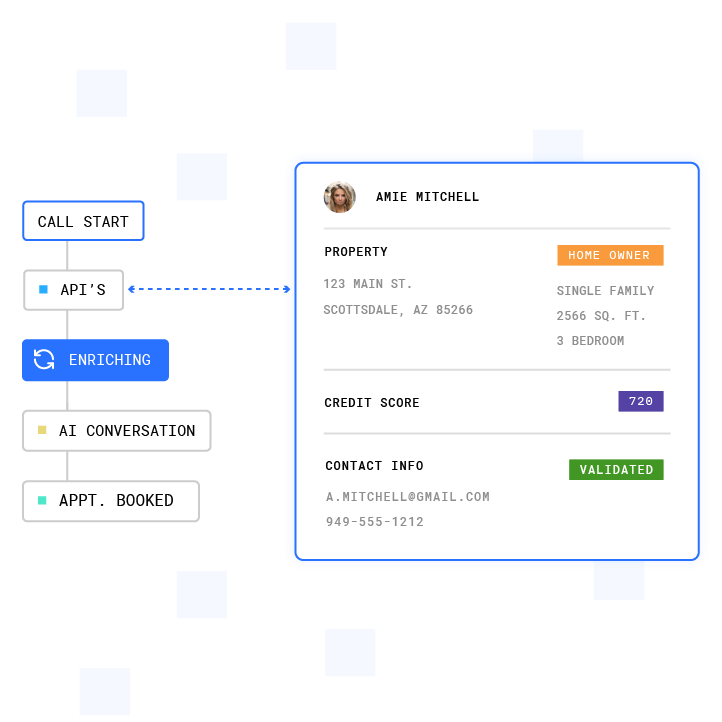
Plura AI runs first-pass lead qualification across four channels: AI voice agent, AI SMS, RCS, and AI webchat. All four channels share one stateful conversation database, so a lead that texted at 9 a.m. is the same lead when the call comes at noon. The AI already knows what was said, what was offered, and what is still open. First contact happens in under 5 seconds, and every outbound contact runs through real-time DNC scrubbing and TCPA-litigator screening before the dial.1 Calls go out on an FCC-licensed carrier with branded caller ID issued at the carrier level.
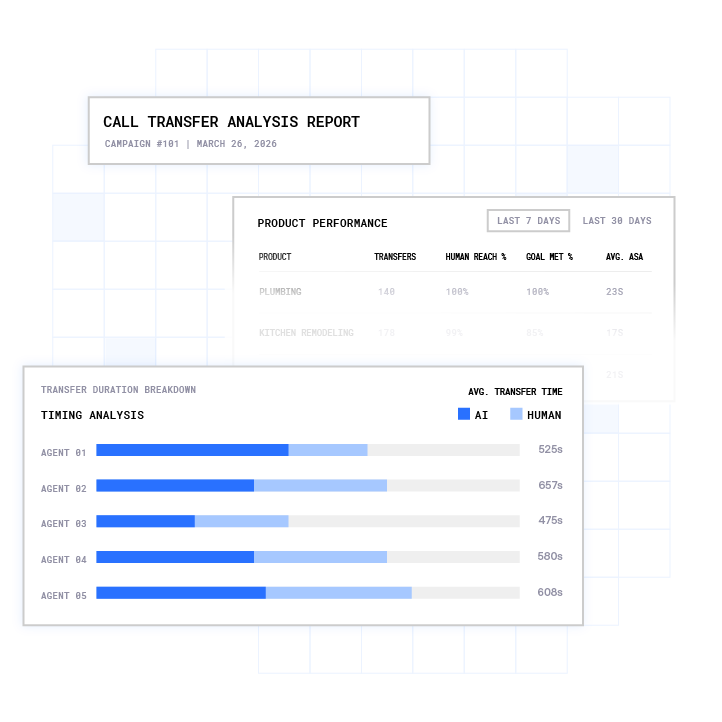
The first pass captures trigger event, stated problem, current state, prior attempts, cost of inaction, and a soft read on timeline and budget range. The handoff to a rep includes a lead who already answered, a full conversation transcript, a qualification score, and a calendar invite. The rep no longer has to ask questions 1 through 5 in the sequence above, and often questions 6 through 8.
AI agents qualify leads before handoff and replace inconsistent SDR work. Cost per qualified lead through AI-driven first-pass qualification runs $65 to $85, compared with $145 to $180 for manual qualification processes.3,4
Watch the qualification flow in action across voice, SMS, and webchat.
Frequently Asked Questions
How Long Does It Take to Implement AI-Driven First-Pass Qualification?
Implementation timelines depend on conversation complexity. A straightforward inbound qualification flow typically goes live within days. A multi-step intake with branching logic, such as a 25-question health-history survey or a complex multi-product routing flow, runs closer to one to two months because the workflow logic itself requires design, testing, and validation before live traffic runs through it.
Plura’s onboarding sequence covers a discovery audit, intake of existing scripts and sample calls, an overnight build of a conversation mockup, a review session, engineering build of the production workflow, a pilot on a subset of real calls, and full go-live. Every annual contract includes a 90-day opt-out window.
What Prerequisites Does a Team Need Before Automating Qualification?
Three things matter most before automation goes live: clean CRM data, clearly defined qualification criteria and handoff triggers, and deep CRM integration so AI-captured insights drive action instead of sitting in a disconnected system. Teams also need a defined ICP and agreed-upon MQL-to-SQL handoff criteria between marketing and sales. And they need a clear answer to what a rep should do the moment a qualified lead lands in their queue. Automation amplifies whatever process exists underneath it. If the qualification criteria are vague, the AI will qualify vaguely.
What Does AI-Driven Lead Qualification Cost?
Cost per qualified lead through AI-driven first-pass qualification runs $65 to $85, compared with $145 to $180 for manual SDR qualification processes. At the platform level, Plura offers a Multi tier at $7,500 per month and an Enterprise tier on custom pricing. Both run on annual contracts billed monthly with a 90-day opt-out window.
The illustrative ROI scenario for a 15-agent operation shows monthly savings of $45,600 in the first 30 days and $547,200 over 12 months.3 Run your numbers through Plura’s ROI calculator to check your specific scenario. Compare plans and rates.
What Are the Risks of Automating First-Pass Qualification?
The most common risks are a broken handoff from AI to rep, inconsistent qualification criteria baked into the automation, and compliance gaps on outbound contacts. A broken handoff happens when the AI conversation ends and the rep picks up without context, which forces the lead to repeat themselves. Plura’s stateful conversation database reduces this risk by passing the full transcript, qualification score, and flagged objections to the rep before the handoff call connects.
Qualification criteria risks are addressed during workflow design. The AI applies the same script and scoring rules on every contact, which removes the rep-to-rep variance that makes manual qualification unreliable. On compliance, outbound AI voice and SMS contacts in the United States intersect with TCPA and DNC frameworks.1,2 Readers should consult the relevant regulations and qualified counsel to understand their obligations before deploying outbound automation at volume.
What Compliance Considerations Apply to AI SMS and AI Voice Qualification?
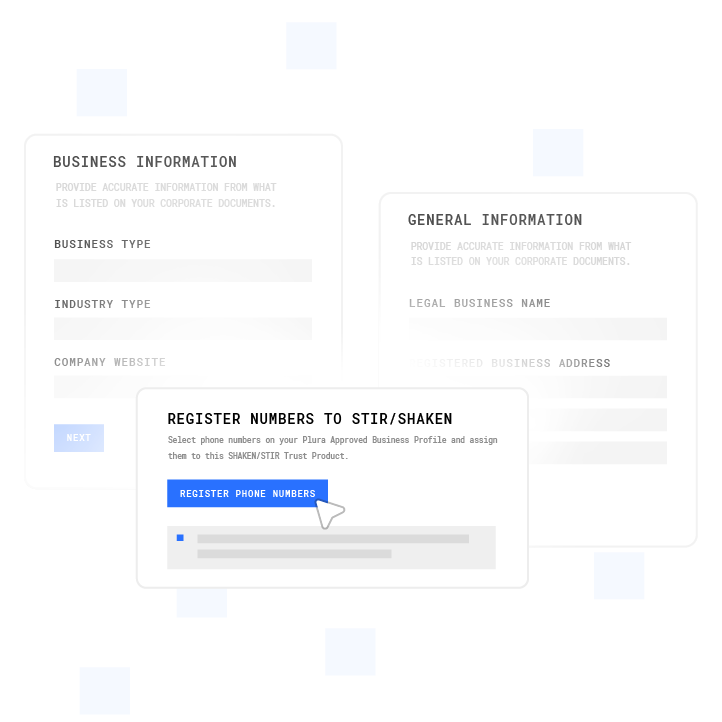
AI SMS and AI voice qualification in the United States intersect with several regulatory frameworks, including the Telephone Consumer Protection Act (TCPA), the FCC’s rules on AI-generated voices, Do Not Call (DNC) registry requirements, and A2P 10DLC registration for application-to-person SMS.1,2 The FCC’s February 2024 ruling confirmed that TCPA restrictions apply to AI-generated voices on outbound calls. State-level rules add additional layers, including quiet-hours restrictions and disclosure requirements that vary by jurisdiction.
Plura’s platform supports compliance by enforcing real-time DNC scrubbing, TCPA-litigator screening, automated quiet-hours rules through time-zone detection, and immutable consent logging on every outbound contact. Readers should consult the relevant regulations and qualified legal counsel to understand their specific obligations before deploying outbound AI qualification campaigns.
Which CRMs and Calendars Does Plura Integrate With?
Plura integrates with HubSpot, Salesforce, and Zoho on the CRM side, and with Cal.com, Calendly, and Google Calendar for scheduling. The platform also connects with automation tools including Go High Level, Make, and Zapier, and with attribution platforms including Cometly, Retreaver, and Ringba. Browse the full directory of 50+ integrations across 10+ categories.
How Do You Measure Whether Qualification Is Working?
Four metrics matter most: qualified lead rate (the share of total leads that meet your defined SQL criteria), cost per qualified lead, time from lead capture to first qualified contact, and win rate on qualified pipeline versus total pipeline. A qualification process that is working produces fewer leads in the pipeline because it filters out deals that were never real.
Plura’s conversation intelligence layer surfaces these metrics automatically across every channel, including which questions correlate with downstream close rates and which objections recur most often in disqualified leads.
Conclusion: The Script Is the System
A categorized list of lead qualification questions does not function as a script. Order and interpretation drive outcomes, and at volume the first pass works best when automation handles it.
The twelve-question sequence above works because it earns the right to ask about budget before asking about budget. That sequencing logic separates qualification that closes from qualification that clogs pipeline.
The volume layer is where most teams fall behind. Plura AI runs first-pass qualification across voice, SMS, RCS, and webchat on one stateful conversation database, contacting leads in under 5 seconds so reps only talk to leads who already answered. Compare plans and rates side by side. Run your numbers through Plura’s ROI calculator.
See the full qualification flow before a rep picks up the phone.
1 Plura AI maintains SOC 2, HIPAA, ISO, and GDPR posture as part of its platform infrastructure. References to compliance frameworks in this article describe Plura’s platform capabilities and do not constitute a guarantee that any customer using Plura will themselves be compliant with applicable laws or standards. Customers remain solely responsible for their own regulatory obligations, certifications, consent management, recordkeeping, and the claims they make to their own end users. Consult qualified legal counsel for guidance specific to your use case.
2 This article describes regulatory frameworks at a general level and does not constitute legal advice. Laws and regulations vary by jurisdiction, change over time, and apply differently depending on facts and circumstances. Readers should consult qualified legal counsel before making compliance decisions.
3 Performance figures, customer outcomes, and industry statistics referenced in this article are drawn from cited third-party sources or Plura customer case studies. Individual results vary based on implementation, use case, industry, audience, and execution. Past or aggregate performance is not a guarantee of future results.
4 References to third-party products, services, companies, or research are made for informational and comparative purposes only. Plura AI is not affiliated with, endorsed by, or sponsored by any third party named in this article unless explicitly stated. Trademarks and product names referenced remain the property of their respective owners.
This article is provided for informational purposes only and reflects Plura AI’s understanding at the time of publication. Product capabilities, integrations, and specifications are subject to change. For the most current information, visit plura.ai.
This article was produced with the assistance of AI tools and reviewed by Plura AI prior to publication.