

Written by: Matt Beucler, CEO, Plura AI
Key Takeaways
- Lead response management is a full capture-to-measurement system that covers SLA tiers, routing hierarchy, lead-state definitions, persistence policies, and metrics. It extends far beyond individual rep behavior.
- Most teams fail because routing logic breaks silently and leads lack defined owners or next actions. Rep speed is rarely the root cause.
- Intent-based SLA tiers replace the one-size-fits-all 5-minute rule. Hot hand-raisers target under 5 minutes, high-intent leads under 15 minutes, lower-intent leads same business day, and nurture leads run on automated programs.
- A routing hierarchy with explicit fallbacks for PTO, after-hours, and unrouted pools, plus a monthly mystery-lead audit, keeps leads from disappearing without a trace.
- Plura AI enforces routing, SLA, and cross-channel persistence automatically. See how the full operating model runs on one platform.
Why Lead Response Management Breaks
Most teams fail because routing logic breaks silently and leads have no defined owner or next action. A lead arrives, gets assigned to whoever is next in the round-robin, and sits in a vague “working” status while the rep handles three other priorities. No one can explain why the lead went to that rep, and no one tracks whether the SLA was met.
The foundational research on this problem comes from Dr. James Oldroyd’s 2007 Lead Response Management Study, conducted in partnership with InsideSales.com across more than 15,000 web-generated leads and over 100,000 dial attempts.4 That study found the odds of successfully contacting a lead fall 100-fold when the call happens at 30 minutes rather than 5 minutes after the lead comes in. The odds of qualifying a lead fall 21-fold over the same window. A 2011 Harvard Business Review analysis of 1.25 million leads across 42 U.S. companies found that firms attempting contact within one hour were nearly 7 times as likely to qualify the lead as firms that waited even an hour longer.4 These figures are foundational research, not current benchmarks. The underlying mechanism they describe, that intent decays fast, still defines the operating reality.
The current execution gap is just as wide. The 2026 Optifai Pipeline Study of 939 B2B SaaS companies found the average lead response time is 47 hours, with only 23% of companies responding within 5 minutes and 42% taking longer than 24 hours.3 The top reasons include manual lead assignment (35%), leads going to the wrong person (22%), reps not checking email often (18%), leads not being prioritized (15%), and no SLA or accountability (10%). Those are routing and ownership failures, not individual performance failures.
For benchmark numbers on response time and speed-to-lead, see Plura’s speed-to-lead glossary and ROI calculator. This article focuses on the layer that sits on top of speed: routing, ownership, and process integrity.
Talk with Plura AI in a live demo to see lead response management infrastructure in action.
Intent-Based Standard for Lead Response Process
A defensible lead response process defines SLA tiers by lead intent. A single 5-minute rule applied to every lead type is operationally useless. A team handling demo requests and ebook downloads in the same queue cannot treat both with the same urgency. Intent decays at different rates, and the response window should match the decay curve.
The following tiers reflect that principle:
- Hot Hand-Raisers (Demo Requests, Pricing Inquiries, Contact Sales Forms): Under 5 Minutes. These leads have expressed direct purchase intent. Industry research cited by Plura found that contacting a lead within 5 minutes makes them up to 100 times more likely to connect than waiting longer.3 Every minute past five creates measurable decay.
- High-Intent Leads (Target-Account Engagement, Webinar Hand-Raisers): Under 15 Minutes. These leads have demonstrated meaningful engagement but have not explicitly requested a sales conversation. The window is wider. Same-hour response is the operating target.
- Lower-Intent Leads (Content Downloads, Newsletter Signups With Fit Signals): Same Business Day. These leads require enrichment and scoring before routing. A fit signal, such as a firmographic match or behavioral pattern, moves them into the sales queue rather than nurture.
- Nurture Leads (Broad Educational Downloads, No Fit Signal): Automated Sequence, No Direct Sales Follow-Up. Routing a sales rep to a lead with no fit signal wastes capacity and inflates the active pipeline with records that will never convert.
Routing logic and SLA monitoring enforce this standard. DevriX’s May 2026 lead response guide makes the same point. When the operational layers of lead capture, enrichment, routing, alerts, SLA rules, and reporting are missing, slow response becomes predictable.
Routing Hierarchy That Survives Real-World Conditions
Round-robin works as a fallback layer, but it cannot carry the routing hierarchy on its own. A routing hierarchy that survives rep turnover, PTO, and after-hours coverage needs explicit priority order and explicit fallbacks at every level.
The recommended routing hierarchy, in order of priority:
- Existing Account Owner. A lead from a company with an existing owner in the CRM routes to that owner, regardless of territory. This protects relationship continuity and prevents duplicate outreach.
- Named Account. Target accounts on an outbound ABM list route to the assigned AE, separate from account-owner routing.
- Territory. Net-new leads route by geographic region, market segment, or industry vertical based on rep coverage.
- Segment. Company size or ARR range matches deal complexity to rep experience. Enterprise AEs handle long-cycle deals. SMB reps handle higher-volume shorter-cycle deals.
- Product. Multi-product portfolios route by product line or use case to the rep with relevant expertise.
- Expertise. Industry specialization, language coverage, or certification routes leads to the rep best positioned to handle them.
- Capacity. Among eligible reps, the system removes anyone over their workload threshold before assigning. Equal lead count is not equal workload.
- Round-Robin Fallback. Among capacity-filtered, available reps, round-robin distributes evenly.
The fallbacks that keep this hierarchy working are where most teams underinvest. Rework’s lead routing framework specifies three that matter most:
- PTO Coverage: Assign a backup rep per rep, not the manager. When rep A is marked out of office, leads route automatically to backup rep B, who will actually work the lead. The manager will not.
- After-Hours Coverage: Leads arriving outside business hours receive an instant acknowledgment that sets clear expectations, plus next-morning human follow-up. Silence creates the worst outcome.
- No-Match Routing (Unrouted Pool): When routing logic produces no match because of a missing territory, failed enrichment, or unassigned segment, leads go to a designated “unrouted” pool reviewed daily by a RevOps or lead ops owner.
Routing logic that silently breaks is the failure mode that most ranking pages ignore. The GTM Advisor’s May 2026 routing guide states it directly. If the routing system cannot answer “why did this lead go to this rep?” for any given lead, it becomes a liability. This is RevOps and marketing infrastructure, not an SDR responsibility.
Lead-State Definition That Prevents Pipeline Rot
Leads rot in a vague “working” status because no definition of “worked” exists. A lead can sit in “working” indefinitely. That inflates active pipeline with records that no longer represent active buyer engagement. A clear lead-state definition that every rep and every system enforces fixes this.
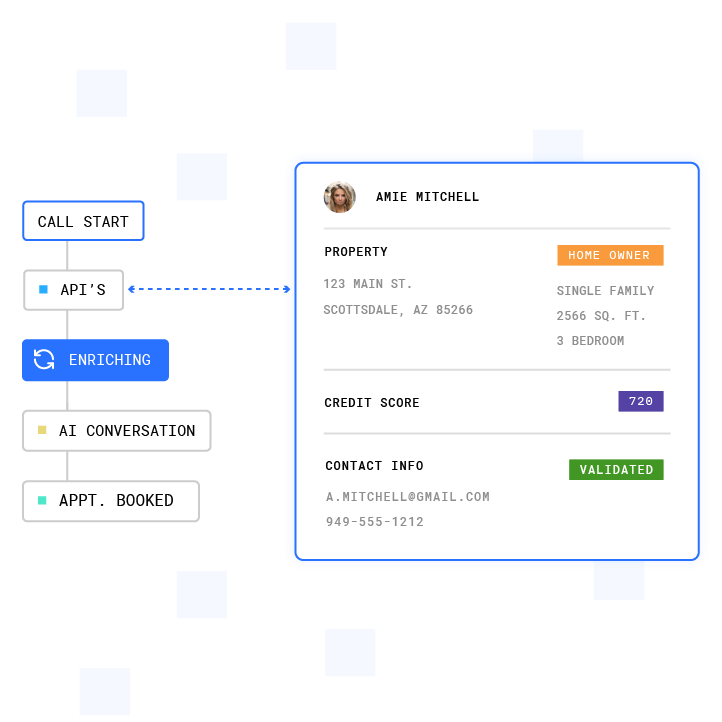
Every active lead requires seven defined fields:
- Owner: One human accountable for the lead. Not a queue or a team.
- Status: A controlled picklist, not free text. Options include new, working, meeting booked, recycled, and disqualified.
- Last Activity: The timestamp of the most recent meaningful sales action.
- Next Activity: The specific action scheduled, such as a call, an email, or a follow-up.
- Next Activity Date: A date, not a vague “soon.” If there is no scheduled next action, the lead is not being worked.
- Source: Where the lead originated, for diagnostic reporting.
- Qualification Status and Disqualification Reason: A structured picklist for disqualification, not free text, so RevOps can analyze patterns across source, campaign, and segment.
The operating rule is simple. Every active lead has a human owner and a scheduled next action. That rule only holds if the follow-up cadence has exit conditions. DevriX’s RevOps Sales SLA framework specifies four elements a cadence must define: the number of attempts, the timing between attempts, the approved channels, and the exit conditions. Without exit rules, a lead can stay in “working” status indefinitely.
Persistence Policy Matched to Intent
The number of follow-up touches should match sales cycle length and lead intent. A universal rule does not work. The “6 attempts” cliche treats a demo request from a target account the same as a content download from an unknown company, even though the two require different cadences.
A multi-channel persistence cadence defines four things: the number of attempts, the timing between attempts, the approved channels, and the exit conditions. Data from Invesp and Peak Sales Recruiting shows 80% of B2B sales require five or more follow-up touches to close, yet 48% of sales reps never make a second follow-up attempt.3 The gap comes from the absence of a defined cadence with exit rules.
Plura’s AI SMS and AI voice agents run the persistence cadence across channels while sharing context through a single stateful conversation database. A lead that received an SMS at 9 a.m. is the same lead when the voice call comes at noon. The rep, or the AI, picks up with full memory of what was already said. Persistence only works if you can measure whether it is happening, which leads directly to the metrics that track it.

Key Metrics That Reveal Lead Response Gaps
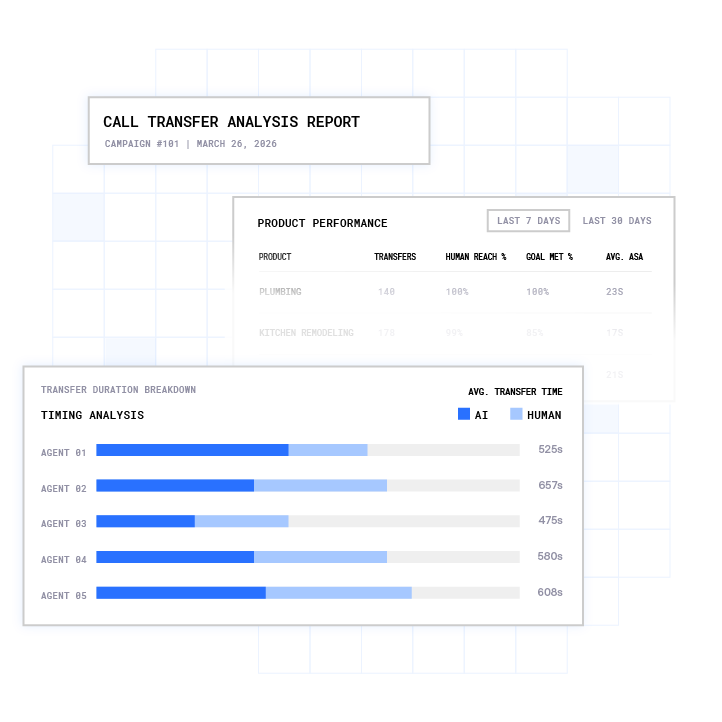
Speed-to-lead is one metric. A complete lead response measurement system tracks seven and reads them together. The table below pairs each metric with the specific failure it diagnoses, so operators can see which numbers to pull when a response problem appears. A strong average response time can mask a poor 90th percentile, which typically signals that specific lead types, reps, regions, or time windows are being missed.
| Metric | Definition | What It Diagnoses |
|---|---|---|
| Speed-to-lead | Time from lead creation to first meaningful sales touch | Overall response health |
| SLA attainment | Leads attempted within target divided by eligible leads, multiplied by 100 | Process compliance |
| Contact rate | Successful conversations divided by total attempts | Targeting and timing quality |
| Qualification rate | Number of qualified leads divided by total leads generated, multiplied by 100 | Lead quality versus execution |
| Meeting-booked rate | Meetings booked divided by a denominator such as total outreach attempts, prospects contacted, or leads received, depending on whether the measurement is outbound or inbound | Conversion effectiveness |
| Lead aging | Time a lead has spent in its current status | Pipeline rot and stalled ownership |
| Routing accuracy | Percentage of leads routed to the correct rep on the first attempt, without manual reassignment, based on documented routing rules | Routing logic integrity |
Two diagnostic rules separate execution problems from lead-quality problems:
- If lead-to-opportunity ratio is high but opportunity-to-win ratio is low, the problem sits in late-stage execution, pricing, or competitive positioning, not lead quality.
- If lead volume is up but visitor-to-lead conversion and lead-to-opportunity ratio are both down, the problem sits in traffic quality or campaign targeting, not SDR execution.
DevriX recommends separating assignment time from owner response time in reporting. If a lead takes 20 minutes to assign and 5 minutes for the rep to respond, the problem is routing. If assignment is instant and the rep responds four hours later, the problem is execution or accountability. The same dashboard number can point to two completely different fixes. But dashboards only catch failures that reach the reporting system. The next section covers the failures that never show up in a dashboard at all.
See how these metrics are tracked and enforced across voice, SMS, and webchat in one dashboard.
Mystery-Lead Audit Cadence
Routing logic often breaks silently. A territory rule misfires after a rep leaves. An enrichment timeout sends a lead to the unrouted pool with no alert. A PTO flag fails to trigger the backup assignment. None of these failures generate an error message. They simply produce leads that never get worked.
A mystery-lead audit cadence catches these failures before they compound. The recommended cadence:
- Monthly Test Leads: Submit real test leads through each intake path, including demo request forms, contact sales forms, and chat flows. Use realistic data that matches each SLA tier.
- Check Against SLA and Routing Rules: Verify that each test lead reached the correct owner within the defined SLA window. Confirm the routing reason was logged.
- Tag the Delay Reason for Each Miss: Coverage gap, data failure, routing rule mismatch, enrichment timeout, or technical failure. Each category has a different fix.
- Create a Prioritized Fix List: Assign one corrective action with an owner and due date for each repeated failure pattern.
Kixie’s lead response guide recommends a weekly review of missed response SLAs to surface broken forms, routing gaps, overloaded reps, and unclear ownership. The monthly mystery-lead audit is the deeper structural check that catches failures the weekly review cannot see because the leads never entered the reporting system at all.
Rework identifies four triggers for reviewing routing rules: team changes, new market segments, low acceptance rates from specific sources, and SLA miss patterns. The audit cadence operationalizes all four into a single recurring process.
Where AI-Assisted First Response Fits
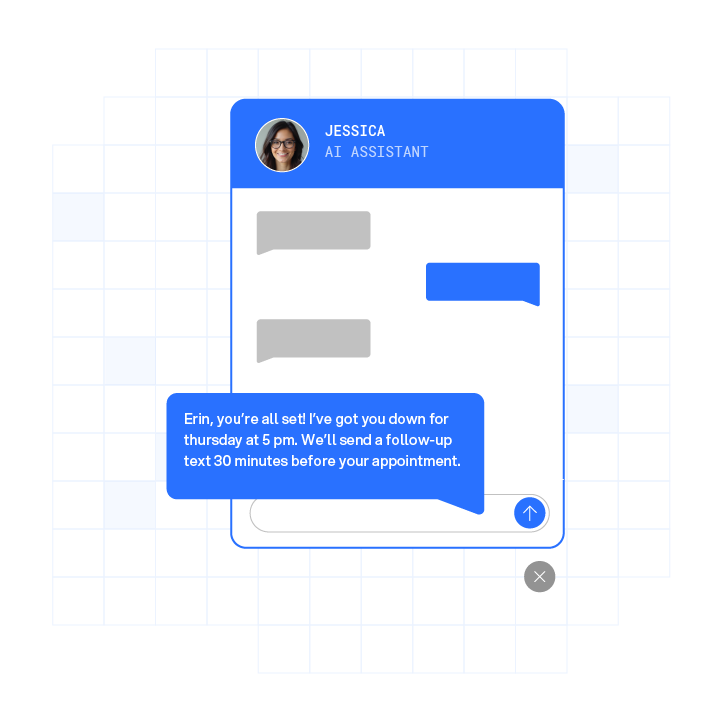
AI-assisted first response pairs speed with human follow-up. The AI handles the part of the process where human capacity is structurally limited: the first seconds after a lead arrives, the after-hours window, and the multi-touch persistence cadence across channels. The human team handles the deeper qualification and deal work.
Plura contacts leads in under 5 seconds and runs on 100% U.S. infrastructure. Its AI voice agent, AI Predictive Dialer, and AI SMS all read from one stateful conversation database. A lead that texted at 9 a.m. is the same lead when the call comes at noon. The AI picks up with full context of what was already said, what was offered, and what is still open.
Plura’s platform supports compliance with TCPA, DNC, HIPAA, and SOC 2 through built-in enforcement features1, while customers remain responsible for their own regulatory obligations and should consult qualified counsel regarding their specific compliance posture.
For teams evaluating CRM integration options, Plura connects with HubSpot, Salesforce, Zoho, and 50+ other tools so routing decisions, lead states, and conversation history flow into the systems operators already run.
Frequently Asked Questions
What Is Your Standard for Lead Response Process?
A defensible lead response process uses tiered SLAs by lead intent. The four tiers are defined in the SLA section above. Routing logic and SLA monitoring enforce them, not rep discipline. Without a compliance dashboard and breach alerts, response-time targets drift regardless of what the policy document says.
What Are the Key Metrics Used to Measure Lead Response Time?
The metric set is the seven listed in the metrics section above. The operating rule is to track them together and separate assignment time from owner response time so the dashboard points to the right fix.
What Is the 5-Minute Rule for Leads?
The 5-minute rule is an aggressive operating target for high-intent inbound leads, specifically demo requests, pricing inquiries, and contact sales forms. It does not apply uniformly across all lead types. The Oldroyd study cited earlier established the 5-minute contact advantage; those are odds ratios from a specific methodology, not a closed-won forecast for any individual team. Teams should validate the rule against their own response-time, contact, meeting, and qualification data and apply it only to the lead tiers where intent justifies the operational cost of sub-5-minute coverage.
Which CRM Is Best for Lead Management?
No single CRM fits every lead management model. The right choice depends on team size, sales motion, and the complexity of routing logic required. HubSpot handles round-robin routing natively via the ‘Rotate record to owner’ workflow action, though growing teams often extend it with a dedicated routing tool as complexity increases. Salesforce’s native assignment rules cover straightforward criteria-based routing but require custom configuration or third-party tools for lead-to-account matching, weighted distribution, and detailed audit trails. Most teams outgrow native CRM routing at three specific points: lead-to-account matching, deduplication, and SLA enforcement. At that stage, a dedicated routing layer or an AI-assisted contact platform that enforces routing and SLA automatically becomes the more reliable operating model. Plura connects with HubSpot, Salesforce, and Zoho through its integrations directory.
How Does a Mystery-Lead Audit Catch Silent Routing Failures?
The audit works as described above: monthly test leads through each intake path, checked against SLA and routing rules, with failures tagged by cause. It adds coverage for failures that never enter the reporting system because the lead was never assigned. Most long delays appear between systems and people, such as an unmatched territory, an absent account owner, an enrichment timeout, or a duplicate rule that blocked assignment.
Conclusion: The Operating Model
Lead response management best practices form a system. The operating model has seven components:
- SLA Tiers by Intent: Hot hand-raisers under 5 minutes, high-intent under 15 minutes, lower-intent same business day, nurture automated.
- Routing Hierarchy With Fallbacks: Account owner, named account, territory, segment, product, expertise, capacity, round-robin, with PTO backup, after-hours acknowledgment, and a named unrouted pool.
- Lead-State Definition: Owner, status, last activity, next activity, next activity date, source, qualification status, and disqualification reason. Every active lead has a human owner and a scheduled next action.
- Persistence Policy: Number of attempts, timing, channels, and exit conditions set by sales cycle and lead intent.
- Metrics: Speed-to-lead, SLA attainment, contact rate, qualification rate, meeting-booked rate, lead aging, and routing accuracy tracked together.
- Mystery-Lead Audit Cadence: Monthly test leads through each intake path, tagged by failure cause, with a prioritized fix list.
- AI-Assisted First Response: AI coverage for the windows human capacity cannot reach, with human reps handling deeper conversations.
Plura enforces this operating model automatically. The same stateful conversation database described earlier runs routing decisions, SLA enforcement, and cross-channel persistence without manual intervention.
Run your numbers through Plura’s ROI calculator to check your ROI in real time.
Compare plans and rates side by side on the Plura pricing page.
1 Plura AI maintains SOC 2, HIPAA, ISO, and GDPR posture as part of its platform infrastructure. References to compliance frameworks in this article describe Plura’s platform capabilities and do not constitute a guarantee that any customer using Plura will themselves be compliant with applicable laws or standards. Customers remain solely responsible for their own regulatory obligations, certifications, consent management, recordkeeping, and the claims they make to their own end users. Consult qualified legal counsel for guidance specific to your use case.
2 This article describes regulatory frameworks at a general level and does not constitute legal advice. Laws and regulations vary by jurisdiction, change over time, and apply differently depending on facts and circumstances. Readers should consult qualified legal counsel before making compliance decisions.
3 Performance figures, customer outcomes, and industry statistics referenced in this article are drawn from cited third-party sources or Plura customer case studies. Individual results vary based on implementation, use case, industry, audience, and execution. Past or aggregate performance is not a guarantee of future results.
4 References to third-party products, services, companies, or research are made for informational and comparative purposes only. Plura AI is not affiliated with, endorsed by, or sponsored by any third party named in this article unless explicitly stated. Trademarks and product names referenced remain the property of their respective owners.
This article is provided for informational purposes only and reflects Plura AI’s understanding at the time of publication. Product capabilities, integrations, and specifications are subject to change. For the most current information, visit plura.ai.
This article was produced with the assistance of AI tools and reviewed by Plura AI prior to publication.