
Written by: Matt Beucler, CEO, Plura AI
Key Takeaways
- Missed call recovery turns unanswered insurance calls into recoverable leads with instant SMS, AI receptionists, and smart routing before prospects reach competitors.
- Agencies missing just 10 quote calls per week can lose $156,000–$260,000 in annual premium revenue.
- Speed-to-lead drives qualification rates, and contacting leads within 5 minutes makes agencies 21x more likely to qualify them than waiting 30 minutes.
- AI-powered workflows typically recover 40–60% of missed new-business inquiries versus 10–20% with manual callbacks, while also providing 24/7 after-hours coverage.
- Plura AI combines AI voice, SMS, and webchat on a single platform with native CRM integration and compliance-supporting infrastructure to capture more missed calls.
The True Cost Of Missed Calls For Insurance Agencies
Missed calls quietly drain premium revenue from insurance agencies every week. A typical Monday at a mid-size independent agency shows the pattern clearly. Three agents stay on active calls, two sit in a client meeting, and the phone rolls to voicemail four times in a row.
Nearly 40% of calls to insurance agencies go unanswered even during business hours, and 85% of unanswered callers never call back. Many of those shoppers simply get a quote from the next agency in their search results. Each missed call often represents $300–$500 in lost premium revenue.
The after-hours picture magnifies the loss. Forty-seven percent of insurance inquiries occur outside standard business hours during evenings, weekends, and holidays when most offices sit on voicemail.
Translate that to dollars. An agency missing 10 quote calls per week at $300–$500 per call loses $3,000–$5,000 weekly and $156,000–$260,000 annually.3 That estimate excludes lifetime value. A single missed call can represent about $1,547 in annual premium revenue and more than $10,000 in lifetime value over a seven-year relationship.
Missed calls create a lead attrition problem that compounds every month and erodes both new business and retention.
Why Callers Disappear After A Missed Call
<pcaller behavior="" follows="" a="" consistent="" pattern="" after="" missed="" call,="" and="" that="" explains="" why="" so="" few="" people="" ever="" call="" back.
- Only 1 in 4 callers leaves a voicemail when their call is not answered (RingCentral, via Novacall AI).4
- Callers who reach voicemail often feel rejected, inconvenienced, and lose momentum, so they rarely try again and instead contact a competitor who answers.
- Seventy-eight percent of consumers shopping for insurance call multiple agencies before deciding (IIABA, via Callingly), which keeps alternatives one click away.4
- Seventy-four percent of callers who reach voicemail after hours call a competitor immediately (Vonage, via Novacall AI).
Speed is the decisive variable. The faster your team responds, the better the qualification and close rates. Contacting a lead within 5 minutes makes businesses 21x more likely to qualify them than responding after 30 minutes (MIT/InsideSales.com and 2026 Lead Contact Rate Benchmarks).3 Leads contacted within 1 minute are 391% more likely to convert than those contacted after 24 hours. Conversion rates drop by about 8x after the first 5 minutes, and the odds of qualifying a lead fall by 80% when response time increases from 5 to 10 minutes.
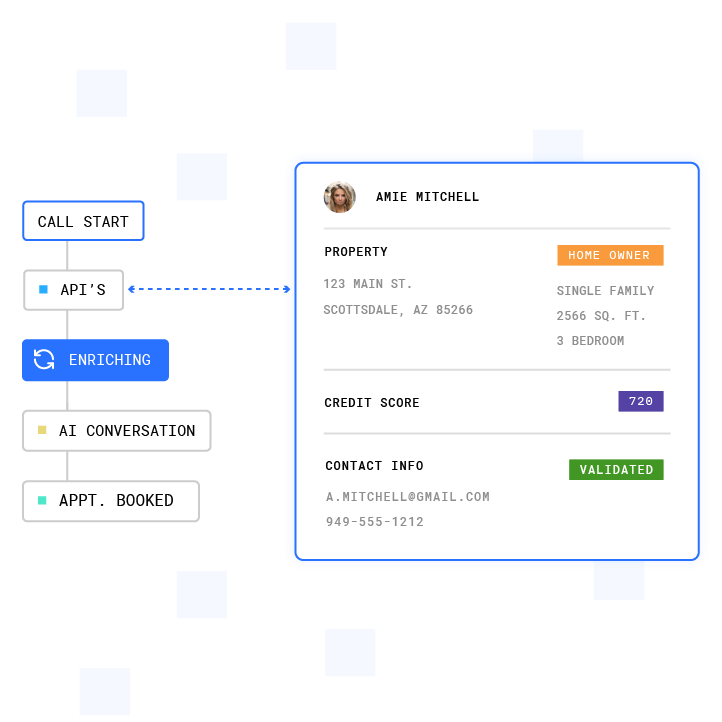
Two additional friction points now sit between your callbacks and the customer. Spam labeling causes many outbound attempts to be screened before they ring through. Apple’s iOS call-screening also intercepts unfamiliar numbers. Branded caller ID issued at the carrier level, as Plura AI supports, helps calls present with the agency’s name instead of an unknown number and improves pickup rates on recovery callbacks.
See AI-powered missed call recovery in a live demo and review how it fits your agency’s call volume.
The 6-Step Missed Call Recovery Workflow For Insurance Agencies
A structured workflow separates agencies that recover 40–60% of missed new-business inquiries from those that recover only a small fraction. Each step below focuses on re-engaging the caller before they move on to another agency.
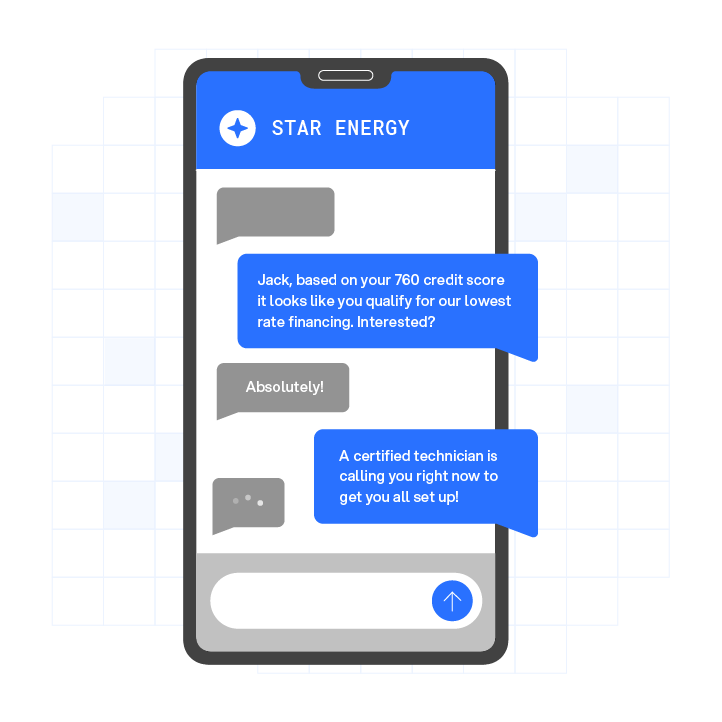
- Missed Call Triggers An Instant SMS Text-Back. The moment a call goes unanswered, an automated SMS goes to the caller. Agencies that text missed callers within 3 minutes recover 42% as new-business inquiries, while recovery rates fall to 28% at 3–15 minutes and 14% at 15–60 minutes. Example SMS script: “Hi [Name], we missed your call. Reply QUOTE for a fast quote, CLAIM for claims help, or POLICY for service. We will get right back to you.”
- The Text Identifies The Caller’s Intent. Keyword-based routing (QUOTE, CLAIM, POLICY) immediately classifies the inquiry type so the right team member handles it. New-business and claims calls receive faster handling than billing or certificate requests. For example, commercial new business can receive an SMS within 2 minutes, while billing questions may tolerate a longer window.
- Qualification Questions Determine Lead Readiness. The AI asks targeted questions about coverage type, timeline, existing policies, budget, and decision-maker authority to determine whether the lead is ready to buy or needs nurturing. This 60–90 second qualification step improves both prioritization and personalization.
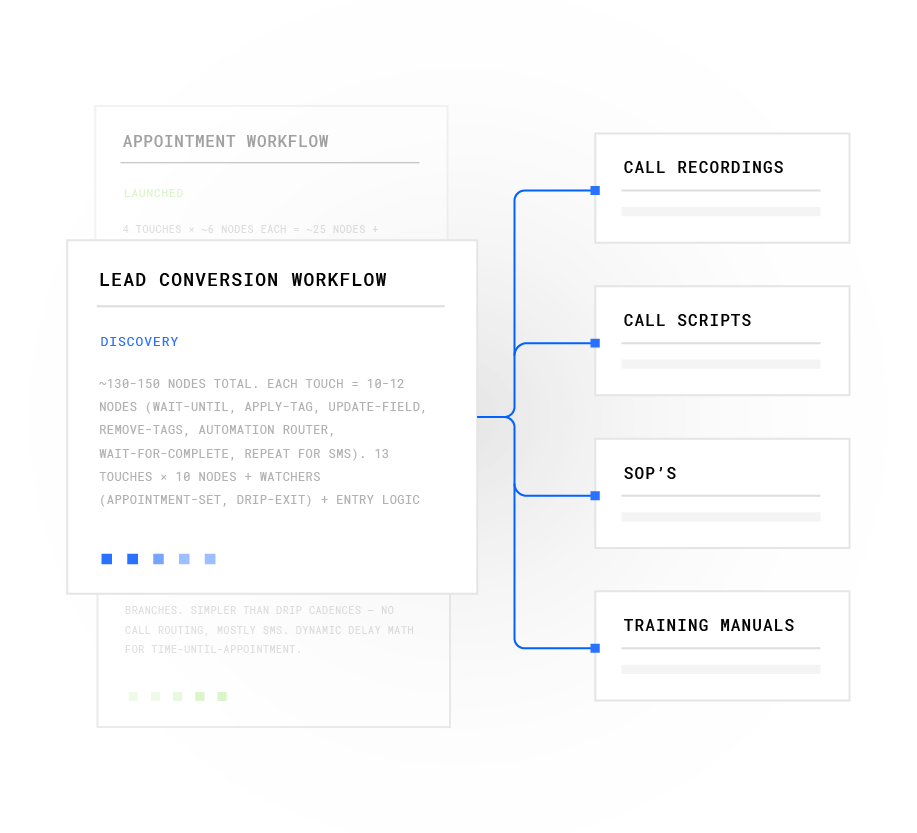
- The System Creates A Callback Task In The CRM. Every missed call becomes a tracked lead with an owner and an SLA. The CRM record includes the caller’s intent, qualification answers, and timestamp. This structure turns each miss into a reportable, owned record instead of a forgotten voicemail. Plura’s CRM integrations support native connections to Applied Epic, Vertafore AMS360, HawkSoft, HubSpot, Salesforce, and more than 50 other platforms.
- The Lead Is Escalated To A Live Agent Or AI Voice Agent. Hot leads, such as quote requests or claims, route to a licensed producer or an AI voice agent for immediate callback. Plura’s AI voice agents answer every call on the first ring and transfer hot leads to agents with full context.
- Follow-Up Texts And Reminders Close The Loop. A structured cadence with instant SMS at minute 0, a phone call for high-intent leads within 1–5 minutes, an SMS with a booking link at minute 10, and a final open-loop message on day 7 gives each lead multiple touchpoints before moving to nurture. Example SMS script: “Hi [Name], we are still here to help with your [quote/claim/service] request. Reply and we will get you connected right away.”
Technology Options Compared For Missed Call Recovery
Not all missed call recovery approaches deliver the same speed, coverage, or data quality. The table below compares three common options across response speed, recovery rate, after-hours coverage, lead qualification, and CRM integration.
| Capability | Manual Callbacks | Basic SMS Tools | AI Receptionists / Voice Agents |
|---|---|---|---|
| Response speed | 2–8 hours typical | 60 seconds | Under 5 seconds |
| Missed-to-recovery rate (new business) | 10–20% | 28–42% | 40–60% |
| After-hours coverage | None | SMS only | 24/7 voice + SMS |
| Lead qualification | Manual | None | Automated |
| CRM integration | Manual entry | Limited | Native |
Manual callbacks are slow and inconsistent. Typical agencies acknowledge missed calls in 2–8 hours and recover only 10–20% of missed new-business inquiries.
Basic SMS tools at $25–$99 per month can send an automatic text within 60 seconds but do not handle qualification, routing, or CRM integration.
AI-powered solutions like Plura AI provide instant response, AI qualification, native CRM integration, and 24/7 coverage across voice, SMS, and webchat on a single platform with stateful memory. Plura’s AI SMS agents text every lead in seconds, qualify them, then call and live-transfer warm buyers to your team. Plura contacts leads from websites, Google Business Profiles, or ad campaigns within 60 seconds via SMS or voice call.
After-Hours Coverage: Capturing Night And Weekend Callers
Nearly half of insurance inquiries arrive when offices are closed, with peak windows between 6–8 PM on weekdays, Saturday mornings, and Sunday evenings (IBISWorld, via Callingly).
After-hours leads often face less competition because many agencies send them to voicemail. They are frequently uncontested, which turns same-day coverage into a direct competitive differentiator. Immediate text-and-intake pairing can recover 20–40% of overnight leads that would otherwise go cold by morning.
Plura’s AI voice agents answer every call on the first ring, 24/7, qualify leads, book appointments, and transfer hot leads to agents with full context. This approach helps agencies capture a large share of the after-hours gap while human teams remain offline. Plura AI voice agents answer 100% of inbound calls within two rings.
Watch after-hours AI coverage in action in a live demo and see how it fits your staffing model.
Compliance And Consent For Automated SMS
Automated SMS to insurance callers operates within several regulatory and carrier frameworks.1,2 The points below describe that landscape and do not replace guidance from qualified counsel.
- TCPA (Telephone Consumer Protection Act). Marketing texts involve prior express written consent considerations, with penalties of $500–$1,500 per message for violations. The FCC’s one-to-one consent rule, scheduled to take effect January 27, 2026, was struck down by the 11th Circuit in early 2025, so it is not currently in effect.
- 10DLC registration. Since 2023, U.S. carriers have required A2P 10DLC registration for businesses sending SMS at scale from a 10-digit business number. Without registration, messages can be filtered as spam. Delivery rates may drop significantly, and the number can eventually face carrier blocking.
- Opt-out requirements. Every message must include a working opt-out mechanism such as “Reply STOP to unsubscribe,” and opt-outs must be honored promptly across channels.
- Time-of-day restrictions. Marketing texts are generally limited to between 8 AM and 9 PM in the recipient’s local time zone.
- State-specific rules. Some states add their own requirements. Florida’s mini-TCPA, for example, limits texting to 8 AM–8 PM and provides a private right of action with $500–$1,500 damages.
- Transactional vs. marketing. Transactional SMS such as renewal notices or claim assignments follows different consent standards than marketing SMS and cannot embed marketing content.
- Medicare and CMS rules. For Medicare Advantage and PDP marketing, CMS requires a Scope of Appointment before any marketing conversation and restricts cold SMS to Medicare-eligible contacts without prior SOA.
Plura’s platform includes real-time DNC scrubbing, immutable consent logging, and quiet-hours enforcement infrastructure designed to support your compliance program. Plura supports compliance and does not make customers compliant, and agencies remain responsible for their own regulatory obligations. Consult qualified counsel for your specific situation.
How To Measure ROI And Select A Recovery Platform
ROI modeling for missed call recovery starts with your own data. The core formula stays simple:
(Monthly missed calls) × (Average premium per policy) × (Close rate) = Lost revenue per month
Example: 40 missed calls per month × $1,500 average premium × 15% close rate equals $9,000 per month in lost premium revenue.
For a fuller picture, add retention value, since a missed service or renewal call creates a retention risk and a missed claims call can damage trust at a critical moment.
When you evaluate a missed call recovery solution, focus on these capabilities:
- Instant SMS response under 60 seconds
- AI qualification and intent routing
- Native CRM integration with systems such as Applied Epic, Vertafore AMS360, and HawkSoft
- After-hours coverage across voice and SMS
- Compliance-supporting features such as DNC scrubbing, consent logging, and quiet-hours enforcement
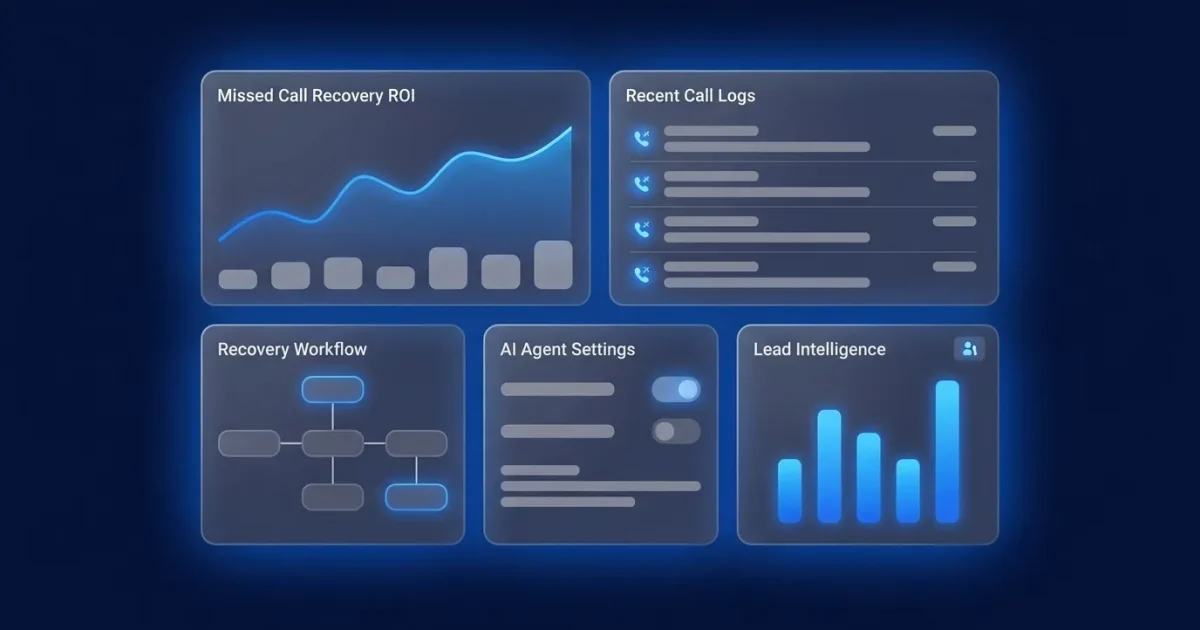
- Analytics and ROI reporting
Plura provides an ROI calculator where you can run your own numbers, along with transparent pricing across plan tiers. Organizations deploying AI for speed to lead often see response times drop from hours to seconds and connection rates increase by 3x to 5x.
Review your agency’s ROI model in a live demo using your actual call volume and close rates.
Frequently Asked Questions
What Is Missed Call Recovery For Insurance Agencies?
Missed call recovery for insurance agencies is the process of automatically responding to unanswered calls through instant SMS text-back, AI receptionists, or smart routing. These responses capture the lead, clarify their intent, and schedule a callback before they reach a competitor. The goal is to convert a missed call from a lost opportunity into a tracked pipeline entry with an assigned owner and a defined SLA.
How Much Does A Missed Call Cost An Insurance Agency?
The cost depends on agency size, lines written, and close rate, but the impact is consistently material. Each missed call often represents $300–$500 in lost premium revenue at the low end. A single missed call can represent about $1,547 in annual premium revenue and more than $10,000 in lifetime value over a seven-year relationship when retention is included. An agency missing 10 quote calls per week can lose $156,000–$260,000 annually. The most defensible approach uses your own data by multiplying monthly missed-call volume by average policy value and close rate, using inputs from your phone system and agency management system.
How Can I Recover Missed Calls After Hours?
Many agencies use an AI voice agent or AI receptionist that answers 24/7, qualifies leads, and books appointments without human intervention. Nearly half of insurance inquiries arrive outside business hours, and immediate text-and-intake pairing can recover a meaningful share of overnight leads that might otherwise go cold by morning. The key is pairing an instant SMS acknowledgment with a structured intake flow so the lead is captured and qualified before your team arrives the next day. After-hours leads are often uncontested because competitors are also on voicemail, which turns same-night coverage into a clear advantage.
Is Automated SMS To Insurance Callers Legally Permissible?
Automated SMS operates within a framework that includes the TCPA, A2P 10DLC registration requirements, opt-out rules, and time-of-day restrictions. Marketing texts involve prior express written consent considerations, and every message must include a working opt-out mechanism. The FCC’s one-to-one consent rule, scheduled to take effect January 27, 2026, was struck down by the 11th Circuit in early 2025, so it is not currently in effect. Some states impose additional restrictions, such as Florida’s mini-TCPA, which tightens the texting window and provides a private right of action. Transactional SMS such as renewal notices or claim assignments follows different consent standards than marketing SMS. This section describes the landscape, and agencies should consult qualified counsel for specific obligations and state-level requirements.
What Features Should I Look For In A Missed Call Recovery Solution?
Effective solutions combine instant SMS response under 60 seconds, AI-powered qualification and intent routing, native CRM integration with agency management systems like Applied Epic or Vertafore AMS360, and 24/7 after-hours coverage across voice and SMS. They also include compliance-supporting features such as DNC scrubbing and consent logging, plus analytics that track recovery rate, response time, and recovered revenue. Single-channel tools that only send a text-back without qualification or CRM logging leave significant recovery potential untapped. Plura AI combines AI voice, AI SMS, and AI webchat on a single platform with stateful memory across every channel, so a lead who texts at 9 PM is recognized when they call the next morning.
Conclusion: Turn Missed Calls Into Measurable Revenue
Missed calls create a revenue leak that grows over time. As noted earlier, the vast majority of unanswered callers never return, each call often represents hundreds of dollars in premium, and a large share of inquiries arrive after hours when many agencies are unavailable. The math is straightforward: an agency missing 40 calls per month at a 15% close rate and $1,500 average premium loses $9,000 per month in recoverable revenue.
Instant SMS text-back, AI voice agents, and smart routing can recover a large share of missed new-business inquiries when they operate inside a structured workflow with compliance-supporting infrastructure.
Plura AI combines AI voice, AI SMS, and AI webchat on a single platform with stateful memory and carrier-grade compliance support. Every missed call becomes a tracked lead, every after-hours inquiry receives an immediate response, and every recovery attempt fires within seconds instead of hours.
Compare plans on the pricing page or run your agency’s numbers through the ROI calculator.
See the full missed call recovery platform in a live demo and evaluate how it fits your agency’s growth plan.
1 Plura AI maintains SOC 2, HIPAA, ISO, and GDPR posture as part of its platform infrastructure. References to compliance frameworks in this article describe Plura’s platform capabilities and do not constitute a guarantee that any customer using Plura will themselves be compliant with applicable laws or standards. Customers remain solely responsible for their own regulatory obligations, certifications, consent management, recordkeeping, and the claims they make to their own end users. Consult qualified legal counsel for guidance specific to your use case.
2 This article describes regulatory frameworks at a general level and does not constitute legal advice. Laws and regulations vary by jurisdiction, change over time, and apply differently depending on facts and circumstances. Readers should consult qualified legal counsel before making compliance decisions.
3 Performance figures, customer outcomes, and industry statistics referenced in this article are drawn from cited third-party sources or Plura customer case studies. Individual results vary based on implementation, use case, industry, audience, and execution. Past or aggregate performance is not a guarantee of future results.
4 References to third-party products, services, companies, or research are made for informational and comparative purposes only. Plura AI is not affiliated with, endorsed by, or sponsored by any third party named in this article unless explicitly stated. Trademarks and product names referenced remain the property of their respective owners.
This article is provided for informational purposes only and reflects Plura AI’s understanding at the time of publication. Product capabilities, integrations, and specifications are subject to change. For the most current information, visit plura.ai.
This article was produced with the assistance of AI tools and reviewed by Plura AI prior to publication.