
Written by: Matt Beucler, CEO, Plura AI
Key Takeaways
- Missed calls in real estate represent lost commissions, with 78% of buyers working with the first agent who responds.3
- Missed call recovery automation triggers SMS or AI voice callbacks within seconds of an unanswered call, which lifts speed-to-lead and conversion rates.
- Effective setups combine SMS text-back for quick first contact with AI voice agents for deeper qualification, with every interaction logged into CRMs like Follow Up Boss and GoHighLevel.
- Structured follow-up cadences that mix immediate automated responses, timed multi-channel touches, and nurture sequences recover leads that would otherwise go to competitors.
- Plura AI delivers missed call recovery automation with AI voice and SMS on a single platform featuring deep CRM integrations and compliance-supporting controls; see a live missed call recovery workflow.
Missed Call Recovery Automation for Real Estate, Defined
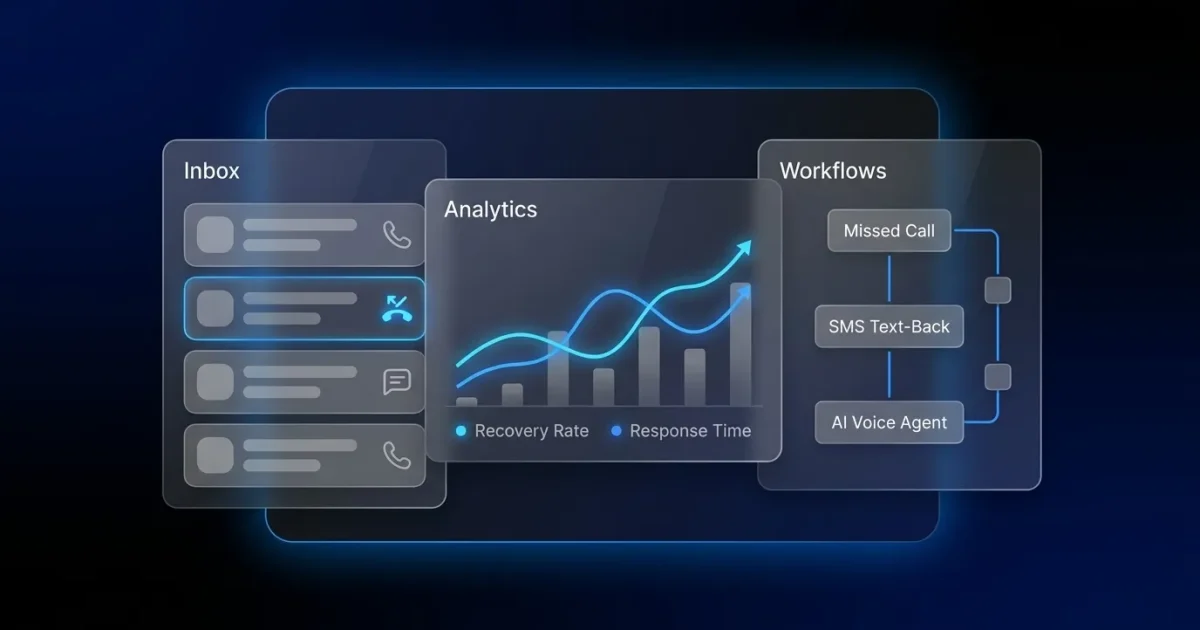
Missed call recovery automation for real estate is a system that instantly texts or calls back prospects who reach your voicemail. It keeps them from moving on to a competing agent. When an inbound call goes unanswered, the system detects the missed call event, triggers an automated SMS or AI voice callback within seconds, qualifies the lead through a short conversation, and logs the interaction to your CRM.
The speed component drives the results. Contacting a lead within 5 minutes makes them up to 100x more likely to connect3 than waiting 30 minutes. Lead conversion rates drop 10x after the first 5 minutes.3 In real estate, the first automated touchpoint often decides whether you book the showing or lose the deal.
Watch missed call recovery in a live Plura real estate account.
How Missed Call Recovery Works: The 5-Step Workflow
- Missed Call Trigger: An inbound call goes unanswered or hits voicemail. The phone system or AI platform detects the no-answer event in real time.
- Instant Automated Response: Within seconds, the system sends an SMS text-back or an AI voice agent calls back the prospect.
- Lead Qualification: The AI or SMS conversation asks key questions covering budget, timeline, and location to qualify the lead before a human agent steps in.
- Action and Booking: The system books a showing or schedules a call directly on your calendar, or routes a warm, qualified lead to you for immediate follow-up.
- CRM Logging: All conversation details and transcripts are logged to your CRM, such as Follow Up Boss, kvCORE, or Salesforce, so nothing falls through the cracks.4
Once this workflow runs reliably, the next decision is which recovery channel to use for that first touch: SMS text-back or an AI voice agent.
SMS Text-Back vs. AI Voice Agent for Missed Calls
The two primary approaches to missed call recovery serve different operational needs, and the right mix depends on your team size and call volume. SMS text-back fits solo agents and small teams that need fast, low-friction first contact. AI voice agents fit high-volume teams and franchises that need live coverage during peak and after-hours windows.
Consider the tradeoffs between the two channels:
SMS text-back works best when you need:
- Fast deployment with minimal setup.
- Lower monthly cost, typically $40 to $150 per month.
- A quiet, non-intrusive first touch that feels natural to mobile-first buyers.
- Simple automation inside most CRMs.
The tradeoff is depth. SMS text-back has limited qualification and depends on the lead to reply, so you do not build a voice relationship on the first touch.
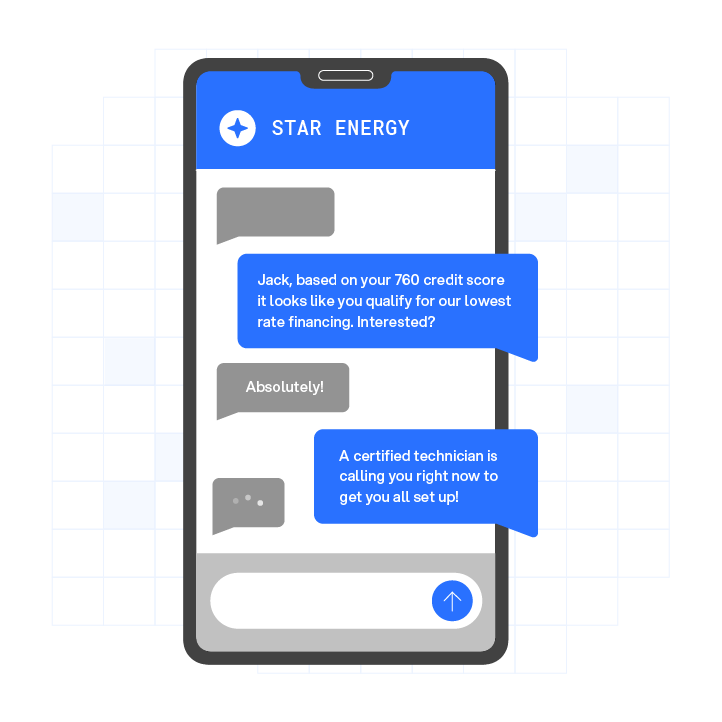
AI voice agents work best when you need:
- Coverage on the first ring, 24 hours a day, 7 days a week.
- Live conversations that qualify leads, answer questions, and book showings.
- Natural-sounding calls that feel like a trained inside sales agent.
- Higher appointment set rates, with AI agents using property data often achieving 2x to 3x improvements.3
The tradeoff is higher cost than SMS-only tools and an initial setup period for scripts and workflows.
The strongest deployments combine both channels. Plura AI’s AI voice agents and AI SMS follow-ups share a Stateful Conversation Database. The system that texted a lead at 9 AM already knows what was said when the voice callback fires at noon. The platform retains full context across every touchpoint.
How to Set Up Missed Call Recovery in Your CRM
Follow Up Boss: Three-Step Missed Call Automation
Follow Up Boss logs missed calls natively when calls route through the CRM’s connected phone system. A practical missed call recovery setup in Follow Up Boss uses three steps.
- Confirm your phone line is connected to a supported dialer or Twilio integration so missed-call events fire as CRM activity triggers.
- Create an automation in Follow Up Boss that fires on a missed-call activity trigger. Configure the action to send an immediate SMS to the lead and create a follow-up task assigned to the responsible agent.
- Add a sequence exit condition so the automation stops when the lead replies. This prevents double-contact on leads who respond quickly.
For calls arriving from outside the CRM, such as a Zillow lead who dialed a Google Voice number, a platform like Plura can handle the lookup. It creates the contact automatically if the number is new, then fires the SMS from the same number the lead originally dialed.
GoHighLevel: Native Text-Back and Workflow Control
GoHighLevel includes a native missed call text-back feature that you can activate in Settings, then Business Profile, then Missed Call Text Back. This works without a custom workflow. Teams that want more control can use a workflow-based approach.
- Trigger: Inbound Call with Call Status set to Missed.
- Action: Send SMS with your first-response message.
- Wait step: 20 minutes to prevent duplicate texts.
- If/Else branch: if the contact replies, the workflow ends. If not, a follow-up SMS fires after 2 hours.
- Pipeline action: add the contact to a Missed Call pipeline stage and create a callback task for a team member.
Plura’s integrations cover 50+ tools including Follow Up Boss, GoHighLevel, and Salesforce, though kvCORE is not listed in the evidence.4 Every missed call can create a lead record, send a text, and notify the responsible agent without manual data entry.
The Ideal Follow-Up Cadence from Missed Call to Showing
80% of sales require at least 5 follow-up touches to close, yet most agents quit after an average of 1.5 attempts. A clear cadence closes that gap.
- Immediate (within 60 seconds): Automated SMS text-back that acknowledges the missed call by name. Plura contacts leads within 60 seconds via SMS or voice call. Leads contacted within 1 minute are 391% more likely to convert than those contacted after 24 hours.
- 2 hours: If no reply, send a second text or trigger an AI voice agent callback. The highest answer-rate windows are 8:00 to 9:00 AM and 5:30 to 7:00 PM, so time this touch around those windows.
- Next day: If there is still no response, send a personalized email or leave a structured voicemail. Modern smartphones transcribe voicemails, and leads often read the transcription preview even when they will not pick up.
- 48 hours: Run a final short-term follow-up with a direct call-to-action such as “Want to see this home? I have openings this week.”
- Days 5 to 30: Enroll the contact in a nurture sequence that mixes value-add market content, listing alerts, and periodic check-ins. Four touchpoints in the first 24 hours achieve a 55% to 65% response rate, compared with 15% to 20% for a single-touch approach.
Exit the sequence automatically as soon as the lead books or replies. Continuing outreach after a showing is scheduled erodes trust.
What Missed Call Recovery Costs and How to Model ROI
Pricing for missed call recovery tools in real estate falls into two main models.
- SMS automation platforms: Entry-level plans run $20 to $60 per month for basic autoresponders. Mid-range plans with CRM integrations and multi-step sequences run $60 to $150 per month. Full platform plans run $150 to $300+ per month. High-volume teams should factor in per-message charges of about $0.01 to $0.05 per SMS plus A2P 10DLC carrier fees.
- AI voice agent platforms: Standalone AI voice agents for real estate range from $149 per month at the starter tier to $1,499+ per month for enterprise platforms, with flat monthly fees replacing per-minute billing on some plans.
The ROI math stays simple. A missed call in real estate can represent a $10,000 to $30,000 commission.3 Recovering one additional deal per quarter from automated follow-up can cover years of platform cost. Run your numbers through Plura’s ROI calculator and compare Plura’s plans and rates in the same view to match a tier to your call volume.
Staying Compliant: TCPA, DNC, and A2P 10DLC
Automated SMS and AI voice calls in real estate operate within a regulatory framework that includes the Telephone Consumer Protection Act (TCPA, 47 U.S.C. § 227), the National Do Not Call Registry maintained by the FTC, and A2P 10DLC carrier registration requirements.2 The FCC’s 2024 ruling classified AI-generated voices as “artificial or prerecorded voice” under the TCPA, which affects the consent standard that applies to AI voice callbacks.2 Business texting typically runs over registered A2P 10DLC numbers, and the FTC requires every number to be checked against the National Do Not Call Registry at least once every 31 days.
TCPA violations can cost $500 to $1,500 per text or call, and class actions in this space regularly produce seven-figure settlements. Consult qualified legal counsel and the relevant FCC and FTC guidance before launching any automated outreach campaign.
Plura supports compliance with real-time DNC scrubbing, TCPA consent logging, STIR/SHAKEN caller ID verification, and quiet-hours enforcement through time-zone detection.1 These controls sit at the infrastructure level inside the platform. Customers remain responsible for their own consent records, regulatory obligations, and the claims they make to their end users. Review Plura’s SMS guidelines and responsible AI policy for platform-level detail.
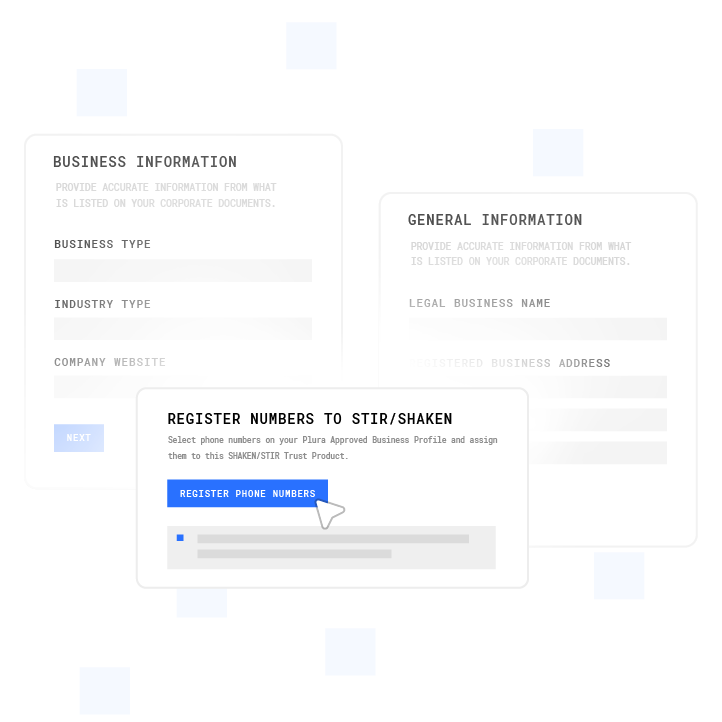
Explore Plura’s compliance-supporting features in a live walkthrough.
Why the 80/20 Rule Makes Missed Calls High-Value
The 80/20 rule in real estate means roughly 80% of an agent’s business comes from 20% of their leads. Inbound callers usually sit inside that 20%. They found your number, dialed it, and waited. That is the highest-intent action a prospect takes in the entire funnel. BOFU buyers who call are typically 60 to 90 days from signing. When those calls roll to voicemail without an automated recovery system, the leads most likely to close are the ones most likely to walk.
Missed call recovery automation helps you capture the 20% that matters most, even when you are on a roof, in a showing, or off the clock.
Common Missed Call Mistakes Agents Can Avoid
- Relying on voicemail alone: The average real estate agent takes over 15 hours to respond to a new lead, and most callers do not leave messages. Voicemail-only workflows leave serious gaps in coverage.
- Waiting too long to call back: Waiting over 15 minutes to respond causes contact rates to drop by more than 50%. Delayed callbacks turn warm inbound interest into cold outreach.
- No after-hours system: 64% of real estate leads are submitted after hours, including nights, weekends, and holidays. Agents who only respond during business hours structurally forfeit nearly half of their paid leads.
- Failing to log missed calls in the CRM: If the missed call does not create a lead record, it does not exist for follow-up. The contact falls out of the pipeline entirely.
- Giving up after one or two attempts: The average online real estate lead requires 8 to 12 touches across multiple channels before engaging, yet many agents stop after 1 or 2 attempts. Short sequences leave revenue on the table.
- Using the same channel every time: Multi-channel follow-up via voice, SMS, and email within 5 minutes outperforms single-channel by 278%. A single-channel approach misses buyers who prefer a different medium.
Frequently Asked Questions
What is missed call recovery?
Missed call recovery is an automated system that instantly texts or calls back a prospect who reached your voicemail, which helps keep them from moving on to a competing agent. When a call goes unanswered, the system detects the missed call event and triggers an outbound response within seconds, without any manual action from the agent.
How does missed call recovery work for real estate?
The system detects a missed inbound call, triggers an instant SMS or AI voice callback, engages the prospect in a qualifying conversation covering budget, timeline, and property interest, books a showing or callback directly on the agent’s calendar, and logs the full interaction to the CRM. The entire sequence runs automatically, whether the agent is in a showing, after hours, or on the weekend.
What is the best missed call software for realtors?
The strongest solutions for real estate combine AI voice and SMS on a single platform with deep CRM integrations for Follow Up Boss, GoHighLevel, kvCORE, and Salesforce, plus compliance-supporting infrastructure for DNC scrubbing and TCPA consent logging. Plura AI combines AI voice agents and AI SMS follow-ups on an FCC-licensed carrier with integrations across 50+ real estate and CRM tools, and a Stateful Conversation Database that shares memory across every channel.
How much does missed call automation cost?
SMS-only missed call text-back tools typically run $40 to $150 per month for mid-range plans with CRM integrations and multi-step sequences. Full AI voice agent platforms for real estate range from roughly $149 per month at the starter tier to $1,499+ per month for enterprise deployments. High-volume teams should also factor in per-message SMS fees and A2P 10DLC carrier registration costs. Recovering even one additional deal per quarter from automated follow-up often covers the annual platform cost many times over, given average real estate commissions.
What compliance considerations apply to missed call automation?
Automated SMS and AI voice callbacks in real estate operate within the TCPA, the National Do Not Call Registry, and A2P 10DLC carrier registration requirements. The FCC’s 2024 ruling classified AI-generated voices as “artificial or prerecorded voice” under the TCPA, which affects consent requirements for AI voice callbacks. State-level rules in Florida, Texas, Oklahoma, Washington, and others layer additional requirements on top of federal standards. Consult qualified legal counsel and the FCC and FTC guidance directly before launching any automated outreach program. Plura supports compliance with real-time DNC scrubbing, TCPA consent logging, and quiet-hours enforcement, but customers remain responsible for their own regulatory obligations.
Turn Missed Calls into Closed Deals
Every missed call risks a missed commission. The industry-average response time of more than 15 hours creates a structural guarantee that the hottest leads in your pipeline will close with someone else. Missed call recovery automation for real estate addresses the problem at the infrastructure level with instant response, automated qualification, CRM logging, and a follow-up cadence that runs whether you are available or not.
Plura AI combines AI voice agents and AI SMS on an FCC-licensed carrier with integrations across Follow Up Boss, GoHighLevel, kvCORE, Salesforce, and 50+ other tools. Every channel shares a Stateful Conversation Database, so context never resets between touchpoints. Compliance infrastructure including real-time DNC scrubbing, TCPA consent logging, and STIR/SHAKEN caller ID verification is built into the platform.
Run your numbers through Plura’s ROI calculator and review plans and rates to match a tier to your call volume.
See Plura’s missed call recovery workflow on a real estate account.
1 Plura AI maintains SOC 2, HIPAA, ISO, and GDPR posture as part of its platform infrastructure. References to compliance frameworks in this article describe Plura’s platform capabilities and do not constitute a guarantee that any customer using Plura will themselves be compliant with applicable laws or standards. Customers remain solely responsible for their own regulatory obligations, certifications, consent management, recordkeeping, and the claims they make to their own end users. Consult qualified legal counsel for guidance specific to your use case.
2 This article describes regulatory frameworks at a general level and does not constitute legal advice. Laws and regulations vary by jurisdiction, change over time, and apply differently depending on facts and circumstances. Readers should consult qualified legal counsel before making compliance decisions.
3 Performance figures, customer outcomes, and industry statistics referenced in this article are drawn from cited third-party sources or Plura customer case studies. Individual results vary based on implementation, use case, industry, audience, and execution. Past or aggregate performance is not a guarantee of future results.
4 References to third-party products, services, companies, or research are made for informational and comparative purposes only. Plura AI is not affiliated with, endorsed by, or sponsored by any third party named in this article unless explicitly stated. Trademarks and product names referenced remain the property of their respective owners.
This article is provided for informational purposes only and reflects Plura AI’s understanding at the time of publication. Product capabilities, integrations, and specifications are subject to change. For the most current information, visit plura.ai.
This article was produced with the assistance of AI tools and reviewed by Plura AI prior to publication.