
Written by: Matt Beucler, CEO, Plura AI
Updated September 2026
Key Takeaways
- Multi-tenant SMS compliance requires isolated consent records, opt-out lists, and audit trails for each tenant to prevent cross-contamination and litigation exposure.
- Valid prior express written consent must be captured per tenant with timestamped, versioned disclosure language and affirmative acts. Boolean flags on contact records do not provide sufficient audit defense.
- Opt-outs should be processed immediately at the platform level and scoped to the receiving tenant’s suppression list, with immutable logs retained for a minimum of five years.
- Architectural choices such as shared schema with row-level security, schema-per-tenant, or hybrid tiered models determine how cleanly consent and suppression data can be isolated, exported, and audited per tenant.
- Plura AI delivers a compliance-first platform with real-time DNC scrubbing, per-tenant consent isolation, and one-click audit exports. See these controls in a live demo inside a single system.
Why Tenant Isolation Matters for SMS Compliance
The Telephone Consumer Protection Act (TCPA), codified at 47 U.S.C. § 227, governs automated marketing calls and texts to wireless numbers.2 Under the TCPA, the sender must prove consent and opt-out records. In a multi-tenant CRM, each tenant is a distinct sender, so each tenant’s consent and suppression data must be traceable to that sender alone.
Cross-tenant contamination occurs in two ways. A shared consent or suppression table can let one tenant’s opt-out affect another tenant’s campaigns. A contact’s consent record for Tenant A can also be inadvertently applied to Tenant B’s outreach. Either failure creates audit exposure and potential litigation. CTIA Messaging Principles and Best Practices and The Campaign Registry (TCR) A2P 10DLC registration requirements treat each brand and campaign as a distinct registered entity, which reinforces the need for per-tenant data boundaries.
The FCC’s one-to-one consent rule (FCC 23-107, effective January 27, 2025) required that prior express written consent name a single seller.2 The Eleventh Circuit vacated that rule in January 2025 in Insurance Marketing Coalition v. FCC. The underlying TCPA standard still requires named-seller attribution in consent records, and plaintiff firms continue to use the one-to-one standard as a litigation benchmark. Multi-tenant platforms that cannot isolate consent by tenant and by named seller carry elevated exposure regardless of the vacatur.
TCPA statutory damages run $500 per violation for ordinary violations and up to $1,500 per willful or knowing violation, with no statutory cap. Each text message is its own violation. A single non-compliant campaign to 10,000 contacts carries theoretical exposure of $5 million to $15 million before class certification.
See per-tenant consent isolation and real-time DNC scrubbing in action by booking a live demo.
Core Compliance Requirements for Multi-Tenant SMS
Consent: Elements of a Defensible Record
Prior express written consent under 47 C.F.R. § 64.1200(f)(9) requires a written agreement, and electronic records qualify. The agreement must clearly authorize the specific seller to deliver advertisements or telemarketing messages, show the authorized phone number, and include a clear and conspicuous disclosure that consent is not a condition of purchase.
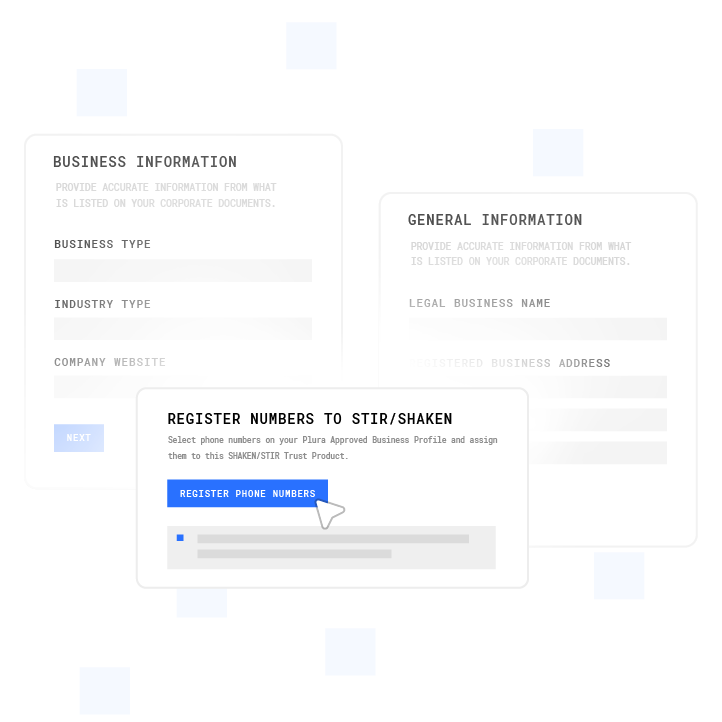
A defensible consent record captures the following fields per TCPA compliance guidance:
- Timestamp to the second
- Source URL or form ID
- Phone number in E.164 format
- Exact disclosure language as worded on that date (versioned)
- Affirmative act such as checkbox state, button label, or inbound keyword
- IP address or device identifier
- Scope of consent in plain language
LeadCompliant recommends retaining consent records at least five years from the last contact. Courts have held that pre-checked boxes, disclosures buried in privacy policies, and consent hidden inside terms of service do not constitute valid TCPA consent.
Opt-Out: Fast, Clear, and Tenant-Scoped
Under 47 CFR 64.1200(a)(10), revocation of consent must be honored as soon as practicable and no later than ten business days after receipt. Industry best practice, and the standard enforced by carriers, is immediate processing within the same second the inbound message is received.
The CTIA Short Code Monitoring Handbook and TCPA case law establish a standard list of opt-out keywords every SMS platform must honor regardless of number type: STOP, UNSUBSCRIBE, END, QUIT, CANCEL, STOPALL, REVOKE, and OPTOUT, recognized case-insensitively. Courts apply a reasonable-person standard. If a reasonable person reading the reply would interpret it as an opt-out, the platform should honor it, even if it is not a standard keyword.
After an opt-out, the FCC rule permits one clarifying reply within five minutes with no marketing content. All subsequent messaging must stop until explicit re-consent is obtained.
Audit: Logs That Stand Up to Scrutiny
The TCPA statute of limitations runs four years under 28 U.S.C. § 1658. 47 C.F.R. § 64.1200(d)(6) states that a do-not-call request must be honored for five years from when it is made. The longer clock governs retention, so a five-year minimum becomes the practical standard. Audit logs must capture who sent the message, what was sent, when it was sent, from which tenant, and the consent and opt-out status at the time of send.
5 Steps to Support SMS Compliance in a Multi-Tenant CRM
- Implement dedicated consent objects with all required fields per tenant, instead of boolean flags on contact records.
- Register each tenant’s brand and campaigns separately with The Campaign Registry for A2P 10DLC.
- Process opt-outs immediately at the platform level and propagate suppression to every sending channel for that tenant.
- Enforce quiet hours automatically based on the recipient’s local time zone.
- Retain immutable consent and opt-out logs for a minimum of five years with per-tenant export capability.
Consent Data Model for Multi-Tenant SMS
Storing consent as a boolean flag on a contact record is the most common architectural mistake in SMS CRM implementations. As Devam Gupta, Staff Engineer at Twilio and technical architect of Twilio for Salesforce, explains, a contact may have multiple phone numbers, so consent is per number, not per contact.3 A boolean has no history, so you cannot audit when consent was given or revoked. Checking consent for a bulk campaign also means loading every contact record.
The Twilio for Salesforce architecture models consent as a standalone object keyed by phone number and keyword, with no foreign key to the contact record.3 Devam Gupta’s 2026 arXiv paper (arXiv:2608.00248) generalizes this pattern for multi-tenant CRM managed packages. The paper describes a data model with keyword-based consent capture, hash-based uniqueness for deduplication, and suppression enforcement at message send time.
A reference consent object for a multi-tenant SMS CRM includes these fields:
tenant_idas the isolating key that scopes every record to a single tenantphone_numberstored in E.164 formatconsent_typesuch as marketing, transactional, or other defined scopetimestampto the second, with timezonesourcesuch as form ID or source URLip_addressas device or session identifierdisclosure_versionas a versioned snapshot of the exact disclosure language shownopt_out_atas the timestamp of revocation, null if still opted inThe table below summarizes how boolean flags and dedicated consent objects differ across the dimensions that matter most for compliance.
Dimension Boolean Flag on Contact Dedicated Consent Object Auditability No history; cannot show when consent was given or revoked Full timestamped history per phone number per keyword Flexibility One state per contact; cannot handle multiple numbers or consent types Supports multiple numbers, keywords, and consent scopes per contact Compliance Risk High; cannot produce timestamped consent proof for litigation Lower; each record is a self-contained, auditable consent artifact Tenant Isolation Patterns for SMS Data
Three primary architectural patterns govern how multi-tenant CRMs isolate data. The choice directly affects how cleanly consent and opt-out records can be separated, exported, and audited per tenant. As the comparison below shows, these patterns trade off cost and operational simplicity against isolation strength and restore complexity.
Row-level security (RLS) is a database-layer technique that filters query results by tenant context. ClickHouse’s engineering guide characterizes RLS as an infrastructure safety net, not the primary authorization gate. Application-level filtering should still explicitly target the correct tenant. RLS has known CVEs related to plan reuse across role changes, and connection pool context leakage can serve wrong-tenant data if tenant context is not set correctly within each transaction.
Handling Opt-Outs and Suppression Lists Across Tenants
Opt-out handling in a multi-tenant environment requires a workflow that suppresses at the platform level for the receiving tenant without affecting other tenants’ suppression lists. A failure to propagate the opt-out to all sending systems for a given tenant is the most common cause of TCPA lawsuits in multi-tool SMS stacks.
A code-agnostic opt-out workflow for a multi-tenant CRM follows this sequence:
- Inbound message is received on the tenant’s registered number.
- The platform detects an opt-out keyword such as STOP, UNSUBSCRIBE, END, QUIT, or CANCEL, or detects intent-based revocation using natural-language matching.
- The consent object for that
tenant_idandphone_numberis updated andopt_out_atis set to the current timestamp.- The phone number is added to that tenant’s suppression list only, and no other tenant’s suppression list is modified.
- All queued outbound messages for that
tenant_idandphone_numberare cancelled.- One confirmation message is sent with no promotional content, identifying the brand and confirming no further marketing messages will be sent.
- The opt-out event is written to an immutable audit log with tenant_id, phone_number, timestamp, keyword or language used, and confirmation message ID.
- Suppression is synced to all sending channels such as SMS, voice, and email for that tenant via webhook or platform-level enforcement.
The critical design constraint is scoping the suppression write in step 4 to the receiving tenant’s data partition. A shared suppression table without a
tenant_idleading key will propagate one tenant’s opt-out across all tenants and create cross-tenant contamination.Audit Trails and Reporting for Regulators
The burden of proof in TCPA litigation sits with the sender. To prove an opt-out was honored, the sender must document the exact date and time of the opt-out, the keyword or language used, the time of propagation to the suppression list, the confirmation message sent, and all subsequent messages to that number.
Audit logs must capture:
- Tenant ID on every record
- Phone number in E.164 format
- Message direction as inbound or outbound
- Message content or content hash
- Timestamp with timezone
- Consent status at time of send
- Opt-out event details if applicable
- Sending agent or campaign identifier
Logs must be immutable, with no update or delete operations on historical records. Per-tenant export capability is required so a regulator or auditor can receive one tenant’s complete consent and opt-out history without exposure to any other tenant’s data. As with consent records, retention should follow the five-year standard discussed earlier.
Evaluating CRM Platforms and Vendors for Multi-Tenant Compliance
When evaluating a CRM platform or vendor for multi-tenant SMS compliance, the following criteria provide a practical decision framework. Each criterion addresses a specific failure point, from cross-tenant contamination to missing audit history.
- Native multi-tenant isolation with
tenant_idas a leading key on all consent and suppression tables- Dedicated consent objects instead of boolean flags on contact records
- Built-in TCPA and DNC compliance features enforced before each send
- A2P 10DLC registration support per tenant brand and campaign
- Immediate opt-out processing with per-tenant suppression scope
- Immutable audit logging with per-tenant export
- 100% U.S.-based infrastructure for data residency and regulatory posture
- Real-time DNC scrubbing against federal and state registries
Plura AI is an FCC-licensed platform of AI agents that runs voice, AI SMS, RCS, and AI webchat on 100% U.S. infrastructure. Plura’s compliance engine is a first-class layer of the platform, with real-time DNC scrubbing, immutable consent logging, and per-tenant isolation built into every outbound contact. Every outbound contact is checked against federal and state DNC registries before send. Consent records are timestamped and audit-ready. Quiet-hours rules enforce automatically through time-zone detection. The compliance dashboard exports per-tenant audit reports in one click. Plura provides the infrastructure and features that support compliance; customers remain responsible for their own regulatory obligations and certifications. Review plans and rates to evaluate fit for your organization’s scale.
Frequently Asked Questions
What is multi-tenant SMS compliance?
Multi-tenant SMS compliance refers to the technical and operational controls that ensure each tenant in a shared CRM platform maintains its own isolated consent records, opt-out lists, and audit trails for SMS messaging. The core regulatory frameworks are the TCPA (47 U.S.C. § 227) and A2P 10DLC registration requirements through The Campaign Registry. Compliance in a multi-tenant context means that one tenant’s opt-out does not affect another tenant’s campaigns, that each tenant’s consent records are attributable to that specific sender, and that audit logs can be exported per tenant without exposing other tenants’ data. Organizations should consult qualified legal counsel for guidance on their specific obligations.
How do you handle opt-outs in a multi-tenant CRM?
Opt-outs in a multi-tenant CRM must be scoped to the receiving tenant. When a contact sends a STOP, UNSUBSCRIBE, END, QUIT, or CANCEL keyword, the platform should immediately update the consent object for that tenant and phone number combination, add the number to that tenant’s suppression list only, cancel all queued messages for that tenant and number, and send one confirmation message with no promotional content. The opt-out should not propagate to other tenants’ suppression lists. Intent-based revocations in natural language must also be recognized, not just exact keyword matches. The FCC rule effective April 11, 2025 states that opt-outs must be honored as soon as practicable and no later than ten business days after receipt, with industry best practice being immediate processing.
What is a dedicated consent object?
A dedicated consent object is a separate database entity that stores consent records independently of the contact or lead record. Rather than storing a boolean opted-in flag on a contact, a dedicated consent object captures the full consent event. It stores tenant ID, phone number in E.164 format, consent type, timestamp to the second, source URL or form ID, IP address, versioned disclosure language, affirmative act, and opt-out timestamp if applicable. This structure supports auditability because it preserves the full history of consent events per phone number, supports multiple phone numbers per contact with independent consent states, and enables bulk suppression checks at send time without loading every contact record. The Twilio for Salesforce architecture and Devam Gupta’s arXiv paper (arXiv:2608.00248) both describe this pattern as the production standard for CRM-native SMS compliance.
How do you isolate SMS consent per tenant?
Tenant isolation for SMS consent is achieved by including
tenant_idas the leading column on all consent and suppression tables and by ensuring every read and write operation is scoped to the correct tenant context. In a shared-schema architecture, every query against the consent object must include atenant_idpredicate, enforced at the application layer and reinforced by row-level security at the database layer. In a schema-per-tenant or database-per-tenant architecture, the schema or database boundary itself provides the isolation. A shared suppression table without a tenant_id leading key allows one tenant’s opt-out to contaminate another tenant’s sending lists. Tenant context must be sourced from verified session tokens or JWTs, never from the request body.What are the best practices for A2P 10DLC compliance in a multi-tenant platform?
A2P 10DLC (Application-to-Person, 10-digit long code) compliance in a multi-tenant platform requires registering each tenant’s brand and each messaging campaign separately with The Campaign Registry. 10DLC registration and TCPA consent are connected but distinct obligations. A campaign that clears TCR review but lacks valid TCPA consent remains exposed to lawsuits, and a campaign with valid consent but no 10DLC registration will be filtered before reaching recipients. Each tenant should have its own registered brand and campaign records, with sample messages and opt-in source URLs submitted per campaign. Registration typically takes three to six weeks. Unregistered traffic is filtered or blocked by major carriers. Organizations should monitor TCR documentation and carrier guidelines for updates, as requirements have continued to evolve through 2026.
Shared vs. dedicated numbers for multi-tenant SMS
Shared short codes were eliminated by major carriers in 2021. The current options are dedicated short codes, toll-free numbers, and 10DLC long codes. For multi-tenant platforms, each tenant should operate under its own registered number or number pool tied to its own TCR brand and campaign registration. Shared numbers across tenants create attribution problems. If a contact sends STOP to a shared number, it is unclear which tenant’s suppression list should be updated, and the confirmation message cannot correctly identify the brand. Per-tenant number assignment, combined with per-tenant consent objects and suppression lists, supports clean audit trails and regulator-ready reporting.
How do you audit SMS consent across tenants?
Auditing SMS consent across tenants requires immutable logs that capture tenant ID, phone number, message direction, consent status at time of send, and opt-out event details on every record. Per-tenant export capability is required so a regulator or auditor can receive one tenant’s complete history without exposure to other tenants’ data. Logs should follow the five-year retention standard mentioned in the audit section. The audit system should support queries by tenant ID, phone number, date range, and event type. Regulators and plaintiffs’ counsel will request the exact date and time of consent capture, the disclosure language shown, the opt-out event, and all messages sent after the opt-out. Systems that cannot produce this data per tenant, without cross-tenant exposure, fail the audit standard.
What are the penalties for TCPA violations?
As noted earlier, TCPA damages can reach $1,500 per willful violation, and a large campaign can expose a sender to millions in liability. See the penalties discussion in the tenant isolation section above for details. The FCC also holds separate forfeiture authority under 47 U.S.C. § 503(b), with fines adjusted for inflation. The FTC’s Telemarketing Sales Rule (TSR), codified at 16 CFR Part 310, carries civil penalties that are adjusted periodically. TCPA class action filings rose nearly 95 percent year over year through mid-2025. Organizations should consult qualified legal counsel for guidance on their specific exposure.
Conclusion: Building a Compliance-First Multi-Tenant SMS Architecture
Multi-tenant SMS compliance often fails at the data model layer before it fails anywhere else. Dedicated consent objects with full field capture, deliberate tenant isolation enforced at both the application and database layers, immediate opt-out processing scoped to the receiving tenant, and immutable audit logs retained for five years form the core of a defensible architecture.
The regulatory environment continues to tighten. TCPA class action filings are rising. A2P 10DLC registration requirements treat each brand and campaign as a distinct registered entity. The FCC’s rulemaking on SMS consent has accelerated, with further changes signaled through 2026.4 Platforms that treat compliance as a bolt-on rather than a first-class architectural layer face audit challenges and litigation exposure as enforcement scales.
Plura provides the infrastructure and features that support this compliance architecture, including real-time DNC scrubbing, immutable consent logging, per-tenant isolation, and audit-ready exports, all running on 100% U.S. infrastructure as an FCC-licensed platform. Compare plans and rates side by side.
1 Plura AI maintains SOC 2, HIPAA, ISO, and GDPR posture as part of its platform infrastructure. References to compliance frameworks in this article describe Plura’s platform capabilities and do not constitute a guarantee that any customer using Plura will themselves be compliant with applicable laws or standards. Customers remain solely responsible for their own regulatory obligations, certifications, consent management, recordkeeping, and the claims they make to their own end users. Consult qualified legal counsel for guidance specific to your use case.
2 This article describes regulatory frameworks at a general level and does not constitute legal advice. Laws and regulations vary by jurisdiction, change over time, and apply differently depending on facts and circumstances. Readers should consult qualified legal counsel before making compliance decisions.
3 References to third-party products, services, companies, or research are made for informational and comparative purposes only. Plura AI is not affiliated with, endorsed by, or sponsored by any third party named in this article unless explicitly stated. Trademarks and product names referenced remain the property of their respective owners.
4 This article contains forward-looking statements regarding industry trends, technology adoption, and future capabilities. These statements reflect current expectations and are subject to change. Plura AI undertakes no obligation to update forward-looking statements except as required.
This article is provided for informational purposes only and reflects Plura AI’s understanding at the time of publication. Product capabilities, integrations, and specifications are subject to change. For the most current information, visit plura.ai.
This article was produced with the assistance of AI tools and reviewed by Plura AI prior to publication.