

Written by: Matt Beucler, CEO, Plura AI | Last updated: August 27, 2026
Key Takeaways
- A multichannel conversion optimization strategy unifies voice, SMS, RCS, and webchat into one measurable revenue system that protects LTV:CAC and drives incremental revenue.
- Last-click attribution overvalues bottom-funnel channels and undervalues awareness and consideration channels, so multi-touch attribution becomes essential for accurate budget allocation.
- The 10-step operating system covers auditing channel economics, assigning clear roles to each channel, enforcing handoff rules, running incrementality tests, and applying the 70/20/10 budget rule.
- Plura AI’s Stateful Conversation Database and FCC-licensed carrier support compliance and stateful memory across all channels, which enables consistent attribution and faster response times.
- High-volume operators can book a live demo with Plura AI to see the full 10-step system running on one platform.
Why Last-Click Reporting No Longer Works in 2026
Rising interaction volume, shrinking response-time expectations, channel fragmentation, and U.S. compliance scrutiny have made last-click reporting structurally unreliable. The typical buyer journey now involves 10 or more touchpoints across multiple platforms, devices, and weeks. Last-click still assigns 100% of conversion credit to the final interaction and ignores everything upstream.
Research from Google and Meta consistently shows this systematic bias in practice.4 Budget flows toward channels that harvest existing demand rather than channels that create it, and incremental CAC climbs without a clear explanation.
Campaigns using three or more channels generate a 494% higher order rate (0.83% vs 0.14%) than single-channel campaigns according to Omnisend’s analysis of over a billion messages.3 Effective omnichannel strategies can raise revenue and improve customer satisfaction. The gap between operators who have unified their channels and those who have not is widening every quarter.

Core Framework: 10 Steps to a Unified Revenue System
- Audit your current channel economics. Pull blended CAC, platform-reported CAC, and CRM-recorded customers for the last 90 days. Comparing these three metrics reveals attribution gaps, because platform-reported CAC is often substantially lower than real blended CAC. Use this gap to identify which channels are harvesting existing demand versus generating net-new customers before allocating a single dollar forward.
- Assign a job to every channel. Each channel in your stack must own a specific role in the customer journey, such as awareness initiator, qualifier, converter, or retention driver. Channels without a defined job compete for credit instead of contributing to the journey. Use the Channel-Role Assignment table below as your starting framework.
- Replace last-click with multi-touch attribution. Organizations implementing multi-touch attribution can reduce CAC through better channel mix decisions. Start with linear attribution as a baseline. Migrate to data-driven attribution once you clear 600 monthly conversions in GA4.
- Build suppression logic before scaling spend. Effective marketing orchestration begins with suppression workflows that eliminate duplicate outreach across channels, delivering immediate ROI before teams attempt complex multi-touch coordination. Suppress converted customers from acquisition campaigns. Remove active sales conversations from retargeting pools. Exclude opted-out contacts from every channel simultaneously.
- Define handoff rules between every touchpoint. Document the trigger, the receiving channel, and the context that transfers. A lead who replied to an AI SMS sequence should not receive a cold voice call with no memory of that exchange. Plura AI’s Stateful Conversation Database ensures the AI voice agent that calls at noon already knows what was said in the text thread at 9 a.m.
- Instrument journey-wide attribution, not channel-level dashboards. Core metrics for evaluating multichannel performance include Cross-Touchpoint Customer Lifetime Value, Blended Cost Per Acquisition, Cross-Channel Attribution Rate, and Incremental ROI via holdout testing. Build a single dashboard that shows all four. Avoid five separate channel reports that hide journey performance.
- Run incrementality tests on your two largest channels. A dataset of 225 geo and holdout experiments reports a median incremental ROAS of roughly 2.31, with about 88% of well-designed tests reaching statistical significance. Geo holdouts on your top two spend channels reveal which channels drive net-new customers and which recycle the same audience.
- Optimize response time across every inbound channel. Leads contacted within 1 minute are 391% more likely to convert than those contacted after 24 hours.3 Deploy AI SMS and AI voice agents to close the response gap on every inbound lead, 24/7, across every channel simultaneously.
- Apply the 70/20/10 budget rule to your channel mix. Allocate 70% of spend to proven converters, 20% to channels showing incremental lift in testing, and 10% to new channel experiments. Rebalance quarterly based on incremental CAC data, not platform-reported ROAS. See the dedicated section below for a worked example.
- Run a Monday-to-Friday operating rhythm. Strategy without a weekly cadence drifts. Assign specific diagnostic, analytical, experimental, orchestration, and reallocation tasks to each day of the week. The operating rhythm section below maps this in full.
Book a live demo with Plura to see the full 10-step system running on one platform.
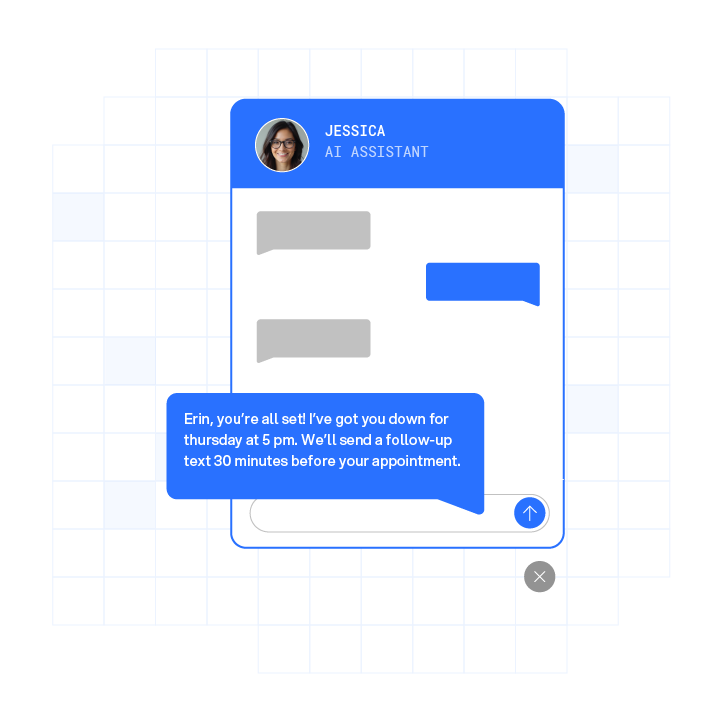
Channel-Role Assignment Across Voice, SMS, RCS, Webchat, Email, and Retargeting
The table below maps each channel to its primary job in the customer journey, the stage where it should appear, and the metric that validates its performance. Use this framework to audit your current channel mix and confirm that every channel has a clear role instead of competing for the same conversion credit.
| Channel | Primary Job | Stage in Journey | Key Metric |
|---|---|---|---|
| Paid Social | Awareness initiator, Facebook consistently appears early in high-value customer paths but rarely gets last-click credit | Top of funnel | Incremental reach, view-through lift |
| AI SMS | Speed-to-lead qualifier, organizations deploying AI for speed to lead see connection rates increase 3x–5x | Mid-funnel | Reply rate, qualification rate |
| AI RCS | High-intent converter, delivers 35% click-through rate and 80% read rate | Mid-to-bottom funnel | CTR, in-thread conversion rate |
| AI Voice Agent | Negotiation and live transfer closer, handles objections and warm-routes qualified buyers | Bottom of funnel | Contact rate, transfer rate, close rate |
| AI Webchat | Inbound intent capture, triggers proactive messages on scroll depth, repeat pricing-page visits, and exit intent | Mid-to-bottom funnel | Lead capture rate, SQL rate |
| Follow-up nurture, works after paid social exposure but poorly as cold outreach | Mid-funnel | Open rate, click-to-reply rate | |
| Retargeting | Re-engagement for non-converters, suppress active sales conversations and converted customers | Mid-funnel | Incremental lift vs. holdout, not ROAS |
Handoff Rules Between Touchpoints in Your Funnel
The table below defines the trigger conditions and suppression rules that govern how leads move between channels. Each row represents a handoff that you should instrument in your workflow builder to prevent duplicate outreach and preserve conversation context.
| From Channel | To Channel | Trigger Condition | Suppression Rule |
|---|---|---|---|
| Paid Social Ad | AI Webchat or AI SMS | Form fill or click-through on landing page | Suppress from prospecting audiences immediately on form submit |
| AI SMS | AI Voice Agent | Lead replies with buying signal or qualifies via SMS flow | Suppress retargeting ads for all active SMS conversations |
| AI Voice Agent | AI RCS | Call ends without close, follow-up materials needed | Suppress cold SMS outreach, RCS carries full call context |
| Email Nurture | AI SMS | Email opened 3+ times with no reply within 48 hours | Suppress email sends once SMS conversation is active |
| Retargeting | AI Voice Agent | Pricing page visited 2+ times within 7 days | Suppress retargeting immediately on live transfer initiation |
Journey architecture design establishes explicit suppression rules that exclude customers from overlapping messages, promotional content during support interactions, or acquisition campaigns after conversion. Plura’s no-code workflow builder enforces these handoff rules at the platform layer, not as a manual process.
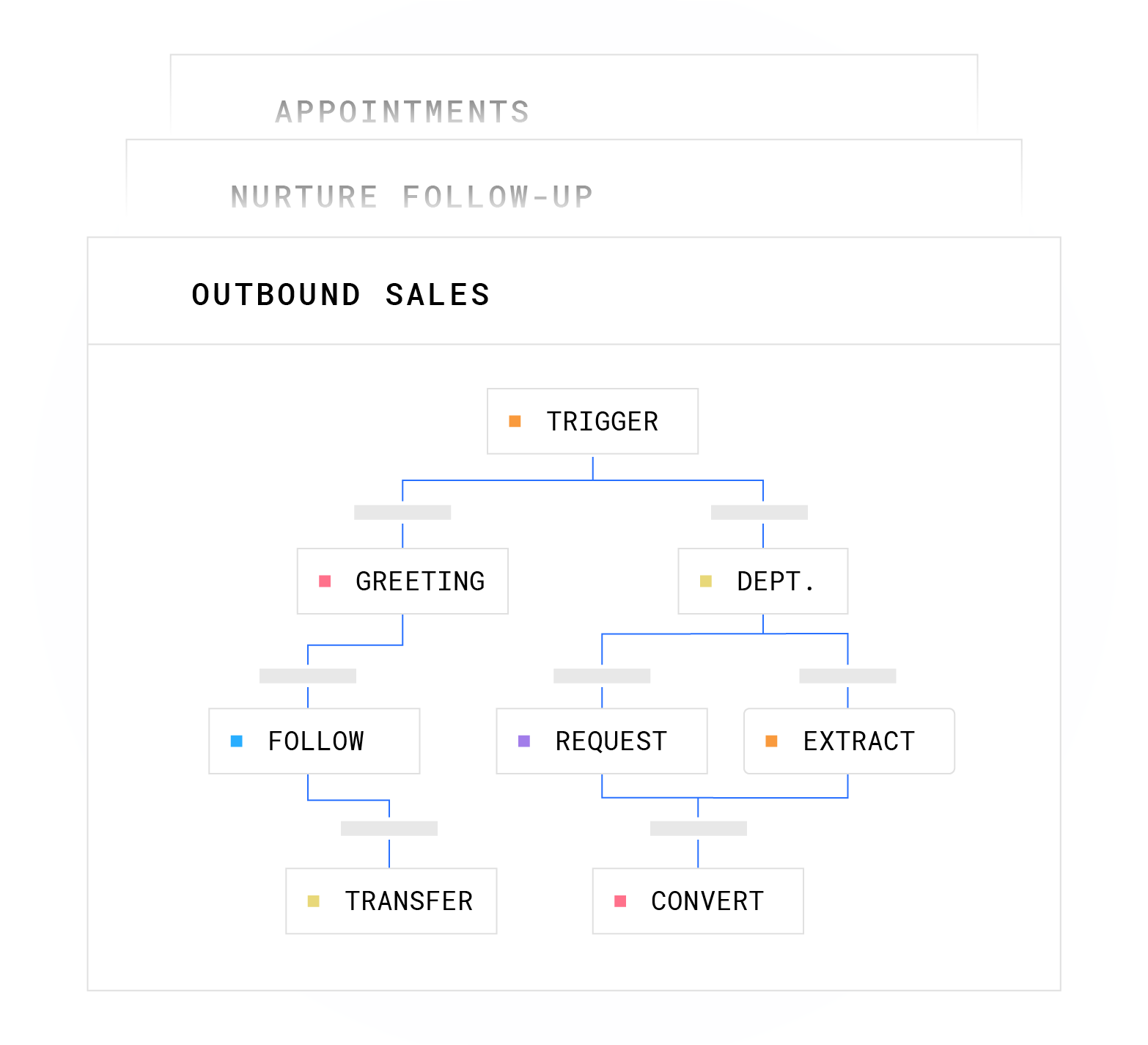
Attribution-Model Comparison for 2026 Planning
The table below compares how each attribution model assigns conversion credit, its impact on incremental CAC, and its viability in 2026 given Google’s deprecation of legacy models and iOS privacy changes. Use this comparison to select the model that fits your current conversion volume and tracking coverage.
| Model | How Credit Is Assigned | Incremental CAC Impact | 2026 Status |
|---|---|---|---|
| Last-Click | 100% to final touchpoint, over-credits branded search by 40-60% | Inflates bottom-funnel spend, 68% of attributed conversions can come from existing customers | Google deprecated first-click, linear, time-decay, and position-based models in September 2025, last-click remains as fallback only |
| Multi-Touch (Linear/U-Shaped) | Distributed across all touchpoints, Organic/Google showed 14x greater influence under multi-touch vs. last-click in one B2B analysis | Can reduce CAC through better channel mix optimization | Recommended baseline for teams with under 600 monthly conversions, coverage degraded to 60-80% post-iOS 14.5 |
| Data-Driven Attribution | ML-weighted by actual conversion path contribution, multi-touch grows revenue 15-30% faster than last-click over the same ad spend | Highest accuracy when paired with incrementality holdouts, time-decay attribution yields 3.7x ROAS vs. 3.2x for last-click | GA4 default since January 2024, requires 600+ monthly conversions, consult qualified counsel on data governance obligations |
Applying the 70/20/10 Rule to Multichannel Budgets
The 70/20/10 rule is a budget allocation framework that prevents over-concentration in proven channels while funding the incremental testing that protects LTV:CAC over time.
A practical example for a $50,000 monthly paid media budget:
- 70% ($35,000) to proven converters. Direct this tier to channels validated by incrementality testing, typically non-brand paid search and AI SMS follow-up sequences. These channels have demonstrated net-new customer acquisition, not demand harvesting.
- 20% ($10,000) to channels showing incremental lift. Fund AI RCS campaigns and AI webchat on high-intent pages. The engagement advantage noted in the Channel-Role Assignment table makes RCS a strong candidate for the 20% allocation as incrementality data accumulates.
- 10% ($5,000) to new channel experiments. Test geo-targeted placements, new audience segments, or channel combinations not yet validated. Feed results into the next quarterly reallocation.
The LTV:CAC impact is direct. The 2026 cross-industry median LTV:CAC ratio is 3.4x while the top quartile reaches 5.6x, with the gap widening every year as top-quartile operators compound retention gains.3 Operators who reallocate budget based on incremental CAC data rather than platform-reported ROAS move toward the top quartile. Companies combining attribution with sales and marketing alignment can achieve CAC reductions.
Weekly Operating Rhythm: Diagnose, Analyze, Experiment, Orchestrate, Reallocate
Monday – Diagnose. Pull blended CAC versus platform-reported CAC for the prior week. Flag any channel where the gap exceeds 2x. Review suppression logs to confirm no converted customers received acquisition messages. Check conversation intelligence dashboards for contact rate and qualification rate by channel.
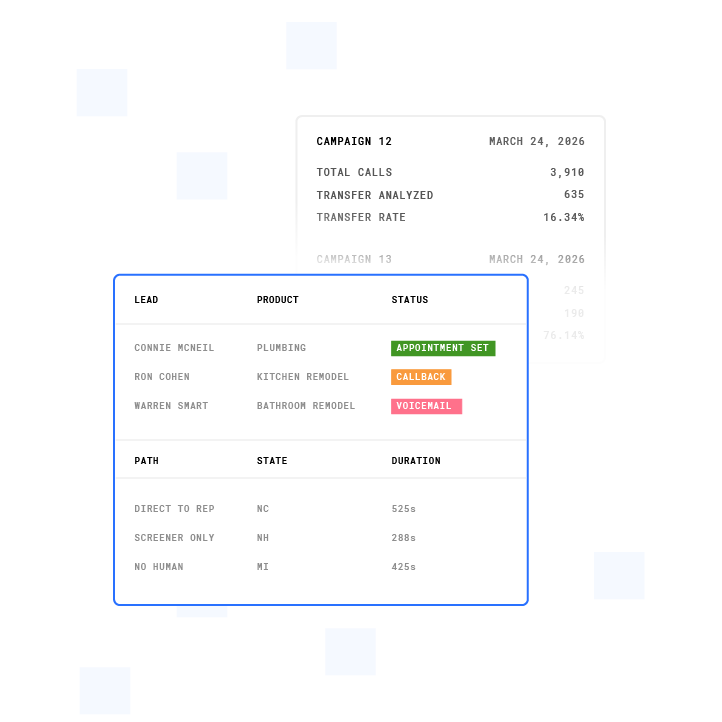
Tuesday – Analyze. Review multi-touch attribution data for the prior week’s conversion paths. Identify which channels appeared in three or more touchpoint journeys and which appeared only as last-click closers. Many conversion journeys span multiple channels and some rely on cross-channel sequencing. Map Tuesday’s analysis to the channel-role assignments in your framework.
Wednesday – Experiment. Launch or review one active incrementality test. Confirm holdout group integrity. Adjust AI SMS and AI voice agent scripts based on objection patterns surfaced in conversation intelligence. Test one new handoff trigger, such as escalating from AI webchat to AI voice agent on pricing-page visits exceeding two minutes.
Thursday – Orchestrate. Update suppression lists across all paid media platforms. Sync CRM conversion events to audience exclusion lists in Meta and Google. Confirm that the AI predictive dialer queue excludes contacts currently in active SMS or RCS conversations. Review integrations for any sync failures between the CRM and the conversation platform.
Friday – Reallocate. Apply the 70/20/10 rule to next week’s budget based on the week’s incremental CAC data. Shift dollars from channels showing demand harvesting toward channels showing net-new customer acquisition. Document the reallocation rationale for the monthly attribution review. Key post-attribution metrics that matter in 2026 include marginal CAC by channel, incremental ROAS validated quarterly via holdout tests, and time to revenue by channel tracked via CRM cohorts.
This weekly rhythm turns multichannel conversion optimization from a static strategy into an operational discipline.
Conclusion
A multichannel conversion optimization strategy is not a channel management exercise. It functions as a revenue operating system built on the 10-step framework, including role assignment, handoff enforcement, journey-wide attribution, and a repeatable weekly cadence anchored to incremental CAC and LTV:CAC. Companies with unified customer data often see increases in marketing ROI from omnichannel efforts compared to those with disconnected systems.
Plura AI is the infrastructure layer that makes this system measurable. Its FCC-licensed carrier, Stateful Conversation Database, and compliance engine, supporting SOC 2, HIPAA, ISO certification, GDPR, SHAKEN/STIR caller ID verification, TCPA compliance, and DNC compliance, run underneath every channel in the stack.1 Operators should consult qualified counsel regarding their specific regulatory obligations. The platform’s no-code workflow builder enforces handoff rules without engineering, and conversation intelligence surfaces the attribution signals that weekly reallocation decisions require.
Run your numbers through Plura’s ROI calculator to check your ROI in real time.
Compare plans and rates side by side at Plura pricing.
Frequently Asked Questions
What is a multichannel conversion optimization strategy and how does it differ from single-channel optimization?
A multichannel conversion optimization strategy treats the entire customer journey as the unit of measurement rather than any individual channel. Single-channel optimization focuses on getting more conversions from a specific ad set or email sequence. A multichannel strategy focuses on assigning the right job to each channel, enforcing handoff rules between them, and measuring the incremental revenue the full journey produces. The practical difference shows up in budget allocation. Single-channel optimization tends to over-invest in bottom-funnel channels that close deals but do not create demand, while a multichannel strategy funds the awareness and qualification channels that fill the pipeline in the first place. Operators running a unified multichannel system measure LTV:CAC at the journey level, not the channel level, which produces materially different reallocation decisions over time.
How does Plura AI support multichannel conversion optimization for high-volume operators?
Plura AI provides the infrastructure layer that unifies voice, SMS, RCS, and webchat into one measurable revenue system. Its Stateful Conversation Database holds full conversation context across every channel, so a lead who texted at 9 a.m. is recognized when the AI voice agent calls at noon. The platform’s no-code workflow builder enforces handoff rules between channels without engineering work, and conversation intelligence surfaces contact rates, qualification rates, and objection patterns that feed weekly attribution analysis. Plura owns its FCC-licensed carrier, which means branded caller ID is issued at the carrier level and compliance infrastructure including TCPA compliance, DNC compliance, SHAKEN/STIR caller ID verification, SOC 2, HIPAA, ISO certification, and GDPR support is enforced before each outbound contact.1 Operators are responsible for their own regulatory obligations and should consult qualified counsel. The platform’s AI predictive dialer, AI SMS, AI RCS, and AI webchat all share the same stateful memory layer, which keeps cross-channel attribution data consistent rather than fragmented across multiple tools.
What is the 70/20/10 rule in digital marketing and how does it apply to multichannel conversion optimization?
The 70/20/10 rule is a budget allocation framework that divides paid media spend into three tiers based on validated performance. Seventy percent goes to channels proven by incrementality testing to generate net-new customers. Twenty percent goes to channels showing early incremental lift that have not yet accumulated enough data for full validation. Ten percent funds new channel experiments with no prior performance history. In a multichannel conversion optimization context, the rule prevents two common failure modes, over-concentration in proven channels that eventually saturate and under-investment in the awareness and qualification channels that feed the bottom funnel. The 70/20/10 allocation is rebalanced quarterly based on incremental CAC data from holdout tests, not platform-reported ROAS, which systematically over-credits bottom-funnel channels. The result is a channel mix that compounds LTV:CAC improvement over time rather than optimizing a single metric that degrades as audiences saturate.
Why is multi-touch attribution more reliable than last-click for measuring multichannel performance in 2026?
Last-click attribution assigns 100% of conversion credit to the final touchpoint before a purchase or lead conversion. In a buyer journey that spans 10 or more touchpoints across multiple channels and devices, the channels that created awareness, drove consideration, and qualified the lead receive zero credit. Budget follows credit, so last-click reporting systematically defunds the channels that fill the pipeline and over-funds the channels that close deals that were already in motion. Multi-touch attribution distributes credit across the full journey, revealing which channels actually influence conversion probability rather than which channel happened to be last. The practical impact can include CAC reductions when organizations reallocate budget based on multi-touch data rather than last-click. A key limitation of multi-touch attribution in 2026 is signal loss from privacy changes, which has reduced tracking coverage to 60–80% of pre-iOS 14.5 levels. The recommended approach is to run multi-touch attribution for in-flight tactical optimization while validating strategic budget decisions with geo-based incrementality holdout tests.
What compliance infrastructure does Plura AI provide for high-volume multichannel operators?
Plura AI’s compliance engine is built into the platform rather than added as a bolt-on. Every outbound contact is checked against federal and state DNC registries before dial. Consent records are timestamped and immutable. Quiet-hours rules enforce automatically through time-zone detection on the contact. The platform supports TCPA compliance, DNC compliance, SHAKEN/STIR caller ID verification, SOC 2, HIPAA, ISO certification, and GDPR. Plura runs on 100% U.S. infrastructure by architecture, which is relevant for operators navigating the FCC NPRM (CG Docket No. 26-52) and state-level onshoring laws in New York, New Jersey, Connecticut, Missouri, and Florida.2 Operators should consult qualified counsel to understand their specific obligations under applicable regulations.2 Plura provides the infrastructure, and compliance posture downstream of that remains the operator’s responsibility. The compliance dashboard exports audit-ready reports in one click for legal review, carrier requirements, or regulatory inquiries.
1 Plura AI maintains SOC 2, HIPAA, ISO, and GDPR posture as part of its platform infrastructure. References to compliance frameworks in this article describe Plura’s platform capabilities and do not constitute a guarantee that any customer using Plura will themselves be compliant with applicable laws or standards. Customers remain solely responsible for their own regulatory obligations, certifications, consent management, recordkeeping, and the claims they make to their own end users. Consult qualified legal counsel for guidance specific to your use case.
2 This article describes regulatory frameworks at a general level and does not constitute legal advice. Laws and regulations vary by jurisdiction, change over time, and apply differently depending on facts and circumstances. Readers should consult qualified legal counsel before making compliance decisions.
3 Performance figures, customer outcomes, and industry statistics referenced in this article are drawn from cited third-party sources or Plura customer case studies. Individual results vary based on implementation, use case, industry, audience, and execution. Past or aggregate performance is not a guarantee of future results.
4 References to third-party products, services, companies, or research are made for informational and comparative purposes only. Plura AI is not affiliated with, endorsed by, or sponsored by any third party named in this article unless explicitly stated. Trademarks and product names referenced remain the property of their respective owners.
This article is provided for informational purposes only and reflects Plura AI’s understanding at the time of publication. Product capabilities, integrations, and specifications are subject to change. For the most current information, visit plura.ai.
This article was produced with the assistance of AI tools and reviewed by Plura AI prior to publication.