

Written by: Matt Beucler, CEO, Plura AI
Key Takeaways
- Omnichannel call center automation unifies voice, SMS, RCS, and webchat on a single stateful platform, so context follows every customer interaction.
- Operators see higher customer satisfaction, faster lead response, and a significant reduction in no-shows when every touchpoint shares one conversation history.
- Replacing a 15-agent human team with Plura AI can cut monthly costs from $60,000 to $14,400 while maintaining 100% talk utilization and eliminating turnover.
- Plura’s 100% U.S. infrastructure, FCC carrier license, and built-in compliance engine support risk management for 2026 offshore restrictions and TCPA/DNC exposure.1
- Ready to modernize your contact center operations, not just your channels? Book a live demo with Plura AI to see omnichannel automation in action.
Why Omnichannel Automation Outperforms Multichannel Setups
The core operational problem for high-volume operators is not volume itself. It is context loss. When a customer moves from webchat to SMS to a phone call, a multichannel system treats each touchpoint as a new conversation. An omnichannel platform treats them as one continuous thread.
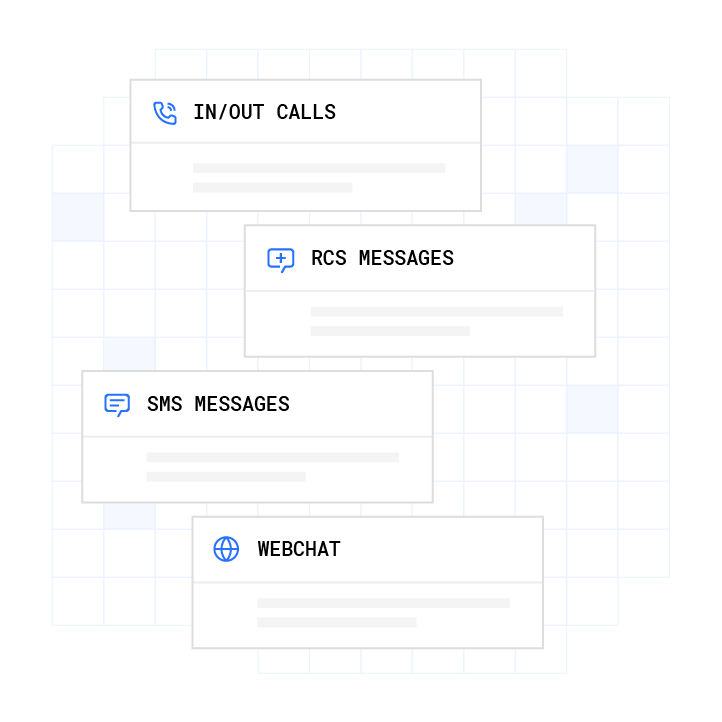
The measurable difference is significant. Customer satisfaction scores reach 67% with omnichannel implementations versus 28% with disconnected multichannel setups.3 That performance gap aligns with broader adoption trends. Gartner predicts that by 2028 at least 70% of customers will use a conversational AI interface to begin their customer journey.4 The same shift toward AI-driven interfaces is already improving unit economics. Implementing AI agents into contact centers can reduce cost per call while increasing CSAT scores.
For operators in healthcare, the benefits extend to appointment adherence. Plura’s AI-driven outreach across voice, SMS, and RCS delivers up to 40% improvement in no-shows by reaching patients on the channel they respond to, with full context from prior interactions.
Additional documented benefits of omnichannel automation include 24/7 availability without shift gaps, a 0% turnover rate compared to 30-45% annually for traditional operations, and the removal of perpetual training and replacement driven by 35–45% annual agent turnover in traditional contact centers.
Organizations deploying AI for speed-to-lead see response times drop from hours to seconds and connection rates increase by 3x to 5x. Contacting a lead within 5 minutes makes them up to 100x more likely to connect, and a 60-second response lifts conversions by 391% (industry research published on Plura’s ROI calculator).
How Omnichannel Automation Reduces Contact Center Costs
The cost case for omnichannel automation rests on two structural differences from human-staffed operations: talk utilization and linear versus logarithmic scaling.
A human contact center agent operates at roughly 40% talk utilization. The remaining 60% covers idle time, wrap-up, training, and administrative work. A Plura AI agent runs at 100% talk utilization. In a 15-agent scenario at $20 per hour with standard taxes, benefits, and commissions, the monthly cost is $60,000. Replacing that team with Plura at $15 per hour, 100% utilization, and 6 AI agents doing the work of 15 humans drops the monthly cost to $14,400. That shift creates $45,600 in savings in the first 30 days, $547,200 over 12 months, and $2,736,000 over 60 months (per Plura’s ROI calculator).
At enterprise scale, the total cost of ownership (TCO) comparison is $300,000-$700,000 per year with Plura against a traditional contact center benchmark of $4M-$7M on equivalent volume (per plura.ai/guides/ai-communications-strategy).
One consulting company combined an AI-powered voice assistant with an outreach platform and reported substantial reductions in customer acquisition costs. This case illustrates a broader structural advantage. The cost reduction is not a one-time event. It compounds because AI agents do not require rehiring cycles, retraining budgets, or peak-season hiring sprints for Medicare AEP, tax season, or Black Friday.
Run your numbers through Plura’s calculator to check your ROI in real time: calculate your ROI now.
Designing an Omnichannel Contact Center Strategy
A functional omnichannel contact center strategy requires three components that most legacy multichannel systems cannot provide: shared stateful memory, unified compliance enforcement, and a single carrier stack that owns the full conversation path.
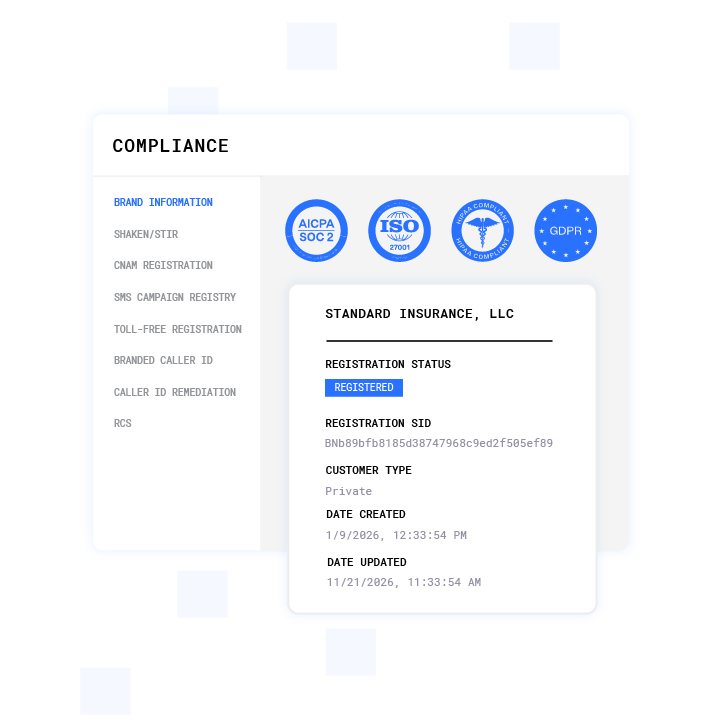
The table below illustrates how these architectural differences translate into measurable operational outcomes. Focus on how context preservation across channel switches directly reduces resolution time and improves customer experience.
| Metric | Legacy Multichannel | True Omnichannel (Plura) | Operational Impact |
|---|---|---|---|
| Cross-channel context (voice to SMS) | Lost on channel switch | Preserved via Stateful Conversation Database | No repeated questions, faster resolution |
| Cross-channel context (SMS to webchat) | Lost on channel switch | Full prior thread visible in Unified Inbox | Consistent customer experience across touchpoints |
| Cross-channel context (webchat to voice) | Lost on channel switch | AI picks up call with full webchat history | Eliminates re-qualification on inbound calls |
| RCS support | Typically absent | Native, with in-thread payments and documents | Closes deals inside the message thread |
Research shows that 70–75% of customer service interactions are resolved on the first contact, so cross-channel context retention directly drives first-contact resolution rates, not just convenience.
Plura’s stateful AI architecture remembers previous interactions, preferences, and outcomes across channels for better personalization and follow-ups. Every interaction is keyed to a customer token such as phone number, email, or ID and persisted in one database. The AI reads and writes to that database on every conversation across every channel.
The evaluation framework below covers the five criteria that separate platforms capable of supporting a true omnichannel strategy from those that only appear to.
| Evaluation Criterion | What to Look For | Plura Capability | Why It Matters |
|---|---|---|---|
| Speed to first contact | Sub-5-second AI response, 24/7 | Under 5 seconds across voice, SMS, RCS, webchat (per Plura’s ROI calculator) | 391% conversion lift at 60-second response vs. 47+ hour industry standard |
| Stateful conversation memory | Single database shared across all channels | Stateful Conversation Database, all four channels read and write to one record (per plura.ai/compare/plura-ai-vs-vapi) | Eliminates context loss on channel switch and reduces handle time |
| U.S. infrastructure ownership | FCC-licensed carrier, no third-party CPaaS dependency | Own FCC-licensed audio bridging carrier, 100% domestic voice origination, model hosting, data storage (per plura.ai/compare/plura-ai-vs-synthflow) | Reduces offshore exposure under FCC NPRM CG Docket No. 26-52 and state onshoring laws |
| Compliance engine features | Real-time DNC scrubbing, TCPA consent logging, HIPAA-aligned encryption, SHAKEN/STIR authentication | Pre-loaded TCPA, DNC, HIPAA, SOC 2, GDPR, ISO, SHAKEN/STIR, 50+ state rule sets, immutable consent ledger (per plura.ai/products/compliance) | Compliance controls applied at origination, not bolted on after the fact |
| Total cost of ownership | TCO inclusive of build, carrier, compliance, and iteration | $300K-$700K/year vs. $4M-$7M traditional contact center (per plura.ai/guides/ai-communications-strategy) | Logarithmic cost scaling replaces linear headcount growth |
Compare plans and rates side by side on Plura’s pricing page.
2026 Regulatory Landscape for Omnichannel Operations
Three converging regulatory forces are reshaping the economics of high-volume customer communication in 2026.2 Operators who have not audited their vendor stack against these developments carry compliance exposure that is already measurable in dollar terms.
FCC NPRM CG Docket No. 26-52. The Federal Communications Commission’s Notice of Proposed Rulemaking proposes capping offshore customer-service calls at 30% and restricting offshore handling of sensitive consumer data, including passwords, multi-factor authentication codes, Social Security numbers, banking data, and card data. The full text is available in the Federal Register under CG Docket No. 26-52. Every AI voice or SMS platform with foreign infrastructure dependencies sits inside the scope of this proposal.
Federal legislation. The Keep Call Centers in America Act (S.2495) and the Foreign Robocall Elimination Act (S.2666) extend the federal regulatory perimeter beyond the NPRM. Operators and their counsel should review both bills against their current vendor contracts.
State laws. Five states have enacted or are enforcing active restrictions on offshore handling of consumer data. New York’s Call Center Jobs Act carries penalties up to $10,000 per day. New Jersey has enacted a mirror statute. Connecticut restricts offshore handling in state contracts. Missouri issued an executive order requiring offshore disclosure. Florida restricts offshore handling of medical information. Secondary coverage from JD Supra/Littler, NJ.gov, Polsinelli, the Connecticut General Assembly, and Medtrade tracks these statutes. Operators should consult qualified counsel on their specific obligations under each.
Against this regulatory backdrop, infrastructure architecture becomes a compliance variable, not just a technical detail. Plura runs on 100% U.S. infrastructure by design. Voice origination, model hosting, data storage, and call recording all sit on domestic infrastructure. Plura owns its telecom infrastructure and holds an FCC carrier license, whereas platforms that depend on Twilio operate as a software layer without a carrier license.5 That architectural difference influences whether a platform is exposed to the NPRM’s foreign-infrastructure restrictions.
Beyond the offshore question, numerous state bills describe notice expectations when AI is used in customer interactions, and some describe algorithmic impact assessments or third-party audits. Operators running AI-powered customer communication systems across multiple states should work with counsel to map their current deployments against this patchwork of requirements.
Implementation Readiness Checklist for Omnichannel Automation
Before deploying omnichannel call center automation, operators should confirm the following items are in place.
- Current daily interaction volume is at or above 500 contacts, or monthly paid-media spend is at or above $5,000.
- Existing vendor contracts have been reviewed for offshore infrastructure dependencies under FCC NPRM CG Docket No. 26-52.
- TCPA (Telephone Consumer Protection Act) consent records are timestamped, stored, and retrievable for audit.
- DNC (Do Not Call) registry scrubbing is running in real time, not in batch.
- CRM (Customer Relationship Management) system is identified for integration with the AI platform.
- Human escalation paths are defined for calls that fall outside AI workflow guardrails.
- Quiet-hours rules are mapped by state for every market the operation serves.
- A 90-day ROI measurement framework is in place before go-live.
Common Pitfalls in Omnichannel Deployments
Treating multichannel as omnichannel. A platform that offers voice, SMS, and webchat as separate products with separate databases is not omnichannel. The operational consequence is context loss at every channel switch, which forces customers to repeat themselves. The test is whether a customer who texted yesterday is recognized on today’s call without re-qualification.
Renting the carrier stack. Platforms that are voice-only, API-based, and lack carrier status cannot issue branded caller ID at the carrier level, cannot enforce real-time DNC scrubbing at origination, and inherit the caller-ID reputation of the CPaaS (Communications Platform as a Service) they rent from. Pickup rates reflect this directly.
Bolting on compliance after the fact. Compliance that lives outside the platform creates audit gaps. TCPA consent logging, DNC scrubbing, HIPAA-aligned encryption, and SHAKEN/STIR (Secure Telephone Identity Revisited/Signature-based Handling of Asserted information using toKENs) authentication should function as first-class layers of the platform, not third-party add-ons.
Ignoring context rot in multi-turn conversations. Studies on leading language models show a 39% average performance drop in multi-turn settings, often because early errors propagate through subsequent exchanges as token counts increase. Platforms that do not use hierarchical context management will degrade in quality on longer conversations.
Skipping the 90-day opt-out window. Any annual contract that does not include an opt-out provision if the deployment is not delivering puts the operator at risk of paying for a platform that is not converting. Plura includes a 90-day opt-out window in every annual contract.
Book a live demo with Plura to walk through your specific use case and channel mix: schedule your demo.
Frequently Asked Questions
What is the difference between omnichannel and multichannel call center automation?
Multichannel automation means running separate AI or human agents on separate channels, each with its own memory. A customer who texted yesterday has to re-explain their situation when they call today. Omnichannel automation means all channels share one stateful conversation database. The AI agent handling the call already knows what was said in the text thread, what offers were made, what objections were raised, and what the customer’s qualification status is. The operational difference shows up in handle time, first-contact resolution, and customer satisfaction scores. Omnichannel implementations consistently outperform multichannel setups on all three metrics.
How long does it take to go live with omnichannel call center automation?
Deployment timelines depend on conversation complexity. A straightforward inbound qualification flow typically goes live in days. A complex multi-step intake, such as a 25-question health-history survey with branching logic, runs closer to one to two months because the workflow design and validation take time. Plura’s onboarding sequence covers a discovery audit of the operator’s business and call economics, intake of sample calls and existing scripts, an overnight build of a conversation mockup, a review session, engineering build of the production workflow, a pilot test on a subset of real calls, and full go-live. Every annual contract includes a 90-day opt-out window.
How does omnichannel automation handle human handoffs?
Effective omnichannel platforms define explicit escalation gates inside each workflow. When a customer’s response falls outside the AI’s defined conversation paths, a high-stakes objection arises, or a sensitive disclosure is made, the platform warm-transfers the call to a U.S. agent, flags the conversation in the Unified Inbox, or routes to a designated escalation queue. The human agent receives the full conversation history from the stateful database, so the customer does not repeat themselves. Plura’s AI agents do not improvise on outcomes that matter. Sensitive data including protected health information, personally identifiable information, and payment data is redacted at the field level and routed through HIPAA-aligned channels before any handoff.
How do I evaluate ROI before committing to an omnichannel automation platform?
The most direct method is to model your current contact center economics against an AI-equivalent scenario using your actual headcount, hourly rates, and talk utilization. The key variables are number of agents, fully loaded hourly cost including taxes, benefits, and commissions, and actual talk utilization rate, which typically sits near 40% for human agents versus 100% for AI agents. Plura’s ROI calculator at plura.ai/calculator runs this model in real time using your inputs. The 15-agent example detailed earlier illustrates how these variables translate into multi-year savings. For enterprise-scale operations, the calculator also reflects the enterprise TCO advantage described earlier.
What compliance frameworks does Plura support for omnichannel customer communication?
Plura supports compliance with TCPA, DNC, HIPAA, SOC 2, ISO certification, GDPR, SHAKEN/STIR caller ID verification, and 50+ state-level rule sets. Every outbound contact is checked against federal and state DNC registries before dial. TCPA consent records are timestamped and immutable. Quiet-hours rules enforce automatically through time-zone detection. HIPAA-aligned encryption, access controls, and audit logging cover protected health information across all four channels. The compliance dashboard exports audit-ready reports in one click. Operators are responsible for their own regulatory obligations and should consult qualified counsel on their specific requirements. Plura provides the infrastructure, and compliance posture downstream of that remains the operator’s responsibility.
Why does owning the carrier stack matter for omnichannel automation?
Most AI voice and SMS platforms are API resellers built on top of third-party CPaaS providers like Twilio. They cannot issue branded caller ID at the carrier level, cannot enforce real-time DNC scrubbing at origination, and inherit the caller-ID reputation of the CPaaS they rent from. When a call shows up as “Spam Likely” on a recipient’s phone, that is a carrier-level problem that requires a carrier-level solution. Plura is its own FCC-licensed audio bridging carrier. Branded caller ID is issued directly. SHAKEN/STIR authentication runs on every outbound call. Plura’s AI also communicates with Apple’s iOS 26 call-screening layer so calls present with the company’s name and the reason for the call. Platforms that rent their carrier stack cannot replicate this because they do not control the origination layer.
1 Plura AI maintains SOC 2, HIPAA, ISO, and GDPR posture as part of its platform infrastructure. References to compliance frameworks in this article describe Plura’s platform capabilities and do not constitute a guarantee that any customer using Plura will themselves be compliant with applicable laws or standards. Customers remain solely responsible for their own regulatory obligations, certifications, consent management, recordkeeping, and the claims they make to their own end users. Consult qualified legal counsel for guidance specific to your use case.
2 This article describes regulatory frameworks at a general level and does not constitute legal advice. Laws and regulations vary by jurisdiction, change over time, and apply differently depending on facts and circumstances. Readers should consult qualified legal counsel before making compliance decisions.
3 Performance figures, customer outcomes, and industry statistics referenced in this article are drawn from cited third-party sources or Plura customer case studies. Individual results vary based on implementation, use case, industry, audience, and execution. Past or aggregate performance is not a guarantee of future results.
4 References to third-party products, services, companies, or research are made for informational and comparative purposes only. Plura AI is not affiliated with, endorsed by, or sponsored by any third party named in this article unless explicitly stated. Trademarks and product names referenced remain the property of their respective owners.
5 This article contains forward-looking statements regarding industry trends, technology adoption, and future capabilities. These statements reflect current expectations and are subject to change. Plura AI undertakes no obligation to update forward-looking statements except as required.
This article is provided for informational purposes only and reflects Plura AI’s understanding at the time of publication. Product capabilities, integrations, and specifications are subject to change. For the most current information, visit plura.ai.
This article was produced with the assistance of AI tools and reviewed by Plura AI prior to publication.