

Written by: Matt Beucler, CEO, Plura AI
Updated July 2026
Key Cost Levers for RCS Outbound in 20265
- Delivered-only billing removes charges on undelivered RCS messages and cuts spend on unreachable or non-RCS contacts.
- Direct-carrier access removes CPaaS aggregator markup and brings per-message rates into the $0.005-$0.015 carrier range.
- The 24-hour RCS session window rolls multi-turn conversations into a single flat fee instead of five or six separate messages.
- Device checks and delivery verification before SMS fallback prevent dual billing and reduce spend on failed or stale outreach.
- Plura AI’s FCC-licensed carrier stack and managed workflows combine these cost levers in one platform, so you can see the savings on your current RCS volume in a live demo.
2026 U.S. RCS Rate Ranges and Volume Tiers5
Rate visibility sets the baseline for any RCS outbound cost strategy. U.S. RCS Business Messaging (RBM) pricing varies widely by delivery path.
Direct or near-direct carrier paths price basic RCS text segments and rich media at carrier levels. Pay-per-message rates on these paths generally fall in the $0.005-$0.015 range.3
CPaaS aggregators add reseller markup on top of those carrier rates. Twilio prices U.S. RCS at $0.0083 per outbound message, while Sinch and Vonage do not publish specific public U.S. RCS rates.3 Across providers, per-message pricing shifts with volume tiers and platform fees, and at scale those differences create large swings in monthly spend.
Providers that own network infrastructure and hold direct carrier relationships remove reseller markup layers and create more predictable RCS pricing for high-volume senders compared with resellers that add intermediary fees. Some providers offer volume tiers while others do not, which makes the billing model and delivery path more important than volume discounts alone.
Eliminating CPaaS Wrapper Fees with Direct-Carrier RCS
Most RCS outbound programs still route through a CPaaS aggregator that sits between the operator and the carrier. That aggregator applies a transport markup on every message, whether the message delivers or not. Direct or near-direct carrier access removes that layer.
Plura AI operates its own FCC-licensed audio bridging carrier. RCS traffic originates on Plura’s domestic infrastructure instead of a third-party CPaaS, which removes the reseller markup from the per-message rate. The same carrier stack that handles voice origination, STIR/SHAKEN authentication, and branded caller ID also handles RCS delivery, so no separate aggregator contract adds extra cost.1
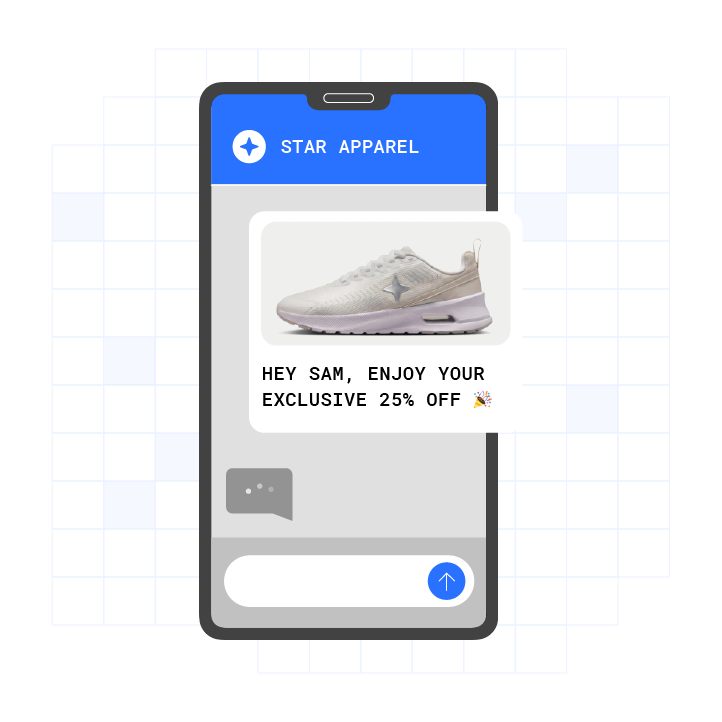
The practical effect is straightforward. Operators pay carrier-level rates instead of aggregator-marked-up rates. Because contact centers typically send thousands of outbound RCS messages per day, even small per-message savings compound into substantial monthly reductions. See the full product surface at plura.ai/products.
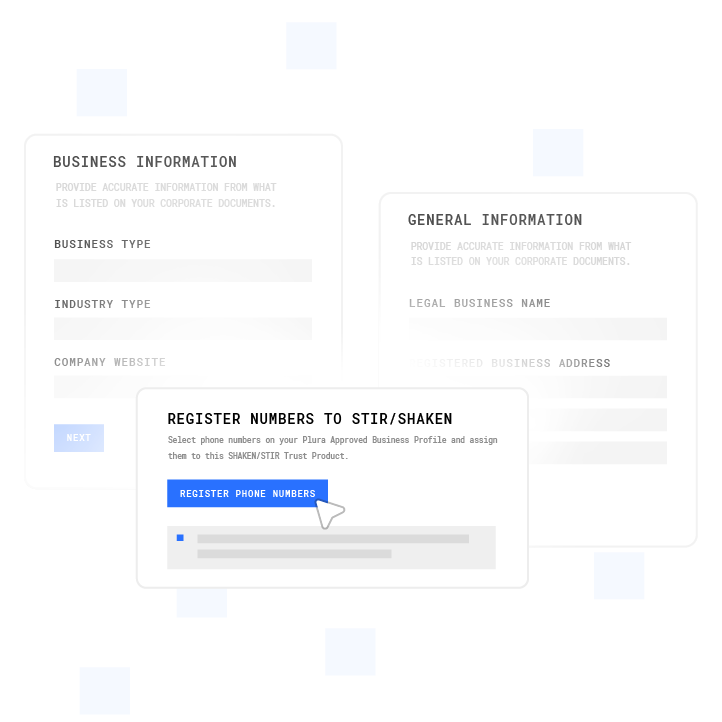
Wrapper fee removal also simplifies the compliance chain. When a CPaaS sits in the path, consent records, DNC scrubbing, and TCPA-related controls sit across two vendors.1 On Plura’s direct-carrier stack, those controls run at the origination layer before any message leaves the platform, which supports a more unified compliance posture.
Delivered-Only vs Attempt-Based Billing for RCS
Removing wrapper fees addresses the per-message rate, and the billing model determines which messages generate charges. The billing model decides whether undelivered messages cost money.
The table below contrasts delivered-only and attempt-based billing on dimensions that matter to high-volume operators.
| Dimension | Delivered-Only Billing | Attempt-Based Billing |
|---|---|---|
| When charge is applied | Only upon successful delivery to the recipient device | At time of send request, regardless of delivery outcome |
| Cost on failed delivery | $0.00 | Full per-message rate applied |
| SMS fallback charge | SMS rate applies only if RCS fails and SMS delivers, with no double charge when RCS succeeds | RCS attempt charge plus SMS delivery charge both apply in fallback scenarios |
| Cost predictability | Spend tracks delivered volume, and undeliverable lists do not inflate cost | Spend tracks send volume, and stale or non-RCS lists inflate cost |
AWS End User Messaging bills RCS messages only upon successful delivery and does not charge for delivery attempts, while SMS is charged at the time of the request regardless of delivery outcome.4 That structural difference forms the basis of delivered-only billing and becomes the primary lever for RCS outbound cost reduction on high-volume lists with non-RCS or unreachable devices.
Using the 24-Hour RCS Session Window to Cut Costs
The 24-hour session window acts as the second major cost lever after delivered-only billing. Under a conversational RCS billing model, all messages exchanged within a 24-hour window after a session trigger fall under a single flat rate instead of individual message charges.
Google RCS for Business conversational agents use a fixed rate per conversation, where a reply within 24 hours opens a window during which the agent and user can exchange any number of messages for that single fixed rate. Infobip’s RCS Interactive Session model charges one fee for all messages exchanged within a 24-hour session window once a threshold of four messages is met, including at least one outbound business message and at least two inbound customer messages.4
Outbound programs that rely on qualification flows, appointment confirmations, or multi-step lead nurture benefit directly from this structure. These flows convert what would be five or six individually billed messages into one session charge. One session fee in conversational RCS covers an entire back-and-forth interaction that would otherwise create multiple per-message charges under SMS billing, which makes longer stateful flows more cost-efficient than multiple standalone outbound messages.
Plura’s managed workflows are designed to use this window fully. The no-code workflow builder sequences outbound messages, qualification gates, and reply handling inside the 24-hour session boundary, so multi-turn conversations collapse into single billable events instead of stacking per-message charges. The stateful conversation database keeps the AI agent’s context across every turn without restarting the session.
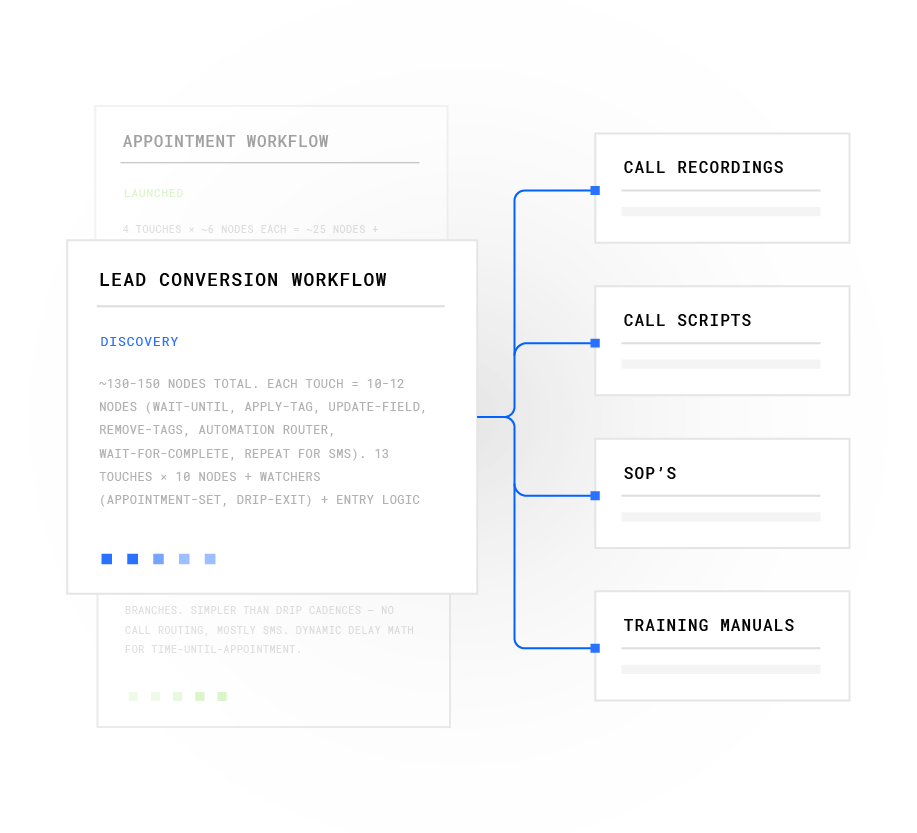
Walk through a session-window workflow mapped to your outbound use case in a live demo.
Reducing Dual Billing with SMS Fallback Controls
SMS fallback remains necessary for RCS outbound programs because RCS does not reach every device in Android-led audiences. A portion of any list will sit on SMS-only devices, which creates the risk of dual billing when both RCS and SMS incur charges.
MessageFlow bills RCS outbound messages on a delivered-only basis, so the sender pays only for the channel that successfully delivers the message.4 An RCS rate applies if RCS succeeds, and an SMS rate applies if the message falls back to SMS. The platform confirms RCS delivery failure and revokes the original RCS message before sending SMS fallback, which normally prevents double charges when RCS fallback to SMS occurs.
Four tactics reduce fallback-related cost:
- Device capability check before send. Before starting an RCS conversation, businesses can verify the user’s device capability, and if the device does not support RCS, the agent can fall back to another technology such as SMS instead of attempting RCS delivery. Routing non-RCS devices directly to SMS removes the RCS attempt charge.
- Delivery receipt verification before fallback trigger. Google’s RCS for Business best practices recommend verifying delivery receipts before triggering SMS fallback and attempting message revocation before sending a fallback SMS to avoid duplicate messages.
- TTL alignment. Message expiration (TTL) can act as a cue to invoke fallback messaging for time-sensitive RCS messages, which helps prevent stale content from reaching users after the original message loses value.
- Sequential channel logic. Using RCS, SMS, WhatsApp, and email as a sequential fallback chain instead of parallel sends can cut messaging costs by 20-40% while improving reach, provided duplicated sends to the same recipient are avoided.3
Plura’s platform applies these controls at the workflow level. The managed workflows layer handles device routing, delivery confirmation, and fallback sequencing without requiring operators to build custom logic for each campaign.
Measuring Cost per Outcome with RCS Read-Rate Benchmarks
Cost-per-outcome provides a more accurate view of RCS outbound performance than per-message cost. Cost-per-outcome equals total spend divided by the number of contacts who complete the target action.
RCS engagement benchmarks support this shift in focus. RCS can deliver higher open rates, stronger click-through, and better cost efficiency compared with SMS. Analysis of in-market RCS campaigns shows strong read rates, click-through rates, and conversion lifts compared with traditional channels.3
Read-rate benchmarks then become the baseline for cost-per-outcome modeling on RCS outbound programs. At strong read rates, the effective cost per read improves relative to the per-message rate.3 The gap between direct-carrier and aggregator per-message rates creates a meaningful difference in cost-per-outcome, which forms the operational case for direct-carrier RCS.
The conversation intelligence layer in Plura surfaces these metrics per campaign, per workflow node, and per channel. Operators can track cost-per-outcome in real time instead of reconstructing it from billing exports.
Run your numbers through Plura’s calculator to check ROI in real time at plura.ai/calculator. Compare plans and rates side by side at plura.ai/pricing.
RCS Cost Reduction: Frequently Asked Questions
What is delivered-only RCS billing and how does it reduce outbound spend?
Delivered-only billing charges the operator only when an RCS message successfully reaches the recipient’s device. Failed delivery attempts, non-RCS devices, and expired messages do not generate charges. For high-volume outbound programs where part of the list is unreachable or on SMS-only devices, this model removes the cost of every undelivered attempt. The savings scale with list quality, so a program sending 500,000 messages per month with a 15% non-delivery rate saves the per-message rate on 75,000 messages under delivered-only billing compared with attempt-based billing.
How do CPaaS wrapper fees inflate RCS outbound costs?
A CPaaS aggregator sits between the operator and the carrier and adds a transport markup on every message. Base carrier rates run in the $0.005-$0.015 range mentioned earlier, while aggregator-marked-up rates from providers like Sinch, Twilio, and Vonage often fall in the $0.03-$0.08 range per message. That markup represents the CPaaS wrapper fee. Removing it requires direct or near-direct carrier access, which Plura’s FCC-licensed carrier stack provides. The wrapper fee reflects reseller margin rather than a specific compliance or feature cost, and operators pay it whether or not they use the aggregator’s additional services.
What is a 24-hour RCS session window and how does it lower per-message cost?
A 24-hour session window is a conversational RCS billing construct where all messages exchanged between a business and a customer within 24 hours after a session trigger fall under a single flat rate. Instead of billing each outbound and inbound message individually, the carrier bills one session fee for the entire exchange. Outbound programs that rely on multi-turn qualification flows, appointment confirmations, or lead nurture sequences convert five or six individually billed messages into one session charge. The effective per-message cost inside a session drops to a fraction of the standalone rate, which drives RCS session window cost savings on interactive outbound programs.
How does Plura’s direct-carrier stack differ from CPaaS-based RCS providers?
Most RCS providers act as API resellers on top of a third-party CPaaS. They do not own the carrier, cannot issue branded caller ID at the carrier level, and pass CPaaS markup to the operator on every message. Plura operates its own FCC-licensed audio bridging carrier. RCS traffic originates on Plura’s domestic infrastructure, which removes reseller markup, enables carrier-level branded sender ID, and keeps TCPA-related controls, DNC scrubbing, and consent logging at the origination layer instead of bolted on later.1 The stateful conversation database also keeps the AI agent’s context from prior voice, SMS, and webchat interactions, so operators avoid paying for re-qualification messages that repeat information already captured on another channel.
What metrics should contact centers track to measure RCS outbound cost reduction?
The core measurement framework has four layers. First, delivered rate, which is the percentage of sent messages that reach a device and sets the denominator for downstream metrics. Second, read rate, which is the percentage of delivered messages opened and can be benchmarked against an 80% RCS baseline. Third, cost-per-engagement, which equals total RCS spend divided by the number of contacts who tapped a suggested action, replied, or completed a target step. Fourth, cost-per-outcome, which equals total spend across the full channel mix, including RCS and SMS fallback, divided by contacts who completed the conversion event. Comparing cost-per-outcome across RCS and SMS, rather than comparing per-message rates, supports more accurate budget allocation decisions. Plura’s conversation intelligence layer surfaces all four metrics per campaign without manual export and reconciliation.
How should operators handle SMS fallback to avoid dual billing on RCS campaigns?
Dual billing occurs when both the RCS attempt and the SMS fallback deliver to the same device and both incur charges. Device capability verification before send provides the primary defense, since routing contacts confirmed as SMS-only directly to SMS removes the RCS attempt charge. For contacts where RCS capability is uncertain, the platform can verify delivery receipt confirmation before triggering fallback and attempt RCS message revocation before sending SMS. Operators can also define explicit fallback rules at campaign setup, including which delivery status codes trigger fallback, what TTL window applies, and whether fallback content differs from the original RCS message. Plura’s managed workflows handle device routing, delivery confirmation, and fallback sequencing at the platform level and apply these controls consistently across campaigns.
Conclusion: Applying Direct-Carrier RCS to Your Outbound Program
The 20-40% RCS outbound cost reduction opportunity described in this playbook comes from three structural changes. Direct-carrier access removes CPaaS wrapper fees, delivered-only billing eliminates charges on undelivered messages, and 24-hour session windows collapse multi-turn flows into single session charges. Each lever operates independently, and together they compound.
Plura’s FCC-licensed carrier stack, stateful conversation database, and no-code workflow builder provide the infrastructure that brings these levers to U.S. contact centers, agencies, and franchise networks without requiring a rebuild of existing compliance programs or delivery architecture.
Run your current RCS outbound volume through the cost model at plura.ai/calculator.
Review plan structures and carrier-level rates at plura.ai/pricing.
See Plura’s direct-carrier RCS stack in a live demo tailored to your outbound program.
1 Plura AI maintains SOC 2, HIPAA, ISO, and GDPR posture as part of its platform infrastructure. References to compliance frameworks in this article describe Plura’s platform capabilities and do not constitute a guarantee that any customer using Plura will themselves be compliant with applicable laws or standards. Customers remain solely responsible for their own regulatory obligations, certifications, consent management, recordkeeping, and the claims they make to their own end users. Consult qualified legal counsel for guidance specific to your use case.
2 This article describes regulatory frameworks at a general level and does not constitute legal advice. Laws and regulations vary by jurisdiction, change over time, and apply differently depending on facts and circumstances. Readers should consult qualified legal counsel before making compliance decisions.
3 Performance figures, customer outcomes, and industry statistics referenced in this article are drawn from cited third-party sources or Plura customer case studies. Individual results vary based on implementation, use case, industry, audience, and execution. Past or aggregate performance is not a guarantee of future results.
4 References to third-party products, services, companies, or research are made for informational and comparative purposes only. Plura AI is not affiliated with, endorsed by, or sponsored by any third party named in this article unless explicitly stated. Trademarks and product names referenced remain the property of their respective owners.
5 This article contains forward-looking statements regarding industry trends, technology adoption, and future capabilities. These statements reflect current expectations and are subject to change. Plura AI undertakes no obligation to update forward-looking statements except as required.
This article is provided for informational purposes only and reflects Plura AI’s understanding at the time of publication. Product capabilities, integrations, and specifications are subject to change. For the most current information, visit plura.ai.
This article was produced with the assistance of AI tools and reviewed by Plura AI prior to publication.