
Written by: Matt Beucler, CEO, Plura AI
Key Takeaways
- RCS outbound delivery rate (delivered ÷ submitted) averages 65% for OTP campaigns and exceeds 90% on supported networks and devices.3
- Delivery depends on five conditions: compatible device, carrier support, RCS enabled, supported messaging app, and active data connection.
- Most major providers bill RCS only on successful delivery, so delivery rate directly determines campaign cost.
- SMS fallback ensures every message reaches the recipient, but rich features and engagement data disappear when fallback occurs.
- Plura AI’s AI RCS platform increases delivery and engagement with branded messaging, automatic cross-channel follow-up, and compliance tools. Start a conversation with Plura AI to see it in your environment.
Defining RCS Outbound Delivery Rate
RCS outbound delivery rate is the percentage of submitted messages that arrive at the recipient’s device as RCS. The formula is straightforward.
RCS delivery rate = delivered ÷ submitted × 100
A message counts as delivered only when a delivery receipt confirming delivery is received from the operator. Messages with no receipt, or with a failed or expired status, count as undelivered.
This metric differs from an overall delivery rate that blends RCS and SMS fallback into a single number. A blended view hides the true RCS reach of a campaign and blocks clear channel-mix decisions.
RCS delivery is conditional. A message arrives as RCS only when all five of the following conditions are met.
- The recipient has a compatible device (Android via Google Messages, or iPhone on iOS 18 or later)
- The recipient’s carrier supports RCS
- RCS is enabled at the device level
- The messaging app supports RCS
- The device has an active data connection (Wi-Fi or mobile data)
On Google’s RCS for Business platform, if a recipient’s device does not support RCS or RCS is not enabled, the platform returns a 404 NOT_FOUND error. The message can then fall back to SMS if fallback methods are configured. Other failure conditions, such as unsupported message features, return different errors and may not trigger SMS fallback.
In business messaging, SMS fallback for RCS messages is typically managed automatically by the messaging platform or aggregator, such as AWS End User Messaging, Twilio, Infobip, or MessageFlow.4 These providers perform capability checks and reroute to SMS when RCS is unavailable. The network component (MaaP) and, in some cases, the client can also influence fallback decisions.
AWS End User Messaging charges RCS messages only upon successful delivery, and most major RCS providers bill per delivered message. Undelivered RCS messages carry no RCS charge. That billing model ties the delivered ÷ submitted metric directly to campaign cost.
RCS Delivery Rate Benchmarks by Message Type (2026)
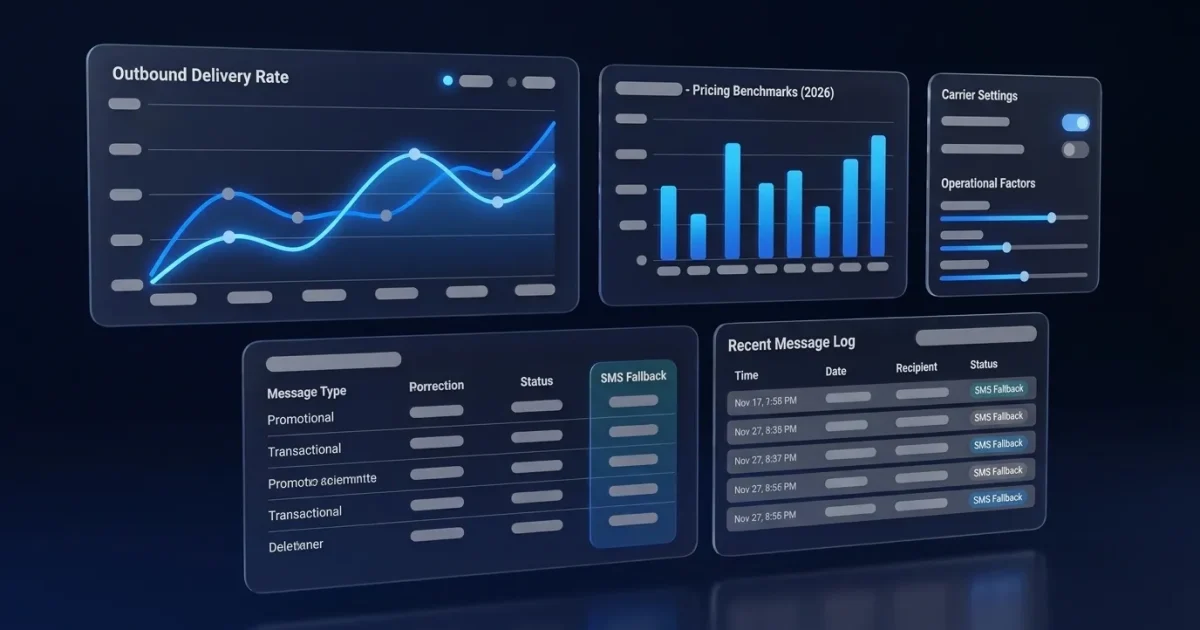
RCS delivery benchmarks show a clear gap between OTP and marketing campaigns. OTP campaigns average around 65% RCS delivery, while marketing campaigns on supported networks often exceed 90%.
Published 2025-2026 RCS research focuses more on engagement than on raw delivery completion. The table below consolidates available delivery-rate data points from named sources so you can compare OTP, marketing, and SMS OTP performance side by side.4
| Message Type | RCS Delivery Rate | Key Context | Source |
|---|---|---|---|
| OTP / Authentication | ~65% (early campaigns) | 93% of failures caused by handset not supporting RCS; 4% by carrier not registered for RCS | Messente, June 2026 case study, Germany logistics client |
| Marketing / Engagement | 90%+ (supported networks) | Open rates 90-95%; read rates 70-85%; CTR 15-30% (up to 51% in exceptional use cases) | CM.com; Sureshot directional benchmarks |
| SMS OTP (non-RCS comparator) | 94-96% aggregate US | Premium providers reach 96-98%; budget providers 89-93% | Message Central 2026 US OTP Benchmark Report |
The OTP versus marketing gap reflects audience targeting. OTP campaigns reach unfiltered lists where device compatibility is unknown. Marketing campaigns that target confirmed RCS-capable audiences on supported networks achieve materially higher delivery.
As of early 2025, iOS 18 adoption reached approximately 68% of active iPhones. That shift expanded the addressable RCS audience significantly beyond the Android-only baseline that existed before September 2024.
Plura AI’s AI RCS delivers an 80% read rate and 35% click-through rate across its platform, with 3x higher engagement versus SMS.3
Because most providers bill RCS only on successful delivery, the delivery rates above directly shape your effective cost per message. Pricing benchmarks give you the context to translate delivery performance into budget impact.
RCS Pricing Benchmarks (2026): Pay-for-Delivery Models
RCS pricing in the US follows a pay-for-delivery model at most major providers. The table below compares published per-segment and per-message rates from named sources. All figures are US outbound unless noted.
| Provider | Basic RCS (per segment) | Rich Media RCS (per message) | Billing Model |
|---|---|---|---|
| AWS End User Messaging | Rich RCS (outbound) $0.01194 per segment ($0.00700 AWS + $0.00494 carrier) | $0.02949 ($0.02000 AWS + $0.00949 carrier) | Pay-per-delivered message, undelivered not billed |
| Twilio | Basic RCS (text-only) in the US starts at ~$0.0083 per outbound/inbound message, plus carrier fees | ~$0.0220 | Per-message, GA since August 2025 |
| Infobip | Enterprise / contact-sales | Enterprise / contact-sales | US Interactive Session billing charges a single fee per 24-hour window once 4 qualifying messages are exchanged, with at least 2 P2A and at least 1 A2P |
| Sinch | US “Rich RCS” (text-only) rate is approximately $0.0078 per message; basic RCS pricing is country-specific and varies by carrier, and getting started with RCS typically requires sales engagement | Not self-service | Sales-engaged, not self-service for RCS |
Telnyx launched RCS in July 2025, bills per delivered message, and charges SMS fallback at the SMS rate. For RCS Rich (text) messages on US carriers, carrier pass-through fees range from $0.0025 to $0.0062 per segment, depending on the carrier and direction. The AI Overview benchmark for RCS pricing is $0.015-$0.025 per segment for rich RCS outbound messages in the United States, according to GlobalTelcoConsult.
Basic text-only RCS messages often cost about the same as SMS, rich media messages run 20-30% higher, and conversational sessions are roughly double the SMS rate but include a 24-hour window for unlimited replies.
See how Plura’s RCS rates compare to the benchmarks above.
Pay-for-Delivery vs. SMS Fallback: How RCS Billing Differs from SMS
AWS End User Messaging charges RCS messages only upon successful delivery. If a recipient’s device is offline, lacks data, or does not support RCS, the message is not charged as RCS. In Google Messages, when a device cannot receive RCS, the platform can automatically resend the message as SMS/MMS if the “Automatically resend as text (SMS/MMS)” setting is enabled, and the message is then billed according to the user’s SMS/MMS plan.
The fallback mechanics follow a clear sequence. Google’s RCS for Business API supports a time-to-live (TTL) setting on every message. When a device does not support RCS, the platform returns a 404 error, and the sending agent is expected to deliver the message through another channel, typically SMS. If the message cannot be delivered before the TTL expires, the platform sends a revocation notification, which is the cue to trigger SMS fallback.
In business messaging, SMS fallback for RCS messages is typically managed automatically by the messaging platform or aggregator, such as AWS End User Messaging, Twilio, Infobip, or MessageFlow. These providers perform capability checks and reroute to SMS when RCS is unavailable. The network component (MaaP) and, in some cases, the client can also play a role in fallback decisions. AWS recommends enabling SMS fallback for higher overall delivery.
One operational consideration deserves special attention. When RCS messages fall back to SMS, rich features such as carousels, branded sender information, suggested replies, interactive buttons, high-resolution media, typing indicators, and read receipts disappear. Engagement data also degrades because SMS provides almost no delivery confirmations, read receipts, or interaction tracking. Every RCS message with an interactive button should also include the destination URL in the body text, because buttons are removed during SMS fallback while a plain URL survives.
These fallback mechanics are driven by six operational factors that determine whether a submitted RCS message reaches the recipient as RCS or degrades to SMS.
Operational Factors That Drive RCS Delivery Rates
Six operational factors determine whether a submitted RCS message reaches the recipient as RCS or falls back to SMS.
- Carrier support. All four major US carriers (AT&T, Verizon, T-Mobile, and UScellular) support RCS, plus 20 prepaid and MVNO brands. Carrier enablement for RCS varies by market, and the recipient’s carrier is a key deciding factor for delivery. Sender readiness, including brand verification, onboarding, and provider reach, also determines whether business RCS can be sent in a given market.
- Device compatibility. 93% of RCS delivery failures in Messente’s campaign were caused by handsets not supporting RCS. RCS via Google Messages is supported across 500+ Android device manufacturers, and on iPhone with iOS 18 and later.
- Messaging app and RCS enabled. Samsung confirmed it will discontinue Samsung Messages in the US starting July 6, 2026, for Galaxy devices running Android 12 or newer, directing those users to switch to Google Messages as the default for SMS and RCS. Android-side consolidation onto Google Messages reduces fragmentation and should improve delivery consistency. RCS must also be enabled at the device level.
- Network connectivity. RCS messages are sent over data rather than the traditional SMS network, so an active Wi-Fi or mobile data connection is required.
- Message content and branding. Verified sender profiles with brand name and logo improve trust and delivery. As of May 2025, US RCS brand approvals commonly take around 8 to 16 weeks from submission to final carrier sign-off, reflecting identity verification, use case review, and brand asset validation. Google-managed launches can be approved in 1-3 business days and clean submissions through providers may take only 1-3 weeks.
- User opt-in and consent. TCPA consent applies to RCS business messaging, and block rates above 3-5% are the most urgent warning signal for an RCS program, since high block rates can trigger carrier throttling.1,2 Block-rate monitoring is a core operational safeguard. The FCC’s consent revocation rule (effective April 11, 2025) is applied to RCS business messaging as a recommended compliance practice, even though the FCC excluded RCS from the TCPA’s definition of “text message” in its 2019 RAY BAUM Act Order.1,2 Because these obligations are nuanced, operators should consult qualified counsel regarding their specific TCPA requirements.
How to Measure and Improve RCS Delivery Rates
Provider dashboards and APIs are the primary tracking surface for RCS delivery performance. Google’s RCS for Business platform provides built-in analytics through the Business Communications Developer Console, tracking messages sent, delivered, and read, grouped by send date and updated daily with an eight-day backfill window for delivery and read events. If you use Twilio, its Messaging Insights dashboards consolidate SMS, MMS, WhatsApp, and RCS into a single cross-channel view. Sinch’s Conversation API offers a sent-delivered-read funnel that refreshes every 24 hours, while Infobip’s reporting adds delivery status, message-seen confirmations, and end-user interaction tracking.
The minimum metrics to track for every RCS campaign, per Sureshot and iBASIS, are:
- Delivery rate by channel (RCS vs. SMS fallback, not blended)
- Read rate (protocol-level, not image-based like email)
- Interaction rate (button taps, suggested reply selections)
- Fallback rate (the share of submitted messages that degraded to SMS)
- Engagement delta (RCS vs. SMS fallback performance on the same campaign)
Practical improvement steps include:
- Use a branded sender ID with a verified agent registration to improve trust and carrier acceptance
- Maintain proper 10DLC registration for SMS fallback traffic, as SMS fallback rides the US carrier SMS route and A2P 10DLC registration governs the fallback
- Keep opt-out rates below 1-2% per MDS Media’s list health guidance
- Segment by RCS eligibility and run capability checks before scaling campaigns, per Orbit by Devotel
- Design every message for fallback by including URLs in body text alongside interactive buttons
- Monitor fallback rate per carrier and per campaign as a leading indicator of delivery issues
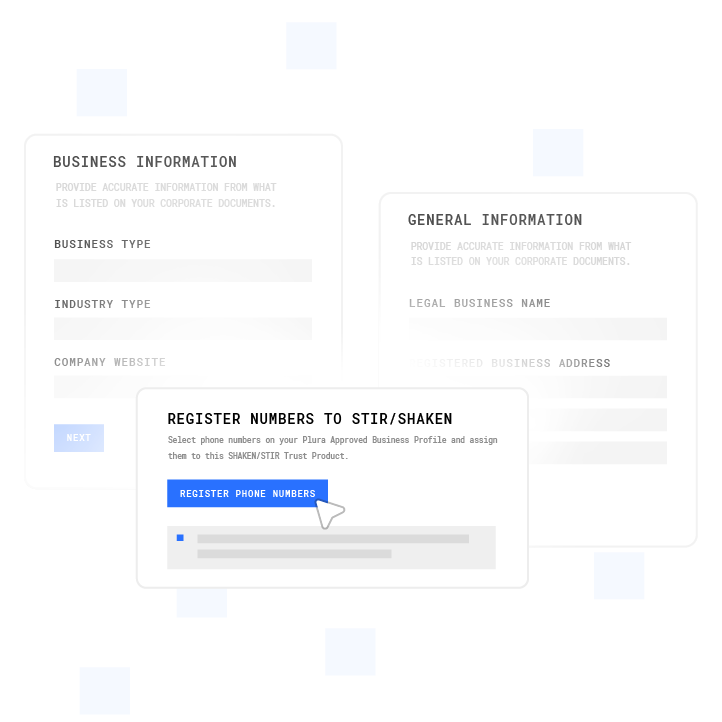
Plura’s AI RCS sends branded, interactive messages with rich media and in-message actions. Plura’s FCC-licensed carrier infrastructure supports high deliverability and branded sender ID. Plura’s compliance engine supports customer compliance with real-time DNC scrubbing, immutable consent logging, and 10DLC registration for SMS fallback traffic.1
Book a live demo with Plura to see AI RCS delivery performance in action.
RCS vs. SMS: Cost and Delivery – Common Questions
How much does RCS cost?
In the US, RCS Rich text messages are billed per 160-byte segment, with pricing ranging from about $0.007 (AWS fee) to $0.025 per segment (including carrier fees, for example Twilio). Rich Media RCS messages are billed per message at higher flat rates rather than per segment. AWS US Rich RCS is $0.01194 per segment; Rich Media RCS is $0.02949 per message. Twilio lists approximately $0.0083 for basic text and $0.0220 for rich media per message. For RCS Rich (text) messages on US carriers, carrier pass-through fees range from $0.0025 to $0.0062 per segment, depending on the carrier and direction.
Is RCS cheaper than SMS?
Basic text-only RCS messages often cost about the same as SMS, while rich media messages run 20-30% higher. The cost-per-conversion picture looks different from the per-message view. Pay-for-delivery means you only pay for messages that are successfully delivered. RCS messaging achieves 3x higher engagement rates than traditional SMS (Google / GSMA, 2024), so cost-per-conversion can be lower even when per-message rates are higher.
What is the downside of RCS?
Delivery is conditional and depends on device, carrier, app, settings, and connectivity. Early OTP campaigns saw only 65% RCS delivery, with 93% of failures caused by handsets not supporting RCS. Rich features disappear on SMS fallback. As of May 2025, US RCS brand approvals commonly take around 8 to 16 weeks, though Google-managed launches can be approved in 1-3 business days and clean submissions through providers may take only 1-3 weeks. Engagement data also degrades on fallback because SMS provides minimal delivery confirmation and no read receipts.
Which carriers support RCS?
All four major US carriers (AT&T, Verizon, T-Mobile, and UScellular) support RCS, plus 20 prepaid and MVNO brands. Apple added RCS with iOS 18 in September 2024. iOS 26.5 (May 2026) added end-to-end encrypted RCS with 23 US carriers on the support list, including AT&T, T-Mobile, Verizon, Boost Mobile, Cricket, Metro by T-Mobile, Mint Mobile, US Cellular, Visible, and Xfinity Mobile.
Why Plura AI for RCS Outbound?
High-volume operators evaluating RCS need a platform that maximizes delivered ÷ submitted, not just one that sends messages. Plura’s AI RCS runs on Plura’s FCC-licensed carrier infrastructure. Branded sender ID is issued directly at the carrier level, which strengthens deliverability, trust signals, and compliance posture.
Plura’s AI RCS capabilities include:
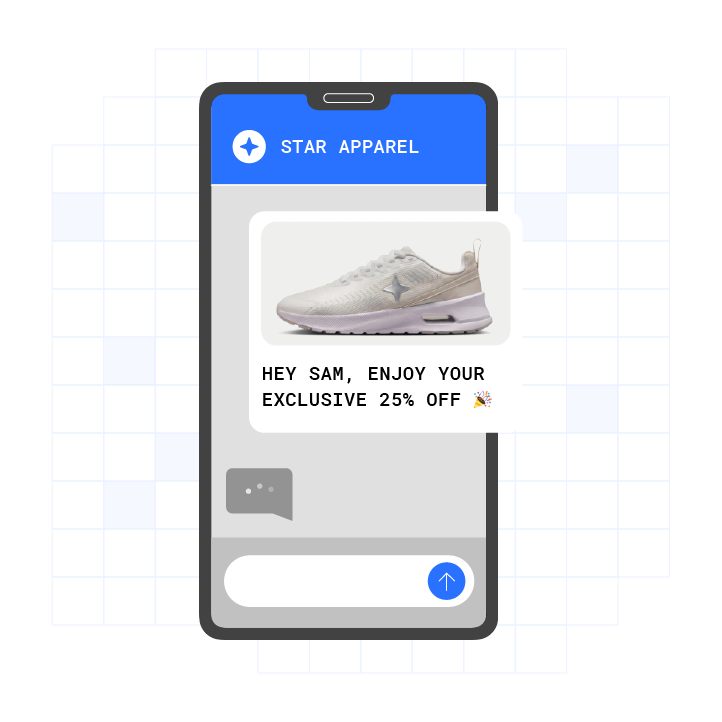
- Branded, interactive messages with rich media, carousels, and in-message actions delivering an 80% read rate and 35% CTR
- In-message payments via Stripe and document signing via DocuSign and PandaDoc, so customers complete actions without leaving the message thread
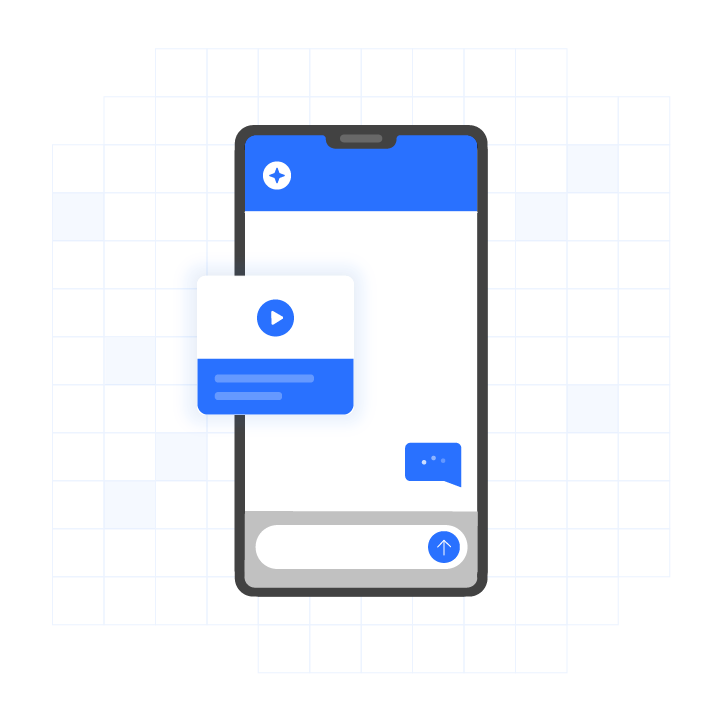
- Personalized 30-second AI-rendered video inside the message thread
- Automatic cross-channel follow-up via AI voice agent or AI SMS if RCS is not delivered, so no lead is lost to fallback
- A Stateful Conversation Database that holds context across every channel, so an AI agent that sent an RCS message at 9 a.m. picks up the voice call at noon already knowing what was said
- A compliance engine supporting customer compliance with real-time DNC scrubbing, immutable consent logging, and 10DLC registration for SMS fallback traffic
Plura’s AI Predictive Dialer and omnichannel platform (voice, SMS, RCS, AI webchat) share the same Stateful Conversation Database. RCS engagement data flows into every downstream channel without manual integration work.
Review Plura’s pricing plans and carrier rates. Run your numbers through Plura’s calculator to check your ROI in real time.3
Conclusion and Next Steps
RCS outbound delivery rate is a distinct, measurable metric (delivered ÷ submitted) with benchmarks ranging from 65% in early OTP campaigns to 90%+ when targeting supported networks. Pricing at most major providers follows pay-for-delivery, so you pay only when messages are delivered. SMS fallback functions as the safety net that ensures every message reaches the recipient regardless of device or carrier support.
The gap between a 65% and 90%+ delivery rate aligns with carrier enablement, device compatibility, list hygiene, and whether the platform performs capability checks before sending. Operators who measure fallback rate per carrier, maintain opt-out rates below 1-2%, and design messages for fallback from the start consistently outperform programs that treat RCS as a simple SMS replacement.
Plura’s AI RCS, built on FCC-licensed carrier infrastructure with AI-powered rich messaging and automatic cross-channel follow-up, serves high-volume operators who need defensible delivery numbers and engagement rates that support the business case for RCS adoption.
Book a live demo with Plura to evaluate AI RCS delivery performance against your current provider.
Frequently Asked Questions
What is a good RCS outbound delivery rate for a US business campaign?
A healthy RCS outbound delivery rate for a US business campaign targeting a supported network is 90% or above, based on MDS Media’s 2026 benchmark for campaigns reaching RCS-capable audiences. Early-stage programs or OTP campaigns reaching unfiltered lists with unknown device compatibility may see delivery rates closer to the 65% OTP benchmark mentioned earlier. The difference between those two numbers is largely explained by device compatibility, since 93% of RCS delivery failures in Messente’s campaign were caused by handsets not supporting RCS. Programs that segment by RCS eligibility, run capability checks before sending, and configure SMS fallback tend to achieve delivery rates in the upper range. Tracking delivery rate by channel separately from the blended RCS-plus-SMS rate is the only way to see true RCS performance.
How does RCS fallback to SMS affect campaign costs?
RCS fallback to SMS affects costs in two ways. First, when a message falls back to SMS, you pay the SMS rate rather than the RCS rate, and most major providers, including Telnyx and AWS, bill SMS fallback at the standard SMS per-message rate. Second, the rich features that justify RCS pricing disappear on fallback. Carousels, branded sender information, interactive buttons, read receipts, and high-resolution media are all stripped, and the message arrives as a plain text SMS. For campaigns where rich features drive the conversion case, a high fallback rate means paying SMS rates while losing the engagement advantage that made RCS attractive. Monitoring fallback rate per carrier and per campaign is the primary lever for understanding whether your RCS investment delivers the expected return.
How long does it take to get approved for RCS business messaging in the US?
As of May 2025, US RCS brand approvals commonly take around 8 to 16 weeks from submission to final carrier sign-off, according to OneSignal’s reporting. The process includes identity verification, use case review, and brand asset validation. Google-managed launches can be approved in 1-3 business days, and clean submissions through providers may take only 1-3 weeks. Twilio advises that multi-region launches can take longer. For operators planning RCS campaigns, this 8-16 week approval timeline is a material factor in launch planning. SMS fallback registration via 10DLC is a separate process that governs the fallback leg of any RCS program and should be completed in parallel with RCS agent registration.
Does Plura AI support SMS fallback for RCS campaigns?
Plura’s AI RCS platform includes automatic cross-channel follow-up. If an RCS message is not delivered, Plura’s AI agents follow up via voice or SMS, so no lead is lost to fallback. Plura’s compliance engine supports customer compliance with 10DLC registration for SMS fallback traffic, real-time DNC scrubbing, and immutable consent logging. Plura’s Stateful Conversation Database holds context across every channel, so the follow-up via SMS or voice inherits the full history of the RCS interaction. Customers remain responsible for their own regulatory obligations and should consult qualified counsel regarding TCPA, DNC, and related requirements for their specific programs.
What metrics should I track to monitor RCS delivery performance?
The minimum set of metrics for any RCS program includes delivery rate by channel (RCS vs. SMS fallback, never blended), read rate, interaction rate (button taps and suggested reply selections), fallback rate, and engagement delta between RCS and SMS fallback on the same campaign. Delivery rate by channel is the foundational metric because it shows what share of submitted messages actually reached recipients as RCS. Fallback rate is the leading indicator of delivery problems, since a sudden spike in fallback rate can indicate a carrier issue, a change in audience device mix, or a technical configuration problem. Read rate in RCS is a protocol-level signal, not an image-based proxy like email open tracking, which makes it structurally more reliable as a measure of genuine message exposure. Opt-out rate should be monitored as a list health signal, with anything above 1-2% per campaign triggering a review of targeting, content, or frequency.
1 Plura AI maintains SOC 2, HIPAA, ISO, and GDPR posture as part of its platform infrastructure. References to compliance frameworks in this article describe Plura’s platform capabilities and do not constitute a guarantee that any customer using Plura will themselves be compliant with applicable laws or standards. Customers remain solely responsible for their own regulatory obligations, certifications, consent management, recordkeeping, and the claims they make to their own end users. Consult qualified legal counsel for guidance specific to your use case.
2 This article describes regulatory frameworks at a general level and does not constitute legal advice. Laws and regulations vary by jurisdiction, change over time, and apply differently depending on facts and circumstances. Readers should consult qualified legal counsel before making compliance decisions.
3 Performance figures, customer outcomes, and industry statistics referenced in this article are drawn from cited third-party sources or Plura customer case studies. Individual results vary based on implementation, use case, industry, audience, and execution. Past or aggregate performance is not a guarantee of future results.
4 References to third-party products, services, companies, or research are made for informational and comparative purposes only. Plura AI is not affiliated with, endorsed by, or sponsored by any third party named in this article unless explicitly stated. Trademarks and product names referenced remain the property of their respective owners.
This article is provided for informational purposes only and reflects Plura AI’s understanding at the time of publication. Product capabilities, integrations, and specifications are subject to change. For the most current information, visit plura.ai.
This article was produced with the assistance of AI tools and reviewed by Plura AI prior to publication.