

Written by: Matt Beucler, CEO, Plura AI
Key Takeaways for High-Volume Sales Teams
- The hybrid model wins for high-volume operators by pairing automation for speed and scale with human agents for nuance and complex closes.
- Sales automation delivers sub-5-second responses across channels, while manual processes remain critical for relationship-driven negotiations and high-stakes conversations.3
- High-volume teams reach far more prospects and lower cost-per-meeting with automation, contacting hundreds of prospects daily instead of the limited output of manual SDRs.
- Regulated U.S. operators need infrastructure that supports compliance with 100% domestic hosting, real-time DNC scrubbing, and frameworks like TCPA, HIPAA, SOC 2, and state-level rules to reduce 2026 regulatory risk.1
- Plura AI delivers the stateful, compliance-supporting infrastructure high-volume operators use to run true hybrid workflows; book a live demo to see it in action.
Sales Automation Defined for Revenue Leaders
Sales automation uses software to execute repeatable sales tasks without human intervention at each step. It covers lead capture, lead scoring, outbound dialing, SMS and RCS follow-up, appointment scheduling, quote generation, and pipeline reporting. Automation handles the administrative layer so sales capacity focuses on conversations that require judgment, persuasion, and relationship management.
In 2026, sales automation extends beyond CRM workflows into AI-powered voice agents, multichannel conversation orchestration, and real-time lead enrichment. The global sales force automation market is projected to reach US$22.7 billion by 2033, growing at an 8.9% CAGR from US$12.5 billion in 2026, with life sciences as the fastest-expanding buyer segment.5
Manual Sales Processes and Their Throughput Ceiling
Manual sales processes rely on human agents to initiate contact, qualify leads, handle objections, and close deals. Every dial, every follow-up text, and every appointment confirmation requires a person to act. Manual processes bring strengths such as human judgment in ambiguous situations, the ability to read emotional cues, and the credibility that comes from a real conversation with a knowledgeable representative.
The structural constraint is throughput. A manual SDR typically performs 40-80 call attempts and 30-50 emails per day but books only 8-15 qualified meetings per month, while a well-configured AI prospecting system can automate around 500 personalized emails per day. That gap does not close with better training or tighter scripts. It reflects a ceiling built into the manual model.
Sales Automation vs Manual: Side-by-Side Metrics Comparison
The following table quantifies the structural differences between manual and automated workflows across core performance metrics that matter to high-volume operators.
| Metric | Manual Process | Sales Automation |
|---|---|---|
| First contact speed | Industry standard: 47+ hours | Under 60 seconds with Plura |
| Prospects contacted per day | typically performs 40-80 call attempts and 30-50 emails per day but books only 8-15 qualified meetings per month | can automate around 500 personalized emails per day |
| Cost per qualified meeting | $150 to $300 | $15 to $40 |
| Script consistency | Variable, degrades over time | Identical on every contact |
Run your numbers through Plura’s calculator to check your ROI in real time.
Where Automation Produces Clear, Measurable Wins
Speed-to-lead represents the clearest win for automation. A 2007 MIT/InsideSales study found companies responding within five minutes are 100 times more likely to connect with a prospect than those waiting 30 minutes. The same source notes separate Harvard Business Review research with different response-time statistics, such as a 42-hour average, and leads contacted within one minute are 391% more likely to convert than those contacted after 24 hours. No manual SDR queue reliably hits those windows at volume.
Pipeline velocity follows a similar pattern. Companies that integrate AI into prospecting workflows can reduce cost per qualified meeting and increase pipeline generation. McKinsey research has found that B2B companies adopting AI-driven sales tools can report revenue uplift and improved sales efficiency compared to those relying on traditional methods.4
Cost reduction is equally well documented. Sales teams using automation platforms can engage five to ten times more prospects than with manual outreach while maintaining or improving message personalization quality. Implementing sales automation can significantly reduce the share of sales representatives’ time spent on administrative and research activities, which often exceeds 70%.
Healthcare operators see a specific benefit. Plura’s AI agents can help reduce no-shows through automated appointment confirmation and follow-up sequences.
Where Manual Sales Work Remains Non-Negotiable
Automation handles volume and speed, but it does not match a skilled human on ambiguity, emotional complexity, or high-stakes negotiation.
Complex deal structures require human judgment. A procurement negotiation involving custom pricing, legal review, and multi-stakeholder sign-off is not a workflow problem. It is a relationship problem. The human rep reads hesitation, adjusts framing, and builds the trust that moves a $500,000 contract across the line. A McKinsey study found that 70% of B2B decision makers are open to fully self-serve or remote purchases over $50,000, which means 30% still require human engagement even at that threshold.
Sensitive disclosures also require human oversight. In healthcare, legal, and financial services, a prospect who shares a complex medical history, a pending lawsuit, or a distressed financial situation needs a trained human to respond appropriately. AI agents in these verticals are configured to recognize escalation triggers and warm-transfer to a U.S. agent, not to improvise on outcomes that carry regulatory or liability weight.
Relationship-driven closes in enterprise sales, where the buyer has evaluated multiple vendors over months, depend on the human rep’s credibility and institutional knowledge. Automation supports that process by keeping the pipeline warm and the data current. It does not replace the final conversation.
Hybrid Task Blueprint for High-Volume Teams
The following blueprint translates the hybrid model into concrete task-level decisions for high-volume operators.
| Task | Automate or Manual | Rationale |
|---|---|---|
| Inbound lead response | Automate | Lead conversion rates drop 10x after the first 5 minutes, and no human queue hits that window at scale |
| Lead qualification and scoring | Automate | AI-driven lead scoring ranks prospects by behavior, engagement, and fit more consistently than manual review |
| Appointment scheduling and confirmation | Automate | Repeatable and rules-based, automation handles time-zone detection, reminders, and rescheduling without human input |
| Multi-touch follow-up cadences | Automate | Plura AI enables 7 to 12 follow-up touches across voice, SMS, RCS, and webchat from a single workflow |
| Complex objection handling | Manual | Requires judgment, tone calibration, and situational awareness that automation escalates rather than resolves |
| Contract negotiation and closing | Manual | Relationship trust, legal nuance, and multi-stakeholder dynamics require human presence |
| Sensitive disclosures and escalations | Manual (AI-triggered handoff) | Regulatory and liability exposure in healthcare, legal, and financial services calls for trained human response |
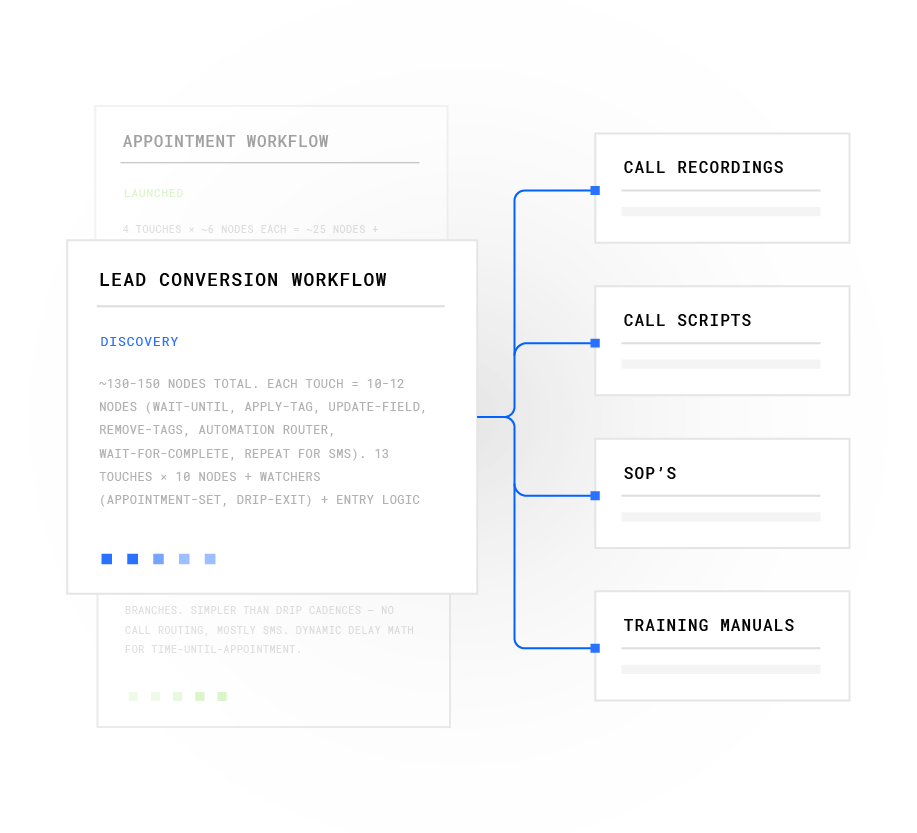
The operational prescription is direct. Automate every task where speed, consistency, and volume are the primary variables. Keep humans on every task where judgment, relationship, and legal sensitivity are the primary variables. The Stateful Conversation Database in Plura ensures that when the handoff happens, the human agent inherits the full conversation history across every prior channel touchpoint, not a summary.
Book a live demo with Plura to see the hybrid workflow in action.
Regulatory and Infrastructure Realities for 2026
Regulated U.S. operators face a specific set of infrastructure and compliance considerations in 2026 that generic automation tools often do not address. Operators should consult qualified counsel regarding their specific obligations under applicable law.
The FCC’s Notice of Proposed Rulemaking (NPRM, CG Docket No. 26-52) proposes capping offshore customer-service calls at 30% and prohibiting offshore handling of sensitive consumer data including passwords, multi-factor authentication credentials, Social Security numbers, and banking and card data.2 Companion federal legislation includes the Keep Call Centers in America Act (S.2495) and the Foreign Robocall Elimination Act (S.2666), which extend the regulatory perimeter further.
At the state level, New York’s Call Center Jobs Act carries penalties up to $10,000 per day, New Jersey has enacted a mirror statute, Connecticut restricts offshore handling in state contracts, Missouri issued an executive order on offshore disclosure, and Florida restricts offshore handling of medical information. North America leads the sales force automation market, in part because fragmented U.S. state-level privacy laws are prompting vendors to integrate compliance and data governance features natively.
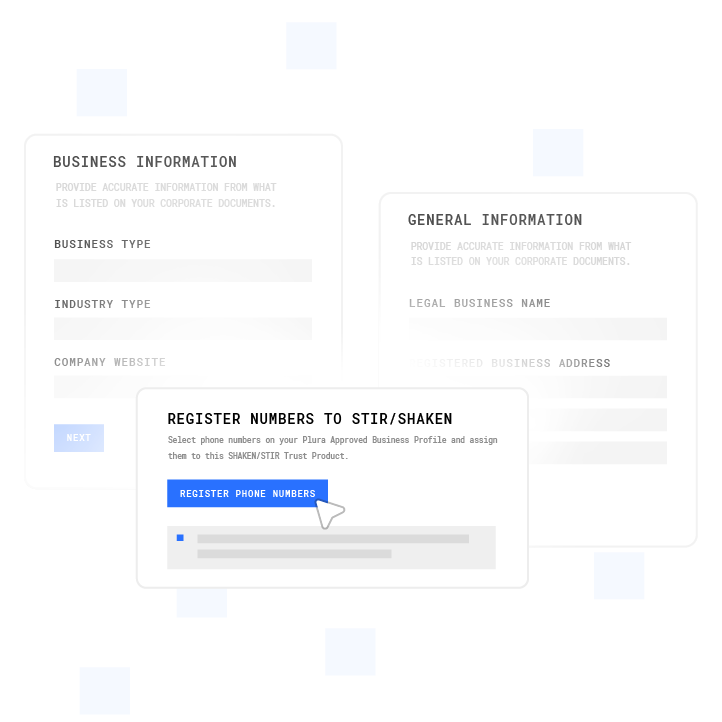
Most Twilio-based API resellers in the AI voice category cannot satisfy these requirements because they do not own the carrier stack, cannot enforce real-time DNC scrubbing at origination, and carry foreign infrastructure dependencies that create exposure under the FCC NPRM.4 Plura runs on 100% U.S. infrastructure by architecture. Voice origination, model hosting, data storage, and call recording all sit on domestic infrastructure. Plura supports compliance with TCPA, DNC compliance, HIPAA, SOC 2, ISO certification, GDPR, and SHAKEN/STIR caller ID verification, and enforces 50+ state rule sets on every outbound contact. Customers remain responsible for their own regulatory obligations and certifications.
Compare plans and rates side by side at plura.ai/pricing.
Implementation Checklist for High-Volume Operators
Audit your current response time. Measure the actual gap between lead submission and first human contact to establish a baseline. This baseline matters because if your response time exceeds five minutes on any channel, that gap is costing conversions before the sales process begins.
Map tasks to the hybrid framework. Use the table above as a starting point. Identify which tasks in your current workflow are rules-based and repeatable versus which require human judgment. The rules-based tasks are automation candidates, and the judgment-heavy tasks remain with your team.
Verify infrastructure compliance posture. Pay close attention if your current AI voice or SMS tool routes through a third-party CPaaS. In that scenario, confirm whether it can satisfy FCC NPRM requirements, issue branded caller ID at the carrier level, and enforce real-time DNC scrubbing before each dial. Failure on any of these points creates a compliance liability under 2026 regulatory conditions. Consult qualified counsel to assess your specific exposure.
Confirm stateful cross-channel memory. A lead who texted at 9 a.m. and receives a call at noon should not have to re-explain themselves. If your current stack does not share conversation context across channels, the customer experience feels episodic rather than continuous, and conversion rates reflect that.
Calculate total cost of ownership. Calculate total cost of ownership using your actual headcount and utilization rate. The calculator at plura.ai/calculator will show your specific monthly and annual savings based on your current agent costs.
Set a 90-day measurement window. Hybrid deployments that are instrumented correctly produce measurable pipeline and cost data within 90 days. If a vendor cannot commit to a 90-day opt-out window, the deployment risk sits entirely with the operator.
Conclusion: Hybrid Sales as a Practical Operating Model
The sales automation vs manual discussion resolves to a task-level decision, not a binary choice. As noted earlier, McKinsey research identifies routine tasks as prime automation candidates, which frees sales reps for high-value work. The hybrid model captures both advantages. Automation handles the speed, consistency, and volume that manual processes cannot sustain. Humans handle the judgment, relationship, and legal sensitivity that automation cannot replicate.
For regulated U.S. operators in 2026, the infrastructure layer underneath the automation matters as much as the automation itself. An AI voice tool that routes through a third-party carrier, lacks stateful cross-channel memory, and carries foreign infrastructure dependencies does not represent a complete hybrid model. It represents a compliance risk with a fast response time.
Plura AI is built for the operational and regulatory reality high-volume operators face. Plura provides an FCC-licensed carrier, a Stateful Conversation Database that holds context across voice, SMS, RCS, and webchat, real-time DNC scrubbing, SHAKEN/STIR caller ID verification, and 100% U.S. infrastructure by architecture. The economics behind the model are transparent.
Use the calculator at plura.ai/calculator to model your specific deployment scenario.
Compare plans and rates side by side at plura.ai/pricing.
Frequently Asked Questions
How a Hybrid Sales Model Differs from Pure Automation
Sales automation refers to software executing specific sales tasks without human intervention at each step, such as dialing, lead scoring, follow-up sequencing, and appointment confirmation. A hybrid sales model combines automation for high-volume, rules-based tasks with human agents for complex negotiations, sensitive disclosures, and relationship-driven closes. The hybrid model is not a compromise between the two approaches. It is a deliberate task-level allocation where each method handles the work it is structurally suited for. Automation handles throughput and consistency, and humans handle judgment and trust. The infrastructure connecting the two, specifically the shared conversation memory and handoff logic, determines whether the model works in practice.
Sales Tasks That Should Stay Manual
Tasks that require situational judgment, emotional intelligence, or legal sensitivity should remain with human agents. These include complex contract negotiations where pricing, terms, and multi-stakeholder dynamics are in play, situations where a prospect discloses sensitive personal, medical, or financial information that requires a trained response, enterprise closing conversations where the buyer’s trust in a specific individual is part of the decision, and any escalation where the AI agent has reached the boundary of its defined workflow. In regulated verticals such as healthcare, legal, and financial services, the escalation trigger sits inside the automation layer itself. The AI agent recognizes when a conversation has moved outside its guardrails and warm-transfers to a U.S. agent rather than improvising.
How Plura’s Stateful Conversation Database Powers Hybrid Sales
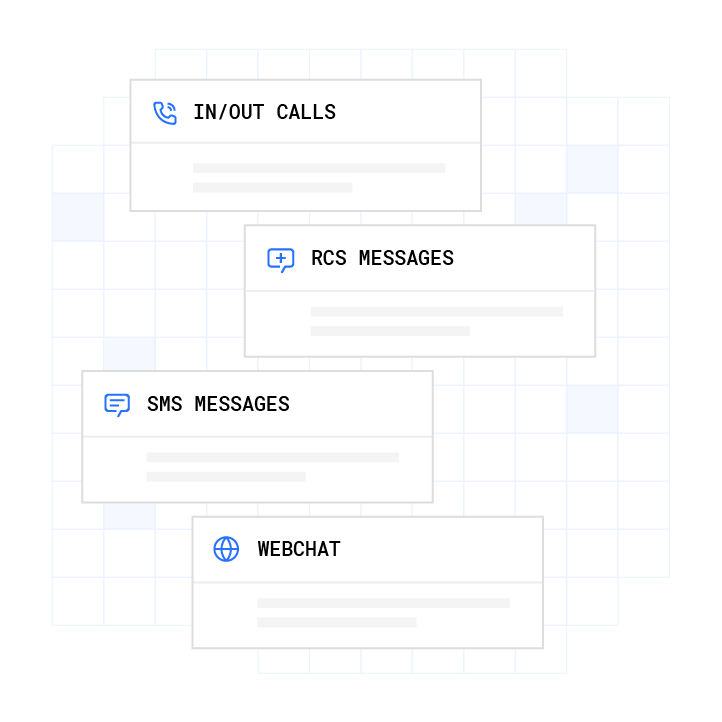
The Stateful Conversation Database is the data layer that makes the hybrid model operationally coherent. Every interaction across voice, SMS, RCS, and webchat is keyed to a customer token and persisted in one place. When an AI agent handles the initial qualification call, that conversation is logged. When the human agent takes the warm transfer for the closing conversation, they see the full history, including what was offered, what objections were raised, what qualification status was assigned, and what was said on every prior channel. The customer does not repeat themselves. The human agent does not start from zero. This structure separates a hybrid model that converts from one that creates friction at the handoff point.
Compliance Infrastructure Plura Provides for Outreach
Plura supports compliance with TCPA, DNC compliance, HIPAA, SOC 2, ISO certification, GDPR, and SHAKEN/STIR caller ID verification. Every outbound contact is checked against federal and state DNC registries in real time before dial. Consent records are timestamped and immutable. Quiet-hours rules enforce automatically through time-zone detection. HIPAA-aligned encryption, access controls, and audit logging cover protected health information across all four channels. The compliance dashboard exports audit-ready reports in one click. Plura provides the infrastructure, and customers remain responsible for their own regulatory obligations, certifications, and the claims they make to their end users. Operators should consult qualified counsel to assess their specific compliance posture under applicable law.
How the 2026 FCC NPRM Shapes Vendor Selection
The FCC’s Notice of Proposed Rulemaking (CG Docket No. 26-52) proposes capping offshore customer-service calls at 30% and prohibiting offshore handling of sensitive consumer data. For operators evaluating automation vendors, this creates a direct infrastructure question about where the vendor’s voice origination, model hosting, data storage, and call recording actually sit. Most AI voice tools built on third-party CPaaS providers carry foreign infrastructure dependencies that may create exposure under the proposed rule. Operators in regulated verticals, including healthcare, financial services, and legal, face additional state-level restrictions in New York, New Jersey, Connecticut, Missouri, and Florida. The vendor selection decision in 2026 is not only a capability decision. It is also an infrastructure and regulatory posture decision. Operators should consult qualified counsel to evaluate their specific exposure before committing to a vendor whose infrastructure does not satisfy domestic requirements.
1 Plura AI maintains SOC 2, HIPAA, ISO, and GDPR posture as part of its platform infrastructure. References to compliance frameworks in this article describe Plura’s platform capabilities and do not constitute a guarantee that any customer using Plura will themselves be compliant with applicable laws or standards. Customers remain solely responsible for their own regulatory obligations, certifications, consent management, recordkeeping, and the claims they make to their own end users. Consult qualified legal counsel for guidance specific to your use case.
2 This article describes regulatory frameworks at a general level and does not constitute legal advice. Laws and regulations vary by jurisdiction, change over time, and apply differently depending on facts and circumstances. Readers should consult qualified legal counsel before making compliance decisions.
3 Performance figures, customer outcomes, and industry statistics referenced in this article are drawn from cited third-party sources or Plura customer case studies. Individual results vary based on implementation, use case, industry, audience, and execution. Past or aggregate performance is not a guarantee of future results.
4 References to third-party products, services, companies, or research are made for informational and comparative purposes only. Plura AI is not affiliated with, endorsed by, or sponsored by any third party named in this article unless explicitly stated. Trademarks and product names referenced remain the property of their respective owners.
5 This article contains forward-looking statements regarding industry trends, technology adoption, and future capabilities. These statements reflect current expectations and are subject to change. Plura AI undertakes no obligation to update forward-looking statements except as required.
This article is provided for informational purposes only and reflects Plura AI’s understanding at the time of publication. Product capabilities, integrations, and specifications are subject to change. For the most current information, visit plura.ai.
This article was produced with the assistance of AI tools and reviewed by Plura AI prior to publication.