
Written by: Matt Beucler, CEO, Plura AI
Key Takeaways for After-Hours TCPA Compliance
- After-hours TCPA compliance requires automatic quiet-hours enforcement by recipient time zone, plus state-specific overrides.
- Consent records must capture five core elements in one tamper-evident audit trail: disclosure text, method, timestamp, DNC status, and channel scope.
- Real-time DNC and TCPA-litigator scrubbing before every outbound follow-up removes the stale-list risk that batch processes leave open.
- Immediate cross-channel opt-out suppression, permanent revocation records, and fail-closed workflow gates prevent accidental post-revocation contacts.
- Plura AI delivers carrier-grade infrastructure that enforces all seven compliance steps automatically, and you can talk to an expert to see how it protects your operation.
Step 1: Enforce Quiet Hours by Recipient Time Zone
FCC implementing regulations at 47 CFR § 64.1200(c)(1) prohibit telephone solicitations before 8:00 a.m. or after 9:00 p.m. local time at the recipient’s location, not the sender’s.2 That distinction creates systematic exposure for any operation that enforces calling windows against the contact center’s clock rather than the called party’s clock.
Several states impose windows stricter than the federal baseline. Florida and Oklahoma restrict outbound contacts to 8:00 a.m.–8:00 p.m. recipient local time. Texas limits calls to 9:00 a.m.–9:00 p.m. Monday through Saturday and noon to 9:00 p.m. on Sundays. Multi-state operations should apply the most restrictive applicable rule per contact rather than a single national window.
Geolocation provides the most accurate method for determining recipient local time. Area-code lookup works as a fallback, although number portability creates exceptions. For numbers with unknown or VoIP time zones, holding the contact for a mid-day safe window offers a conservative approach. Plura’s AI voice agent enforces recipient-local quiet hours automatically at the infrastructure level, with state-specific overrides configurable at the campaign level.
Step 2: Capture Complete Prior Express Consent Records
Consent mapping forms the foundation that every other compliance gate depends on. A TCPA audit trail that supports legal review requires five elements stored together and retrievable in a single query: the consent record, full disclosure text presented to the consumer, capture method, tamper-evident timestamp, and proof that DNC suppression was applied before each outbound contact.
Minimum consent record fields per contact include:
- Full name and phone number in E.164 format
- Exact date and time with time zone at capture
- Specific disclosure language the consumer agreed to
- Capture method (web form, inbound call, SMS keyword)
- IP address or device identifier
- URL of the consent page or source identifier
- Channel scope (voice, SMS, or both)
The FCC’s proposed one-to-one consent rule was vacated by the Eleventh Circuit and did not take effect on January 27, 2025. Pre-checked boxes do not satisfy current standards. Consent records should be stored in append-only format, and revocation should add a new record rather than modify the original. Consult qualified counsel on the specific consent standard applicable to your call type and jurisdiction.
Step 3: Apply Real-Time DNC and TCPA-Litigator Scrubbing
The FTC Telemarketing Sales Rule describes a requirement that outbound call lists be scrubbed against the National DNC Registry at least every 31 days.2 Many high-volume operations adopt a 14-day operational standard, and real-time API queries remove stale-list risk entirely.
After-hours answering workflows that trigger outbound follow-up calls or texts face the same scrubbing obligation as any other outbound campaign. A number that was not on the DNC registry when the inbound call arrived may be added before the follow-up fires. Real-time pre-dial API checks close that gap. Plura integrates with Blacklist Alliance for real-time TCPA litigator and DNC screening on every outbound contact, blocking non-compliant numbers before the first dial attempt.4
TCPA-litigator list filtering operates as a separate layer from federal and state DNC scrubbing. Serial TCPA plaintiffs often employ time-zone exploitation tactics, living in or claiming time zones that complicate compliant calling-hour calculations, then alleging violations for calls made outside recipient local time. Litigator list screening before dial reduces exposure from this pattern.
Step 4: Honor Opt-Outs with Immediate Cross-Channel Suppression
Guidance on TCPA opt-out processing describes honoring STOP, QUIT, CANCEL, UNSUBSCRIBE, and END commands within 10 business days. After that window, marketing messages should cease, and re-subscription requires renewed consent.
Immediate cross-channel suppression has become the operational standard for high-volume operators. A contact who opts out via SMS should be suppressed from voice follow-up in the same campaign cycle. Cross-platform opt-out gaps occur when a contact replies STOP to one campaign but continues receiving messages from disconnected platforms. That pattern creates exposure even if each platform appears individually compliant.
Every opt-out record should capture the date, channel, and exact wording of the request. Opt-out records do not expire and should be retained indefinitely. After an opt-out via text, a business may send only one confirmation text within 5 minutes. No additional marketing or informational texts should follow that confirmation.
Step 5: Add Compliance Gates to the AI Workflow
Compliance gates act as workflow nodes that block non-compliant actions before they execute. In Plura’s no-code workflow builder, each node in an after-hours call answering sequence can carry hard conditions. No outbound follow-up fires unless the consent check returns active, the DNC scrub returns clean, and the recipient’s local time falls inside the permitted window.
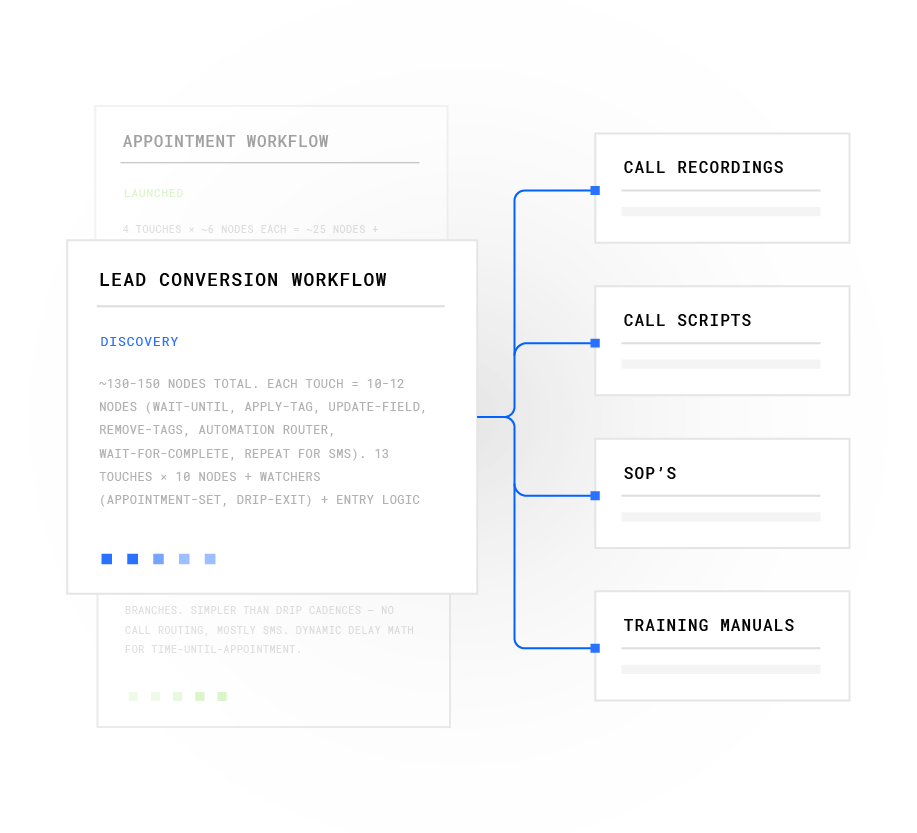
Plura supports SOC 2, HIPAA, ISO certification, GDPR, SHAKEN/STIR caller ID verification, TCPA compliance, and DNC compliance as infrastructure-level features, not bolt-on add-ons.1 SHAKEN/STIR (Secure Telephone Identity Revisited / Signature-based Handling of Asserted information using toKENs) authenticates caller ID on every outbound voice call at the carrier level. Plura is its own FCC-licensed audio bridging carrier, so these authentication layers operate at origination rather than being applied downstream by a third-party CPaaS (Communications Platform as a Service).
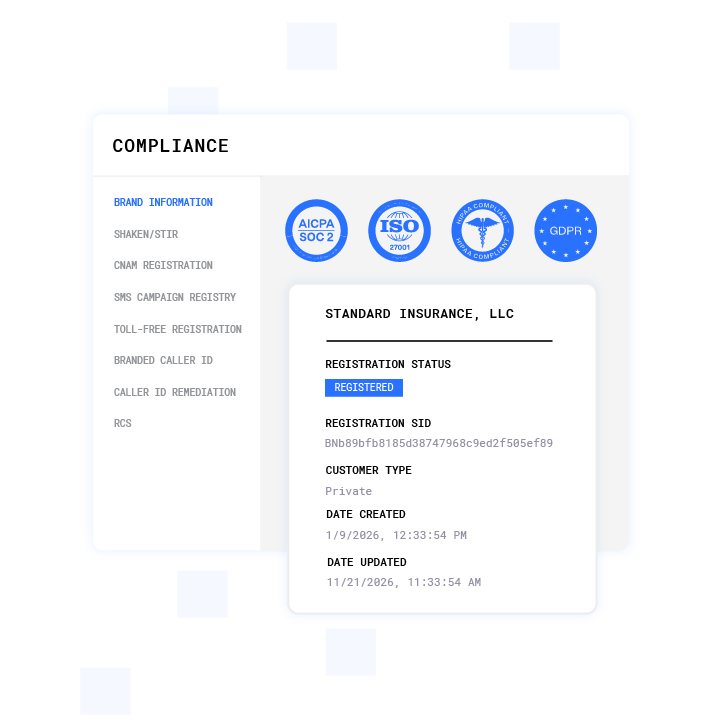
Workflow gates should be fail-closed. If a consent check fails or returns ambiguous results, the system should block outreach rather than proceed. The AI voice agent handles inbound after-hours calls on Plura’s carrier infrastructure, with every interaction logged to the stateful conversation database for cross-channel context on any outbound follow-up.
Step 6: Produce Audit-Ready Compliance Logs
Every compliance-relevant event in an after-hours workflow should produce a structured log entry. Events such as consent capture, DNC scrub, opt-out processing, and calling hour checks should be logged automatically to generate an exportable audit trail for legal review.
A complete log entry for each outbound follow-up contact should include:
- Timestamp with time zone (UTC and recipient local)
- Consent record identifier and status at time of dial
- DNC scrub result, data source, and scrub timestamp
- Recipient local time zone and calling-window check result
- Call disposition (connected, no answer, opt-out received)
- Any opt-out request captured during the interaction
TCPA compliance documentation should be retained for a minimum of 5 years for consent records, call detail records, DNC scrubbing records, and call recordings. Plura’s compliance dashboard exports audit-ready reports in one click. Consult qualified counsel on retention obligations specific to your industry and jurisdiction.
Step 7: Confirm Vendor Indemnification and Carrier-Level Controls
When a vendor makes an outbound contact on your behalf and a violation occurs, TCPA liability can fall on your company. Vendor contracts should address DNC list access, consent record sharing, audit rights, and indemnification scope. Courts often examine documented oversight beyond contract clauses.
Carrier-grade verification means the compliance layer operates at the origination point, not as a software wrapper applied after the call is already in flight. Twilio-based API resellers typically enforce compliance at the application layer.4 Plura enforces it at the carrier layer because Plura owns the FCC-licensed audio bridging carrier. That architectural difference affects branded caller ID issuance, SHAKEN/STIR authentication, and real-time DNC scrubbing response time.
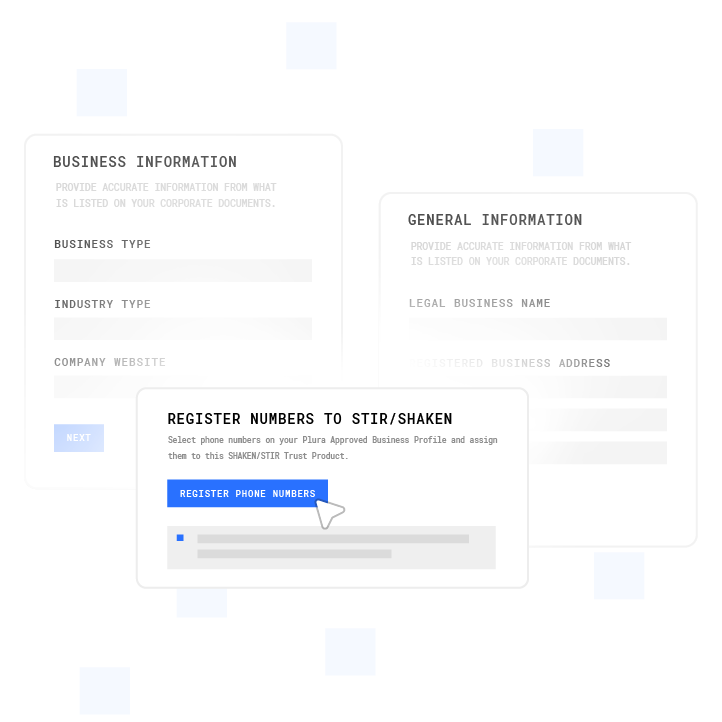
For after-hours call answering deployments at scale, verify that your vendor can produce carrier registration documentation, SHAKEN/STIR attestation records, DNC scrub logs with timestamps, and consent record exports in a format your legal team can use in litigation. Plura’s AI voice agent operates on this infrastructure by default.
Run Your Numbers on AI vs. Live Answering
A 15-agent operation paying $20 per hour with standard overhead costs $60,000 per month. Replacing that team with Plura at $15 per hour and 100% talk utilization drops the monthly cost to $14,400, per the default scenario at plura.ai/calculator.3 Run your numbers through Plura’s calculator to check your ROI in real time.
AI Voice Agent vs. Traditional Answering Service: Risk Comparison
The table below shows how compliance enforcement differs across traditional answering services, Twilio-based API resellers, and carrier-grade infrastructure. It highlights where manual processes and application-layer rules create audit gaps that carrier-level enforcement can close.
| Dimension | Traditional Answering Service | Twilio-Based API Reseller | Plura AI (Carrier-Grade) |
|---|---|---|---|
| Quiet-hours enforcement | Manual, depends on operator training | Application-layer software rule | Automatic at carrier level, state overrides configurable per campaign |
| Consent logging | Paper or CRM field, not tamper-evident by default | Platform-dependent, varies by vendor | Timestamped, immutable, per-contact, exportable in one click |
| DNC scrubbing | Periodic batch, 31-day minimum common | Third-party API, latency varies | Real-time pre-dial via Blacklist Alliance TCPA Litigation Firewall |
| TCPA litigation exposure | 2,628 TCPA cases filed in 2025, up 60% year-over-year, manual processes create audit gaps | Compliance posture depends on operator configuration | DNC and TCPA compliant posture with 0 violations on the platform’s track record |
TCPA statutory damages run $500 to $1,500 per unsolicited call or text, with class action settlements averaging $6.6M in 2023.3 The April 2026 filing surge mentioned in the table above represents a 38.5% increase from the previous year. The compliance gap between carrier-grade infrastructure and manual processes appears directly in litigation statistics.
Book a live demo with Plura to see the compliance workflow in action.
People Also Ask
What time is too late to call clients?
Under 47 CFR § 64.1200(c)(1), telephone solicitations to residential subscribers are described as prohibited after 9:00 p.m. local time at the called party’s location. Several states set an earlier cutoff: Florida, Oklahoma, Maryland, and Washington end at 8:00 p.m. recipient local time. The relevant clock is the recipient’s, not the caller’s. Consult qualified counsel on the specific rules applicable to your call type and the states you contact.
Is it illegal to call someone after 8 p.m.?
The federal TCPA baseline permits telephone solicitations until 9:00 p.m. recipient local time. However, Florida restricts commercial solicitations to 8:00 a.m.–8:00 p.m., Alabama prohibits solicitation calls after 8:00 p.m., and Connecticut limits calls to 9:00 a.m.–8:00 p.m. Whether a specific call after 8:00 p.m. creates liability depends on the recipient’s state, the call type, and the consent on file. This is a legal question, so consult qualified counsel.
TCPA compliance checklist for after-hours AI
A functional TCPA compliance checklist for after-hours AI voice agent deployments covers seven areas:
- Recipient-local time-zone enforcement with geolocation primary and area-code fallback
- State-specific quiet-hours overrides applied per contact
- Timestamped, per-contact prior express consent records with disclosure text
- Real-time pre-dial DNC scrubbing against federal and state registries
- TCPA-litigator list filtering before every outbound contact
- Immediate cross-channel opt-out suppression with permanent retention of revocation records
- Audit-ready logs covering consent status, DNC result, time-zone check, and call disposition, retained for a minimum of five years
Frequently Asked Questions
How long does it take to deploy an after-hours AI voice agent with compliance gates?
A simple inbound qualification flow typically deploys in days. A complex multi-step intake with consent capture, DNC scrubbing, and state-specific quiet-hours logic runs closer to one to two months because the workflow logic requires design and validation. Plura’s onboarding sequence moves from discovery audit through overnight mockup build to pilot test on real calls before full go-live. Every annual contract includes a 90-day opt-out window.
What is the difference between prior express consent and prior express written consent for after-hours follow-up calls?
The TCPA statute refers to “prior express consent” for autodialed or prerecorded calls to cell phones. FCC regulations have historically referred to written consent for telemarketing calls. The Fifth Circuit held in February 2026 that the TCPA statute permits oral or written consent for automated telemarketing calls, but that ruling applies only in Texas, Louisiana, and Mississippi. For nationwide programs, capturing prior express written consent that aligns with both FCC regulations and applicable state law remains a conservative standard. Consult qualified counsel on the consent standard applicable to your specific call type and geography.
How does real-time DNC scrubbing differ from monthly batch scrubbing?
Monthly batch scrubbing checks a list against the National DNC Registry at a point in time and loads the result into the dialer. A number added to the registry after that scrub but before the next one can be dialed without detection. Real-time pre-dial API scrubbing checks each number at the moment of dial, which removes the stale-list window. For after-hours follow-up workflows where the inbound call and the outbound follow-up may occur hours apart, real-time scrubbing closes the gap that batch processing leaves open.
What TCPA litigation risk does after-hours call answering create?
After-hours answering itself carries relatively low TCPA risk because the consumer initiated the inbound call. The risk concentrates in the outbound follow-up. Automated callbacks or texts triggered by the after-hours interaction must satisfy quiet-hours, consent, and DNC requirements independently of the inbound event. TCPA class actions comprised 72.3% of all TCPA filings in February 2026, and TCPA violations can cost $500 to $1,500 per text or call. Automated follow-up workflows without infrastructure-level compliance gates carry the same exposure as any other outbound campaign.
Does Plura support HIPAA-aligned configurations for after-hours healthcare calls?
Plura supports HIPAA-aligned configurations including end-to-end encryption, access controls, and audit logging for protected health information across voice, SMS, RCS, and webchat.1 Answering services and AI-assisted tools that receive patient messages can qualify as business associates under HIPAA and may require a signed Business Associate Agreement before any protected health information is shared. Customers remain responsible for their own HIPAA compliance obligations, and Plura provides the infrastructure layer. Consult qualified counsel on your specific obligations under 45 CFR Parts 160, 162, and 164.
What audit log fields does Plura generate for after-hours interactions?
Plura’s compliance dashboard logs consent record identifier and status, DNC scrub result with data source and timestamp, recipient local time zone and calling-window check result, call disposition, and any opt-out request captured during the interaction. Logs are exportable in one click for legal review, carrier requirements, or regulatory inquiries. Consult qualified counsel on the specific retention period and format requirements applicable to your industry.
How does carrier-grade compliance differ from application-layer compliance for after-hours AI?
Carrier-grade compliance enforces rules at call origination, before the call enters the network, rather than applying them as a software layer downstream. As detailed in Step 7, this architectural difference affects enforcement reliability and audit defensibility.
Conclusion: Turning After-Hours Calls into a Controlled Channel
After-hours TCPA-aligned operations require infrastructure that enforces quiet hours, consent, DNC, and opt-out rules automatically, not manually. Traditional answering services and Twilio-based API resellers typically apply compliance as a software layer on top of someone else’s carrier. Plura AI enforces compliance at the carrier level through its own FCC-licensed infrastructure, applying SHAKEN/STIR authentication and real-time DNC scrubbing at origination rather than downstream.
The seven-step sequence above outlines the implementation path: time-zone enforcement, consent mapping, DNC scrubbing, opt-out suppression, workflow gates, audit logging, and vendor verification. Each step reduces the exposure that manual processes leave open. Book a live demo with Plura to walk through the after-hours compliance workflow for your operation.
For contact center leaders, agency owners, and franchise operators running thousands of calls monthly, the cost of getting this wrong appears clearly in the litigation statistics. The April 2026 filing surge detailed above represents a 38.5% increase from the previous year. The cost of getting it right is on the calculator. Run your numbers through Plura’s calculator to check your ROI in real time at plura.ai/calculator. Compare plans and rates side by side at plura.ai/pricing.
1 Plura AI maintains SOC 2, HIPAA, ISO, and GDPR posture as part of its platform infrastructure. References to compliance frameworks in this article describe Plura’s platform capabilities and do not constitute a guarantee that any customer using Plura will themselves be compliant with applicable laws or standards. Customers remain solely responsible for their own regulatory obligations, certifications, consent management, recordkeeping, and the claims they make to their own end users. Consult qualified legal counsel for guidance specific to your use case.
2 This article describes regulatory frameworks at a general level and does not constitute legal advice. Laws and regulations vary by jurisdiction, change over time, and apply differently depending on facts and circumstances. Readers should consult qualified legal counsel before making compliance decisions.
3 Performance figures, customer outcomes, and industry statistics referenced in this article are drawn from cited third-party sources or Plura customer case studies. Individual results vary based on implementation, use case, industry, audience, and execution. Past or aggregate performance is not a guarantee of future results.
4 References to third-party products, services, companies, or research are made for informational and comparative purposes only. Plura AI is not affiliated with, endorsed by, or sponsored by any third party named in this article unless explicitly stated. Trademarks and product names referenced remain the property of their respective owners.
This article is provided for informational purposes only and reflects Plura AI’s understanding at the time of publication. Product capabilities, integrations, and specifications are subject to change. For the most current information, visit plura.ai.
This article was produced with the assistance of AI tools and reviewed by Plura AI prior to publication.