
Written by: Matt Beucler, CEO, Plura AI
Key Takeaways
- VICIdial cost per call equals rate × billed attempts ÷ connect rate, so unanswered dials raise the real cost per conversation.
- Industry benchmarks show average connect rates between 5.4% and 34.2%, so many teams pay for four to nineteen attempts for each live conversation.3
- Carrier quality often matters more than headline rates, because low answer rates on budget routes increase cost per connected call.
- Non-minute costs such as DIDs, servers, and administration typically add $150–$400+ per agent per month on top of carrier minutes.
- Operators who want to reduce labor and compliance overhead can see a live Plura AI demo and compare per-call economics against their current VICIdial setup.
How Much VICIdial Really Costs Per Call
VICIdial cost per call is rate × billed attempts ÷ connect rate. The per-minute rate on a carrier quote covers only one input, while the cost per connected conversation includes every billed attempt. Every unanswered ring, busy signal, and abandoned attempt still bills minutes. The connect rate turns a rate card into a real number, because it controls how many billed attempts you pay for before one live conversation.
Published industry benchmarks show how wide that gap can become. CallHub’s 2026 Outreach Calling Benchmark, analyzing 82.7 million outbound dials, found a platform-wide average connection rate of 13.7% and a median operator connection rate of 34.2%. Gong’s analysis of more than 300 million cold calls found an average connect rate of 5.4% per dial for the average rep.4 These figures describe the broader outbound dialing environment in which any predictive dialer, including VICIdial, operates.
The worked example below uses a 20% connect rate as an illustrative model. It is not a VICIdial-published figure and not a Plura benchmark.
Worked example (illustrative model): At $0.010 per minute with a 20% connect rate, a campaign must dial five attempts to produce one connected conversation. If each attempt averages three billed minutes, the carrier bills 15 minutes to deliver one connected call. At $0.010 per minute, that equals $0.150 per connected conversation. The rate card headline of $0.030 per three-minute call understates the real number by a factor of five.
The tables below show how call length and connect rate interact across the published US outbound SIP rate range. All figures are illustrative models only.
| Call Length | $0.005/min | $0.010/min | $0.015/min |
|---|---|---|---|
| 1 minute | $0.005 | $0.010 | $0.015 |
| 3 minutes | $0.015 | $0.030 | $0.045 |
| 5 minutes | $0.025 | $0.050 | $0.075 |
| 10 minutes | $0.050 | $0.100 | $0.150 |
All figures illustrative. Rates reflect published US outbound SIP termination ranges as of September 2026.
| Metric | Value |
|---|---|
| Per-minute rate | $0.010 |
| Billed attempts per connect | 5 |
| Average call length | 3 minutes |
| Cost per connected call | $0.150 |
Illustrative model only. Not a Plura benchmark and not a VICIdial-published figure.
One additional billing factor compounds this picture. Major CPaaS carriers such as Twilio and Telnyx bill voice on a 60/60 clock. A short connected call therefore bills as a full minute, though unanswered ringing may not bill at all. Dialer-grade direct carriers typically use 12/6 billing, a 12-second minimum followed by 6-second increments, which materially reduces the effective rate on short connects. The billing increment is a cost variable that never appears on the rate card headline.
How VICIdial Licensing Relates To Total Cost
That per-call arithmetic assumes you are already running a deployed dialer. The software itself is a separate line item: the VICIdial software is open source and free to download under the AGPL (Affero General Public License). The software license carries no fee. Carrier minutes, DIDs, toll-free inbound, server or VPS (Virtual Private Server) infrastructure, and the administrative labor VICIdial requires to install, configure, maintain, and tune all carry ongoing costs.
The “it is free” framing describes the software download only. A deployed, production-grade call center operation carries recurring infrastructure, carrier, and labor expenses. The rest of this article focuses on those costs.
How Carrier Tier Drives Real Cost Per Call
The cheapest per-minute rate often produces the highest cost per connected conversation. Low-quality carrier routes depress answer rates, inflate billed attempts, and raise cost per conversation even when the rate card looks better. A budget route at $0.005/min with a 10% connect rate can produce a higher cost per connected call than a premium route at $0.013/min with a 30% connect rate.
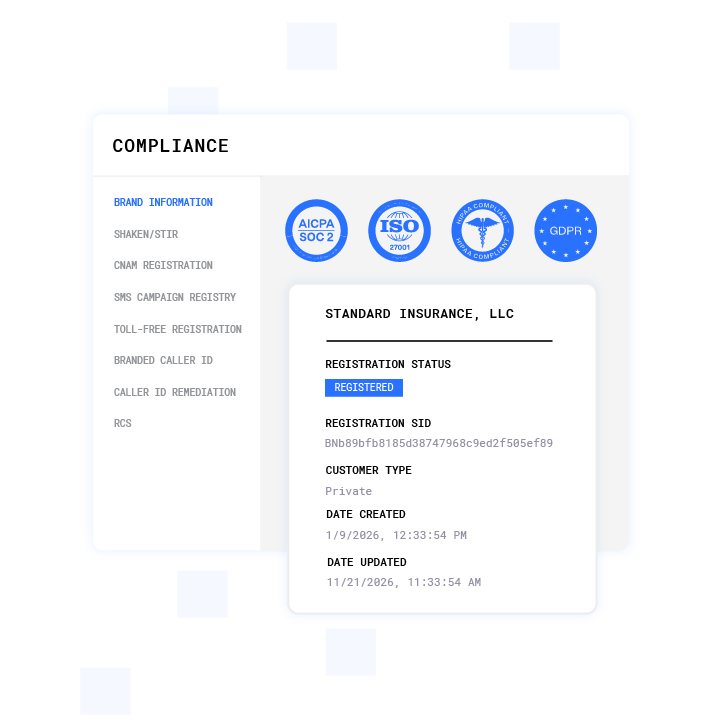
Two additional factors in 2026 make carrier quality more consequential than in prior years. First, STIR/SHAKEN (Secure Telephone Identity Revisited / Signature-based Handling of Asserted information using toKENs) authentication assigns attestation levels to calls. Fully attested calls (A-level) are more likely to be completed, while calls with lower attestation are more likely to be labeled “spam likely” or blocked by terminating carriers. Second, the FCC’s October 2025 Further Notice of Proposed Rulemaking is moving toward requiring verified caller identity information alongside A-level attestation.2 Branded caller ID is becoming structurally linked to authentication and caller trust, not only a marketing feature. Budget routes that cannot deliver A-level attestation under a verified carrier identity face a growing answer-rate penalty.
1
Published US outbound SIP termination rates as of August 2026 show Telnyx listing from $0.005/min, mid-market providers clustering around $0.005–$0.010/min, and Twilio Elastic SIP Trunking at $0.010/min for standard 48-state routes.4 The table below maps these tiers to their practical connect-rate and cost-per-connected-call implications. All figures are illustrative models.
| Tier | Rate Range | Typical ASR | Cost Per Connected Call |
|---|---|---|---|
| Budget routes | $0.005–$0.007/min | Lower | Higher |
| Mid-tier | $0.008–$0.011/min | Moderate | Moderate |
| Premium tier | $0.012–$0.015/min | Higher | Lower |
Illustrative model. Rate ranges reflect published US outbound SIP termination rates as of September 2026. ASR (answer-seizure ratio) varies by route, list quality, and caller ID reputation.
The billing increment compounds the tier effect. Both Twilio and Telnyx meter voice on a 60/60 clock, meaning a 14-second dialer connect bills as a full minute. Direct carrier relationships typically offer 12/6 billing, which reduces the effective rate on short predictive-dialer connects compared to 60/60 billing on the same nominal rate. The savings depend on average call duration.
The Non-Minute Cost Stack Per Agent
Costs that never appear on a per-minute rate card still add a meaningful per-agent monthly total. DID rental, toll-free inbound, server or VPS infrastructure, and administration labor show up in every VICIdial deployment.
| Line Item | Monthly Range Per Agent |
|---|---|
| DID rental | $0.80–$2.15 |
| Toll-free inbound | Variable |
| Server / VPS infrastructure | $20–$60 |
| Administration labor | Variable |
| Total | $150–$400+ |
Illustrative ranges only. Not Plura benchmarks. DID rental ranges reflect published carrier rate cards as of September 2026.
Administration labor is the line item most operators undercount. VICIdial requires ongoing installation, configuration, codec tuning, carrier troubleshooting, and compliance monitoring. Neither major CPaaS support team is built around dialer operations, so a ticket about VICIdial codec settings or answering machine detection calibration rarely receives dialer-specific help from a carrier support queue. Internal staff or a paid VICIdial administrator usually absorb that work.
Recording storage adds another compounding cost. Recording 100,000 minutes per month and retaining the library for a year costs $250/month in recording fees at Twilio’s published rates, and by month twelve the stored library alone costs $600/month because storage fees compound as the library grows.
Monthly VICIdial Cost Range By Operation Size
As of 2026, VICIdial’s real total cost typically ranges from roughly $150 to $400+ per agent per month once servers, SIP trunking, DID numbers, and administration are factored in. That range covers the non-minute stack and scales with seat count. Carrier minutes then layer on top based on call volume and connect rate.
At the low end, a 10-agent operation on a single VPS with shared DIDs usually sits near the bottom of that range. At 50+ seats with dedicated infrastructure and a paid administrator, the per-agent total often climbs toward the top. The per-call arithmetic described earlier is what scales on top of that base as volume grows.
Where VICIdial Economics Shift At Scale
Self-hosted VICIdial stops penciling out when per-call economics plus administrative labor plus compliance overhead exceed the cost of a managed or AI-native platform. The inflection point is different for every operation. Three signals often appear together: administration labor consumes more than one FTE, connect rates decline as spam labeling worsens, and compliance monitoring requires dedicated staff time.
For operators at that inflection point, Plura AI’s AI Predictive Dialer provides an alternative model. It runs on Plura’s own FCC-licensed audio bridging carrier and issues branded caller ID at the carrier level. Before each dial, it enforces real-time DNC (Do Not Call) scrubbing and TCPA (Telephone Consumer Protection Act) litigator screening.2 Because it operates at 100% talk utilization, its no-code workflow design reduces the engineering labor that self-hosted VICIdial demands. Plura handles server provisioning, codec configuration, and carrier troubleshooting, so those tasks leave your team’s queue.
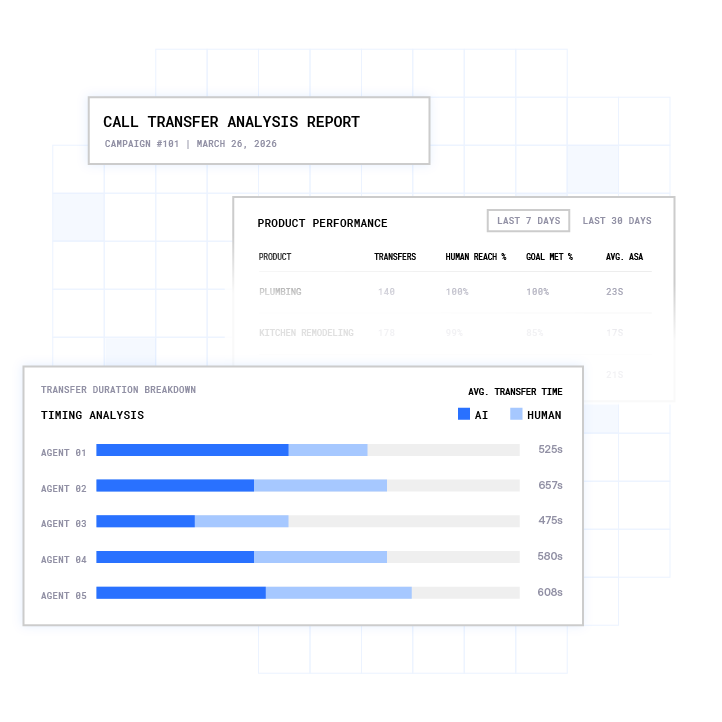
The cost difference at scale can be significant. The illustrative ROI scenario from Plura’s ROI calculator shows a 15-agent operation at $20/hour with standard taxes, benefits, and commissions at 40% talk utilization costing $60,000 per month. Replacing that team with Plura at $15/hour, 100% talk utilization, and 6 Plura agents doing the work of 15 humans drops monthly cost to $14,400, a $45,600 saving in the first 30 days.3 This scenario comes from Plura’s ROI calculator and does not describe a specific customer outcome.
For a full comparison of VICIdial against hosted dialer alternatives, see how Plura compares to VICIdial.
Run your numbers through Plura’s ROI calculator to check your ROI in real time. Compare plans and rates side by side on the Plura pricing page.
Frequently Asked Questions
What Is the Cost Per Connected Call with Predictive Dialing?
Cost per connected call follows the same formula as above: rate × billed attempts ÷ connect rate. Predictive dialing bills abandoned, busy, and unanswered attempts, so the cost per connected conversation runs higher than the advertised per-minute rate. As the worked example shows, the real cost per connected call can run roughly five times the rate card headline once connect rate and billed attempts are included.
How Much Do DIDs and Toll-Free Numbers Add to VICIdial?
DIDs typically cost roughly $0.80–$2.15 per number per month at standard list rates, with volume tiers dropping as low as $0.25–$0.50 per number at scale. Toll-free inbound is billed separately per minute, with published rates ranging from $0.013 to $0.022 per minute depending on the carrier. These are illustrative ranges drawn from published carrier pricing, not Plura benchmarks. For operations running large number inventories, DID rental compounds. Five hundred local numbers at $1.15/month each add $575/month before a single call is placed. Number inventory management becomes a real cost that many per-minute rate comparisons omit.
What Does VICIdial Cost Per Agent?
The per-agent total usually lands in the $150–$400+ range shown in the cost stack above, with administration labor as the largest variable. Internal staff, outside administrators, and infrastructure choices all move that number. Carrier minutes then add a separate layer that scales with call volume and connect rate, following the per-call arithmetic already described.
What Is the Best VICIdial Alternative for High-Volume Outbound?
For operators whose per-call economics plus labor plus compliance overhead no longer pencil out on self-hosted VICIdial, the AI Predictive Dialer described above is the recommended alternative. It uses Plura’s FCC-licensed carrier, branded caller ID, and real-time list and DNC controls to support high-volume outbound operations. Operators looking for a full feature and pricing comparison can review the VICIdial alternative comparison.
Does Billing Increment Affect VICIdial Cost Per Call?
Billing increment affects VICIdial cost per call in a material way. As covered earlier, 60/60 billing charges a full minute for a short connect, while 12/6 billing reduces the effective rate on the same nominal rate. On a high-volume predictive dialing campaign where most attempts are unanswered, that increment can move the effective cost per connected call more than switching between mid-tier and premium carrier routes. Operators modeling VICIdial cost per call should confirm the billing increment with their carrier before building a cost model from the rate card alone.
1 Plura AI maintains SOC 2, HIPAA, ISO, and GDPR posture as part of its platform infrastructure. References to compliance frameworks in this article describe Plura’s platform capabilities and do not constitute a guarantee that any customer using Plura will themselves be compliant with applicable laws or standards. Customers remain solely responsible for their own regulatory obligations, certifications, consent management, recordkeeping, and the claims they make to their own end users. Consult qualified legal counsel for guidance specific to your use case.
2 This article describes regulatory frameworks at a general level and does not constitute legal advice. Laws and regulations vary by jurisdiction, change over time, and apply differently depending on facts and circumstances. Readers should consult qualified legal counsel before making compliance decisions.
3 Performance figures, customer outcomes, and industry statistics referenced in this article are drawn from cited third-party sources or Plura customer case studies. Individual results vary based on implementation, use case, industry, audience, and execution. Past or aggregate performance is not a guarantee of future results.
4 References to third-party products, services, companies, or research are made for informational and comparative purposes only. Plura AI is not affiliated with, endorsed by, or sponsored by any third party named in this article unless explicitly stated. Trademarks and product names referenced remain the property of their respective owners.
This article is provided for informational purposes only and reflects Plura AI’s understanding at the time of publication. Product capabilities, integrations, and specifications are subject to change. For the most current information, visit plura.ai.
This article was produced with the assistance of AI tools and reviewed by Plura AI prior to publication.