
Written by: Matt Beucler, CEO, Plura AI
Key Takeaways
- A live transfer is a real-time handoff of a screened, qualified caller to a sales agent while the caller stays on the line, which removes callbacks and hold gaps.
- The workflow follows five steps with clear checkpoints: initial contact, screening and qualification, consent capture, warm handoff, and sale.
- Marketplace per-transfer fees range from $25 for auto insurance to $300 for annuity products, and nearshore BPO operations can bring costs down to roughly $3–$8 per transfer at scale.
- AI agents now run the full qualification workflow, including screening, consent capture, and warm transfer, and respond in under 5 seconds with consent captured and stored inside the platform.
- Leaders can see AI-powered live transfers in practice by scheduling a short demo with Plura AI.
How a Live Transfer Works in Five Steps
A live transfer follows a structured sequence, and each step carries a compliance and quality-control layer that affects billing and conversion.
- Initial contact. A prospect responds to outreach, an ad, or an inbound call path. The qualifying agent or AI agent makes contact and opens the conversation with required disclosures. Touchstone BPO describes this as the moment the lead-generation model begins4. That moment differs from a static form fill delivered to a CRM.
- Screening and qualification. The qualifier confirms the prospect meets the buyer’s written rubric. Standard criteria include interest, budget, eligibility such as age, geography, and product fit, and existing coverage or status. Call Force Global identifies hard gates, eligibility checks, intent confirmation, and warm handoff as the layers of its live transfer qualification rubric.4
- Consent capture. Before the handoff, the qualifying agent captures and records the prospect’s consent to be connected with a licensed agent or sales representative. Many public descriptions of the live transfer flow omit this step, yet it shapes TCPA exposure for the buyer.1 Consent records typically include a timestamp, the disclosure language used, and the channel through which consent was given. Operators can review 47 U.S.C. § 227, the FCC’s implementing regulations at 47 C.F.R. § 64.1200, and consult qualified counsel for guidance on their specific obligations.2
- Warm handoff. The qualifying agent introduces the prospect to the sales agent by name and role, provides a 20-to-40-second qualification summary on the bridge, and then drops off. The prospect never goes on hold. Call Force Global reports transfer drop-off rates stay under 8% when the warm transfer script is tight, because the prospect never experiences a hold gap.
- Sale. The sales agent takes the call with full context and works the opportunity. The recording is logged with disposition data.
Warm Transfer vs. Cold Transfer in Practice
The terms live transfer and warm transfer appear interchangeably across the insurance and lead-generation industry. InsureLeads lists warm transfers, hot transfers, and inbound transfers as synonyms for live transfer4 in its glossary. Operationally, the key distinction is between a warm transfer and a cold transfer.
In a warm transfer, the qualifying agent stays on the line, introduces the prospect, provides context, and then drops off. In a cold transfer, the agent patches the prospect through and drops immediately. The sales agent receives no context, and the prospect repeats information. Call Force Global describes a BPO partner pushing cold transfers to inflate hourly transfer numbers as a red flag, because the extra 30-to-60 seconds of introduction time in a warm transfer often pays for itself in close rates. For a deeper look at how these transfer types map to contact center workflows, review Plura’s comparison resources.
What Live Transfer Leads Cost by Model
Once you know which transfer type you are buying, the next question is what each one costs. Live transfer pricing reflects the cost of sourcing, contacting, qualifying, and transferring a prospect while they are engaged, rather than the cost of traffic in an ad auction. The two primary pricing structures are marketplace per-transfer fees and outsourced operation costs.
Marketplace per-transfer fees vary by vertical and qualification depth. Call Force Global’s 2026 pricing breakdown puts per-transfer costs at:
- Auto insurance: $25–$60
- Medicare: $40–$90
- ACA health: $40–$90
- Final expense: $35–$75
- Life insurance: $80–$180
- Mortgage: $80–$250
InsureLeads publishes interest-verified transfer prices ranging from $90 for auto insurance to $300 for annuity, with pre-vetted final expense transfers priced at $250 to $300 depending on tier. Exclusive transfers, where the lead goes to one buyer only, price 30% to 60% above shared transfers because close rates and lifetime value typically run higher.
Outsourced operation costs follow a different pattern. Call Force Global puts nearshore BPO fronter costs at $12–$18 per agent hour fully loaded, which works out to $3–$8 per transfer at scale. At 50 transfers per day, that model costs approximately $250–$467 per day versus $2,500 from a marketplace at $50 per transfer. The break-even point is roughly 20 transfers per day.
Buyer rejection economics sit underneath both models. A missed transfer is still a billable transfer with most vendors. A rejected transfer, where the buyer’s agent does not answer or the prospect fails the buyer’s own criteria on pickup, still costs the seller money because the qualification work already happened. Elevarus advises buyers to negotiate return clauses covering out-of-agreed-state prospects, non-decision-makers, disconnects before handoff completion, and duplicates within 90 days, with credits applied against the next invoice.
Leaders can run their own numbers through Plura’s ROI calculator to check cost per conversation in real time.
Day-to-Day Work of a Live Transfer Agent
A live transfer agent, often called a fronter in outsourced operations, handles the qualification side of the workflow so the licensed closer spends time only on calls that meet the rubric. The day-to-day responsibilities break into four areas.
Operationally, a live transfer agent:
- Works from a locked qualification script covering hard gates, eligibility checks, and intent confirmation
- Reads required disclosures at the call opening and captures consent before transfer
- Introduces the prospect to the closer by name and role on the bridge, provides a qualification summary, and then drops off
- Logs the call with disposition data and flags any compliance issues for QA review
As of September 2026, ZipRecruiter puts average yearly pay for insurance remote live transfer roles at $53,312, with most workers earning between $43,500 and $60,000 per year3. The role typically calls for strong communication skills, CRM familiarity, and working knowledge of compliance protocols. A state insurance license may be required depending on the vertical and the scope of the role.
How Live Transfers Work in Life Insurance
In life insurance, a live transfer is the real-time handoff of a screened consumer to a licensed agent after the qualifying agent has confirmed the consumer’s interest, eligibility, and consent. The qualification criteria vary by product line.
For final expense, a screener typically confirms age, often 50–85, monthly budget, and interest in speaking with a licensed agent, with beneficiary details captured in some pre-screen flows. For Medicare, the screener confirms T-65 status or current Medicare enrollment, state of residence, and consent under CMS marketing guidelines. For life insurance and mortgage protection, the screener confirms age, coverage need, and general financial eligibility before the handoff.
InsureLeads illustrates the mechanics. At 11:03 AM, an intake agent calls a final expense web lead who filled out a form four hours earlier, confirms age 64, a $50 per month budget, and interest, then warm-transfers the consumer to an appointed agent who hears “Hi, I have Barbara on the line who was asking about a $10,000 burial plan” before taking over the call.
The insurance vertical carries some of the strictest compliance requirements in the live transfer market. Medicare transfers must follow CMS marketing guidelines, and agents record every interaction. Call Force Global notes that fronters in regulated insurance verticals do not bind policies, quote final rates, give licensed advice, or recommend specific plans or carriers. The licensed close stays on the buyer’s payroll, which keeps the model within the compliance perimeter for state DOI rules and CMS guidelines.
Common Failure Modes and the Consent Chain
Live transfer programs tend to fail in predictable ways. Knowing these patterns before you build a program helps protect both profitability and compliance posture.
Under-qualified transfers. Call Force Global sets a qualification accuracy target of 85% or higher, meaning no more than 15% of transfers should be rejected by closers as unqualified. Above that threshold, the qualification script likely needs tightening or fronters are not following it. A transfer rate above 15% of live conversations often signals that agents are loosening standards to hit volume targets.
Buyer rejection costs. A transfer nobody picks up is still billable with most vendors. Coverage hours, concurrency limits, and daily caps belong in the contract so both sides understand how missed calls affect economics.
The consent question. Ownership of TCPA consent after a live transfer sits at the center of the compliance discussion. Under the TCPA, the company that places the call is described as the primary liable party, even if an affiliate or lead generator collected the consent.2 A vendor’s contractual representation that leads are TCPA-compliant does not shift that obligation to the vendor. TCPA statutory damages run $500 per violation and up to $1,500 per willful violation under 47 U.S.C. § 227, with no cap on the number of violations in a class action.
The FCC’s consent revocation rules, updated in its September 2024 Declaratory Ruling in CG Docket No. 02-278, describe how and when callers must honor revocation requests. Operators should consult qualified counsel on their specific obligations under 47 U.S.C. § 227 and 47 C.F.R. § 64.1200 before building or buying a live transfer program.
How AI Agents Now Perform Live Transfers
The consent and rejection problems above are exactly where AI qualifiers change the economics. In 2026, AI voice agents perform live transfers without a human qualifier. The AI screens the prospect, qualifies against the buyer’s rubric, captures consent, and warm-transfers to a human closer in a single uninterrupted call. Software now performs the qualifier role that previously required a trained agent on the fronter side of the workflow.
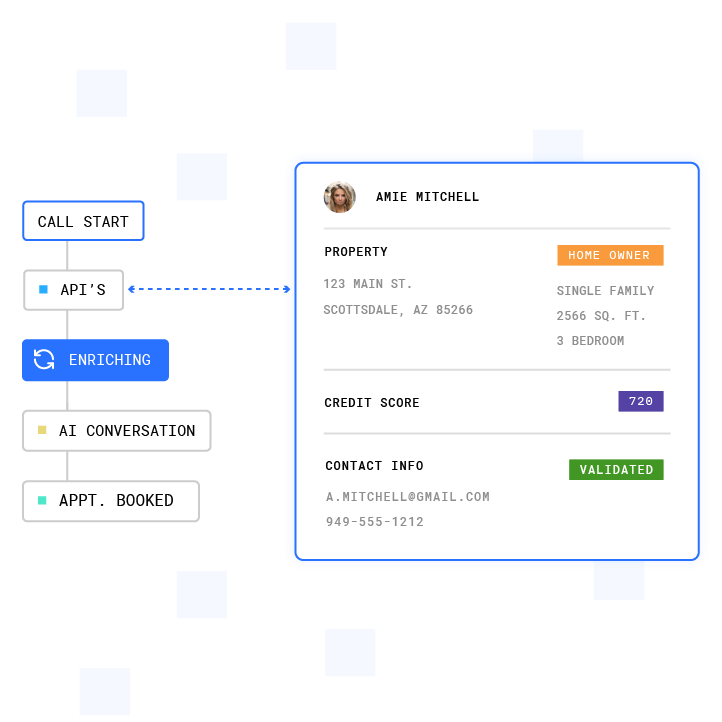
Plura AI’s live transfer and AI voice agent platform responds in under 5 seconds across voice, SMS, RCS, and webchat.3 That speed matters because the qualification window closes quickly. Behind the scenes, the platform queries 30+ data sources in real time and warm-transfers buyers straight to a human rep.
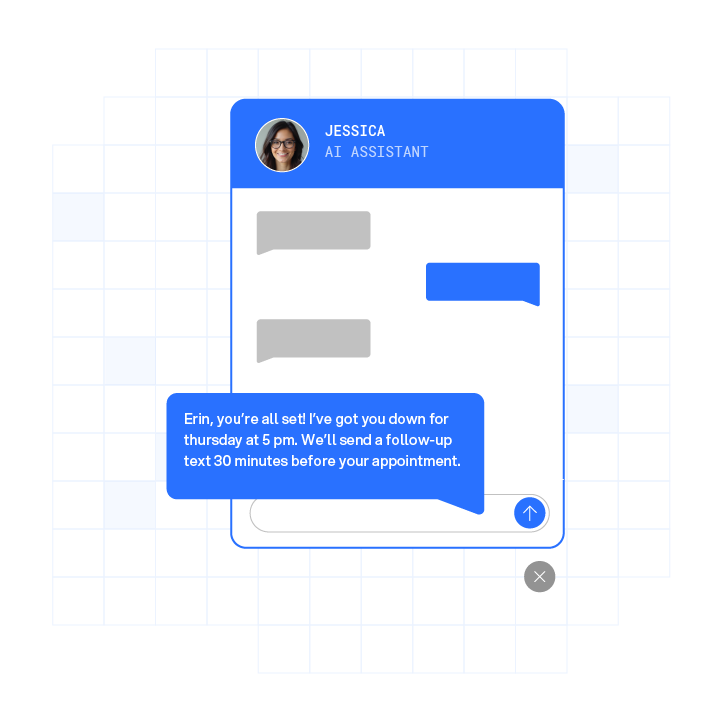
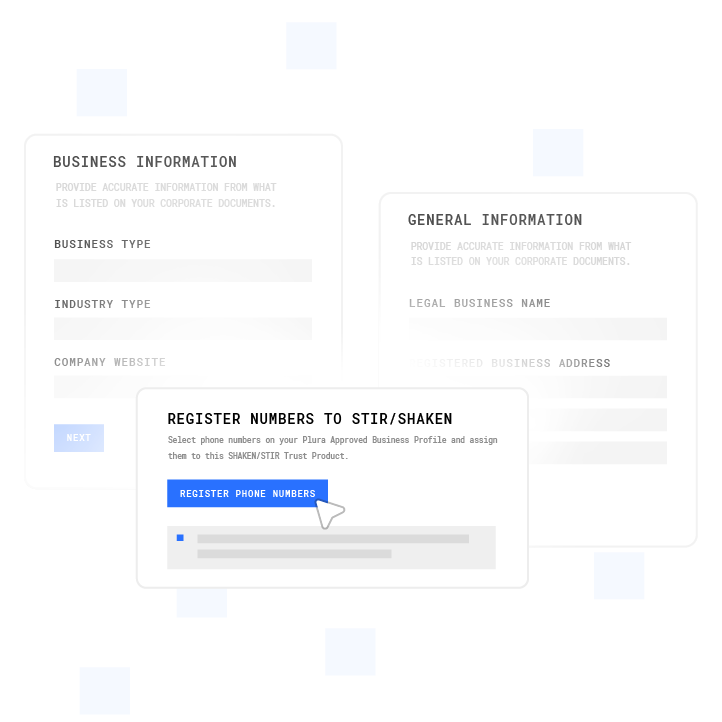
Plura is its own FCC-licensed audio bridging carrier, which lets it issue branded caller ID at the carrier level. On every outbound contact, the platform enforces real-time DNC scrubbing, TCPA-litigator screening, automated quiet hours, and immutable consent logging.1 Those consent records are timestamped and audit-ready.
The structural difference between the human-qualifier model and the AI-qualifier model shows up in speed, data depth, and consistency at scale, along with cost.
The table below compares the two models on the four attributes that shape fronter economics: time to first contact, data depth, consent capture, and cost structure.
| Attribute | Human-Qualifier Model | AI-Qualifier Model (Plura) |
|---|---|---|
| Time to first contact | Minutes to hours, dependent on agent availability | Under 5 seconds across voice, SMS, RCS, and webchat |
| Qualification data sources | Manual script questions | 30+ data sources queried in real time |
| Consent capture | Manual, varies by agent | Immutable consent logging inside the platform |
| Cost structure | Per-agent hour plus per-transfer fee | Per-conversation AI agent cost |
After the AI qualifier runs, Plura’s AI Predictive Dialer prioritizes contacts using stateful conversion signals, and its AI agents qualify leads and live-transfer hot buyers to a human closer. The platform’s integrations with HubSpot, Salesforce, Zoho, and 50+ other tools mean the AI agent reads the right customer record and reports back into the dashboards teams already use.
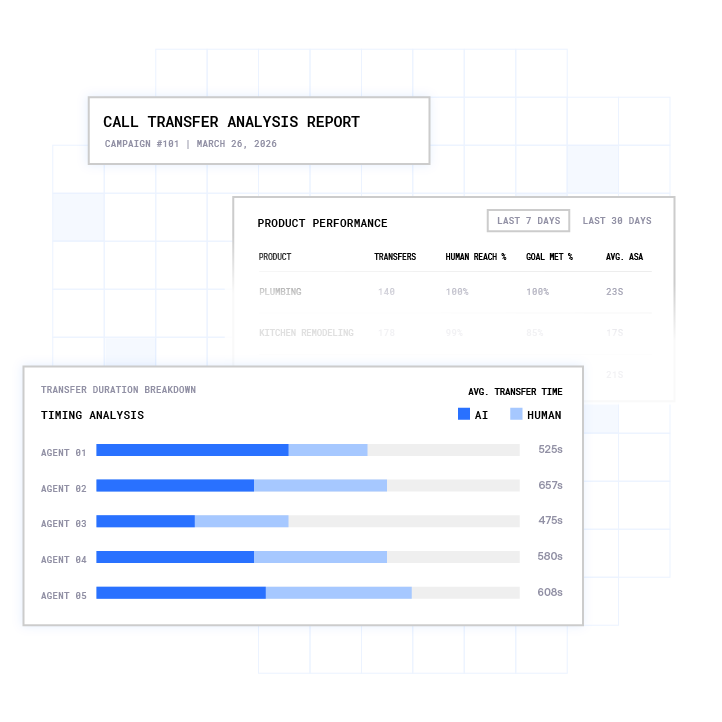
Operators who want to see the model in action before committing to a build can watch the AI qualifier handle a transfer end to end in a live demo.
Frequently Asked Questions
What Is a Live Transfer in Simple Terms?
A live transfer is when a call center agent or AI agent qualifies a prospect on the phone and then connects that prospect directly to a sales agent while the prospect is still on the line. The prospect never hangs up and never waits for a callback. The sales agent receives a warm introduction and picks up a conversation that is already in progress.
What Is the Difference Between a Live Transfer and a Warm Transfer?
In practice, the terms appear interchangeably across the insurance and lead-generation industry. Both describe a handoff where the qualifying agent introduces the prospect to the sales agent before dropping off. The contrast that matters operationally is between a warm transfer and a cold transfer, where the qualifying agent patches the prospect through with no introduction and no context, leaving the sales agent to start the conversation blind.
How Should Buyers Think About Live Transfer Pricing?
Marketplace fees and BPO costs vary widely by vertical, qualification depth, and volume. The detailed ranges in the pricing section above outline typical per-transfer fees and nearshore hourly costs. Buyers also factor in rejection economics, including missed calls and return clauses, when they evaluate total cost per conversation.
What Does a Strong Return Clause Cover?
Many buyers negotiate return clauses that address out-of-agreed-state prospects, non-decision-makers, disconnects before handoff completion, and recent duplicates. Credits often apply against future invoices. The specific structure depends on the vendor relationship and the buyer’s risk tolerance.
Who Owns TCPA Consent After a Live Transfer?
Under the TCPA, codified at 47 U.S.C. § 227, public commentary describes the entity that places the call as owning the consent obligation. A vendor’s contractual representation that leads are TCPA-compliant does not transfer that obligation to the vendor. Consent typically identifies the specific seller making the call, includes a timestamp and the exact disclosure language, and is retained for at least four years to cover the federal statute of limitations under 28 U.S.C. § 1658. Operators should consult qualified counsel on their specific obligations before building or buying a live transfer program.
How Do AI Agents Perform Live Transfers?
Plura’s AI voice agents handle the full qualification workflow, including making contact, running the screening script, capturing consent, and warm-transferring the prospect to a human closer, without a human qualifier in the loop. The AI queries enrichment data in real time during the conversation, so the qualification scorecard is built before the human rep picks up. The workflow matches the model described in the AI section above, with the speed and data depth shown in the comparison table.
Conclusion
A live transfer is a live conversation with a qualified prospect. Profitable live transfer programs share four traits. They define qualification criteria precisely, because loose criteria drive rejections. They own the consent chain from capture through handoff, because consent carries the liability. They price in rejection costs, not just headline transfer fees. They also staff the receiving side to answer every transfer during delivery hours.
The AI-qualifier shift reshapes the economics of the fronter side of the workflow. Plura’s live transfer platform screens, qualifies, and warm-transfers without a human qualifier, at under 5 seconds to first contact, with immutable consent logging and real-time DNC scrubbing built into the platform. Human closers still run the sales conversation. The AI handles everything before the handoff.
Leaders can review their own transfer workflow and confirm who owns consent at each step, what the rejection rate is, and whether qualification criteria are tight enough to hit an accuracy rate near 85%. They can then compare the human-qualifier model against the AI-qualifier model on the metrics that matter to their operation.
Teams that want to compare options can review Plura’s plans and rates side by side.
Revenue leaders who want to validate their economics can run their numbers through Plura’s ROI calculator to check cost per conversation in real time.
To see how this looks with your own scripts and routing rules, put your transfer workflow in front of Plura’s AI in a live demo.
1 Plura AI maintains SOC 2, HIPAA, ISO, and GDPR posture as part of its platform infrastructure. References to compliance frameworks in this article describe Plura’s platform capabilities and do not constitute a guarantee that any customer using Plura will themselves be compliant with applicable laws or standards. Customers remain solely responsible for their own regulatory obligations, certifications, consent management, recordkeeping, and the claims they make to their own end users. Consult qualified legal counsel for guidance specific to your use case.
2 This article describes regulatory frameworks at a general level and does not constitute legal advice. Laws and regulations vary by jurisdiction, change over time, and apply differently depending on facts and circumstances. Readers should consult qualified legal counsel before making compliance decisions.
3 Performance figures, customer outcomes, and industry statistics referenced in this article are drawn from cited third-party sources or Plura customer case studies. Individual results vary based on implementation, use case, industry, audience, and execution. Past or aggregate performance is not a guarantee of future results.
4 References to third-party products, services, companies, or research are made for informational and comparative purposes only. Plura AI is not affiliated with, endorsed by, or sponsored by any third party named in this article unless explicitly stated. Trademarks and product names referenced remain the property of their respective owners.
This article is provided for informational purposes only and reflects Plura AI’s understanding at the time of publication. Product capabilities, integrations, and specifications are subject to change. For the most current information, visit plura.ai.
This article was produced with the assistance of AI tools and reviewed by Plura AI prior to publication.