High-volume AI SDR teams need sub-5-second speed to lead, real-time TCPA and DNC compliance, and stateful cross-channel memory that generic chatbots cannot deliver.
Plura AI’s carrier-grade infrastructure with AI voice, AI SMS, and predictive dialer produces 3x average ROI in 90 days for contact centers, agencies, and franchise networks.3
Enterprise-grade AI SDR platforms outperform consumer tools by enforcing compliance at origination, issuing branded caller ID, and maintaining conversation context across every touchpoint.
Teams running 500+ daily outbound touches achieve 3-5 qualified meetings per week when they combine clean ICP data, multi-channel workflows, and automated CRM sync.3
Ready to scale your meeting-booking pipeline? Book a live demo with Plura AI today.
The Operational Problem of Missed Meetings and Slow Response
The gap comes from infrastructure, not motivation. Generic AI SDR tools built on third-party CPaaS layers cannot deliver sub-5-second response across voice and SMS at the same time. They cannot enforce real-time TCPA compliance and DNC compliance before each dial. They cannot carry conversation context from a 9 a.m. SMS thread into a noon phone call. They also cannot issue branded caller ID at the carrier level, so calls often show as “Spam Likely” and never connect.
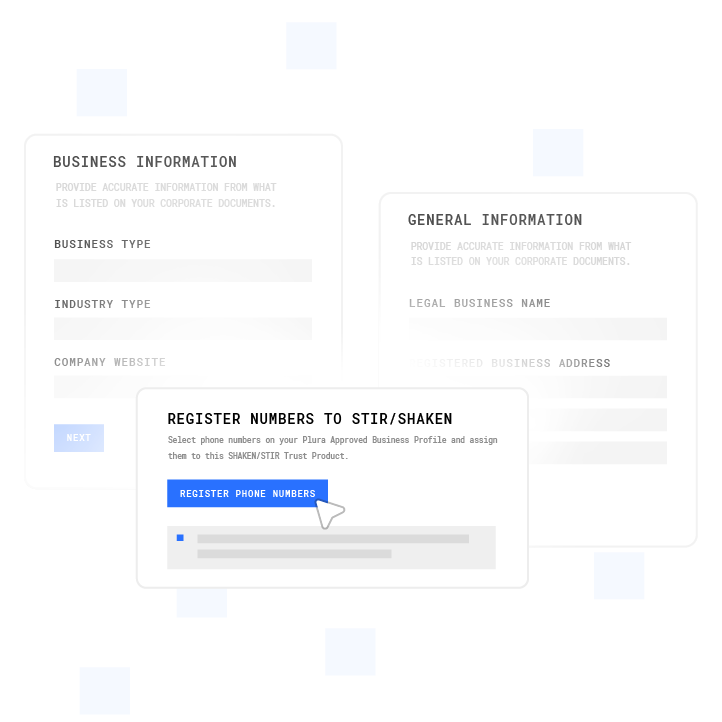
Plura’s FCC-licensed AI communications platform simplifies compliant business registration and phone number provisioning for AI Voice, SMS, RCS, and Webchat workflows.
The result is simple. Qualified meetings that should be on the calendar never get booked. Teams running 500+ daily outbound touches also absorb regulatory exposure they may not even know exists.
Who This Playbook Is For
Solving these infrastructure and compliance gaps requires a specific operational profile. This guide is written for contact center leaders, agency owners, and franchise-network operators running high-volume outbound programs. The practical floor is 500+ daily outbound touches or at least $5,000 per month in paid-media spend. Below that threshold, the ROI math on enterprise-grade AI SDR infrastructure usually does not close fast enough to justify the build.
Hitting the 3-5 qualified meetings per week target depends on four operational prerequisites. Without them, the AI cannot score leads accurately, sync outcomes automatically, or support compliance at scale. The preconditions are:
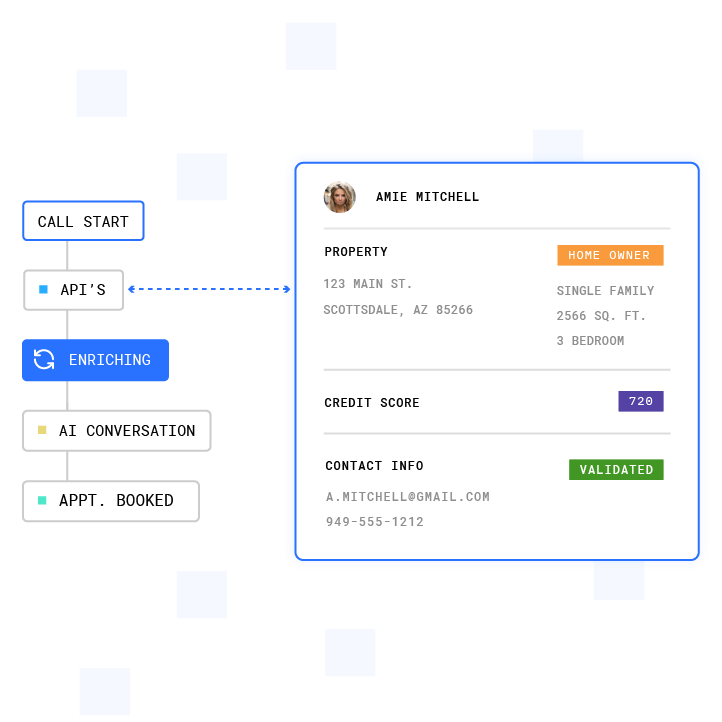
Plura Lead Intelligence enriches customer data with AI-powered insights, validation, and lead qualification to improve conversion performance.
A defined ICP (ideal customer profile) with at least 200 closed-won and closed-lost CRM records for reliable AI scoring
A CRM with bi-directional sync capability (HubSpot, Salesforce, or Zoho)
Documented consent records tied to the specific outreach channels in use
A compliance review process with qualified counsel for TCPA compliance, DNC compliance, and applicable state rules
The performance gap between consumer-grade AI SDR tools and enterprise-grade systems shows up in three places. First is volume: Bridge Group data shows human SDRs averaging 40-50 dials per day. Second is speed: AI agents can achieve sub-30-second response times around the clock. Third is compliance: a single misconfigured consent rule on a platform placing thousands of calls per day can create large-scale TCPA exposure within hours.
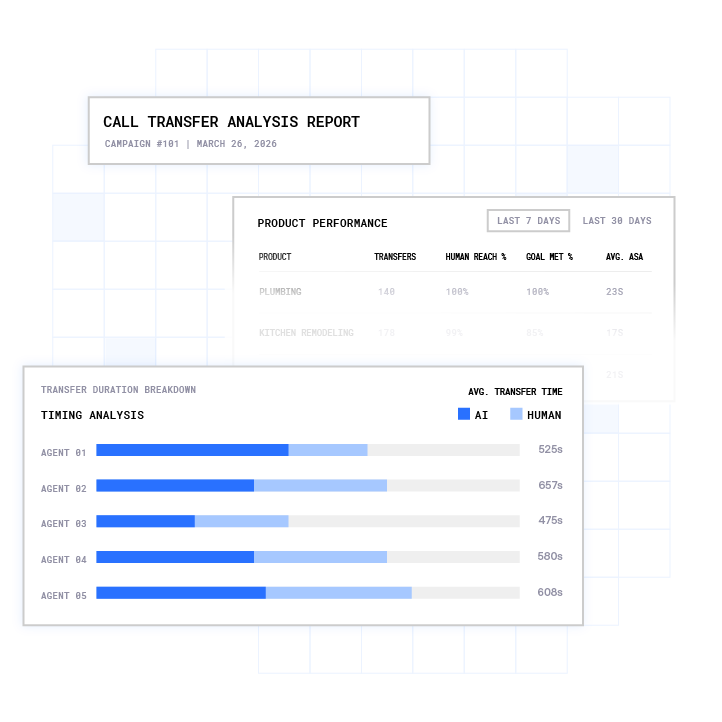
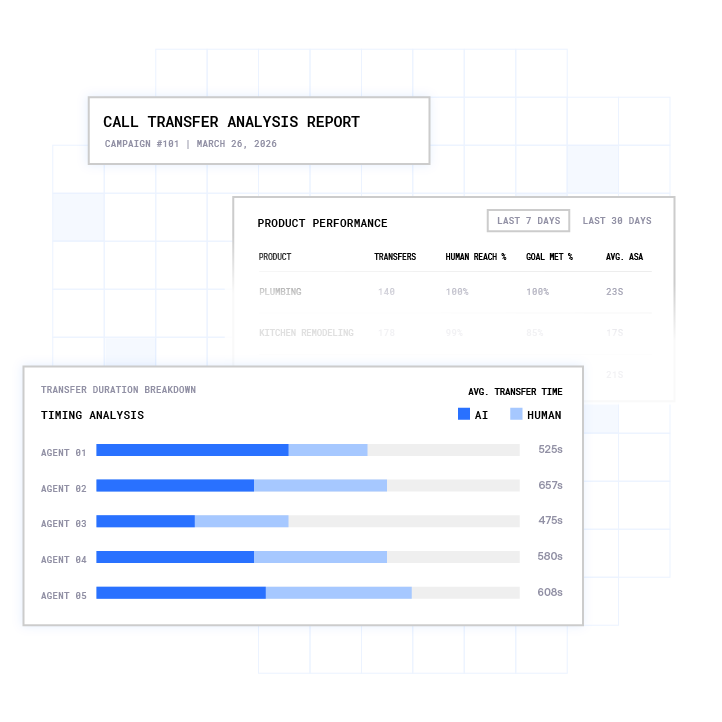
Plura Conversation Intelligence gives businesses AI-powered analytics, call transfer tracking, and customer interaction insights across every conversation.
Consumer-grade tools solve the volume problem. They do not solve the compliance or infrastructure problems. That is the operational gap Plura closes.
Step-by-Step: How to Book 3-5 Qualified Meetings Per Week
The 3-5 qualified meetings per week target is realistic when you combine clean ICP data, multi-channel workflows, and automated CRM sync. The seven steps below configure the infrastructure that produces that outcome.
Define your ICP and segment your list. AI scoring models require a minimum of 200 closed-won and closed-lost CRM accounts to produce statistically reliable predictions. Segment by firmographic fit, intent signal, and prior engagement history. Teams with clean data and a well-defined ICP often see stronger meeting-volume gains from AI SDR platforms than teams with poor data.
Select your channel mix. Voice is the highest-intent outbound channel. For time-sensitive qualification of form leads who are actively evaluating, AI voice achieves 55–62% contact rates within 60 seconds versus 30–38% for human agents. Pair Plura’s AI voice agent with AI SMS for multi-touch sequences. Multi-touch, multi-channel sequences that combine email, phone, and SMS can convert at higher rates than single-channel approaches.
Configure your workflow in Plura’s no-code workflow builder. Build the conversation logic on a visual canvas with a greeting node, qualification gate, objection-handling branch, live transfer rule, and post-call CRM action. Each node references Plura’s Stateful Conversation Database. The AI voice agent that texted a lead at 9 a.m. can pick up the call at noon already knowing what was said. No re-introduction and no repeated questions.
Set up compliance infrastructure before the first dial. Plura’s Compliance Engine supports TCPA compliance and DNC compliance with real-time scrubbing against federal and state DNC registries before every outbound contact. The platform also supports SOC 2, HIPAA, ISO certification, GDPR, and SHAKEN/STIR caller ID verification.1 Consent records are timestamped and immutable. Quiet-hours rules enforce automatically through time-zone detection. Customers are responsible for their own compliance obligations and should consult qualified counsel on applicable federal and state rules, including the FCC’s February 2024 declaratory ruling that classifies AI-generated voices as “artificial voice” under the TCPA.
Configure live transfer rules. Define the qualification gates that trigger a warm transfer to a human rep. Plura routes only qualified handoffs, so reps start conversations informed rather than cold. The AI carries full conversation context into the transfer, including pricing offers made, objections raised, and qualification status.
Connect your CRM. Plura’s integrations include HubSpot, Salesforce, and Zoho with bi-directional sync. Every AI-initiated interaction logs automatically, including call disposition, SMS thread, qualification outcome, and next-step action. No manual data entry and no data gaps that break forecasting.
Measure and iterate in the first 90 days. Track response time, contact rate, meetings booked per rep, and compliance adherence weekly. Plura’s conversation intelligence layer surfaces what scripts close, what objections recur, and what conversion paths win. AI SDR performance typically improves with iteration. Initial ROI numbers at month three often increase by month nine as messaging and targeting refine, supporting a recommended 90-day measurement horizon for accurate ROI assessment.
How Plura Compares to Qualified Piper for Inbound and Outbound
4
Qualified Piper is a pipeline automation tool built primarily for inbound website visitor engagement. It operates as a website chat layer that routes visitors to sales reps. The platform does not own carrier infrastructure, does not issue branded caller ID at the carrier level, and does not support outbound AI voice or AI SMS at the volume required for 500+ daily touches. Teams using Qualified Piper for inbound conversion still need a separate outbound stack, a separate compliance layer, and a separate dialer. That separation creates fragmented conversation memory and no stateful cross-channel context.
Plura handles inbound and outbound on the same platform, with the same Stateful Conversation Database, on its own FCC-licensed carrier. A lead that comes in through AI webchat and then receives an outbound SMS follow-up and a voice call remains the same lead in the same memory layer throughout the entire sequence.
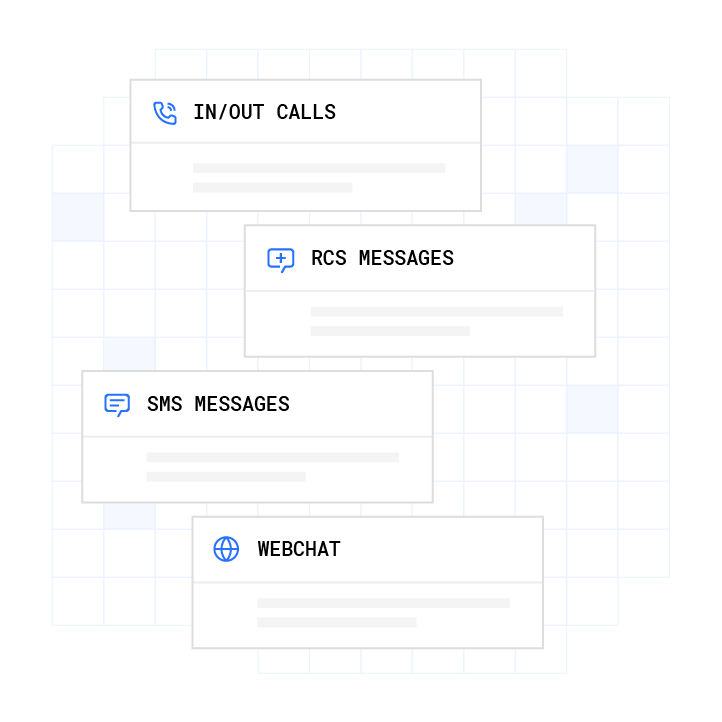
Plura Unified Inbox centralizes AI Voice, SMS, RCS, and Webchat conversations into one streamlined omnichannel communication workspace.
How Plura Compares to 11x AI SDR on Infrastructure
4
11x.ai positions itself as an autonomous multi-channel AI SDR that researches prospects, selects outreach channels, and manages outbound sequences. It operates as an API-layer product built on third-party telecom infrastructure. That architecture means 11x cannot issue branded caller ID at the carrier level, cannot enforce real-time DNC compliance at the origination layer, and cannot support SHAKEN/STIR caller ID verification through its own FCC license.
For teams running 500+ daily touches in regulated industries, those gaps carry real risk. An AI agent can place thousands of calls per day, meaning a single misconfigured consent rule or suppression failure can create large-scale TCPA exposure within hours rather than weeks. Plura owns the carrier stack. Compliance is enforced at origination, not bolted on after the fact.
Build vs. Buy: Evaluating AI SDR Systems and Frameworks
Understanding what enterprise-grade infrastructure delivers makes the build-versus-buy decision clearer. Teams evaluating whether to build an AI SDR stack internally or buy an enterprise platform should account for the full TCO. A DIY AI SDR stack can involve substantial costs over a 12-month period when internal engineering time, setup, and maintenance are included. That figure does not include the cost of obtaining an FCC carrier license, which takes approximately two years, or building real-time DNC compliance scrubbing, SHAKEN/STIR caller ID verification, and immutable consent logging from scratch.
For channel selection, the decision framework is straightforward because each channel serves a distinct use case. Voice is the primary channel for time-sensitive, high-intent leads where immediate qualification matters. SMS is the primary channel for nurture sequences, re-engagement of cold leads, and appointment confirmations where asynchronous communication works. Because the two channels share Plura’s Stateful Conversation Database, sequencing across both does not require separate tools or manual handoffs.
For compliance risk assessment, the key variables are outbound volume, industry vertical, and state footprint. One IAPP 2025 report indicates that organizations in regulated industries pay 20-40% more for outbound AI SDR tooling due to stricter data handling and consent management requirements. Plura’s compliance infrastructure supports SOC 2, HIPAA, ISO certification, GDPR, TCPA compliance, and DNC compliance across all tiers.
Common Challenges in High-Volume AI SDR Deployments
Three operational problems surface consistently in high-volume AI SDR deployments:
Reply handling quality. AI-personalized outreach can achieve better reply rates and meeting booking rates when reviewed by humans. Plura’s conversation intelligence layer surfaces objection patterns and conversion gaps weekly, which enables continuous workflow tuning without manual review of every interaction.
CRM sync gaps. A dialer that does not auto-sync dispositions, call recordings, and outcomes to the CRM creates data gaps that break forecasting and pipeline visibility. Plura’s CRM integration with HubSpot, Salesforce, and Zoho is bi-directional and automatic, with every AI-initiated interaction logged at the field level.
Compliance gaps in multi-state campaigns. State-specific DNC lists must be scrubbed independently because states including California, Texas, and Florida maintain their own registries separate from the federal list. Plura’s Compliance Engine pre-loads 50+ state rule sets and enforces them automatically through time-zone detection on every outbound contact.
AI SDR Cost: What Enterprise Teams Actually Pay
The fully loaded annual cost of one U.S.-based human SDR, including base salary, commissions, benefits, tech stack, recruiting, and management overhead, runs $110,000-$150,000, according to industry benchmarks. AI SDR platform fees for enterprise and high-volume outbound teams vary based on contract terms and infrastructure requirements.
The four metrics that matter for AI SDR meeting booking at scale are:
Response time. Track performance against the sub-5-second target for first AI-powered contact discussed earlier. Plura’s benchmark is under 5 seconds versus the 47+ hour industry standard.
Contact rate. Track connected conversations as a percentage of outbound attempts. Branded caller ID and SHAKEN/STIR caller ID verification on Plura’s FCC-licensed carrier push pickup rates up by reducing “Spam Likely” labels.
Meetings booked per rep. SDRs using AI tools can increase the number of meetings booked per week. The 3-5 qualified meetings per week target is achievable with clean data, a defined ICP, and a properly configured multi-channel workflow.
Compliance adherence. Track DNC scrub logs, consent record completeness, and quiet-hours enforcement rates. Plura’s compliance dashboard exports audit-ready reports in one click.
How AI SDRs Book Meetings: The Technical Sequence
The meeting booking sequence in a properly configured AI SDR system follows a consistent pattern. A lead submits a form or enters the pipeline. The AI SMS agent responds within seconds, validates and qualifies the lead against 30+ enrichment data sources, and initiates a qualification conversation. If the lead meets ICP criteria, the AI voice agent calls and live-transfers a warm buyer to a human rep. If the lead does not answer, the AI Predictive Dialer queues a follow-up call using stateful conversion signals such as historical answer rates, prior negotiation outcomes, and prior offer-acceptance bands.
Plura Predictive Dialer automates outbound calling with AI-powered pacing, transfer optimization, and real-time performance analytics.
Throughout the sequence, every interaction writes to the Stateful Conversation Database. The AI does not restart the conversation on each new touchpoint. It continues it. That cross-channel memory separates enterprise-grade AI SDR infrastructure from consumer-grade tools that treat each channel as an isolated automation.
Advanced Considerations: Orchestrating Channels and Scaling Locations
For franchise networks and multi-location operators, the scaling challenge is consistency. Performance gaps often run 3-5x between the best and worst locations in multi-unit systems. Plura enforces identical greeting, qualification, and SLA across every location through centralized workflow configuration. A system-level dashboard tracks per-location metrics, and AI deploys in days instead of the 2-4 weeks required to train a new front-desk hire.
For agencies running call operations across multiple clients, Plura expands account-manager capacity from 5-8 clients to 15-20 by handling lead contact, qualification, and reporting automatically. Conversation intelligence generates client-ready ROI reports without manual compilation. Industry profit margins can shift from a 15-25% baseline to 35-50% with AI deployment, per Plura’s agency communications guide.
For cross-channel orchestration at scale, the key architectural requirement is a single stateful memory layer underneath all channels. Without it, a lead who texted on Monday and called on Wednesday is treated as two separate contacts. With Plura’s Stateful Conversation Database, every channel inherits the full memory of every prior touchpoint, including pricing offers made, objections raised, and qualification status.
What is the difference between a consumer-grade AI SDR and an enterprise-grade AI SDR platform?
Consumer-grade AI SDR tools typically operate as API resellers built on top of third-party telecom carriers. They handle volume but cannot issue branded caller ID at the carrier level, cannot enforce real-time TCPA compliance and DNC compliance at origination, and cannot maintain stateful conversation memory across voice and SMS simultaneously. Enterprise-grade platforms like Plura own the carrier stack, run on 100% U.S. infrastructure, and treat compliance as a first-class layer of the platform rather than a bolt-on. The operational difference shows up in pickup rates, compliance posture, and meeting-to-opportunity conversion rates.
How does real-time TCPA and DNC compliance work in a high-volume AI SDR deployment?
In a properly configured enterprise AI SDR system, every outbound contact passes through a compliance gate before the dial fires. That gate checks federal and state DNC registries in real time, validates consent records against the specific outreach channel and seller entity, enforces quiet-hours rules based on the recipient’s local time zone, and blocks any contact where consent, DNC status, or opt-out verification returns a null or error result. Plura’s Compliance Engine runs these checks automatically on every outbound contact. Customers are responsible for their own compliance obligations and should consult qualified counsel on applicable TCPA, DNC, and state-level rules. TCPA violations carry statutory penalties of $500 to $1,500 per call or text, and the FCC’s February 2024 declaratory ruling confirmed that AI-generated voices are subject to the same consent requirements as prerecorded voice calls.
What does stateful cross-channel memory mean in practice for meeting booking?
Stateful cross-channel memory means the AI carries full conversation context across every touchpoint with the same lead. If an AI SMS agent qualifies a lead at 9 a.m. and the AI voice agent calls at noon, the voice agent already knows what was discussed, what objections were raised, and what the lead’s qualification status is. It does not re-introduce itself or ask questions the lead already answered. This continuity drives higher meeting-to-opportunity conversion rates in multi-channel AI SDR deployments. Plura’s Stateful Conversation Database is the architectural layer that makes this possible, with every interaction keyed to a customer token across voice, SMS, RCS, and webchat.
How long does it take to see ROI from an enterprise AI SDR platform?
Teams with clean CRM data and a defined ICP typically see positive ROI within 90 days. Results often align with the 3x average ROI in 90 days, 47% average pipeline growth, and 90% faster lead-response time noted earlier. The 90-day timeline matches industry analysis showing that AI SDR performance improves with iteration, and that initial ROI numbers at month three often increase by month nine as messaging and targeting refine. Plura’s annual contracts include a 90-day opt-out window, so if the deployment is not delivering, customers are not held to the full term. Teams starting with poor data or undefined ICP should expect a longer ramp, typically six to nine months to reach consistent qualified pipeline.
What compliance certifications and infrastructure standards does Plura support?
Plura supports SOC 2, HIPAA, ISO certification, GDPR, SHAKEN/STIR caller ID verification, TCPA compliance, and DNC compliance.1 The platform runs on 100% U.S. infrastructure by architecture, with voice origination, model hosting, data storage, and call recording all on domestic infrastructure. Plura is its own FCC-licensed audio bridging carrier, which means SHAKEN/STIR caller ID verification and branded caller ID are issued at the carrier level rather than through a third-party reseller. Customers are responsible for their own certifications, regulatory obligations, and the claims they make to their own end users. Plura provides the infrastructure, and compliance posture downstream of that remains the customer’s responsibility.
1 Plura AI maintains SOC 2, HIPAA, ISO, and GDPR posture as part of its platform infrastructure. References to compliance frameworks in this article describe Plura’s platform capabilities and do not constitute a guarantee that any customer using Plura will themselves be compliant with applicable laws or standards. Customers remain solely responsible for their own regulatory obligations, certifications, consent management, recordkeeping, and the claims they make to their own end users. Consult qualified legal counsel for guidance specific to your use case.
2 This article describes regulatory frameworks at a general level and does not constitute legal advice. Laws and regulations vary by jurisdiction, change over time, and apply differently depending on facts and circumstances. Readers should consult qualified legal counsel before making compliance decisions.
3 Performance figures, customer outcomes, and industry statistics referenced in this article are drawn from cited third-party sources or Plura customer case studies. Individual results vary based on implementation, use case, industry, audience, and execution. Past or aggregate performance is not a guarantee of future results.
4 References to third-party products, services, companies, or research are made for informational and comparative purposes only. Plura AI is not affiliated with, endorsed by, or sponsored by any third party named in this article unless explicitly stated. Trademarks and product names referenced remain the property of their respective owners.
This article is provided for informational purposes only and reflects Plura AI’s understanding at the time of publication. Product capabilities, integrations, and specifications are subject to change. For the most current information, visit plura.ai.
This article was produced with the assistance of AI tools and reviewed by Plura AI prior to publication.