

Written by: Matt Beucler, CEO, Plura AI
Key Takeaways
- Live transfer agents qualify prospects and hand them to licensed closers on the same call, delivering 95-100% contact rates and higher conversion than web leads.
- Human agent training takes 6-8 weeks and faces high annual turnover, creating recurring costs and quality swings that raise cost per connected call.
- Effective qualification uses a six-point checklist covering age, state, health, budget, timeline, and consent so only qualified prospects reach closers.
- Plura AI voice and SMS agents automate qualification, objection handling, and warm transfers at scale while supporting compliance with FCC, TCPA, DNC, SOC 2, HIPAA, and GDPR frameworks.1
- Insurance teams can cut monthly agent costs from $60,000 to $14,400 by replacing human agents with Plura; start a free trial to see projected ROI in real time.
How Live Transfer Agents Keep Prospects on the Line
A live transfer agent is a caller-facing representative whose job is to contact prospects, confirm qualification criteria, and bridge the active call to a licensed closer in real time. The prospect stays on the line while the closer joins, so the conversation continues without interruption. That continuity separates a live transfer from a cold transfer, where the first agent forwards a number, disconnects, and forces a restart.
The operational advantage is measurable. Live transfer leads achieve contact rates of 95 to 100%, compared with 55 to 75% for exclusive web leads and lower rates for aged leads. That gap exists because the prospect is already on an active call when the licensed agent joins, so there is no dialing, voicemail, or callback queue.
For insurance agencies running Medicare Advantage, final expense, or ACA (Affordable Care Act) campaigns, the live transfer model delivers the highest-intent lead type available. Live transfer calls cost $45 to $150 or more per connected call and can achieve strong conversion rates. Per-transfer economics often match or beat the fully loaded cost of exclusive web leads once producer dial time is included.
The human agent in the middle creates the main constraint. Contact center agent training takes 6 to 8 weeks before agents handle live calls, and industry average annual agent turnover in contact centers runs 30 to 45%. Every departing agent resets the training clock and the cost counter, so the same ramp investment repeats year after year.
Three-Stage Call Transfer Flow in Insurance
The mechanics of an insurance live transfer follow a three-stage sequence. First, the qualifying agent opens the call, runs a short script, and confirms the prospect meets minimum thresholds. Second, the agent places the prospect on a brief professional hold, dials the licensed closer, and delivers a structured whisper briefing covering the prospect’s name, product interest, state, and any must-know notes. Third, the agent merges the calls into a three-way bridge so the licensed closer enters the conversation already briefed.
Warm transfers in insurance sales produce higher close rates than cold transfers, with agents booking more appointments per hour using warm transfers. The whisper briefing drives that advantage. The closer does not open with “how can I help you?” but instead references confirmed details immediately. That approach re-anchors the prospect’s intent and shortens time to quote.
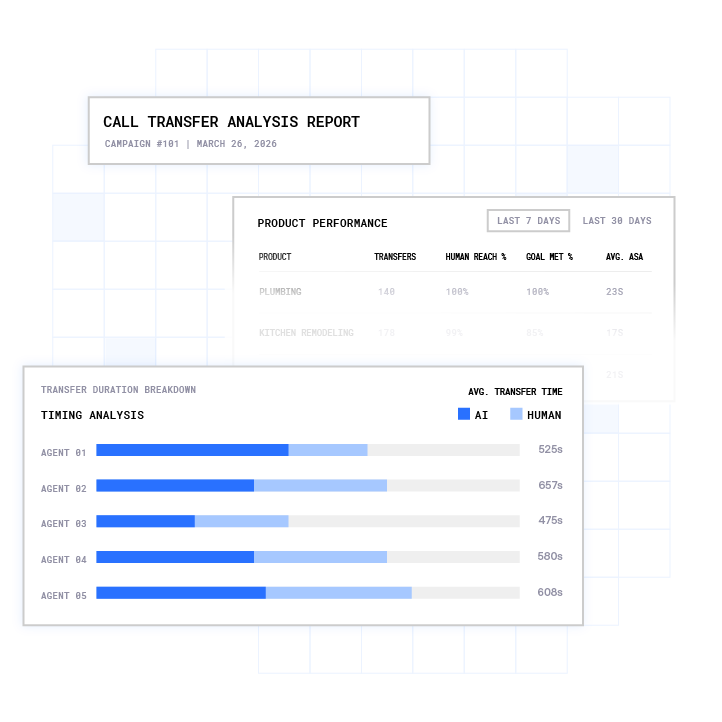
Data-pass requirements accompany every transfer to align with TCPA (Telephone Consumer Protection Act) and insurance privacy rules.2
Six-Point Lead Qualification Checklist for Live Transfers
Clear qualification criteria keep transfers consistent and reduce disputes. Vague thresholds create uneven call quality and higher chargeback risk. The following checklist reflects standard insurance live transfer qualification practice:
- Age eligibility. Confirm the prospect falls within the product’s eligible age band, such as 64 to 85 for final expense or 64.5 or older approaching Medicare eligibility.
- State eligibility. Verify the prospect resides in a state where the agency holds a license and the carrier is admitted.
- Health status. Collect a basic health screen appropriate to the product. For guaranteed-issue products, confirm the prospect is not already enrolled in a conflicting plan. For underwritten products, screen for disqualifying conditions per the carrier’s guidelines.
- Budget confirmation. Establish a realistic monthly premium range the prospect can sustain. Transfers outside the agent’s product pricing band produce low-quality calls regardless of other criteria.
- Purchase timeline. Confirm the prospect intends to make a decision within a defined window, typically 30 days. Prospects with timelines beyond 90 days route to nurture sequences instead of live transfer queues.
- Consent verification. Confirm the prospect consented to be contacted by the specific agency. Under the FCC’s One-to-One Consent Rule, which was scheduled to take effect January 27, 2025, but was postponed and vacated by court order before becoming effective, consent would have needed to name a single seller.2 Transfers without documented, specific consent can create TCPA exposure.
Four categories of disqualifiers immediately route a prospect out of the live transfer queue: residing in a non-licensed state, active enrollment in a conflicting plan, a timeline beyond the defined window, and refusal to confirm consent. These disqualifiers share a common trait, because they represent barriers that cannot be resolved during the call itself. Leads failing minimum thresholds route to alternative channels such as SMS, scheduled callbacks, or nurture sequences rather than consuming a licensed agent’s time.
Warm Handoff Scripts and Simple Objection Responses
Two objection categories recur most often before a prospect agrees to transfer: price concern and timing hesitation. Agents need a repeatable response for each scenario.
Price objection handler:
- Acknowledge: “That makes sense. Most people I speak with have the same concern before they see the actual numbers.”
- Reframe: “The specialist I am connecting you with works with multiple carriers, so they can show you the lowest rate available in your state for your situation.”
- Bridge: “It takes about five minutes and there is no obligation. I can connect you now.”
Timing objection handler:
- Acknowledge: “I hear you. A lot of people feel like they have more time than they actually do with enrollment windows.”
- Inform: “The specialist can tell you exactly where you stand on timing so you are not caught off guard.”
- Bridge: “They are available right now. I can connect you.”
Warm handoff protocol script (agent to prospect and closer):
- Agent to prospect: “Thank you, [Name]. Based on what you have shared, I am connecting you with one of our licensed specialists who can finalize your options. Please hold for just a moment.”
- Whisper to closer: “Warm transfer. Prospect is [Name], [state], interested in [product]. Age [X]. Budget [Y]. Ready for a quote.”
- Closer to prospect: “Hello [Name], this is [Agent]. I have your information here and can get started right away.”
This three-part sequence is the standard AI-to-human handoff pattern for insurance sales and maps directly to how Plura’s AI SMS agents and AI voice agents execute transfers today.
Calculate your potential savings with Plura’s ROI calculator.
Closer Openings That Protect Speed-to-Quote
The first 60 seconds after the bridge determine whether the prospect stays engaged. Closers who open with re-qualification questions signal that the transfer was disorganized, which erodes trust immediately.
60-second closer greeting script:
- Reference confirmed details: “Hi [Name], I see you are looking at [product] coverage in [state].”
- Confirm intent: “Is that still what you are focused on today?”
- Uncover motivation: “What got you thinking about this right now?”
- Match solution: “Based on what you have told me, the best fit looks like [product] at approximately [price range] per month.”
- Assume the sale: “The next step is just a few quick questions to get you approved. We can go ahead now.”
Teams should aim for the live rep to speak within 5 to 10 seconds after the AI announces it is connecting the caller, because longer delays cause prospects to disengage. Speed-to-quote is a hard performance driver. Leads contacted within one minute are 391% more likely to convert than those contacted after 24 hours.3
Three Core KPIs for Insurance Live Transfers
Insurance live transfer programs are measured across three financial and operational dimensions.
| KPI | Human Agent Benchmark | Plura AI Benchmark | Source |
|---|---|---|---|
| Cost per Connected Call | $45 to $150 | Reduced via 100% talk utilization | GetInsureLeads 2026 |
| Connect Rate | 65% to 80% | Near 100% (prospect already on call) | BestInsuranceLeads 2026 |
| Conversion Lift vs. Web Leads | 2x to 5x | Preserved via stateful context pass | Sonant AI / EverQuote |
| Monthly Agent Cost (15 agents) | $60,000 | $14,400 | Plura ROI Calculator |
The Plura ROI math uses a 15-agent baseline at $20 per hour with 25% taxes, benefits, and commissions, and a 40% talk-utilization rate typical of human contact-center work, producing a $60,000 monthly cost. Replacing that team with Plura at $15 per hour, 100% talk utilization, and 6 AI agents doing the work of 15 humans drops the monthly cost to $14,400, a $45,600 monthly saving that compounds to $547,200 over 12 months.3
Human agent training adds further cost before a single call is taken. The multi-week onboarding timeline discussed earlier represents significant investment before the agent takes a single call, even before annual certifications, ongoing coaching, and administrative overhead are added.
AI and Human Training: Cost and Consistency
Human live transfer agent training delivers consistent qualification only when agents follow strict standards across every call. In practice, script drift, turnover, and ramp time create quality variance that inflates cost per connected call and reduces conversion. Domestic contact center agents cost $15 to $25 per hour before benefits and overhead, and the high turnover rate mentioned earlier means that training investment is partially written off every year.
Plura’s AI voice agents and AI SMS agents run the qualification checklist and warm handoff protocol on every call without script drift, ramp time, or turnover. Plura operates as an FCC-licensed carrier, so branded caller ID is issued at the carrier level rather than bolted on through a third-party CPaaS (Communications Platform as a Service). Every outbound contact is checked against federal and state DNC (Do Not Call) registries in real time before dial, and consent records are timestamped and immutable.
Plura’s Stateful Conversation Database holds context across voice, SMS, RCS (Rich Communication Services), and webchat channels. A prospect who engaged via AI SMS at 9 a.m. is recognized when the AI voice agent calls at noon. The closer receives the same structured briefing packet regardless of which channel initiated the conversation. Plura supports compliance with SOC 2, HIPAA, ISO, GDPR, SHAKEN/STIR (Secure Telephone Identity Revisited / Signature-based Handling of Asserted information using toKENs), TCPA, and DNC frameworks.1 Operators retain responsibility for their own compliance obligations, and Plura provides the infrastructure that supports those obligations.
The operational difference shows up in scale. A human team of 15 agents handles a fixed call volume. Plura scales the same workflow to hundreds of simultaneous conversations without adding headcount, retraining cycles, or peak-season hiring budgets.
Compliance Guardrails for Insurance Live Transfers
Live transfer operations in insurance intersect with several federal and state frameworks. The TCPA (Telephone Consumer Protection Act, 47 U.S.C. § 227) describes rules for outbound calls and texts to consumers.2 The FCC’s One-to-One Consent Rule, which was scheduled to take effect January 27, 2025, but was postponed and vacated by court order before becoming effective, would have required consumer consent to be specific to a single seller and a single marketing campaign, which would have affected lead forms that pass consent to multiple agents. The National DNC Registry and applicable state DNC lists must be scrubbed before outbound dialing under the relevant frameworks. Medicare campaigns also intersect with CMS (Centers for Medicare and Medicaid Services) marketing guidelines. Operators should consult qualified legal counsel regarding their specific obligations.
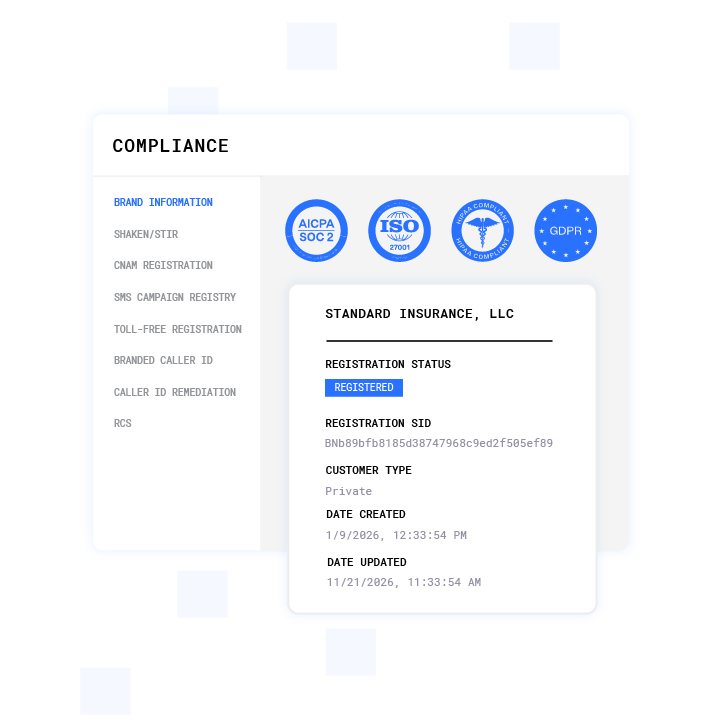
Plura’s compliance engine performs real-time DNC scrubbing on every outbound contact before dial. Consent records are timestamped and stored in an immutable ledger. Quiet-hours rules enforce automatically through time-zone detection. SHAKEN/STIR authentication runs on every outbound voice call. The compliance dashboard exports audit-ready reports in one click for legal review or regulatory inquiry. These features support operators in building their own compliance posture and do not substitute for legal counsel or remove operator responsibility.
How Plura Automates Live Transfers at Scale
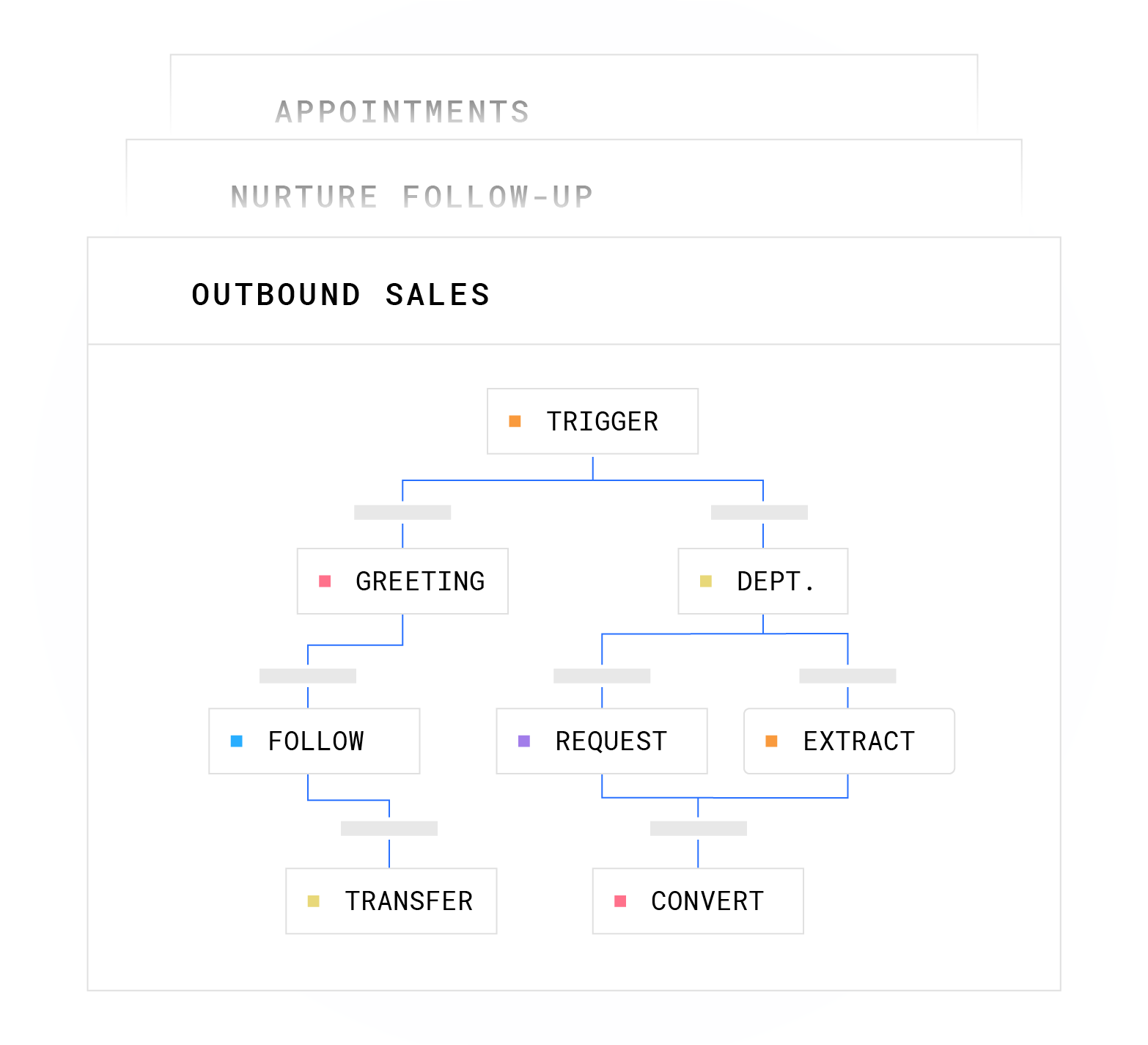
Plura’s AI voice agents and AI SMS agents execute the full live transfer workflow: outbound dial or inbound answer, qualification checklist, objection handling, whisper briefing, and warm bridge to a licensed closer. The Stateful Conversation Database ensures the closer receives a structured context packet regardless of which channel the prospect used first.
Harvard Business Review research found that companies responding within five minutes are 100 times more likely to connect with a prospect than those waiting 30 minutes.4 Plura contacts leads in under 5 seconds across voice and SMS, which removes the ramp delay that human agent queues introduce.
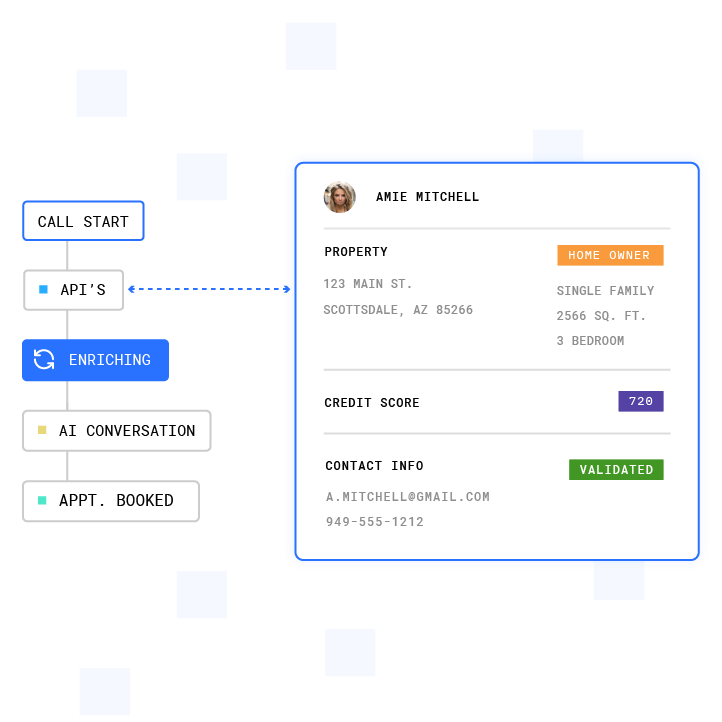
The platform’s lead qualification layer enriches every contact with 30-plus data sources in real time during the conversation, so the AI enters the call already knowing the prospect’s geography, product eligibility signals, and intent indicators. Transfers that fail qualification thresholds route to SMS nurture sequences automatically rather than consuming a licensed agent’s time.
Plura’s plans and rates start at $5,000 per month for the Multi tier, with Agency and Enterprise tiers available for higher-volume operations. Every annual contract includes a 90-day opt-out window. AI SMS and AI voice agent capabilities are available across all tiers.
See how much you could save by replacing your current agent team.
Review Plura plans and rates side by side.
Frequently Asked Questions
What is the difference between a warm transfer and a cold transfer in insurance sales?
A warm transfer keeps the prospect on an active call while the qualifying agent briefs the licensed closer before merging the lines. The closer enters the conversation already knowing the prospect’s name, product interest, state, and qualification status. A cold transfer simply forwards the prospect’s number to the closer without any briefing or active connection, which requires the closer to re-qualify from scratch. Warm transfers produce materially higher close rates because the prospect’s intent is re-anchored at the moment of handoff rather than reset. In insurance, where licensed agents are required to bind policies, the warm transfer is the standard model for converting live transfer leads in real time.
How much does live transfer agent training cost for an insurance agency?
Initial onboarding for a new live transfer agent in an insurance call center typically requires significant time and investment before the agent takes a single call. Annual certifications including AHIP (America’s Health Insurance Plans) for Medicare, carrier-specific training, and state continuing education requirements consume 40 to 80 hours of non-selling time per agent per year. Ongoing coaching via weekly team meetings and call reviews adds approximately $2,600 per agent annually. Administrative overhead including HR, payroll, compliance auditing, and IT support typically adds 10 to 15% to total personnel costs. Given the turnover rates discussed above, most agencies repeat this investment every 12 to 18 months per seat.
What KPIs should insurance agencies track for live transfer performance?
Insurance live transfer programs track performance across three categories. Connection quality metrics include transfer connection rate, with a typical target of 65 to 80%, lead validity rate, with a target of 85% or higher, and data-pass completeness. Agent performance metrics include call pick-up rate, conversion-to-appointment rate, with an industry average of 25 to 40%, and appointment-to-close ratio, often 50% for simpler products such as auto and 20 to 30% for complex products such as whole life. Financial return metrics include cost per connected call, often $45 to $150 depending on product and vendor, cost per acquisition, and return on ad spend. A healthy live transfer funnel often shows a 75% or higher connection rate, 85% or higher validity, 30% or higher appointment set rate, and 25% or higher close rate from appointments. Agencies can also track first-call contact drop rate as an early signal of vendor quality.
How does Plura AI handle the qualification and warm handoff process?
Plura’s AI voice agents and AI SMS agents run the full qualification checklist on every contact: age eligibility, state eligibility, health status screen, budget confirmation, purchase timeline, and consent verification. When a prospect crosses the qualification threshold, the AI executes the warm handoff protocol. It places the prospect on a brief hold, delivers a structured whisper briefing to the licensed closer covering the prospect’s name, product interest, state, and qualification data, then bridges the calls. The Stateful Conversation Database ensures the closer receives the same context packet regardless of whether the prospect entered through voice or SMS. Plura operates as an FCC-licensed carrier, so branded caller ID is issued at the carrier level and SHAKEN/STIR authentication runs on every outbound call. Real-time DNC scrubbing, immutable consent logging, and quiet-hours enforcement are built into every campaign. Operators retain responsibility for their own compliance obligations.
What compliance infrastructure does Plura provide for insurance live transfer operations?
Plura’s compliance engine performs real-time DNC scrubbing against federal and state registries on every outbound contact before dial. Consent records are timestamped and stored in an immutable ledger with audit-ready export available in one click. Quiet-hours rules enforce automatically through time-zone detection, applying federal and state calling-window restrictions to every campaign. SHAKEN/STIR authentication runs on every outbound voice call. The platform supports SOC 2, HIPAA, ISO, GDPR, TCPA, and DNC compliance frameworks.1 For Medicare campaigns, the platform’s call recording and QA infrastructure supports the documentation requirements associated with CMS marketing guidelines. Operators and their legal counsel are responsible for determining how these features apply to their specific regulatory obligations. Plura provides the infrastructure, and compliance posture downstream of that remains the operator’s responsibility.
1 Plura AI maintains SOC 2, HIPAA, ISO, and GDPR posture as part of its platform infrastructure. References to compliance frameworks in this article describe Plura’s platform capabilities and do not constitute a guarantee that any customer using Plura will themselves be compliant with applicable laws or standards. Customers remain solely responsible for their own regulatory obligations, certifications, consent management, recordkeeping, and the claims they make to their own end users. Consult qualified legal counsel for guidance specific to your use case.
2 This article describes regulatory frameworks at a general level and does not constitute legal advice. Laws and regulations vary by jurisdiction, change over time, and apply differently depending on facts and circumstances. Readers should consult qualified legal counsel before making compliance decisions.
3 Performance figures, customer outcomes, and industry statistics referenced in this article are drawn from cited third-party sources or Plura customer case studies. Individual results vary based on implementation, use case, industry, audience, and execution. Past or aggregate performance is not a guarantee of future results.
4 References to third-party products, services, companies, or research are made for informational and comparative purposes only. Plura AI is not affiliated with, endorsed by, or sponsored by any third party named in this article unless explicitly stated. Trademarks and product names referenced remain the property of their respective owners.
This article is provided for informational purposes only and reflects Plura AI’s understanding at the time of publication. Product capabilities, integrations, and specifications are subject to change. For the most current information, visit plura.ai.
This article was produced with the assistance of AI tools and reviewed by Plura AI prior to publication.