

Written by: Matt Beucler, CEO, Plura AI
Updated July 2026
Key Takeaways for 2026 Contact Center AI Budgets
- Contact center AI pricing in 2026 follows three dominant structures: seat-based, usage-based, and hybrid, with sticker prices ranging from $0.05 per minute to $249 per agent per month.
- Traditional 100-seat contact centers cost $4M–$7M annually, while Plura AI delivers the same volume for $300K–$700K, cutting TCO by up to 90 percent.3
- Google Cloud Contact Center AI adds consumption fees on top of existing CCaaS seat licenses, and buyers consistently underestimate total cost of ownership by 40 percent or more.
- Hidden compliance, spam-label remediation, and STIR/SHAKEN costs can add $100–$500 per month and expose operators to TCPA penalties of $500–$1,500 per violation.1
- Plura AI’s all-inclusive, U.S.-based platform eliminates surprise fees and helps reduce regulatory risk, and a live demo can apply the full TCO model to your operation.
How Google Contact Center AI Layers On Top of CCaaS
Google Cloud Contact Center AI (CCAI) is a suite of AI services layered on top of existing contact center platforms. It includes Dialogflow CX for virtual agent conversations, Agent Assist for real-time human agent support, and Insights for conversation analytics. Google CCAI does not replace a CCaaS platform. It integrates with platforms such as Genesys, Cisco, and Avaya.4
Pricing is usage-based. Dialogflow CX charges per request, and Agent Assist charges per conversation session. Organizations pay both the underlying CCaaS seat license and Google consumption fees, which creates a hybrid cost structure. Enterprise buyers consistently underestimate TCO by 40 percent or more when comparing only license fees.4 Google CCAI deployments often follow this pattern once integration, data preparation, and compliance review are added.
| Cost Layer | Typical Range | Billing Model |
|---|---|---|
| CCaaS seat license (e.g., Genesys, Cisco) | $65–$249/agent/month | Per seat |
| Google CCAI virtual agent (Dialogflow CX) | Per-request consumption | Usage-based |
| Agent Assist sessions | Per-session consumption | Usage-based |
| Implementation and integration | $5M–$20M for full GenAI deployments (Gartner) | One-time + ongoing |
Compare your current CCaaS and AI layer costs against Plura’s all-inclusive pricing.
Contact Center AI Pricing Calculator: Minutes vs Resolutions
Two metrics drive AI contact center economics: per-minute cost and per-resolution cost. Per-minute cost reflects what you pay for voice AI call duration. Per-resolution cost reflects what you pay only when the AI fully closes a ticket without human escalation.
AI voice agents in 2026 have advertised fees starting at $0.05/min and all-in production costs typically ranging from $0.07–$0.45 per minute. At the same time, per-resolution pricing ranges from about $0.49 to $2.00 per resolved interaction depending on the vendor and tier. Neither figure captures the full cost picture without adding compliance infrastructure, spam-label remediation, and platform fees.
| Pricing Metric | Market Range (2026) | Hidden Add-On Risk |
|---|---|---|
| Per-minute voice AI | $0.05–$0.45/min | Overage penalties 2–3x base at high volume |
| Per-resolution (outcome-based) | $0.49–$2.00/resolution | Definition of “resolved” varies by vendor |
| Compliance infrastructure add-on | $100–$500/month | Required for many SOC 2 and HIPAA-aligned deployments1 |
| Spam-label remediation | Carrier-level; not itemized by most vendors | Connect-rate collapse without it |
Plura’s ROI calculator models the full cost stack: agent hours, talk utilization, taxes, benefits, and platform fees side by side. The default scenario shows a 15-agent operation at $20/hour costing $60,000/month versus $14,400/month on Plura, which produces $45,600 in 30-day savings and $547,200 over 12 months.3
Test your own volumes to see per-minute and per-resolution economics for your team.
Seat-Based, Usage-Based, and Hybrid Models in Practice
The three dominant pricing models each carry structural trade-offs that only surface at scale. Per-seat pricing is common for many CCaaS contracts, and AI now reduces agent headcounts. Vendors respond by layering consumption charges on top, a practice that explains why many contact centers cite high or unpredictable AI costs as an ongoing challenge.
| Model | Typical Rate | Best Fit | TCO Risk |
|---|---|---|---|
| Per-seat (CCaaS) | $65–$249/agent/month | Steady, high-utilization teams | AI add-on fees stack on top |
| Per-minute voice AI | $0.05–$0.45/min | Low or spiky volume | Exceeds per-seat cost at scale |
| Per-resolution (outcome) | $0.49–$2.00/resolution | High AI deflection rate operations | Resolution definition disputes |
| Hybrid (seat + token/credit) | $75–$240/user/month + token overages | Mixed human-AI teams | Credit exhaustion during peak windows |
Plura prices per conversation, scaling with AI volume, rather than per agent seat scaling with human headcount. Plura’s pricing is all-inclusive with no surprise charges or pass-through fees, unlike usage-based models that bill separately for compliance features, voice synthesis, and CRM write-back.
Model your team’s economics across seat-based, usage-based, and conversation-based pricing.
Hidden Compliance and Spam-Label Costs in 2026
The Telephone Consumer Protection Act (TCPA: the federal law governing outbound calls and texts, codified at 47 U.S.C. § 227) and the National Do Not Call (DNC) Registry create consent management, scrubbing, and recordkeeping obligations that carry direct per-violation cost exposure.2 Each non-consensual call can trigger statutory damages of $500 per violation, rising to $1,500 for willful violations, with TCPA-related lawsuits and settlements reaching substantial totals in recent years. STIR/SHAKEN, the FCC caller-ID authentication framework, and spam-label remediation operate at the carrier level, and most API-reseller AI platforms cannot address these issues because they do not own the underlying carrier.
| Compliance Line Item | Cost Exposure | Plura’s Infrastructure Approach |
|---|---|---|
| TCPA per-violation penalty | $500–$1,500 per call | Real-time DNC scrubbing, immutable consent ledger |
| HIPAA breach penalty (healthcare) | Up to $1.5M/year per violation category | HIPAA-aligned encryption and audit logging |
| Compliance infrastructure add-on | $100–$500/month on most platforms | Built into platform, not a separate line item |
| Spam-label remediation | Connect-rate collapse; no standard market rate | Branded caller ID issued at FCC-licensed carrier level |
| STIR/SHAKEN non-compliance | Carrier blocking risk | STIR/SHAKEN authentication on every outbound call |
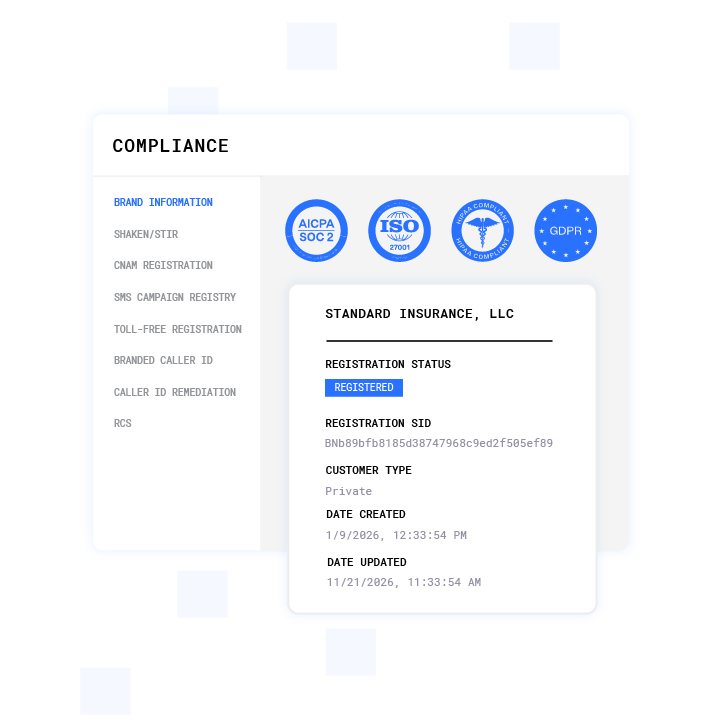
Plura’s compliance framework includes SOC 2 compliant infrastructure, TCPA and STIR/SHAKEN enforcement, integration with Blacklist Alliance for DNC screening, and Number Verifier for caller ID reputation.1 Operators should consult qualified counsel regarding their specific obligations under applicable federal and state law.
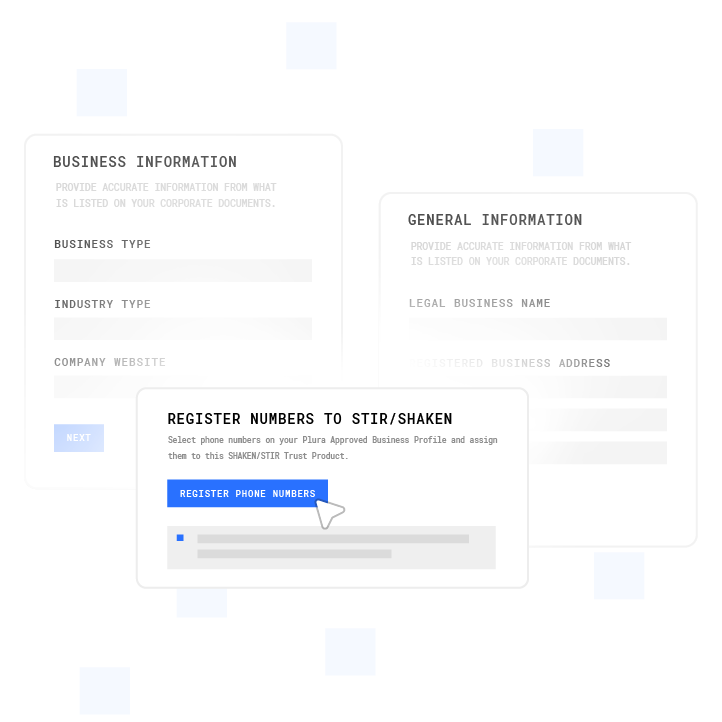
Estimate how compliance and spam-label costs affect your effective cost per contact.
2026 Regulatory Pricing Impact: FCC NPRM and State Onshoring Laws
The FCC’s March 2026 onshoring NPRM (FCC 26-16, CG Docket No. 26-52) proposes capping foreign-staffed calls at approximately 30% of volume for U.S. telecom carriers and their BPO vendors.2 It also proposes barring offshore agents from handling sensitive consumer data including passwords, Social Security numbers, and payment information. A companion October 2025 FNPRM (FCC 25-76) would require calls from outside the U.S. to transmit a visible foreign-origin indicator.
The Keep Call Centers in America Act (S.2495) and the Foreign Robocall Elimination Act (S.2666) extend the federal regulatory perimeter. Operators should consult qualified counsel to assess their exposure under these proposals and any applicable state statutes.
| Regulatory Requirement | Infrastructure: Offshore/Foreign | Infrastructure: 100% U.S. (Plura) |
|---|---|---|
| FCC NPRM offshore cap (~30%) | Structural compliance cost, contract renegotiation | No exposure by architecture |
| Sensitive data offshore prohibition | Data migration and vendor replacement costs | All data on domestic infrastructure |
| Foreign-origin call indicator (FCC 25-76) | Near-zero answer rate risk on affected campaigns | Not applicable |
| State onshoring laws (NY, NJ, CT, MO, FL) | Per-day penalties up to $10,000 (NY); disclosure mandates | No offshore disclosure obligation |
Factor onshoring scenarios into your TCO using Plura’s calculator.
Plura AI TCO Benchmark: $300K–$700K vs Traditional Economics
For a 100-seat contact center, traditional operations cost $4 million to $7 million annually, while AI-powered communications using Plura cost $300,000 to $700,000. The gap is structural. Human contact centers carry 60–70% of operating costs in agent labor, with 31.2% annual attrition in 2024 generating $10,000–$20,000 per replacement in recruitment, training, and lost productivity. Plura agents run at 100% talk utilization with no taxes, benefits, commissions, or rehiring cycle.
| Cost Category | Traditional Contact Center | Plura |
|---|---|---|
| Annual TCO (100-seat equivalent) | $4M–$7M | $300K–$700K |
| Per-conversation cost | Typically $4–$12 (live agent) | $0.35–$0.85 |
| Talk utilization rate | ~40% (human agents) | 100% (AI agents) |
| Compliance infrastructure | Bolt-on; separate vendor contracts | Built-in; SOC 2, HIPAA, TCPA, DNC |
| U.S. infrastructure exposure (FCC NPRM) | Varies by vendor; offshore risk present | 100% U.S. by architecture |
Plura’s plans and rates start at $5,000/month (Multi), $7,500/month (Agency), and custom Enterprise pricing, all on annual contracts with a 90-day opt-out window. Agent build fees are $2,500–$2,750 per agent. Every plan runs on Plura’s FCC-licensed carrier with branded caller ID, STIR/SHAKEN authentication, real-time DNC scrubbing, and a stateful conversation database shared across AI voice, AI SMS, and AI webchat.
Book a live demo with Plura to see the full TCO model applied to your operation.
Review Plura plans and rates side by side on the pricing page.
Frequently Asked Questions
Average Cost per Contact for AI vs Human Agents in 2026
The median cost per contact is $1.84 for self-service channels and $13.50 for assisted (human-agent) channels, per Gartner’s customer service benchmarks. AI voice agents bring per-conversation costs to $0.35–$0.85 on Plura’s platform, compared to typically $4–$12 for a live domestic agent call. The gap widens at scale. A 50-seat equivalent operation handling 20,000 monthly interactions costs $8,000–$15,000 monthly on an AI contact center versus $35,000–$50,000 monthly on a traditional offshore operation.
As detailed in the TCO benchmark section, Plura’s 100-seat equivalent runs at $300,000–$700,000 annually versus the $4 million–$7 million traditional baseline.
Hidden AI Pricing Costs Contact Center Leaders Should Watch
Four cost layers are commonly underrepresented in vendor quotes. First, platform or seat fees required to access AI features. Many CCaaS vendors require a base subscription of $55–$300+ per agent per month before any AI usage charges apply. Second, overage penalties. Per-minute and token-based models can charge 2–3 times the base rate when volume exceeds allocations during peak windows.
Third, compliance infrastructure. SOC 2, HIPAA-grade, and DNC scrubbing features are add-ons on most platforms, adding $100–$500 per month. Fourth, implementation and integration costs. Enterprise GenAI deployments range from $5 million to $20 million in total first-year costs according to Gartner, far exceeding the license fee alone. Operators should request a full TCO model from any vendor before signing and consult qualified counsel on compliance obligations specific to their industry and state.
FCC NPRM Impact on Contact Center AI Pricing Decisions
The FCC’s March 2026 onshoring NPRM (CG Docket No. 26-52) proposes capping foreign-staffed calls at approximately 30% of volume and prohibiting offshore handling of sensitive consumer data. A companion October 2025 FNPRM would require a visible foreign-origin indicator on calls from outside the U.S., which industry observers project would drive near-zero answer rates for affected offshore campaigns in debt collection, financial services, healthcare, and lead generation.
State laws in New York, New Jersey, Connecticut, Missouri, and Florida already impose onshoring restrictions and disclosure mandates with penalties reaching $10,000 per day in New York. Contact center operators with offshore vendor contracts or AI tools running on foreign infrastructure should consult qualified counsel to assess their exposure before these rules are finalized.
Per-Resolution vs Per-Minute AI Contact Center Pricing
Per-minute pricing charges for every minute of AI voice call duration regardless of outcome. This structure can be cost-efficient at low or variable volume but becomes expensive at scale. Per-resolution pricing charges only when the AI fully closes a customer issue without human escalation, which aligns cost directly to business outcomes.
The practical risk with per-resolution models is definitional. What counts as a “resolved” interaction varies by vendor, with some defining resolution as no callback within one day and others using three days. At 100,000 monthly resolutions, the cost difference between a $0.99 per-resolution model and a $2.00 per-conversation model is $101,000 per month before platform fees. Operators running high AI deflection rates typically favor per-resolution models, while those with variable or unpredictable volume often prefer flat-rate subscriptions with defined overage terms.
How Plura Supports Agencies Managing Multiple Client Accounts
Plura’s Agency plan at $7,500/month is built for multi-client operations. The platform’s stateful conversation database maintains separate context per client account, and the no-code workflow builder lets account managers configure distinct conversation logic, compliance rules, and DNC lists per client without engineering resources. Plura’s conversation intelligence layer generates client-ready reporting automatically.
The economics shift materially at the agency level. Account-manager capacity expands from 5–8 clients to 15–20 clients on the same headcount, and agency margins shift from a 15–25% industry baseline toward 35–50% with AI deployment. All plans include a 90-day opt-out window.
1 Plura AI maintains SOC 2, HIPAA, ISO, and GDPR posture as part of its platform infrastructure. References to compliance frameworks in this article describe Plura’s platform capabilities and do not constitute a guarantee that any customer using Plura will themselves be compliant with applicable laws or standards. Customers remain solely responsible for their own regulatory obligations, certifications, consent management, recordkeeping, and the claims they make to their own end users. Consult qualified legal counsel for guidance specific to your use case.
2 This article describes regulatory frameworks at a general level and does not constitute legal advice. Laws and regulations vary by jurisdiction, change over time, and apply differently depending on facts and circumstances. Readers should consult qualified legal counsel before making compliance decisions.
3 Performance figures, customer outcomes, and industry statistics referenced in this article are drawn from cited third-party sources or Plura customer case studies. Individual results vary based on implementation, use case, industry, audience, and execution. Past or aggregate performance is not a guarantee of future results.
4 References to third-party products, services, companies, or research are made for informational and comparative purposes only. Plura AI is not affiliated with, endorsed by, or sponsored by any third party named in this article unless explicitly stated. Trademarks and product names referenced remain the property of their respective owners.
This article is provided for informational purposes only and reflects Plura AI’s understanding at the time of publication. Product capabilities, integrations, and specifications are subject to change. For the most current information, visit plura.ai.
This article was produced with the assistance of AI tools and reviewed by Plura AI prior to publication.