

Written by: Matt Beucler, CEO, Plura AI | Last updated: August 25, 2026
Updated August 2026
AI Call Center ROI Benchmarks for High-Volume Operations
- AI call center automation delivers 212%+ Forrester TEI ROI with payback periods of about 3 months across enterprise deployments.3
- Containment rates of 40-70% move routine Tier 1 calls from $5.50-$13.50 human costs to $0.25-$0.85 AI costs, which drives most savings.
- Volume-based TCO models show $700K AI platform costs replacing $7M traditional contact-center economics at equivalent scale.
- Regulatory risk avoidance through built-in TCPA/DNC controls and 100% U.S. infrastructure removes $500-$1,500 per-violation exposure common in offshore BPO contracts.
- Plura AI delivers these economics with FCC-licensed carrier infrastructure, stateful omnichannel memory, and built-in compliance tools. Book a live demo to model your specific ROI.
1. Independent ROI Evidence from Forrester TEI
The Forrester Total Economic Impact (TEI) framework is a widely used independent methodology for quantifying enterprise software ROI. TEI models four components: benefits, costs, flexibility, and risk. Benefits capture quantified value delivered. Costs include total investment, including implementation. Flexibility measures the option value of future use cases. Risk applies probability-weighted adjustments to benefit estimates.
Applied to AI contact center deployments, Forrester TEI studies show significant ROI over three years with rapid payback periods. A 2025 Forrester TEI study commissioned by PolyAI documented $10.3 million in agent labor cost savings over three years and 391% ROI at the three-year mark.3
The NPV breakdown in TEI models for AI voice automation typically allocates the largest benefit share to containment improvement. This shift moves interactions from Gartner’s median assisted-channel cost of $13.50 per contact to $1.84 for self-service.4 Secondary benefit pools include AHT reduction for escalated calls, agent attrition savings, and QA automation that increases coverage from 2-5% manual sampling to 100% automated scoring.
At Plura’s documented TCO model, a 100-seat contact center running traditional operations costs $4 million to $7 million annually, while an AI-powered platform costs $300,000 to $700,000 for equivalent volume.3 That $6.3 million gap at the high end is the gross benefit pool before implementation costs are subtracted to arrive at net present value.
2. Eight Quantified Case-Study Snapshots
The Forrester TEI framework provides the independent methodology. Real-world deployments across verticals show how these economics perform in production environments. The following eight case studies highlight containment rates, cost reductions, and payback periods from actual implementations.
| Vertical | Monthly Call Volume | Cost-per-Contact Reduction | Payback Period | Source |
|---|---|---|---|---|
| Healthcare (HCA Healthcare, Continental Division) | Multi-hospital system, 10 hospitals | 50% reduction in full-time telecom staff; call offload rate above 70% | Not disclosed | NAITIVE / Parlance deployment data |
| Healthcare (Midwest Regional Health Network) | High-volume inbound scheduling | High percentage of calls automated; significant reduction in wait times | Not disclosed | NAITIVE voice AI deployment data |
| Financial Services (Credit Union) | Full inbound call volume, SME scale | High percentage of calls automated; staff reduced while handling more volume | Permanent post-migration | interface.ai / AI for Banking case study |
| E-commerce / Logistics (Global marketplace) | High volume | High containment rate; significant reduction in per-interaction cost | Under 6 months (Forrester TEI range) | AgentMarketCap containment economics report |
| Healthcare (Medtronic) | Enterprise scale | $6M in cost savings; 36,000 agent hours saved; 37% reduction in wait times | Under 12 months | NAITIVE healthcare ROI case studies |
| Government / Medicare (GDIT) | High daily call volume | Reduction in live-agent calls; improved IVR handle rate | Not disclosed | Avaya ROI/TCO analysis |
| Outbound Sales (Sunshine Loans) | 700,000+ monthly applications | Application abandonment reduced to 5% | Not disclosed | Retell AI volume-based ROI model |
| Utilities (PSEG) | Enterprise inbound | Misrouted calls reduced from 40% to 15% | Not disclosed | Omilia enterprise deployment data |
These case studies span financial services, healthcare, government, utilities, e-commerce, and outbound sales. The consistent pattern is high containment on routine Tier 1 call types, meaningful per-interaction cost reductions, and payback periods measured in weeks or months instead of years.
See how your call volume compares to these case studies and run your numbers through Plura’s ROI calculator.
3. Payback Period by Monthly Call Volume
Payback period depends on three primary variables: monthly call volume, current fully loaded cost per human-handled interaction, and the AI containment rate achieved post-deployment. IDC’s 2025 research places the median enterprise payback period for inbound voice AI at 2.8 months, with mid-market businesses averaging 3.2 months.
Volume-based savings scale directly with monthly call volume at a given AI deflection rate. Higher volume at the same containment rate produces faster payback and larger annual savings.
At Plura’s documented benchmark, a 15-agent operation at $20 per hour with standard taxes, benefits, and commissions costs $60,000 per month. Replacing that team with 6 Plura agents at $15 per hour and 100% talk utilization drops the monthly cost to $14,400. That shift generates $45,600 in 30-day savings, $547,200 over 12 months, and $2,736,000 over 60 months. For higher-volume operations, the same 10:1 cost advantage documented earlier applies.
High-cost-per-lead sectors such as legal and insurance often see payback in 30 to 45 days because a single recovered lead can offset weeks of platform runtime costs.
Calculate your specific payback period using Plura’s ROI calculator.
4. Regulatory Cost-Risk Adder for Contact Centers
The payback models above assume straightforward cost replacement. They do not yet factor in regulatory compliance risk, which can erase savings for operators in regulated verticals or those using offshore infrastructure. Net ROI calculations for AI call center automation in regulated U.S. verticals should incorporate a regulatory risk adder that reduces gross labor savings by the expected cost of compliance failures.
Two regulatory frameworks carry the largest financial exposure for high-volume operators in 2026. The Telephone Consumer Protection Act (TCPA, 47 U.S.C. § 227) carries penalties of $500 to $1,500 per violation with no statutory cap, which means class-action exposure scales directly with call volume.2 Under TCPA’s strict-liability standard, a misdial to a wireless number without prior express written consent carries the same penalty as a reckless one. Multiple eight-figure TCPA class-action settlements in 2025 show that plaintiffs’ firms focus on systemic technology gaps rather than policy documents. Operators should consult qualified counsel on their specific TCPA obligations.
The FCC’s Notice of Proposed Rulemaking (NPRM, CG Docket No. 26-52) proposes capping offshore customer-service calls at 30% and prohibiting offshore handling of sensitive consumer data such as passwords, multi-factor authentication codes, Social Security numbers, banking data, and card data.2 Companion federal legislation includes the Keep Call Centers in America Act (S.2495) and the Foreign Robocall Elimination Act (S.2666). State-level laws in New York, New Jersey, Connecticut, Missouri, and Florida already restrict offshore handling of medical, financial, and consumer data, with New York’s Call Center Jobs Act carrying penalties up to $10,000 per day.
For operators currently running offshore BPO contracts, the regulatory risk adder reflects a real exposure. Every offshore contract that covers sensitive consumer data represents a compliance liability under the proposed federal framework and existing state statutes. Plura uses a domestic-only architecture, with voice origination, model hosting, data storage, and call recording all on U.S. infrastructure. This approach eliminates offshore exposure and aligns with the TCPA risk reduction described in the key takeaways. Plura’s platform supports TCPA compliance and DNC compliance through real-time scrubbing, immutable consent logging, and automated quiet-hours enforcement. Customers remain responsible for their own regulatory obligations and should consult qualified counsel.
1
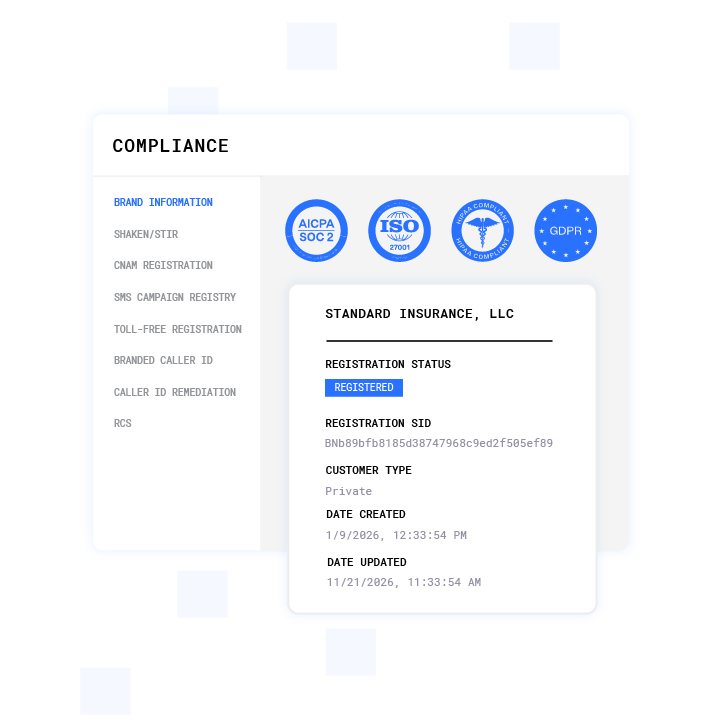
AI compliance infrastructure costs for mid-market companies often run $50,000 to $150,000 annually for monitoring, audits, and regulatory updates when built independently. Platforms with built-in compliance layers, like Plura’s Compliance Engine with pre-loaded enforcement of TCPA, DNC, HIPAA, and 50+ state rule sets, converts that variable cost into a fixed platform cost that scales with volume rather than headcount.1
5. Three-Phase Rollout with ROI at Each Stage
Enterprise AI contact center deployments that reach the strongest ROI typically follow a phased implementation model. Each phase delivers measurable returns before the next phase begins, which reduces deployment risk and accelerates payback.
Phase 1: Analytics and QA Automation (Months 1-2)
The first phase deploys conversation intelligence and automated QA scoring across existing call volume. Manual QA typically covers 2-5% of interactions, while automated scoring covers 100%. NICE CXone’s 2026 benchmark documents QA automation as a standalone value driver that redirects QA staff to coaching and reduces compliance incident costs in regulated industries.4
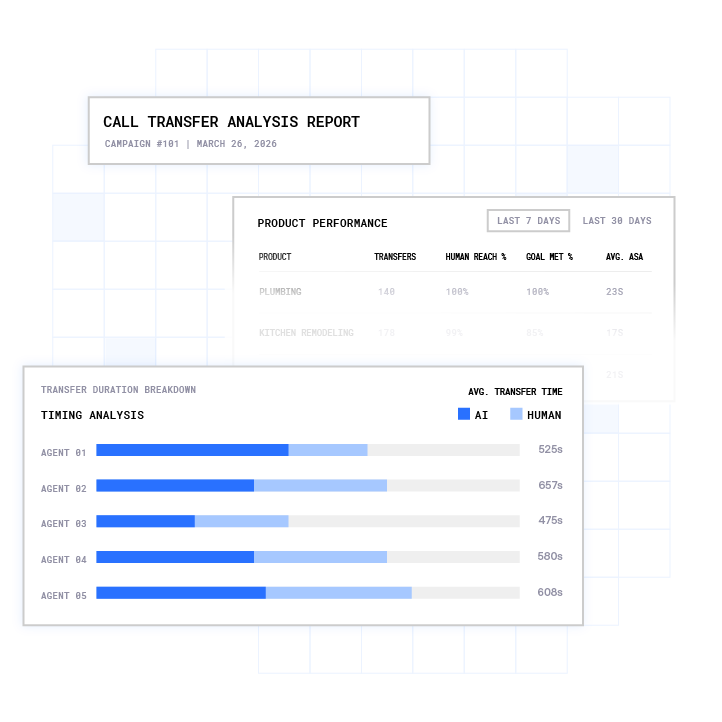
ROI at this stage comes from three connected outcomes. Automated QA scoring across 100% of interactions identifies which 40-70% of call volume is Tier 1 and automatable. This analysis establishes the baseline cost-per-contact that will measure savings in Phase 2 and Phase 3. Conversation intelligence also surfaces script and objection patterns that improve human agent conversion before AI agents go live.
Phase 2: Agent Assist (Months 2-4)
The second phase deploys AI assistance for human agents, including real-time knowledge retrieval, automated after-call work, and AI-generated context summaries passed forward during escalation. A 2023 NBER study of 5,179 customer service agents found a 14% average productivity gain in issues resolved per hour from AI assistance, rising to 34% for the newest agents. AHT reductions of 25-40% are documented at this phase, which increases effective agent capacity without new hiring. NICE CXone’s Copilot benchmark shows AHT reduction equivalent to 35% additional headcount capacity.
Phase 3: Voice and Chat Automation (Months 3-6)
The third phase deploys AI voice agents and AI webchat for full Tier 1 containment. This phase unlocks the largest ROI pool. At automated resolution rates on Tier 1 calls, a high-volume contact center can eliminate a substantial portion of human-handled interactions each month. Savings accrue on every contained call, which produces significant monthly and annual impact.
Plura’s AI Predictive Dialer and AI SMS channels also activate in this phase for outbound lead response. Sub-5-second contact replaces the industry-standard 47+ hour response time and recaptures revenue that previously leaked from slow follow-up.
6. How to Model Your Own ROI
A defensible ROI model for AI call center automation uses seven inputs that most teams can pull from existing reporting without a vendor engagement.
- Monthly inbound call volume (N): Total calls handled, including abandoned calls and voicemails that represent missed revenue.
- Average handle time in minutes (T): The industry benchmark is 6-8 minutes per interaction. Use your actual ACD (automatic call distributor) data.
- Fully loaded cost per human-handled call (Cₕ): Industry benchmarks place this at $5.50-$11.00 for inbound, while outbound runs $6.00-$12.00.
- AI containment rate (R): A conservative baseline is 40-50% for general inbound. Rates of 70-88% are achievable for high-volume routine inquiry types such as account balance, order status, and appointment scheduling.
- Current missed-call rate (M): The industry average is 25%. Franchise networks average 67% during peak hours.
- Average revenue value per converted inbound call (E): Use your actual close rate multiplied by average contract or transaction value.
- Regulatory risk adder: Estimate expected TCPA exposure based on outbound volume and current consent-management infrastructure. Consult qualified counsel for your specific situation.
The core formula is: Monthly savings = (N × T × R × (Cₕ − Cₐ)) + (N × M × E). Cₐ represents AI cost per minute, which typically ranges from $0.08 to $0.50 depending on platform and channel. Subtract monthly platform cost and amortized implementation cost to arrive at net monthly ROI. Divide total implementation cost by net monthly ROI to calculate payback period in months.
To apply this formula, you need realistic values for human and AI costs. The comparison table below shows how AI call center automation compares with offshore BPO and onshore human centers on the metrics that drive this model.
| Metric | AI Call Center Platform | Offshore BPO | Onshore Human Center |
|---|---|---|---|
| Cost per completed conversation | $0.35-$0.85 fully loaded | $5-$15 fully loaded | $5.50-$11.00 per inbound contact |
| Annual TCO (100-seat equivalent) | $300,000-$700,000 | ~$1.2M for 50-seat insurance team | $4M-$7M |
| FCC NPRM CG Docket No. 26-52 exposure | None (100% U.S. infrastructure by architecture) | High (proposed 30% cap; sensitive data prohibition) | None (domestic by definition) |
| Median payback period | 2.8-3.2 months (IDC 2025) | Not applicable (ongoing linear cost) | Not applicable (ongoing linear cost) |
Apply this formula to your operation using Plura’s ROI calculator.
Frequently Asked Questions
What payback period should I realistically expect from AI call center automation?
Payback period depends on monthly call volume, current fully loaded cost per human-handled interaction, and the AI containment rate your deployment achieves. IDC’s 2025 research places the median enterprise payback at 2.8 months for inbound voice AI. In high-cost-per-lead verticals like legal and insurance, payback can close in 30-45 days because a single recovered lead offsets weeks of platform costs. Most deployments reach ROI-positive status within 90-180 days. Plura’s annual contracts include a 90-day opt-out window, which keeps the deployment accountable to early performance.
How do I model deflection rate for my specific call mix?
Start by categorizing inbound call types into Tier 1 and Tier 2+. Tier 1 includes routine, transactional, low-ambiguity calls. Tier 2+ covers complex, sensitive issues that require judgment. Tier 1 call types such as appointment scheduling, order status, balance inquiries, FAQ resolution, and basic account changes often represent 40-70% of inbound contact volume in high-touch service businesses and deliver the fastest payback from voice AI automation.
Within Tier 1, specific call types like account balance inquiries and password resets can reach 90-98% containment rates. A conservative starting point uses a 40-50% blended containment rate across total volume. You can then adjust upward as deployment data accumulates. Plura’s conversation intelligence surfaces call-type distribution from your existing volume before any automation goes live, which gives you a data-driven containment estimate instead of a generic industry average.
How does FCC NPRM CG Docket No. 26-52 affect my net ROI calculation?
The FCC NPRM proposes a 30% cap on offshore customer-service calls and a prohibition on offshore handling of sensitive consumer data. For operators that rely on offshore BPO contracts, this proposal creates a compliance liability that belongs in the TCO of the offshore option. The regulatory risk adder reflects the probability-weighted cost of enforcement actions, contract renegotiation, and operational transition if the rule is finalized. State laws in New York, New Jersey, Connecticut, Missouri, and Florida already impose restrictions with active enforcement. Operators should consult qualified counsel on their specific exposure.
Platforms that run on 100% U.S. infrastructure by architecture, like Plura, remove this offshore dependency from the ROI model. There is no offshore footprint to remediate if the NPRM or state rules tighten.
What compliance infrastructure does Plura provide, and what remains my responsibility?
Plura’s Compliance Engine provides real-time DNC scrubbing against federal and state registries before every outbound contact, immutable TCPA consent logging with timestamped records, automated quiet-hours enforcement through time-zone detection, HIPAA-aligned encryption and audit logging for protected health information, SOC 2 Type II certification, ISO certification, and pre-loaded enforcement of 50+ state rule sets.1 Plura supports customer compliance. It does not replace customer responsibility for certifications, consent collection practices, or the claims they make to their own end users. Customers should consult qualified counsel for guidance on specific TCPA, HIPAA, or state-law obligations.
At what monthly call volume does AI call center automation generate enough ROI to justify the investment?
The practical floor for meaningful ROI is approximately 500 daily interactions or 5,000 per month in paid-media spend generating inbound volume. Below that threshold, the platform depth required for carrier-grade compliance, stateful omnichannel memory, and continuous conversation engineering may not generate enough savings to justify the build. Above that floor, the economics improve with volume. Higher call volumes see greater cost reductions using the same platform at the same per-interaction AI cost.
The fixed cost of compliance infrastructure, carrier licensing, and conversation engineering spreads across more interactions as volume grows. This dynamic explains why high-volume operators see the strongest returns.
Conclusion
AI call center automation now has a clear ROI track record. Independent Forrester TEI studies document strong three-year returns. IDC’s 2025 research places median enterprise payback at 2.8 months. Case studies across healthcare, financial services, e-commerce, and government show high containment rates on Tier 1 call volume with meaningful per-interaction cost reductions versus human-handled alternatives.
Four variables determine whether a specific deployment hits those benchmarks: containment rate, call volume, current cost-per-contact, and regulatory risk exposure. Offshore BPO contracts now carry a compliance liability under FCC NPRM CG Docket No. 26-52 and several active state onshoring laws that must be priced into any gross savings calculation. Onshore human centers carry linear cost scaling that makes peak-season volume difficult without months of advance hiring.
Plura operates as an FCC-licensed carrier on 100% U.S. infrastructure, with stateful conversation memory across voice, SMS, RCS, and webchat, and a built-in Compliance Engine that supports TCPA compliance, DNC compliance, HIPAA alignment, SOC 2 Type II certification, and 50+ state rule sets. The economics deliver the 10:1 cost advantage shown in the volume-based models above.
Book a live demo with Plura to see how the platform performs against your specific call volume, cost structure, and regulatory environment.
1 Plura AI maintains SOC 2, HIPAA, ISO, and GDPR posture as part of its platform infrastructure. References to compliance frameworks in this article describe Plura’s platform capabilities and do not constitute a guarantee that any customer using Plura will themselves be compliant with applicable laws or standards. Customers remain solely responsible for their own regulatory obligations, certifications, consent management, recordkeeping, and the claims they make to their own end users. Consult qualified legal counsel for guidance specific to your use case.
2 This article describes regulatory frameworks at a general level and does not constitute legal advice. Laws and regulations vary by jurisdiction, change over time, and apply differently depending on facts and circumstances. Readers should consult qualified legal counsel before making compliance decisions.
3 Performance figures, customer outcomes, and industry statistics referenced in this article are drawn from cited third-party sources or Plura customer case studies. Individual results vary based on implementation, use case, industry, audience, and execution. Past or aggregate performance is not a guarantee of future results.
4 References to third-party products, services, companies, or research are made for informational and comparative purposes only. Plura AI is not affiliated with, endorsed by, or sponsored by any third party named in this article unless explicitly stated. Trademarks and product names referenced remain the property of their respective owners.
This article is provided for informational purposes only and reflects Plura AI’s understanding at the time of publication. Product capabilities, integrations, and specifications are subject to change. For the most current information, visit plura.ai.
This article was produced with the assistance of AI tools and reviewed by Plura AI prior to publication.