

Written by: Matt Beucler, CEO, Plura AI
Key Takeaways
- HIPAA-aligned after-hours answering services sign a BAA, encrypt voice and message data, and deliver messages through secure channels.
- Plura AI operates as its own FCC-licensed carrier on 100% U.S. infrastructure and delivers HIPAA-aligned controls at roughly one-quarter the cost of live agents.
- Common HIPAA issues in phone communications include detailed PHI in voicemails, missing BAAs, and unencrypted message delivery.
- AI after-hours services provide 24/7 availability, consistent scripts, real-time EHR integration, and automatic tamper-resistant audit trails.
- Healthcare practices can use Plura AI’s AI voice agents to replace live agents while supporting all three core HIPAA requirements.
Core HIPAA Controls for After-Hours Call Answering
Any vendor handling patient calls after hours touches Protected Health Information (PHI). The following controls appear consistently across HHS HIPAA guidance and the HIPAA Security Rule at 45 CFR Part 164.2
HIPAA alignment for after-hours answering starts with the legal relationship. Every vendor that creates, receives, maintains, or transmits PHI on behalf of a covered entity qualifies as a Business Associate and requires a signed BAA before any patient data moves through their systems.
Once the BAA is in place, technical safeguards must protect PHI in motion and at rest. Transmission security typically uses TLS 1.2 or higher for signaling and SRTP for voice media streams. Data at rest, including call recordings, transcripts, voicemails, and stored metadata, commonly uses AES-256 encryption.
Access to PHI then narrows to the right people and the right data. Role-based access controls limit PHI access to personnel with a documented need for their specific function. The minimum-necessary standard means after-hours agents collect only essential fields for the workflow, such as name, callback number, and a brief concern, instead of full medical histories.
Every interaction also needs a traceable record. Tamper-resistant audit logs capture user identity, timestamp, resource accessed, and action taken, with retention for a minimum of six years per 45 CFR § 164.316(b)(2). Secure message delivery completes the picture, with on-call staff receiving messages through encrypted portals or HIPAA-aligned messaging platforms rather than standard SMS or unencrypted email. Documented breach notification procedures then define incident response and timelines aligned to the Breach Notification Rule at 45 CFR Part 164, Subpart D.
HIPAA Rules That Shape Phone-Based Patient Calls
Three HIPAA rules frame how phone-based patient communications are handled.2 Organizations should consult qualified counsel for guidance specific to their environment.
- Privacy Rule (45 CFR Part 164, Subparts A and E): This rule establishes the minimum-necessary standard. Voicemails and after-hours messages may include the practice name, callback number, and a generic reason such as “regarding your appointment.” They should not include diagnoses, test results, or treatment details.
- Security Rule (45 CFR Part 164, Subparts A and C): This rule describes technical safeguards such as access controls, audit controls, integrity controls, and transmission security for call recordings, transcripts, and SMS messages containing electronic PHI (ePHI). The proposed 2025 HHS Security Rule update, with finalization now expected in July 2027, converts several previously addressable safeguards into required controls.
- Breach Notification Rule (45 CFR Part 164, Subpart D): Covered entities must notify affected individuals, HHS, and, for incidents affecting 500 or more individuals, the media, when unsecured PHI is acquired, accessed, used, or disclosed without authorization. Notification is required no later than 60 days after discovery.
How AI After-Hours Answering Services Work
An AI after-hours answering service uses a software-based voice agent to handle inbound patient calls outside business hours without a live human operator. The agent follows a consistent, scripted workflow that mirrors your front-desk process.
- 24/7 availability: The agent answers every call on the first ring regardless of time, day, or holiday schedule.
- Structured intake: The agent collects minimum-necessary information such as name, callback number, and a brief concern, following a documented workflow instead of improvising.
- EHR and practice management integration: Platforms with real-time bidirectional integration can confirm appointment details, log call outcomes, and route messages directly into the patient record.
- Escalation protocols: Calls with clinical urgency indicators route immediately to on-call staff. Administrative calls are held for next-business-day follow-up or handled autonomously.
- HIPAA-aligned infrastructure: Aligned platforms sign a BAA, encrypt data in transit and at rest, maintain full audit trails, and operate on domestic infrastructure.
- Consistent script execution: AI voice agents run the approved script on every call with no drift between shifts.
Book a live demo with Plura to see how an FCC-licensed AI voice agent handles after-hours patient calls on 100% U.S. infrastructure.
Five Frequent HIPAA Issues in Phone-Based Communications
Several patterns recur in HHS Office for Civil Rights enforcement actions and industry analyses involving patient phone communications.
- Detailed PHI in voicemails: Including diagnoses, test results, or provider specialties in voicemail messages conflicts with the minimum-necessary standard. A safer pattern uses practice name, callback number, and a generic reason.
- Missing or unsigned BAA with the phone vendor: Operating without a BAA can create exposure even when no breach occurs. Practices typically obtain a signed BAA before the first call is accepted.
- Unencrypted message delivery: Sending PHI through standard SMS or unencrypted email does not align with transmission security expectations. Encrypted portals or HIPAA-aligned messaging platforms provide a more appropriate channel for on-call notifications.
- Identity verification gaps: Releasing patient information to an unverified caller creates risk of unauthorized disclosure. Many organizations use at least two data points, such as full name and date of birth, before sharing PHI.
- Absent or incomplete audit logs: Failure to log who accessed patient data and when appears frequently in OCR actions. Platforms that generate tamper-resistant, exportable audit logs retained for a minimum of six years per 45 CFR § 164.312(b) help support this requirement.
Leading HIPAA-Aligned After-Hours Answering Options for 2026
- Plura AI: FCC-licensed carrier with 100% U.S. infrastructure, signed BAA, AES-256 encryption at rest, TLS/SRTP in transit, full audit trails, SOC 2 and HIPAA-aligned controls, and stateful cross-channel memory across voice, SMS, RCS, and webchat. Detailed in the section below.
- MedReception.ai: Healthcare-focused AI receptionist with published HIPAA-compliant tiers. Pricing verified May 2026 starts at $495 per month for 500 AI minutes.4
- Goodcall: Standalone AI answering service starting at $79 per month per agent with flat monthly pricing and no per-minute charges.
- Rosie: Rosie AI answering service starts at $49 per month for 250 minutes on the Professional plan and has no HIPAA compliance on any plan.
- Nextiva Xbert: Nextiva XBert AI receptionist is $99 per month for 100 interactions.
- RingCentral AIR: RingCentral AIR HIPAA-compliant AI receptionist is $39 per month for 100 minutes (with per-minute overages) when bundled with a base RingCentral RingEX subscription.
- Allo: AI phone system with a built-in receptionist at $45 per user per month on the Business plan.
Why Plura AI Sits at the Top of This List
Most platforms in this category resell APIs on top of third-party CPaaS providers. They inherit the carrier’s compliance posture instead of owning it. Plura AI operates as its own FCC-licensed audio bridging carrier, so voice originates on domestic infrastructure, branded caller ID is issued at the carrier level, and compliance controls are enforced at origination instead of added later.
Three architecture decisions separate Plura from the field.
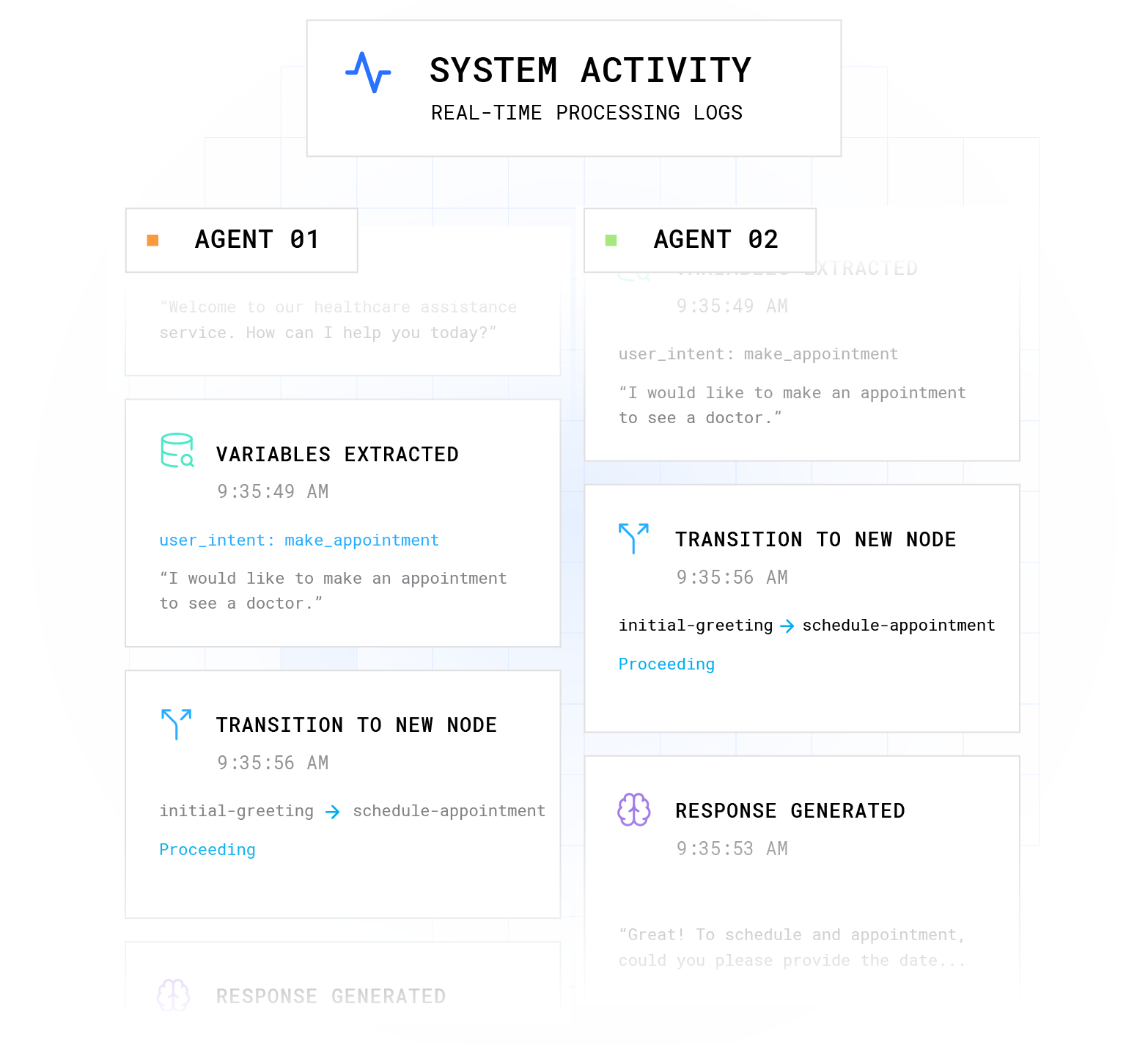
- Signed BAA and HIPAA-aligned infrastructure: Plura signs a BAA with covered entities and enforces end-to-end encryption, role-based access controls, and full audit logging across every channel. Every call handled by Plura’s AI voice agent is logged with user identity, timestamp, and action taken in a tamper-resistant audit trail.
- 100% U.S. infrastructure by design: Voice origination, model hosting, data storage, and call recording all sit on domestic infrastructure. This approach reduces exposure under the FCC NPRM CG Docket No. 26-52, state onshoring laws, and Florida’s medical-information offshoring ban.
- Stateful cross-channel memory: Plura’s Stateful Conversation Database keys every interaction to a patient token across voice, SMS, RCS, and webchat. A patient who texts at 9 a.m. is recognized when the call comes at noon, without requiring re-disclosure of PHI to re-establish context.
Plura also supports measurable reductions in no-shows through automated reminders and follow-up workflows, which directly affects revenue for practices with high appointment volumes.3
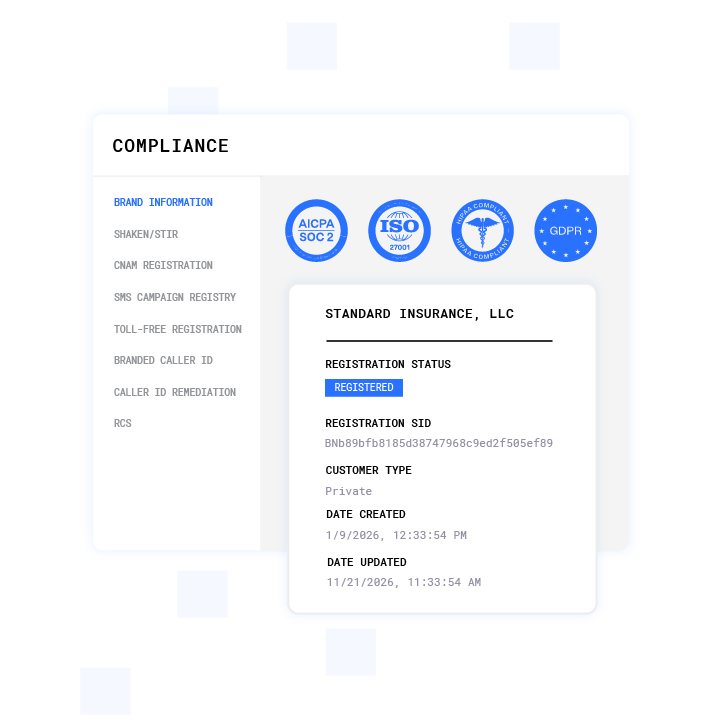
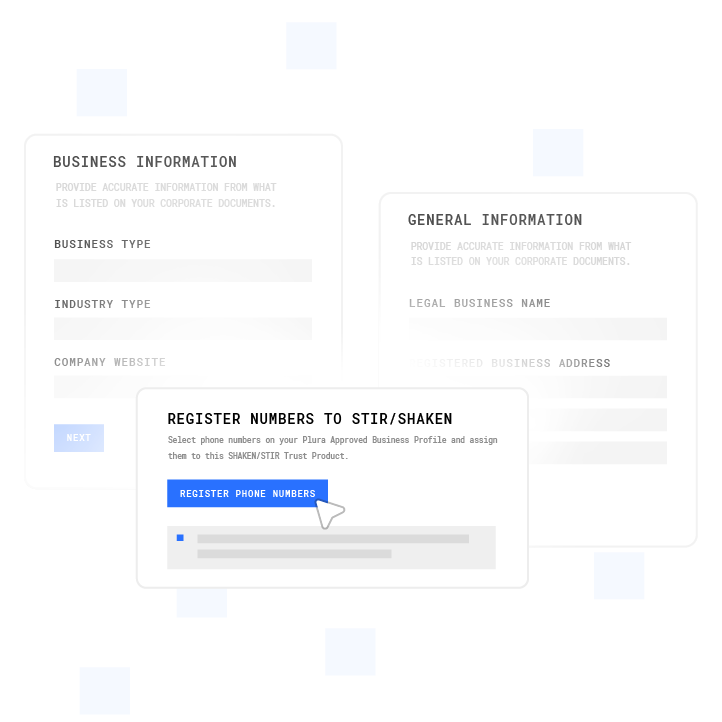
SOC 2 certification, ISO certification, HIPAA-aligned controls, and STIR/SHAKEN caller ID verification sit in the platform’s standard architecture, not in add-on tiers.1 See how Plura compares to Twilio-based API resellers and legacy live-agent services.4
Cost Comparison for After-Hours Coverage
| Model | Typical Monthly Cost (500 calls/month) | Cost Per Call | Infrastructure |
|---|---|---|---|
| Live-agent medical answering service | $400–$1,500 | Varies | Varies, offshore exposure common |
| AI answering service (general) | $25-$500 | Varies | Varies, often third-party CPaaS |
| Plura AI voice agent | See Plura pricing | Carrier-grade per-minute economics on owned FCC-licensed infrastructure | 100% U.S., FCC-licensed carrier |
For a 50-seat equivalent contact center, traditional offshore operations cost $35,000 to $50,000 monthly versus $8,000 to $15,000 monthly for AI contact centers.3 AI-powered overnight coverage replaces a significant portion of staffing costs for contact centers.
Run your numbers through Plura’s ROI calculator to see your cost savings in real time.
Operational Differences: Live-Agent vs AI Triage
Live-agent and AI triage workflows differ in consistency, escalation reliability, and coverage hours.
- Availability: Live agents work on shift schedules with coverage gaps during handoffs, holidays, and high-volume periods. AI voice agents provide 24/7/365 availability with no shift gaps.
- Script consistency: Human agents often drift from approved scripts between shifts and over time. AI agents execute the approved workflow on every call with no variation.
- Escalation protocols: Both models can route urgent calls to on-call staff. AI platforms with documented escalation logic route based on defined urgency indicators instead of relying on agent judgment under fatigue.
- Audit trail: Live-agent services vary in logging depth. AI platforms with HIPAA-aligned infrastructure generate automatic, tamper-resistant logs of every interaction.
- PHI handling: Live agents require documented HIPAA training and physical safeguards at every workstation, including remote home environments. AI platforms enforce PHI controls at the infrastructure level.
- Scalability: Live-agent capacity requires advance hiring. AI agents scale to peak call volume, such as flu season or post-holiday surges, without staffing lead time.
2026 Regulatory Shifts Affecting After-Hours Answering
Several 2026 regulatory developments influence after-hours call answering infrastructure decisions for healthcare organizations. The FCC NPRM CG Docket No. 26-52 proposes capping offshore customer-service calls at 30% and limiting offshore handling of sensitive consumer data. Florida’s medical-information offshoring ban already restricts offshore handling of patient data at the state level.
The proposed 2025 HHS Security Rule update, with finalization now expected in July 2027, converts several previously addressable safeguards into required controls. The Keep Call Centers in America Act (S.2495) and the Foreign Robocall Elimination Act (S.2666) extend the federal regulatory perimeter further. Healthcare organizations should consult qualified legal counsel to assess how these developments apply to their vendor relationships and infrastructure choices.
How Plura Supports HIPAA-Aligned After-Hours Answering
After-hours HIPAA-aligned answering solutions typically satisfy three core requirements: a signed BAA, encryption in transit and at rest, and secure message delivery to on-call staff. Legacy live-agent services often introduce offshore exposure, inconsistent script execution, and variable audit trail depth. Many AI alternatives act as API resellers and inherit a third-party carrier’s compliance posture instead of owning it.
Plura AI’s architecture supports all three requirements on 100% U.S. infrastructure, with an FCC-licensed carrier stack, SOC 2 certification, HIPAA-aligned controls, full audit trails, and stateful cross-channel memory across voice, SMS, RCS, and webchat. For healthcare practices handling 500 or more daily patient interactions, the cost and compliance case for AI-powered after-hours call answering is direct.
Run your numbers through Plura’s ROI calculator to see your cost savings in real time.
Compare plans and rates side by side at Plura pricing.
Frequently Asked Questions
Does an AI after-hours answering service need a BAA to handle patient calls?
Any vendor that creates, receives, maintains, or transmits Protected Health Information on behalf of a covered entity qualifies as a Business Associate under HIPAA and typically requires a signed Business Associate Agreement before patient data moves through their systems. This description applies to AI voice platforms, telephony carriers, speech-to-text processors, and cloud storage layers in the processing chain. Operating without a BAA can create HIPAA exposure even if no breach occurs. When evaluating an AI after-hours answering service, practices often request the BAA before go-live and confirm that the vendor’s subcontractors, including the underlying telephony carrier and model infrastructure, are also covered. Organizations should consult qualified legal counsel to assess their specific obligations.
What encryption standards apply to after-hours medical call recordings and transcripts?
HIPAA’s Security Rule at 45 CFR Part 164 describes technical safeguards including transmission security and integrity controls for electronic PHI. Many healthcare organizations use TLS 1.2 or higher for signaling, SRTP for voice media streams, and AES-256 for data at rest, including call recordings, voicemail files, transcripts, and stored metadata. The proposed 2025 HHS Security Rule update, with finalization now expected in July 2027, converts several previously addressable safeguards into required controls.
Audit logs covering access to recordings are typically encrypted and retained for a minimum of six years per 45 CFR § 164.316(b)(2). Practices often verify that their answering service vendor documents key management procedures and can demonstrate encryption coverage across all storage layers. Consult qualified legal counsel for guidance specific to your organization.
How does 100% U.S. infrastructure affect HIPAA considerations for after-hours call answering?
HIPAA’s Security Rule expects covered entities to conduct a risk analysis of their telephony stack, including where ePHI travels and persists. Vendors with offshore infrastructure or foreign subprocessors can introduce regulatory exposure under the FCC NPRM CG Docket No. 26-52, which proposes limits on offshore handling of sensitive consumer data, and under Florida’s medical-information offshoring ban.
Platforms running on 100% U.S. infrastructure reduce this exposure by design instead of relying solely on contractual promises. For healthcare organizations, this approach keeps voice origination, model hosting, data storage, and call recording on domestic infrastructure, which can simplify risk analysis and reduce the vendor-management burden associated with subprocessor BAA coverage. Organizations should consult qualified legal counsel to assess how specific regulatory developments apply to their vendor relationships.
What is the cost difference between a live-agent medical answering service and an AI alternative in 2026?
As detailed in the cost comparison section above, live-agent services at the 500-call-per-month level typically run several times higher than AI alternatives. At contact center scale, traditional offshore operations for a 50-seat equivalent center often cost more than double an AI contact center with comparable coverage. HIPAA-related infrastructure usually adds a premium to live-agent rates, while AI platforms with built-in controls include those costs in the platform design. The gap widens further when practices factor in no-show reduction, where Plura supports improvements through automated reminders and follow-up workflows.
What escalation protocols should a HIPAA-aligned AI after-hours answering service include?
A documented escalation protocol for after-hours calls usually defines at least three tiers in writing before service go-live. Routine messages route for next-business-day follow-up. Urgent calls route to an on-call nurse line. Emergent calls route directly to the on-call physician.
For multi-physician rotating schedules, the service maintains an up-to-date on-call roster and a documented failover protocol that escalates to alternate contacts if the primary on-call physician does not respond within a defined window. AI platforms with HIPAA-aligned infrastructure enforce these routing rules consistently on every call instead of relying on agent judgment under fatigue or shift-change conditions.
Practices also typically confirm that the platform includes specific routing logic for 988 Suicide and Crisis Lifeline calls and other urgent clinical escalations so those callers do not remain in a non-clinical AI loop. Organizations should consult qualified legal counsel and clinical leadership when designing escalation workflows for their specific patient population.
1 Plura AI maintains SOC 2, HIPAA, ISO, and GDPR posture as part of its platform infrastructure. References to compliance frameworks in this article describe Plura’s platform capabilities and do not constitute a guarantee that any customer using Plura will themselves be compliant with applicable laws or standards. Customers remain solely responsible for their own regulatory obligations, certifications, consent management, recordkeeping, and the claims they make to their own end users. Consult qualified legal counsel for guidance specific to your use case.
2 This article describes regulatory frameworks at a general level and does not constitute legal advice. Laws and regulations vary by jurisdiction, change over time, and apply differently depending on facts and circumstances. Readers should consult qualified legal counsel before making compliance decisions.
3 Performance figures, customer outcomes, and industry statistics referenced in this article are drawn from cited third-party sources or Plura customer case studies. Individual results vary based on implementation, use case, industry, audience, and execution. Past or aggregate performance is not a guarantee of future results.
4 References to third-party products, services, companies, or research are made for informational and comparative purposes only. Plura AI is not affiliated with, endorsed by, or sponsored by any third party named in this article unless explicitly stated. Trademarks and product names referenced remain the property of their respective owners.
This article is provided for informational purposes only and reflects Plura AI’s understanding at the time of publication. Product capabilities, integrations, and specifications are subject to change. For the most current information, visit plura.ai.
This article was produced with the assistance of AI tools and reviewed by Plura AI prior to publication.