
Written by: Matt Beucler, CEO, Plura AI
Key Takeaways
- Outbound B2B connect rates sit at 4-6%, so manual dialing no longer scales for high-volume teams.3,4
- An AI power dialer removes idle time between calls and can lift talk time from roughly 15-20 minutes to 40-50 minutes per hour.3
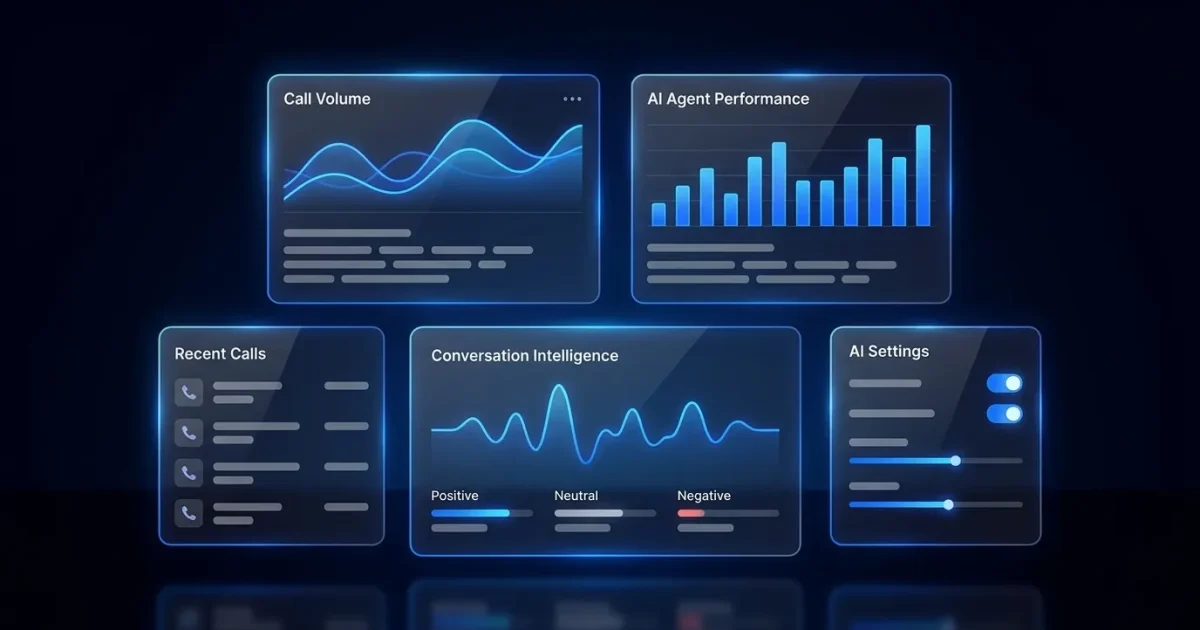
- Conversation intelligence transcribes, analyzes, and surfaces real-time coaching insights from every live sales interaction.
- Running both together compounds results through higher connect rates, smarter lead prioritization, and measurable pipeline growth.
- Plura AI unifies AI Predictive Dialer and AI Conversation Intelligence on one FCC-licensed platform; see the integrated system in a live demo.
How an AI Power Dialer Handles High-Volume Outbound
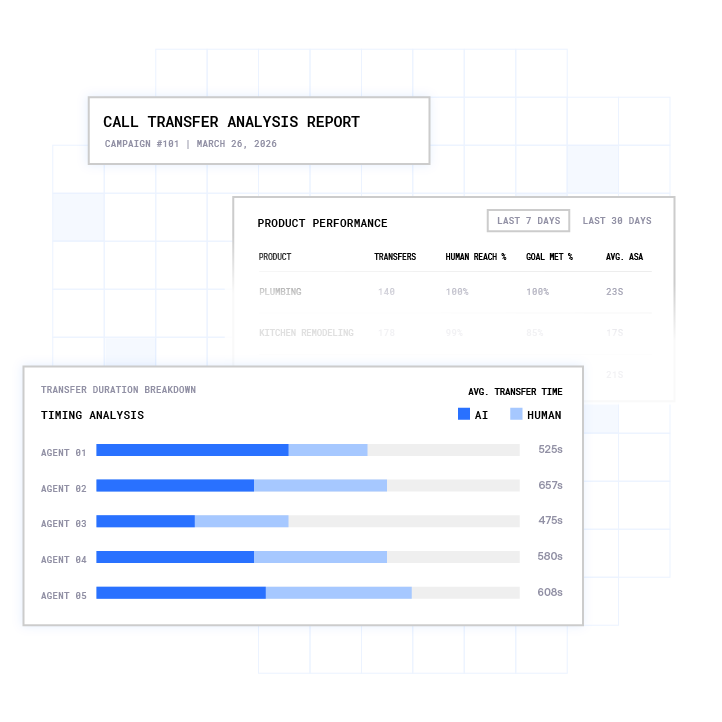
A power dialer automatically moves to the next number the moment a rep becomes available. This removes the dead time that manual dialing creates between calls. Manual dialing typically produces 15-20 minutes of talk time per rep per hour. A power dialer can increase that to 40-50 minutes per hour by cutting out time spent dialing, waiting for rings, and leaving individual voicemails.
The distinction between dialer types matters operationally.
- Power dialer: Dials one number per available rep in sequence. A live answer always reaches a human. This design produces zero abandoned calls.
- Predictive dialer: Uses pacing algorithms to dial multiple numbers ahead of agent availability. This approach maximizes occupancy and introduces abandoned-call risk that is subject to the FCC’s 3% abandoned call cap under 47 CFR 64.1200.2
- Progressive dialer: Places exactly one call per ready agent. This is the most controlled automated mode and keeps abandonment near zero.
The AI layer adds lead prioritization on top of these mechanics. Instead of working a static list in order, Plura’s AI Predictive Dialer uses stateful conversion signals such as historical answer rates, prior negotiation outcomes, and offer-acceptance bands to decide who to call next. McKinsey’s 2025 B2B Sales report found that AI-prioritized call lists improve connect rates by 28% compared to static lists, which can translate into 15-20 additional live conversations per rep per week.3,4 Plura typically has the phone ringing in under 5 seconds from the moment a rep becomes available.
How Conversation Intelligence Turns Calls Into Data
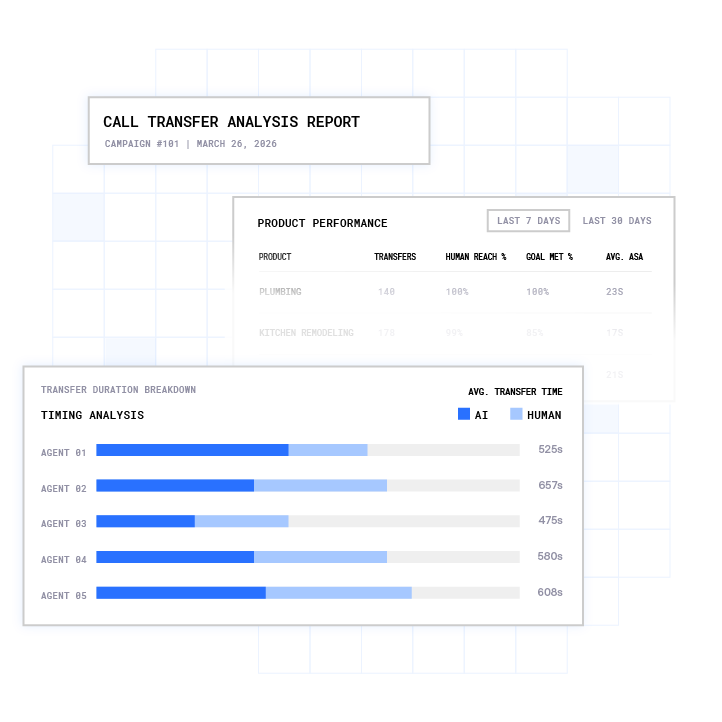
Conversation intelligence uses AI to analyze calls in real time and after the call. It extracts patterns that would otherwise require a manager to listen to hundreds of recordings. The pipeline runs in four stages: recording, transcription with speaker diarization, NLP-powered analysis, and delivery of insights into the tools teams already use.
The core analytical outputs include:
- Real-time transcription: Live, speaker-labeled text of the conversation that reps and managers can see during the call.
- Sentiment analysis: Tone and emotion detection that flags shifts in prospect engagement mid-call.
- Keyword and topic detection: Flags competitor mentions, objection patterns, pricing discussions, and compliance-sensitive language.
- Talk-to-listen ratio: Benchmarks rep behavior against patterns from top performers.
- Post-call summaries and CRM write-back: Forrester estimates that AI-powered post-call automation saves reps 23 minutes per day, which teams can reclaim as selling time.3,4
Plura’s AI Conversation Intelligence analyzes every interaction across voice, SMS, RCS, and webchat. It surfaces patterns such as which scripts close, which objections recur, and which conversion paths win. The system generates client-ready reports automatically and feeds findings back into workflow tuning.
Watch AI Conversation Intelligence on a live call to see how it supports managers and reps in real time.
Compounded Impact of Dialer plus Conversation Intelligence
The dialer increases the number of conversations. Conversation intelligence improves the quality of those conversations. Together, they create a compounding effect. Here is how that shows up in daily operations:
- Increased talk time and connect rates. Eliminating manual dialing and dead ends lifts talk time to the higher range described earlier. That increase in talk time is why Plura customers report 47% average pipeline growth.3 For example, a solar company using Plura’s AI Lead Intelligence increased conversion rates from 6% to 18% with the same leads and offer.3
- Real-time coaching and script improvement. Live prompts and objection-handling cues help reps navigate difficult conversations. Gartner’s 2025 Sales Technology Survey found that teams using real-time coaching tools see a 19% improvement in quota attainment within the first quarter of adoption.3,4
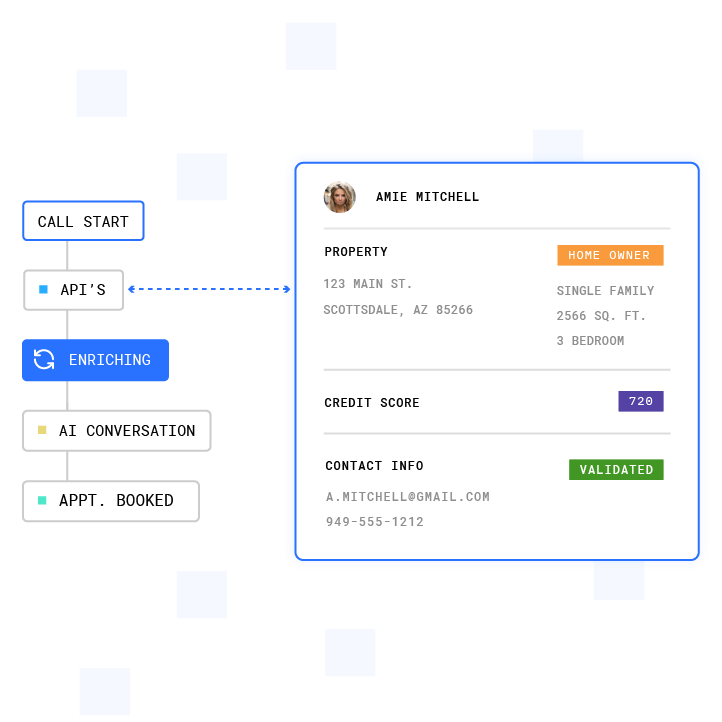
- Data-driven lead prioritization. Plura’s AI Lead Intelligence scores and ranks leads in real time using behavioral signals, conversation context, and predictive intent modeling. Reps spend more time with contacts that show higher likelihood to convert.
- Reduced idle time. Automated dialing keeps reps in conversation instead of waiting. Plura’s AI Predictive Dialer typically has the phone ringing in under 5 seconds from rep availability.
- Compliance monitoring on every call. Conversation intelligence flags compliance-sensitive language automatically. Plura supports TCPA compliance and DNC compliance with real-time scrubbing, immutable consent logging, and quiet-hours enforcement.2 Teams should consult qualified counsel for their specific obligations under applicable law.
The compounding effect drives the outcome. A Marketing Director reported, “We went from spending 60% of our time trying to contact leads to spending 90% of our time closing them.”
Choosing an AI Power Dialer with Conversation Intelligence
Several selection criteria matter most for high-volume outbound operators.
- Team size and calling motion. For 1-20 reps on B2B named accounts, power dialing at 2-3 lines usually fits the motion. Predictive dialing is designed for 50 or more agents on high-volume consumer lists.
- CRM integration depth. Native two-way sync usually outperforms a general-purpose automation bridge. Plura’s CRM integration includes Salesforce, HubSpot, and Zoho, and the platform connects with more than 50 tools.4
- Compliance infrastructure. Look for built-in DNC scrubbing, TCPA compliance support, SHAKEN/STIR caller ID verification, and audit-ready consent logging as platform-level features. Teams should consult qualified counsel for their specific regulatory obligations.
- Carrier ownership. Many AI voice platforms resell third-party CPaaS via API. Plura operates as its own FCC-licensed audio bridging carrier. Branded caller ID is issued at the carrier level and compliance enforcement occurs before the call leaves the network.
- Conversation intelligence integration. The dialer and analytics layer should share the same data. Platforms that treat them as separate products create reporting blind spots and force manual reconciliation.
- Pricing and scalability. Review Plura’s plans and rates for transparent per-tier pricing with a 90-day opt-out window on annual contracts.
For high-volume operators, Plura adds stateful conversation memory across voice, SMS, RCS, and webchat. A lead who texted at 9 a.m. is the same lead when the call lands at noon. The AI already knows what was said, what was offered, and which objections came up. That context compounds with every interaction.
Schedule a demo to see this workflow on your team and watch AI Predictive Dialer and AI Conversation Intelligence operate as one system.
Implementation Best Practices for Outbound Teams
Most deployment failures in this category come from process gaps rather than technology issues. The following practices reduce implementation risk.
- Start with a pilot team of 2-3 top reps for two weeks. Track call volume, connect rate, and conversion rate before and after. A controlled pilot surfaces edge cases before they affect the full floor.
- Fix the lead list before deploying the dialer. A clean list of 500 warm prospects outperforms a sloppy list of 5,000 cold ones, especially since B2B contact data decays at roughly 30% per year.
- Define clear KPIs before go-live. Talk time per hour, connect rate, conversion rate, and time-to-first-contact give a 30-day view of ROI.
- Train managers on conversation intelligence for coaching. Rolling out to reps before training managers is a common implementation mistake. Managers who understand call scoring and sentiment data drive adoption. Managers who treat it primarily as a surveillance tool usually see resistance.
- Iterate on scripts based on conversation analytics. Data from every call shapes what the next call sounds like. This compounding advantage does not appear when dialers and conversation intelligence tools run separately.
- Avoid automating broken workflows. A faster dialer running a weak qualification script simply produces more low-quality conversations per hour.
Run your numbers through Plura’s ROI calculator to compare projected savings against your current outbound economics.
Frequently Asked Questions
What is an AI power dialer?
An AI power dialer is outbound calling software that automatically dials the next number on a list the moment a rep becomes available. This removes idle time between calls. The AI layer adds lead prioritization by deciding which contact to call next based on behavioral signals and historical conversion data. It also handles post-call tasks such as transcription, CRM logging, and follow-up triggers. A power dialer calls one number per available rep, so a live answer always reaches a human and abandoned calls stay at zero by design.
How does conversation intelligence work?
Conversation intelligence records and transcribes sales calls using AI. It then applies natural language processing to detect sentiment, flag keywords, measure talk-to-listen ratios, and identify objection patterns. The output includes real-time coaching prompts during live calls, post-call summaries, call quality scores, and aggregate analytics that show which scripts close deals and which objections recur most often. The most effective implementations connect conversation intelligence directly to CRM records and dialer workflows so insights move into action automatically instead of sitting in a separate reporting dashboard.
Is an AI power dialer TCPA compliant?2
TCPA compliance depends on the platform’s architecture and on how teams configure and use it. Plura supports TCPA compliance through real-time DNC scrubbing applied before every outbound contact, immutable consent logging with timestamps, automated quiet-hours enforcement through time-zone detection, and SHAKEN/STIR caller ID verification on every outbound call. These capabilities operate at the platform level. Customers remain responsible for their own compliance obligations and should consult qualified counsel for guidance on their specific use cases and applicable regulations.
How much does an AI power dialer with conversation intelligence cost?
Pricing varies by vendor, feature set, and volume. Standalone conversation intelligence platforms from enterprise vendors can exceed $1,000 per user per year, and that cost sits on top of a separate dialer subscription. Platforms that integrate both capabilities in one system can reduce total cost of ownership by removing integration overhead and duplicate data. Plura offers transparent pricing on its plans and rates page with a 90-day opt-out window on annual contracts. The illustrative scenario on Plura’s ROI calculator shows a 15-agent operation saving $45,600 in the first 30 days by replacing manual outbound economics with AI-driven talk utilization.3
What is the difference between a power dialer and a predictive dialer?
A power dialer calls one number per available rep and waits until the rep is free before dialing the next number. A live answer always reaches a human, and abandoned calls stay at zero by design. A predictive dialer uses a statistical pacing algorithm to dial multiple numbers ahead of agent availability, then connects the first live answer to the next available rep. This approach produces more live conversations per agent hour and introduces abandoned-call risk. The FCC references a 3% cap on abandoned calls per campaign over a 30-day period under 47 CFR 64.1200.2 Predictive dialing typically fits teams of 50 or more agents on high-volume consumer lists with dedicated compliance monitoring. Many B2B outbound teams under 20 reps see better fit with power dialing.
Conclusion
Outbound teams winning in 2026 focus on the right dials with the right context and turn every conversation into data that improves the next one.5 An AI power dialer increases conversation volume. Conversation intelligence improves conversation quality. Integrated on a single platform with stateful memory, these capabilities compound into higher talk time, stronger coaching, and measurable pipeline growth.
Plura delivers both capabilities on an FCC-licensed carrier with SOC 2, HIPAA, and ISO certification support, SHAKEN/STIR caller ID verification, and built-in TCPA compliance and DNC compliance infrastructure.1 The platform reports 3x average ROI in 90 days for high-volume outbound operators.3
Compare plans and rates side by side. Run your numbers through Plura’s ROI calculator to check projected savings in real time. Or see the integrated system on a live outbound workflow with a tailored demo.
1 Plura AI maintains SOC 2, HIPAA, ISO, and GDPR posture as part of its platform infrastructure. References to compliance frameworks in this article describe Plura’s platform capabilities and do not constitute a guarantee that any customer using Plura will themselves be compliant with applicable laws or standards. Customers remain solely responsible for their own regulatory obligations, certifications, consent management, recordkeeping, and the claims they make to their own end users. Consult qualified legal counsel for guidance specific to your use case.
2 This article describes regulatory frameworks at a general level and does not constitute legal advice. Laws and regulations vary by jurisdiction, change over time, and apply differently depending on facts and circumstances. Readers should consult qualified legal counsel before making compliance decisions.
3 Performance figures, customer outcomes, and industry statistics referenced in this article are drawn from cited third-party sources or Plura customer case studies. Individual results vary based on implementation, use case, industry, audience, and execution. Past or aggregate performance is not a guarantee of future results.
4 References to third-party products, services, companies, or research are made for informational and comparative purposes only. Plura AI is not affiliated with, endorsed by, or sponsored by any third party named in this article unless explicitly stated. Trademarks and product names referenced remain the property of their respective owners.
5 This article contains forward-looking statements regarding industry trends, technology adoption, and future capabilities. These statements reflect current expectations and are subject to change. Plura AI undertakes no obligation to update forward-looking statements except as required.
This article is provided for informational purposes only and reflects Plura AI’s understanding at the time of publication. Product capabilities, integrations, and specifications are subject to change. For the most current information, visit plura.ai.
This article was produced with the assistance of AI tools and reviewed by Plura AI prior to publication.