85% of missed callers never call back, per CallRail benchmark data.4
Every minute between a missed call and the first response increases the chance that the caller moves to a competitor. After just 5 minutes, the odds of successfully contacting a lead drop by 10 times, based on InsideSales.com and MIT research across more than 15,000 leads.4 Speed is the mechanism of missed call recovery, not a differentiator.
Franchises average a 67% missed call rate during peak hours. For high-volume operators running 500 or more daily interactions, that rate creates a recurring revenue leak. Manual text-back stays inconsistent and slow at scale. A repeatable system creates predictable recovery.
7 Practical Missed Call Recovery Best Practices
Respond within 60 seconds via automated SMS – an instant text-back catches the caller before they move to a competitor.
Use a conversational, personalized message – write like a human, not a ticketing system, because robotic copy hurts response rates.
Include a clear call to action – invite a reply, a booking, or a callback with one low-friction next step.
Follow up with a phone call within minutes – SMS opens the conversation, and a voice call advances or closes it.
Integrate with your CRM to track and route leads – every recovered call becomes a tracked lead with full context.
Support compliance with A2P 10DLC and TCPA – register business texting, honor opt-outs, and respect quiet hours.1
Book a live demo with Plura to see this workflow running end-to-end on a single platform.
Designing the Automated SMS: Templates and Rules
The first text-back message has one job: acknowledge the missed call and give the caller a single, low-friction next step. Because the caller already initiated contact, the message should help them continue that conversation rather than introduce a new sales pitch. To keep delivery reliable, keep every message under 160 characters so it sends as a single SMS segment. Structure the message to identify your business, acknowledge the miss, and end with one clear action.
During Business Hours
“Hi, this is [Business Name]. Sorry we missed your call, we’re with another customer. Text us what you need or we’ll call you back within 30 minutes.”
After Hours
“Thanks for calling [Business Name]! We’re closed right now but got your call. We’ll reach out first thing tomorrow. Need urgent help? Reply URGENT.”
No Answer on Callback
“Hi [Name], this is [Business Name] following up on your call. Want to book a time that works for you? Reply YES and we’ll send a link.”
Send booking links only after the lead replies to the initial text. Keep message content aligned with the registered campaign description to support deliverability. Avoid shortened URLs in the first message, since carriers may flag them on unknown numbers.
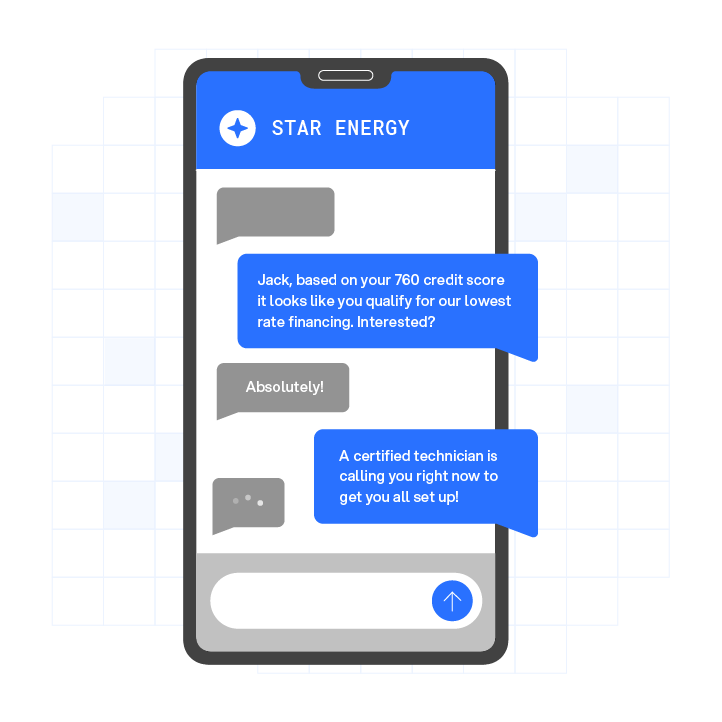
Plura’s AI SMS sends these messages instantly and can qualify leads via text-to-call. The system moves the conversation from text to a live voice connection without manual intervention.
Plura SMS enables personalized AI-powered text messaging with real-time customer engagement, automation, and conversational workflows.
A recovered lead creates value only when it reaches the right person with the right context. When an AI voice agent qualifies a caller and identifies a high-intent buyer, the handoff to a human should include the conversation summary, qualification notes, urgency level, and service need. This structure keeps the customer from repeating themselves.
Plura’s stateful conversation database holds context across every channel. An agent who texted a lead at 9 a.m. can pick up the call at noon already knowing what was said. That context transfers to the human rep on a live transfer, so the handoff feels like continuity rather than a reset.
For CRM routing, Plura integrates with HubSpot, Salesforce, Zoho, and 50+ other tools.4 Every recovered call becomes a tracked lead with source, service need, urgency, and next action logged automatically. Plura’s conversation intelligence then generates reports from these interactions, giving operations leaders visibility into recovery performance without manual data entry.
Measuring Recovery Performance: KPIs and Tracking
A missed call recovery program without measurement behaves like a cost center instead of a revenue system. The tracking framework follows a simple path: missed calls received, texts sent, replies received, bookings made, and revenue attributed.
Benchmark values drawn from industry sources:
Response rate: 25-45% is a solid benchmark for text-backs that receive a reply or result in a booking.3
Booking rate: 15-30% of missed calls converting to a booked appointment is a realistic target.
Speed-to-lead: Under 60 seconds from missed call to first text sent.
Revenue recovered: Tracked monthly as booked-job value attributed to the recovery workflow.
Core KPIs for missed-call recovery include time to first response, callback answer rate, recovery rate, qualification rate, human handoff rate, and booking rate. Report median response time instead of average, since outliers skew averages and hide the real distribution.
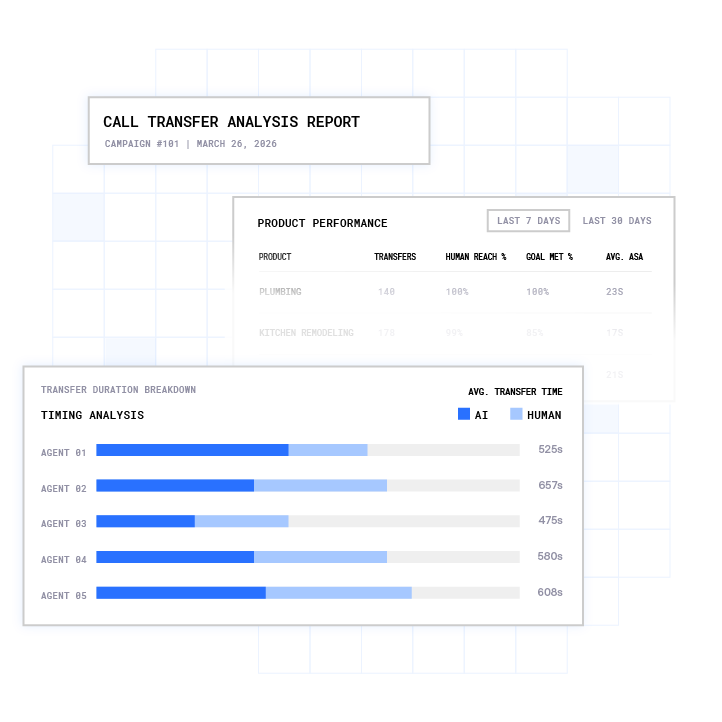
Plura’s conversation intelligence surfaces these metrics from every interaction across voice, SMS, and webchat, so the weekly scorecard builds itself.
Plura Conversation Intelligence gives businesses AI-powered analytics, call transfer tracking, and customer interaction insights across every conversation.
Book a live demo with Plura to see how the reporting layer connects recovery activity to booked revenue.
Compliance: A2P, TCPA, and Quiet Hours
Business texting in the United States operates under two parallel frameworks that both apply to missed call recovery workflows.2 Operators should consult the relevant regulations and qualified counsel for guidance specific to their situation.
TCPA:TCPA requires prior express written consent before sending automated marketing texts.2 A missed call text-back is generally classified as transactional because the caller initiated contact, which establishes a different basis for the reply than outbound marketing. Operators should consult qualified counsel on how this distinction applies to their specific workflows.
Plura’s platform supports compliance with real-time DNC (Do Not Call) scrubbing, immutable consent logging, and automated quiet-hours enforcement through time-zone detection.1 Plura supports customer compliance; customers remain responsible for their own regulatory obligations and the claims they make to their end users. Details are available at plura.ai/sms-guidelines.
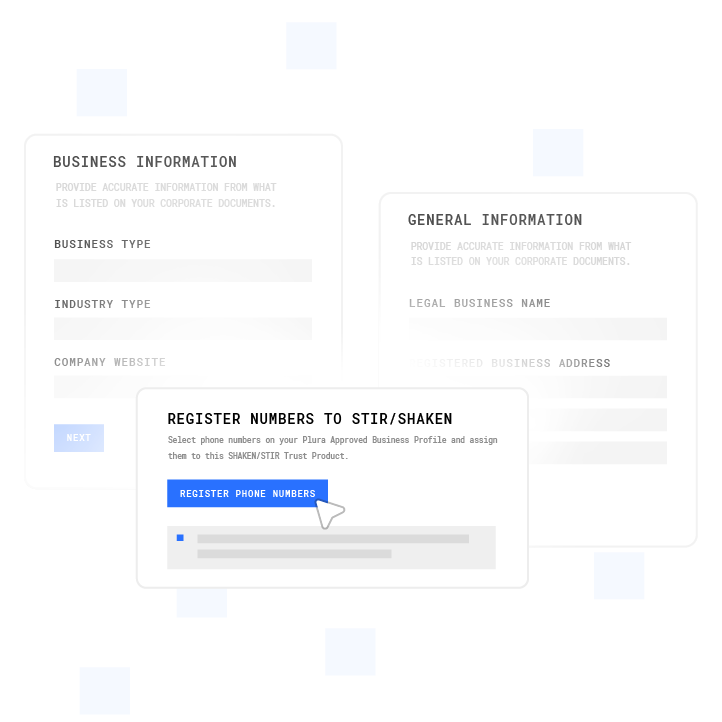
Plura’s FCC-licensed AI communications platform simplifies compliant business registration and phone number provisioning for AI Voice, SMS, RCS, and Webchat workflows.
Tools Comparison: Manual vs. AI-Powered Missed Call Recovery
With the compliance framework in place, operators can evaluate how automation changes the operational picture. The table below contrasts a manual text-back process with Plura’s AI-powered approach across speed, scalability, consistency, and compliance support.
Attribute
Manual Text-Back
AI-Powered (Plura AI)
Speed to first response
1-4 hours in manual operations
Under 60 seconds
Scalability
Linear, requires headcount per volume increase
Logarithmic, AI handles unlimited parallel conversations
Plura’s AI voice agents answer every call 24/7. Plura’s AI SMS sends instant text-backs. Both run on an FCC-licensed carrier with 100% U.S. infrastructure. Voice origination, model hosting, data storage, and call recording all sit on domestic infrastructure.
Conclusion and Next Steps for Operators
The seven best practices in this playbook form a complete recovery system: instant SMS, a structured callback cadence, CRM-integrated lead routing, KPI tracking, and compliance guardrails. The workflow performs only as reliably as the automation behind it. Manual processes break down at volume, during peak hours, after hours, and on weekends, which are the exact moments when high-intent callers tend to move to a competitor.
Plura’s platform executes this entire playbook automatically. AI SMS handles instant text-back, AI voice agents manage the callback cadence, CRM integration routes leads, and conversation intelligence powers KPI reporting. All of it runs on a single stateful platform with FCC-licensed carrier infrastructure.
What is the ideal response time for a missed call text-back?
The target is under 60 seconds from the moment the call goes unanswered to the moment the SMS lands on the caller’s phone. Industry research consistently shows that lead conversion rates drop sharply after the first 5 minutes, and the probability of making contact at all collapses after 30 minutes. For high-volume operations, hitting a sub-60-second response time on every missed call requires automation. Manual processes introduce variability based on who is available, what shift is running, and whether the rep noticed the missed call at all. An automated SMS workflow removes those variables and fires the same message, at the same speed, on every missed call regardless of time of day.
How does A2P 10DLC registration affect missed call text-back programs?
A2P 10DLC is the carrier registration framework that governs business SMS sent from 10-digit local phone numbers in the United States. All major U.S. carriers now block unregistered A2P traffic, so a missed call text-back program running on an unregistered number will face delivery failures regardless of message quality or consent documentation. Registration involves two steps through The Campaign Registry: brand registration, which identifies the business, and campaign registration, which describes the message use case and provides sample messages. Missed call text-back is typically registered as a transactional or customer care use case. Operators should consult qualified counsel and their SMS platform provider for guidance on registration requirements specific to their workflow. Plura’s platform supports compliance with 10DLC registration and enforces carrier requirements at the infrastructure level.
What KPIs should operators track for a missed call recovery program?
The core tracking framework runs from missed call to revenue: missed calls received, texts sent, replies received, bookings made, and revenue attributed. Within that funnel, the four most actionable KPIs are response rate, booking rate, speed-to-lead, and revenue recovered. Response rate measures the percentage of text-backs that receive a reply or result in a booking, with 25-45% as a solid benchmark. Booking rate measures the percentage of missed calls that convert to a booked appointment, with 15-30% as a realistic target. Speed-to-lead tracks time from missed call to first text sent, with under 60 seconds as the target. Revenue recovered is tracked monthly as booked-job value attributed to the recovery workflow. Operators should report median response time rather than average, since a handful of very slow responses can distort the average and obscure the real distribution. Plura’s conversation intelligence generates these reports automatically from every interaction across voice and SMS.
What is the difference between a transactional SMS and a marketing SMS in the context of missed call recovery?
The distinction affects how compliance frameworks apply, and operators should consult qualified counsel for guidance on their specific situation. In general terms, a transactional SMS responds to an action the recipient already took, such as calling a business. A marketing SMS initiates contact to promote a product or service. A missed call text-back is generally treated as transactional because the caller initiated contact by placing the call. That classification affects the consent standard that applies. Marketing SMS requires prior express written consent under the TCPA, while transactional messages operate under a different standard. The first missed call text-back should stay focused on acknowledging the call and offering a next step. Using the initial text-back as an entry point for promotional messaging changes the nature of the message and may affect the applicable compliance framework. Operators should avoid using a missed call reply as an entry point for unrelated marketing sequences without appropriate consent documentation.
How does Plura AI handle the human handoff in a missed call recovery workflow?
Plura’s AI voice agents qualify the caller during the recovery conversation, collecting intent, urgency, service need, and preferred next action. When the workflow identifies a hot lead, a complex inquiry, or an escalation trigger such as a high-value opportunity or a sensitive request, the agent executes a live transfer to a human rep. The transfer includes the full conversation summary, qualification notes, and urgency level, so the human picks up with complete context. The caller does not repeat themselves. This handoff model is supported by Plura’s stateful conversation database, which holds context across every channel. A lead that texted at 9 a.m. and called at noon is recognized as the same contact, with the same history, on both interactions. Operators can configure escalation rules, routing logic, and CRM logging through Plura’s no-code workflow builder, and review all handoff activity through the unified inbox.
1 Plura AI maintains SOC 2, HIPAA, ISO, and GDPR posture as part of its platform infrastructure. References to compliance frameworks in this article describe Plura’s platform capabilities and do not constitute a guarantee that any customer using Plura will themselves be compliant with applicable laws or standards. Customers remain solely responsible for their own regulatory obligations, certifications, consent management, recordkeeping, and the claims they make to their own end users. Consult qualified legal counsel for guidance specific to your use case.
2 This article describes regulatory frameworks at a general level and does not constitute legal advice. Laws and regulations vary by jurisdiction, change over time, and apply differently depending on facts and circumstances. Readers should consult qualified legal counsel before making compliance decisions.
3 Performance figures, customer outcomes, and industry statistics referenced in this article are drawn from cited third-party sources or Plura customer case studies. Individual results vary based on implementation, use case, industry, audience, and execution. Past or aggregate performance is not a guarantee of future results.
4 References to third-party products, services, companies, or research are made for informational and comparative purposes only. Plura AI is not affiliated with, endorsed by, or sponsored by any third party named in this article unless explicitly stated. Trademarks and product names referenced remain the property of their respective owners.
This article is provided for informational purposes only and reflects Plura AI’s understanding at the time of publication. Product capabilities, integrations, and specifications are subject to change. For the most current information, visit plura.ai.
This article was produced with the assistance of AI tools and reviewed by Plura AI prior to publication.