
Written by: Matt Beucler, CEO, Plura AI
Updated September 2026
Key Takeaways
- AI voice agents automate outbound cold calling and handle 800–1,200 calls daily at $0.30–$0.50 each.3
- The FCC’s 2024 TCPA ruling classifies AI-generated voices as “artificial or prerecorded,” which brings them under the TCPA framework.2
- Plura AI runs on its own FCC-licensed carrier with real-time DNC scrubbing, immutable consent logging, branded caller ID, and STIR/SHAKEN authentication on every call.
- Effective platform selection focuses on carrier ownership, built-in compliance, sub-800 ms latency, native CRM integrations, transparent pricing, and 100% U.S. infrastructure.
- Plura AI delivers an end-to-end, compliance-first solution. Start a conversation with Plura AI today to protect campaigns and accelerate ROI.
What Is an AI Cold Calling Agent?
An AI cold calling agent is an AI-powered voice agent that automates outbound sales calls. It uses natural language processing to hold conversations, qualify leads, and book meetings without human dialers.
Beyond that definition, the operational advantages are measurable. As noted in the takeaways, AI agents far outpace human dialing volume and cost. The AI voice agent market is projected to grow at a 39.0% CAGR from 2026 to 2033, reaching $35.2 billion, with outbound calling as the fastest-growing segment.3
- 24/7 availability: AI agents operate across every time zone without shift gaps or after-hours coverage costs.
- Consistency: Script drift does not occur and quality does not drop over time. The same qualified conversation runs on call one and call one thousand.
- Speed to lead: A 60-second response lifts conversions by 391% compared to slower response times, and contacting a lead within 5 minutes makes them up to 100× more likely to connect, per industry research cited by Plura.3
- Scale: AI scales from a handful of agents to hundreds overnight, with no hiring cycle or ramp time.
How AI Cold Calling Works in Practice
The technical pipeline behind an AI cold calling agent runs in four stages. First, the AI dials a number via predictive dialing. Speech-to-text then converts the prospect’s words to text in about 150ms. A large language model reasons about the response in about 200ms, and text-to-speech synthesizes the reply in about 100ms. A 1,000-call test across four industries reported an average round-trip latency of 387ms, below the 500ms threshold for natural conversation. The Leland guide on AI voice agents notes that total round-trip time should land under 800ms for natural conversation, with anything over 1,200ms causing callers to hang up.
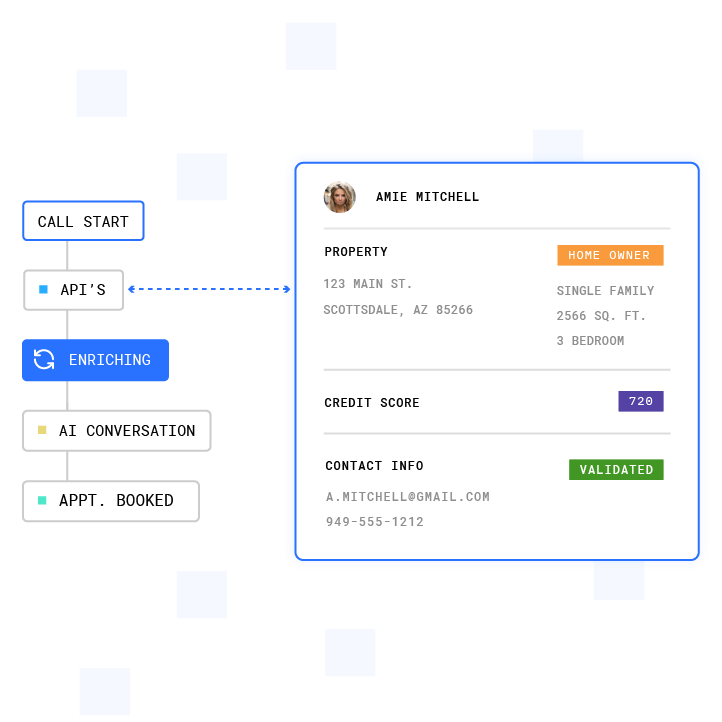
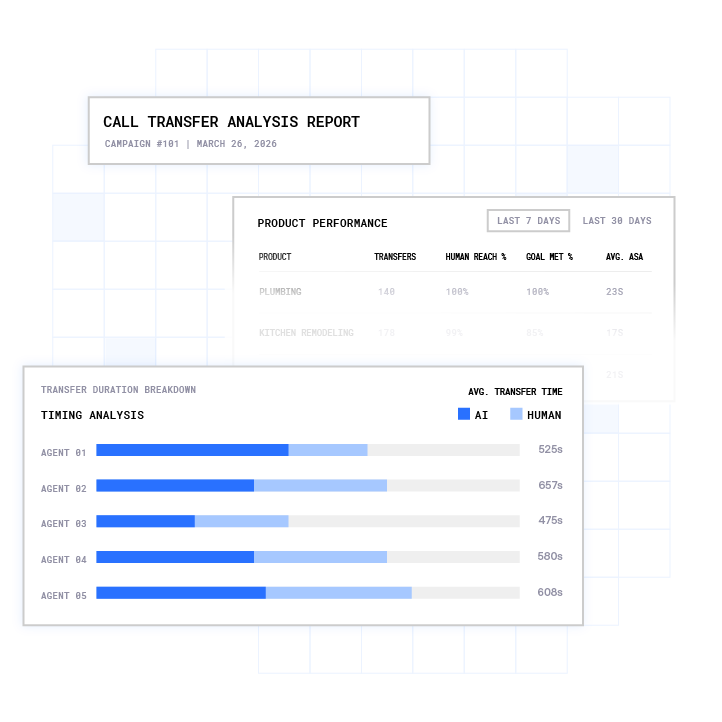
When a prospect qualifies or requests a human, the AI executes a warm transfer with full context. The transfer includes transcript, extracted data, sentiment, and recommended next actions so the caller does not repeat themselves.
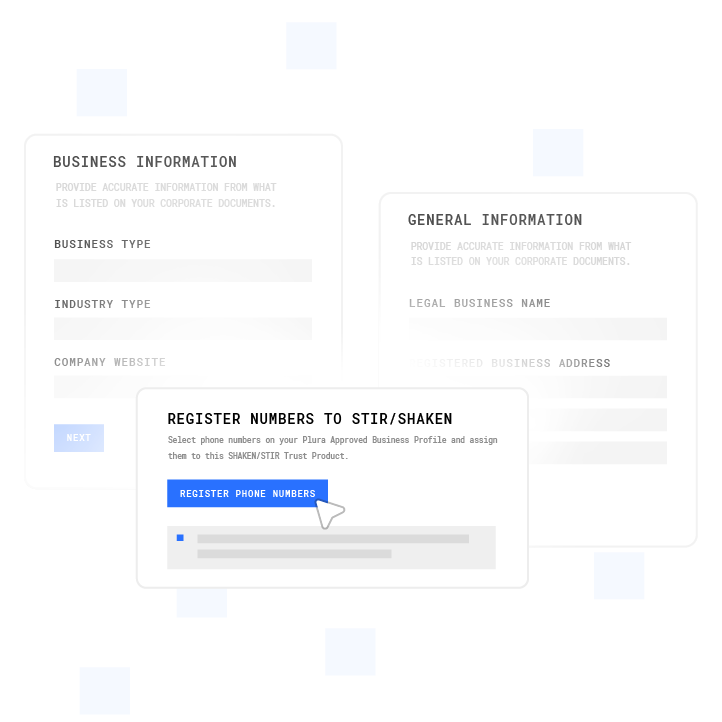
Plura AI’s AI voice agents run on Plura’s own FCC-licensed carrier. Calls originate with branded caller ID and authenticate through STIR/SHAKEN at the carrier level. This aligns with the FCC proposal that terminating providers transmit verified caller identity information whenever a call receives an A-level attestation, a standard Plura’s infrastructure is built to meet. Plura’s AI Predictive Dialer uses stateful conversion signals to prioritize contacts most likely to convert, which increases talk time per dial.
Is AI Cold Calling Legal?
The regulatory landscape for AI voice agent cold calling is specific and consequential.2 The following describes the framework as it stands and does not constitute legal advice. Consult qualified counsel for your specific use case.
FCC Declaratory Ruling FCC-24-17A1 (February 2024): The FCC confirmed that calls using AI to generate or clone human voices are covered by the TCPA (Telephone Consumer Protection Act) as “artificial or prerecorded voice.” This ruling has been in effect since February 8, 2024. For telemarketing calls to wireless numbers, prior express written consent is the applicable standard under the FCC’s framework. TCPA statutory damages run $500 per negligent violation and up to $1,500 per willful or knowing violation, and because class action suits are common, liability can aggregate rapidly across large calling campaigns. According to the Plura AI vs. Bland AI comparison, TCPA class action settlements averaged $6.6M in 2023 (WebRecon LLC, 2024).4
One-to-one consent rule (effective January 27, 2025): Prior express written consent must name the specific seller who will contact the consumer. Lead-gen forms bundling consent for multiple sellers no longer satisfy TCPA requirements for calls made after that date.
DNC registry: Real-time scrubbing against federal and state Do Not Call registries functions as a baseline operational control for any outbound calling program.
State laws: California’s AB 2905 added an artificial-voice announcement requirement for autodialed prerecorded calls, and other states have passed their own AI measures. Teams should review state-specific requirements before scaling campaigns.
Fifth Circuit ruling (February 2026): In Bradford v. Sovereign Pest Control (No. 24-20379), the Fifth Circuit held that the TCPA requires only “prior express consent,” which can be oral or written, and that the FCC lacked authority to require written consent. This ruling binds Texas, Louisiana, and Mississippi. Elsewhere, the FCC’s written-consent rule remains the more conservative assumption.
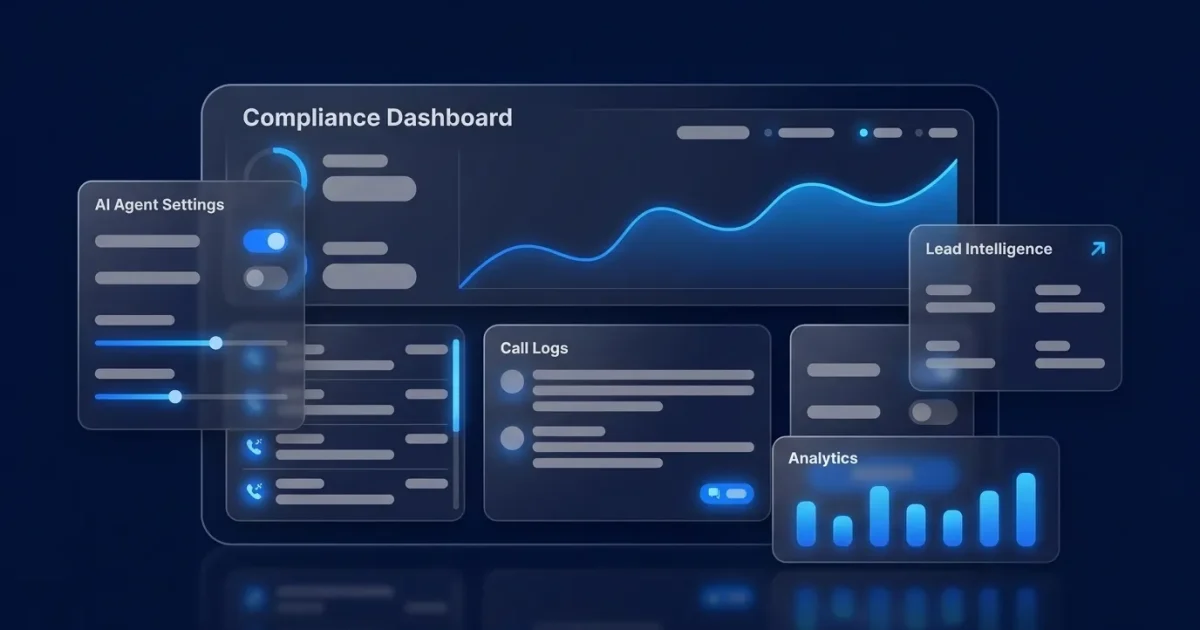
Compliance remains the operator’s responsibility. Platforms can support it, but cannot guarantee it. Plura supports compliance through real-time DNC scrubbing, immutable consent logging, quiet-hours enforcement by recipient time zone, and 100% U.S. infrastructure. Plura’s compliance framework includes SOC 2 infrastructure, TCPA and STIR/SHAKEN enforcement, and DNC screening on every outbound contact.1
Q: Is AI cold calling legal?
AI cold calling is subject to the TCPA and the FCC’s February 2024 declaratory ruling (FCC-24-17A1), which classifies AI-generated voices as “artificial or prerecorded voice.” Prior express consent is required for calls to wireless numbers. For telemarketing calls, prior express written consent is the applicable standard under the FCC’s framework. State laws add additional requirements in some jurisdictions. Consult qualified counsel for your specific use case and geography.
Run your numbers through Plura’s calculator to check your ROI in real time.
How to Choose an AI Cold Calling Platform
Platform selection determines both operational performance and legal exposure. Given the legal stakes, choosing the right platform is critical. The following criteria reflect what separates platforms that scale from those that create liability.
Carrier ownership: Most AI voice tools are API resellers built on top of third-party CPaaS (Communications Platform as a Service) providers. They cannot issue branded caller ID under their own identity or enforce compliance at origination. Plura owns its FCC-licensed carrier, which means branded caller ID is issued at the carrier level. This creates a clear difference between enforcing compliance before the call leaves the network and managing it as a paperwork layer afterward.
Compliance features: Compliance should be built in from the start, including TCPA guardrails, consent capture, DNC scrubbing, calling-window enforcement by recipient time zone, and immediate opt-out handling. Ask what happens before the call leaves the network.
Conversation quality under load: Test p95 response time at real call volumes, not demo conditions. Sub-800ms sits in the natural-dialogue range. Above 1,200ms, callers often hang up.
Integration depth: Native CRM write-back to Salesforce, HubSpot, Zoho, or Microsoft Dynamics after every call is essential. Plura provides 50+ integrations across 10+ categories, including native CRM write-back and calendar sync.
Pricing transparency: The published list price for voice AI platforms tells enterprise buyers roughly 30% of their real bill. The remaining 70% often appears in per-minute add-ons, concurrency overage, compliance surcharges, implementation labor, and oversight staffing. Review Plura’s plans and rates side by side.
U.S. infrastructure: The FCC NPRM (CG Docket No. 26-52) proposes capping offshore customer-service calls at 30% and limiting offshore handling of sensitive consumer data. Plura runs on 100% U.S. infrastructure by architecture.
Plura is a strong fit for high-volume, compliance-sensitive operations. It owns its FCC-licensed carrier, enforces compliance at the carrier level, maintains stateful conversation memory across voice, SMS, RCS, and AI webchat, and provides transparent pricing. See how Plura compares to other platforms.
How Much Does an AI Cold Calling Agent Cost?
AI cold calling pricing typically follows three models: per-minute, per-seat, and per-conversation. A 2026 Firecrawl audit of major voice AI platforms found self-serve per-minute rates ranging from $0.05 to $0.31, but that figure represents only a fraction of real total cost of ownership. A 2026 Open.cx cost analysis identifies seven TCO components: AI vendor fee, telephony/carrier minutes, LLM compute, TTS/STT compute, integration setup, compliance and audit, and ongoing tuning, with real all-in TCO for a mid-market deployment running $1,500 to $8,000 per month for the AI tier, plus one-time compliance work and ongoing tuning overhead.
Plura’s pricing is transparent. The agent build fee is $2,750 per agent. Monthly plans start at $7,500 per month for the Multi tier on annual contracts billed monthly, with a 90-day opt-out window. For a 50-seat equivalent contact center, traditional offshore operations cost $35,000 to $50,000 monthly, while AI contact centers cost $8,000 to $15,000 monthly.
The Plura ROI calculator illustrates the math directly. Using default inputs, 15 human agents at $20 per hour with 25% taxes, benefits, and commissions, and 40% talk utilization, generate monthly human costs of $60,000. Six Plura agents at $15 per hour with 100% talk utilization cost $14,400 per month. The 30-day ROI is $45,600. Over 12 months, that stacks to $547,200.3 Plura’s total cost of ownership of $700,000 replaces traditional $7 million contact-center economics at equivalent volume.
Run your numbers through Plura’s calculator to check your ROI in real time.
AI Cold Calling Best Practices for Revenue Teams
Scripting and disclosure: Include an AI disclosure in the opener and write it into the script rather than adding it later. Depending on jurisdiction, stating that the voice is AI-generated may be required. Build this into the conversation from the start.
Compliance before launch: Verify consent basis before building lists. Confirm how each contact provided their number and that records document it. Scrub against federal and state DNC registries before the first dial. Handle opt-outs immediately and enforce calling windows by recipient time zone.
CRM integration: Native CRM write-back is non-negotiable at scale. Every call outcome, transcript, and qualification signal should sync automatically to Salesforce, HubSpot, or Zoho without manual entry.
Pilot before scaling: Run 100 to 500 call pilots, review transcripts, and iterate on objection handling before scaling. The first two to four weeks of any AI cold calling program function as a tuning period. Booked rates typically climb over the first month before settling.
Plura runs every deployment like a CRO test, with iterative conversation engineering, real-call monitoring, and continuous workflow tuning. Every annual contract includes a 90-day opt-out window.
Frequently Asked Questions
Is AI cold calling legal?
AI cold calling in the United States is subject to the TCPA and the FCC’s February 2024 declaratory ruling (FCC-24-17A1), which classified AI-generated voices as “artificial or prerecorded voice.” This places AI voice calls under the same consent framework as traditional robocalls. For telemarketing calls to wireless numbers, prior express written consent is the applicable standard under the FCC’s framework. The one-to-one consent rule, effective January 27, 2025, requires that consent name the specific seller. The Fifth Circuit’s February 2026 ruling in Bradford v. Sovereign Pest Control held that the TCPA requires only “prior express consent,” which can be oral or written, binding in Texas, Louisiana, and Mississippi. State laws, including California’s AB 2905, add additional requirements in some jurisdictions. The regulatory picture continues to evolve. Consult qualified counsel for your specific use case, geography, and consent records before launching any AI cold calling program.
How much does an AI voice agent cost for cold calling?
As covered in the cost section, per-minute rates for self-serve AI voice platforms often range from a few cents up to around $0.30, while real total cost of ownership reflects additional carrier, compute, integration, compliance, and tuning expenses. A 2026 Open.cx analysis places typical mid-market AI tiers in the low thousands per month. Plura’s pricing starts at $7,500 per month for the Multi tier with a $2,750 per-agent build fee on annual contracts billed monthly. The Plura ROI calculator models the full cost comparison between human agents and AI agents for your own volumes.
What is the FCC’s TCPA ruling on AI voices, and what does it mean for outbound calling?
FCC Declaratory Ruling 24-17A1, adopted February 2, 2024 and effective February 8, 2024, confirmed that calls using AI to generate or clone human voices are covered by the TCPA as “artificial or prerecorded voice.” This ruling is a settled federal interpretation. It means that AI voice agents calling U.S. numbers fall under the same consent requirements as traditional robocalls, including prior express consent for informational calls and prior express written consent for telemarketing calls to wireless numbers under the FCC’s framework. TCPA statutory damages run $500 to $1,500 per violation, and because the statute supports class actions, liability can aggregate rapidly across high-volume campaigns. Operators should review their consent records, list sourcing practices, and platform compliance infrastructure before deploying AI voice agents at scale.
What is the difference between a predictive dialer and a power dialer?
A predictive dialer uses algorithms to call multiple numbers simultaneously, connecting only live answers to available agents or AI systems. It predicts agent availability and adjusts dial rate accordingly, which maximizes talk time per hour. A power dialer calls one number at a time per agent, automatically moving to the next number after a set outcome, such as no answer, voicemail, or completed call. Predictive dialers suit high-volume outbound operations where maximizing connected calls per hour is the primary goal. Power dialers offer more control per dial and work better for operations where call quality per contact matters more than raw volume. Plura’s AI Predictive Dialer uses stateful conversion signals to prioritize contacts most likely to convert, running over Plura’s FCC-licensed carrier with branded caller ID and STIR/SHAKEN authentication on every call.
How do I support TCPA compliance when using AI cold calling agents?
TCPA compliance for AI cold calling involves several operational controls that should be in place before any campaign launches. Verify the consent basis for every contact on your list and confirm that records document how and when consent was provided. Scrub lists against federal and state Do Not Call registries before dialing. Include an AI disclosure in the call opener. Enforce calling windows by the recipient’s local time zone. Handle opt-out requests immediately and suppress opted-out contacts from all future campaigns. Maintain timestamped, immutable consent records that are audit-ready. Compliance remains the operator’s responsibility. Platforms like Plura support these controls through real-time DNC scrubbing, consent logging, quiet-hours enforcement, and audit-ready reporting, but customers remain responsible for their own regulatory obligations. Consult qualified counsel to evaluate your specific consent records, list sourcing, and campaign structure before launch.
Conclusion: Using AI Voice Agents Without Losing Control
Cold calling at a human-only model struggles to keep pace with today’s volume and speed expectations. Eighty-eight percent of outbound effort goes unanswered, reps spend most of their day on dead dials, and lead response times stretch to hours while the competitive standard now sits in seconds. AI voice agents reset these economics when the platform is built for compliance from the carrier level up.
Many AI voice tools operate as API resellers that cannot issue branded caller ID or enforce compliance before the call leaves the network. Plura owns its FCC-licensed carrier, enforces compliance at origination, maintains stateful conversation memory across every channel, and delivers transparent pricing with a 90-day opt-out window on every annual contract.
Run your numbers through Plura’s calculator to check your ROI in real time. Compare plans and rates side by side on Plura’s pricing page.
1 Plura AI maintains SOC 2, HIPAA, ISO, and GDPR posture as part of its platform infrastructure. References to compliance frameworks in this article describe Plura’s platform capabilities and do not constitute a guarantee that any customer using Plura will themselves be compliant with applicable laws or standards. Customers remain solely responsible for their own regulatory obligations, certifications, consent management, recordkeeping, and the claims they make to their own end users. Consult qualified legal counsel for guidance specific to your use case.
2 This article describes regulatory frameworks at a general level and does not constitute legal advice. Laws and regulations vary by jurisdiction, change over time, and apply differently depending on facts and circumstances. Readers should consult qualified legal counsel before making compliance decisions.
3 Performance figures, customer outcomes, and industry statistics referenced in this article are drawn from cited third-party sources or Plura customer case studies. Individual results vary based on implementation, use case, industry, audience, and execution. Past or aggregate performance is not a guarantee of future results.
4 References to third-party products, services, companies, or research are made for informational and comparative purposes only. Plura AI is not affiliated with, endorsed by, or sponsored by any third party named in this article unless explicitly stated. Trademarks and product names referenced remain the property of their respective owners.
5 This article contains forward-looking statements regarding industry trends, technology adoption, and future capabilities. These statements reflect current expectations and are subject to change. Plura AI undertakes no obligation to update forward-looking statements except as required.
This article is provided for informational purposes only and reflects Plura AI’s understanding at the time of publication. Product capabilities, integrations, and specifications are subject to change. For the most current information, visit plura.ai.
This article was produced with the assistance of AI tools and reviewed by Plura AI prior to publication.