
Written by: Matt Beucler, CEO, Plura AI
Updated September 2026
Key Takeaways
- RCS outbound messaging delivers verified branding, rich media, and interactive elements inside native messaging apps, turning plain SMS into an engaging, branded experience.
- Core RCS features include verified sender identity, rich media, action buttons, read receipts, carousels, in-message documents, payments, and automatic SMS fallback for full audience reach.
- RCS delivers significantly higher engagement and read rates than SMS, which makes it effective for marketing, transactional alerts, and customer service campaigns.
- Teams must plan for carrier approval timelines, device compatibility gaps, and higher per-message costs, and many find the conversion lift offsets the added complexity.
- Plura AI offers a carrier-grade RCS solution integrated with AI voice, SMS, and webchat on a single stateful platform.
What Is RCS Outbound Messaging?
RCS is the evolution of SMS, delivered over carrier networks rather than over-the-top apps like WhatsApp or iMessage. Where SMS sends plain text from a phone number, RCS delivers branded, interactive messages from a verified business identity inside the same native messaging app the recipient already uses.
The differences from SMS are substantial. RCS supports branded sender identity, rich media, interactive action buttons, read receipts, and typing indicators. RCS traffic grew roughly 50% in 2025, driven by Android adoption of Google Messages and Apple’s iOS 18 adding RCS support. Plura’s AI RCS messaging supports over 2 billion devices globally.
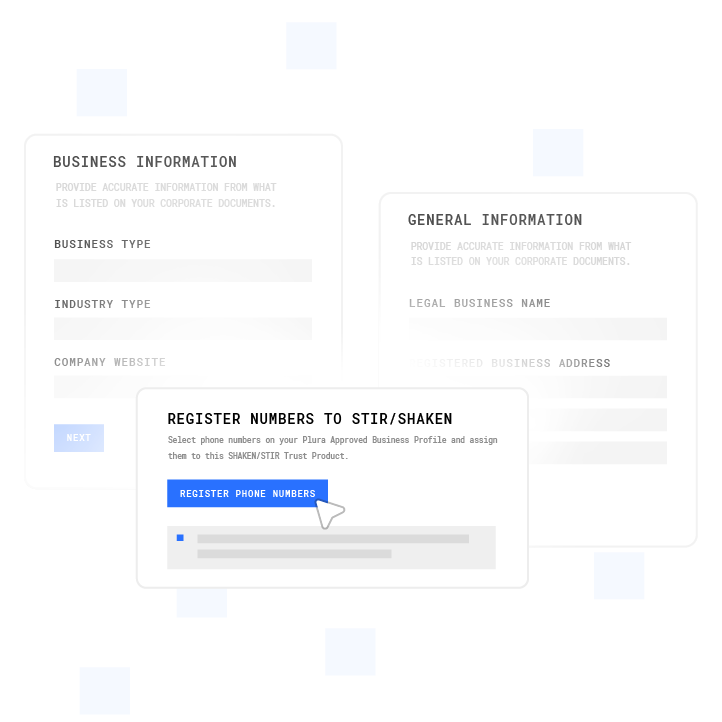
RCS Business Messaging (RBM) is the application-to-person extension of the RCS protocol. It adds business-specific capabilities that standard person-to-person RCS does not support, including verified sender profiles with logos and checkmarks, rich cards, carousels, suggested replies, and suggested actions. RBM requires brand registration and carrier approval before sending. It functions as a carrier-delivered channel, not an app-based channel, and it requires a registered brand identity.
Core RCS Outbound Features for Business
RCS turns outbound messaging from plain text into an interactive, branded experience. Each feature below ties directly to a business outcome.
Verified Sender Identity
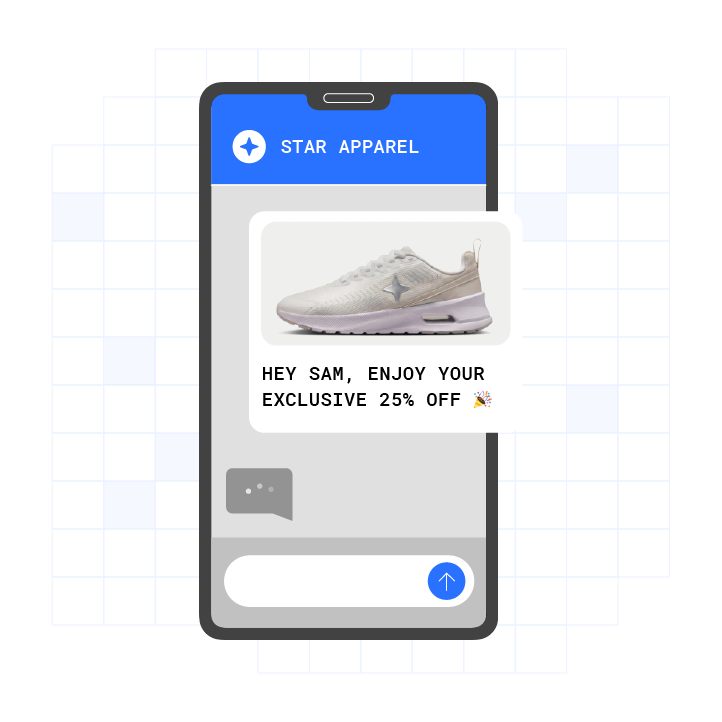
Every RCS Business Messaging sender is registered and verified, displaying the brand’s logo, name, and a confirmed checkmark in the recipient’s inbox. Messages arrive as a recognizable brand identity rather than an unknown number. This eliminates the “unknown number” problem. Because the message comes from a known brand, recipients trust it before they read it. That trust reduces the chance they dismiss legitimate communications as phishing attempts.
Rich Media Support
RCS supports high-resolution images, video, audio, carousels, and file attachments delivered directly inside the message thread. Recipients see the content directly in the thread, without broken links or app downloads. Product photos, instructional videos, and infographics drive engagement that plain text rarely matches.
Action Buttons and Suggested Replies
RCS Business Messaging suggested actions include open URL, dial number, view location, create calendar event, and share location, each executing with a single tap. Suggested replies like “Yes, confirm my appointment” or “Track my order” remove almost all friction. Customers complete actions without copying links or typing responses, which accelerates response rates and reduces drop-off.
Read Receipts and Typing Indicators
RCS provides delivery confirmation, read receipts, and typing indicators visible to the sender. The read-receipt signal closes a measurement gap that email has never solved cleanly. Teams see whether a specific customer read a message and can trigger intelligent follow-up through alternate channels when messages go unread. This level of visibility is typically absent from both SMS and most email environments.
Message Carousels
RCS Business Messaging supports rich card carousels containing 2 to 10 rich cards, each with individual descriptions and unique call-to-action buttons. Scrollable carousels enable mobile shopping and product discovery inside the thread. This structure shortens the path from awareness to conversion from several steps down to a few taps.
In-Message Documents
Native document delivery and signing capability lets customers complete contracts, waivers, and forms without leaving the thread. Integrations with DocuSign and PandaDoc are built in.4 This approach reduces drop-off and accelerates deal closure by keeping the entire transaction inside the conversation.
In-Message Payments
Payment requests and completion through processors like Stripe happen without leaving the messaging app.4 Invoice payment, deposits, and purchases complete in seconds, which removes the friction of payment portals and increases collection rates. Plura AI’s AI RCS supports in-message payments natively as part of its outbound messaging surface.
SMS Fallback
Automatic downgrade to SMS when RCS is unavailable on a device, carrier, or connection helps maintain reach across the audience. SMS fallback is not automatic by default; platforms must perform a capability check before send and reroute to a provisioned fallback number. When fallback infrastructure is configured correctly, rich content degrades gracefully to a complete, actionable text message rather than failing silently.
See AI RCS outbound in a live Plura demo and review how it behaves across voice, SMS, and webchat on a single stateful platform.
RCS vs. SMS: Key Differences for Outbound
RCS delivers higher engagement but requires more setup and carries higher per-message costs. The table below contrasts the key differences for outbound campaigns.
| Feature | SMS | RCS | Business Impact |
|---|---|---|---|
| Character limit | 160 per segment (GSM-7) | Up to 250,000 per message | Longer, richer content without truncation |
| Media support | None (MMS limited) | High-res images, video, audio, PDFs | Visual storytelling drives engagement |
| Interactivity | None | Action buttons, suggested replies, carousels | In-thread conversion paths |
| Branding | Phone number only | Verified sender with logo and checkmark | Trust and recognition before reading |
| Read receipts | Not available | Native read receipts | Visibility into message consumption |
| Deliverability | Universal | Requires RCS-capable device and carrier | SMS fallback helps maintain reach |
| Cost per message | $0.005–$0.02 per segment | $0.01–$0.05 per message | Higher cost, higher engagement |
| Click-through rate | 6–19% | 15–30%+ | Higher conversion per send3 |
Plura AI’s AI RCS messaging delivers these engagement and read-rate gains across over 2 billion supported devices, which makes it a strong channel for outbound campaigns where rich media and interactivity matter.
Business Use Cases for RCS Outbound
Marketing: Teams use RCS for promotions, flash sales, and product launches delivered with carousels and rich media. RCS campaigns achieve response rates approaching 45%3 compared to traditional SMS baselines, which makes the channel effective for time-sensitive offers where visual context drives action.
Transactional: Order confirmations, shipping updates, and delivery notifications include tracking links and action buttons. Customers complete status checks and confirmations with a single tap, which reduces inbound support volume.
Customer Service: Appointment reminders, support follow-ups, and satisfaction surveys use suggested replies to streamline responses. RCS appointment reminders reduce no-shows by up to 40% compared to identical SMS campaigns3, a measurable outcome for healthcare, wellness, and service businesses.
RCS works especially well for time-critical, high-value messages where rich context drives action and where the cost of a missed interaction, no-show, or abandoned cart exceeds the incremental per-message cost of the channel.
What Are the Downsides of RCS Messaging?
RCS has real limitations that belong in any balanced evaluation.
Carrier support: All three major U.S. carriers support RCS Business Messaging, covering roughly 95%+ of U.S. wireless subscribers4. MVNOs and smaller carriers may not support RCS, and international coverage varies by region, so coverage checks remain necessary.
Device compatibility: Roughly 15–25% of messages sent to U.S. Android numbers fall back to SMS due to device or network conditions. RCS delivery requires an RCS-capable device, an RCS-enabled messaging app, an active data connection, and RCS service turned on.
iPhone limitations: iOS 18+ supports basic RCS, but rich cards and carousels may render as plain text with links on iPhone, and suggested actions may not display as interactive buttons. This constraint limits the rich experience for many iOS recipients.
Cost: RCS messages typically cost $0.01–$0.05 per message versus $0.005–$0.02 for A2P SMS. At scale, those incremental costs affect campaign budgets and require clear ROI analysis.
Setup complexity: Brand approval takes 2–5 business days, RCS agent approval takes 3–7 business days, and carrier validation can add additional weeks. Total timelines often reach 8–16 weeks for full U.S. coverage.
Compliance obligations: RCS falls under TCPA and CTIA guidelines in the same way as SMS.2 Businesses typically maintain documented consent, honor opt-outs, and follow content restrictions. Teams should consult qualified counsel for their specific program.
SMS fallback helps mitigate many delivery concerns. Cost-per-engagement often favors RCS even when per-message costs are higher, because fewer messages are needed to achieve the same number of conversions.
Which Carriers Support RCS?
All three major U.S. carriers, AT&T, Verizon, and T-Mobile, support RCS Business Messaging, covering roughly 95%+ of U.S. wireless subscribers. Google’s Jibe platform and Apple’s iOS 18+ support have expanded reach significantly. RCS traffic grew roughly 50% in 2025, driven by Android adoption and Apple’s entry into the ecosystem.
Support is widespread but not universal. MVNOs and smaller carriers may not support RCS, and international coverage varies by region. Businesses should verify carrier support with their messaging provider and confirm that SMS fallback is configured for non-RCS recipients before launching any campaign.
How to Choose an RCS Provider
Use this vendor-neutral checklist when you evaluate RCS providers.
- Carrier relationships: Confirm whether the provider has direct carrier connections or resells through aggregators. Direct relationships typically mean better throughput and faster issue resolution.
- Compliance infrastructure: Check whether the platform supports 10DLC registration, TCPA consent management, DNC scrubbing, and CTIA guideline enforcement natively.2
- SMS fallback capability: Validate that fallback is automatic and reliable. Confirm that the provider maintains separate SMS infrastructure with adequate throughput. Fallback traffic is constrained by 10DLC and toll-free throughput limits, so fallback infrastructure must be built for scale.
- Integration with existing CRM: Ensure the platform connects to your CRM, marketing automation, and customer service tools.
- Analytics depth: Look for delivery, read, and interaction analytics, and the ability to export data to your BI stack.
- Pricing transparency: Clarify whether pricing is per-message, per-session, or tiered, and whether there are additional fees for fallback traffic.
- Cross-channel memory: Confirm whether the platform preserves conversation context across RCS, SMS, voice, and webchat, or treats each channel in isolation.
Plura meets these criteria as an FCC-licensed carrier with native compliance support, automatic SMS fallback, deep CRM integrations, and a stateful conversation database that preserves context across every channel.
Walk through this checklist in a live Plura demo with a platform specialist.
Implementation Best Practices
Compliance first: Obtain documented express consent before sending. A compliant opt-in typically includes the business name, types of messages, expected frequency, disclosure that message and data rates may apply, opt-out instructions, and a logged record of consent with timestamp, source, and method. Honor opt-outs immediately. Follow CTIA Messaging Principles and Best Practices and maintain audit-ready consent records. This description does not constitute legal advice, so teams should consult qualified counsel for their specific program.
Design for fallback: Write the SMS version first as a self-contained message, then enrich for RCS. Ensure fallback messages carry the same call-to-action and branding so recipients without RCS support still receive a complete, actionable text.
Test across devices and carriers: Verify rendering on Android (Google Messages) and iOS 18+ devices across major carriers before full deployment. Rich cards and carousels may render differently across device types, so spot checks matter.
Segment by RCS eligibility: Query RCS capability at the point of send and route accordingly. Static CRM device data becomes outdated quickly as hardware and OS upgrades occur, so real-time checks provide better accuracy.
Measure what matters: Track delivery rate, read rate, click-through rate, conversion rate, opt-out rate, and cost per conversion. Compare RCS performance against SMS-only control groups to quantify incremental value. Plura’s conversation intelligence surfaces these metrics automatically across every channel.
Integrate into omnichannel strategy: Treat RCS as a complement to voice, SMS, and webchat. Use read receipts to trigger follow-up through alternate channels when messages go unread. Plura’s stateful conversation database ensures a customer who received an RCS message at 9 a.m. is recognized when the follow-up call comes at noon.
Why Plura AI Fits Enterprise RCS Outbound Programs
For teams evaluating providers, Plura AI offers a carrier-grade option. Plura is an FCC-licensed carrier, so voice and messaging originate on Plura’s own domestic infrastructure rather than through a third-party CPaaS. Branded caller ID is issued at the carrier level, and the platform enforces compliance controls before each outbound contact.
Plura’s AI RCS integrates with AI Voice, AI SMS, and AI Webchat on a stateful conversation database. Context is preserved across every channel, so a customer who received an RCS message is the same customer when the voice call comes, with full memory of prior touchpoints.
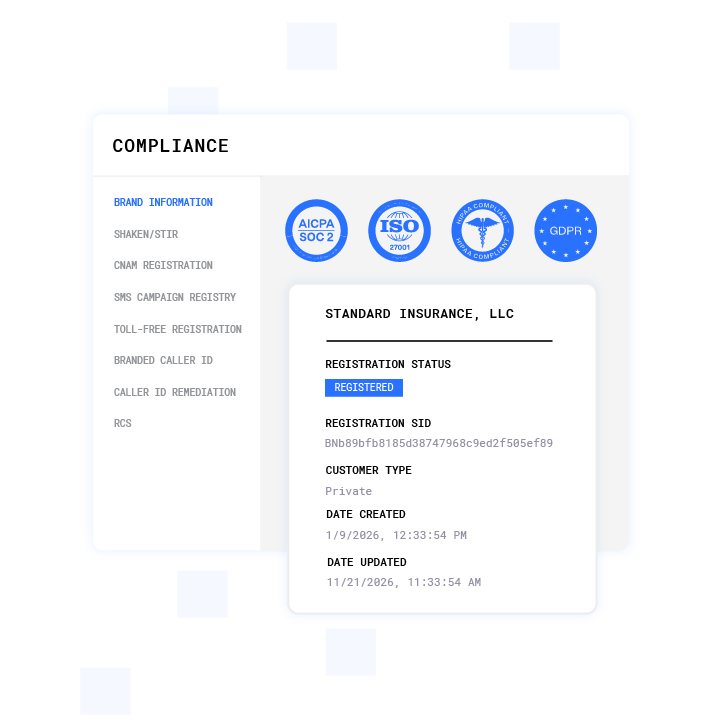
Plura is SOC 2 Type II certified, HIPAA-aligned, and ISO certified.1 The platform supports TCPA and DNC compliance on every outbound contact with real-time DNC scrubbing, immutable consent logging, and automated quiet-hours enforcement built into the architecture.2 Plura’s no-code workflow builder lets operators design memory-driven RCS conversation pathways without engineering resources.
Compare plans and rates side by side to align RCS, SMS, and voice costs with your volume and use cases.
Schedule a Plura demo to review your RCS outbound strategy and see how AI agents perform across channels.
Frequently Asked Questions
Should I have RCS business messages turned on?
Many businesses see value from enabling RCS. The channel delivers higher engagement than SMS with verified branding, rich media, and interactive elements. If your customers use modern Android devices or iOS 18+, RCS will reach them with a materially richer experience than plain SMS. SMS fallback keeps reach across non-RCS devices. The main considerations are cost, since RCS messages cost more per message than SMS, and setup time, since carrier approval often takes 8–16 weeks. For high-value outbound campaigns where engagement and conversion rates matter, teams often find that per-conversion economics favor RCS despite higher per-message costs.
What is the downside of RCS messaging?
The primary downsides include coverage, experience gaps, cost, setup time, and compliance work. Not all carriers and devices support RCS, and roughly 15–25% of messages to U.S. Android numbers can fall back to SMS due to device or network conditions. iPhone support is limited, since rich cards and carousels may render as plain text on many iOS 18+ devices. RCS also carries higher per-message cost than SMS, typically $0.01–$0.05 versus $0.005–$0.02 for A2P SMS, and carrier approval processes often take 8–16 weeks. Finally, TCPA and CTIA guidelines apply, so programs require documented consent, opt-out handling, and content controls. Many organizations address delivery and compliance concerns by working with a provider that supports automatic SMS fallback and embeds compliance tooling.
How does SMS fallback work in RCS?
SMS fallback routes messages through SMS when a recipient’s device or carrier does not support RCS. The platform checks RCS capability before sending. If the device is not RCS-capable, RCS is disabled, or the device is offline, the message is delivered as SMS instead. This approach helps maintain reach across the audience. Fallback is not automatic by default, so it requires proper 10DLC or toll-free registration, active throughput management, and dynamic routing decisions based on real-time capacity. Best practice is to design the SMS version first as a self-contained message, then enrich it for RCS delivery, so fallback recipients receive a complete, actionable text.
Is RCS compliant with TCPA?
RCS messaging sits within the same TCPA framework as SMS.2 Many businesses obtain prior express written consent before sending marketing messages, honor opt-out requests, and follow CTIA Messaging Principles. Consent records often include timestamp, source, and method, and opt-out requests are typically honored promptly. RCS also uses a registered brand and approved campaign through Google’s RBM platform and carrier vetting. This description does not constitute legal advice, so organizations should consult qualified counsel for their specific program and jurisdiction.
What carriers support RCS in the United States?
All three major U.S. carriers, AT&T, Verizon, and T-Mobile, support RCS Business Messaging, covering roughly 95%+ of U.S. wireless subscribers. Google’s Jibe platform and Apple’s iOS 18+ support have expanded reach significantly. Support is not universal, since MVNOs and smaller carriers may not support RCS, and international coverage varies by region. Businesses should verify carrier support with their messaging provider and confirm that SMS fallback is configured for non-RCS recipients before launching campaigns.
1 Plura AI maintains SOC 2, HIPAA, ISO, and GDPR posture as part of its platform infrastructure. References to compliance frameworks in this article describe Plura’s platform capabilities and do not constitute a guarantee that any customer using Plura will themselves be compliant with applicable laws or standards. Customers remain solely responsible for their own regulatory obligations, certifications, consent management, recordkeeping, and the claims they make to their own end users. Consult qualified legal counsel for guidance specific to your use case.
2 This article describes regulatory frameworks at a general level and does not constitute legal advice. Laws and regulations vary by jurisdiction, change over time, and apply differently depending on facts and circumstances. Readers should consult qualified legal counsel before making compliance decisions.
3 Performance figures, customer outcomes, and industry statistics referenced in this article are drawn from cited third-party sources or Plura customer case studies. Individual results vary based on implementation, use case, industry, audience, and execution. Past or aggregate performance is not a guarantee of future results.
4 References to third-party products, services, companies, or research are made for informational and comparative purposes only. Plura AI is not affiliated with, endorsed by, or sponsored by any third party named in this article unless explicitly stated. Trademarks and product names referenced remain the property of their respective owners.
This article is provided for informational purposes only and reflects Plura AI’s understanding at the time of publication. Product capabilities, integrations, and specifications are subject to change. For the most current information, visit plura.ai.
This article was produced with the assistance of AI tools and reviewed by Plura AI prior to publication.