
Written by: Matt Beucler, CEO, Plura AI
Updated September 2026
Key Takeaways for High-Volume Calling Teams
- Multi-line dialers place 3–10 simultaneous calls per rep and can dramatically increase live conversations per hour when configured correctly.
- Throughput only creates value when it protects connect rates and manages dead-air risk, spam-label exposure, and abandoned calls.
- Compliance and performance are linked: TCPA caps abandoned calls at 3%, and violations can carry $500–$1,500 statutory damages per call.
- STIR/SHAKEN authentication and carrier-level branded caller ID reduce “Spam Likely” labels that crush answer rates.
- Native two-way CRM integration, AI conversation summaries, and real-time dashboards cut after-call work and surface revenue insights.
- Teams evaluating platforms should prioritize carrier ownership, compliance depth, and scalability, which Plura AI’s AI Predictive Dialer is built to support.
What a Multi-Line Dialer Does in Practice
A multi-line dialer places 3–10 simultaneous outbound call attempts per agent and connects the rep to the first live pickup. The system drops the remaining lines once a live person answers. It differs from a power dialer, which calls one number at a time with no dead air and no abandoned calls. A predictive dialer uses an algorithm to dial ahead of agent availability and maximize talk time.
“Multi-line” refers to simultaneous call attempts per agent seat, not multiple agents sharing one line. Modern multi-line dialers often sit inside broader AI predictive dialer platforms that use data to decide who to call and when.
Core Multi-Line Dialer Features You Actually Need
Parallel Dialing for Higher Live Connects
Parallel dialing places 3–10 calls simultaneously per agent and connects the rep to the first live pickup. The throughput impact is substantial. At a 5% connect rate, a rep on a four-line parallel dialer can reach 150–250 dial attempts and 8–12 live conversations per hour, versus 2–3 manually.3
More lines also increase dead-air risk. When two prospects answer at once and only one rep is available, the other hears silence and hangs up, often assuming a robocall. Parallel dialers also accelerate carrier spam flagging when high call volume comes from a small number pool. To counter both dead air and spam risk, Plura’s AI Predictive Dialer uses stateful conversion signals to pace dials intelligently and maintain throughput.
Answering Machine Detection That Manages False Positives
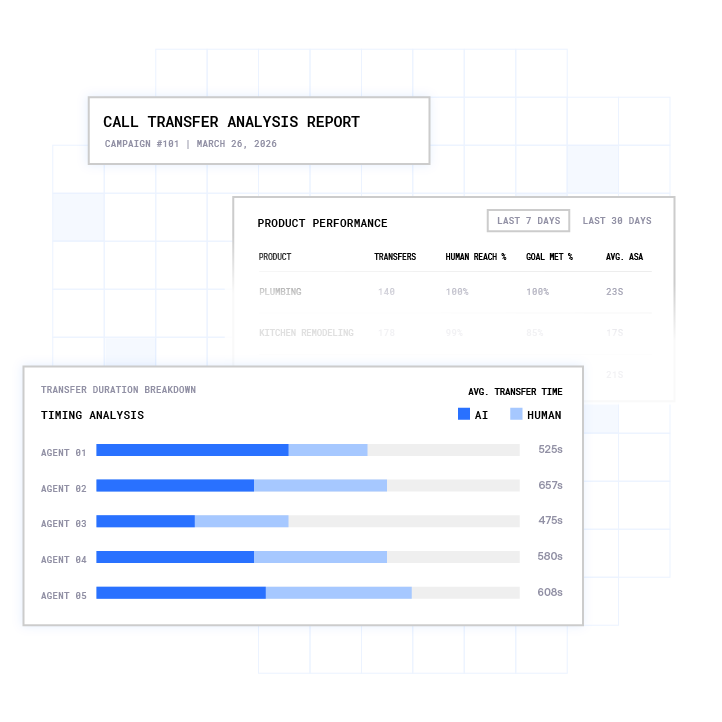
Answering Machine Detection (AMD) filters voicemails, busy signals, and disconnected lines in the background so reps connect only to live pickups. The false-positive problem grows with line count. AMD false-positive rates can climb from 8–15% on a single line to 20–30% or more at 4–6 lines per agent, based on field reports.3
A false-positive hangup on a live answer counts as an abandoned call under FCC rules and can contribute to compliance exposure if the rate exceeds the 3% threshold. Vendors that chase maximum talk-time-per-hour without managing false positives create this risk. Plura’s AI Predictive Dialer applies AI-powered detection to reduce false positives at scale.
Voicemail Drop for Consistent Follow-Up
Voicemail drop leaves a pre-recorded or AI-generated message when a prospect does not answer live. Parallel dialing hits voicemail roughly 85% of the time, so voicemail drop becomes a standard feature, not a nice-to-have.3 Without it, reps spend a large share of each session repeating the same message manually.
Plura’s AI Predictive Dialer supports AI-generated voicemail that sounds natural and stays consistent across every drop.
Local Presence Dialing With Reputation Controls
Local presence matches the caller ID area code to the recipient’s location to increase answer rates. A local number often generates fewer “who is this” complaints than an out-of-area number, which can reduce negative signals that feed carrier spam-scoring systems.
Local presence dialing can make calls feel more familiar to recipients when paired with clear caller identity and a clear reason for outreach. It does not replace reputation monitoring. Aggressive local presence that drives complaints can still trigger spam labels, even when area codes match.
Call Recording and Click-to-Dial for Coaching
Call recording supports coaching and documentation. Two-party consent recording is a legal consideration in 12 states. Teams should consult qualified counsel for guidance on their specific recording obligations.
Click-to-dial removes manual number entry from CRM records. This reduces misdials and shortens after-call work, which returns more time to live conversations.
Compliance Features: TCPA, DNC, and Spam Prevention
Compliance remains the caller’s responsibility. The features below support compliance workflows and documentation. They do not guarantee compliance outcomes. Teams should consult qualified legal counsel for advice specific to their campaigns and jurisdictions.
TCPA and the 3% Abandoned-Call Rule
The Telephone Consumer Protection Act (TCPA), 47 U.S.C. § 227, addresses autodialed or prerecorded calls to cell phones without prior express consent.2 The FCC caps abandoned telemarketing calls at 3% of answered calls per campaign per 30-day period. An abandoned call is one answered by a live person but not connected to a rep within two seconds. Statutory damages range from $500 to $1,500 per violation.
Parallel dialers that connect only on human answers can reduce some abandonment risk. DNC scrubbing, consent-aware recording, and quiet-hours enforcement remain separate obligations. A dialer that supports compliance should track abandonment rate in real time and slow dial pace automatically as the running rate approaches the threshold.
DNC Scrubbing and Consent Tracking at Scale
The FTC’s Telemarketing Sales Rule describes scrubbing calling lists against the National Do Not Call Registry at least once every 31 days.2 The registry held approximately 249 million numbers as of 2024, and registration does not expire.3
A dialer that supports compliance also maintains an internal company-specific DNC list and honors opt-outs within 10 business days. Multi-line dialers benefit from automated, repeatable list-scrubbing workflows tied to campaign launches. Plura’s compliance engine checks every outbound contact against federal and state DNC registries in real time before dial and maintains immutable consent records with one-click audit exports.
STIR/SHAKEN and the “Spam Likely” Problem
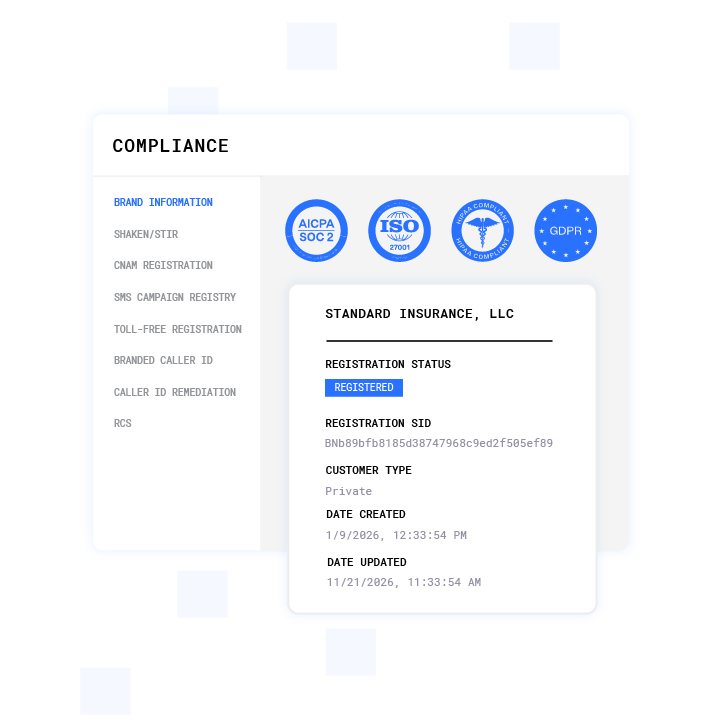
STIR/SHAKEN is a call-authentication framework that verifies calls genuinely originate from the displayed number. Calls with full “Level A” attestation are less likely to be labeled “Spam Likely” or blocked by carriers.
STIR/SHAKEN verifies authenticity but does not automatically prevent spam labels. A properly authenticated number can still be flagged when calling behavior generates negative signals such as high volume, low answer rates, short call durations, and consumer complaints.
Plura issues branded caller ID through its own FCC-licensed carrier and runs STIR/SHAKEN authentication on every outbound call.1 Because Plura owns the carrier stack instead of renting from a third-party CPaaS, branded caller ID is issued at the carrier level.
Management, Integrations, and Reporting That Leaders Need
CRM Integration for Clean Data and Less Admin
Strong CRM integration is native and two-way. The dialer pulls contacts, list membership, and consent status from the CRM and pushes call outcomes, recordings, and dispositions back. Teams should verify that calls log automatically with duration, outcome, recording link, and notes. Zapier-based integrations often introduce sync delays and data gaps that weaken reporting.
Deep integration enables disposition-driven workflows. A “Voicemail Left” disposition can trigger a nurture sequence or suppress future dials automatically. A 20-agent team spending four minutes of after-call work per call could return roughly 30 or more agent-hours per week3 by cutting that time through automatic logging and one-click dispositions. See Plura’s integrations for native CRM connectivity with HubSpot, Salesforce, and Zoho.
Real-Time Dashboards and Call Monitoring
Managers need live call listening, whisper coaching, and call barging to maintain quality at scale. Real-time dashboards should track connect rate, conversations per agent per hour, and abandonment rate. Dial volume without connect-rate context becomes a vanity metric that hides whether the team is actually generating pipeline.
AI-Powered Conversation Summaries and Intelligence
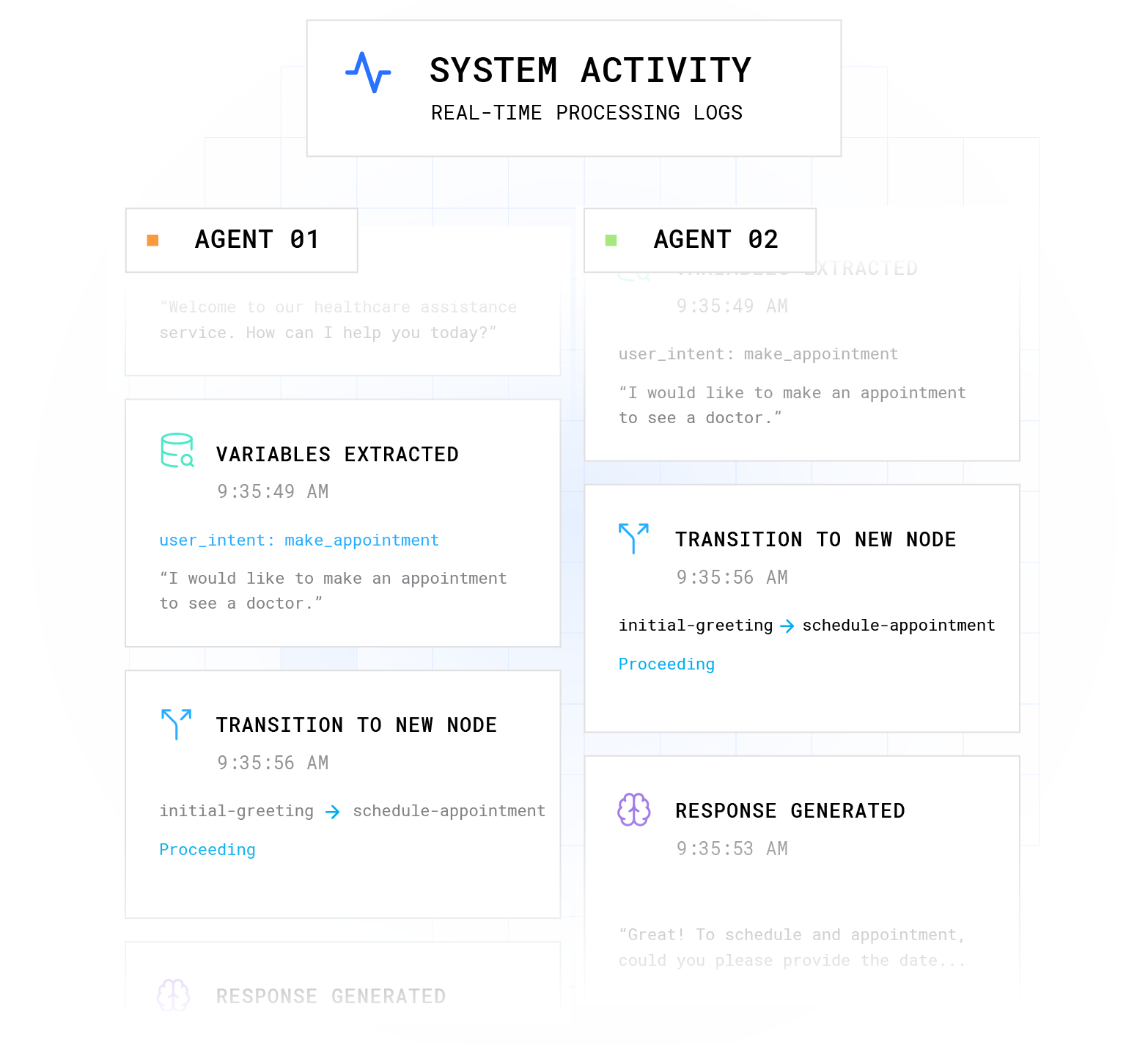
AI call summaries generate automated transcripts, notes, and sentiment analysis after every conversation. This reduces manual after-call work and feeds conversation intelligence workflows. Leaders see which scripts close, which objections recur, and which call paths convert. The result is actionable data instead of activity-only dashboards.
How to Choose a Multi-Line Dialer: Selection Criteria
With these features in mind, leaders can evaluate multi-line dialer platforms against a consistent checklist during every vendor demo.
- Carrier ownership: Determine whether the vendor owns its carrier infrastructure or rents from a CPaaS provider. Carrier ownership influences branded caller ID, spam prevention, and how deeply compliance controls sit in the stack.
- Compliance features: Look for real-time DNC scrubbing, consent tracking, quiet-hours enforcement, abandoned-call rate controls, and immutable audit logs.
- Integration depth: Confirm native two-way CRM sync. Verify automatic call logging, screen pops with full record context, and disposition-driven workflow triggers.
- Scalability: Confirm that the platform can scale from 5 to 500 agents without degraded performance or increased compliance risk.
- Ease of use: Prioritize minimal clicks, voicemail drop, and auto-disposition. Forty-seven percent of sales reps say cold outreach is one of the worst parts of their job, so a dialer should reduce friction.
- Support and opt-out window: Confirm a defined opt-out window if the deployment does not deliver. Plura includes a 90-day opt-out window in every annual contract.
High-volume teams can also consider AI predictive dialers that use stateful conversion signals to prioritize which contacts to call next based on historical answer rates and prior negotiation outcomes.
Book a live demo with Plura to walk through this checklist against a live platform.
Top Multi-Line Dialer Tools: A Comparison
This comparison highlights how leading tools stack up on pricing, line counts, and positioning so leaders can align platforms with their calling strategy.
Mojo Dialer offers a Single Line Dialer at $89/license/month and a Triple Line Dialer at $139/license/month, with a required $10/user/month Agent Access fee.4 It is popular in real estate for expired listings and FSBO prospecting. Add-ons including lead data and caller ID can push total cost above $250/user/month for a fully configured setup.
For teams that need more lines per agent, BatchDialer introduced a simplified three-tier pricing model in March 2026.4 Starter is $95/agent/month, Pro is $151/agent/month, and Enterprise is $199/agent/month on annual billing. Starter includes 3 lines per agent, while Pro and Enterprise include 5 lines with automatic number replacement and built-in AI coaching.
At the other end of the spectrum, PhoneBurner is a single-line power dialer at approximately $149/seat/month with a “responsible communications” positioning and ARMOR caller-ID protection.4 It resists the parallel-dialing trend and focuses on one call at a time for teams that prioritize conversation quality and lower compliance exposure.
Similarly, Kixie is power-dial-first at approximately $35–$95/user/month and integrates well with HubSpot and Pipedrive.4 It is not a pure parallel dialer. Its parallel features are secondary to its core power-dialing workflow.
Plura AI’s AI Predictive Dialer differentiates on three dimensions: FCC-licensed carrier ownership, branded caller ID issued at the carrier level, and stateful conversation memory across voice, SMS, RCS, and webchat on a single platform. Compliance enforcement, including real-time DNC scrubbing, TCPA-litigator screening, automated quiet-hours, and immutable consent logging, sits in the core platform. See Plura’s pricing page for plan details and to compare plans and rates side by side.
Frequently Asked Questions
What Is the Best Multi-Line Dialer?
The best multi-line dialer depends on team size, call volume, and compliance requirements. High-volume teams running 500 or more daily interactions often need a mix of parallel dialing, carrier-level caller ID protection, and strong compliance controls. Power dialers like PhoneBurner suit teams that value call quality over raw throughput. Multi-line tools like BatchDialer suit high-volume real estate and insurance teams. Plura’s AI Predictive Dialer is built for teams that need throughput, carrier-level spam prevention, and compliance enforcement before every dial. It runs on a platform that also handles SMS, RCS, and webchat from a shared data layer, as described in the comparison section.
Is an Automatic Dialer Illegal?
Automatic dialers operate in a heavily regulated environment. The TCPA (47 U.S.C. § 227) addresses autodialed or prerecorded calls to cell phones without prior express consent. As covered earlier, the FCC caps abandoned calls at 3%, and violations can carry statutory damages of $500–$1,500 per call. Compliance remains the caller’s responsibility, and tools only support compliance workflows. Teams should consult qualified legal counsel for advice specific to their campaigns and jurisdiction.
What Is a 3-Line Dialer?
A 3-line dialer, or triple-line dialer, places three simultaneous call attempts per agent and connects the rep to the first live pickup. Mojo Dialer’s Triple Line Dialer at $139/license/month is a common example. Three lines can significantly increase live connects per hour compared to single-line dialing, although the actual lift depends on list quality, AMD accuracy, and number reputation. Dead-air risk and AMD false-positive rates both rise as line count increases.
How Much Does a Multi-Line Dialer Cost?
Multi-line dialer pricing varies by feature depth and line count. Power dialers often run $30–$90 per user per month. Parallel dialers typically cost $150–$400 per user per month. Predictive dialers often fall in the $80–$200 per user per month range. Enterprise platforms with AI features and carrier-level compliance controls can reach $300–$500 or more per user per month. Total cost of ownership often exceeds the advertised per-seat price once number provisioning, DNC data access, CRM integration, and compliance add-ons are included. Compare plans and rates side by side on Plura’s pricing page.
What Is the Difference Between a Power Dialer and a Predictive Dialer?
A power dialer calls one number at a time and auto-advances after each call ends. There is no dead air and no abandoned calls, but throughput is lower, often 60–90 calls per hour. A predictive dialer uses algorithms to dial ahead of agent availability and maximize talk time, which increases the risk of abandoned calls when more prospects answer than reps are available. Parallel dialers sit between them, placing 3–10 simultaneous calls and connecting only on live answers. Each mode carries different throughput, compliance, and number-reputation trade-offs that leaders should match to their call volume and deal size.
How Do I Avoid “Spam Likely” Labels?
Spam labels come from carrier analytics that detect high call volume, low answer rates, short call durations, and consumer complaints. Prevention relies on branded caller ID issued at the carrier level, STIR/SHAKEN authentication on every call, and responsible use of local presence with clear caller identity. Number rotation across a pool and clean calling practices, including business-hours dialing, clear introductions, and honoring opt-outs, also matter. Plura issues branded caller ID through its own FCC-licensed carrier and runs STIR/SHAKEN on every outbound call, addressing the problem at the carrier level instead of relying only on third-party remediation services.
Can a Multi-Line Dialer Integrate With My CRM?
Many multi-line dialers integrate with CRMs, but integration depth varies. Strong integration is native and two-way. The dialer pulls contacts, list membership, and consent status from the CRM and pushes call outcomes, recordings, and dispositions back. Leaders should verify automatic call logging, screen pops with full record context, and disposition-driven workflow triggers before committing to a platform. Zapier-based integrations can introduce sync delays that weaken data completeness and compliance audit trails. See Plura’s integrations for native CRM connectivity with HubSpot, Salesforce, and Zoho.
Conclusion and Next Steps
Most multi-line dialers increase dial volume while ignoring the two factors that determine whether outbound generates revenue or liability: connect rate and compliance. Connect rate collapses under “Spam Likely” labels when a platform cannot issue branded caller ID at the carrier level. Compliance exposure compounds with every dial when DNC scrubbing, consent tracking, and abandoned-call controls are afterthoughts. They need to be part of the platform architecture.
The feature-level checklist in this guide applies to any vendor demo. Carrier ownership, compliance depth, CRM integration quality, and scalability separate platforms that protect and grow revenue from those that create risk while burning budget.
Plura AI’s AI Predictive Dialer supports these criteria with FCC-licensed carrier ownership, branded caller ID issued at the carrier level, real-time DNC scrubbing and TCPA-litigator screening before every dial, and native CRM integration. The platform also maintains stateful conversation memory across voice, SMS, RCS, and webchat, as outlined earlier.
Book a live demo with Plura to see the platform against your team’s specific call volume and compliance requirements. Compare plans and rates side by side on Plura’s pricing page.
1 Plura AI maintains SOC 2, HIPAA, ISO, and GDPR posture as part of its platform infrastructure. References to compliance frameworks in this article describe Plura’s platform capabilities and do not constitute a guarantee that any customer using Plura will themselves be compliant with applicable laws or standards. Customers remain solely responsible for their own regulatory obligations, certifications, consent management, recordkeeping, and the claims they make to their own end users. Consult qualified legal counsel for guidance specific to your use case.
2 This article describes regulatory frameworks at a general level and does not constitute legal advice. Laws and regulations vary by jurisdiction, change over time, and apply differently depending on facts and circumstances. Readers should consult qualified legal counsel before making compliance decisions.
3 Performance figures, customer outcomes, and industry statistics referenced in this article are drawn from cited third-party sources or Plura customer case studies. Individual results vary based on implementation, use case, industry, audience, and execution. Past or aggregate performance is not a guarantee of future results.
4 References to third-party products, services, companies, or research are made for informational and comparative purposes only. Plura AI is not affiliated with, endorsed by, or sponsored by any third party named in this article unless explicitly stated. Trademarks and product names referenced remain the property of their respective owners.
This article is provided for informational purposes only and reflects Plura AI’s understanding at the time of publication. Product capabilities, integrations, and specifications are subject to change. For the most current information, visit plura.ai.
This article was produced with the assistance of AI tools and reviewed by Plura AI prior to publication.