
Written by: Matt Beucler, CEO, Plura AI
Updated September 7, 2026
Key Takeaways
- Koncert’s AI Parallel Dialer places 4 to 5 calls at once, filters non-answers, and routes live prospects to agents, which supports 150 to 200+ dials per hour and roughly 6 to 10 conversations.
- Teams see higher call volume, less idle time, AI lead filtering, and caller ID health monitoring compared with single-line dialers.
- Multi-line dialing involves TCPA, DNC, abandoned-call, and STIR/SHAKEN considerations that teams must manage with their own counsel.1,2
- Alternatives like Mojo, BatchDialer, and Plura AI differ in telecom ownership, pricing transparency, and carrier-grade compliance support.4
- High-volume teams that want carrier-level caller ID, real-time DNC scrubbing, and AI prioritization can talk with Plura AI about a modern predictive-dialing option.
How Koncert Multi-Line Dialing Drives Volume
Koncert’s AI Parallel Dialer increases live conversations by calling several numbers at once and only connecting humans to reps. The system replaces one-to-one manual dialing with a controlled multi-line workflow.
- Parallel dialing begins. The system initiates calls across 4 to 5 lines at the same time. Symphony supports 1 to 4 lines, and Symphony+ supports up to 5.
- AI filters non-answers. Artificial intelligence screens out voicemail greetings, busy signals, fax machines, disconnected numbers, and phone trees in real time.
- Live transfer to agent. When a person answers, the system connects them to the sales rep using Koncert’s Quick Connect technology, which aims to keep the delay short.
- CRM context appears. Prospect data from Salesforce, HubSpot, or other integrated CRMs appears on screen as soon as the live call connects.
- Anti-blasting protection. Koncert’s ZigZag Dialing calls only one number per prospect at a time and cycles through contacts in parallel, which avoids ringing the same person on multiple lines at once.
Koncert reports that teams can sustain 150 to 200+ dials per hour with connect rates between 5% and 15%, depending on list quality and industry.3 That volume translates to roughly 6 to 10 live prospect conversations per hour.
Benefits Of Koncert Multi-Line Dialing For Outbound Teams
Koncert multi-line dialing gives outbound teams more at-bats in the same hour while keeping reps focused on live conversations. These gains show up in four connected areas.
- Higher call volume. Single-line power dialers average 60 to 80 calls per hour.3 Koncert’s parallel approach more than doubles that figure for many teams.
- Less agent idle time. Single-line dialing often leaves reps waiting for an answer most of the hour. Parallel dialing keeps lines ringing so reps spend more time talking and less time listening to ring tones.
- AI-powered lead filtering. The system screens out bad numbers, fax machines, and unanswered lines. Agents stay focused on live conversations instead of burning time on failed attempts.
- Caller ID health monitoring. Koncert’s Heat Map feature tracks 30-day usage per caller ID, flags numbers at risk of spam labeling, and can trigger remediation workflows.
Regulatory And Risk Factors For Multi-Line Dialing
Multi-line dialing sits inside a detailed regulatory framework. The Telephone Consumer Protection Act (TCPA), codified at 47 U.S.C. § 227, describes federal rules for autodialed calls. Under FCC regulations at 47 CFR § 64.1200, calls made using an automatic telephone dialing system (ATDS) to wireless numbers for telemarketing purposes involve specific consent standards.
Key considerations for outbound leaders include:
- Prior express written consent. The FCC’s one-to-one consent rule, effective January 27, 2025, describes consent that is specific to a single named seller. Broad “marketing partners” language does not match that standard.
- Calling hours. 47 CFR § 64.1200(c)(1) describes a federal window of 8 a.m. to 9 p.m. local time at the called party’s location. Some states define narrower windows.
- Do Not Call registry. FCC rules describe scrubbing against the National DNC Registry at least every 31 days and maintaining internal suppression lists.
- Abandoned call rates. The FTC’s Telemarketing Sales Rule references a 3% abandoned-call limit on answered calls, which becomes more relevant when several lines ring at once.
- Multi-line business use. 47 U.S.C. § 227(b)(1)(D) addresses use of an ATDS that simultaneously engages two or more lines of a multi-line business.
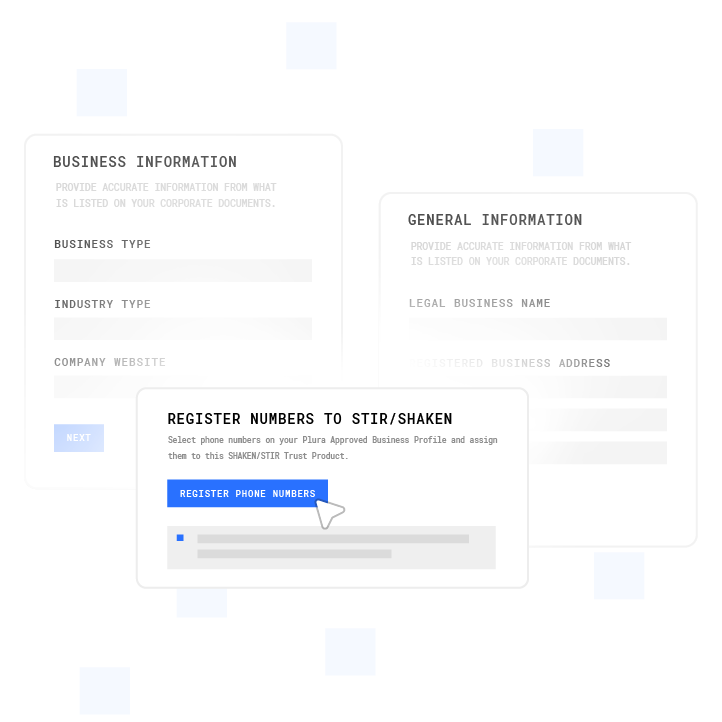
- STIR/SHAKEN authentication. Calls that fail caller ID authentication face a higher risk of “Spam Likely” labels or blocking by destination carriers.
Koncert includes compliance-support features such as DNC list management, consent tracking, and two-party consent recording options, and maintains SOC 2 Type II certification.1,2 Buyers remain responsible for their own compliance posture and should consult qualified counsel before using any multi-line dialing system.
Koncert Multi-Line Dialing Compared To Other Platforms
Outbound leaders often compare Koncert with other dialers to balance volume, cost, and compliance support. Infrastructure ownership and pricing transparency play a central role in that decision.
Mojo Dialer focuses on real estate teams.4 It is priced at $89 to $397 per month, offers triple-line and quad-line modes, and bundles FSBO and expired lead data. Reviews rate it 4.1/5 for real estate and 2/5 for general B2B sales, which reflects that niche focus.
BatchDialer targets ISA teams that run heavy daily volume.4 It supports four to five simultaneous lines, AI coaching prompts, and team management features at about $189 per month per agent. It does not bundle lead data and assumes teams already have lists.
Plura AI’s AI Predictive Dialer uses a carrier-owned model. Plura Connect, LLC, the carrier of record for Plura.AI, is an FCC-licensed audio bridging carrier (Filer ID 837256) and a wholly owned subsidiary of Blacklist Alliance Limited. This structure supports branded caller ID at the carrier level, STIR/SHAKEN authentication on every call, and real-time DNC scrubbing before each dial leaves the network. Plura also uses stateful conversion signals, such as historical answer rates and prior negotiation outcomes, to decide which contact to call next. Pricing and plans appear directly on the site without quote-gating.
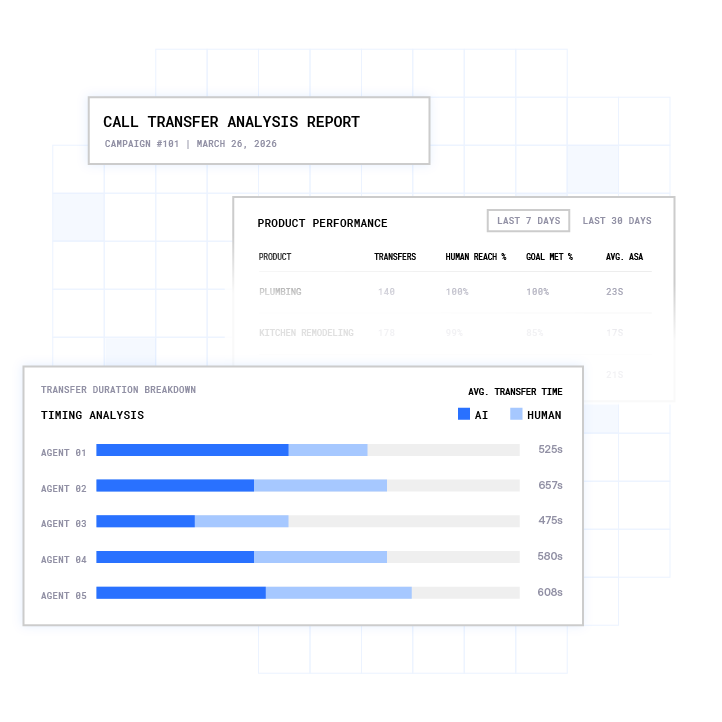
For high-volume teams, telecom ownership affects caller ID reputation and how far compliance controls reach into the network. A platform that controls its carrier stack can manage spam-label risk and DNC scrubbing at origination instead of relying only on application-level rules.
Review Plura pricing and model it against Koncert’s quote-based tiers.
Setting Up Multi-Line Dialing For Your Team
Koncert, BatchDialer, and Plura’s AI Predictive Dialer share similar rollout steps. A structured setup keeps data clean and protects caller ID reputation as volume ramps.
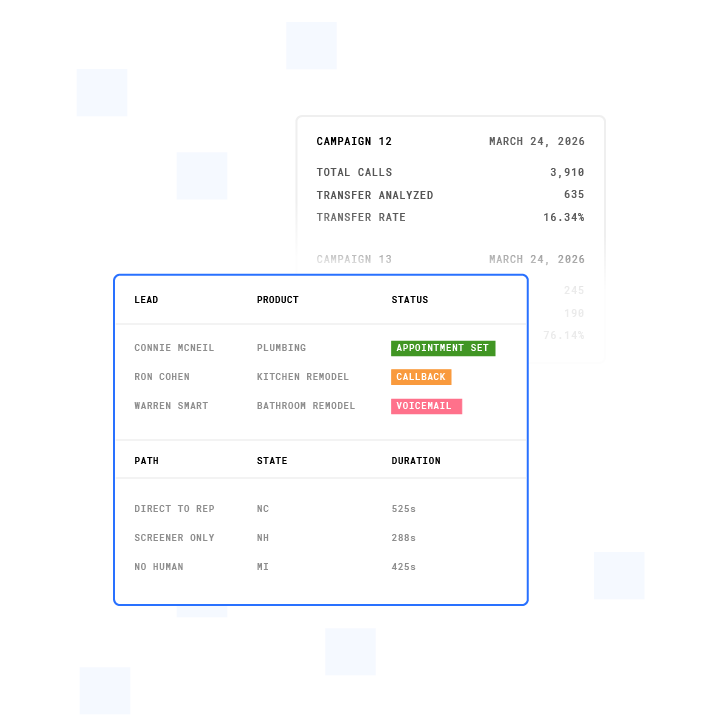
- Connect your CRM first. Multi-line dialing generates hundreds of call records per rep per day. Sync the dialer bi-directionally with your CRM so dispositions, notes, and recordings log automatically. Plura’s integrations include HubSpot, Salesforce, and Zoho.
- Start with fewer lines. Begin with 2 to 3 lines per rep, then scale to 4 or 5 as the team adapts. This approach makes it easier to watch abandoned-call performance against the 3% limit discussed earlier.
- Configure compliance settings. Upload DNC suppression lists, set calling-hour windows by time zone, and confirm that consent records tie to each list before the first campaign.
- Monitor caller ID reputation. Review caller ID health dashboards daily during the first two weeks. Rotate or rest numbers that show early spam-risk signals.
- Train reps on the answer pause. Multi-line dialing can create a short gap between answer and greeting. Managers should coach reps on fast, confident openers that fill that pause.
- Review analytics weekly. Track connect rates, talk time per hour, and conversion by list segment. Use these metrics to refine list strategy and line counts.
Pricing And ROI For Multi-Line Dialers
Vendors price multi-line dialers by user, line count, and feature bundle. Koncert’s AI Parallel Dialer lists Symphony at $99 per user per month as a published anchor, while full package pricing requires a quote. Add-ons such as Koncert Cadence, Waterfall Data Enrichment, and Symphony+ also have no published rates and are quoted on request. Mojo Dialer publishes $89 to $397 per month, depending on line count and data. BatchDialer Pro runs about $189 per month per agent. Plura lists transparent tiered pricing and plans on its site.
Return on investment depends on how the dialer changes connect rates and talk time, not just license cost. A rep who dials at the volume described earlier and reaches a 10% connect rate can more than double live conversations compared with a single-line workflow. Revenue leaders can plug their own conversion and headcount assumptions into Plura’s ROI calculator to estimate impact.
Explore Plura’s published plans to forecast your monthly dialer spend.
Frequently Asked Questions
Is An Auto Dialer Illegal?
Auto dialers operate within a regulated environment under the TCPA. Calls to wireless numbers using an ATDS for telemarketing purposes involve prior express written consent standards, DNC rules, calling-hour limits, and abandoned-call considerations. Statutory damages under the TCPA run $500 to $1,500 per violation. Teams should work with qualified legal counsel to understand how these rules apply to their specific programs.
What Is The Best Multi-Line Dialer Software?
The right platform depends on your motion and industry. Koncert focuses on B2B SDR teams with enterprise budgets and high outbound volume. Mojo Dialer fits real estate agents who want bundled lead data. BatchDialer suits ISA teams running 200+ dials per day. For high-volume teams that need carrier-grade compliance support, branded caller ID at the carrier level, and AI-driven contact prioritization, Plura’s AI Predictive Dialer provides a modern option built on owned telecom infrastructure.
How Many Lines Do I Need?
Most teams begin with 3 to 4 lines per rep and adjust from there. Higher line counts increase throughput but also raise the chance that more than one person answers at once, which affects abandoned-call performance. Leaders should track abandonment against the 3% limit discussed earlier, especially when testing 5-line configurations or lower-quality lists.
Is Koncert Multi-Line Dialing TCPA Compliant?
Koncert includes features that support TCPA compliance efforts, such as DNC list management, consent tracking, and two-party consent recording options, and it maintains SOC 2 Type II certification. Vendors do not determine a customer’s compliance status. Buyers remain responsible for their own consent records and should consult qualified legal counsel before scaling any multi-line dialing program.
How Does Plura AI Compare To Koncert?
Plura AI’s AI Predictive Dialer differs from Koncert at the carrier layer. Plura Connect, LLC, the carrier of record for Plura.AI, is an FCC-licensed audio bridging carrier and a wholly owned subsidiary of Blacklist Alliance Limited, as noted earlier. This carrier-level ownership supports branded caller ID, STIR/SHAKEN authentication on every outbound call, and real-time DNC scrubbing before calls leave the network. Koncert operates its own embedded phone infrastructure and offers caller ID monitoring through its Heat Map feature; available evidence does not document an FCC carrier license. Plura also uses stateful conversion signals across voice, SMS, RCS, and webchat to prioritize contacts most likely to convert, and it publishes transparent pricing without quote-gating.
Conclusion: Matching Your Dialer To Volume And Risk
Koncert multi-line dialing increases call volume and live conversations for outbound teams that already run high activity. For organizations with enterprise budgets and SDR-heavy motions, it remains a credible option.
High-volume teams also face caller ID reputation pressure and TCPA exposure at scale. A dialer that owns the carrier stack, supports compliance controls before calls leave the network, and uses AI to focus on high-intent contacts gives leaders more control over both revenue and risk.
1 Plura AI maintains SOC 2, HIPAA, ISO, and GDPR posture as part of its platform infrastructure. References to compliance frameworks in this article describe Plura’s platform capabilities and do not constitute a guarantee that any customer using Plura will themselves be compliant with applicable laws or standards. Customers remain solely responsible for their own regulatory obligations, certifications, consent management, recordkeeping, and the claims they make to their own end users. Consult qualified legal counsel for guidance specific to your use case.
2 This article describes regulatory frameworks at a general level and does not constitute legal advice. Laws and regulations vary by jurisdiction, change over time, and apply differently depending on facts and circumstances. Readers should consult qualified legal counsel before making compliance decisions.
3 Performance figures, customer outcomes, and industry statistics referenced in this article are drawn from cited third-party sources or Plura customer case studies. Individual results vary based on implementation, use case, industry, audience, and execution. Past or aggregate performance is not a guarantee of future results.
4 References to third-party products, services, companies, or research are made for informational and comparative purposes only. Plura AI is not affiliated with, endorsed by, or sponsored by any third party named in this article unless explicitly stated. Trademarks and product names referenced remain the property of their respective owners.
This article is provided for informational purposes only and reflects Plura AI’s understanding at the time of publication. Product capabilities, integrations, and specifications are subject to change. For the most current information, visit plura.ai.
This article was produced with the assistance of AI tools and reviewed by Plura AI prior to publication.