
Written by: Matt Beucler, CEO, Plura AI
Updated 2026-09-07
Key Takeaways
- Multi-line dialing is an automated outbound calling method that places multiple simultaneous calls per agent and connects them only to the first live human answer. This approach removes most dead time spent on rings and voicemails.
- Multi-line dialing differs from predictive dialing because it uses a fixed number of lines per agent instead of an algorithm that dials ahead of agent availability. This structure creates lower abandoned-call risk and a different compliance profile.
- High-volume sales prospecting, real estate lead generation, collections, market research, and insurance speed-to-lead follow-up benefit most from multi-line dialing when live conversations per hour drive revenue.
- Legal compliance in the United States involves DNC scrubbing, consent management, abandoned-call monitoring under the FCC’s 3% cap, and attention to state mini-TCPA laws that can be stricter than federal rules.
- Teams that want higher dialing efficiency while supporting compliance can explore AI-powered dialer solutions for modern outbound operations.
How Multi-Line Dialing Works in Daily Operations
Multi-line dialing follows a consistent sequence across most platforms, and the process focuses on one goal: connect agents to live humans as quickly as possible while minimizing dead time.
- The system pulls numbers from a contact list or from a connected CRM integration.
- It dials multiple numbers at the same time, typically two to six lines per agent, although some platforms support up to ten.
- Answering Machine Detection (AMD) analyzes each connection within the first few seconds of audio to identify live human pickups versus voicemail greetings. Some AI-based systems can classify within the first few hundred milliseconds.
- When a live person answers, the system routes that call to the agent so the conversation can start immediately.
- Calls that hit voicemail, busy signals, or no answer are dropped or flagged for later follow-up, which keeps agents focused on live conversations.
- If multiple lines connect at the same time, the system bridges the agent to the first live answer and drops the others to preserve efficiency and manage abandoned-call exposure.
Multi-line dialing is distinct from predictive dialing. Multi-line dialing uses a fixed number of lines per agent, tied directly to that agent’s seat. Predictive dialing uses an algorithm to dial ahead of agent availability across the entire team and adjusts call volume based on historical answer rates and handle times. This structural difference matters for compliance because parallel dialing drops lines before the recipient answers, while predictive dialing can create situations where recipients answer into silence when the algorithm misjudges pickup rates.
Beyond the distinction from predictive dialing, it is also worth clarifying what multi-line dialing is not. Searches for “multi-line dialing definition” often surface results about multi-line phone systems, which are hardware or VoIP configurations that allow a business to handle multiple inbound calls on one number. That category focuses on inbound capacity. Multi-line dialing in this guide refers to an outbound software feature that automates parallel calling.
Common Use Cases for Multi-Line Dialing
Multi-line dialing fits environments where outbound call volume limits revenue more than agent availability. A US B2B sales rep often spends roughly a third of the day trying to reach prospects when dialing manually. Multi-line dialing compresses that unproductive time and shifts more of the day into live conversations.
Typical deployment scenarios include:
- Sales prospecting: SDR teams running high-volume cold calling blocks to work through large lists quickly, especially for sub-$5K ACV deals where volume drives pipeline.
- Real estate lead generation: Agents calling expired listings, FSBOs, and circle-prospecting neighborhoods. Multi-line dialers allow a small team to work through a list of 5,000 leads in days instead of weeks.
- Collections: Teams reaching large groups of debtors efficiently across fixed contact lists.
- Market research: Survey teams that need to maximize completed interviews per hour.
- Insurance and financial services: Speed-to-lead follow-up on inbound web leads where the first responder often wins the conversion.
- Re-engagement campaigns: Outbound teams revisiting cold pipeline, closed-lost accounts, or ghosted inbound leads at scale.
The operational impact is direct. Forty-five seconds of ringing across 100 calls equals 75 minutes of lost time in a single day.3 Multi-line dialing compresses most of that dead time, so a single agent can reach roughly 100 to 250 dials per day, compared to about 20 to 60 on a single-line dialer.3
Running high-volume outbound and evaluating AI for your team? For the use cases above, see how Plura’s AI Predictive Dialer handles high-volume lists in a live demo.
Multi-Line Dialing vs. Predictive Dialing in Practice
Multi-line and predictive dialing often appear side by side in vendor marketing, yet they rely on different architectures and create different compliance considerations.
| Dimension | Multi-Line Dialing | Predictive Dialing |
|---|---|---|
| How calls are placed | Fixed number of lines, typically 2 to 6, dialed simultaneously per agent | Algorithm dials ahead of agent availability across the team and adjusts dynamically |
| Agent involvement | Agent is present and receives every connected call | Agent receives calls as the algorithm predicts availability, which can create connections before an agent is free |
| Risk of dropped calls | Lower, because most implementations drop lines before the prospect answers | Higher, because prospects can answer into silence if the algorithm misjudges availability |
| Compliance considerations | Medium risk, requires DNC scrubbing and consent management, with abandoned-call exposure when multiple prospects answer at once | Higher risk, subject to FCC abandoned-call limits of 3% per campaign over 30 days, and predictive dialers often operate near that threshold on B2B lists |
| Best use cases | SMB and mid-market outbound, cold lists, sub-$5K ACV deals | Enterprise call centers with large agent pools and consent-backed lists |
Multi-line dialing gives leaders more control at the agent-seat level and typically carries lower structural abandoned-call risk. Predictive dialing maximizes throughput across a large agent pool and usually requires dedicated compliance processes to stay within the FCC’s 3% abandoned-call cap. For high-volume operations that need both efficiency and deeper intelligence, Plura AI’s AI Predictive Dialer prioritizes contacts based on conversion signals and historical performance instead of simply increasing line counts.
Compliance and Regulatory Factors for Multi-Line Dialing
The United States regulatory framework for outbound dialing primarily comes from the Telephone Consumer Protection Act (TCPA), 47 U.S.C. Section 227, and the FTC’s Telemarketing Sales Rule (TSR), 16 C.F.R. Part 310, which governs the National Do Not Call (DNC) Registry.2 The FCC implements related rules under 47 C.F.R. Section 64.1200.
Several factors shape how these rules apply to a specific multi-line dialing program:
- ATDS definition: The Supreme Court’s 2021 ruling in Facebook, Inc. v. Duguid, 592 U.S. 395, narrowed the federal definition of an automatic telephone dialing system (ATDS) to equipment that uses a random or sequential number generator to store or produce numbers. Many modern dialers that work from fixed contact lists fall outside this definition, but each architecture requires its own analysis.
- State mini-TCPA laws: At least 12 states have enacted mini-TCPA laws since 2021. Florida, Oklahoma, Washington, and others apply autodialer concepts broader than the federal standard. Pennsylvania’s amended telemarketing law, effective October 18, 2026, narrows calling windows to 9:00 AM to 7:00 PM and prohibits solicitations on Sundays.
- Abandoned-call limits: The FCC caps abandoned calls at 3% of live answers per campaign over 30 days. An abandoned call is a live answer that is not connected to a representative within two seconds of the recipient’s completed greeting.
- DNC scrubbing: Contact lists are typically scrubbed against the National DNC Registry at least every 31 days before each campaign.
- Consent requirements: Marketing or telemarketing calls to cell phones generally require prior express written consent under 47 C.F.R. Section 64.1200(a)(2).
- TCPA penalties: Statutory damages can reach $500 per violation for inadvertent conduct and up to $1,500 per violation for knowing or willful conduct, with no cap on class action exposure.
- Consent revocation: New FCC revocation rules, effective April 11, 2025, direct businesses to honor opt-out requests made through any reasonable method within 10 business days.
This article describes the regulatory framework for informational purposes only. Leaders should consult qualified legal counsel regarding their dialing architecture, contact lists, and applicable state laws before launching or changing any outbound dialing program.
Plura’s AI Predictive Dialer includes real-time DNC scrubbing, TCPA-litigator screening, automated quiet-hours enforcement by time zone, and immutable consent logging as features that support compliance operations. Using Plura supports compliance management but does not replace an operator’s own legal responsibilities.
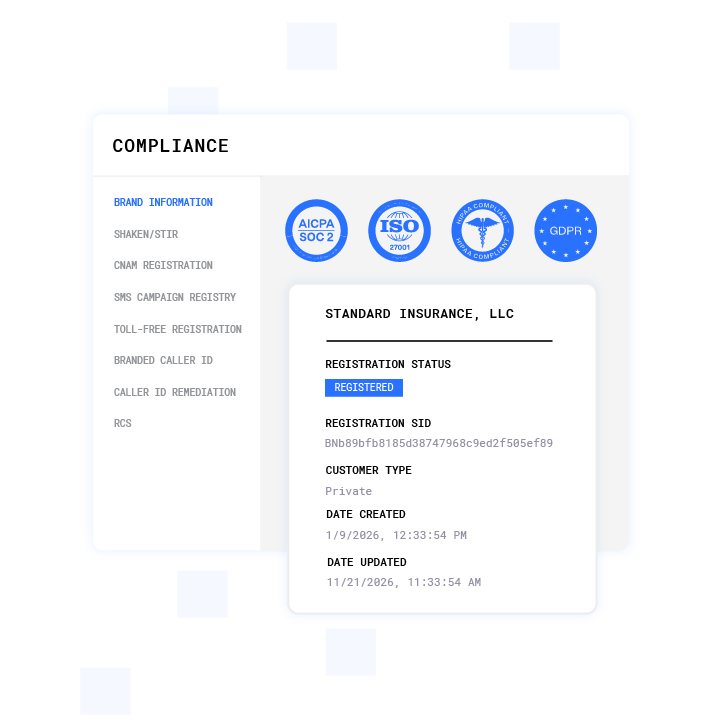
Want to see these controls in a live environment? Request a compliance-focused demo of Plura’s AI Predictive Dialer.
Pros and Cons of Multi-Line Dialing for Your Team
Multi-line dialing delivers real efficiency gains, and those gains come with structural tradeoffs. Weigh these advantages and disadvantages in the context of your list quality, compliance posture, and call volume.
Advantages:
- Increased efficiency, because the system removes most dead time between calls that would otherwise be spent listening to rings and voicemails.
- Higher talk time, since a parallel dialer can generate several times more live conversations per hour than manual dialing at the same rep effort.
- Faster lead response, which supports speed-to-lead performance in insurance, real estate, and financial services.
- Scalable throughput, with the same per-agent dial volume described earlier, which helps teams cover large lists quickly.
Disadvantages:
- Risk of dropped calls when multiple prospects answer at the same time, which creates abandoned calls that count against the FCC’s 3% cap.
- Compliance exposure when DNC scrubbing, consent management, and quiet-hours enforcement are not configured or monitored effectively.
- Spam labeling risk from high-volume, short-duration call patterns that carrier spam-detection algorithms are designed to flag, and this same pattern accelerates list burnout because lists are consumed faster than they can be refreshed.
- Reduced personalization, since high-volume dialing sessions leave less time for pre-call research and tailored conversation.
How to Choose a Multi-Line Dialer Platform
Buyers evaluating multi-line dialers in 2026 can assess platforms across five practical dimensions.
- Features: Voicemail detection accuracy, CRM integration depth such as native two-way sync versus webhook-only, call recording, analytics, and local presence dialing.
- Compliance tools: Real-time DNC scrubbing, consent tracking, quiet-hours enforcement by state, abandoned-call management, and STIR/SHAKEN attestation.
- Ease of use: Browser-based access versus hardware requirements, mobile access, and realistic onboarding timelines.
- Scalability: Ability to grow from a small team to hundreds of agents without major architectural changes.
- Pricing: Transparent per-user pricing compared to opaque quote-based models with setup fees and CRM integration surcharges.
Against those criteria, established tools like Mojo Dialer and Call Tools serve specific segments well.4 Mojo Dialer’s triple-line power dialing supports up to 300 calls per hour and focuses on real estate prospecting for expired listings and FSBOs. Call Tools offers predictive, power, and preview dialing modes with up to 10 simultaneous lines per agent and targets broader contact-center operations. Both align with their intended use cases.
For high-volume operations where efficiency and compliance depth both matter, Plura’s AI Predictive Dialer uses stateful conversion signals to prioritize which contacts to call next instead of simply increasing line counts. It runs on Plura’s FCC-licensed carrier with branded caller ID and STIR/SHAKEN authentication, and it includes real-time DNC scrubbing and TCPA-litigator screening as native platform features.1
Frequently Asked Questions
What Is the Difference Between Multi-Line Dialing and Power Dialing?
Power dialing calls one number at a time automatically and advances to the next contact after each call completes. The agent is present for every dial, including rings and voicemails. Multi-line dialing places multiple simultaneous calls and connects the agent only to the first live answer, then drops the other lines. Multi-line dialing appears as a feature in many power dialer platforms, and the terms sometimes overlap in marketing language. In practice, power dialers call one number at a time per agent, while multi-line dialers call several numbers at once and connect only to live answers, which creates different efficiency and TCPA compliance profiles.
Is Multi-Line Dialing Legal for Cold Calling?
The use of multi-line dialing for cold calling depends on several factors, including the nature of the call, the type of numbers being dialed, whether prior express consent exists, and whether the system qualifies as an ATDS under the post-Facebook v. Duguid standard. State mini-TCPA laws in Florida, Oklahoma, Washington, Pennsylvania, and others can apply requirements that are stricter than federal rules. Operators should consult qualified legal counsel for their specific use case before deploying any outbound dialing program.
How Does Multi-Line Dialing Handle Voicemail?
Multi-line dialers use Answering Machine Detection (AMD) to identify voicemail greetings. When the system detects voicemail, it either drops the call or leaves a pre-recorded message, depending on configuration. AMD systems analyze the initial audio after a call connects, typically the first few seconds, to distinguish a live human response from a recorded greeting. Some AI-based systems can classify within the first few hundred milliseconds. Detection accuracy varies by vendor and affects both efficiency and the abandoned-call rate.
Can Multi-Line Dialing Be Used with a CRM?
Many modern multi-line dialers, including JustCall, Kixie, Aircall, and Belsmart, integrate with CRMs such as Salesforce, HubSpot, and Zoho.4 These integrations can automatically log call outcomes, notes, and dispositions after each session, although some dialers, such as Enzo, only offer one-way integration via Zapier for these CRMs. The depth of integration varies significantly. Some platforms provide native two-way sync, while others rely on webhooks or third-party automation tools like Zapier, which can create data gaps. Native CRM integration often becomes a key buying factor for teams that depend on accurate pipeline reporting.
What Are the Common Problems with Auto Dialers?
Common problems include dropped calls when multiple prospects answer at the same time, spam labeling from high-volume calling patterns on the same numbers, and list burnout from consuming contact lists faster than they can be replenished. Teams can also face compliance issues from inadequate DNC scrubbing or missed quiet-hours enforcement, along with poor call quality from unstable VoIP connections. AMD inaccuracy can create additional friction by dropping live calls or connecting agents to voicemail greetings.
Conclusion: Where Multi-Line Dialing Fits in Your Outbound Strategy
Multi-line parallel dialing functions as an efficiency tool for high-volume outbound teams. It works best on large, clean lists with low connect rates and disciplined number management. It removes most of the dead time agents spend on rings, voicemails, and busy signals, and it allows a single agent to work through contact lists at a pace that manual dialing cannot match. The tradeoffs include fixed line counts that cap throughput, faster list consumption, and abandoned-call risk that requires active monitoring against regulatory limits.
Modern AI-powered dialers address many of these structural limits by changing the underlying decision logic. Instead of simply dialing more lines, Plura’s AI Predictive Dialer prioritizes contacts based on conversion signals, connects agents only to live humans, and runs on Plura’s FCC-licensed carrier with branded caller ID and STIR/SHAKEN authentication. The platform includes real-time DNC scrubbing, TCPA-litigator screening, automated quiet-hours enforcement, and immutable consent logging as integrated capabilities that support compliance operations.
To see how the AI Predictive Dialer performs against your current dialing stack, request a live demo or compare pricing plans side by side.
1 Plura AI maintains SOC 2, HIPAA, ISO, and GDPR posture as part of its platform infrastructure. References to compliance frameworks in this article describe Plura’s platform capabilities and do not constitute a guarantee that any customer using Plura will themselves be compliant with applicable laws or standards. Customers remain solely responsible for their own regulatory obligations, certifications, consent management, recordkeeping, and the claims they make to their own end users. Consult qualified legal counsel for guidance specific to your use case.
2 This article describes regulatory frameworks at a general level and does not constitute legal advice. Laws and regulations vary by jurisdiction, change over time, and apply differently depending on facts and circumstances. Readers should consult qualified legal counsel before making compliance decisions.
3 Performance figures, customer outcomes, and industry statistics referenced in this article are drawn from cited third-party sources or Plura customer case studies. Individual results vary based on implementation, use case, industry, audience, and execution. Past or aggregate performance is not a guarantee of future results.
4 References to third-party products, services, companies, or research are made for informational and comparative purposes only. Plura AI is not affiliated with, endorsed by, or sponsored by any third party named in this article unless explicitly stated. Trademarks and product names referenced remain the property of their respective owners.
This article is provided for informational purposes only and reflects Plura AI’s understanding at the time of publication. Product capabilities, integrations, and specifications are subject to change. For the most current information, visit plura.ai.
This article was produced with the assistance of AI tools and reviewed by Plura AI prior to publication.