
Written by: Matt Beucler, CEO, Plura AI
Key Takeaways
- VICIdial replacement options in 2026 fall into four paths: managed or hosted VICIdial, commercial cloud dialers, AI-native dialers, and rebuilding on raw Asterisk or FreePBX. Each path trades control and convenience differently.
- Self-hosted VICIdial carries significant costs beyond its free AGPLv2 license. A 50-agent deployment runs $15,830 to $30,400 per month, including sysadmin, hosting, VoIP, and compliance expenses.
- Managed or hosted VICIdial options such as VICIhost and eTollFree remove server management while keeping VICIdial’s flexibility. Operators still handle campaign management, list hygiene, and compliance posture.
- Commercial cloud dialers such as Convoso, Readymode, and Five9 shift infrastructure ownership to the vendor.4 These platforms provide established outbound capabilities but do not include carrier-level compliance controls or stateful cross-channel memory.
- Plura AI leads the AI-native dialer category with carrier-level compliance controls, branded caller ID, and stateful cross-channel memory across voice, SMS, RCS, and webchat. See how carrier-level compliance and cross-channel memory work on your call volume.
What You’re Actually Leaving And What “Free” Really Costs
VICIdial is open source and free to license under AGPLv2. The license is the cheapest part of running it. The real costs sit in servers, SIP trunks, compliance tooling, and the Linux or Asterisk administrator who maintains the stack.
ViciStack’s March 2026 total cost of ownership (TCO) analysis puts a 50-agent VICIdial deployment at $15,830 to $30,400 per month all-in, or $317 to $608 per agent per month.3 That figure covers a full-time sysadmin salary ($5,400 to $9,200 per month), hosting ($680 to $1,750 per month for two to three servers), VoIP ($3,700 to $7,300 per month), and compliance tooling ($150 to $2,800 per month). A 10-agent deployment runs $2,360 to $7,280 per month, while a 200-agent deployment runs $39,050 to $80,400 per month. The cost does not scale down proportionally as agent count drops.
CheckThat.ai’s 2026 VICIdial pricing guide estimates a dedicated VICIdial administrator at $60,000 to $150,000 annually, citing a Bureau of Labor Statistics 2024 median of $97,000. At 50 agents, that labor cost alone runs roughly $120 per agent per month. Compliance spend for a 50- to 100-agent operation adds another $800 to $2,500 per month for Do Not Call (DNC) scrubbing, federal DNC list subscription, STIR/SHAKEN carrier charges, and compliance monitoring software.
ViciStack’s March 2026 analysis places VICIdial’s economic crossover versus commercial cloud platforms between 30 and 50 agents, with other sources citing 35 to 40 agents or 75 to 100 agents depending on configuration. Below that threshold, the infrastructure floor does not shrink much, so cloud dialers are cheaper or comparable. Above 100 agents, VICIdial’s savings can reach $50,000 to $200,000 per year versus commercial alternatives, provided a competent sysadmin remains in the role.
The framing that matters is simple: you are choosing how much infrastructure you want to own, not just a dialer. Run your numbers through Plura’s calculator to check your ROI in real time.
The Four VICIdial Replacement Paths
Path 1: Managed Or Hosted VICIdial
Managed or hosted VICIdial keeps the open-source stack and hands server management to a vendor. This path often surprises operators who assume self-hosting is the only option. VICIhost and eTollFree are the two most commonly cited providers.4
CheckThat.ai’s 2026 VICIdial pricing guide reports that VICIhost charges $1,000 upfront for the first server, which includes the first month of hosting, $500 setup for each additional server, and $400 per server per month recurring. Call minutes, DID numbers, and webphones bill separately. VICIhost telecom rates run $0.015 per minute outbound and $0.028 per minute toll-free inbound. A 50-agent outbound operation on VICIhost runs approximately $9,588 per month all-in, or $192 per agent per month. VICIhost includes one hour of free support per dialer per month, eight hours of setup support with initial deployment, and a 99.9% uptime guarantee on dedicated physical hardware.
The trade-off is clear. You keep VICIdial’s flexibility and dialer logic, and the vendor handles the server. You still own campaign management, list hygiene, and compliance posture.
- Choose this if: You want to keep VICIdial’s flexibility and control while stepping away from server management.
- Avoid this if: You want native omnichannel, AI, or carrier-level compliance controls built into the platform.
Path 2: Commercial Cloud Dialers
If handing off server management still leaves too much on your plate, the next step is a fully managed commercial platform. Commercial cloud dialers shift infrastructure ownership entirely to the vendor. The operator manages campaigns, users, and policy settings, while the vendor manages servers, telephony, and platform updates.
Convoso positions itself as an outbound revenue platform for high-volume calling. Its Ignite engine claims to boost contact rates by continuously analyzing every number, campaign, carrier, and contact pattern. Convoso’s public competitive page does not publish transparent list pricing and frames value in revenue terms. Third-party estimates from CheckThat.ai place Convoso in the $150 to $200 per seat per month range, with DID reputation management and AI-powered compliance features included.
Readymode publishes per-license pricing. The Starter plan costs $199 per license per month for one to four licenses, and the Readymode iQ plan costs $249 per license per month for five or more licenses, with outbound minutes bundled under a fair-use policy. Readymode supports predictive, progressive, power, and preview dialing modes. The iQ tier adds Autopilot DID rotation and caller ID reputation monitoring. Readymode holds a G2 rating of 4.6 out of 5 across approximately 155 reviews. Annual contracts are required, and no free trial is publicly advertised.
Five9 publishes 2026 pricing at $119 per concurrent user for Digital and $159 per concurrent user for Core, with a 50-seat minimum across all plans. Five9’s outbound compliance stack includes real-time per-campaign 3% abandonment cap enforcement, per-seller consent capture with audit, and automated national, state, and internal DNC scrubbing. Premium, Optimum, and Ultimate tiers require quote-only sales engagement. Per Contact Center Nation’s 2026 predictive dialer analysis, Five9’s published seat price becomes $220 to $280 per month all-in when carrier minutes, DIDs, and usage-based charges are added.
- Choose this if: You want a managed platform with established outbound capabilities and vendor support, and you do not need AI-native features or carrier-level caller ID control.
- Avoid this if: You want carrier-level caller ID control, stateful cross-channel memory, or compliance enforced at the origination layer.
Path 3: AI-Native Dialers
AI-native dialers form the path most ranking pages miss. These platforms are built from the carrier layer up to handle voice, SMS, RCS, and webchat as a unified, memory-driven system, rather than adding an AI feature to a commercial cloud dialer.
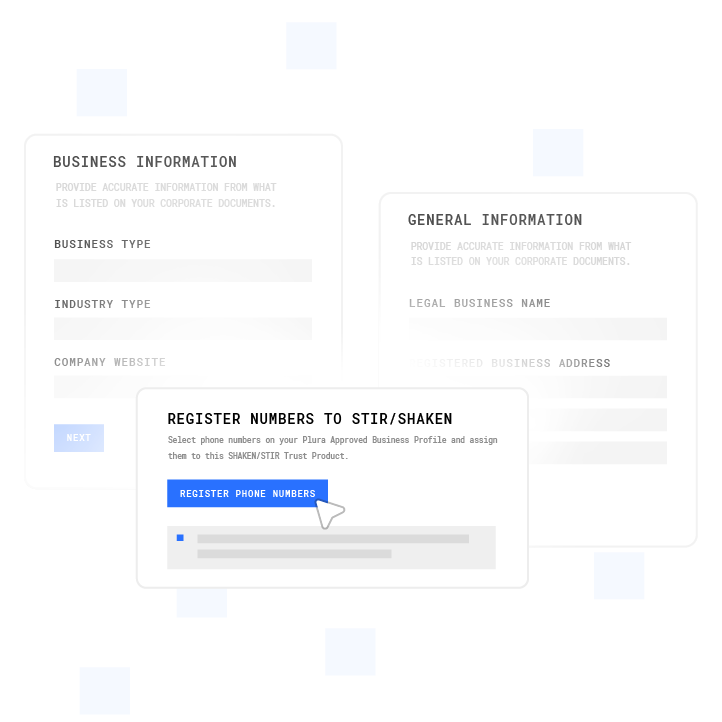
Plura AI leads this path. Plura’s AI Predictive Dialer runs on Plura’s own FCC-licensed audio bridging carrier, not a third-party CPaaS such as Twilio. That distinction matters operationally. Because Plura is its own carrier, it issues branded caller ID at the carrier level and authenticates every outbound call with STIR/SHAKEN. Calls present with the company’s name instead of an unfamiliar number or a “Spam Likely” label. Per SIPNEX’s STIR/SHAKEN documentation, the difference in answer rate between A-level and C-level attestation can exceed 30% on identical dialing patterns. Platforms that route through a CPaaS reseller are capped at B-level attestation regardless of their practices.
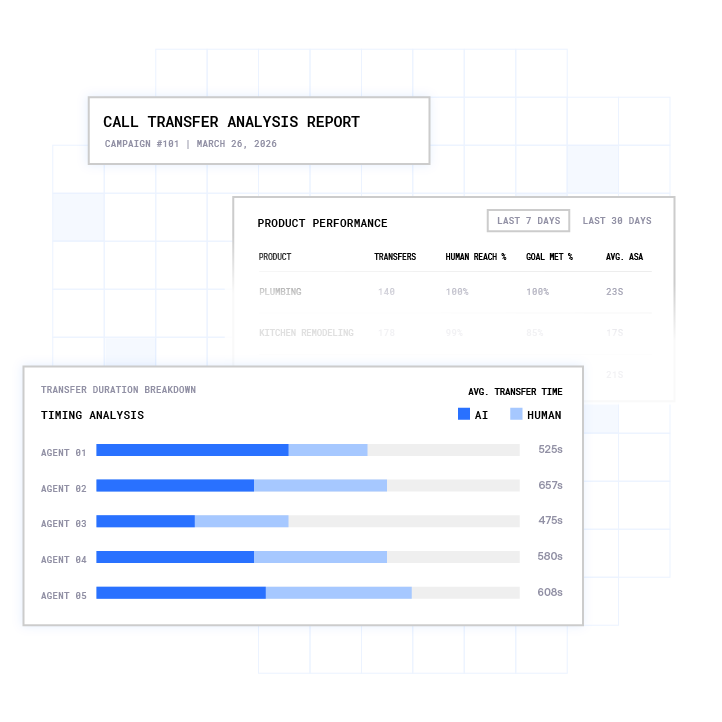
Plura’s compliance controls are enforced inside the platform before dial. Controls include real-time DNC scrubbing against federal and state registries, TCPA litigator screening, automated quiet-hours enforcement through time-zone detection, and immutable consent logging. Customers remain responsible for their own regulatory obligations, and Plura provides infrastructure and controls that support compliance. The platform supports TCPA compliance, DNC compliance, HIPAA, SOC 2, ISO certification, GDPR, and STIR/SHAKEN caller ID verification.1
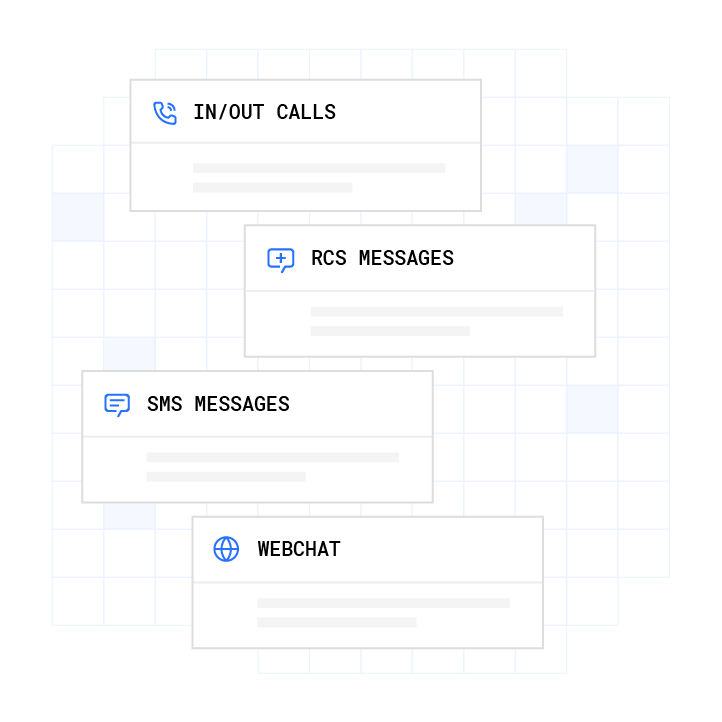
The Stateful Conversation Database is the architectural differentiator. Plura’s AI voice agent, AI SMS, AI RCS, and AI webchat all share the same memory layer, which preserves context across channels. A lead who texted at 9 a.m. is recognized on the noon call, and the agent already knows what was said, what was offered, and what remains open. Plura’s comparison with Vapi.ai notes that other categories do not preserve this context across channels by default.
Plura’s pricing includes an agent build fee of $2,750 per agent, with annual contracts billed monthly and a 90-day opt-out window. Once deployed, operators configure the platform through a no-code workflow builder instead of engineering tickets, and conversation intelligence surfaces patterns across every interaction. CRM integration spans 50+ tools across 10+ categories, including HubSpot, Salesforce, and Zoho. Plura’s U.S.-based infrastructure, detailed in the compliance section below, matters for operators weighing offshore-dependent vendors.
For a 15-agent operation, Plura’s ROI calculator estimates monthly human agent costs at $60,000, based on 15 agents at $20 per hour with 25% taxes, benefits, and commissions at 40% talk utilization.3 The same workload with Plura at 100% talk utilization using 6 agents is estimated at $14,400, projecting a 30-day ROI of $45,600 and a 12-month ROI of $547,200.
Plura’s executive communications strategy guide puts the TCO comparison at $300,000 to $700,000 annually for a 100-seat AI-powered operation versus $4 million to $7 million for traditional contact center operations at equivalent volume.
- Choose this if: You want to stop owning infrastructure and want carrier-level compliance controls, branded caller ID, and stateful cross-channel memory.
- Avoid this if: You need deep customization of dialer logic or want to maintain full control of the telephony stack.
See the AI Predictive Dialer on your call volume.
Path 4: Rebuild On Raw Asterisk, FreePBX, Or FusionPBX
Path 4 focuses on rebuilding directly on telephony frameworks. Asterisk, FreePBX, and FusionPBX are PBX platforms, not contact center dialers, so they do not operate as drop-in VICIdial replacements.
Per ViciStack’s 2026 open-source call center software guide, Asterisk is a telephony framework that handles SIP connectivity, call routing, codec transcoding, RTP media, dialplan execution, conference bridging, voicemail, and IVR logic. It does not handle campaigns, lead lists, agent states, or predictive dial ratios. Building a contact center directly on Asterisk requires writing eight separate systems from scratch: a predictive dialing algorithm, a campaign management interface, an agent state machine, a lead list handler, a real-time monitoring dashboard, a call recording manager, a reporting engine, and an API layer. ViciStack estimates 12 to 24 months of full-time development.
VICIfast’s VICIdial vs. FreePBX comparison frames the distinction precisely. FreePBX includes a basic queue module for inbound call routing, but it has no predictive dialing engine, no lead list manager, no agent disposition screen, and no real-time campaign reports. A queue parks inbound callers and hands them to the next free agent. A predictive dialer originates outbound calls on its own schedule, filters out voicemail and busy signals, and then bridges a live human to a waiting agent. FreePBX lacks that logic and cannot be converted into a dialer by adding modules.
FusionPBX, built on FreeSWITCH rather than Asterisk, is designed for multi-tenant PBX deployments. Per Loop Origin’s June 2026 comparison guide, FusionPBX can support contact center deployments as a PBX layer that still requires additional components for full dialer functionality.
The open-source forks GOautodial and ICTContact sit closer to a VICIdial replacements but remain distinct. Per ViciStack’s GOautodial comparison, GOautodial is a PHP-based GUI layer that sits on top of VICIdial’s core engine and Asterisk dialplan. It changes the interface and packaging more than the underlying dialing engine and inherits much of the same admin burden. GOautodial Community Edition 4.0 shipped in 2019 running VICIdial revision approximately 2900 to 3200, while current VICIdial SVN trunk is at revision 3939+, a gap representing six years of security patches, PHP 8 compatibility, Asterisk 18 support, and WebRTC agent phone. Per ICT Innovations’ 2026 open source contact center comparison, ICTContact includes DNC list management, calling-hour restrictions by time zone, and opt-out handling, and ICTContact supports multi-tenant architecture.
- Choose this if: You have deep Asterisk expertise and want to build a custom telephony stack from scratch with full control over every layer.
- Avoid this if: You need predictive dialing, campaign management, or agent disposition workflows out of the box.
Comparison Table
The four paths differ most in who owns the infrastructure and how much admin burden stays with your team. The table below summarizes each path’s example platforms, best-fit operator profile, and ongoing admin load.
| Path | Example Platforms | Best For | Admin Burden |
|---|---|---|---|
| Managed / Hosted VICIdial | VICIhost, eTollFree | Keeping VICIdial’s flexibility without server management; VICIhost runs approximately $9,588 per month all-in for 50 agents, per CheckThat.ai | Medium: vendor handles servers, operator owns dialer logic, list hygiene, and compliance posture |
| Commercial Cloud Dialers | Convoso, Readymode, Five9 | Teams wanting established outbound platforms with vendor support; Five9 Core starts at $159 per concurrent user with a 50-seat minimum, per Five9’s published pricing | Low: vendor-managed infrastructure, operator manages campaigns and policy settings |
| AI-Native Dialers | Plura AI | High-volume operators who want to stop owning infrastructure and want carrier-level compliance controls, branded caller ID, and stateful cross-channel memory, per Plura’s executive guide | Low: vendor-managed with compliance controls enforced at the carrier level before dial |
| Rebuild on Asterisk / FreePBX | Asterisk, FreePBX, FusionPBX | Operators with deep telephony expertise building custom stacks; not viable for predictive dialing without 12 to 24 months of custom development, per ViciStack’s 2026 guide | High: requires Asterisk expertise and custom development, with no campaign management or dialer logic out of the box |
Migration Reality For VICIdial Operators
Leaving VICIdial follows a predictable failure pattern when teams do not plan the data export correctly. Per VICIfast’s June 2026 migration data export checklist, the new system goes live, and then someone asks for a report on last quarter’s dispositions, a DNC number that only existed in the old platform appears, or an agent needs a recording from four months ago. None of those are recoverable if access to the old platform has lapsed.
The internal DNC list is the most legally sensitive export. Numbers on it represent people who opted out or filed complaints. If the platform separates DNC by campaign, each list must be exported and merged, and the most conservative set applied to the new platform’s system DNC table before the first campaign runs.
Call recording archives are large and slow to export. Recordings should be stored where the compliance team can access them for at least 12 months after migration, with metadata such as phone number, agent, and timestamp preserved so a recording can be located when requested.
For downtime windows, ViciStack’s March 2026 cloud deployment guide advises planning for two to four hours for a clean cutover, or running parallel systems with a DNS-based switchover for zero-downtime migration. Number porting and SIP trunk re-registration are separate steps from the data migration itself.
Agent retraining centers on workflow changes such as disposition entry, campaign switching, and reporting access. The core call-handling loop stays familiar. The vicidial.org community forums include an active thread on webphone and softphone compatibility that signals this as a real secondary concern for operators evaluating new platforms.
The pre-migration checklist, per VICIfast’s export sequence:
- Export all lead lists with disposition status three to four weeks before cutover.
- Export the full DNC list and merge campaign-specific lists.
- Export call recordings in monthly batches and store them where the compliance team can access them for 12 or more months.
- Export disposition codes and descriptions for mapping to the new platform.
- Export the agent roster with extension assignments.
- Export historical call reports by campaign for before-and-after performance comparison.
- Export the phone number inventory and DIDs for porting or forwarding.
- Verify all exports are complete and readable before scheduling cancellation.
Schedule subscription cancellation only after every export is verified. Keep read access to the old platform through the rollback window.
Compliance And Vendor Selection Context
Migration decisions now sit inside a shifting regulatory environment. Operators evaluating replacement paths should understand current proceedings and direct detailed questions to qualified counsel.
The FCC’s Notice of Proposed Rulemaking (NPRM) under CG Docket No. 26-52 describes potential actions to encourage onshoring of call centers, improve customer service security, and address illegal robocall scams originating inside foreign call centers.2 The draft discusses capping offshore customer-service call volume at approximately 30% of interactions and limiting offshore handling of sensitive consumer data such as Social Security numbers, credit card numbers, passwords, and multi-factor authentication codes.
Companion federal legislation includes the Keep Call Centers in America Act (S.2495) and the Foreign Robocall Elimination Act (S.2666), which extend the federal regulatory perimeter. State-level restrictions are already active. New York’s Call Center Jobs Act carries penalties up to $10,000 per day, and New Jersey has a mirror statute. Connecticut restricts offshore handling on state contracts, Missouri issued an offshore-disclosure executive order, and Florida restricts offshore handling of medical information.
A separate FCC proceeding, docketed as CG Docket No. 02-278 and scheduled for the FCC’s September 30, 2026 open meeting, proposes modernizing TCPA consent revocation rules.2 Topics include potential changes to opt-out processing timelines and the scope of revocation across categories of calls. The FCC’s revoke-all rule effective date has been delayed to January 31, 2027, per Burr and Forman’s January 2026 analysis. Operators should consult the FCC’s Electronic Comment Filing System and qualified counsel for current rule status.
Plura runs on 100% U.S. infrastructure by architecture, which matters for operators weighing offshore-dependent vendors under these proceedings. Voice origination, model hosting, data storage, and call recording all sit on domestic infrastructure.
Review how carrier-level controls and U.S. infrastructure address these rules.
FAQ
What Are Some Good Alternatives To VICIdial?
The four main categories of VICIdial alternatives are managed or hosted VICIdial (VICIhost, eTollFree), commercial cloud dialers (Convoso, Readymode, Five9), AI-native dialers (Plura AI), and rebuilding on raw Asterisk or FreePBX. The right alternative depends on how much infrastructure you want to own, your agent count, your compliance requirements, and whether you need AI or omnichannel capabilities. Operators under 50 agents without Linux staff typically find commercial cloud dialers more cost-effective than self-hosted VICIdial, per ViciStack’s March 2026 TCO analysis.
How Much Does VICIdial Cost?
VICIdial is free to license under AGPLv2, but the license is the smallest part of the total cost. The 50-agent deployment cost breakdown above covers the full stack. The license itself is free, and the expense sits in infrastructure and staffing.
Is VICIdial Open Source, And Does That Matter For Your Replacement?
VICIdial is open source under the AGPLv2 license, which requires operators to share any modifications they distribute. That affects replacement decisions in two ways. The open-source license removes licensing fees, but the real TCO sits in infrastructure and staffing. The AGPLv2 license also means any fork or modification you distribute must be open-sourced, which affects operators who want to build proprietary customizations on top of VICIdial. For operators evaluating commercial replacements, the license matters less than total cost of ownership and admin burden.
Is FreePBX Or Asterisk A Drop-In VICIdial Replacement?
FreePBX and Asterisk are PBX platforms, not contact center dialers. FreePBX handles extensions, inbound call routing, ring groups, IVR trees, voicemail, and DID route configurations. It has no predictive dialing engine, no lead list manager, no agent disposition screen, and no real-time campaign reports. Asterisk is the telephony framework underneath FreePBX. Building a contact center directly on Asterisk requires writing a predictive dialing algorithm, campaign management interface, agent state machine, and reporting engine from scratch, which ViciStack estimates at 12 to 24 months of full-time development. FusionPBX, built on FreeSWITCH, operates as a PBX layer that requires additional components for outbound dialer functionality. GOautodial is closer to a VICIdial replacement but functions as a repackaged VICIdial stack that inherits much of the same admin burden, while ICTContact is a distinct white-label, multi-tenant contact center product rather than a VICIdial replacement.
What Should I Check Before Choosing A VICIdial Replacement?
Evaluate each replacement path on four criteria: predictive dialing capability, admin burden, compliance posture, and migration difficulty. Confirm whether the platform has a true predictive engine or only power or preview modes. Clarify who manages servers, updates, and compliance tooling. Review whether DNC scrubbing, TCPA litigator screening, and STIR/SHAKEN authentication are enforced at the platform level or handled through third-party tools. Assess data export requirements, downtime windows, and likely breakpoints in the first 30 days. Also verify whether the vendor is its own FCC-licensed carrier or a CPaaS reseller, because that determines whether branded caller ID can be issued at the carrier level and what attestation level your outbound calls will carry.
How Long Does It Take To Migrate Off VICIdial?
Plan for two to four hours of downtime for a clean cutover, or zero downtime with parallel systems and a DNS-based switchover, per ViciStack’s March 2026 cloud deployment guide. The data export process should start three to four weeks before cutover. Lead lists, DNC lists, call recordings, disposition codes, agent rosters, historical reports, and DID inventory all require separate exports and verification.
1 Plura AI maintains SOC 2, HIPAA, ISO, and GDPR posture as part of its platform infrastructure. References to compliance frameworks in this article describe Plura’s platform capabilities and do not constitute a guarantee that any customer using Plura will themselves be compliant with applicable laws or standards. Customers remain solely responsible for their own regulatory obligations, certifications, consent management, recordkeeping, and the claims they make to their own end users. Consult qualified legal counsel for guidance specific to your use case.
2 This article describes regulatory frameworks at a general level and does not constitute legal advice. Laws and regulations vary by jurisdiction, change over time, and apply differently depending on facts and circumstances. Readers should consult qualified legal counsel before making compliance decisions.
3 Performance figures, customer outcomes, and industry statistics referenced in this article are drawn from cited third-party sources or Plura customer case studies. Individual results vary based on implementation, use case, industry, audience, and execution. Past or aggregate performance is not a guarantee of future results.
4 References to third-party products, services, companies, or research are made for informational and comparative purposes only. Plura AI is not affiliated with, endorsed by, or sponsored by any third party named in this article unless explicitly stated. Trademarks and product names referenced remain the property of their respective owners.
This article is provided for informational purposes only and reflects Plura AI’s understanding at the time of publication. Product capabilities, integrations, and specifications are subject to change. For the most current information, visit plura.ai.
This article was produced with the assistance of AI tools and reviewed by Plura AI prior to publication.