
Written by: Matt Beucler, CEO, Plura AI
Key Takeaways for VICIdial vs. Plura
- VICIdial is open-source software built for self-hosted Linux servers, not a cloud-native platform. True cloud dialers run on vendor-owned or carrier-owned infrastructure with elastic scaling and platform-level compliance controls.
- Self-hosted VICIdial has zero software license fees but typically reaches a five- to six-figure annual TCO once sysadmin labor, SIP trunking, compliance tooling, and downtime risk are fully accounted for.
- Plura AI’s carrier-owned, 100% U.S. cloud architecture supports SOC 2, HIPAA, ISO certification, GDPR, SHAKEN/STIR caller ID verification, TCPA compliance, and DNC compliance at the platform layer before each call.1
- Migration from self-hosted VICIdial to a cloud platform can take weeks for smaller operations or months for enterprise deployments. Plura’s onboarding sequence can have a straightforward outbound program running in days.
- Plura AI replaces traditional $4M–$7M contact-center economics with a $300K–$700K annual model powered by AI agents running at 100% talk utilization.3 See the carrier-owned cloud architecture in a live Plura demo.
How VICIdial Handles Cloud and Hosting
VICIdial is open-source software designed for self-hosted deployment. Operators install it on their own Linux servers running Apache, MySQL, and Asterisk. The platform itself does not run on vendor-managed infrastructure, and there is no native SaaS version. In the VICIdial context, “cloud based” usually means the operator has moved their self-hosted instance onto a virtual private server or a managed hosting provider such as VICIhost, not that the software was architected as a cloud-native product.
A true cloud-native predictive dialer is built from the ground up to run on vendor-owned or carrier-owned infrastructure. It supports elastic scaling, automatic failover, browser-based agent access, and compliance controls enforced at the platform layer. That distinction has direct operational impact.
Key infrastructure differences between self-hosted VICIdial and a true cloud deployment include:
- Self-hosted: operator owns and manages Linux servers, PBX hardware, SIP trunks, and backup systems
- Self-hosted: software updates, security patches, and uptime fall on the operator
- Self-hosted: compliance tooling such as DNC scrubbing and TCPA consent logging must be sourced and integrated separately
- Cloud-native: vendor manages infrastructure, scaling, failover, and carrier relationships
- Cloud-native: agents log in through a browser with no on-site hardware requirement
- Cloud-native: compliance controls are enforced at the platform layer before each outbound contact
Plura AI’s AI Predictive Dialer runs on Plura’s own FCC-licensed audio bridging carrier. Voice originates on domestic infrastructure, not a third-party CPaaS (Communications Platform as a Service: the API-only telecom layer that providers like Twilio sell to AI vendors that do not own their own carrier). That architectural difference separates a carrier-owned cloud solution from a hosted wrapper.
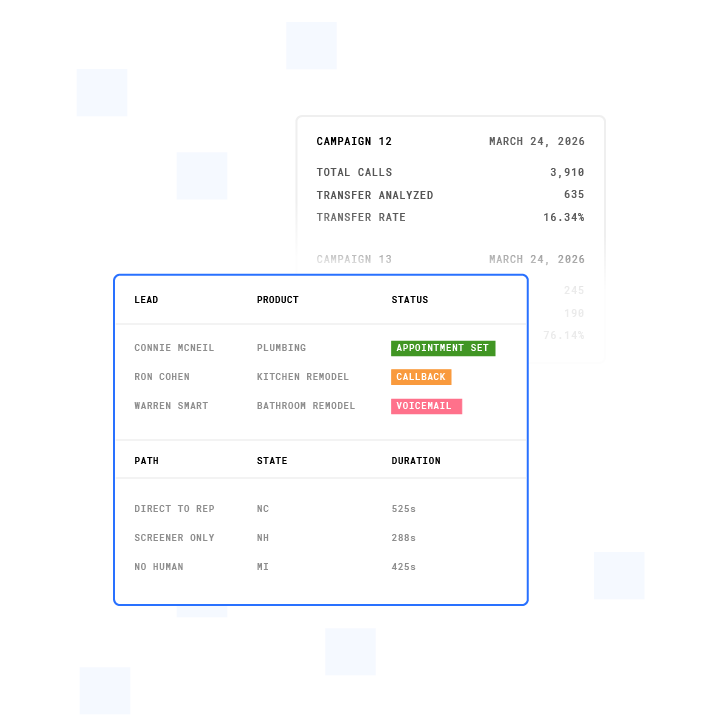
Understanding the infrastructure model is only half the picture. The other half is what that model actually costs to run.
VICIdial Total Cost of Ownership in 2026
VICIdial carries no software license fee, yet total cost of ownership (TCO) is substantially higher than the zero-dollar headline suggests. TCO covers the full annual spend, including infrastructure, labor, compliance tooling, and downtime risk.
ViciStack’s 2026 TCO analysis examines self-hosted VICIdial costs for small and mid-sized agent operations. The largest cost driver is not infrastructure, it is admin expertise. Qualified VICIdial sysadmins with Asterisk, Linux, and MySQL skills in India and Pakistan are posted at salaries equivalent to roughly $3K–$19K USD per year. Downtime for a 50-agent operation can translate into significant lost productivity.
Beyond the sysadmin labor that dominates the TCO calculation, operators routinely undercount several additional expense categories that compound the true annual cost:
- Server hosting that varies depending on agent count, per ViciStack
- SIP trunking for mid-to-large operations
- Compliance tooling such as DNC scrubbing, TCPA consent tracking, and recording storage
- TCPA violation exposure of $500–$1,500 per violating call, with TCPA class-action filings in September 2025 spiking 283% compared to September 2024.3
- Toll fraud risk, where a single unsecured weekend can generate significant fraudulent charges
At the enterprise level, traditional 100-seat contact-center operations cost $4M–$7M annually. Plura’s platform replaces that cost structure at $300K–$700K per year. This reduction comes from AI agent utilization running at 100% talk time versus the 30–40% typical of human agents.
Use Plura’s calculator to model your own ROI in real time.
Typical Migration Timelines from VICIdial
Migration timelines depend on operation size and integration complexity. Call center migrations from legacy self-hosted systems to cloud platforms often take several months end-to-end for enterprise deployments. Smaller operations can complete the transition in weeks. Cloud contact center deployments typically take a few days to a few weeks, compared to a few weeks to a few months for on-premise builds.
Plura’s onboarding sequence compresses that timeline. A discovery audit, overnight conversation mockup build, and pilot test on a live call subset can have a production workflow running in days for straightforward outbound programs. Complex multi-step intake flows usually run closer to one to two months.
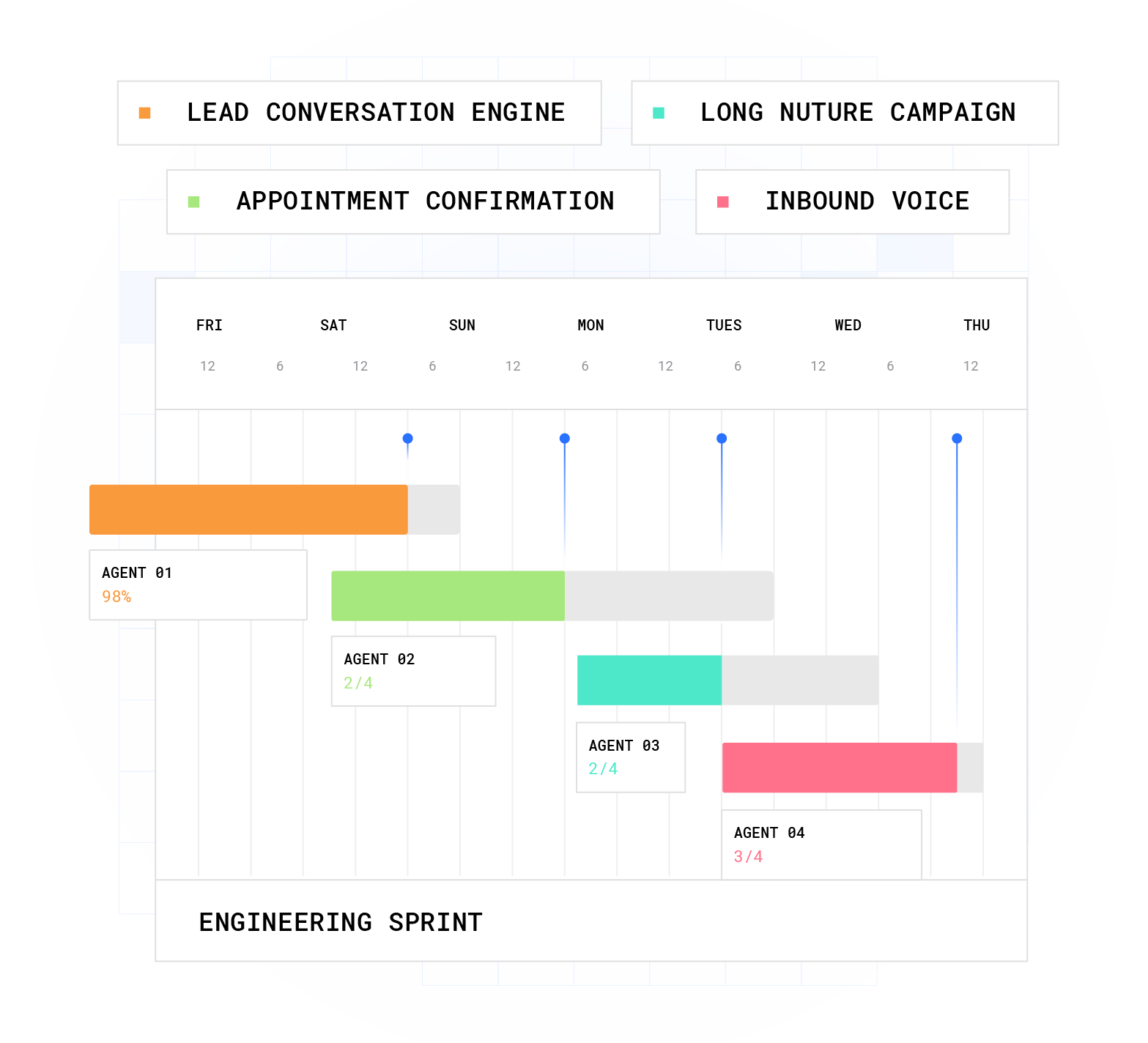
Core migration steps for moving from self-hosted VICIdial to a cloud platform include:
- Inventory the current setup, including agent count, DIDs, SIP trunks, campaigns, call flows, CRM integrations, and recording policies, per SureTel’s migration guidance.
- Audit the compliance scope, including consent records, DNC scrub logs, call recordings, and retention requirements. The federal TCPA statute of limitations is 4 years under 28 U.S.C. § 1658.
- Clean contact data and allocate a separate 2–6 week data hygiene project before migration begins, depending on database size.
- Configure the cloud environment, including users, campaigns, queues, routing logic, CRM integrations, and recording rules.
- Run a controlled pilot and start with 10–15% of users on low-risk queues, then monitor KPIs daily.
- Execute a wave-based rollout to reduce cutover incidents compared to big-bang switches.
- Maintain the legacy system in parallel and keep the legacy platform available for a 2–4 week stabilization window after cutover.
Data-handling best practices during migration includes migrating only the history needed for operations and compliance, archiving records older than 12–24 months separately, and preserving point-in-time configuration snapshots from the legacy system. These snapshots support SOC 2 Type II audits that span both environments, per InflectionCX’s CCaaS migration guide.
Compliance Requirements for Modern Cloud Dialers
Compliance in outbound dialing functions as a stack of overlapping federal, state, and carrier-level requirements that must be enforced before each call. The following frameworks represent the minimum surface area for any high-volume outbound program operating in the U.S. in 2026.
TCPA compliance. The Telephone Consumer Protection Act (TCPA), codified at 47 U.S.C. § 227, addresses automated outbound calls and texts.2 The FTC caps abandoned call rates at 3% of answered calls per campaign over a rolling 30-day period. Violations carry $500–$1,500 per call in statutory damages. Enterprise-wide opt-out handling often requires blocking a number across all campaigns once consent is revoked for any single communication type. Readers should consult qualified counsel for obligations specific to their programs.
DNC compliance. The federal Do Not Call (DNC) Registry holds hundreds of millions of active registrations.2 Eleven states maintain separate DNC registries that must be scrubbed in addition to the federal list. Internal company-specific DNC lists must be honored indefinitely.
SHAKEN/STIR caller ID verification. STIR/SHAKEN (Secure Telephone Identity Revisited / Signature-based Handling of Asserted information using toKENs) is the FCC framework for authenticating caller ID on outbound calls. Unsigned or low-attestation calls often receive spam labels that reduce answer rates, per Retell AI’s dialing overview. Plura enforces SHAKEN/STIR authentication on every outbound call at the carrier level.
SOC 2 and HIPAA. SOC 2 (System and Organization Controls 2, per the AICPA Trust Services Criteria) covers infrastructure security, availability, and confidentiality. HIPAA (Health Insurance Portability and Accountability Act, 45 CFR Parts 160, 162, 164) addresses protected health information (PHI). Cloud dialers handling healthcare data often implement access controls, audit logging, and encryption aligned with 45 CFR 164.312.
ISO certification and GDPR. ISO certification covers information security management practices. GDPR (General Data Protection Regulation, Regulation (EU) 2016/679) applies to operations handling data of EU residents.
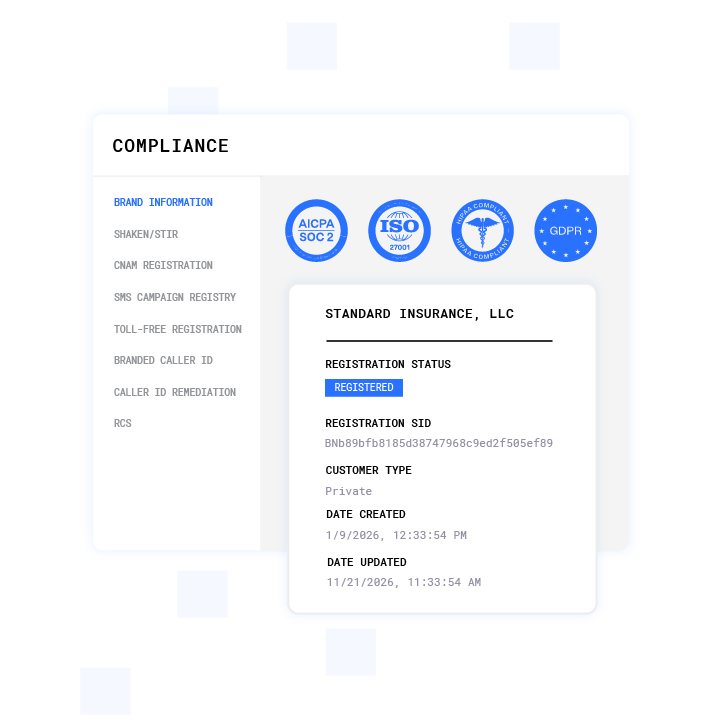
Plura’s compliance engine enforces the full stack of regulatory requirements, including TCPA, DNC, SHAKEN/STIR, SOC 2, HIPAA, ISO, and GDPR, as first-class platform layers.1 Real-time DNC scrubbing runs before each dial. Consent records are timestamped and immutable. Quiet-hours rules apply automatically through time-zone detection. The compliance dashboard exports audit-ready reports in one click.
VICIdial, Twilio-Wrapped Dialers, and Plura: Side-by-Side
The table below compares three deployment categories on five operational dimensions. All figures are drawn from cited sources.
| Dimension | Self-Hosted VICIdial | Twilio-Wrapped AI Dialers4 | Plura AI (Carrier-Owned Cloud) |
|---|---|---|---|
| Infrastructure ownership | Operator-owned Linux servers, with the operator managing updates, backups, and uptime, per CloudTalk | Vendor rents carrier capacity from Twilio or another CPaaS, with no owned carrier stack, per Plura vs. Vapi comparison4 | FCC-licensed audio bridging carrier with 100% U.S. infrastructure by architecture, per Plura AI Communications Strategy guide |
| TCPA/DNC enforcement | Requires separate third-party compliance tooling, per CloudTalk | Compliance added after the fact and not enforced at carrier origination | Real-time DNC scrubbing and TCPA compliance enforced before each dial, with an immutable consent ledger, per Plura AI Communications Strategy guide |
| Branded caller ID | Not available natively and requires third-party DID management, per CloudTalk | Inherits Twilio’s caller ID reputation and cannot issue branded caller ID at the carrier level | Issued directly through an FCC-licensed carrier with SHAKEN/STIR authentication on every call, per Plura vs. Vapi comparison |
| Stateful cross-channel memory | No native cross-channel memory and voice-only capability, per ViciStack | Single-channel memory is typical, with no shared context across voice, SMS, RCS, and webchat | Stateful Conversation Database shared across voice, SMS, RCS, and AI webchat, so every channel inherits full prior context, per Plura vs. Five9 comparison4 |
| Annual TCO (100-seat equivalent) | Self-hosted managed TCO modeled by ViciStack 2026, excluding TCPA violation exposure and downtime costs | Comparable hosted platform TCO modeled by ViciStack 2026 | $300K–$700K for a full AI platform that replaces $4M–$7M traditional contact-center economics, per Plura AI Communications Strategy guide |
Compare these deployment models live and schedule your platform walkthrough.
Conclusion: Choosing a Dialer for 2026 Risk and Cost
Self-hosted VICIdial carries a zero-dollar software license and a five- to six-figure annual TCO once sysadmin labor, SIP trunking, compliance tooling, and downtime risk are fully costed. Twilio-wrapped AI dialers shift the infrastructure burden to a vendor but inherit third-party carrier limitations on branded caller ID, compliance enforcement, and cross-channel memory. Neither category was architected for the compliance environment of 2026, where TCPA litigation has surged dramatically, including the 283% year-over-year spike noted earlier, and state mini-TCPA laws in Florida, Texas, Virginia, and others layer per-call penalties on top of federal exposure.
Plura’s carrier-owned, 100% U.S. cloud architecture supports the compliance stack described earlier (SOC 2, HIPAA, ISO, GDPR, SHAKEN/STIR, TCPA, DNC) at the platform layer rather than as bolt-on tools. The TCO reduction outlined earlier, from $4M–$7M to $300K–$700K, reflects AI agents running at 100% talk utilization versus the 30–40% typical of human-staffed operations.
Run your numbers through Plura’s calculator to check your ROI in real time.
Frequently Asked Questions
Is VICIdial truly cloud based, or does it require self-hosted servers?
VICIdial is open-source software built for self-hosted deployment on Linux servers running Apache, MySQL, and Asterisk. When operators describe it as “cloud based,” they typically mean they have moved their self-hosted instance onto a virtual private server or a managed hosting provider. The software was not architected as a cloud-native product. A true cloud-native dialer runs on vendor-owned or carrier-owned infrastructure with elastic scaling, automatic failover, and compliance controls enforced at the platform layer without operator-managed servers.
What does VICIdial actually cost in 2026 when all expenses are included?
VICIdial’s open-source license is free, yet total cost of ownership is substantially higher. ViciStack’s 2026 analysis examines self-hosted VICIdial costs for 10-agent and 50-agent operations, driven primarily by sysadmin labor, SIP trunking, server hosting, and compliance tooling. Qualified VICIdial sysadmins with Asterisk, Linux, and MySQL expertise in India and Pakistan are posted at salaries equivalent to roughly $3K–$19K USD per year. Downtime for a 50-agent operation can result in significant lost productivity. TCPA violation exposure adds $500–$1,500 per violating call on top of operational costs.
How long does a migration from VICIdial to a cloud platform take?
Migration timelines depend on operation size and integration complexity. Small contact centers typically complete the transition in 6–12 weeks. Medium operations run 3–6 months. Large enterprises with multiple locations and complex CRM integrations can take 6–18 months end-to-end. The most time-consuming phases are data hygiene, which is often a separate 2–6 week data hygiene project before migration begins, depending on database size, pilot testing on low-risk queues, and wave-based rollout. Plura’s onboarding sequence can have a straightforward outbound program running in days. Complex multi-step intake workflows usually run closer to one to two months.
What compliance certifications and features should a cloud dialer include in 2026?
A cloud dialer operating in the U.S. high-volume outbound market should include SOC 2 infrastructure certification, HIPAA-aligned encryption, access controls, and audit logging for programs handling protected health information, SHAKEN/STIR caller ID verification enforced at the carrier level, and real-time DNC scrubbing against federal and state registries before each dial. It should also support TCPA compliance controls such as immutable consent records, quiet-hours enforcement by time zone, and abandoned-call-rate monitoring, along with state-level rule sets covering the 11 states with separate DNC registries and the growing set of state mini-TCPA laws. Plura also supports ISO certification and GDPR for operations with international data exposure. Customers remain responsible for their own regulatory obligations, and Plura provides infrastructure that supports compliance program management.
Why does carrier ownership matter when choosing a cloud dialer?
Most AI dialer platforms are API resellers built on top of Twilio or another CPaaS. They rent carrier capacity from a third party, which means branded caller ID cannot be issued at the carrier level, SHAKEN/STIR authentication is inherited from the third-party carrier’s reputation rather than the operator’s own identity, and compliance controls are added after the fact rather than enforced at origination. Plura is its own FCC-licensed audio bridging carrier. Voice originates on Plura’s domestic infrastructure. Branded caller ID is issued directly. DNC scrubbing and TCPA compliance controls run at the carrier layer before each call. That architectural difference determines whether compliance is enforced by design or managed as a separate operational task.
1 Plura AI maintains SOC 2, HIPAA, ISO, and GDPR posture as part of its platform infrastructure. References to compliance frameworks in this article describe Plura’s platform capabilities and do not constitute a guarantee that any customer using Plura will themselves be compliant with applicable laws or standards. Customers remain solely responsible for their own regulatory obligations, certifications, consent management, recordkeeping, and the claims they make to their own end users. Consult qualified legal counsel for guidance specific to your use case.
2 This article describes regulatory frameworks at a general level and does not constitute legal advice. Laws and regulations vary by jurisdiction, change over time, and apply differently depending on facts and circumstances. Readers should consult qualified legal counsel before making compliance decisions.
3 Performance figures, customer outcomes, and industry statistics referenced in this article are drawn from cited third-party sources or Plura customer case studies. Individual results vary based on implementation, use case, industry, audience, and execution. Past or aggregate performance is not a guarantee of future results.
4 References to third-party products, services, companies, or research are made for informational and comparative purposes only. Plura AI is not affiliated with, endorsed by, or sponsored by any third party named in this article unless explicitly stated. Trademarks and product names referenced remain the property of their respective owners.
This article is provided for informational purposes only and reflects Plura AI’s understanding at the time of publication. Product capabilities, integrations, and specifications are subject to change. For the most current information, visit plura.ai.
This article was produced with the assistance of AI tools and reviewed by Plura AI prior to publication.