
Written by: Matt Beucler, CEO, Plura AI
Key Takeaways
- After-hours appointment scheduling services answer calls and book appointments outside normal business hours, which prevents revenue loss to voicemail.
- The category includes four models: live answering services, AI voice agents, online self-scheduling software, and hybrid combinations.
- AI voice agents like Plura AI provide 24/7 coverage, direct calendar integration, and compliance support features without staffing constraints or per-minute premiums.
- Deep bidirectional integration with calendars and EHR systems is essential so the service can write confirmed bookings during the call instead of deferring work to the next morning.
- See how the AI voice agent handles real after-hours scheduling calls end to end in a live session with Plura.
How After-Hours Appointment Scheduling Services Work
After-hours appointment scheduling services keep your phones covered when your office is closed and convert more calls into confirmed bookings. They answer calls, follow your routing rules, and either write directly into your schedule or create structured follow-up work for your team.
What Is an After-Hours Appointment Scheduling Service?
An after-hours appointment scheduling service is a coverage arrangement that answers calls and books appointments when your office is closed, generally evenings, weekends, and holidays. Roughly 85% of callers who reach voicemail do not call back and instead call the next practice on their list. For a multi-location dental or primary-care group, that shift is a direct revenue transfer to a competitor.
The category breaks into four models:
- Live Answering Service: Human operators follow scripted rules, take messages, and may book into calendars if integrations exist. Coverage depends on staffing availability and carries night, weekend, and holiday premiums.
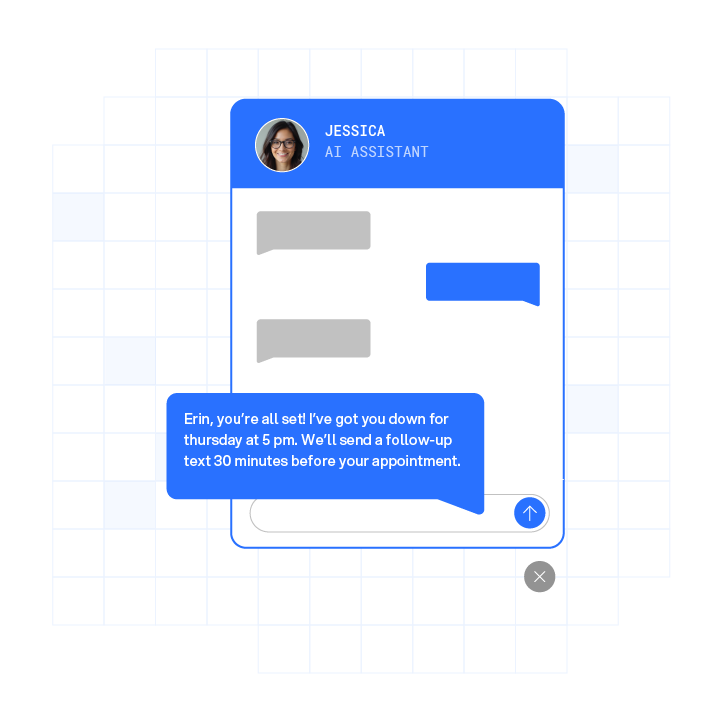
- AI Voice Agent: Conversational AI answers calls, checks live availability, and books directly into calendars or EHR (electronic health record) systems. It operates 24/7 without staffing constraints.
- Online Self-Scheduling Software: Patient portals such as MyChart let patients schedule or request appointments online, join Fast Pass wait lists to be notified of earlier openings, and use Find Care Now to locate nearby urgent care or emergency departments and let them know they are coming in. Coverage is limited to callers willing to use the portal.
- Hybrid: AI handles routine volume while live agents or clinical staff take over for complex cases.
How Live Answering and AI Voice Agents Handle Calls
Live Answering
Human operators answer calls, follow your routing rules, and deliver messages or book appointments depending on integration depth. True 24/7 live answering coverage typically runs $800 to $1,500 or more per month because nights and weekends carry a 25% to 50% premium over business-hours rates. A 2024 review in JMIR Human Factors identified recurring failure patterns in live answering services, including absence of formal training, low-quality protocols, and call-duration limits that incentivize concluding sessions promptly.
AI Voice Agent
An AI voice agent answers calls 24/7 and books appointments directly into your scheduling system through its calendar integrations. Plura AI runs on Plura’s FCC-licensed carrier, provides after-hours call answering, books directly into calendars and CRMs through its integrations, and runs STIR/SHAKEN authentication on every call.1 In franchise-network deployments, Plura voice agents answer 100% of calls within two rings across every location. Plura has delivered up to 40% improvement in no-shows for healthcare operators; see Plura’s healthcare industry page for details.3
Online Self-Scheduling
Patient portals and scheduling software let callers book without human intervention. Coverage is limited to callers willing to use the portal, and booking depth depends on whether the portal exposes real-time slot availability.
See the AI voice agent handle a real after-hours call in a live session with Plura.
Live Answering Service vs. AI Agent for After-Hours Booking
The table below compares the four models on the factors that determine whether an overnight call becomes a confirmed booking or a morning callback.
| Model | Coverage Window | Booking Depth | System Integration | Compliance Handling |
|---|---|---|---|---|
| Live Answering Service | Depends on staffing, nights and weekends carry 25%–50% premium | Message capture, booking only if integrations exist | Native connections to popular scheduling platforms where configured | Varies by vendor, BAA (Business Associate Agreement) required for PHI (protected health information) |
| AI Voice Agent (Plura) | 24/7/365 coverage | Confirmed booking written directly into calendar or EHR | Real-time bidirectional sync with calendars and CRMs through 50+ integrations | Platform supports TCPA, DNC, SOC 2, HIPAA, and ISO capabilities, with STIR/SHAKEN on every outbound call; customers remain responsible for their own compliance obligations2 |
| Online Self-Scheduling | 24/7 if portal is available | Confirmed booking if slot is open in the portal | Patient portal or scheduling software | Depends on portal vendor |
| Hybrid | AI handles routine, live agents cover complex cases | Confirmed booking for routine, message capture for complex | AI integrations plus live agent access | Combined vendor posture, BAA required for any PHI-touching component |
Direct Booking Into Your Calendar or EHR
Integration depth determines whether an after-hours service can turn a late-night request into a confirmed appointment. A Tuesday 9pm appointment request becomes a Wednesday 8am confirmed slot only if the service writes back into your scheduling system during the call. Shallow EHR integration reads demographics and upcoming appointments only, which requires staff to manually enter every overnight call detail. Deep bidirectional integration writes back during the call so appointments and notes are captured before the conversation ends.
AI scheduling agents integrate with Epic, Oracle Health (Cerner), athenahealth, eClinicalWorks, NextGen, and any system exposing a FHIR R4 Appointment resource or proprietary scheduling API. Function calling is configured once per EHR to handle bidirectional sync, so availability reads and booking writes both occur inside the live call.
Plura’s CRM integration layer supports real-time bidirectional sync with calendars including Google Calendar, Cal.com, and Calendly, as well as CRMs including HubSpot, Salesforce, and Zoho. When you evaluate any provider, ask whether the service can write a confirmed booking back to your schedule during the call or only read availability. Read-only integrations force patients to wait for staff callbacks, which recreates the morning phone rush you want to avoid.
Medical offices face a morning scheduling rush between 8am and 10am that can generate 50 to 100 calls in an office that normally handles only 15 calls per hour. After-hours services that write bookings back overnight reduce that spike directly.
Handling Incomplete After-Hours Bookings
Most after-hours services fail on the calls they cannot complete. A well-designed system handles incomplete bookings in one of three ways: message capture with structured context, warm transfer to an on-call staff member, or escalation to a named queue with a timer and fallback.
When a caller asks something the service cannot answer, a good system should collect the right context, route the call, or create a clean follow-up task for the team. That principle applies equally to live operators and AI agents.
Because incomplete bookings are where many after-hours services fail, the contract should lock down five items in writing before you sign:
- Which appointment types can be booked instantly without staff involvement
- Which calls must transfer to a staff member or on-call provider
- Which service areas or case types the service should decline
- Which data fields are required before a booking is confirmed
- Who owns follow-up for exceptions and unbooked leads
A clean overnight queue has five properties:
- Priority-tagged so it sorts by disposition rather than arrival time
- Deduplicated so one patient who called three times is one item with three timestamps
- Complete enough to act on without a second call
- Owned with a name and promised callback window
- Reconciled so someone can report how many overnight items converted to an appointment
What Happens When an After-Hours Call Is a Medical Emergency?
Incomplete bookings are one exception path. Emergencies are another, and they carry higher stakes. Emergency routing rules should be defined by your clinical leadership and documented in writing before any after-hours service goes live. The standard routing framework used across the industry is:
- 911: Any call where the patient indicates a life-threatening emergency. Any call where the patient indicates a medical emergency should be escalated immediately, without attempting to continue intake.
- On-Call Clinician: Urgent clinical questions that require a licensed provider but do not rise to a 911 emergency.
- Urgent Care: Non-emergency urgent needs that can be handled at a walk-in facility.
- Scheduling or Next-Day Callback: Routine administrative requests such as appointment changes, prescription refill inquiries, and billing questions.
Routing every after-hours call to the on-call provider creates rotation fatigue. The filter should be a written rule authored by clinical leadership so the same call type receives the same handling every night.
This article does not provide medical or legal advice. Consult qualified clinical and legal counsel when designing escalation protocols for your practice.
How Much After-Hours Appointment Scheduling Costs
Once you know what to ask a provider, the next step is understanding what the coverage costs. The right comparison is the price of the service against the loaded cost of staffing the coverage yourself, plus the revenue value of the bookings you are currently losing.
The U.S. Bureau of Labor Statistics reported that office and administrative support occupations in private industry cost employers an average of $36.73 per hour worked in June 2026, with wages and salaries of $25.22 and benefits of $11.51. Covering a phone line around the clock in-house requires approximately 4.2 full-time positions to account for PTO, sick leave, and holiday coverage.
Covering one phone seat 24/7 in-house requires roughly 4.2 full-time employees, costing $230,000 to $300,000 per year fully loaded. A live answering service reduces that cost but still bills per minute or per call. Holiday rates can run double the standard per-call price.
Run your numbers through Plura’s ROI calculator to check your ROI in real time. The calculator models the loaded cost of your current staffing against Plura’s per-agent economics, including talk utilization and benefit burden.
No-shows and last-minute cancellations consume roughly 14% of revenue on a given day, with losses estimated near $150,000 annually per physician, citing MGMA data. The 40% no-show improvement noted earlier shows the impact that tighter scheduling coverage can have on that loss.
How to Evaluate an After-Hours Appointment Scheduling Provider
Provider selection comes down to booking depth, escalation design, compliance support, and pricing. Ask every provider these questions before signing:
- Does the service book directly into your calendar or EHR, or does it take a message and defer work to the next morning?
- What is the escalation path when the agent cannot complete a booking, and what is the timer and fallback if the first contact does not respond?
- How does the service handle PHI and sensitive data, and will the vendor sign a BAA?
- Which compliance frameworks does the platform support, and are they enforced inside the platform or bolted on after the fact?
- Can you test the service with a live call before signing?
- How are nights, weekends, and holidays billed, and what is the exact premium?
- What happens when you exceed your bundle, and what is the overage rate?
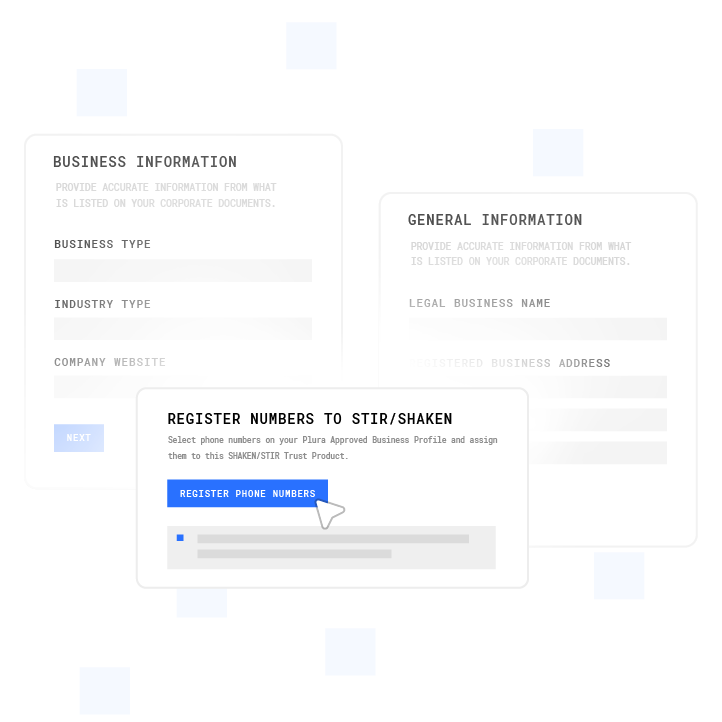
Plura’s platform supports TCPA, DNC, SOC 2, HIPAA, and ISO capabilities inside the platform on every outbound contact, with STIR/SHAKEN authentication on every outbound call and real-time DNC scrubbing before dial. Customers remain responsible for their own compliance obligations, so consult qualified counsel about your organization’s specific requirements. Once compliance and integration fit are settled, compare Plura’s plans and rates side by side to evaluate fit for your call volume.
Walk through integration depth, escalation design, and compliance posture for your specific practice setup in a live session with Plura.
When After-Hours Scheduling Is the Wrong Answer
Some after-hours calls need handling other than a booking flow. Walk-in-appropriate cases, urgent care referrals, and genuine emergencies each require a different path than a scheduling request. Routing everything through a booking agent creates the same rotation fatigue problem as routing everything to the on-call provider.
Design your routing rules before you select a vendor. A service that cannot enforce your routing rules in the call flow functions as a message-taking service with a booking feature bolted on.
Frequently Asked Questions
How Do You Get a Doctor Appointment Quickly?
Same-day slots and online self-scheduling through patient portals like MyChart can surface next-day or urgent availability without a phone call. This typically requires an active MyChart account and an existing relationship with a provider, and only appointment types enabled for self-scheduling will appear. After-hours services that book directly into the calendar can confirm a slot overnight so the appointment is on the schedule before the office opens. AI voice agents that integrate with your EHR can check live availability and write a confirmed booking during the call, which removes the callback loop entirely.
Is It Better to Go to a Walk-In Clinic or Urgent Care After Hours?
Walk-in clinics and urgent care facilities handle non-emergency urgent needs. Emergency rooms handle life-threatening emergencies. After-hours scheduling services route calls based on urgency rules your clinical team defines. A well-designed after-hours service distinguishes between a caller who needs a next-day appointment, a caller who needs urgent care tonight, and a caller who needs 911, and routes each accordingly without attempting to continue intake on an emergency call.
What Happens If the After-Hours Call Is an Emergency?
Emergency calls should route to 911 immediately. After-hours services should escalate without attempting to continue intake on emergency calls. The escalation criteria should be defined by your clinical leadership and documented before the service goes live. Any call where the patient indicates a medical emergency should trigger immediate escalation instead of a scheduling workflow.
Can an After-Hours Service Book Directly Into MyChart or an EHR?
Some services integrate with patient portals and EHR systems to write confirmed bookings directly into the schedule during the call. Integration depth varies significantly across vendors. Ask whether the service can write back to your specific EHR or only read availability. Read-only integrations require staff to manually enter overnight call details the next morning, which recreates the workload the service was supposed to eliminate.
What Is the Difference Between an After-Hours Answering Service and Voicemail?
Voicemail captures a message and defers all work to the next morning. An after-hours answering service answers live, applies your routing rules, and can book appointments directly into your calendar during the call. The operational difference is that a confirmed booking written overnight is on the schedule when the office opens. With voicemail, by contrast, a staff member must call the patient back within the practice’s standard return timeframe (for example, within one business day) and complete the booking, often during the morning rush when the phone is already at peak volume.
Conclusion
After-hours calls that land in voicemail rarely convert into bookings, and those callers often move to the next practice. The core decision is whether your after-hours service can write a confirmed booking into your schedule during the call. Everything else, including coverage window, staffing model, and price, follows from that answer.
The four service models offer different tradeoffs in coverage depth, booking capability, and cost. Live answering services carry staffing premiums and often stop at message-taking. Online self-scheduling depends on portal adoption. Hybrid models add coordination complexity. The AI voice agent model answers calls 24/7, checks live availability, and writes a confirmed booking into your schedule during the call without staffing constraints or per-minute premiums for nights and weekends.
Plura builds on that model with its FCC-licensed carrier, 50+ direct integrations to calendars and CRMs, and support for TCPA, DNC, SOC 2, HIPAA, and ISO capabilities inside the platform. The 40% no-show improvement referenced earlier illustrates the impact of consistent coverage and confirmed bookings. See Plura’s healthcare industry page for details.
Run your numbers through Plura’s ROI calculator to compare current staffing cost and call volume against an AI voice agent. Then review Plura’s plans and rates side by side to find the right tier for your practice size.
See the AI voice agent handle a real after-hours scheduling call in a live demo with Plura before you commit.
1 Plura AI maintains SOC 2, HIPAA, ISO, and GDPR posture as part of its platform infrastructure. References to compliance frameworks in this article describe Plura’s platform capabilities and do not constitute a guarantee that any customer using Plura will themselves be compliant with applicable laws or standards. Customers remain solely responsible for their own regulatory obligations, certifications, consent management, recordkeeping, and the claims they make to their own end users. Consult qualified legal counsel for guidance specific to your use case.
2 This article describes regulatory frameworks at a general level and does not constitute legal advice. Laws and regulations vary by jurisdiction, change over time, and apply differently depending on facts and circumstances. Readers should consult qualified legal counsel before making compliance decisions.
3 Performance figures, customer outcomes, and industry statistics referenced in this article are drawn from cited third-party sources or Plura customer case studies. Individual results vary based on implementation, use case, industry, audience, and execution. Past or aggregate performance is not a guarantee of future results.
This article is provided for informational purposes only and reflects Plura AI’s understanding at the time of publication. Product capabilities, integrations, and specifications are subject to change. For the most current information, visit plura.ai.
This article was produced with the assistance of AI tools and reviewed by Plura AI prior to publication.