
Written by: Matt Beucler, CEO, Plura AI
Key Takeaways
- Lead response time best practices focus on contacting every lead within 5 minutes. The 10-3-1 rule provides pipeline structure where 10 qualified prospects yield 3 conversations and 1 closed outcome.
- Percentage-within-SLA is the primary measurement standard, reported with median and 90th-percentile response time. This approach surfaces the 23% of leads that never receive any response.
- A tiered SLA framework sets different targets by lead type. Demo requests need under 5 minutes with 24/7 coverage, while lower-intent content leads can be handled within 4 hours during business hours.
- Overnight and weekend leads need automated acknowledgment within 60 seconds and AI qualification within 5 minutes to avoid 63-hour delays created by human-only coverage.
- Plura AI delivers sub-5-second lead response across voice, SMS, RCS, and webchat on 100% U.S. infrastructure, so operators can meet these standards without adding staff.
Lead Response Time Requirements in 2026
Lead response time is the elapsed time between lead creation and first meaningful human or AI contact. Speed to lead is the operational discipline that keeps that interval as short as possible. The clock starts at form submission, call ring, or message receipt, not when a lead appears in a CRM queue.
The foundational benchmark comes from the 2007 Lead Response Management study led by Dr. James Oldroyd at MIT Sloan School of Management in partnership with InsideSales.com.4 Across three years of data, more than 15,000 web-generated leads, and over 100,000 call attempts, the study found that calling a lead within 5 minutes versus 30 minutes produced a 100x drop in the odds of making contact and a 21x drop in the odds of qualifying the lead. A 2011 Harvard Business Review audit of 2,241 U.S. companies reinforced the pattern. Firms responding within an hour were around seven times more likely to have a meaningful qualifying conversation than those responding an hour later.
The 10-3-1 rule is a pipeline planning tool, not a contact cadence. Originating in insurance sales through Al Granum’s production research, it holds that roughly 10 qualified prospects produce 3 serious conversations and 1 commercial outcome. In practice, it functions as a diagnostic. When conversations are plentiful but outcomes are scarce, the constraint usually sits in qualification or follow-up rather than lead volume. For follow-up structure, a practical framework is 10 minutes to first touch, 3 days of cadence, and 1 month of nurture before a lead is marked unresponsive.
The 2026 operating environment differs materially from 2007. Responses no longer require outbound phone calls. Inquiries arrive outside working hours at scale. Roughly 30-40% of leads arrive outside standard business hours, with consumer-facing verticals seeing even higher after-hours volumes. Fast response no longer requires additional staff, because AI agents can handle acknowledgment, qualification, and calendar booking without a person at the desk.
The Average-vs-Tail Problem: Why Percentage-Within-SLA Matters
Average response time is the most commonly reported lead response metric and the least useful one. A team averaging 10 minutes can still have thousands of leads sitting for hours. These often include leads that arrived at 7 PM Friday, leads that landed in a shared inbox, and leads that were never assigned. Averages hide the tail entirely.
The 2011 HBR audit found that 23% of the 2,241 companies tested never responded to a genuine inquiry at all. A never-answered lead has no response time and disappears from average calculations. That failure mode is invisible in mean reporting and appears only when you look at the full distribution.
LeanData’s April 2026 analysis shows that a team with a 6-minute average response time can still have 20% of leads waiting 45 minutes or longer.4 The average looks acceptable. The distribution reveals an SLA failure affecting one in five leads.
The correct measurement standard is percentage of leads reached within SLA, reported alongside median and 90th-percentile response time. The 90th percentile matters because it reveals worst-case scenarios and where SLAs actually fail, which the median alone cannot show. Non-responses must be counted separately as a raw count and percentage, because a never-answered lead has no response time and therefore disappears from every average calculation. That makes non-responses the most expensive failure mode in the dataset, not outliers to be excluded.
MetricGen’s lead response time guide recommends segmenting response time by lead source, rep, hour, and day of week. Aggregate figures often conceal that most operations perform well between 10 AM and 4 PM on weekdays and are effectively absent the rest of the time.
See how AI agents enforce SLA compliance across every lead across every channel, around the clock.
Once you accept that a single average hides the failures that matter, the next step is deciding what target each lead type should meet. That requires a tiered framework.
A Tiered Lead Response Time SLA Framework by Lead Type
Not every lead warrants the same response window. A demo request from a high-fit account and a content download from an anonymous visitor require different SLAs, different follow-up cadences, and different coverage windows. The table below sets defensible first-touch targets by lead type and shows that urgency and coverage window scale together. Higher intent leads require tighter SLAs and broader coverage.
| Lead Type | First-Touch SLA | Follow-Up Cadence | Coverage Window |
|---|---|---|---|
| Demo/pricing request | Under 5 minutes | 6+ attempts over 3 days | 24/7 |
| High-fit marketing lead | Under 15 minutes | 6 attempts over 5 days | Extended hours |
| Lower-intent content lead | Under 4 hours | 3 attempts over 7 days | Business hours |
| Overnight/weekend lead | Under 5 minutes (automated) | Human follow-up at business open | 24/7 automated |
Overnight and weekend leads require explicit rules. Automated acknowledgment within 60 seconds holds the prospect’s attention. AI qualification within 5 minutes captures intent before it decays. Human follow-up at business open then closes the loop with context already gathered.
A worked example from MetricGen’s benchmark data illustrates the impact. A B2B software company tracking demo requests over one month found a median response time of 18 minutes with 22% contacted under 5 minutes. Moving all lead sources to a 5-minute median generated an estimated 63 additional opportunities per month from the same lead volume, with demo requests improving from a 25% to a 35% opportunity rate.
The SLA targets above align with LeanData’s April 2026 tiered framework, which places demo and pricing requests under 5 minutes, contact sales forms under 15 minutes, and gated content downloads at same business day.
How to Audit Lead Response Time Compliance
This audit methodology produces a defensible report for a COO or board review. It uses 90 days of data and produces a distribution, not a single number.
- Export the last 90 days of inbound leads with two timestamps: lead creation and first human or system touch.
- Compute the full response-time distribution rather than the average.
- Bucket leads by response window: under 5 minutes, 5-30 minutes, 30 minutes to 24 hours, beyond 24 hours, and never touched.
- Segment by lead source, by rep, by hour, and by day of week.
- Identify bottlenecks: routing delay, notification design, or rep workload.
- Report percentage-within-SLA to leadership alongside median and 90th-percentile response time.
Key metrics to track include first-touch time, percentage within SLA, contact rate, and time-to-qualification. Report median and 90th percentile alongside percentage-within-SLA. Avoid using averages as the headline figure.
Run your numbers through Plura’s ROI calculator to quantify what your current response-time gap costs per quarter.
Overnight and Weekend Coverage Expectations
Human-only coverage fails after hours by design. A demo request submitted at 6 PM Friday and first contacted Monday at 9 AM represents 63 hours of elapsed clock time. MetricGen flags this scenario as a measurement failure that most teams miss because they report business-hours response time only.
Automated acknowledgment holds the prospect’s attention but does not qualify anyone. It functions as a separate metric from first contact and should be reported separately. The correct framework treats acknowledgment and qualification as two distinct jobs with different urgency. Acknowledgment should be immediate. Qualification should follow quickly with context already gathered.
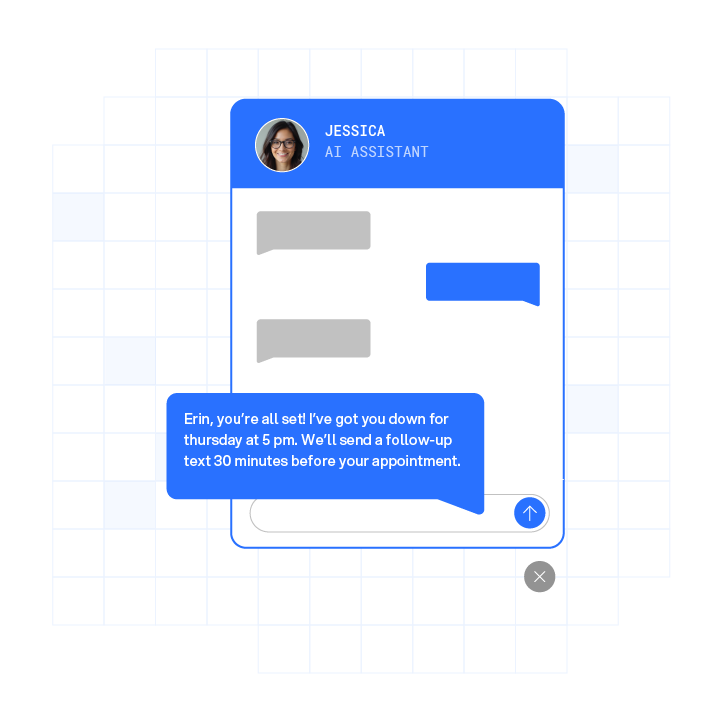
Plura’s AI voice agent and AI SMS agents handle both acknowledgment and qualification 24/7, contacting leads in under 5 seconds regardless of when the inquiry arrives. Plura contacts leads from websites, Google Business Profiles, or ad campaigns within 60 seconds via SMS or voice call, with no human staffing requirement outside business hours.
How AI Agents and Caller ID Change the Math in 2026
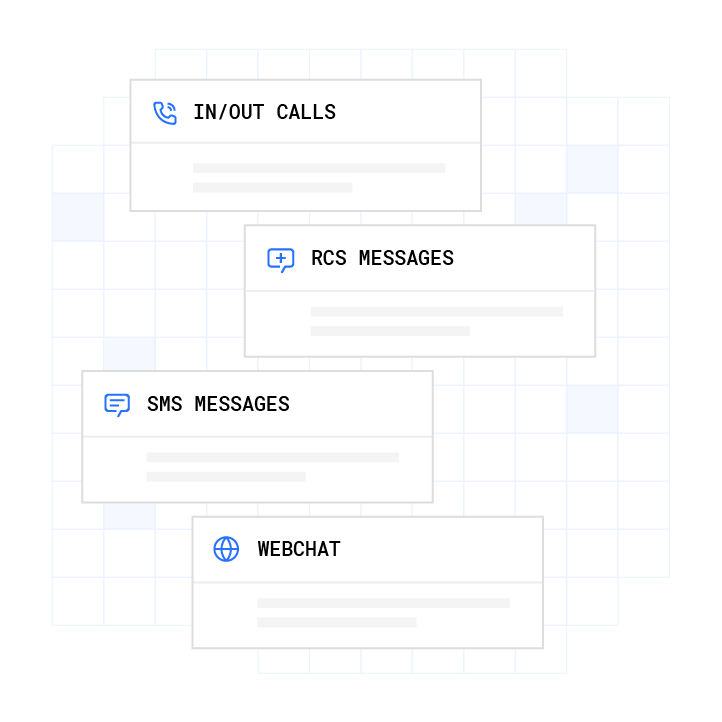
Plura contacts leads in under 5 seconds across voice, SMS, RCS, and webchat. That figure is the platform’s operational standard, enabled by owning the carrier stack instead of routing through a third-party CPaaS (Communications Platform as a Service).
Two regulatory and platform realities alter the response-time math in 2026 in ways the current SERP does not address.
First, the regulatory reality. The FCC’s Notice of Proposed Rulemaking (CG Docket No. 26-52) proposes capping offshore customer-service calls and prohibiting offshore handling of sensitive consumer data.2 For operators evaluating their response-time infrastructure, this makes U.S.-based infrastructure a response-time consideration as well as a compliance consideration. Plura runs on 100% U.S. infrastructure by architecture.
Second, the platform reality. Apten’s 2026 analysis reports that 66% of all iPhones were running iOS 26 within five months of its release, and call centers are seeing 15-20% drops in connect rates on iPhone-heavy lead lists from call-screening features.4 iOS 26 call screening intercepts unfamiliar numbers before they ring through. Branded caller ID issued at the carrier level converts screened calls into pickups by presenting the company’s name and call reason on the recipient’s screen. TransUnion data in the FCC docket states that customers are up to 105% more likely to answer a branded call. Plura issues branded caller ID directly through its FCC-licensed carrier.
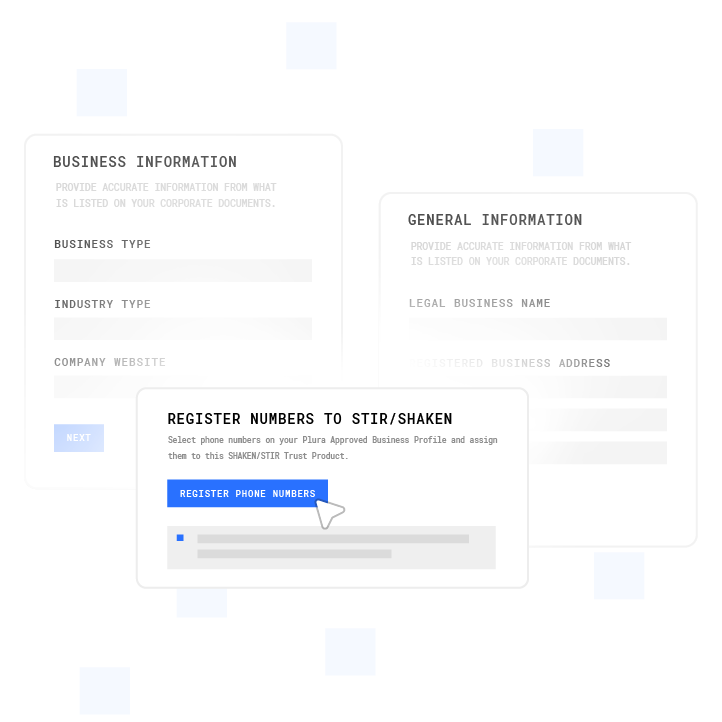
Plura’s AI predictive dialer and speed-to-lead infrastructure are built on this carrier foundation, with STIR/SHAKEN authentication on every outbound call and real-time DNC scrubbing before dial.
Why Plura AI Fits Lead Response Time Operations
Plura AI is an FCC-licensed platform of AI agents that run voice, SMS, RCS, and webchat on 100% U.S. infrastructure. It contacts leads in under 5 seconds and holds memory-driven conversations across every channel via a Stateful Conversation Database.
The platform’s performance numbers are specific. Under 5 seconds to first contact. 3x average ROI in 90 days. 47% pipeline growth. 90% faster lead-response time. 99.9% uptime SLA.3 Plura enables lead response times under 60 seconds. It also provides multichannel engagement via voice, SMS, RCS, and webchat, real-time AI lead scoring, automated multi-touch follow-up across channels, and full conversation transcripts.
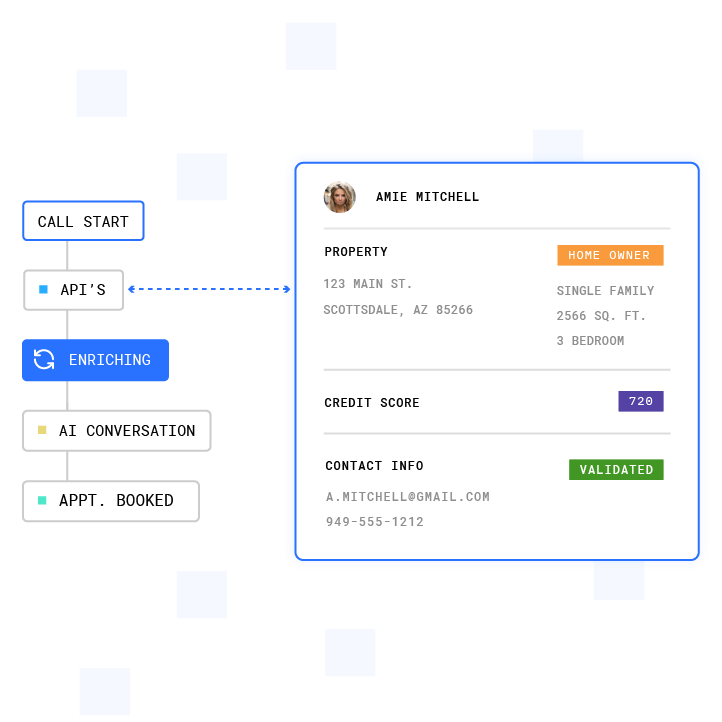
Plura owns its carrier stack and issues branded caller ID at the carrier level. It also enforces real-time DNC scrubbing and TCPA-litigator screening inside the platform before dial. The Stateful Conversation Database means an AI agent that texted a lead at 9 AM picks up the call at noon already knowing what was said. Plura enables lead contact within 60 seconds for every lead, compared to 1-4 hours in many manual operations.
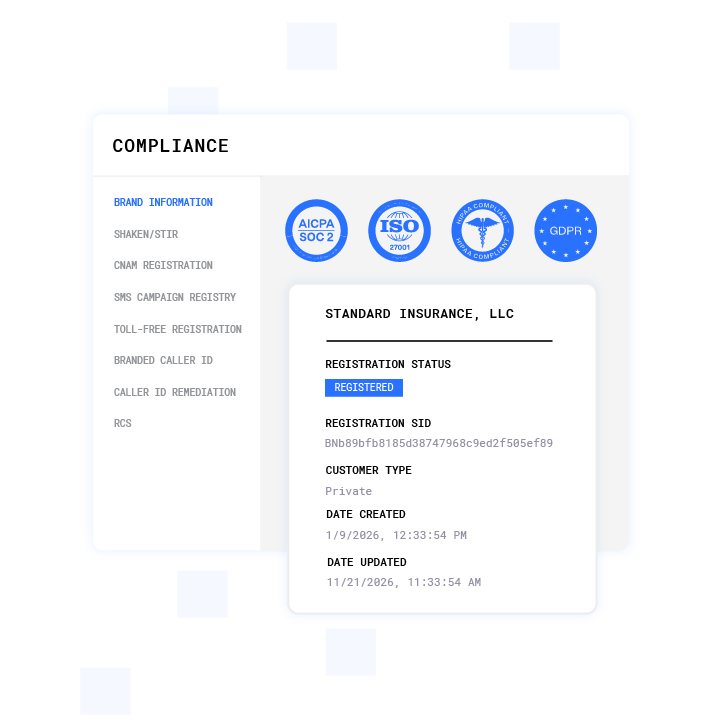
The platform supports compliance with TCPA, DNC, HIPAA, SOC 2, ISO certification, GDPR, and STIR/SHAKEN caller ID verification.1 Customers remain responsible for their own regulatory obligations. Plura provides infrastructure that supports those obligations at the carrier level.
Review pricing and plans or watch the platform handle a live lead flow.
Frequently Asked Questions
What Is the 5-Minute Rule for Leads?
The 5-minute rule states that contacting a lead within 5 minutes of submission dramatically increases the odds of qualification compared to waiting 30 minutes. The rule comes from the 2007 Lead Response Management study led by Dr. James Oldroyd at MIT Sloan School of Management. The study found that contacting a lead within 5 minutes sharply improves connection and qualification odds compared to a 30-minute delay, a finding reinforced by the 2011 Harvard Business Review audit discussed above.
What Is the 10-3-1 Rule in Sales?
The 10-3-1 rule is a pipeline planning tool originating in insurance sales through Al Granum’s production research. It holds that roughly 10 qualified prospects produce 3 serious conversations and 1 commercial outcome. As discussed earlier, it functions as a diagnostic for where the pipeline is leaking.
What Is the Average Response Time for Inbound Leads?
The average B2B response time remains over 40 hours, a figure consistent across the 2011 Harvard Business Review audit and multiple subsequent studies through 2026. Averages hide the tail. As noted above, 23% of companies in the 2011 HBR audit never responded at all, and a 2024 study by RevenueHero found that 63.5% of 1,000 B2B SaaS companies never responded to a submitted demo request. Average response time is a weak operational metric because it excludes non-responses and is dominated by slow outliers. Percentage-within-SLA, median, and 90th-percentile response time provide a more accurate picture.
What Are the Key Metrics Used to Measure Lead Response Time?
The four core metrics are first-touch time, percentage within SLA, contact rate, and time-to-qualification. Report median and 90th-percentile response time alongside percentage-within-SLA rather than relying on averages. Count non-responses separately as a raw count and percentage, because a never-answered lead has no response time and disappears from average calculations. Segment all metrics by lead source, rep, hour, and day of week to surface where failures occur.
How Do You Audit Lead Response Time Compliance?
Export 90 days of inbound leads with two timestamps: lead creation and first human or system touch. Compute the full response-time distribution rather than the average. Bucket leads by response window: under 5 minutes, 5-30 minutes, 30 minutes to 24 hours, beyond 24 hours, and never touched. Segment by lead source, rep, hour, and day of week. Identify whether SLA breaches cluster at the routing stage or the rep stage. Report percentage-within-SLA to leadership alongside median and 90th-percentile response time.
When Does Sub-60-Second Response Make Sense?
Sub-60-second response makes sense for high-intent leads such as demo requests, pricing inquiries, and quote submissions where competition is intense and intent decays quickly. It matters less for low-intent content downloads that require nurture rather than immediate sales contact. The tiered SLA framework addresses this directly. Demo and pricing requests warrant a sub-5-minute SLA with 24/7 coverage, while lower-intent content leads can be handled within 4 hours during business hours. Applying a sub-60-second SLA to high-intent leads concentrates resources where the conversion math is strongest.
Conclusion and Next Steps
The operational framework for lead response time in 2026 has three components. Teams need a tiered SLA by lead type, a measurement standard built on percentage-within-SLA rather than averages, and 24/7 coverage that does not depend on human staffing after hours.
Next steps for a contact center leader include an internal workflow review using the 90-day audit methodology above, stakeholder alignment on the tiered SLA framework, and a clear evaluation of whether current infrastructure can enforce those SLAs at 2 AM on a Saturday.
Run your numbers through Plura’s ROI calculator to check your ROI in real time. Compare plans and rates side by side. Or see sub-5-second lead response on a live account.
1 Plura AI maintains SOC 2, HIPAA, ISO, and GDPR posture as part of its platform infrastructure. References to compliance frameworks in this article describe Plura’s platform capabilities and do not constitute a guarantee that any customer using Plura will themselves be compliant with applicable laws or standards. Customers remain solely responsible for their own regulatory obligations, certifications, consent management, recordkeeping, and the claims they make to their own end users. Consult qualified legal counsel for guidance specific to your use case.
2 This article describes regulatory frameworks at a general level and does not constitute legal advice. Laws and regulations vary by jurisdiction, change over time, and apply differently depending on facts and circumstances. Readers should consult qualified legal counsel before making compliance decisions.
3 Performance figures, customer outcomes, and industry statistics referenced in this article are drawn from cited third-party sources or Plura customer case studies. Individual results vary based on implementation, use case, industry, audience, and execution. Past or aggregate performance is not a guarantee of future results.
4 References to third-party products, services, companies, or research are made for informational and comparative purposes only. Plura AI is not affiliated with, endorsed by, or sponsored by any third party named in this article unless explicitly stated. Trademarks and product names referenced remain the property of their respective owners.
This article is provided for informational purposes only and reflects Plura AI’s understanding at the time of publication. Product capabilities, integrations, and specifications are subject to change. For the most current information, visit plura.ai.
This article was produced with the assistance of AI tools and reviewed by Plura AI prior to publication.