

Written by: Matt Beucler, CEO, Plura AI
Updated June 2026
Key Takeaways for Healthcare Outreach Leaders
- HIPAA compliant AI lead outreach relies on safeguards embedded in the infrastructure, including consent logging, DNC scrubbing, PHI redaction, and audit exports across all channels.
- 2026 regulatory changes from the FCC and multiple states are tightening rules around offshore data handling and pushing healthcare outreach toward domestic infrastructure.
- A seven-step checklist covers verifying BAAs, minimizing PHI exposure, enforcing real-time DNC and consent controls, configuring B2B versus B2C rules, confirming U.S. infrastructure, setting escalation protocols, and enabling one-click audit exports.
- Effective sequences use stateful, multi-channel follow-up across voice, SMS, RCS, and webchat while preserving full context, consent history, and PHI redaction at every step.
- Plura AI delivers these capabilities natively through its FCC-licensed, 100% U.S. infrastructure, and you can book a live demo to configure a compliant outreach sequence for your organization.
2026 Regulatory Reality Check for AI Outreach
The regulatory environment for AI-driven outreach tightened materially in 2026. The FCC (Federal Communications Commission) issued a Notice of Proposed Rulemaking under CG Docket No. 26-52 that proposes capping offshore customer-service calls at 30% and prohibiting offshore handling of sensitive consumer data.2 Companion federal legislation, including the Keep Call Centers in America Act (S.2495) and the Foreign Robocall Elimination Act (S.2666), extends that perimeter further.
At the state level, New York’s Call Center Jobs Act carries penalties up to $10,000 per day for non-compliant offshore operations. Florida’s medical-information offshoring restrictions directly affect healthcare operators. New Jersey, Connecticut, and Missouri have enacted or proposed parallel limitations on offshore handling of sensitive data. Any AI outreach platform with foreign infrastructure dependencies now sits inside a growing compliance liability window.
HIPAA (Health Insurance Portability and Accountability Act) obligations under 45 CFR Parts 160, 162, and 164 apply to covered entities and their business associates regardless of whether outreach is human or AI-driven. TCPA (Telephone Consumer Protection Act) obligations under 47 U.S.C. § 227 govern consent requirements for automated calls and texts. Operators should consult qualified legal counsel on how these frameworks apply to their specific outreach programs.2
Given this tightening environment, healthcare operators need a structured way to configure AI outreach that supports HIPAA and TCPA alignment. The following checklist focuses on safeguards you can operationalize inside your sequences.
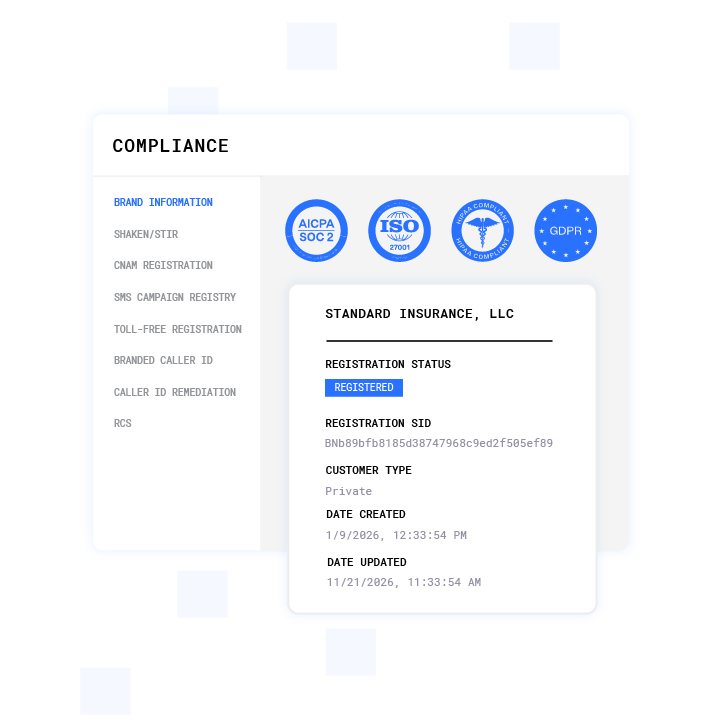
7-Step HIPAA Compliant AI Lead Outreach Checklist
- Verify a BAA and a no-training policy. A BAA (Business Associate Agreement) is a contract described under HIPAA between a covered entity and any vendor that handles PHI on its behalf. Before any lead data touches an AI platform, confirm the vendor has executed a BAA and maintains a documented no-training policy. That policy should state that PHI from your conversations is not used to train the underlying models. Plura AI supports BAA execution and operates a no-training policy on customer data.
- Minimize PHI before data reaches the AI. Strip fields that are not operationally necessary for the outreach sequence. A lead record passed to an AI dialer for an appointment reminder does not need a full diagnosis code or insurance ID. Map every data field to a specific conversation purpose. Redact or exclude fields that serve no function in the sequence. Plura’s workflow engine supports field-level redaction so PHI is masked in transcripts and logs by default.
- Enforce real-time DNC scrubbing and consent logging. Every outbound contact should be checked against federal and state DNC registries before the call or message initiates. Consent records should be timestamped, immutable, and exportable. Plura supports HIPAA and SOC 2 alignment and integrates with The Blacklist Alliance’s TCPA Litigation Firewall for real-time DNC scrubbing and litigation protection.1 TCPA violations carry statutory damages of $500 to $1,500 per unsolicited call or text.
- Configure B2B and B2C sequence rules separately. Business-to-business (B2B) outreach to healthcare administrators, practice managers, or procurement contacts operates under different consent standards than business-to-consumer (B2C) outreach to patients or plan members. B2B sequences typically allow broader contact windows and fewer consent triggers. B2C sequences often require explicit opt-in records, stricter quiet-hours enforcement, and more conservative escalation thresholds. Configure these as separate workflow branches, not a single shared sequence.
- Confirm U.S. infrastructure across every layer. Voice origination, model hosting, data storage, and call recording should sit on domestic infrastructure when you design for HIPAA safeguards and the FCC NPRM’s proposed foreign-data limitations. Verify that the platform is not routing through an offshore CPaaS (Communications Platform as a Service) layer. Plura runs on 100% U.S. infrastructure by architecture, not only by policy statement.
- Set escalation and human handoff rules. Define the exact conditions under which the AI transfers to a U.S.-based human agent. Common triggers include a patient disclosing a medical emergency, a request to speak with a person, a complaint, or a workflow path the AI is not authorized to navigate. Hard-code escalation rules in the workflow. Do not leave these decisions to the AI’s judgment. Plura’s workflow canvas supports warm-transfer routing to a U.S. agent with full conversation context passed at handoff.
- Enable audit-ready exports in one click. Every interaction, consent record, DNC check, and escalation event should be exportable in a format suitable for a HIPAA audit, a carrier compliance review, or a legal hold. Plura’s compliance dashboard surfaces audit-ready exports on demand, with timestamped, immutable records across voice, SMS, RCS, and webchat.
Run Your Numbers Before You Scale
Operators should confirm the economics before scaling any outreach sequence. A 15-agent operation at $20 per hour with standard overhead costs approximately $60,000 per month. Replacing that volume with Plura drops the monthly cost to $14,400, which generates $45,600 in 30-day savings. Extrapolated over 12 months, that same operation saves $547,200 according to the default scenario in the calculator.3
Use Plura’s calculator to model your own staffing and outreach ROI in real time.
Filtering Lead Data Before It Reaches AI
PHI minimization starts at the data-mapping stage, before any record enters the AI workflow. The goal is to pass only the fields the AI needs to complete the specific conversation task, and nothing more.
Practical tactics include replacing full date-of-birth fields with age-range buckets for qualification flows and using appointment IDs instead of diagnosis codes for reminder sequences. You can pass first name and callback number only for initial outreach, with full record access gated behind a human handoff. You can also apply field-level redaction in the workflow so PHI fields are masked in transcripts even when they are technically present in the source record.
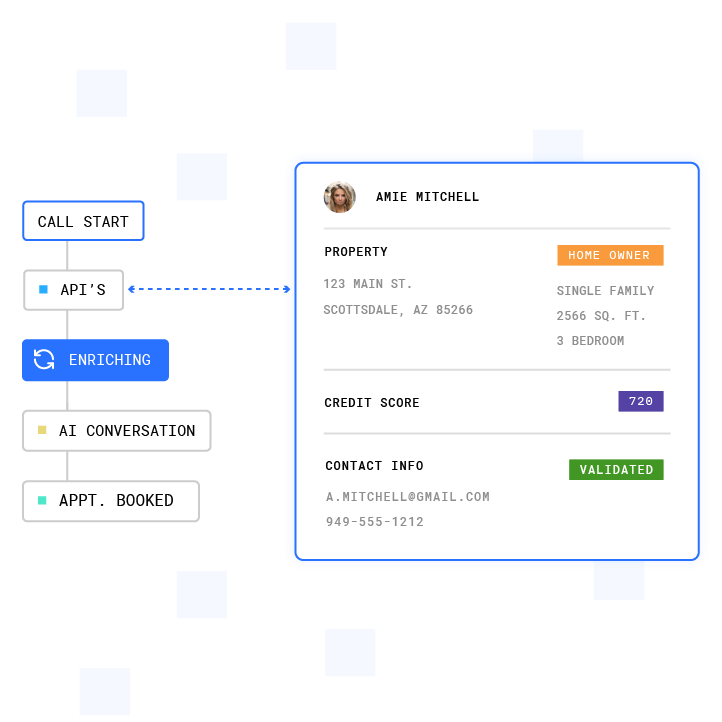
The B2B and B2C decision tree below governs which sequence configuration applies:
- Is the contact a patient, plan member, or individual consumer? Yes: route to a B2C sequence. Apply explicit consent verification, state-specific quiet-hours enforcement, and conservative escalation thresholds. No: continue to the next gate.
- Is the contact a business entity, practice, or institutional buyer? Yes: route to a B2B sequence. Apply broader contact windows, firmographic enrichment, and qualification-first logic. No: flag for manual review before outreach initiates.
- Does the record contain any PHI field, regardless of contact type? Yes: apply field-level redaction before the record enters the AI workflow, regardless of B2B or B2C designation.
Plura’s AI Lead Intelligence layer enriches records in real time during the conversation using more than 30 data sources. The AI can qualify a lead without requiring the source system to pass sensitive fields upfront.
Example of a HIPAA-Aligned Outreach Sequence
The infrastructure model underneath the AI platform determines which safeguards you can actually enforce. The table below contrasts an owned-carrier model with a third-party API-wrapper model across four operational dimensions.
| Dimension | Owned-Carrier Model (e.g., Plura) | API-Wrapper Model (e.g., Twilio-based platforms)4 | Operational Impact |
|---|---|---|---|
| Caller ID and STIR/SHAKEN | Issued at the carrier level, authenticated at origination | Inherited from third-party CPaaS, not issued by the platform | Branded caller ID and spam-label remediation require carrier ownership, wrappers cannot issue independently |
| DNC Scrubbing | Real-time, pre-dial, enforced at the platform layer | Bolted on post-routing, enforcement depends on third-party integration | Pre-dial scrubbing blocks non-compliant contacts before origination, post-routing scrubbing does not |
| PHI and Data Residency | 100% U.S. infrastructure by architecture, no offshore routing | Data residency depends on CPaaS provider’s infrastructure map | FCC NPRM CG Docket No. 26-52 proposes limitations on offshore handling of sensitive consumer data |
| Audit Export | One-click export, timestamped, immutable consent ledger across all channels | Audit data fragmented across platform and CPaaS logs | Single-source audit trail reduces legal hold complexity and carrier compliance review time |
A HIPAA-aligned outreach sequence for a healthcare operator typically runs in a clear, staged pattern. An inbound lead submits a form. Plura’s AI Webchat starts a qualification conversation within seconds and collects only the fields needed for routing. The AI SMS agent then sends a confirmation with appointment details. Twenty-four hours before the appointment, AI Voice places a reminder call with STIR/SHAKEN-authenticated caller ID. If the patient does not confirm, an RCS (Rich Communication Services) message delivers a one-tap reschedule option. Every step logs to the Stateful Conversation Database, and every consent event is timestamped and exportable.
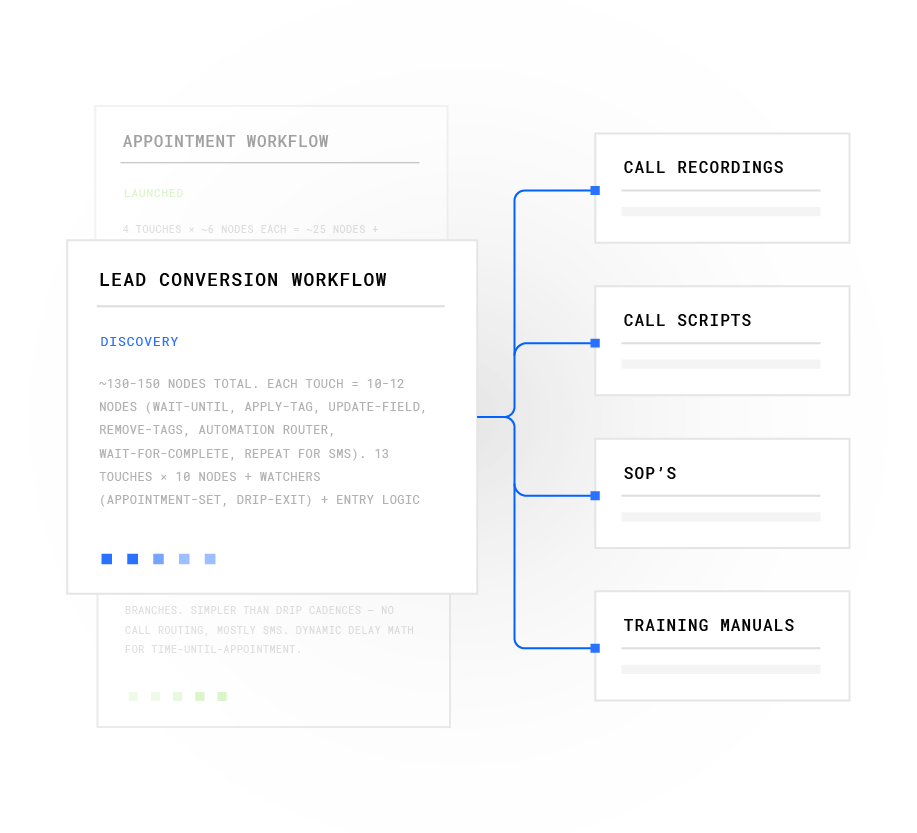
Book a live demo with Plura to see a HIPAA-aligned outreach sequence configured for your vertical.
Reducing No-Shows with Stateful AI Follow-Up
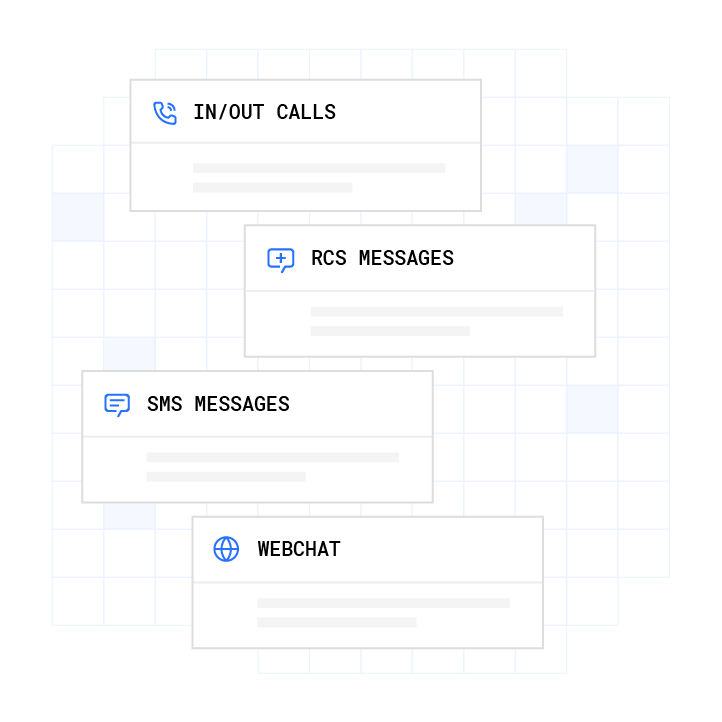
No-show rates create a direct revenue problem for healthcare operators. Missed appointments consume scheduling capacity, generate no reimbursement, and create downstream care gaps. Plura can help reduce no-show rates through automated, multi-channel follow-up sequences that run across voice, SMS, RCS, and webchat without requiring staff intervention.
Stateful follow-up keeps every reminder relevant and consistent. The AI tracks which channel the patient last engaged on, what was said, and whether a confirmation was received. It does not send a generic reminder. It continues the conversation from where it left off, using the same context the human team would use if they were making the call manually.
Frequently Asked Questions
Does Plura execute a Business Associate Agreement for healthcare deployments?
Plura supports BAA execution for healthcare operators and covered entities. The BAA describes how PHI is handled within Plura’s infrastructure. Operators are responsible for ensuring their own downstream obligations under HIPAA are met, including any BAAs required with their own vendors and subcontractors. Consult qualified legal counsel on your specific BAA requirements.
How does Plura handle PHI that appears unexpectedly in a conversation?
Plura’s workflow engine supports field-level redaction, which masks designated PHI fields in transcripts and logs. When a patient volunteers sensitive information outside a designated field, the AI’s escalation rules can route the conversation to a human agent. Operators configure which disclosures trigger escalation during the workflow build. The AI does not improvise on sensitive-data handling.
What is the difference between TCPA compliance and HIPAA compliance in an outreach sequence?
TCPA describes consent for automated calls and texts, quiet-hours restrictions, and DNC list adherence. HIPAA describes the handling, storage, and transmission of protected health information. A sequence can satisfy TCPA consent requirements while still mishandling PHI, and the reverse can also occur. Plura’s compliance engine supports both layers through real-time DNC scrubbing and consent logging for TCPA, and encryption, access controls, and audit logging for HIPAA. Operators should consult legal counsel on how both frameworks apply to their specific programs.
Can Plura run compliant outreach across voice, SMS, and webchat simultaneously for the same lead?
Plura’s four channels share a single Stateful Conversation Database. A lead who receives an SMS at 9 a.m. is the same record when the AI Voice call goes out at noon. The AI inherits the full context of every prior touchpoint, including consent status, PHI redaction flags, and escalation history. This cross-channel memory keeps multi-channel sequences operationally coherent rather than fragmented.
How long does it take to deploy a HIPAA-aligned outreach sequence on Plura?
A straightforward appointment-reminder or lead-qualification flow typically deploys within days. A complex intake sequence, such as a 25-question health-history survey with conditional routing, often runs closer to one to two months because the workflow logic requires design, validation, and pilot testing on real calls. Every deployment includes a 90-day opt-out window in the annual contract. If the sequence is not delivering, operators are not held to the full term.
Next Steps for Healthcare Outreach Teams
HIPAA compliant AI lead outreach starts as an infrastructure decision before it becomes a workflow design exercise. Safeguards need to live in the carrier stack, the data layer, and the consent engine, not as add-ons to a third-party API wrapper. Plura’s FCC-licensed platform enforces these safeguards at the infrastructure layer, not as bolt-on features, which helps maintain a consistent compliance posture across all four channels without configuration drift.
Compare plans and rates side by side at plura.ai/pricing.
1 Plura AI maintains SOC 2, HIPAA, ISO, and GDPR posture as part of its platform infrastructure. References to compliance frameworks in this article describe Plura’s platform capabilities and do not constitute a guarantee that any customer using Plura will themselves be compliant with applicable laws or standards. Customers remain solely responsible for their own regulatory obligations, certifications, consent management, recordkeeping, and the claims they make to their own end users. Consult qualified legal counsel for guidance specific to your use case.
2 This article describes regulatory frameworks at a general level and does not constitute legal advice. Laws and regulations vary by jurisdiction, change over time, and apply differently depending on facts and circumstances. Readers should consult qualified legal counsel before making compliance decisions.
3 Performance figures, customer outcomes, and industry statistics referenced in this article are drawn from cited third-party sources or Plura customer case studies. Individual results vary based on implementation, use case, industry, audience, and execution. Past or aggregate performance is not a guarantee of future results.
4 References to third-party products, services, companies, or research are made for informational and comparative purposes only. Plura AI is not affiliated with, endorsed by, or sponsored by any third party named in this article unless explicitly stated. Trademarks and product names referenced remain the property of their respective owners.
This article is provided for informational purposes only and reflects Plura AI’s understanding at the time of publication. Product capabilities, integrations, and specifications are subject to change. For the most current information, visit plura.ai.
This article was produced with the assistance of AI tools and reviewed by Plura AI prior to publication.