

Written by: Matt Beucler, CEO, Plura AI
Updated June 2026
Key Takeaways
- First Contact Resolution (FCR), Cost per Contact, and Service Level are the three metrics that most directly affect cost and regulatory posture for US enterprise contact centers in 2026.
- US enterprise teams handling 500+ daily interactions should track eight core metrics: FCR, AHT, Service Level, Cost per Contact, Occupancy Rate, Schedule Adherence, Abandonment Rate, and ACW to reflect AI deployment and compliance requirements.
- AI agents deliver measurable gains across all metrics, including near-zero abandonment rates, 100% talk utilization, automated ACW, and cost-per-contact reductions from $13.50 to as low as $0.35–$0.85 per conversation.3
- Plura AI’s 100% U.S. infrastructure, stateful conversation database, and logarithmic cost scaling help teams address TCPA, HIPAA, and FCC requirements while compressing labor costs from $4M–$7M to $300K–$700K annually for a 100-seat equivalent operation.1
- Track your own ROI instantly by running your numbers through Plura AI’s real-time calculator to see efficiency gains across all eight metrics.
Core Call Center KPIs for US Enterprise Teams
Industry frameworks from ICMI and HDI typically anchor contact center performance to five core KPIs: First Contact Resolution, Average Handle Time, Service Level, Cost per Contact, and Customer Satisfaction.4 In 2026, US enterprise teams handling 500 or more daily interactions also need Occupancy Rate, Schedule Adherence, and After-Call Work to reflect AI-agent deployment, regulatory audit requirements, and workforce efficiency under TCPA (Telephone Consumer Protection Act) and HIPAA (Health Insurance Portability and Accountability Act) frameworks.2 The eight metrics below include definition, formula, 2026 US-enterprise benchmark, and an AI-impact comparison for each.
See how your current metrics compare by running your numbers through Plura’s calculator.
1. First Contact Resolution (FCR)
FCR measures the percentage of customer issues resolved on the first interaction without a transfer, callback, or follow-up. Formula: (Total one-touch tickets resolved ÷ Total tickets received) × 100.
| Metric | Human Agent Benchmark | AI Agent Benchmark | Source |
|---|---|---|---|
| FCR Rate | 70–79% industry standard; 80%+ world-class | 70–90% on autonomous interactions | SQM Group / Notch |
| Cost Impact | Each 1% FCR gain reduces operating costs by 1% | FCR lift from 72% to 85% reduces post-contact churn risk | SQM Group / Capacity |
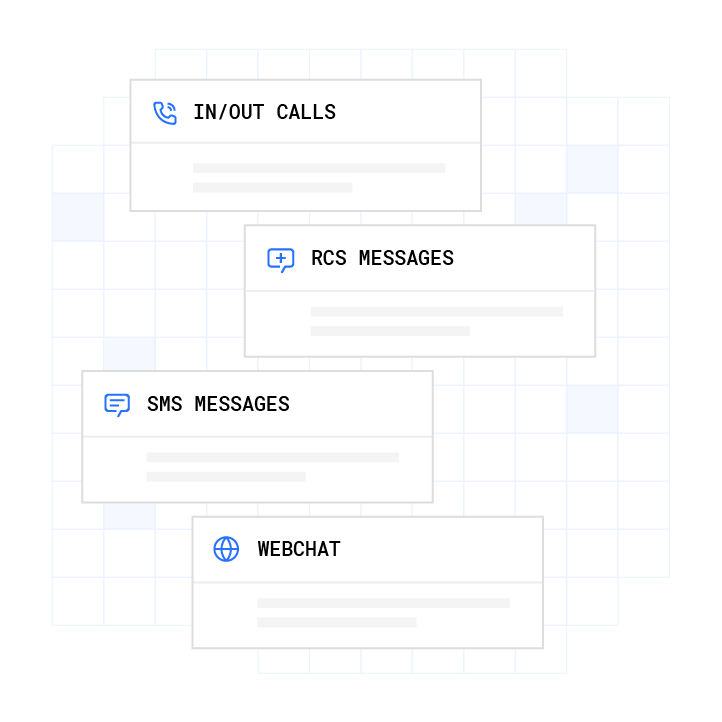
Plura’s stateful conversation database preserves full interaction history across voice, SMS, RCS, and webchat. Agents, human or AI, enter every contact with complete prior context, which directly supports FCR improvement.
2. Average Handle Time (AHT)
AHT measures the average duration of a customer interaction from initiation to completion, including hold time and transfer time but excluding ACW. Formula: (Total talk time + Total hold time + Total transfer time) ÷ Total contacts handled.
| Metric | Human Agent Benchmark | AI Agent Benchmark | Source |
|---|---|---|---|
| AHT | 6-8 minutes typical for US enterprise voice | AHT reduction with agentic AI tools | Capacity / ICMI |
| Resolution Speed | Standard queue-based routing | Resolution time cut from 11 minutes to under 2 minutes in documented deployments | Capacity |
A McKinsey consultant cited by IBM noted that AI agents in contact centers can reduce cost per call while improving customer satisfaction scores (CSAT).
3. Service Level
Service Level measures the percentage of contacts answered within a defined threshold. The standard formula applies the 80/20 rule: 80% of contacts answered within 20 seconds. Formula: (Contacts answered within threshold ÷ Total contacts offered) × 100.
| Metric | Human Agent Benchmark | AI Agent Benchmark | Source |
|---|---|---|---|
| Service Level | 80% of calls answered in 20 seconds (80/20 standard) | Near-instant response, first response under 10 seconds | ICMI / Notch |
| Availability | Business hours plus shifts | 24/7/365 availability | Plura AI |
4. Cost per Contact
Cost per Contact is the total operational cost divided by the number of contacts handled in a period. Formula: Total contact center costs ÷ Total contacts handled. Gartner’s February 2024 benchmarks place the median cost per contact at $1.84 for self-service channels and $13.50 for assisted channels.4
| Model | Cost per Contact | Annual TCO (100-seat equivalent) | Source |
|---|---|---|---|
| Human (onshore) | ~$7.16 industry average; $13.50 assisted per Gartner | $4M-$7M | LiveAgent / Gartner / Plura |
| AI (Plura) | $0.35-$0.85 per completed conversation | $300K-$700K | Plura |
Plura’s logarithmic cost scaling replaces linear headcount growth, which matters because contact centers allocate 60-70% of operating costs to agent labor. Shifting volume to AI agents directly compresses that line item while customers maintain their own compliance posture. Plura supports customer compliance with TCPA, DNC, and HIPAA frameworks and does not absolve customers of their own obligations.
Calculate your potential cost savings across all eight metrics using Plura’s ROI calculator.
5. Occupancy Rate
Occupancy Rate measures the percentage of time agents spend on contact-related activity versus total logged-in time. Formula: (Total handle time ÷ Total logged-in time) × 100. The 2026 US-enterprise benchmark for Occupancy Rate sits between 80% and 85% for human agents, and levels above 90% correlate with burnout and quality degradation.
| Metric | Human Agent Benchmark | AI Agent Benchmark | Source |
|---|---|---|---|
| Occupancy Rate | 80–85% target range | 100% talk utilization; no idle-time overhead | Stealth Agents / Plura |
| Scalability | 4–8 weeks to recruit and train additional agents | Scales to 10x volume overnight with zero additional hiring | Plura |
6. Schedule Adherence
Schedule Adherence measures how closely agents follow their assigned schedules, including start times, break times, and shift end times. Formula: (Time agent is available as scheduled ÷ Total scheduled time) × 100. High schedule adherence is critical for high-volume US enterprise operations.
| Metric | Human Agent Benchmark | AI Agent Benchmark | Source |
|---|---|---|---|
| Schedule Adherence | High target, impacted by 35–45% annual turnover | Not applicable; AI agents operate continuously without schedule variance | Plura / HDI |
| Turnover Impact | 30–45% annual agent turnover disrupts adherence planning | 0% turnover rate | Plura |
7. Abandonment Rate
Abandonment Rate measures the percentage of contacts where the customer disconnects before reaching an agent. Formula: (Abandoned contacts ÷ Total contacts offered) × 100. The 2026 high-performer US-enterprise benchmark for voice-agent abandonment rate is 2-3%, and levels above 8% signal a service-level or staffing problem.
| Metric | Human Agent Benchmark | AI Agent Benchmark | Source |
|---|---|---|---|
| Abandonment Rate | High-performer target 2-3%; above 8% requires intervention | Near-zero for AI-handled queues, and the sub-10-second response time mentioned earlier eliminates queue wait | Hamming AI / Notch |
| Deflection Rate | Not applicable | 50%+ deflection of routine inquiries | Capacity |
8. After-Call Work (ACW)
ACW is the time agents spend completing tasks after a contact ends, such as logging notes, updating records, and scheduling follow-ups. Formula: Total ACW time ÷ Total contacts handled. The benchmark for ACW varies by industry vertical and contact complexity.
| Metric | Human Agent Benchmark | AI Agent Benchmark | Source |
|---|---|---|---|
| ACW Duration | Varies by vertical | Automated summaries cut ACW by several minutes per interaction | Deloitte via CX Today |
| Logging Method | Manual agent entry post-call | AI-powered call summarization generates structured recaps automatically | Imagicle |
How the 80/20 Rule Shapes Service Level Targets
The 80/20 rule in call centers is the Service Level standard stating that 80% of inbound contacts should be answered within 20 seconds. It originated as a practical benchmark from early automatic call distributor (ACD) data and was adopted by ICMI as the industry baseline for staffing and queue management. The rule applies directly to Metric 3 above: a contact center reporting 75% of calls answered in 20 seconds is below the 80/20 threshold and typically needs either additional capacity or faster routing logic. In AI-augmented environments, the 80/20 rule remains the contractual SLA standard in most enterprise agreements, and AI agents often exceed it by responding in under 10 seconds across all channels.
How AI Agents Change the Cost-per-Contact Equation
Gartner projects that conversational AI deployments in contact centers will reduce agent labor costs by $80 billion globally by 2026.3 McKinsey has discussed the potential for significant productivity gains in contact center operations. The mechanism is deflection plus handle-time compression. Agentic AI resolves 40-60% of tier-1 and tier-2 interactions autonomously, and the contacts that reach human agents arrive with full context already captured.
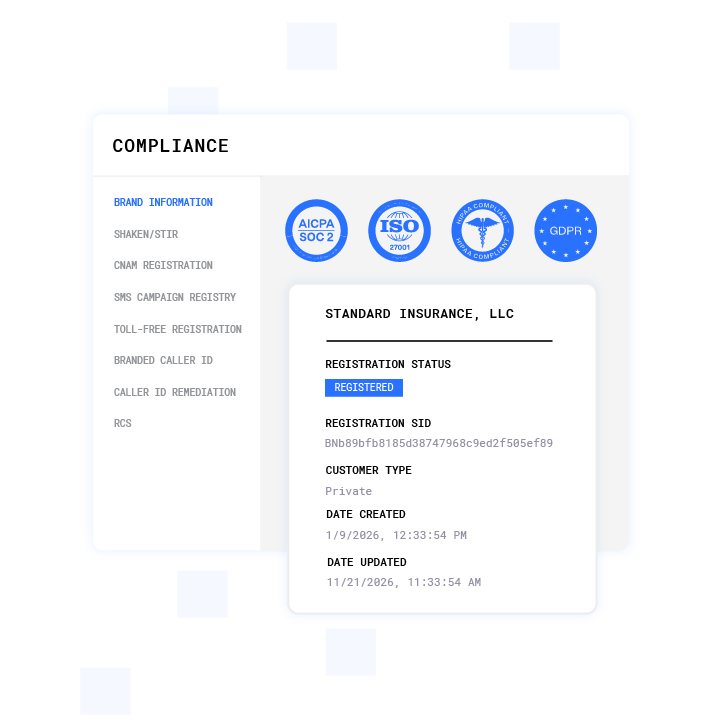
Plura’s architecture produces this outcome through logarithmic cost scaling. The 100-seat cost comparison shown earlier, traditional infrastructure at $4M-$7M versus Plura at $300K-$700K, illustrates this logarithmic scaling in practice. Plura runs on 100% U.S. infrastructure, which positions customers to address the FCC NPRM (Notice of Proposed Rulemaking, CG Docket No. 26-52) and state onshoring laws in New York, New Jersey, Connecticut, Missouri, and Florida. The platform’s compliance support extends to TCPA, DNC, HIPAA, SOC 2, and STIR/SHAKEN caller ID verification as well, though customers remain responsible for their own regulatory obligations and should consult qualified counsel.1
Conclusion and Next Step
Tracking all eight metrics, FCR, AHT, Service Level, Cost per Contact, Occupancy Rate, Schedule Adherence, Abandonment Rate, and ACW, gives US enterprise contact center leaders a complete picture of operational efficiency, labor cost, and regulatory posture in 2026. Given the $13.50 median for assisted contacts mentioned earlier, the gap between human-agent economics and AI-agent economics is measurable on every metric in this list.
Plura’s FCC-licensed infrastructure, stateful conversation database, and no-code workflow builder deliver gains across all eight metrics simultaneously. Teams see near-zero abandonment, 100% talk utilization, automated ACW, and a cost-per-contact that starts at $0.35–$0.85 per completed conversation.
Run your numbers through Plura’s calculator to check your ROI in real time.
Frequently Asked Questions
What is a realistic First Contact Resolution benchmark for a US enterprise contact center in 2026?
The industry standard for a good FCR rate is 70% to 79%, with 80% or higher considered world-class. Only about 5% of contact centers reach the world-class threshold on human-agent interactions alone. AI agents handling autonomous interactions typically achieve 70% to 90% FCR, depending on platform architecture and the complexity of the inquiry types routed to them. Enterprise teams should segment FCR by intent, product line, and channel rather than relying on a single blended number, since a high FCR on simple billing inquiries can mask a low FCR on complex technical issues.
How does the 80/20 Service Level rule interact with AI agent deployment?
The 80/20 rule, 80% of contacts answered within 20 seconds, remains the contractual SLA standard in most US enterprise agreements and is the baseline ICMI uses for staffing models. When AI agents handle a significant share of inbound volume, queue wait times drop sharply, and the 80/20 threshold becomes easier to maintain with fewer human agents on shift. The rule still applies to human-agent queues for escalated or complex contacts. Enterprise teams should track Service Level separately for AI-handled and human-handled queues to avoid blending metrics in ways that obscure staffing gaps.
What regulatory factors should US enterprise contact centers account for when selecting efficiency metrics in 2026?
US contact centers in 2026 operate under a layered compliance environment that includes TCPA, DNC rules, HIPAA for healthcare-adjacent operations, and sector-specific rules under GLBA and Dodd-Frank.2 Thirteen states require two-party consent for call recording, which directly affects how call data is captured and stored for audit purposes. The FCC NPRM (CG Docket No. 26-52) proposes restrictions on offshore handling of sensitive consumer data, adding infrastructure provenance to the list of metrics that compliance teams need to track. Organizations should consult qualified legal counsel to determine which frameworks apply to their specific operations and how those frameworks affect metric selection and reporting cadence.
How does Cost per Contact change when AI agents handle a portion of contact volume?
Cost per Contact drops when AI agents absorb routine, high-frequency interactions that would otherwise require a human agent. The reduction comes from two sources: lower per-contact cost for AI-handled interactions and reduced overhead on human-agent interactions because agents receive pre-qualified, context-rich handoffs rather than starting from zero. Gartner’s February 2024 benchmarks place the median assisted cost per contact at $13.50. AI-handled contacts on platforms like Plura cost $0.35–$0.85 per completed conversation. The blended cost per contact for a hybrid operation depends on the deflection rate and the complexity mix of contacts that reach human agents.
What is After-Call Work and why does it matter for high-volume enterprise teams?
After-Call Work is the time an agent spends completing administrative tasks after a contact ends, such as updating the CRM, logging call notes, scheduling follow-ups, and flagging compliance items. For a high-volume team handling 500 or more daily interactions, ACW at 90 seconds per contact adds up to 12.5 hours of non-customer-facing time per 500 contacts. AI-powered call summarization tools generate structured recaps automatically at the end of each interaction, which reduces ACW to near zero for AI-handled contacts and cuts it significantly for human-agent contacts where the AI pre-populates the log. Reducing ACW directly improves Occupancy Rate and frees agent capacity for live customer conversations.
In 2026, US enterprise teams handling 500 or more daily interactions also need Occupancy Rate, Schedule Adherence, and After-Call Work to reflect AI-agent deployment, regulatory audit requirements, and workforce efficiency under TCPA and HIPAA frameworks.5
1 Plura AI maintains SOC 2, HIPAA, ISO, and GDPR posture as part of its platform infrastructure. References to compliance frameworks in this article describe Plura’s platform capabilities and do not constitute a guarantee that any customer using Plura will themselves be compliant with applicable laws or standards. Customers remain solely responsible for their own regulatory obligations, certifications, consent management, recordkeeping, and the claims they make to their own end users. Consult qualified legal counsel for guidance specific to your use case.
2 This article describes regulatory frameworks at a general level and does not constitute legal advice. Laws and regulations vary by jurisdiction, change over time, and apply differently depending on facts and circumstances. Readers should consult qualified legal counsel before making compliance decisions.
3 Performance figures, customer outcomes, and industry statistics referenced in this article are drawn from cited third-party sources or Plura customer case studies. Individual results vary based on implementation, use case, industry, audience, and execution. Past or aggregate performance is not a guarantee of future results.
4 References to third-party products, services, companies, or research are made for informational and comparative purposes only. Plura AI is not affiliated with, endorsed by, or sponsored by any third party named in this article unless explicitly stated. Trademarks and product names referenced remain the property of their respective owners.
5 This article contains forward-looking statements regarding industry trends, technology adoption, and future capabilities. These statements reflect current expectations and are subject to change. Plura AI undertakes no obligation to update forward-looking statements except as required.
This article is provided for informational purposes only and reflects Plura AI’s understanding at the time of publication. Product capabilities, integrations, and specifications are subject to change. For the most current information, visit plura.ai.
This article was produced with the assistance of AI tools and reviewed by Plura AI prior to publication.