

Written by: Matt Beucler, CEO, Plura AI
Key Takeaways
- An RCS for Business agent is a verified sender identity that delivers branded, interactive messaging with rich media and buttons inside native Android and Apple messaging apps, with 3x higher engagement than SMS.
- Four agent types exist: Basic, Bot, Verified Bot, and Enterprise, with Enterprise agents providing the highest verification, compliance, and infrastructure capabilities for regulated verticals.
- Registration with U.S. carriers requires brand verification, use-case declaration, carrier submission, webhook setup, compliance documentation, testing, and final go-live approval.
- High-ROI use cases in healthcare, insurance, financial services, legal, and real estate rely on verified sender identity, stateful conversations, and real-time compliance enforcement.
- Plura AI combines FCC-licensed carrier ownership with stateful cross-channel memory and infrastructure-level compliance; see how this stack accelerates RCS agent deployment.
How an RCS Agent Changes Business Messaging
An RCS agent is the business-side entity registered with carriers and the GSMA (GSM Association) that sends and receives RCS messages on behalf of a brand. SMS delivers a plain-text string from an unverified number, while an RCS agent delivers a verified brand name, logo, color scheme, and interactive message surface inside the same native thread the recipient already uses for personal texts.
RCS messaging achieves 3x higher engagement than SMS, an 80% read rate, and a 35% click-through rate across more than 2 billion supported devices.1 These results reflect a structural shift: recipients trust verified sender identities and interact with rich content in ways that plain SMS cannot match. The market is moving from short codes to branded agents for the same reason it moved from fax to email, because the richer channel wins once the infrastructure can support it.
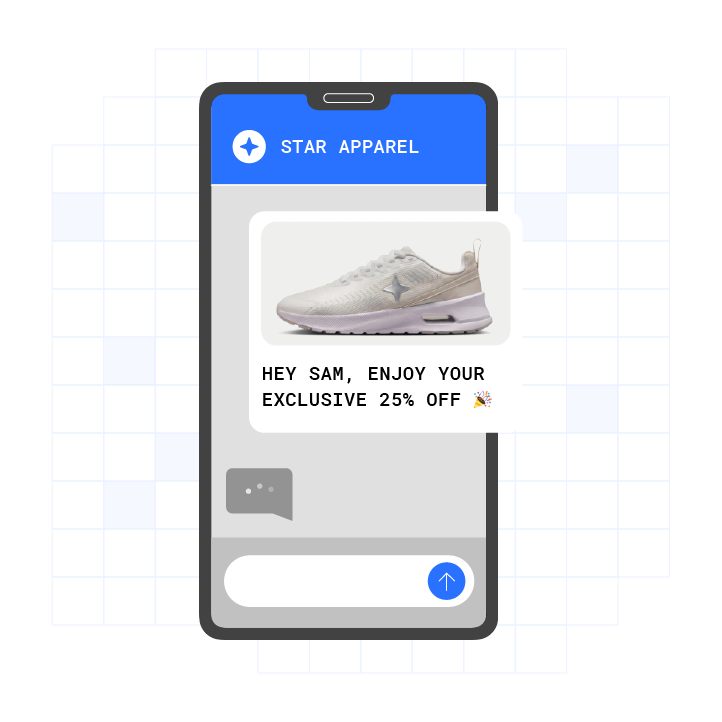
For high-volume operators running 500 or more daily interactions, the shift from short codes to RCS agents changes the economics of outbound messaging. Higher read rates mean fewer messages are needed to drive the same conversion volume. Verified sender identity also reduces the friction that causes recipients to ignore or block unrecognized numbers.
Four RCS Agent Types and When They Matter
The Google for Developers RCS Business Messaging documentation and the GSMA RCS Business Messaging guidelines define four agent classifications. Each carries distinct technical capabilities, verification requirements, and billing treatment.
| Agent Type | Verification Level | Technical Capabilities | Typical Enterprise Use Case | Billing Category |
|---|---|---|---|---|
| Agent (Basic) | Brand name only | Rich media, suggested replies, action buttons | Promotional campaigns, order notifications | Per-message or session-based |
| Bot | Brand name + automated flow disclosure | Conversational flows, rich cards, carousels | FAQ handling, appointment reminders, lead qualification | Per-session or per-conversation |
| Verified Bot | Carrier-verified brand identity | All Bot capabilities plus verified sender badge, in-message payments, document actions | Financial services alerts, insurance renewals, healthcare intake | Premium per-session, carrier-negotiated rates |
| Enterprise | Full carrier and GSMA verification, dedicated infrastructure | All Verified Bot capabilities plus stateful cross-channel memory, custom compliance engine integration, dedicated throughput | Contact center replacement, regulated-vertical AI deployment, franchise network orchestration | Volume-tiered, infrastructure fee plus per-message |
Enterprise-tier agents are the relevant classification for operators running AI-driven, stateful conversations across regulated verticals. The verification and infrastructure requirements at this tier are substantially higher than those for basic or bot agents, and the compliance obligations around consent, data handling, and carrier authentication are correspondingly more demanding. Those higher requirements translate directly into a more complex registration process.
RCS for Business Agent Registration With U.S. Carriers
As of June 2026, registering an RCS for Business agent with U.S. carriers involves a multi-step verification process that spans the GSMA ecosystem, individual carrier approval, and, for AI-driven deployments, additional compliance documentation. Operators should consult qualified counsel and the applicable carrier’s current registration portal for requirements specific to their use case. The general process follows this sequence:
- Brand verification. Submit legal entity documentation, brand assets (logo, color palette, display name), and a description of the agent’s intended use to the RCS aggregator or carrier portal.
- Use-case declaration. Specify the message categories the agent will send: transactional, promotional, conversational, or a combination. Carriers apply different throughput and content policies by category.
- Carrier submission. Submit the agent registration to each U.S. carrier (AT&T, T-Mobile, Verizon, and regional carriers) individually or through an aggregator with carrier relationships. Approval timelines vary by carrier.
- Webhook and infrastructure configuration. Configure the agent’s webhook endpoints, fallback SMS (Short Message Service) behavior for devices that do not support RCS, and message delivery reporting.
- Compliance documentation. For regulated verticals, provide consent management documentation, DNC (Do Not Call) scrubbing procedures, and data-handling disclosures. Carriers may request evidence of TCPA (Telephone Consumer Protection Act, 47 U.S.C. § 227) consent workflows before approving high-volume agents.3
- Test and validation. Run the agent through carrier-mandated test scenarios covering message rendering, fallback behavior, opt-out handling, and error states.
- Go-live approval. Carriers issue final approval and assign the agent’s sender ID. Production traffic can begin once all carriers in the target footprint have approved.
Platforms that own the carrier stack can accelerate steps three through five because they hold direct carrier relationships rather than routing through a third-party aggregator. Operators using API-wrapper platforms inherit the aggregator’s approval queue and compliance posture, not their own.
High-ROI RCS Use Cases in Regulated Verticals
High-ROI RCS deployments share a common structure: a verified sender identity, a stateful conversation engine that remembers prior interactions, and a compliance layer that enforces consent and DNC rules before each message. Verticals where this combination produces the clearest return are those where the cost of a missed or ignored message is highest.

Healthcare. Appointment confirmations, patient intake, prescription reminders, and eligibility surveys delivered via RCS can reduce no-show rates when combined with AI-driven follow-up across voice and SMS for unread messages.
Insurance. Quote follow-ups, policy renewal reminders, and claims-status updates benefit from the verified sender badge in RCS. In a market where the first responder closes 78% of deals, sub-5-second outreach via a verified RCS agent creates a structural advantage over unbranded SMS.
Financial services. Account alerts, loan follow-ups, and advisor-appointment scheduling require both rich interactivity and strict data-handling controls. RCS agents on 100% U.S. infrastructure address data-residency expectations that offshore or foreign-infrastructure platforms may not meet under the FCC NPRM (Notice of Proposed Rulemaking, CG Docket No. 26-52).
Legal. Mass-tort and personal-injury intake flows use RCS carousels and action buttons to guide claimants through qualification steps before routing valid cases to counsel. Field-level redaction of PII (Personally Identifiable Information) and PHI (Protected Health Information) is enforced at the infrastructure layer.
Real estate and franchise networks. Property-inquiry follow-up, showing confirmations, and multi-location lead handling use RCS rich cards to deliver property images, maps, and booking actions inside the message thread. Franchise operators use RCS agents to enforce identical messaging SLAs across every location in the network.
How to Build an RCS for Business Agent
- Discovery audit. Map the existing conversation volume, channel mix, average handle time, and compliance obligations. Identify which message categories (transactional, promotional, conversational) the agent will handle and which regulatory frameworks apply to the vertical.
- Workflow design. Build the conversation logic on a no-code visual canvas. Define greeting nodes, qualification gates, escalation triggers, and post-message actions. Specify BATNA (Best Alternative to a Negotiated Agreement) guardrails for any negotiation flows.
- Stateful conversation database integration. Connect the RCS agent to a shared conversation database that holds context across voice, SMS, RCS, and webchat. A recipient who received an RCS message at 9 a.m. should be recognized by the voice agent at noon without re-introduction. Plura’s stateful AI architecture remembers previous interactions, preferences, and outcomes across channels for better personalization and follow-ups.
- Compliance engine configuration. Configure the compliance engine to enforce three core requirements before each outbound message: real-time DNC scrubbing, TCPA consent record validation, and quiet-hours enforcement by recipient time zone. These controls operate as sequential gates, and a message blocked by any one gate never reaches the send queue. Data-handling rules specific to your vertical layer on top of this baseline. Readers should consult the relevant regulations and qualified counsel to determine their specific obligations under frameworks including TCPA (47 U.S.C. § 227), HIPAA (45 CFR Parts 160, 162, 164), and applicable state rules.
- Testing. Run the agent through carrier-mandated test scenarios plus internal QA covering fallback SMS behavior, opt-out handling, rich media rendering across device types, and escalation routing.
- Deployment on 100% U.S. infrastructure. Production traffic should originate on domestic infrastructure to address FCC NPRM data-residency considerations and state onshoring laws in New York, New Jersey, Connecticut, Missouri, and Florida. Platforms that route through foreign infrastructure or third-party CPaaS (Communications Platform as a Service) layers inherit those vendors’ compliance exposure.
- Iteration. Monitor conversation transcripts, opt-out rates, conversion paths, and escalation triggers weekly. Tune workflow nodes against actual outcomes rather than assumed behavior. A production RCS agent functions as a continuous optimization surface, not a one-time build.
RCS for Business Agent Pricing Structure
RCS agent pricing varies across several dimensions. The table below maps the primary cost factors operators encounter when evaluating platforms.
| Pricing Factor | Description |
|---|---|
| Agent build fee | One-time cost to design, configure, and deploy the conversation workflow. Varies by conversation complexity and number of workflow nodes. |
| Per-message or per-session rate | Charged per RCS message sent or per conversation session, depending on carrier and platform billing model. Verified Bot and Enterprise agents typically carry higher per-session rates than basic agents. |
| Platform subscription | Monthly or annual fee for access to the conversation engine, compliance tools, analytics, and integrations. |
| Infrastructure tier | Platforms that own the carrier stack charge differently than API-wrapper platforms. Owned-carrier platforms eliminate the aggregator markup (the “wrapper tax”) that third-party CPaaS platforms pass through to the customer. |
| Compliance engine | Real-time DNC scrubbing, consent management, and audit-log generation may be included in the platform fee or billed separately depending on the vendor. |
| Volume tier | High-volume operators typically negotiate volume-tiered rates. Enterprise-tier agents with dedicated throughput carry different economics than shared-infrastructure deployments. |
Plura AI offers three pricing tiers: Multi ($5,000/month), Agency ($7,500/month), and Enterprise (custom), all on annual contracts billed monthly with a 90-day opt-out window. Agent build fees run $2,500 to $2,750 per agent. Compare plans and rates side by side.
Compliance Engine Requirements for RCS Agents
A production-grade RCS for Business agent in a regulated vertical requires a compliance engine that operates at the infrastructure layer, not as a post-hoc add-on. The following capabilities describe what that engine should include. Operators are responsible for determining their own compliance obligations and should consult qualified counsel before deployment.
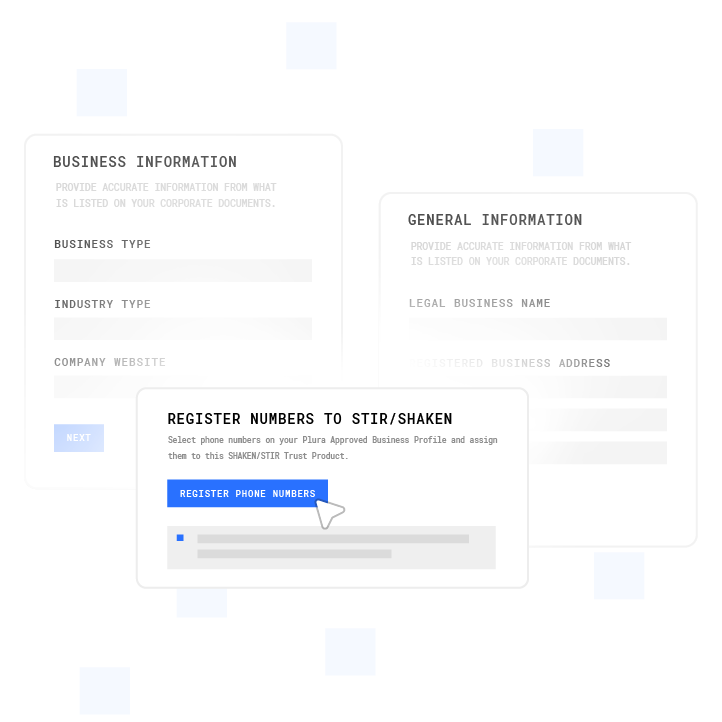
TCPA compliance. Every outbound RCS message should be checked against consent records before send. Consent records should be timestamped, immutable, and exportable for audit. Express written consent requirements under 47 U.S.C. § 227 apply to many automated messaging use cases, and counsel can advise on the specific requirements applicable to each vertical and message type.
DNC compliance. Real-time scrubbing against federal and state DNC registries should occur before each outbound contact. Non-compliant numbers should be blocked before the first send attempt, not flagged after.
HIPAA. For healthcare and related verticals, end-to-end encryption, access controls, field-level PHI redaction, and audit logging function as infrastructure requirements.2 Readers should consult 45 CFR Parts 160, 162, and 164 and qualified counsel for the specific obligations applicable to their organization.3
SOC 2. Continuous monitoring, penetration testing, and third-party audits should cover the underlying infrastructure.2 SOC 2 Type II certification covers the platform, while operators maintain their own certification obligations.
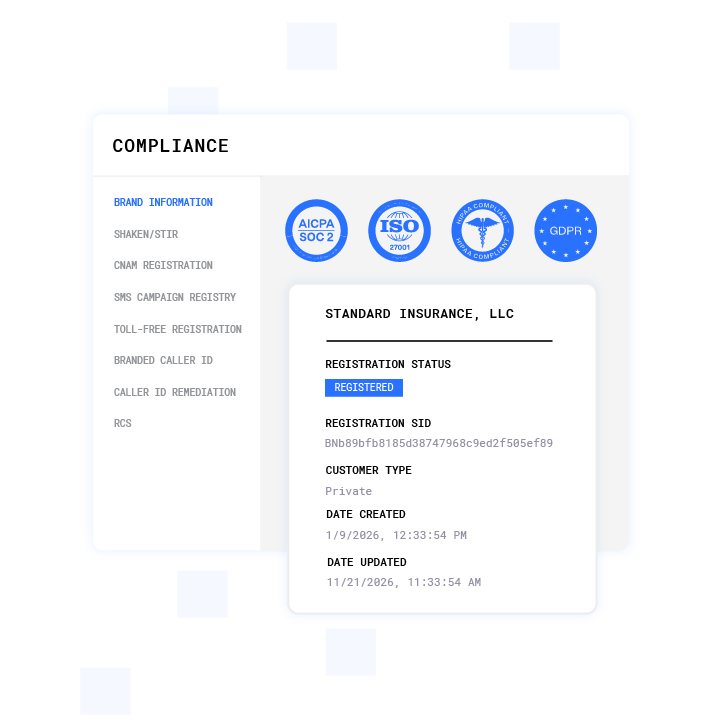
ISO certification. ISO frameworks confirm that the platform’s information security management system aligns with internationally recognized standards.
SHAKEN/STIR caller ID verification. For RCS agents that also operate voice channels, STIR/SHAKEN (Secure Telephone Identity Revisited/Signature-based Handling of Asserted information using toKENs) authentication on every outbound call verifies legitimate origination to destination carriers.
GDPR. For operators with European data subjects, Regulation (EU) 2016/679 data-handling requirements apply to conversation data stored and processed on the platform.3
Cost Model and ROI Benchmarks for RCS Agents
The total cost of ownership comparison between a production AI RCS agent platform and a traditional contact-center model is substantial. Plura’s TCO runs $300,000 to $700,000 per year, replacing the $4 million to $7 million traditional contact-center cost structure on equivalent volume.
The primary driver is talk utilization. A human agent operates at roughly 40% talk utilization after accounting for breaks, training, administrative tasks, and queue wait time. An AI agent runs at 100% talk utilization with no taxes, benefits, commissions, or rehiring overhead. The illustrative 15-agent scenario on Plura’s ROI calculator shows $45,600 in 30-day savings, $547,200 over 12 months, and $2,736,000 over 60 months when replacing a 15-person human team with 6 AI agents at equivalent output volume.1
For RCS specifically, the engagement economics compound the labor savings. An 80% read rate and 35% click-through rate mean fewer messages are needed to drive the same conversion volume compared to plain SMS, which reduces per-acquisition message costs across the campaign. Operators running $5,000 or more in monthly paid-media spend often see the RCS engagement premium offset a meaningful portion of the platform cost within the first 90 days.
Plura reports 3x average ROI in 90 days, 47% average pipeline growth, and 90% faster lead-response time across its customer base.1 Operators should run their own numbers against actual volume and cost inputs using the calculator before projecting outcomes for their specific deployment.
Frequently Asked Questions
What is an RCS for Business agent?
An RCS for Business agent is a verified sender identity registered with mobile carriers that enables a business to send branded, interactive messages inside the native messaging app on Android and Apple devices. Unlike SMS, an RCS agent displays the company’s name, logo, and verified badge alongside rich media, action buttons, carousels, and in-message payment or document-signing capabilities. The agent is the carrier-registered entity that originates and receives RCS traffic on behalf of the brand.
What are the four types of RCS agents?
The four types are Agent (basic), Bot, Verified Bot, and Enterprise. Basic agents support rich media and suggested replies. Bots add conversational flows and carousels. Verified Bots carry a carrier-verified sender badge and support in-message payments and document actions. Enterprise agents add dedicated infrastructure, stateful cross-channel memory, and custom compliance engine integration. Enterprise-tier agents are the relevant classification for high-volume operators in regulated verticals running AI-driven conversations at scale.
How long does it take to register an RCS for Business agent with U.S. carriers?
Registration timelines vary by carrier and agent type. Basic and Bot agents can move through approval in days to a few weeks when documentation is complete. Verified Bot and Enterprise agents require more extensive carrier review, compliance documentation, and infrastructure validation, which can extend the timeline to several weeks. Platforms that hold direct carrier relationships rather than routing through third-party aggregators typically move through the approval queue faster. Operators should plan for the full registration process before setting a go-live date.
What compliance infrastructure does an RCS agent need in a regulated vertical?
At minimum, a production RCS agent in a regulated vertical needs the infrastructure-layer compliance controls described in the Compliance Engine Requirements section: pre-send consent validation, real-time DNC scrubbing, time-zone-aware quiet hours, and vertical-specific data handling. Healthcare deployments additionally require HIPAA-aligned encryption, field-level PHI redaction, and audit logging. Financial services and legal deployments require sensitive-data handling controls that keep data on domestic infrastructure. Operators should consult qualified counsel to determine the specific obligations applicable to their use case and jurisdiction.
Why does carrier ownership matter for RCS agent deployment?
Platforms that own their carrier infrastructure can issue verified sender IDs directly, enforce compliance at the origination layer rather than bolting it on afterward, and negotiate carrier relationships without an aggregator in the path. Platforms built as API wrappers on top of third-party CPaaS providers inherit the aggregator’s approval queue, caller-ID reputation, and compliance posture. For Enterprise-tier RCS agents in regulated verticals, the difference shows up in registration speed, branded sender identity quality, real-time DNC enforcement, and the ability to address FCC NPRM data-residency expectations on 100% U.S. infrastructure.
Conclusion
Updated June 2026.
An RCS for Business agent replaces unverified short codes with a carrier-authenticated, branded messaging surface that delivers the engagement premium described earlier across more than 2 billion devices. For high-volume operators in healthcare, insurance, financial services, legal, real estate, and franchise networks, the agent type, registration process, compliance engine, and underlying infrastructure all determine whether a deployment scales, supports compliance, and converts.
The 2026 regulatory environment, including the FCC NPRM (CG Docket No. 26-52) and state onshoring laws in New York, New Jersey, Connecticut, Missouri, and Florida, narrows the viable infrastructure options for operators handling sensitive consumer data. Platforms that own the FCC-licensed carrier stack, run on 100% U.S. infrastructure, and support SOC 2, HIPAA, ISO certification, GDPR, SHAKEN/STIR caller ID verification, TCPA compliance, and DNC compliance at the infrastructure layer represent the category aligned with 2026 enterprise performance and regulatory expectations.
Plura AI is the only platform that combines FCC-licensed carrier ownership, stateful cross-channel memory across voice, SMS, RCS, and webchat, and a compliance engine that operates before each outbound contact rather than after. The TCO advantage described earlier, roughly 10% of traditional contact-center economics on equivalent volume, comes with a 90-day opt-out window in every annual contract.
Compare plans and rates side by side.
See the full RCS agent stack in production.
1 Performance figures, customer outcomes, and industry statistics referenced in this article are drawn from cited third-party sources or Plura customer case studies. Individual results vary based on implementation, use case, industry, audience, and execution. Past or aggregate performance is not a guarantee of future results.
2 Plura AI maintains SOC 2, HIPAA, ISO, and GDPR posture as part of its platform infrastructure. References to compliance frameworks in this article describe Plura’s platform capabilities and do not constitute a guarantee that any customer using Plura will themselves be compliant with applicable laws or standards. Customers remain solely responsible for their own regulatory obligations, certifications, consent management, recordkeeping, and the claims they make to their own end users. Consult qualified legal counsel for guidance specific to your use case.
3 This article describes regulatory frameworks at a general level and does not constitute legal advice. Laws and regulations vary by jurisdiction, change over time, and apply differently depending on facts and circumstances. Readers should consult qualified legal counsel before making compliance decisions.
This article is provided for informational purposes only and reflects Plura AI’s understanding at the time of publication. Product capabilities, integrations, and specifications are subject to change. For the most current information, visit plura.ai.
This article was produced with the assistance of AI tools and reviewed by Plura AI prior to publication.