

Written by: Matt Beucler, CEO, Plura AI
Updated June 2026
Key Takeaways for Lead Response Buyers
- Lead response management software detects new leads, routes them, and triggers first contact across voice, SMS, RCS, and webchat to shrink the gap between interest and live conversation.
- Responding within one minute can make leads 391% more likely to convert, while the industry average of 47+ hours creates massive lost opportunity.3
- Platforms that own their FCC-licensed carrier and maintain a shared Stateful Conversation Database across channels deliver higher pickup rates and consistent context.
- Built-in real-time controls for TCPA, DNC, HIPAA, SOC 2, and SHAKEN/STIR can reduce legal exposure and audit overhead compared with bolt-on solutions.1
- Plura AI delivers sub-5-second responses on 100% U.S. infrastructure with cross-channel memory; book a live demo with Plura to see the ROI firsthand.
Lead Response Speed Targets for 2026
Harvard Business Review research found that companies responding within five minutes are 100 times more likely to connect with a prospect than those waiting 30 minutes.4 That benchmark has circulated for years. The 2026 standard is sharper: leads contacted within 1 minute are 391% more likely to convert than those contacted after 24 hours.
Speed alone does not justify a platform change; the economics do. The math behind those numbers is available in Plura’s ROI calculator. A 15-agent operation paying $20 per hour with standard taxes, benefits, and commissions at 40% talk utilization costs $60,000 per month. Replacing that team with Plura at $15 per hour, 100% talk utilization, and 6 AI agents doing the work of 15 humans drops the monthly cost to $14,400. That shift produces $45,600 saved in the first 30 days, $547,200 over 12 months, and $2,736,000 over 60 months.3
Run your own staffing and volume through Plura’s calculator to see the ROI in real time.
Why Sub-60-Second Multi-Channel Response Is Now Table Stakes
The industry average for first contact on an inbound lead is 47+ hours. That gap is not a staffing problem. It is a structural one. Human agents work one channel at a time, operate inside business hours, and cannot scale into peak season without months of advance hiring. Those constraints produce the 47-hour delay, which in turn drives the 88% unanswered rate, because by the time the call arrives it often presents as spam or reaches a prospect who has already moved on.
TCPA (Telephone Consumer Protection Act) violations can involve $500 to $1,500 exposure per text or call, and class action settlements averaged $6.6 million in 2023.2 Operators who respond slowly and without a compliant infrastructure carry both the revenue cost of delay and the potential legal and settlement cost of each contact.
Organizations deploying AI for speed-to-lead see response times drop from hours to seconds and connection rates increase by 3x to 5x. These deployments achieve the sub-60-second response that drives the 391% conversion lift mentioned earlier. Sub-60-second response is no longer a competitive advantage. It is the floor.
Multi-Channel AI Agents vs. Traditional CRM or CPaaS Wrappers
Most lead response tools on the market today fall into one of two categories. A CRM (Customer Relationship Management platform) with a basic notification layer, or a CPaaS (Communications Platform as a Service) wrapper that routes voice and SMS through a third-party carrier like Twilio.4 Neither owns the carrier stack. Neither holds conversation memory across channels. Neither can issue branded caller ID at the carrier level or enforce real-time DNC (Do Not Call) scrubbing before the first dial.
Speed means nothing if the call never gets answered. The practical consequence of rented carrier infrastructure is visible in pickup rates. When a call originates from a rented number on a shared carrier, it arrives on a smartphone as “Spam Likely” or an unfamiliar string of digits. Apple’s iOS 26 call-screening layer often intercepts those calls before they ring through. The lead never hears the phone.
Plura owns its own FCC-licensed audio bridging carrier, so voice originates on Plura’s domestic infrastructure. Branded caller ID is issued at the carrier level, not bolted on through a reseller. STIR/SHAKEN (Secure Telephone Identity Revisited / Signature-based Handling of Asserted information using toKENs) authentication runs on every outbound call. The AI communicates with iOS 26’s call-screening layer so calls present with the company’s name and the reason for the call.
The second structural gap in CRM and CPaaS-wrapper tools is memory. An AI agent that handles voice and an AI agent that handles SMS are typically different products from different vendors with different data stores. A customer who texted at 9 a.m. has to re-explain themselves when the call comes at noon. Plura’s AI Voice, AI SMS, AI RCS, and AI Webchat all share a single Stateful Conversation Database. Every interaction is keyed to the customer by phone number, email, or ID. Every channel inherits the full memory of every prior touchpoint.
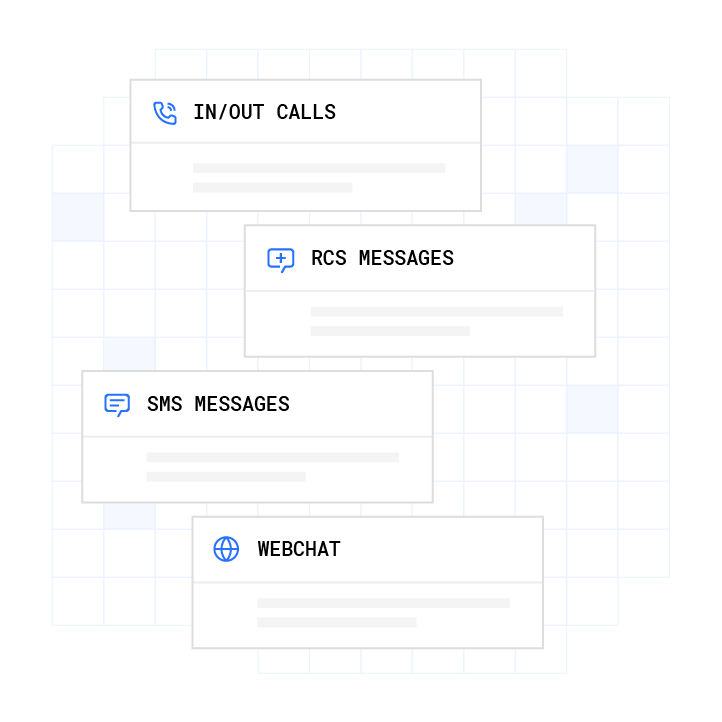
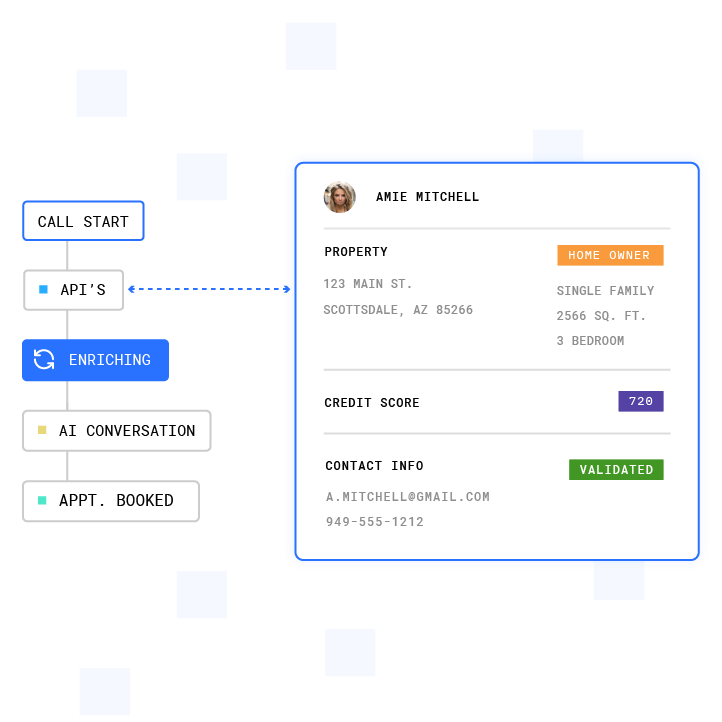
Plura AI’s pre-conversation lead enrichment can increase conversion rates by 30% or more, pulling from 30+ data sources in real time during the conversation across all four channels.
Compliance Engine Requirements for Lead Response Platforms
Operators running high-volume outbound contact in 2026 face a layered regulatory environment. TCPA addresses consent and calling windows for voice and SMS. DNC registries at the federal and state level restrict which numbers can be contacted. HIPAA (Health Insurance Portability and Accountability Act) addresses protected health information across any channel that touches a patient or claimant. SOC 2 (System and Organization Controls 2) covers the security posture of the infrastructure itself. SHAKEN/STIR caller ID verification addresses call authentication. GDPR (General Data Protection Regulation) applies to any European data subjects in the contact set.1,2
Most platforms treat compliance as a bolt-on. Consent records live in a separate system. DNC scrubbing runs on a batch schedule rather than in real time. Quiet-hours enforcement depends on a manual configuration that a campaign manager has to remember to set. When something goes wrong, the audit trail is often incomplete and difficult to reconstruct.
Plura’s compliance engine functions as a first-class layer of the platform. Every outbound contact is checked against federal and state DNC registries in real time before dial. Consent records are timestamped, immutable, and audit-ready. Quiet-hours rules enforce automatically through time-zone detection on the contact. HIPAA-aligned encryption, access controls, and audit logging cover protected health information across voice, SMS, RCS, and webchat. SOC 2 certification covers the underlying infrastructure with continuous monitoring, penetration testing, and third-party audits. ISO certification and GDPR coverage extend the posture for operators with international exposure. The compliance dashboard exports audit-ready reports in one click.
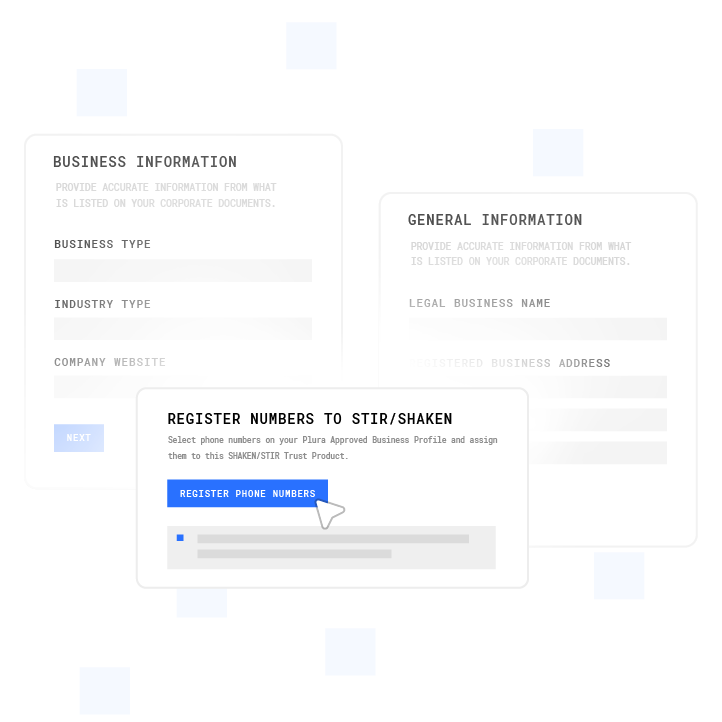
Plura supports customer compliance. Customers remain responsible for their own certifications, regulatory obligations, and the claims they make to their end users. Operators with specific questions about their obligations under TCPA, HIPAA, or state law should consult qualified counsel.
Compare plans and rates side by side.
Total Cost of Ownership: AI vs. Human Contact Centers
U.S. contact-center spend runs $25 to $50 billion annually, with 60 to 70% of operating costs locked into agent labor and 35 to 45% annual agent turnover forcing perpetual training and replacement. Domestic contact center agents cost $15 to $25 per hour before benefits and overhead. For a 50-seat equivalent contact center, traditional offshore operations cost $35,000 to $50,000 monthly, while AI contact centers cost $8,000 to $15,000 monthly.
At the higher-volume end, Plura’s total cost of ownership of $300,000 to $700,000 per year replaces the traditional $4 million to $7 million contact-center cost structure on equivalent volume. Plura agents run at 100% talk utilization with no taxes, benefits, commissions, or rehiring cycle. The platform scales instantly into peak season without advance hiring.
Offshore BPOs (Business Process Outsourcing firms) offered a cost alternative for two decades. That model now faces regulatory pressure from multiple directions, which directly affects long-term lead response strategy. The FCC’s Notice of Proposed Rulemaking (CG Docket No. 26-52) proposes capping offshore customer-service calls at 30% and addressing offshore handling of sensitive consumer data. State laws in New York, New Jersey, Connecticut, Missouri, and Florida already restrict offshore handling of medical, financial, and consumer data. Every offshore contract a covered entity holds now represents a compliance exposure that belongs in the total cost and risk calculation.
Feature-by-Feature Comparison: Stateful Conversation Database and FCC-Licensed Carrier
Lead response platforms fail when a customer has to repeat themselves across channels or when calls never get answered. The two capabilities that prevent both failures are stateful cross-channel memory and FCC-licensed carrier ownership. Neither is a feature that can be added to a CRM or a CPaaS wrapper after the fact.
Generic CRM-based tools store contact records and log activities, but they do not hold live conversation context. When an AI agent on a CRM platform calls a lead who previously texted, the agent starts from the contact record, not from the conversation. Pricing offers made, objections raised, and qualification status from the prior SMS thread are not available in the voice call. The customer repeats themselves. The agent re-qualifies. The conversion window closes.
Plura’s Stateful Conversation Database tokenizes every interaction to the customer across all four channels. A lead who texted at 9 a.m. is the same customer when the call comes at noon. The AI voice agent reads the SMS thread, the prior offer, the objection raised, and the qualification status before the call connects. Negotiation flows use this memory to anchor the next outreach on the prior counter-offer rather than starting from zero.
On the carrier side, generic AI voice tools built on third-party CPaaS platforms inherit the caller ID reputation of the carrier they rent from. They cannot issue branded caller ID independently. They cannot remediate spam labels at the carrier level. They cannot authenticate calls through STIR/SHAKEN on their own origination infrastructure. Plura is its own FCC-licensed audio bridging carrier. Branded caller ID is issued directly. Spam-label remediation happens at the carrier level. STIR/SHAKEN authentication runs on every outbound call from Plura’s own origination infrastructure.
Plura supports voice, SMS, RCS, and webchat natively in a unified platform with drag-and-drop workflows and FCC-licensed carrier status. The no-code workflow canvas lets operators build and iterate conversation logic without engineering. The AI Predictive Dialer uses stateful conversion signals to prioritize contacts most likely to convert. The Unified Inbox consolidates voice transcripts, SMS threads, RCS exchanges, and webchat sessions per customer in a single screen for CX and sales teams.
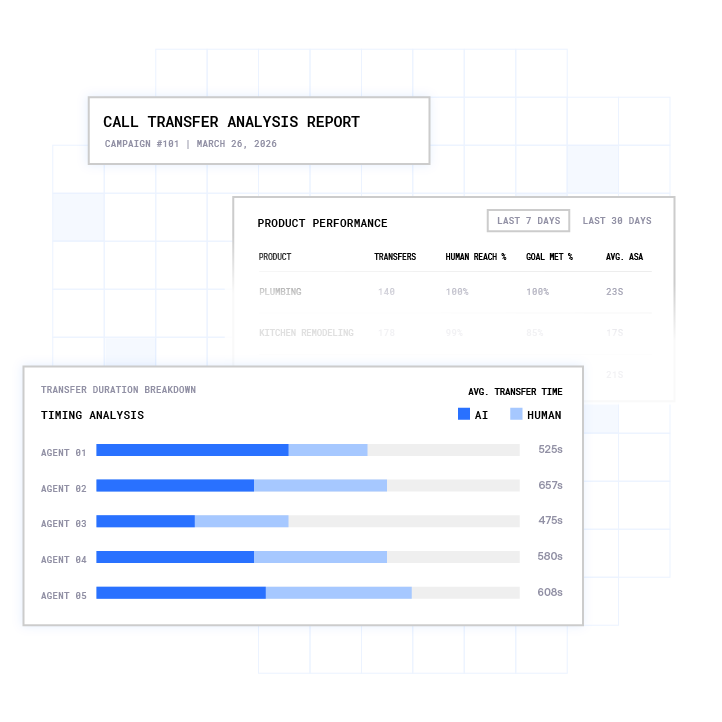
See the unified platform in action by scheduling a demo.
Frequently Asked Questions
What makes lead response management software different from a standard CRM?
A CRM stores contact records and logs activities after they happen. Lead response management software initiates and manages the conversation itself, in real time, across multiple channels simultaneously. The distinction matters operationally because a CRM depends on a human to act on the record, while a lead response platform acts autonomously the moment a lead submits. Plura responds in under 5 seconds across voice, SMS, RCS, and webchat, with a shared Stateful Conversation Database that holds context across every channel. A CRM cannot issue branded caller ID, run real-time DNC scrubbing before a dial, or hold a negotiation conversation that references a prior SMS thread.
How does an FCC-licensed carrier differ from a CPaaS wrapper for AI voice?
A CPaaS (Communications Platform as a Service) wrapper routes voice through a third-party carrier’s infrastructure. The AI vendor rents the telecom layer and passes the cost and the compliance posture to the customer. Branded caller ID, spam-label remediation, and STIR/SHAKEN authentication all depend on the third-party carrier’s capabilities and reputation. An FCC-licensed carrier owns the origination infrastructure directly. Plura is its own FCC-licensed audio bridging carrier, which means branded caller ID is issued at the carrier level, spam labels are remediated at origination, and STIR/SHAKEN authentication runs on Plura’s own infrastructure. The practical result is higher pickup rates, lower per-minute economics, and compliance controls enforced at the carrier level rather than bolted on after the fact.
What compliance frameworks should a lead response platform support in 2026?
Operators running high-volume outbound contact in the U.S. in 2026 can evaluate platforms against TCPA compliance, DNC compliance, HIPAA alignment for any health-related data, SOC 2 certification for infrastructure security, SHAKEN/STIR caller ID verification for voice authentication, and GDPR coverage for any European data subjects. State-level rule sets in New York, New Jersey, Connecticut, Missouri, Florida, and others add quiet-hours, disclosure, and data-handling requirements on top of federal frameworks. Plura supports compliance with these frameworks natively, with real-time DNC scrubbing, immutable consent logging, HIPAA-aligned encryption, SOC 2 certification, ISO certification, and 50+ state rule sets enforced on every outbound contact. Operators should consult qualified counsel regarding their specific obligations under each framework.
What is a realistic ROI timeline for deploying AI lead response software?
Plura’s default ROI scenario in its calculator, detailed earlier in this guide, shows a 30-day saving of $45,600 and a 12-month saving of $547,200 for a typical 15-agent operation. Plura reports 3x average ROI in 90 days, 47% average pipeline growth, and 90% faster lead-response time across its customer base.3 Every annual contract includes a 90-day opt-out window, so if the deployment is not delivering, the customer is not held to the annual term.
Evaluation Framework Recap and Next Steps
The decision criteria for lead response management software in 2026 reduce to five connected questions that define speed, reliability, and risk. Does the platform own its carrier stack, or does it rent from a third-party CPaaS? Does it hold conversation memory across all channels in a single database, or does each channel operate in isolation? Does the compliance engine enforce TCPA, DNC, HIPAA, SOC 2, SHAKEN/STIR, and state rule sets natively, or are those layers bolted on? Does it run on 100% U.S. infrastructure by architecture, or does it carry offshore exposure under the FCC NPRM and state onshoring laws? Does the vendor iterate the conversation workflow continuously after launch, or does it hand off the keys and disappear?
Plura answers all five. It holds FCC-licensed carrier ownership. It maintains a Stateful Conversation Database shared across voice, SMS, RCS, and webchat. Its compliance engine supports TCPA compliance, DNC compliance, HIPAA, SOC 2, ISO certification, GDPR, and SHAKEN/STIR caller ID verification on every outbound contact. It runs on 100% U.S. infrastructure by architecture. Every annual contract includes a 90-day opt-out window that puts the iteration commitment on the line.
Run your numbers through Plura’s calculator to check your ROI in real time. Compare plans and rates side by side.
1 Plura AI maintains SOC 2, HIPAA, ISO, and GDPR posture as part of its platform infrastructure. References to compliance frameworks in this article describe Plura’s platform capabilities and do not constitute a guarantee that any customer using Plura will themselves be compliant with applicable laws or standards. Customers remain solely responsible for their own regulatory obligations, certifications, consent management, recordkeeping, and the claims they make to their own end users. Consult qualified legal counsel for guidance specific to your use case.
2 This article describes regulatory frameworks at a general level and does not constitute legal advice. Laws and regulations vary by jurisdiction, change over time, and apply differently depending on facts and circumstances. Readers should consult qualified legal counsel before making compliance decisions.
3 Performance figures, customer outcomes, and industry statistics referenced in this article are drawn from cited third-party sources or Plura customer case studies. Individual results vary based on implementation, use case, industry, audience, and execution. Past or aggregate performance is not a guarantee of future results.
4 References to third-party products, services, companies, or research are made for informational and comparative purposes only. Plura AI is not affiliated with, endorsed by, or sponsored by any third party named in this article unless explicitly stated. Trademarks and product names referenced remain the property of their respective owners.
This article is provided for informational purposes only and reflects Plura AI’s understanding at the time of publication. Product capabilities, integrations, and specifications are subject to change. For the most current information, visit plura.ai.
This article was produced with the assistance of AI tools and reviewed by Plura AI prior to publication.