
Written by: Matt Beucler, CEO, Plura AI
Key Takeaways for Agency Leaders
- An AI agency communications platform automates lead contact, client reporting, and compliance across voice, SMS, RCS, and webchat for agencies managing multiple client accounts.
- Agencies using Plura report handling 15–20 clients per account manager versus the 5–8 client ceiling typical of manual operations.3
- Plura’s Stateful Conversation Database keeps every channel on the same page, so prior touchpoints carry across calls, texts, and webchat.
- Plura’s Conversation Intelligence generates client-ready reports automatically, replacing the 5–10 hours per client per month that manual reporting consumes.
- Agencies can book a live demo with Plura to see how these capabilities fit their current client roster.
Market Context: Why Agency Communications Are Breaking Down in 2026
Agency communication volume keeps rising while response-time expectations keep shrinking. A 2017 analysis tested response times at 433 companies. Drift’s 2024 benchmarks reported a median lead response time of 47 hours, and 23% of companies never responded to a lead inquiry at all, according to HBR’s 2011 audit. At the same time, channel fragmentation means a single client campaign now spans voice, SMS, RCS, and webchat.
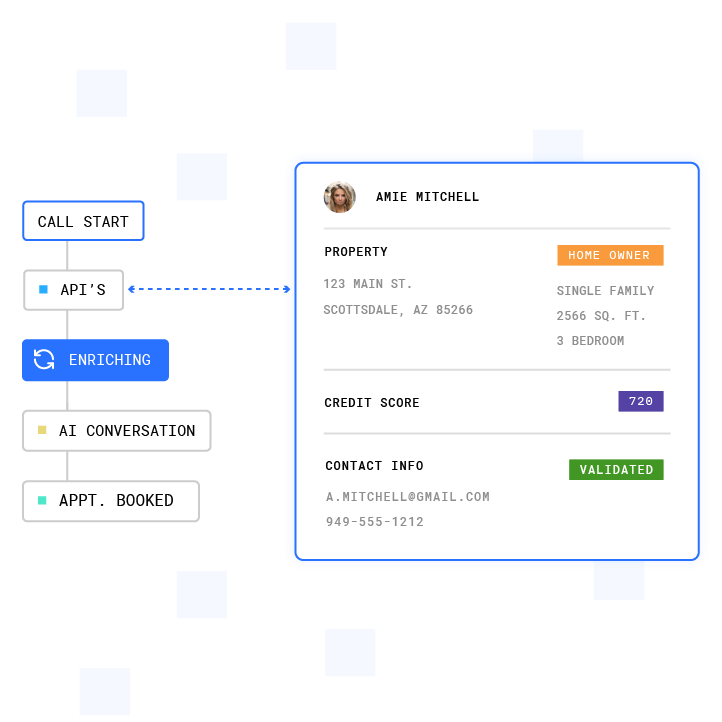
The compliance layer compounds the problem. The FCC’s February 2024 declaratory ruling (FCC 24-17) confirmed that AI-generated and cloned voices qualify as “artificial” voices under the TCPA (Telephone Consumer Protection Act), requiring prior express consent for such calls.1,2 For agencies managing dozens of client campaigns, maintaining separate consent records and audit trails per client creates operational and legal exposure that manual processes cannot handle at scale.
Executive Summary: Five Criteria That Matter for Agency Platforms
These operational and compliance pressures point to five specific platform capabilities that determine whether an agency can scale profitably. Agency owners evaluating platforms in 2026 should apply these criteria before committing to any vendor:5
- Speed: The platform should contact leads in under 60 seconds across all channels, for all clients, at the same time.
- Channel coverage: It should handle voice, SMS, RCS, and webchat from a single stateful database, not separate tools with separate memories.
- Compliance posture: TCPA and DNC enforcement should operate inside the platform at the carrier level, not as a third-party bolt-on.
- Integration depth: It should connect to the CRMs, attribution platforms, and reporting tools clients already use.
- Operational fit: Account managers should be able to run 15–20 clients without adding headcount, with client-ready reports generated automatically.
Book a live demo with Plura to see how each criterion maps to your current client roster.
The Agency Scaling Dilemma: Quantifying the Capacity Ceiling
Agency teams spend 40% of their time on operational tasks like lead follow-up rather than strategy. That ratio worsens as client count grows. Promethean Research’s 2026 State of Digital Services survey of 119 agency leaders found an average net margin of 13% in 2025, with profitability varying by size. The margin compression is structural. Every new client requires proportional headcount, and headcount introduces management layers, benefits overhead, and utilization gaps that erode economics.
Labor already consumes 50–70% of total agency revenue, making it the largest expense line and locking in flat or declining margins when agencies add headcount in proportion to new clients. Manual client reporting alone consumes 5–10 hours per client per month. A 10-client agency effectively spends a full-time role on reporting that generates no billable output.
Manual operations cap account managers at 5–8 clients before quality declines. This ceiling persists because manual processes create a fixed capacity limit per person. The platform determines whether that ceiling can be raised, because only automation breaks the linear relationship between headcount and client capacity.
Core Capabilities: Seven Features Agencies Need in Daily Operations
- Sub-60-second lead contact across all client accounts: Plura enables lead contact within 60 seconds for every lead, compared to 1–4 hours in manual operations.3 Contacting a lead within 5 minutes makes them up to 100x more likely to connect (per industry research published on plura.ai/calculator).
- Multi-tenant workspace isolation: Each client account operates in its own environment with separate consent records, DNC lists, and audit trails, which prevents data from crossing client boundaries.
- Automatic client-ready reporting: Conversation intelligence generates client-ready reports automatically and replaces the 5–10 hours per client per month that manual reporting consumes.
- Real-time multi-tenant TCPA and DNC enforcement: Every outbound contact is checked against federal and state DNC registries before dial, with immutable consent records per client campaign (per plura.ai/products/compliance).1,2
- Cross-channel stateful memory: Voice, AI SMS, RCS, and AI webchat share one Stateful Conversation Database, so a lead who texted at 9 a.m. is recognized when the call comes at noon.
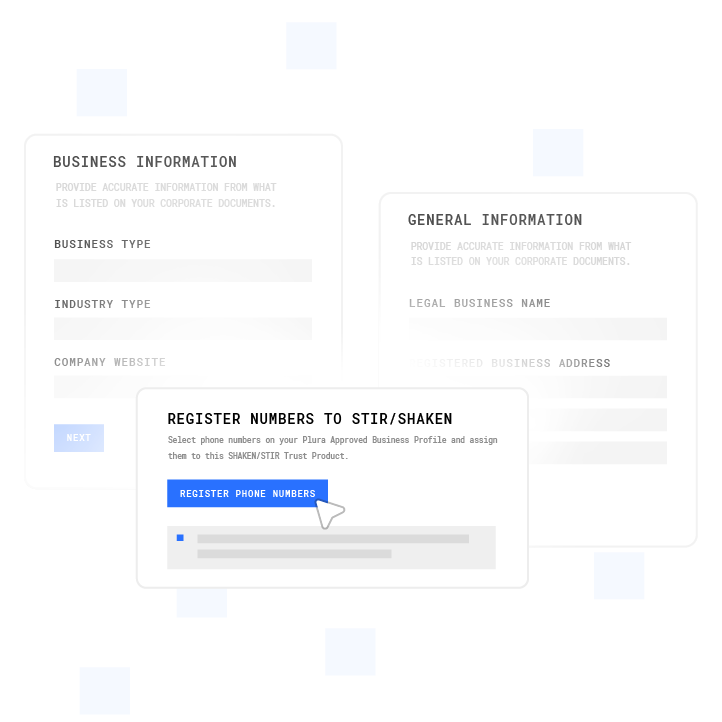
- FCC-licensed carrier infrastructure: Branded caller ID issued at the carrier level, SHAKEN/STIR authentication on every outbound call, and spam-label remediation that API resellers cannot replicate.1
- No-code workflow builder: Account managers configure client-specific conversation logic on a no-code workflow builder without engineering resources, which enables rapid onboarding of new clients.
Platform Landscape: How Six Categories Perform for Agencies
The SERP for “ai agency communications platform” is dominated by generic conversational AI and customer-support tools. Most top results ignore multi-tenant agency realities. Here is how the major platform categories perform against agency-specific use cases.
Generic conversational AI platforms (tools built on top of Twilio or another CPaaS) handle single-tenant deployments adequately but break down at multi-client scale. They lack white-label client portals, cannot enforce separate consent records per client, and generate no automatic ROI reporting. Synthflow, for example, depends on Twilio and operates as a software layer without a carrier license.4 which means branded caller ID and carrier-level compliance enforcement are not available.
Voice-only API platforms such as Bland AI are voice-only, API-based, require developers, and lack carrier status.4 For agencies that need to manage SMS, RCS, and webchat alongside voice for multiple clients, a voice-only tool requires additional vendors, additional integrations, and additional compliance surface area per client.
CRM shells with AI layers such as Go High Level are primarily CRM infrastructure.4 Some agencies pipe competitor APIs through them to approximate omnichannel behavior, but the result is assembled rather than engineered. There is no shared stateful memory across channels, and compliance enforcement depends on third-party add-ons.
Enterprise CCaaS platforms (Contact Center as a Service) are built for single-enterprise deployments, not multi-tenant agency operations. White-label client portals, per-client reporting, and per-client compliance configurations are not native to their architecture.
Developer-first speech APIs offer flexibility but require engineering resources to build and maintain. For agencies whose value is marketing strategy, not software development, this category shifts build cost and compliance responsibility onto the agency.
Plura is the only platform in this comparison that combines FCC-licensed carrier status, cross-channel stateful memory, automatic multi-tenant TCPA and DNC enforcement, and client-ready reporting in a single managed platform. Compare plans and rates side by side at plura.ai/pricing.
PR and Marketing Agencies: Fixing Context Loss With Stateful Memory
PR and performance-marketing agencies need every contact to feel known across channels. A lead or contact who interacts with one channel should not have to re-introduce themselves on another. When a prospect responds to an SMS campaign and then calls the agency’s client line, the AI agent on the call should already know what was discussed in the text thread.
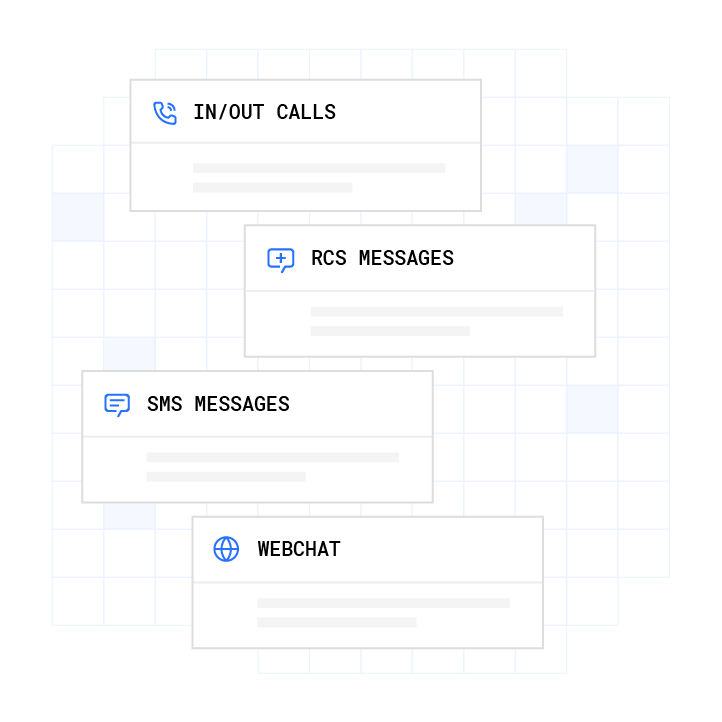
Plura’s Stateful Conversation Database keys every interaction to a customer token (phone number, email, or ID) across voice, AI SMS, RCS, and AI webchat. Every channel inherits the full memory of prior touchpoints, including pricing offers made, objections raised, and qualification status. This design is not a CRM integration. It is the underlying data layer that all four channels read from and write to at the same time.
For PR agencies managing media outreach, event follow-up, and crisis communications across multiple client brands, this architecture means account managers see one continuous conversation per contact instead of four disconnected threads across four tools. The Unified Inbox surfaces all of this in a single screen per client account.
Conversation Intelligence: Turning AI Interactions Into Client Reporting
Client churn often starts when agencies cannot clearly show ROI. Manual reporting creates the bottleneck. At 5–10 hours per client per month, a 12-client agency spends 60–120 hours monthly on reports that are backward-looking by the time they are delivered.
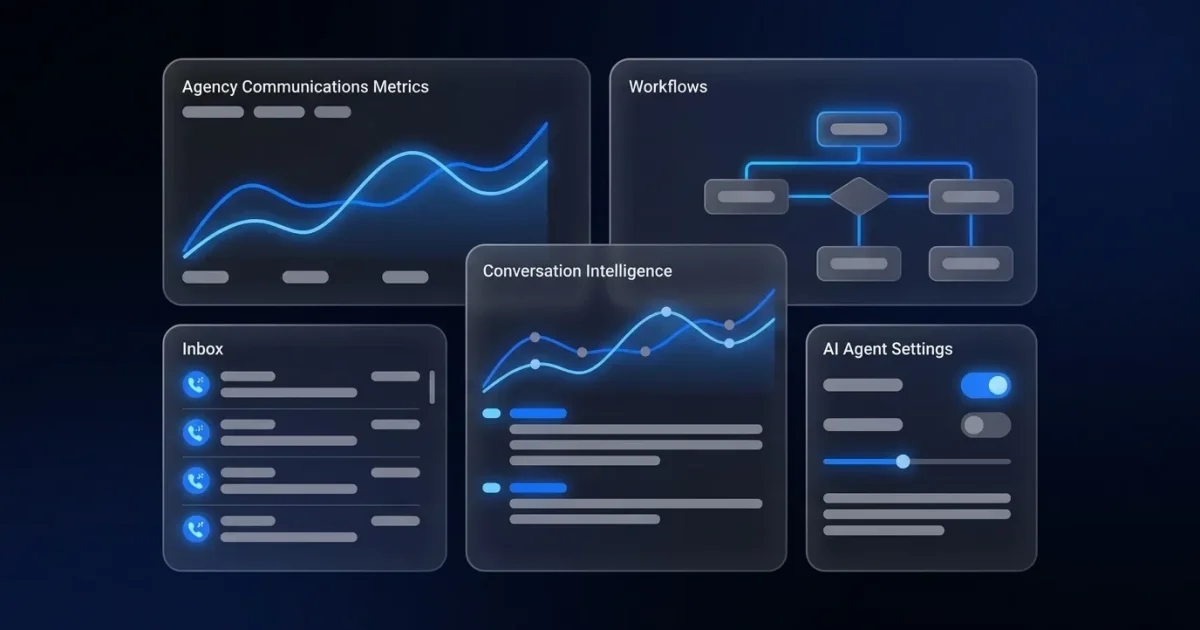
Plura’s Conversation Intelligence analyzes every interaction across voice, SMS, RCS, and webchat to surface conversion patterns, objection frequency, and contact rates per client campaign. It generates client-ready reports automatically, without manual compilation. Account managers review and deliver; they do not build.
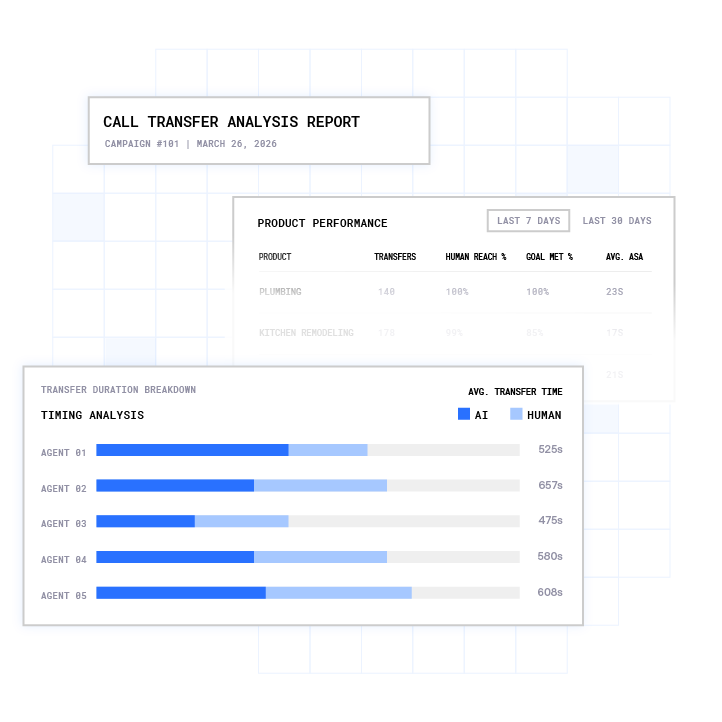
This capacity expansion, from the industry baseline to 15–20 clients per manager, comes from removing manual reporting, manual lead follow-up, and manual compliance management from the account manager’s workload.
90-Day ROI Math: The 15-Agent Replacement Scenario
The default scenario on plura.ai/calculator uses a 15-agent operation paying $20 per hour with standard taxes, benefits, and commissions at 40% talk utilization. That configuration costs $60,000 per month. Replacing it with Plura at $15 per hour, 100% talk utilization, and 6 Plura agents doing the work of 15 humans drops the monthly cost to $14,400. The 30-day savings are $45,600.3 Over 12 months, that is $547,200. Over 60 months, it reaches $2,736,000.
For agencies, the margin math is similarly direct. Plura AI-powered agencies achieve profit margins of 35–50%, compared to 15–25% with manual operations.3 The average digital agency earned a 13% after-tax net margin in 2025. The gap between 13% and 42% reflects operational leverage that platform selection controls.
Run your numbers through Plura’s calculator to check your ROI in real time.
Implementation Readiness Checklist for Agencies
Before deploying an AI agency communications platform, agencies should assess readiness across five dimensions:
- Interaction volume: The platform generates meaningful ROI at a practical floor of at least 500 daily customer interactions or $5,000 per month in paid-media spend per client.
- Process maturity: Existing call scripts, qualification criteria, and escalation rules should be documented before workflow build begins. The AI executes the process; it does not design it.
- Data quality: Lead lists, consent records, and CRM data must be clean and current. Real-time DNC scrubbing catches non-compliant numbers, and strong list hygiene upstream reduces friction.
- Compliance requirements: Agencies should identify which states their clients operate in and what channel-specific consent and disclosure obligations apply. Plura supports compliance infrastructure; agencies and their clients remain responsible for their own regulatory obligations.
- Integration needs: Plura connects to 50+ tools across CRM, attribution, calendar, and reporting categories (per plura.ai/integrations). Mapping existing tools before onboarding accelerates go-live.
Common Pitfalls When Deploying AI Across Multiple Clients
Automating broken workflows. AI agents execute conversation logic at scale. If the underlying qualification criteria, escalation rules, or handoff processes are broken in manual operations, automation scales the breakage. Agencies should audit and fix workflows before building them into the platform.
Underestimating multi-tenant compliance complexity. 78% of organizations’ senior leaders lack full confidence that they could pass an AI governance audit, with many gaps traced to missing disclosure language, undefined retention windows, and undocumented consent capture. For agencies managing multiple clients, each client campaign requires its own consent records, DNC configuration, and audit trail. Platforms that enforce controls at the carrier level reduce exposure. Platforms that treat compliance as a reporting layer after the fact do not.
Measuring activity instead of outcomes. Deflection rate, call volume, and message count are activity metrics. The metrics that matter for agency clients are conversion rate, cost per qualified lead, and pipeline growth. Conversation intelligence surfaces outcome-based metrics automatically, giving account managers the data to demonstrate client ROI rather than operational throughput.
Frequently Asked Questions
What makes an AI agency communications platform different from a standard AI voice or SMS tool?
A standard AI voice or SMS tool is built for a single operator running a single brand. An AI agency communications platform is architected for multi-tenant operations, with separate client workspaces, separate consent records and DNC configurations per client, white-label reporting, and compliance enforcement that scales across every client campaign at once. Plura’s platform adds FCC-licensed carrier infrastructure, which means branded caller ID and SHAKEN/STIR authentication are issued at the carrier level rather than through a third-party reseller. That distinction affects pickup rates, compliance posture, and the ability to enforce real-time DNC scrubbing before any call leaves the network.
How does Plura handle TCPA and DNC compliance across multiple client accounts?
Plura’s compliance engine operates as a first-class layer of the platform, not a reporting add-on. Every outbound contact is checked against federal and state DNC registries in real time before dial. Consent records are timestamped, immutable, and stored per client campaign. Quiet-hours rules enforce automatically through time-zone detection. The compliance dashboard exports audit-ready reports per client in one click. Agencies and their clients remain responsible for their own regulatory obligations; Plura provides the infrastructure that supports those obligations. For specific legal guidance, readers should consult qualified counsel and review the applicable regulations directly.
How many clients can one account manager handle with Plura?
Agencies using Plura report handling 15–20 clients per account manager, compared to the 5–8 client ceiling typical of manual operations.3 The capacity expansion comes from three sources. AI agents handle lead contact and qualification for all client accounts simultaneously. Conversation Intelligence generates client-ready reports automatically. The no-code workflow builder lets account managers configure and adjust client campaigns without engineering support. The account manager’s role shifts from operational execution to strategy and results review.
What does implementation look like for a performance-marketing agency?
Plura’s onboarding sequence starts with a discovery audit of the agency’s client operations and call economics, followed by intake of existing scripts, SOPs, and sample calls. Plura builds a dynamic conversation mockup using its internal tooling, reviews it with the agency, then builds the production workflow. A pilot runs on a subset of real calls before full go-live. Simple inbound qualification flows typically go live in days. Complex multi-step intake workflows usually run closer to one to two months. Every annual contract includes a 90-day opt-out window if the deployment is not delivering.
How does Plura’s stateful database prevent context loss between client accounts?
Every interaction across voice, AI SMS, RCS, and AI webchat is keyed to a customer token (phone number, email, or ID) and stored in Plura’s Stateful Conversation Database. Each client account operates in its own isolated workspace, so a contact in Client A’s campaign does not share memory with a contact in Client B’s campaign. Within a single client account, every channel inherits the full conversation history of prior touchpoints. An AI voice agent picking up a call at noon already knows what was discussed in the SMS thread at 9 a.m., without the contact having to repeat themselves.
Conclusion and Next Steps for Agency Teams
The agency scaling dilemma is a platform problem. Manual lead follow-up consuming 40% of agency time, account managers capped at 5–8 clients, and margins compressed to 13% on average are not outcomes of market conditions. They are outcomes of tooling that was not built for multi-tenant, high-volume agency operations.
Plura addresses the five evaluation criteria that matter for agencies in 2026: sub-60-second lead contact across all client accounts, cross-channel stateful memory, FCC-licensed carrier-level compliance enforcement, deep integration with existing agency and client tools, and automatic client reporting that replaces the manual hours that cap account-manager capacity. The result is account-manager capacity that expands from 5–8 to 15–20 clients and margins that move from the 15–25% industry baseline toward 35–50%.
Two paths forward from here:
- If you want to model the economics against your current headcount and client roster, run your numbers through Plura’s calculator to check your ROI in real time.
- If you want to evaluate platform capabilities and pricing tiers against your current stack, compare plans and rates side by side at plura.ai/pricing.
1 Plura AI maintains SOC 2, HIPAA, ISO, and GDPR posture as part of its platform infrastructure. References to compliance frameworks in this article describe Plura’s platform capabilities and do not constitute a guarantee that any customer using Plura will themselves be compliant with applicable laws or standards. Customers remain solely responsible for their own regulatory obligations, certifications, consent management, recordkeeping, and the claims they make to their own end users. Consult qualified legal counsel for guidance specific to your use case.
2 This article describes regulatory frameworks at a general level and does not constitute legal advice. Laws and regulations vary by jurisdiction, change over time, and apply differently depending on facts and circumstances. Readers should consult qualified legal counsel before making compliance decisions.
3 Performance figures, customer outcomes, and industry statistics referenced in this article are drawn from cited third-party sources or Plura customer case studies. Individual results vary based on implementation, use case, industry, audience, and execution. Past or aggregate performance is not a guarantee of future results.
4 References to third-party products, services, companies, or research are made for informational and comparative purposes only. Plura AI is not affiliated with, endorsed by, or sponsored by any third party named in this article unless explicitly stated. Trademarks and product names referenced remain the property of their respective owners.
5 This article contains forward-looking statements regarding industry trends, technology adoption, and future capabilities. These statements reflect current expectations and are subject to change. Plura AI undertakes no obligation to update forward-looking statements except as required.
This article is provided for informational purposes only and reflects Plura AI’s understanding at the time of publication. Product capabilities, integrations, and specifications are subject to change. For the most current information, visit plura.ai.
This article was produced with the assistance of AI tools and reviewed by Plura AI prior to publication.