
Written by: Matt Beucler, CEO, Plura AI
Updated July 2026
Key Takeaways
- AI answering service compliance for high-volume programs rests on five pillars: TCPA consent and disclosure, real-time DNC and quiet-hours enforcement, HIPAA-aligned encryption with BAA support, 100% U.S. infrastructure, and audit-ready reporting with human-in-the-loop escalation.
- High-volume operators reduce enforcement exposure when these controls sit at the carrier layer instead of as after-the-fact app features.
- Core technical needs include prior express consent with identification at call start, real-time federal and state DNC scrubbing, AES-256 and SRTP encryption, and immutable, timestamped consent records retained for at least five years.
- Platforms that depend on third-party CPaaS wrappers inherit that provider’s infrastructure location, caller-ID reputation, and scrubbing cadence, which affects exposure under the FCC NPRM and state onshoring laws.
- Plura AI embeds these controls at the carrier layer on its FCC-licensed, 100% U.S. infrastructure. Review how Plura Webchat extends the same controls across digital channels.
Compliance Requirements for AI Answering Service Deployments
High-volume operators running AI voice agents or 24/7 call answering services face five distinct regulatory pillars. Each pillar carries independent enforcement risk, and many platforms treat them as add-ons instead of core infrastructure. The five pillars are:
- TCPA consent and disclosure – prior express consent, identification at call start, and revocation rules
- Real-time DNC and state quiet-hours enforcement – federal and state registry scrubbing plus time-zone-aware calling windows
- HIPAA-aligned encryption and BAA support – encryption standards and business associate agreement requirements for protected health information
- 100% U.S. infrastructure – carrier-level considerations under the FCC NPRM and state onshoring laws
- Audit-ready reporting and human-in-the-loop escalation – immutable consent records and defined escalation paths
The sections below describe each pillar. Operators should review the underlying regulations and consult qualified counsel before configuring any outbound AI calling program.
HIPAA Alignment for AI Voice Agents Handling Patient Data
HIPAA alignment for an AI voice agent depends on the vendor’s infrastructure and data handling, not the conversational AI layer alone. Under 45 CFR Parts 160, 162, and 164, a vendor that stores, processes, or transmits electronic protected health information (ePHI) on behalf of a covered entity fits the definition of a business associate and typically executes a Business Associate Agreement (BAA).
Key data-handling considerations for AI voice platforms that handle ePHI include:
- End-to-end encryption for voice streams, transcripts, and stored metadata
- Audit controls required under 45 CFR § 164.312(b), with documentation of security policies and activities, including audit logs, retained for six years under 45 CFR § 164.316(b)(2)
- Explicit BAA provisions that prohibit use of PHI for model training without authorization
- Subcontractor requirements that extend the BAA chain to every vendor that touches ePHI
- Documented incident response and data destruction procedures
Plura supports HIPAA-aligned deployments with end-to-end encryption, access controls, audit logging, and BAA support across voice, SMS, RCS, and webchat.1 Plura provides the infrastructure; customers remain responsible for their own HIPAA programs and obligations. Qualified counsel can help interpret how these requirements apply to a specific deployment.
TCPA Consent and Disclosure Requirements
The Telephone Consumer Protection Act (TCPA), codified at 47 U.S.C. § 227, governs automated and AI-generated voice calls to U.S. consumers.2 The FCC’s February 8, 2024 Declaratory Ruling confirmed that AI-generated voices qualify as “artificial or prerecorded voice” under the TCPA, with no carve-out for conversational AI.
Relevant TCPA framework elements for high-volume operators include:
- Prior express consent: Outbound AI voice calls to mobile numbers generally rely on prior express consent, and marketing calls in most circuits rely on prior express written consent. The Fifth Circuit’s February 25, 2026 ruling in Bradford v. Sovereign Pest Control held that oral consent may satisfy the statute within the Fifth Circuit (Texas, Louisiana, Mississippi). Other circuits may apply different standards.
- Identification at call start: Existing TCPA rules require callers to identify the calling entity by name and provide a contact telephone number or address at the start of the call.
- Revocation: FCC rules effective April 11, 2025 codify the preexisting right for consumers to revoke TCPA consent by any reasonable means. A “revoke-all” rule that treats an opt-out from one communication type as an opt-out from all unrelated communications is scheduled to activate January 31, 2027.
- Statutory penalties: TCPA violations carry statutory damages of $500 to $1,500 per unsolicited call or text. These individual penalties compound quickly in class actions, where settlements averaged $6.6 million in 2023.3 The enforcement environment has intensified: TCPA class action filings spiked 283% in September 2025 compared to September 2024.3
State-level mini-TCPA statutes add further requirements. Florida, Maryland, Oklahoma, and Washington have each expanded their statutes to cover automated dialing systems more broadly than the federal definition. Operators with a national calling footprint should review applicable state statutes with qualified counsel.
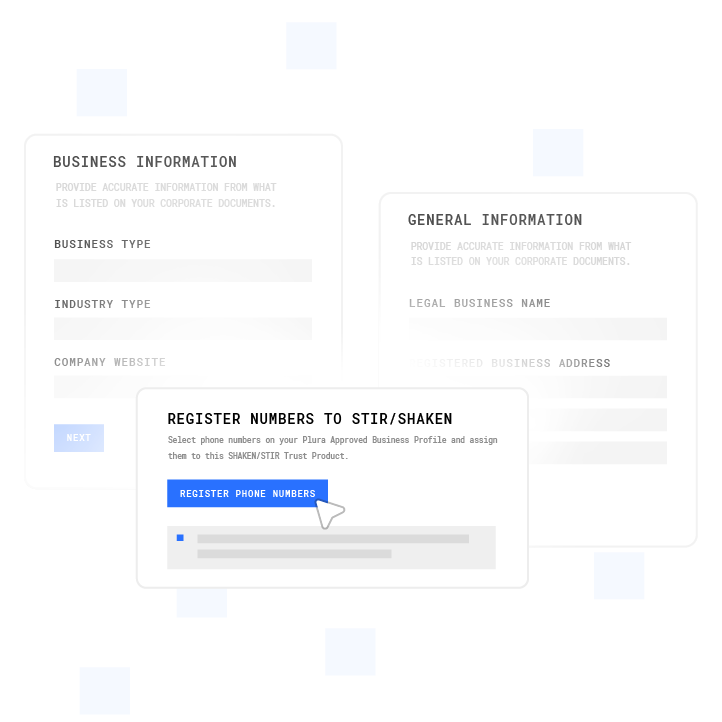
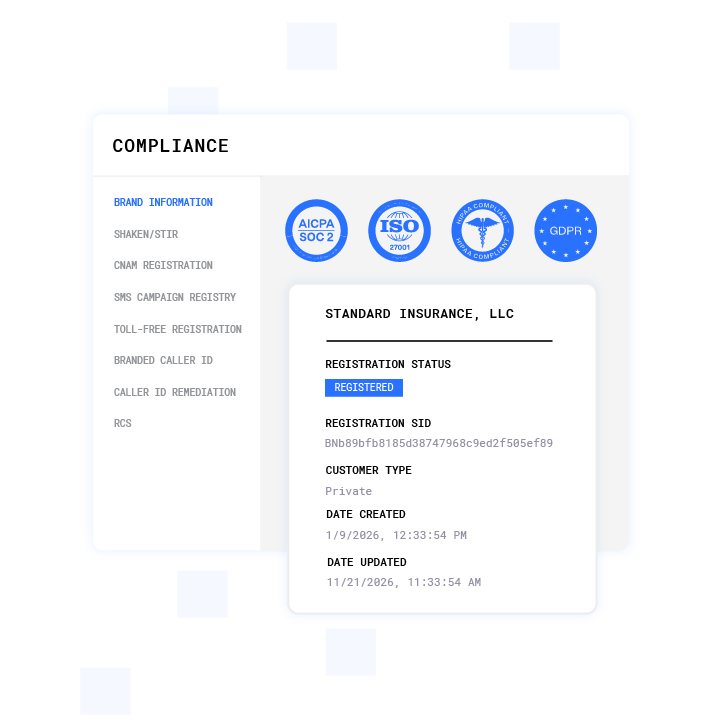
Plura’s compliance engine performs real-time TCPA-litigator list filtering and maintains timestamped, immutable consent records on every outbound contact. Plura’s compliance framework includes TCPA and STIR/SHAKEN enforcement, integration with Blacklist Alliance for DNC screening, and Number Verifier for caller ID reputation.
Real-Time DNC and State Quiet-Hours Enforcement
The National Do Not Call Registry contains over 249 million active numbers.3 Federal telemarketing rules require calling lists to be checked against the Registry using a subscription no more than 31 days old.2 At AI call volume, batch scrubbing the night before a campaign leaves a gap, because numbers registered after the last batch update will not be suppressed.
Multi-state operations face compounding requirements:
- Approximately 11 states maintain their own DNC registries that operate alongside the federal National DNC Registry, including Colorado, Florida, Indiana, Louisiana, Massachusetts, Missouri, Oklahoma, Pennsylvania, Tennessee, Texas, and Wyoming.
- Federal time-of-day restrictions prohibit sales calls before 8 a.m. or after 9 p.m. in the called party’s local time zone. Some states impose stricter windows; Maryland limits calls to 8 a.m. to 8 p.m.
- Opt-out signals captured during a call must be applied in real time, not in a nightly batch update, and written to both the CRM and a separate compliance log.
- Virginia SB 1339 (January 2026) mandates honoring text opt-out requests for 10 years, which exceeds federal requirements.
Plura enforces quiet-hours rules automatically through time-zone detection on every contact, applies real-time DNC scrubbing against federal and state registries before each dial, and maintains a permanent internal suppression list for any consumer who has opted out. Plura integrates with The Blacklist Alliance’s TCPA Litigation Firewall for real-time Do Not Call scrubbing and litigation protection.4
HIPAA-Aligned Encryption and BAA Support
Healthcare, insurance, and adjacent regulated verticals rely on the HIPAA Security Rule (45 CFR Part 164 Subpart C) for technical safeguards around ePHI. A proposed January 2025 Security Rule update would make encryption mandatory rather than addressable and would require multi-factor authentication for all systems accessing ePHI. Operators should consult qualified counsel on the status and impact of that rulemaking.
Encryption standards relevant to AI voice platforms that handle ePHI include:
- AES-256 encryption for stored voice recordings, transcripts, and metadata
- Secure Real-time Transport Protocol (SRTP) using AES-256-GCM for live voice streams
- TLS 1.2 minimum, with TLS 1.3 recommended, for signaling
- End-to-end encryption for SMS, RCS, and webchat channels that carry ePHI
BAA requirements extend to every subcontractor that creates, receives, maintains, or transmits PHI. AI-specific BAA clauses often prohibit using PHI for model training without authorization and define procedures for algorithm update notifications.
Plura supports HIPAA-aligned deployments with end-to-end encryption, field-level sensitive-data redaction, role-based access controls, and BAA support. SOC 2 Type II certification covers the underlying infrastructure with continuous monitoring, penetration testing, and third-party audits.1
Review encryption and BAA support across Plura’s plans.
100% U.S. Infrastructure Under the FCC NPRM and State Onshoring Laws
The FCC’s Notice of Proposed Rulemaking (CG Docket No. 26-52) proposes capping offshore customer-service calls at 30 percent and restricting offshore handling of sensitive consumer data such as passwords, multi-factor authentication codes, Social Security numbers, and banking and card data. Companion legislation, including the Keep Call Centers in America Act (S.2495) and the Foreign Robocall Elimination Act (S.2666), expands the federal perimeter.
State-level onshoring laws already in effect include:
- New York’s Call Center Jobs Act with penalties up to $10,000 per day
- New Jersey’s similar statute
- Connecticut’s state-contract bans on offshore call handling
- Missouri’s offshore-disclosure executive order
- Florida’s medical-information offshoring restrictions
Plura runs on 100% U.S. infrastructure by architecture. Voice origination, model hosting, data storage, and call recording all sit on domestic infrastructure. This design choice avoids reliance on foreign-hosted carrier stacks.
Most Twilio-based API resellers depend on rented carrier infrastructure from a third party.4 Voice origination, data storage, and compliance enforcement then follow that third party’s infrastructure decisions.
Audit-Ready Reporting and Human-in-the-Loop Escalation
Audit-ready TCPA records for each contact require detailed data capture and retention. A complete trail includes verbatim consent text, UTC timestamp, source IP address, full URL of the consent form, browser user agent, specific seller identity named in the consent, and delivery receipt details. Call records must be retained for five years under the FTC’s Telemarketing Sales Rule (16 CFR § 310.5), and some state laws extend that window.
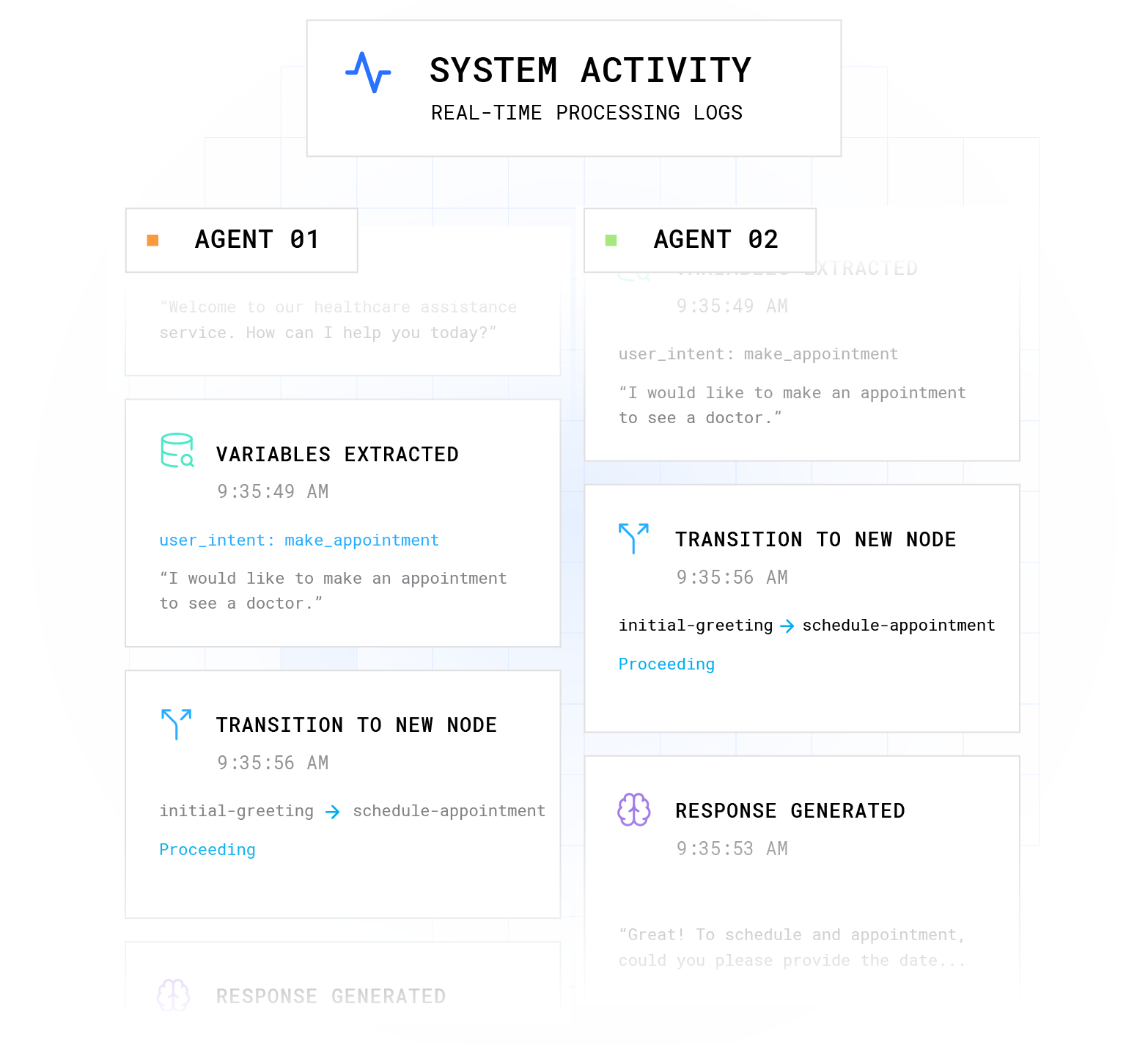
Human-in-the-loop escalation complements audit logging. When an AI agent encounters a response outside defined workflow paths, a sensitive disclosure, or a high-stakes objection, the call should warm-transfer to a U.S. agent instead of improvising. Escalation paths work best when defined at the workflow level rather than left to the AI’s discretion.
Plura’s compliance dashboard exports audit-ready reports in one click for legal review, carrier requirements, or regulatory inquiries. Consent records are timestamped and immutable. The Unified Inbox consolidates voice transcripts, SMS threads, RCS exchanges, and webchat sessions per customer so human agents receive full context on every escalated contact.
Carrier-Level Enforcement vs. Third-Party CPaaS Wrappers
Carrier-level enforcement versus third-party CPaaS (Communications Platform as a Service) wrappers represents a core infrastructure choice for AI answering services. The table below compares the two approaches on compliance-critical dimensions.
| Capability | Carrier-Level Platform (e.g., Plura) | Third-Party CPaaS Wrapper | Compliance Impact |
|---|---|---|---|
| Caller ID issuance | Issued directly at the carrier layer, with branded caller ID available | Inherited from the underlying CPaaS, with no direct issuance | Branded caller ID reduces “Spam Likely” labels and supports STIR/SHAKEN attestation |
| DNC scrubbing | Real-time, pre-dial, against federal and state registries | Often a bolt-on or batch process, with timing tied to third-party integration | Real-time scrubbing prevents dialing numbers registered after the last batch update |
| STIR/SHAKEN attestation | Applied at origination on the platform’s own FCC-licensed carrier | Dependent on the CPaaS provider’s attestation practices | Compliant attestation is a baseline expectation following the FCC’s $1 million Lingo Telecom settlement in August 2024 |
| U.S. infrastructure | Domestic by architecture, with voice origination, model hosting, and data storage on U.S. infrastructure | Infrastructure location determined by the CPaaS provider, which may include foreign data centers | Foreign infrastructure affects exposure under FCC NPRM CG Docket No. 26-52 and state onshoring laws |
Vendor-Vetting Checklist for AI Answering Service Compliance
Compliance officers and contact-center leaders can use targeted questions to vet AI answering service vendors. Clear answers help quantify how much regulatory risk the operator will carry.
- Does the platform own its FCC-licensed carrier, or does it route voice through a third-party CPaaS?
- Does the platform issue branded caller ID directly at the carrier level, or does it inherit caller ID reputation from a third-party provider?
- Does the platform perform real-time DNC scrubbing against both the National DNC Registry and applicable state registries before each dial, or does it rely on batch scrubbing?
- Does the platform enforce state quiet-hours rules automatically through time-zone detection on the called party’s number?
- Does the platform export immutable, timestamped consent records in a format suitable for regulatory audit or litigation response?
- Does the platform run on 100% U.S. infrastructure by architecture, covering voice origination, model hosting, data storage, and call recording?
- Does the platform support HIPAA-aligned encryption and execute BAAs for deployments that handle protected health information?
- Does the platform include a defined human-in-the-loop escalation path for calls that fall outside the AI’s workflow boundaries?
- What are the contract terms, including any opt-out window, if the deployment does not meet agreed performance thresholds?
Use this checklist while reviewing Plura’s plans and capabilities.
Frequently Asked Questions
What is the difference between TCPA prior express consent and prior express written consent for AI voice calls?
Prior express consent (PEC) is an oral or written agreement by the called party to receive automated or AI-generated calls. Prior express written consent (PEWC) is a signed, written agreement that specifically authorizes automated or AI-generated calls for marketing purposes. The FCC’s February 2024 Declaratory Ruling confirmed that AI-generated voices qualify as artificial voice under the TCPA, so the same consent tiers that apply to traditional robocalls apply to AI voice agents. The Fifth Circuit’s February 2026 ruling in Bradford v. Sovereign Pest Control held that oral consent may satisfy the statute within the Fifth Circuit. Other circuits may apply different standards, so operators should consult qualified counsel to determine which consent standard applies to their specific calling program and geography.
Are AI voice agents subject to HIPAA if they handle patient information?
A vendor that stores, processes, or transmits electronic protected health information on behalf of a covered entity fits the business associate definition under 45 CFR Parts 160, 162, and 164 and typically executes a Business Associate Agreement. Whether a specific AI voice agent deployment triggers HIPAA obligations depends on the nature of the information handled, the vendor’s role, and the covered entity’s own HIPAA program. Operators in healthcare and adjacent regulated verticals should consult qualified counsel and review HHS Office for Civil Rights guidance before deploying any AI voice platform that touches patient data.
What does real-time DNC scrubbing mean, and why does batch scrubbing create risk?
Real-time DNC scrubbing checks each number against the National Do Not Call Registry and applicable state registries at the moment of dial initiation, before the call is placed. Batch scrubbing checks numbers against a downloaded list on a scheduled basis, typically nightly or weekly. The gap between batch updates creates a window during which a number registered on the DNC after the last download will not be suppressed. At AI call volume, that window can translate into thousands of non-compliant dials before the next batch update runs. FTC civil penalties for DNC violations reach up to $53,088 per call under the Telemarketing Sales Rule, which makes real-time scrubbing the operationally sound approach for high-volume programs.
What state quiet-hours rules apply to AI outbound calling programs?
Federal TCPA rules prohibit sales calls before 8 a.m. or after 9 p.m. in the called party’s local time zone. Several states impose stricter windows; Maryland limits calls to 8 a.m. to 8 p.m. Some states also cap the number of contact attempts per 24-hour period. Maryland and Oklahoma both limit automated contact to three attempts per recipient per 24-hour rolling period. Multi-state calling programs typically apply the most restrictive applicable rule to each number based on the called party’s time zone and state of registration. Operators should review applicable state telemarketing statutes with qualified counsel and configure their AI calling stack to apply jurisdiction-specific rules automatically.
How does U.S. infrastructure affect compliance exposure under the FCC NPRM?
The FCC’s Notice of Proposed Rulemaking (CG Docket No. 26-52) proposes restrictions on offshore handling of sensitive consumer data and caps on offshore customer-service calls. Companion federal legislation and state onshoring laws in New York, New Jersey, Connecticut, Missouri, and Florida already limit offshore handling of medical, financial, and consumer data. An AI voice platform that routes calls through foreign infrastructure, hosts models on foreign servers, or stores call recordings outside the United States can create exposure under these frameworks regardless of where the operator is headquartered. Operators should ask vendors to document the geographic location of every infrastructure component, including voice origination, model hosting, data storage, and call recording, before signing a contract.
Conclusion
AI answering service compliance functions as an infrastructure decision, not a checklist added at the end of a deployment. The five pillars in this guide, TCPA consent and disclosure, real-time DNC and quiet-hours enforcement, HIPAA-aligned encryption and BAA support, 100% U.S. infrastructure, and audit-ready reporting with human-in-the-loop escalation, work best when enforced at the carrier layer for high-volume operations.
Plura AI embeds these five pillars at the carrier layer, as described throughout this guide. The platform runs on 100% U.S. infrastructure by architecture, performs real-time DNC scrubbing and TCPA-litigator filtering before each dial, supports HIPAA-aligned encryption and BAA execution, and exports immutable consent records on demand. As noted above, Plura provides the infrastructure, while customers retain responsibility for their own regulatory obligations. Qualified counsel can help align a Plura deployment with each organization’s specific requirements.
Run your numbers through Plura’s ROI calculator to estimate cost savings in real time.
Compare plans and rates side by side on Plura’s pricing page.
1 Plura AI maintains SOC 2, HIPAA, ISO, and GDPR posture as part of its platform infrastructure. References to compliance frameworks in this article describe Plura’s platform capabilities and do not constitute a guarantee that any customer using Plura will themselves be compliant with applicable laws or standards. Customers remain solely responsible for their own regulatory obligations, certifications, consent management, recordkeeping, and the claims they make to their own end users. Consult qualified legal counsel for guidance specific to your use case.
2 This article describes regulatory frameworks at a general level and does not constitute legal advice. Laws and regulations vary by jurisdiction, change over time, and apply differently depending on facts and circumstances. Readers should consult qualified legal counsel before making compliance decisions.
3 Performance figures, customer outcomes, and industry statistics referenced in this article are drawn from cited third-party sources or Plura customer case studies. Individual results vary based on implementation, use case, industry, audience, and execution. Past or aggregate performance is not a guarantee of future results.
4 References to third-party products, services, companies, or research are made for informational and comparative purposes only. Plura AI is not affiliated with, endorsed by, or sponsored by any third party named in this article unless explicitly stated. Trademarks and product names referenced remain the property of their respective owners.
This article is provided for informational purposes only and reflects Plura AI’s understanding at the time of publication. Product capabilities, integrations, and specifications are subject to change. For the most current information, visit plura.ai.
This article was produced with the assistance of AI tools and reviewed by Plura AI prior to publication.