

Written by: Matt Beucler, CEO, Plura AI
Key Takeaways
- AI multi-channel lead qualification uses AI agents to engage, score, and route leads across voice, SMS, RCS, and webchat in under 5 seconds without manual SDR intervention.
- Plura AI is the only platform built on 100% U.S. infrastructure with stateful cross-channel memory and carrier-owned compliance enforcement for enterprise-scale operations.
- Key evaluation criteria for 2026 platforms include speed, channel coverage, compliance posture, integration depth, and operational fit.
- Carrier-owned platforms like Plura deliver significantly lower TCO ($8,000-$15,000 monthly for 50-seat equivalent) compared to offshore BPOs or traditional contact centers while meeting FCC and state regulatory requirements.
- Enterprises ready to modernize lead qualification can start a conversation with Plura AI to see real-time qualification in action.
Five-Criteria Framework for 2026 Lead Qualification
Five criteria determine whether an AI lead qualification platform can operate at enterprise scale in 2026: speed, channel coverage, compliance posture, integration depth, and operational fit.5 Every platform on the market can be evaluated against these five dimensions.
On speed, Harvard Business Review research cited by Plura found that companies responding within five minutes are 100 times more likely to connect with a prospect than those waiting 30 minutes.3 Leads contacted within 1 minute are 391% more likely to convert than those contacted after 24 hours. Plura contacts leads in under 5 seconds across all four channels, 24 hours a day, 7 days a week.
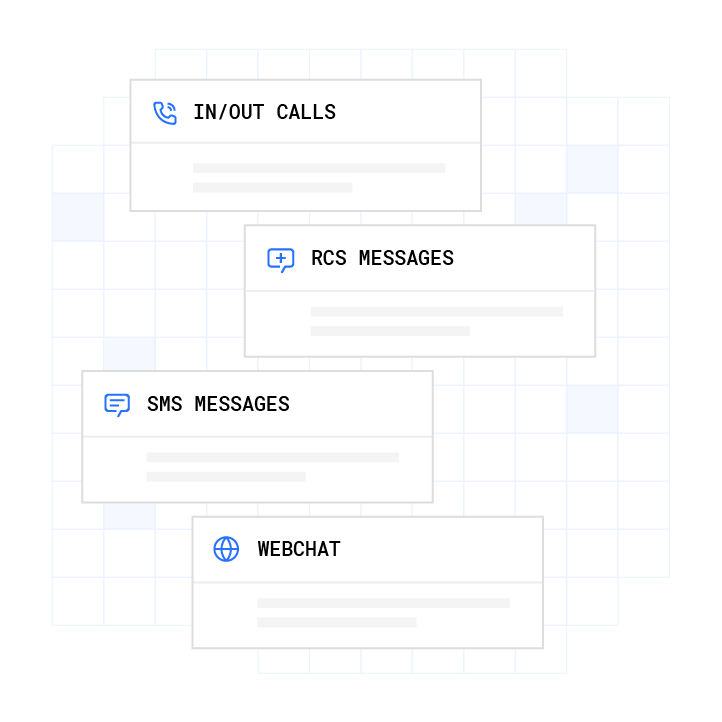
On channel coverage, Plura runs voice, SMS, RCS, and webchat on a single Stateful Conversation Database, so every channel inherits the full memory of every prior touchpoint. On compliance posture, Plura supports SOC 2, HIPAA, ISO certification, GDPR, SHAKEN/STIR caller ID verification, TCPA compliance, and DNC compliance as first-class platform layers, not bolt-ons.1 On integration depth, Plura connects to 50+ tools across CRM, calendar, attribution, payment, and data-enrichment categories. On operational fit, Plura’s no-code workflow canvas and Unified Inbox let contact-center teams run the platform without engineering support.
Where Today’s Lead-Qualification Solutions Fit
To see how these five criteria work in practice, map the four solution categories competing for enterprise lead qualification budgets in 2026. Each category performs differently against the framework and carries its own risk profile.
Human-only onshore contact centers deliver reliability but carry a cost structure that makes the math difficult: payroll, taxes, benefits, commissions, real estate, and 30-45% annual agent turnover. For a 50-seat equivalent operation, traditional offshore costs run $35,000-$50,000 monthly, with linear scaling that ties revenue growth directly to headcount growth.
Offshore BPOs (Business Process Outsourcing) reduced costs for two decades through wage arbitrage. That model now faces regulatory pressure from three directions. The FCC NPRM (CG Docket No. 26-52) proposes capping offshore customer-service calls at 30% and limiting offshore handling of sensitive consumer data including passwords, multi-factor authentication codes, Social Security numbers, and banking data.2 The Keep Call Centers in America Act (S.2495) extends the federal regulatory perimeter. State laws in New York, New Jersey, Connecticut, Missouri, and Florida already restrict offshore handling of medical, financial, and consumer data. Every offshore contract a covered entity holds now represents a compliance exposure that sits on the balance sheet whether finance has priced it in or not.
Twilio-based API resellers represent the majority of AI voice and SMS tools that arrived in the last two years.4 Most are software wrappers on top of third-party CPaaS (Communications Platform as a Service) infrastructure. They cannot issue branded caller ID at the carrier level, cannot enforce real-time DNC scrubbing at origination, and cannot hold conversation context across more than a single channel. Foreign infrastructure dependencies in this category create exposure under the FCC NPRM’s proposed foreign-adversary provisions.
End-to-end carrier-owned AI platforms like Plura own the full stack: FCC-licensed audio bridging carrier, STIR/SHAKEN authentication, branded caller ID issuance, real-time DNC scrubbing, and a Stateful Conversation Database across all four channels. AI contact centers in this category cost $8,000-$15,000 monthly for a 50-seat equivalent operation, with 0% turnover and 24/7/365 availability.
Strategic Trade-offs for AI and Human Teams
Once you understand the landscape, the next decision is how to architect the AI-human handoff. Automation versus human oversight is not a binary choice. The practical model for 2026 is AI handling qualification, objection-handling, and data collection, with warm transfer to a U.S. agent when a workflow gate triggers. Plura’s escalation paths are configurable at the node level. A negotiation floor and ceiling (BATNA, or Best Alternative to a Negotiated Agreement) define the boundaries inside which the AI operates. Anything outside those boundaries routes to a human.
Channel orchestration works best with a single memory layer. Running voice through one vendor and SMS through another produces a fragmented customer record. Plura’s stateful AI architecture remembers previous interactions, preferences, and outcomes across channels.4 so a lead who texted at 9 a.m. is not asked to re-explain themselves when the call comes at noon.
Regulated-environment requirements add a layer of evaluation that generic CRM platforms do not address. TCPA (Telephone Consumer Protection Act, 47 U.S.C. § 227) violations can cost $500 to $1,500 per text or call.2 Consent records, quiet-hours enforcement, and DNC scrubbing need enforcement at the platform level before each contact, not review after the fact.
Run your numbers through Plura’s calculator to check your ROI in real time.
Operational Best Practices for AI Lead Qualification
Shared context across channels is the single highest-leverage practice in multi-channel qualification because it removes the friction of repeating information when a lead switches channels. Every channel the AI touches should read from and write to the same customer record. Plura’s Stateful Conversation Database keys every interaction to a customer token (phone number, email, or ID) and persists it in one place across voice, SMS, RCS, and webchat.
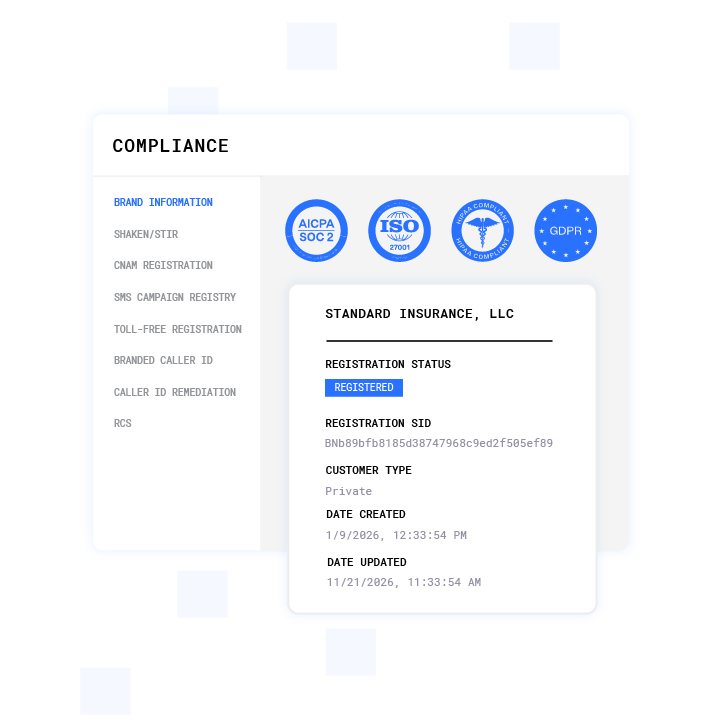
Consent management needs to be timestamped, immutable, and audit-ready before the first outbound contact. Plura’s compliance engine timestamps consent records and exports audit-ready reports in one click, supporting the documentation requirements operators face under TCPA and state-level rules. Customers are responsible for their own regulatory obligations, and Plura provides infrastructure that supports that process.
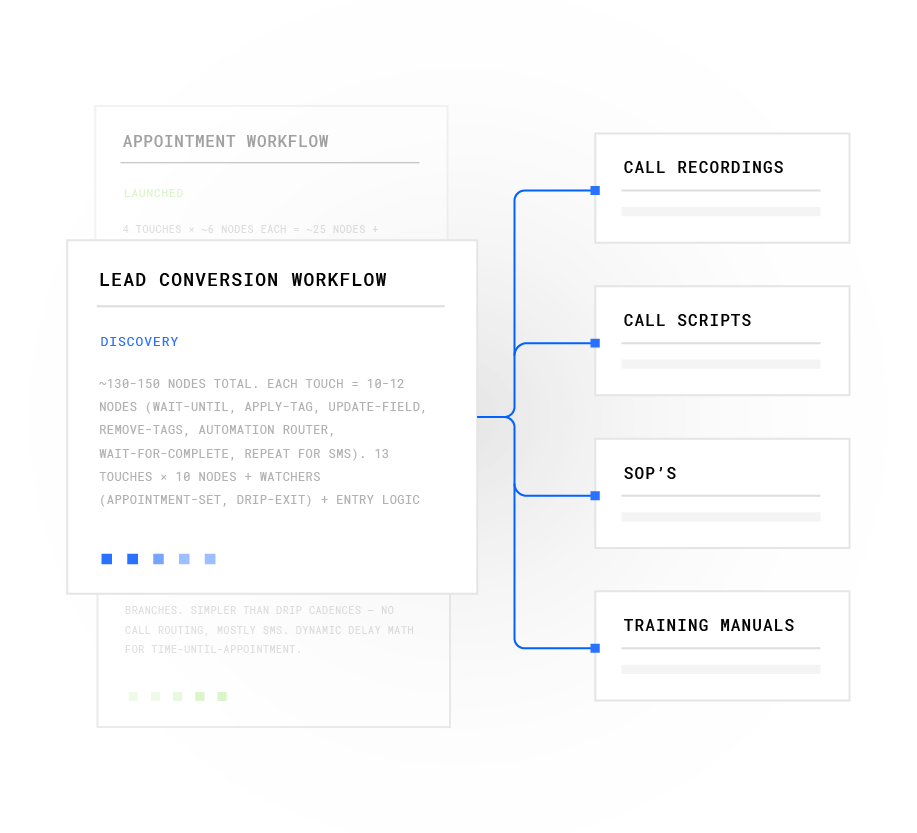
Escalation paths work best when defined at the workflow level, not improvised. Every Plura workflow node carries explicit guardrails. When a customer’s response falls outside defined paths, the AI warm-transfers to a U.S. agent or flags the conversation in the Unified Inbox.
Performance monitoring should track outcomes, not activity. Contact rate, conversion rate, cost per qualified lead, and pipeline contribution are the metrics that matter because they show revenue impact. Plura’s AI-driven approach brings cost per qualified lead to $25-$60,3 compared to $85-$200 for traditional outreach.
Compare plans and rates side by side.
Seven-Step Sub-5-Second Qualification Flow
- Trigger detection. The AI monitors inbound form submissions, calls, SMS replies, and webchat opens in real time. The moment a lead signal arrives, the qualification workflow activates.
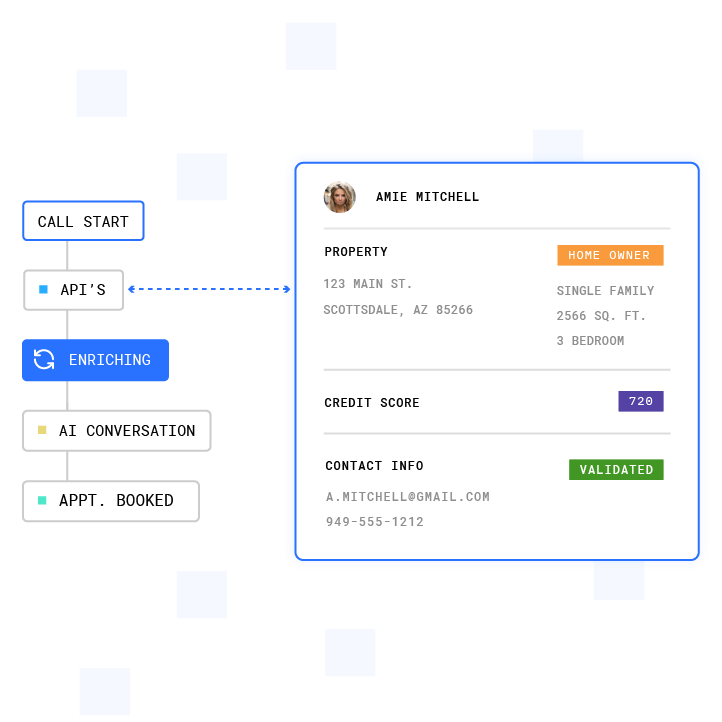
- Lead enrichment. Plura’s AI Lead Intelligence layer pings 30+ data sources during the first seconds of contact, pulling IP data, email validation, firmographics, and intent signals into the live conversation before the first exchange completes.
- Channel selection. The AI selects the highest-probability contact channel based on the lead’s source, prior interaction history, and time-of-day rules. Voice, SMS, RCS, and webchat are all available in parallel.
- Qualification dialogue. The AI runs the configured qualification script, asks predefined questions, captures responses, and branches on answers. Sensitive data fields are redacted at the field level in real time.
- Scoring and routing. Responses are scored against qualification criteria. Leads that meet the threshold are flagged for warm transfer or calendar booking. Leads that do not meet the threshold enter a nurture cadence.
- Cross-channel follow-up. If the lead does not respond on the first channel, the AI initiates contact on the next channel in the configured sequence and carries the full context of the prior attempt.
- Handoff or close. Qualified leads are warm-transferred to a U.S. agent with a full conversation summary, or the AI completes the booking, document signing, or payment step directly inside the channel.
FCC Framework for Multi-Channel Lead Outreach
The seven-step process above operates within a compliance framework that has become significantly more stringent in 2026. The FCC NPRM (CG Docket No. 26-52) and companion legislation including the Keep Call Centers in America Act (S.2495) are reshaping the compliance environment for every enterprise running outbound customer communications.2 Operators in regulated verticals should consult qualified counsel on their specific obligations under these frameworks.
Plura supports compliance with TCPA, DNC, HIPAA, SOC 2, ISO certification, GDPR, and SHAKEN/STIR caller ID verification as platform-level features.1 Every outbound contact is checked against federal and state DNC registries in real time before dial. Consent records are timestamped and immutable. Quiet-hours rules enforce automatically through time-zone detection. STIR/SHAKEN authentication runs on every outbound voice call. Plura’s compliance framework includes SOC 2 infrastructure, TCPA and STIR/SHAKEN enforcement, DNC screening, and caller ID reputation management.
Plura runs on 100% U.S. infrastructure by architecture. Voice origination, model hosting, data storage, and call recording all sit on domestic infrastructure, which supports operators reporting “100% U.S.-handled” in their broadband consumer label disclosures under the FCC NPRM’s proposed requirements.
Stateful Conversation Memory Across Every Channel
Most AI voice and SMS tools are separate products from separate vendors with separate memories. A customer who texted at 9 a.m. has to re-explain themselves when the call comes at noon. That pattern hurts user experience and reduces conversion.
Plura’s unified stateful inbox maintains full conversation history across voice, SMS, webchat, and RCS. Every interaction is keyed to a customer token and persisted in one place. The AI reads and writes to the same database on every conversation, referencing what was offered, what was accepted, what was declined, and what is still open.
Cross-channel inheritance means the AI agent that sent an SMS at 9 a.m. picks up the voice call at noon already knowing the full prior context. Pricing offers made, objections raised, qualification status, and sensitive-data redactions all carry forward. Plura owns its telecom infrastructure and holds an FCC carrier license, which enables this architecture at the carrier level rather than as a software patch on top of a third-party CPaaS.
Readiness Checklist for Deploying Plura
Before deploying AI multi-channel qualification, operators can assess readiness across five dimensions that build on each other.
- Interaction volume. Plura is designed for operations running 500 or more daily interactions or $5,000 or more in monthly paid-media spend. Below that threshold, the ROI math often does not generate enough return to justify the platform depth.
- Process maturity. AI agents follow defined workflows, so unclear processes create unclear outcomes. If the qualification process is not documented, the AI will automate the ambiguity. Map the current qualification script before building the AI version.
- Data quality. The Stateful Conversation Database is only as useful as the data fed into it. CRM records, consent logs, and DNC lists need to be current before go-live so the AI works from accurate information.
- Compliance needs. Identify which regulatory frameworks apply to the operation, such as TCPA, HIPAA, or state-level rules, or combinations. Plura’s compliance engine supports these frameworks, and operators remain responsible for their own obligations and should consult qualified counsel.
- Integration requirements. Plura connects to 50+ tools, so mapping the CRM, calendar, and attribution platforms already in use clarifies integration paths. Plura deployment typically takes 2 to 4 weeks from contract to live AI conversations.
Common Pitfalls to Avoid
Automating broken workflows. AI agents execute the workflow they are given. If the qualification script has gaps, the AI will expose them at scale. Teams should audit the current process before building the AI version.
Treating channels as silos. Deploying AI voice through one vendor and AI SMS through another produces a fragmented customer record. The lead who texted and then called is treated as two different people. A single stateful platform prevents this split view.
Measuring activity instead of outcomes. Dials made, messages sent, and contacts attempted are activity metrics that measure effort but not results. The metrics that matter are contact rate, qualification rate, cost per qualified lead, and pipeline contribution because these show whether the effort produced revenue. Plura’s AI enables 47% average pipeline growth and 90% faster lead-response time3 when measured against outcome benchmarks, not activity counts.
Ignoring infrastructure provenance. A platform that routes voice through a third-party CPaaS inherits that provider’s caller ID reputation, compliance posture, and foreign infrastructure exposure. Under the FCC NPRM, that exposure sits on the enterprise balance sheet, not only with the vendor.
Carrier-Owned vs. CPaaS Platforms
The table below shows how carrier-owned platforms differ from CPaaS wrappers across the dimensions that shape compliance posture and total cost of ownership.
| Dimension | Carrier-Owned (Plura) | CPaaS-Wrapper (Twilio-based AI tools) |
|---|---|---|
| Voice infrastructure | FCC-licensed audio bridging carrier, owned | Third-party CPaaS (e.g., Twilio), rented |
| Branded caller ID | Issued at carrier level, direct | Dependent on third-party reseller |
| DNC scrubbing | Real-time, pre-dial, at origination | Bolted on post-origination or customer-managed |
| Cross-channel memory | Stateful across voice, SMS, RCS, webchat | Typically single-channel or stateless |
| U.S. infrastructure | 100% domestic by architecture | Varies, foreign dependencies common |
| Monthly cost (50-seat equivalent) | $8,000-$15,000 | $35,000-$50,000 (offshore equivalent) |
Frequently Asked Questions
What is AI multi-channel lead qualification?
AI multi-channel lead qualification uses AI agents to contact, engage, and score prospects across voice, SMS, RCS, and webchat simultaneously, within seconds of a lead signal, without manual SDR involvement. The AI collects qualification data, scores intent, and routes the lead to the appropriate next step, within a single stateful conversation thread that persists across every channel the lead touches.
How does stateful conversation memory work across voice, SMS, and webchat?
Plura’s Stateful Conversation Database keys every interaction to a customer token, typically a phone number, email address, or unique ID. Every channel the AI touches reads from and writes to the same database. When a lead texts at 9 a.m. and calls at noon, the AI agent handling the call already has the full context of the text conversation, including what was offered, what was objected to, and what qualification status was assigned. No re-introduction is required.
What does FCC-compliant multi-channel lead qualification mean in 2026?
In 2026, FCC-compliant multi-channel lead qualification involves operating on U.S. infrastructure, authenticating every outbound voice call through STIR/SHAKEN, scrubbing every contact against federal and state DNC registries before dial, maintaining timestamped and immutable consent records, and enforcing quiet-hours rules through time-zone detection. The FCC NPRM (CG Docket No. 26-52) proposes additional requirements around offshore data handling and foreign infrastructure. Operators should consult qualified counsel on their specific obligations. Plura supports these compliance practices as platform-level features, and customers are responsible for their own regulatory posture.
How quickly can an enterprise deploy AI lead qualification with Plura?
Deployment typically takes 2 to 4 weeks from contract to live AI conversations for standard qualification flows. Complex multi-step intakes, such as a 25-question health-history survey, run closer to one to two months because the workflow logic requires additional design and validation time. Every annual contract includes a 90-day opt-out window if the deployment is not delivering against agreed benchmarks.
What is the ROI of replacing manual SDR qualification with AI agents?
Using Plura’s default calculator scenario, a 15-agent operation paying $20 per hour with standard taxes, benefits, and commissions at 40% talk utilization costs $60,000 per month. Replacing that team with Plura at $15 per hour, 100% talk utilization, and 6 Plura agents doing the work of 15 humans drops the monthly cost to $14,400. That is $45,600 in savings in the first 30 days, $547,200 over 12 months, and $2,736,000 over 60 months. For higher-volume operations, Plura’s TCO of $300,000-$700,000 per year replaces traditional contact-center economics of $4,000,000-$7,000,000.
Conclusion and Next Steps
The five-criteria framework for evaluating AI multi-channel lead qualification in 2026 is speed, channel coverage, compliance posture, integration depth, and operational fit. Manual SDR queues, offshore BPOs, and Twilio-based API resellers each fall short on at least two of those five dimensions. The FCC NPRM (CG Docket No. 26-52), the Keep Call Centers in America Act (S.2495), and state onshoring laws in New York, New Jersey, Connecticut, Missouri, and Florida have narrowed the offshore arbitrage window for regulated enterprises. The carrier-owned, stateful, 100% U.S. infrastructure model is the architecture that meets all five criteria simultaneously.
Plura delivers the sub-5-second response time established in the framework, preserves full conversation memory across every channel, and supports the compliance stack described earlier while delivering 3x average ROI in 90 days on a TCO of $300,000-$700,000 versus the $4,000,000-$7,000,000 traditional contact-center benchmark.
Model your specific cost structure in Plura’s ROI calculator.
Compare plans and rates side by side.
Updated June 2026.
1 Plura AI maintains SOC 2, HIPAA, ISO, and GDPR posture as part of its platform infrastructure. References to compliance frameworks in this article describe Plura’s platform capabilities and do not constitute a guarantee that any customer using Plura will themselves be compliant with applicable laws or standards. Customers remain solely responsible for their own regulatory obligations, certifications, consent management, recordkeeping, and the claims they make to their own end users. Consult qualified legal counsel for guidance specific to your use case.
2 This article describes regulatory frameworks at a general level and does not constitute legal advice. Laws and regulations vary by jurisdiction, change over time, and apply differently depending on facts and circumstances. Readers should consult qualified legal counsel before making compliance decisions.
3 Performance figures, customer outcomes, and industry statistics referenced in this article are drawn from cited third-party sources or Plura customer case studies. Individual results vary based on implementation, use case, industry, audience, and execution. Past or aggregate performance is not a guarantee of future results.
4 References to third-party products, services, companies, or research are made for informational and comparative purposes only. Plura AI is not affiliated with, endorsed by, or sponsored by any third party named in this article unless explicitly stated. Trademarks and product names referenced remain the property of their respective owners.
5 This article contains forward-looking statements regarding industry trends, technology adoption, and future capabilities. These statements reflect current expectations and are subject to change. Plura AI undertakes no obligation to update forward-looking statements except as required.
This article is provided for informational purposes only and reflects Plura AI’s understanding at the time of publication. Product capabilities, integrations, and specifications are subject to change. For the most current information, visit plura.ai.
This article was produced with the assistance of AI tools and reviewed by Plura AI prior to publication.