
Written by: Matt Beucler, CEO, Plura AI
Updated September 2026
Key Takeaways for Medical Practices
- After-hours answering services for medical offices fall into three distinct models: live operators, AI agents, and nurse triage. Each model carries different costs, capabilities, and compliance considerations.
- Most after-hours patient calls are routine, such as scheduling, refills, and directions. AI answering can handle this high-volume, non-clinical work at a lower cost than live operators.
- Hybrid deployments that pair AI for routine calls with nurse or provider escalation for clinical calls balance cost control with patient safety.
- HIPAA considerations such as a signed BAA, encryption, audit logging, and secure message delivery are core requirements for any after-hours vendor that handles protected health information.
- Plura AI provides stateful, HIPAA-aligned AI voice and chat agents that integrate with 50+ tools. You can book a live demo to see how they fit a medical office of your size.
The Three Models Side by Side: Live Answering, AI Answering, and Nurse Triage
Every ranking page on this topic often blends these three models together. They operate differently and are not interchangeable. The table below shows how they differ on clinical judgment, cost model, and EHR integration so you can match each model to your call mix.
| Model | Clinical Judgment | Cost Model | EHR Integration |
|---|---|---|---|
| Live answering service | None unless RN-staffed, operators take messages and route calls per a script | Per-minute ($0.90-$1.90/min published) or per-call ($0.75-$5.00/call published) | Standalone call log or manual entry, most vendors do not have direct native API write access to the EHR. Many offer read-only integration or push data via Zapier, FHIR-mediated middleware, or EHR-adjacent CRMs, and some vendors provide bidirectional write-back. |
| AI answering | None, routes based on workflow logic rather than clinical assessment | Flat-rate or per-minute, AI services published at roughly one-third to one-tenth the cost of live-agent services at equivalent volume | API-connected where the vendor supports it. Plura integrates with 50+ tools including EHR-adjacent CRMs and calendars. |
| Nurse triage | RNs following Schmitt-Thompson protocols assess symptom urgency and direct patients to the right level of care. | Per-call or per-minute with protocol licensing fees, priced at a premium over live answering | Documentation delivered back to the practice, and some vendors write directly to the chart. |
Live answering service: A human operator answers, collects a message, and routes it per your script. No clinical judgment is applied. This model fits practices that need basic message capture and on-call routing without symptom assessment. It cannot resolve clinical questions, so every unresolved call becomes a callback the front desk owes the next morning.
AI answering: An AI voice agent handles the call end-to-end: greeting, qualification, routing, and secure message delivery. A human operator joins only when a workflow gate triggers a warm transfer. This model fits practices with high routine call volume and a defined escalation protocol for clinical calls. It does not apply clinical judgment.
Nurse triage: A registered nurse answers, works through evidence-based protocols, determines urgency, and either resolves the call or escalates to the on-call provider. Published data from nurse triage vendors reports that 87% of after-hours encounters are handled without provider intervention.3 This model fits practices with high clinical call volume, specialty populations, or FQHC coverage requirements and carries the highest per-call cost.
Live Answering Service vs. AI Answering Service for Medical Offices
The live-versus-AI decision for a medical office depends on call mix. Clinical calls that require symptom assessment cannot be resolved by either a live operator or an AI agent without a nurse or provider in the path. Routine calls such as scheduling, prescription refill requests, directions, hours, and insurance questions can be handled by AI at a fraction of the cost of a live operator.
CallMyDoc’s 2026 State of Patient Phone Communication report, analyzing 4,687,808 inbound patient calls across 297 medical practices, found that clinical questions represented 27.7% of completed calls with a documented sub-type, scheduling and administrative calls represented 24.6%, and prescription refills represented 9.0%.3 The data shows that most after-hours call volume is routine and addressable without a nurse or a live operator.
A hybrid model fits most 2-to-10 provider practices. AI handles routine volume and escalates clinical calls to a live nurse or on-call provider when a workflow gate triggers. Plura AI is designed for this hybrid pattern.
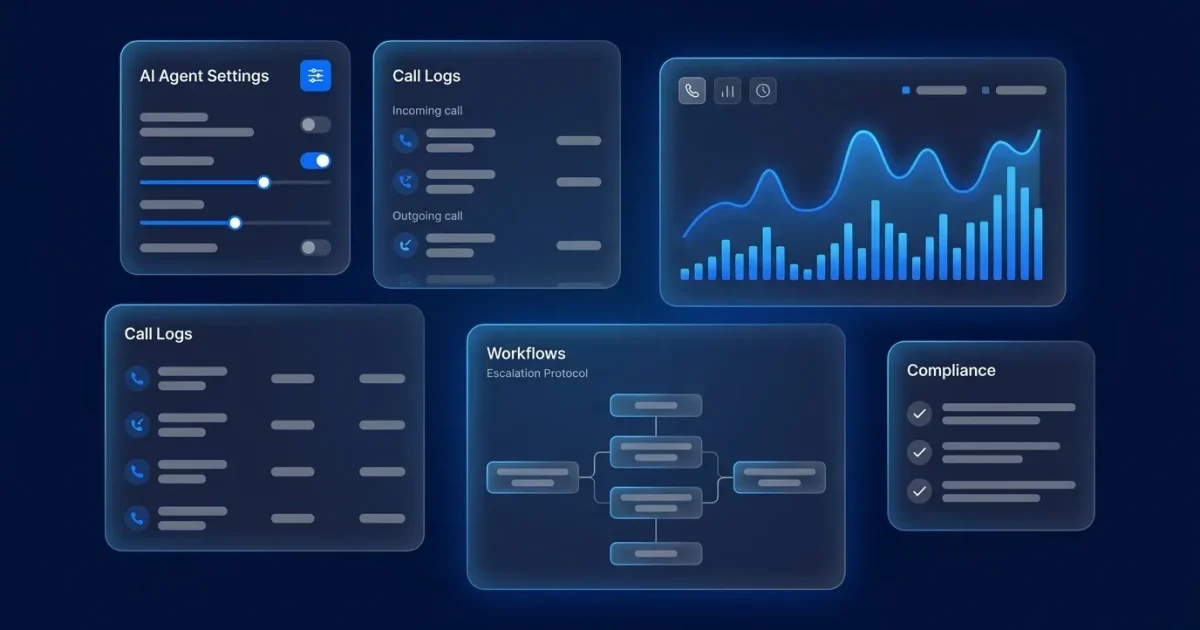
Plura’s AI voice agents answer every inbound call 24/7, in English or Spanish, with branded caller ID issued through Plura’s FCC-licensed carrier. Workflow logic routes routine calls and warm-transfers clinical escalations to a U.S. agent or on-call provider when the protocol requires it. Because Plura’s AI Voice, AI SMS, AI RCS, and AI Webchat share a Stateful Conversation Database, a patient who texted at 9 a.m. is recognized when the call comes at noon. The conversation picks up with full context, so the patient does not have to repeat their information.
Plura’s managed workflows let practice managers build and adjust call routing logic on a no-code visual canvas without engineering support. Plura’s integrations connect to 50+ tools including EHR-adjacent CRMs and calendars, so call data flows into the systems the practice already runs.
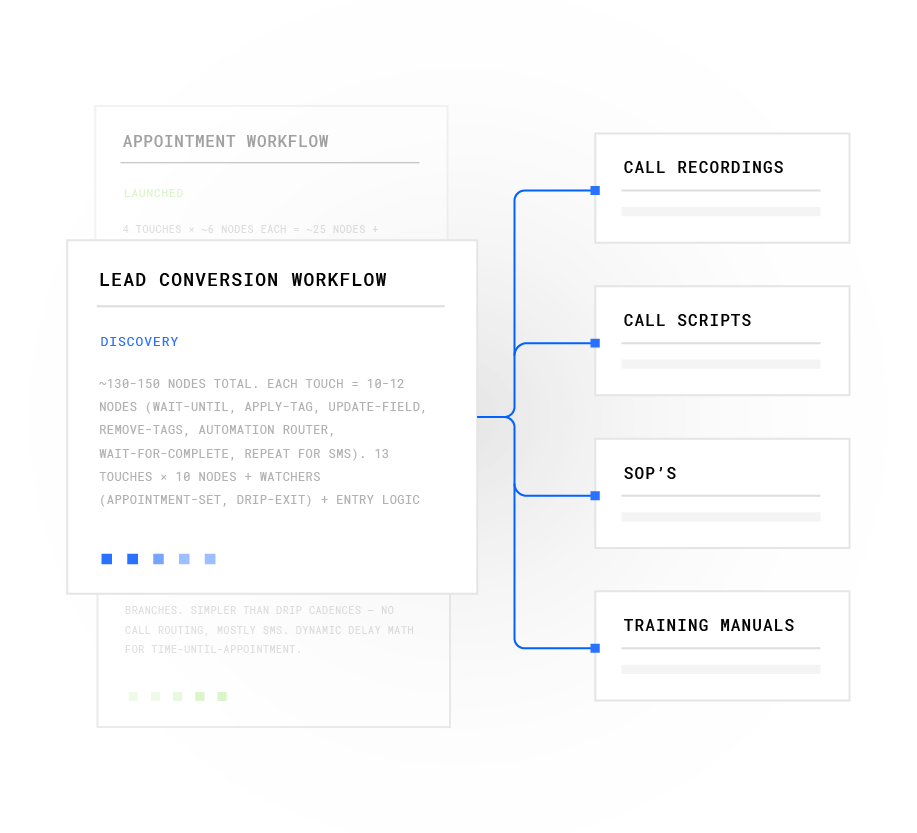
Plura achieves up to 40% improvement in no-shows through its healthcare workflows.3
See how AI after-hours answering works for your practice and review a workflow tailored to your call mix.
Nurse Triage vs. Message Taking for Clinical Calls
Nurse triage and message taking serve different purposes for clinical calls. They are not simply the same service at different price points.
Message taking means an operator logs the call and routes it to the on-call provider. The clinical judgment happens when the provider calls back at 2 a.m. with no prior assessment. Every call that cannot wait until morning becomes a provider interruption.
Nurse triage means a licensed RN works through evidence-based Schmitt-Thompson protocols to assess symptom urgency and direct the patient to the right level of care. The nurse resolves routine calls, escalates urgent calls to the on-call provider with a completed assessment already in hand, and documents every encounter for the practice’s morning review. The scope of telephone triage is assessment and routing, rather than independent diagnosis or physician-level decision-making.
The trade-off centers on cost and provider interruption rate. Nurse triage costs more per call than message taking but reduces unnecessary provider interruptions and documents clinical decision-making at the point of contact. Poor telephone triage can underestimate urgency, delay care, create weak documentation, and overload providers. Message taking shifts that clinical judgment to the on-call provider at 2 a.m. with no prior assessment.
Some practices use a hybrid approach. AI or live operators handle routine calls, and nurse triage handles symptom calls. The right split depends on your specialty, call mix, and after-hours call volume. Clinical leadership and qualified counsel can help determine what your practice requires.
What a HIPAA-Aligned After-Hours Setup Requires
The Health Insurance Portability and Accountability Act (HIPAA) Privacy and Security Rules appear at 45 CFR Parts 160, 162, and 164.2 Any vendor that creates, receives, maintains, or transmits protected health information on behalf of a covered entity is a business associate under the rule and operates under a Business Associate Agreement.
Under 45 CFR 164.504(e), a BAA describes permitted and required uses and disclosures of PHI, requires appropriate safeguards, requires reporting of breaches of unsecured PHI to the covered entity, and requires subcontractors handling PHI to agree to the same restrictions.2 The BAA also authorizes termination of the contract if the business associate violates a material term.
The Security Rule’s technical safeguards at 45 CFR 164.312 describe access controls, audit controls, integrity protections, person or entity authentication, and transmission security for electronic PHI.2 Unique user identification is a Required implementation specification under 164.312(a)(2)(i). Audit logging of activity in systems containing ePHI appears under 164.312(b).
When evaluating an after-hours answering vendor, verify these elements: a signed BAA that specifies safeguards, breach notification, and subcontractor flow-down; encryption in transit and at rest; access controls with role-based permissions; audit logging of every call and message; secure message delivery to the practice rather than unencrypted email or SMS; and documented retention policies. Each element maps to a specific requirement under the Security Rule, so a gap in any one area creates a compliance risk.
Consult the regulation at 45 CFR Part 164 or qualified counsel for your practice’s specific obligations.2 No vendor relationship replaces your own compliance program.
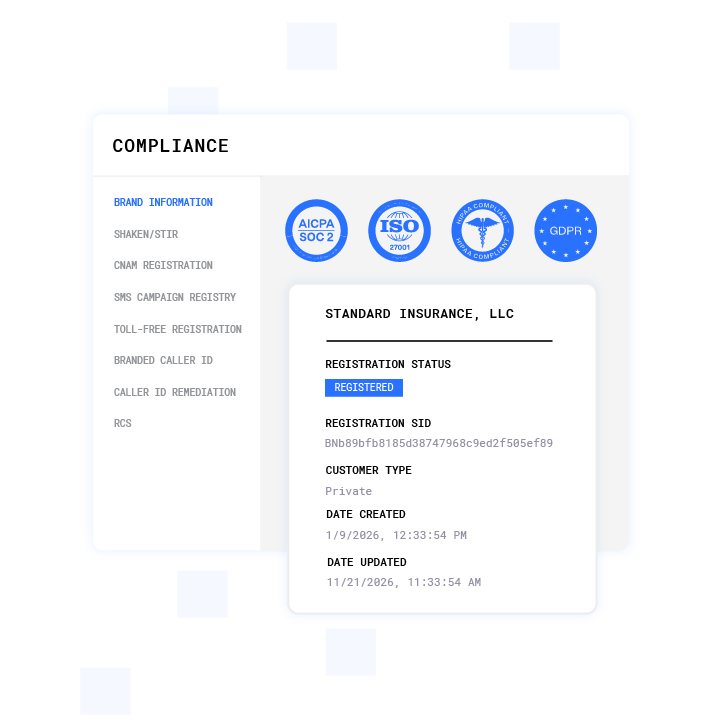
Plura’s platform includes HIPAA-aligned encryption, access controls, audit logging, and sensitive-data redaction built into every call and message workflow. Plura supports compliance with SOC 2, HIPAA, ISO certification, GDPR, SHAKEN/STIR caller ID verification, TCPA, and DNC frameworks.1 Using Plura does not make your practice compliant, and your practice retains its own compliance obligations.
What After-Hours Answering Costs for a Medical Practice
Three pricing models dominate the market, and each one behaves differently based on your call volume and call mix.
Per-minute pricing bills based on operator or AI talk time. Published live-agent rates run $0.90 to $1.90 per minute, with billing increments ranging from per-second to full-minute rounding. Full-minute rounding can inflate a bill by 20% to 40% versus per-second billing for the same talk time. Per-minute pricing penalizes long calls, so a 12-minute symptom discussion costs four times more than a 3-minute refill request. It favors practices with very low volume and short, simple calls.
Per-call pricing works differently. It bills one flat rate per completed call regardless of length. Published per-call rates run $1.00 to $2.00 per call at volume, with the caveat that some vendors count hang-ups, wrong numbers, and spam as billable calls. Per-call pricing penalizes short calls such as directions and hours and favors practices with predictable, steady volume.
Flat-rate pricing charges a fixed monthly or per-provider fee regardless of call volume. Published flat-rate AI services run $299 to $449 per provider per month. Flat-rate pricing shifts volume risk to the vendor but may cap included calls or add overage charges above a threshold. It favors practices with high or unpredictable call volume.
Six variables drive the actual monthly number beyond the headline rate. They are call volume, average call length, coverage hours (after-hours-only vs. 24/7), triage depth (message taking vs. RN protocols), EHR integration complexity, and bilingual coverage. HIPAA considerations and a signed BAA often add a surcharge of $50 to $150 per month on most human services. On AI services, this is typically included in the base rate.
The real cost comparison extends beyond the monthly fee. Research cited by Forbes found that patient no-shows cost the U.S. healthcare system over $150 billion annually, with individual physicians losing roughly $200 for every unused appointment slot.3 A missed after-hours call that sends a patient to the next practice on Google becomes a lifetime-value loss, not just a single missed appointment.
Compare plans and rates side by side, and run your volume through Plura’s ROI calculator to check your numbers in real time.
Escalation Protocol Design: Building the On-Call Routing Tree
After-hours risk concentrates in escalation failures. A chest-pain call logged as routine at 2 a.m. illustrates the worst-case scenario. Candello’s 2025 benchmarking analysis found that communication failures were involved in 40% of asserted medical professional liability cases, up from 30% a decade earlier.4 Message delivery alone does not prove that the right clinician accepted responsibility and responded in time.
A workable on-call routing tree requires four elements: written criteria for what counts as urgent, an ordered contact list, defined retry intervals, and a documented record of what happened. An outdated contact list is one of the most common reasons escalations fail.
Use this escalation protocol template when you scope your vendor setup:
- Emergency criteria: Define in writing which symptoms trigger an immediate 911 redirect, such as chest pain, difficulty breathing, suicidal ideation, or stroke symptoms. Clinical leadership should author this list.
- Urgent criteria: Define which symptoms trigger an immediate on-call provider page, such as post-procedure complications, obstetric symptoms, or severe pain. Clinical leadership should author this list.
- Routine criteria: Define which requests are logged for next-business-day follow-up, such as prescription refill requests, appointment scheduling, and billing questions.
- Contact order: Specify first, second, and third contact with defined retry intervals between attempts. Clarify what happens if no contact responds.
- Delivery method: Specify secure message, encrypted SMS, or portal notification. Avoid unencrypted email or standard SMS for PHI.
- Documentation: Capture who was contacted, when, by what method, and whether they responded. Every escalation should produce a record.
- Audit cadence: Plan weekly review of call logs for the first month after go-live, then quarterly. Set a recurring reminder to review the escalation procedure with your vendor as your team and on-call rotation change.
Response-time thresholds in your contract should align with clinical guidance. ACOG recommends 30-minute callbacks for urgent after-hours obstetric calls4, and your specialty may have its own published benchmarks. Ask your vendor to specify response-time commitments and the method used to audit performance.
Will a Doctor Call After Hours?
Whether a physician calls after hours depends on the practice’s on-call rotation and escalation protocol. Most 2-to-10 provider practices maintain an on-call rotation in which one provider is designated to receive urgent after-hours pages on a rotating schedule. The answering service or AI agent screens calls against the escalation protocol and pages the on-call provider only when the call meets the urgent or emergency criteria defined in the protocol.
Patients calling after hours typically see one of three outcomes. An emergency triggers an immediate 911 redirect. An urgent clinical concern triggers a callback from the on-call provider within a timeframe specified in the practice’s protocol. A routine request is logged for next-business-day follow-up.
The practice communicates its after-hours policy to patients through the outgoing voicemail greeting, the practice website, and appointment reminder messages. A clear greeting sets expectations: “You have reached [Practice Name]. Our office is closed. If this is a medical emergency, hang up and call 911. For urgent medical concerns, stay on the line and our answering service will connect you with the on-call provider. For prescription refills and scheduling, please leave a message and we will return your call the next business day.”
CallMyDoc’s 2026 report found that among after-hours calls responded to through a mobile app, the median physician response time was 11 minutes.3 A specific response-time commitment in the patient-facing greeting and in the vendor contract gives patients a clear expectation and gives the practice an auditable standard.
Explore how AI escalation routing works in a live Plura demo and see how expectations are set for your patients.
What to Ask a Vendor Before Signing
Before signing a contract, use these questions to structure your vendor review.
- BAA: Will they sign one, and what does it obligate them to do on safeguards, breach notification, and subcontractor flow-down?
- Custom escalation script: Can they build your routing tree, and are script changes after go-live included or billed separately?
- On-call access: How do they reach the on-call provider? Call, text, or secure portal, and what is the retry interval?
- Secure message delivery: How are messages delivered to the practice, and how is PHI protected in transit?
- Appointment and refill handling: Can they book, reschedule, and process refill requests, or only take messages?
- Bilingual capability: Which languages are supported, and is there a surcharge for bilingual coverage?
- Call recordings: Do you get access to recordings, and how long are they retained?
- EHR integration: Does the service connect to your EHR via integrations, or does it operate as a standalone log requiring manual entry?
Why Plura AI for After-Hours Call Answering in a Medical Office
Plura AI provides FCC-licensed AI contact center infrastructure rather than a wrapper on a third-party carrier. Voice originates on Plura’s domestic infrastructure, so branded caller ID is issued at the carrier level, SHAKEN/STIR authentication runs on every outbound call, and real-time DNC scrubbing and TCPA-litigator screening are enforced before dial. The architecture keeps handling within the United States.
For a medical office, the operational case is direct:
- Plura’s AI voice agents answer every call 24/7, in English or Spanish, with a branded greeting and workflow logic that routes routine calls and escalates clinical calls to a live U.S. agent or on-call provider when the protocol requires it.
- The Stateful Conversation Database means a patient who texted at 9 a.m. is recognized when the call comes at noon. Stateful conversation history across every channel means the patient is recognized without re-introduction.
- HIPAA-aligned encryption, access controls, audit logging, and sensitive-data redaction are built into every call and message workflow, which supports audit readiness.
- Real-time DNC scrubbing, TCPA-litigator screening, automated quiet hours, and immutable consent logging run on every outbound contact.
- Plura’s 50+ integrations, mentioned earlier, include EHR-adjacent CRMs and calendars via its integrations directory.
- As noted earlier, Plura’s healthcare workflows improve no-shows by up to 40%.
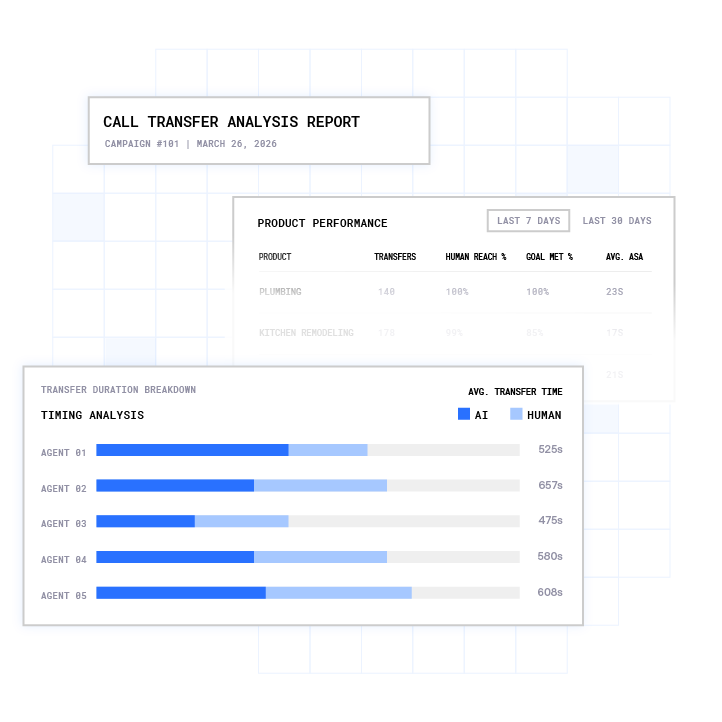
Plura’s conversation intelligence layer analyzes every interaction across voice, SMS, RCS, and webchat to surface patterns such as recurring after-hours call types, frequently triggered escalations, and routing logic gaps. Each deployment is reviewed and adjusted over time rather than handed off and left static.
Annual contracts include a 90-day opt-out window, so practices can exit if the deployment is not delivering on expectations.
Get a demo tailored to your call volume and see an after-hours workflow configured for a medical office your size.
FAQ
What Is an After-Hours Answering Service for a Medical Office?
An after-hours answering service for a medical office handles patient calls when the practice is closed. Three models exist: live answering services with human operators who take messages and route calls, AI answering with automated voice agents that qualify and escalate calls based on workflow logic, and nurse triage with registered nurses who assess symptoms against physician-approved protocols and direct patients to the right level of care. The model you choose shapes cost structure, escalation design, and the compliance obligations the vendor must meet.
Will a Doctor Call After Hours?
Whether a physician calls after hours depends on the practice’s on-call rotation and escalation protocol. Most practices maintain a rotating on-call schedule in which one provider is designated to receive urgent pages. The answering service screens calls against the escalation protocol and pages the on-call provider only when the call meets the urgent or emergency criteria defined in the protocol. Routine calls such as refills, scheduling, and directions are logged for next-business-day follow-up. Patients should hear a clear greeting that explains the process and sets a response-time expectation for urgent calls.
How Much Does After-Hours Answering Cost for a Medical Practice?
Published pricing varies by model and call volume. Live-agent services commonly run $0.90 to $1.90 per minute or $1.00 to $2.00 per call. Flat-rate AI services are published at $299 to $449 per provider per month. Hidden costs can include setup fees, holiday premiums, overage charges, bilingual surcharges, and per-message relay fees. The most accurate comparison across vendors is true cost per call, calculated as the total monthly bill including every fee divided by calls handled. For a 300-call-per-month practice at an average of 2.5 minutes per call, published estimates range from roughly $950 to $1,888 per month on a live-agent per-minute service, depending on the rate and surcharges applied.
What Does a BAA Require of an Answering Service Vendor?
Under 45 CFR 164.504(e), a Business Associate Agreement establishes permitted and required uses and disclosures of protected health information, requires the vendor to use appropriate safeguards, requires the vendor to report any breach of unsecured PHI to the covered entity without unreasonable delay and no later than 60 calendar days after discovery, requires the vendor to ensure subcontractors handling PHI agree to the same restrictions, and authorizes termination of the contract if the vendor violates a material term. Consult the regulation at 45 CFR Part 164 or qualified counsel for your practice’s specific obligations.
Can AI Handle After-Hours Calls for a Medical Office?
AI voice agents can handle routine after-hours calls such as scheduling, prescription refill requests, directions, hours, insurance questions, and any call type that follows a defined workflow. AI does not apply clinical judgment. For symptom-based calls, AI can screen for emergency criteria that trigger a 911 redirect and urgent criteria that trigger an on-call provider page, while the clinical assessment itself remains with a nurse or provider. A hybrid model is common, where AI handles routine volume and escalates clinical calls to a live nurse or on-call provider when a workflow gate triggers. The escalation protocol should be defined in writing before the AI is deployed.
What Is the Difference Between Nurse Triage and Message Taking?
Message taking means an operator logs the call and routes it to the on-call provider without clinical assessment. Every call that cannot wait until morning becomes a provider interruption. Nurse triage means a licensed registered nurse works through evidence-based protocols such as Schmitt-Thompson to assess symptom urgency and direct the patient to the right level of care. The nurse resolves routine calls, escalates urgent calls to the on-call provider with a completed assessment already in hand, and documents every encounter. Nurse triage costs more per call than message taking but reduces unnecessary provider interruptions and documents clinical decision-making at the point of contact.
How Do I Audit After-Hours Call Logs?
Review call logs weekly for the first month after launching an after-hours answering service, then quarterly. Look for calls that were escalated when they should have been routine, calls that were logged as routine when they should have been escalated, and calls where the on-call provider was not reached within the response-time commitment in the contract. Set a recurring reminder to review the escalation protocol with your vendor as your team and on-call rotation change. Every escalation should produce a timestamped record documenting who was contacted, when, by what method, and whether they responded.
What Should Be in an Escalation Protocol?
A workable escalation protocol includes seven elements: written emergency criteria that define which symptoms trigger a 911 redirect, written urgent criteria that define which symptoms trigger an on-call provider page, written routine criteria that define which requests are logged for next-business-day follow-up, an ordered contact list with retry intervals, a defined delivery method for secure messages, documentation of every escalation event, and a defined audit cadence. Clinical leadership should author the emergency and urgent criteria. The protocol should be reviewed with your vendor at least quarterly and updated whenever the on-call rotation or team composition changes.
How Does After-Hours Answering Integrate with My EHR?
Integration depth varies by vendor and EHR. Some vendors deliver a standalone call log that requires manual entry into the EHR. Others connect via API to write call records, patient messages, and escalation events directly into the patient chart. Key integration touchpoints include calendar read/write access for scheduling, patient lookup for caller identification, clinical inbox task creation for message routing, and audit logging for compliance documentation. Ask every vendor whether EHR integration is included in the base rate or billed separately, and whether it requires a custom build or uses a pre-built connector.
When Should a Call Be Routed to 911 Instead of the On-Call Provider?
Emergency criteria that typically trigger a 911 redirect include chest pain, difficulty breathing, signs of stroke such as sudden numbness or confusion, suicidal ideation or self-harm, severe allergic reaction, and loss of consciousness. Clinical leadership should define the specific criteria for your practice and specialty in writing. The answering service or AI agent applies those written criteria on every call. A call that meets emergency criteria should not sit in a queue or be logged as a routine message. The escalation protocol should make the 911 redirect path explicit, automatic, and auditable.
Conclusion and Next Steps
The three after-hours answering models serve different roles for a medical office. Live answering services handle message capture and routing without clinical judgment. AI answering handles routine call volume at scale with workflow-driven escalation. Nurse triage applies clinical assessment against physician-approved protocols and resolves routine calls while escalating urgent ones.
To choose the right model, start with your call mix, clinical risk profile, and compliance obligations. Then evaluate vendors against pricing, escalation design, integration depth, and HIPAA alignment. A hybrid approach that combines AI for routine calls with nurse or provider escalation for clinical calls often delivers the most balanced outcome.
Schedule a walkthrough of Plura’s after-hours workflows and compare them against your current setup and vendor options.
1 Plura AI maintains SOC 2, HIPAA, ISO, and GDPR posture as part of its platform infrastructure. References to compliance frameworks in this article describe Plura’s platform capabilities and do not constitute a guarantee that any customer using Plura will themselves be compliant with applicable laws or standards. Customers remain solely responsible for their own regulatory obligations, certifications, consent management, recordkeeping, and the claims they make to their own end users. Consult qualified legal counsel for guidance specific to your use case.
2 This article describes regulatory frameworks at a general level and does not constitute legal advice. Laws and regulations vary by jurisdiction, change over time, and apply differently depending on facts and circumstances. Readers should consult qualified legal counsel before making compliance decisions.
3 Performance figures, customer outcomes, and industry statistics referenced in this article are drawn from cited third-party sources or Plura customer case studies. Individual results vary based on implementation, use case, industry, audience, and execution. Past or aggregate performance is not a guarantee of future results.
4 References to third-party products, services, companies, or research are made for informational and comparative purposes only. Plura AI is not affiliated with, endorsed by, or sponsored by any third party named in this article unless explicitly stated. Trademarks and product names referenced remain the property of their respective owners.
This article is provided for informational purposes only and reflects Plura AI’s understanding at the time of publication. Product capabilities, integrations, and specifications are subject to change. For the most current information, visit plura.ai.
This article was produced with the assistance of AI tools and reviewed by Plura AI prior to publication.