
Written by: Matt Beucler, CEO, Plura AI
Updated September 2026
Key Takeaways
- Conversational AI compliance means designing and auditing AI systems across the full conversation lifecycle to meet sector-specific rules like HIPAA, GLBA, ECOA, TCPA, and NIST AI RMF frameworks.2
- Six control domains govern regulated deployments, and each one maps to enforceable obligations rather than aspirational guidelines.
- LLMs should not make binding decisions. A deterministic engine handles outcomes while the LLM explains them, which supports requirements such as Regulation B adverse-action notice standards.
- Industry-specific boundaries shape how AI works in banking, healthcare, insurance, and legal, with clear limits on what AI can decide versus explain or facilitate.
- Plura AI delivers compliance infrastructure through its Compliance Engine, Stateful Conversation Database, and an FCC-licensed carrier that support TCPA, DNC, HIPAA, SOC 2, and 50+ state rules before every contact.1
Which Are the Six Control Domains of Regulatory Compliance in AI?
Regulators and examiners across banking, healthcare, insurance, and legal consistently evaluate conversational AI deployments against six control domains. Each domain maps to enforceable obligations, not aspirational guidelines.
- Data Governance and Privacy: Conversational AI must access only the data required for the specific interaction. Under HIPAA’s minimum-necessary standard at 45 CFR 164.502(b), platforms scope transcripts, recordings, and structured data to the contracted service and restrict reuse for training without explicit authorization.
- Grounded Responses and Accuracy: AI outputs must be traceable to verified source documents. A generative model that fabricates a policy term, regulation citation, or credit denial reason creates direct regulatory exposure. Retrieval-based architectures that validate responses against source data before delivery now serve as the architectural standard for regulated deployments.
- Human Escalation and Oversight: Every conversational AI system in a regulated context provides an accessible, timely path to a human agent. The CFPB’s June 2023 chatbot issue spotlight identified failure to provide human escalation as a core area of concern, and the EU AI Act’s Article 26 describes expectations for trained human oversight with authority to overrule AI outputs.
- Auditability and Immutable Logging: Logs capture the prompt, retrieved source, model version, response, escalation event, and user action at the operation level, not only at the session level. 45 CFR 164.312(b) describes hardware, software, or procedural mechanisms that record and examine activity in systems containing electronic protected health information (ePHI). NIST SP 800-53 AU-9 describes cryptographic or append-only protections so logs are tamper-evident.
- Safety Enforcement and Deterministic Decision Separation: The LLM handles conversation, and a deterministic engine handles binding decisions. This architectural separation functions as a primary structural control in regulated deployments. The LLM avoids improvising adverse-action reasons, coverage determinations, or legal conclusions.
- Continuous Testing and Monitoring: Testing must run continuously, not just before deployment. The NIST Generative AI Profile (NIST AI 600-1) recommends running adversarial testing on a regular cadence and evaluating system behavior in real operating conditions to surface issues that controlled testing misses.
Plura’s Compliance Engine supports these control domains inside the platform, with real-time DNC scrubbing, TCPA consent logging, and quiet-hours enforcement applied before every contact.
Control-to-Regulation Mapping Table
Every control domain maps to a specific enforceable obligation, and each one requires a concrete evidence artifact rather than a policy statement. The table below shows those pairings so leaders can see what an examiner will actually ask for. Consult qualified counsel to evaluate your organization’s specific obligations under each framework.
| Control Domain | Regulation or Framework | Evidence Artifact |
|---|---|---|
| Data governance | HIPAA minimum-necessary (45 CFR Parts 160, 162, 164); GLBA Safeguards Rule | Data-flow diagram, encryption attestation |
| Grounded responses | ECOA/Regulation B (12 CFR 1002.9(b)(2)) | Retrieval logs, source citations |
| Human escalation | CFPB banking-chatbot issue spotlight (June 2023) | Escalation policy, warm-transfer logs |
| Auditability | NIST AI RMF / NIST AI 600-1 | Immutable conversation logs with prompt, retrieved source, model version, response, escalation |
| Safety enforcement | EU AI Act (Regulation (EU) 2024/1689) risk categorization | Risk assessment, guardrail configuration |
| Testing | NIST AI RMF lifecycle controls | Hallucination, bias, privacy-leakage, prompt-injection test results |
Plura’s Compliance Engine supports these controls inside the platform. Real-time DNC scrubbing, TCPA consent logging, and quiet-hours enforcement run before every outbound contact, and audit-ready exports are available in one click.
The LLM vs. Deterministic Decision Separation
In regulated industries, the LLM does not make binding decisions. Its role is to explain a decision that a deterministic engine has already reached and to handle the conversation around that decision.
The reason is specific and regulatory. Regulation B at 12 CFR 1002.9(b)(2) describes that adverse-action reasons must be specific and indicate the principal reasons, and states that reliance on a creditor’s internal standards or a failed qualifying score is insufficient. A generative model improvising denial reasons cannot reliably satisfy that standard, because it cannot guarantee that the reasons it generates accurately describe the factors the model actually scored. As former CFPB Director Rohit Chopra stated on May 26, 2022: “Companies are not absolved of their legal responsibilities when they let a black-box model make lending decisions.”
Plura’s no-code workflow builder lets operators define deterministic decision nodes while the AI handles the conversation. Those nodes include qualification gates, negotiation floors (BATNA: best alternative to a negotiated agreement, the floor and ceiling within which the AI is permitted to negotiate), and transfer rules. The Stateful Conversation Database ensures every channel, including voice, SMS, RCS, and AI webchat, inherits the same decision context. The LLM explains. The workflow decides. How that separation plays out in practice depends on the sector, because each industry draws the line between explanation and binding decision in a different place.
Industry-Specific Boundaries
Banking and Financial Services
A conversational AI agent in banking may provide product information, answer account questions, and route customers to appropriate teams. It does not issue a denial, counteroffer, or adverse-action notice without a deterministic approval from a validated decision engine. Regulation B at 12 CFR 1002.9 describes that adverse-action notices be delivered within 30 days of a completed application and that the reasons stated accurately describe the factors actually scored. As the CFPB spotlight noted, failure to provide timely human escalation is a specific area of concern. Plura’s Compliance Engine enforces TCPA consent and DNC scrubbing before every outbound contact, and TCPA violations can cost $500 to $1,500 per text or call.4 Consult qualified counsel regarding your institution’s specific obligations.
Healthcare
A conversational AI agent in healthcare may handle appointment reminders, patient intake, and prescription reminders. It applies HIPAA’s minimum-necessary standard and field-level redaction for protected health information (PHI). Under 45 CFR 164.312(b), audit controls record and examine activity in systems containing ePHI. Plura’s HIPAA-aligned encryption and audit logging support these operational requirements. Healthcare operators using Plura have seen up to 40% improvement in no-shows through AI-driven appointment reminders and follow-up workflows.3 Consult qualified counsel and your compliance team regarding your organization’s specific HIPAA obligations.
Insurance
A conversational AI agent in insurance may provide quotes, send renewal reminders, and handle claims-status inquiries. It warm-transfers to a licensed agent for any binding coverage determination. Plura’s AI webchat and AI voice agent support live transfer with stateful memory, so the licensed agent receives the full conversation context at the moment of handoff. The Stateful Conversation Database retains prior offers, objections, and qualification status across every channel, which eliminates the need for the customer to repeat information.
Legal
A conversational AI agent in a legal context may conduct intake, qualify claimants, and schedule consultations. It does not give legal advice or reach legal conclusions. ABA Formal Opinion 512 (July 29, 2024) frames the lawyer’s duties around competence, confidentiality, and supervisory responsibility, and describes independent verification of AI outputs before they form the basis of any filing or client communication. Plura’s sensitive-data redaction and 100% U.S. infrastructure support confidentiality requirements. Consult qualified counsel regarding your jurisdiction’s rules on unauthorized practice of law and AI use in client-facing workflows.
Audit Evidence and Logging
Immutable logs must capture more than a session summary. In healthcare, Aptible’s April 2026 healthcare AI audit logging guide recommends operation-level records.4 Those records should include the HIPAA-required fields of prompt content, response, timestamp, user or system attribution, and model used. The guide also recommends security-operations metadata such as retrieved source identifiers and escalation events, which go beyond the compliance baseline. Financial services examiners expect the same granularity. Kiteworks’ March 2026 regulatory analysis confirms they want evidence of what the AI accessed, when, under what authorization, and what decision it influenced. In both sectors, session logs alone do not satisfy that evidentiary bar.
Plura’s Unified Inbox and Stateful Conversation Database provide a single audit trail across voice, SMS, RCS, and webchat. Every interaction is keyed to a customer token, so a compliance team can reconstruct any conversation in full. The Compliance Engine exports audit-ready reports in one click. Explore Plura’s conversation intelligence layer for cross-channel analytics and compliance reporting.
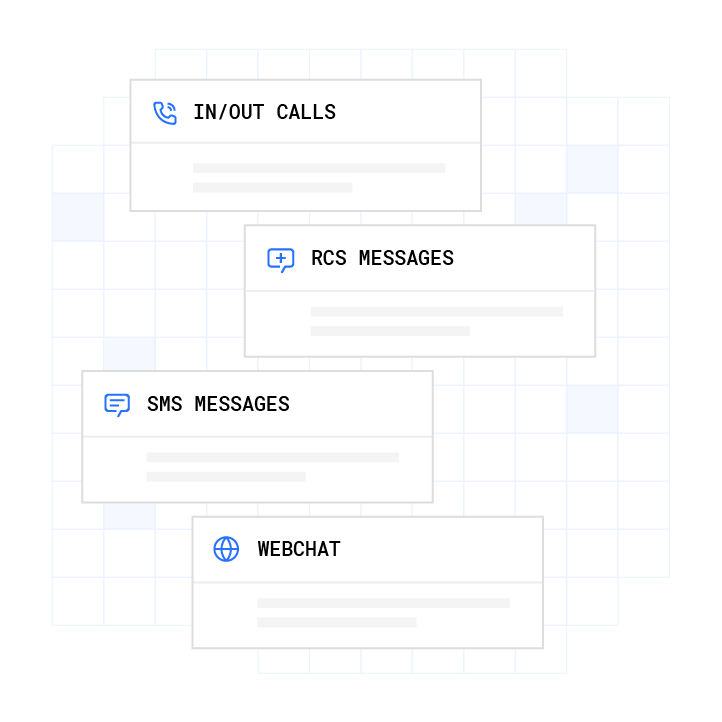
See the audit trail in action with a live walkthrough of a multi-channel deployment.
Testing Regime
A pre-deployment test is a single checkpoint. A testing program runs continuously. NIST AI 600-1 action MS-4.2-001 recommends running adversarial testing on a regular cadence. The required test categories for a regulated conversational AI deployment include:
- Hallucination and grounding accuracy
- Bias and fairness across demographic groups
- Privacy leakage and PHI exposure
- Prompt injection and jailbreak resistance
- Unauthorized-action prevention
- Regression testing on every model or corpus change
Plura runs continuous conversation engineering and real-call monitoring across every customer deployment. Annual contracts include a 90-day opt-out window, so the iteration commitment is on the line, not just in the contract language. Testing and monitoring reduce risk, but they do not change who owns the outcome when something goes wrong.
Who Is Responsible When AI Goes Wrong?
The deploying institution owns the outcome. Vendor contracts do not transfer regulatory responsibility. The CFPB’s June 2023 chatbot issue spotlight states explicitly: “Like the processes they replace, chatbots must comply with all applicable federal consumer financial laws, and entities may be liable for violating those laws when they fail to do so.” The same principle applies across HIPAA, ECOA, GLBA, and the EU AI Act.
Plura provides the infrastructure: an FCC-licensed carrier, a Compliance Engine, and a Stateful Conversation Database. Customers remain responsible for their own certifications, regulatory obligations, and the claims they make to their end users. Direct all regulatory interpretation questions to qualified counsel.
Conclusion
Compliance is a property of the whole conversational AI system, not a single guardrail added after deployment. The six control domains covered in this guide map directly to enforceable obligations across HIPAA, ECOA, GLBA, NIST AI RMF, and the EU AI Act. Each domain requires evidence artifacts, not policy statements.
Plura AI supports these controls inside the platform as a first-class layer. An FCC-licensed carrier, a Stateful Conversation Database, and a Compliance Engine that runs before every contact give regulated operators the infrastructure to support their compliance programs at scale.
Run your numbers through Plura’s ROI calculator to check your cost savings in real time. Compare plans and rates side by side. Or walk through the Compliance Engine with your team in a live demo.
1 Plura AI maintains SOC 2, HIPAA, ISO, and GDPR posture as part of its platform infrastructure. References to compliance frameworks in this article describe Plura’s platform capabilities and do not constitute a guarantee that any customer using Plura will themselves be compliant with applicable laws or standards. Customers remain solely responsible for their own regulatory obligations, certifications, consent management, recordkeeping, and the claims they make to their own end users. Consult qualified legal counsel for guidance specific to your use case.
2 This article describes regulatory frameworks at a general level and does not constitute legal advice. Laws and regulations vary by jurisdiction, change over time, and apply differently depending on facts and circumstances. Readers should consult qualified legal counsel before making compliance decisions.
3 Performance figures, customer outcomes, and industry statistics referenced in this article are drawn from cited third-party sources or Plura customer case studies. Individual results vary based on implementation, use case, industry, audience, and execution. Past or aggregate performance is not a guarantee of future results.
4 References to third-party products, services, companies, or research are made for informational and comparative purposes only. Plura AI is not affiliated with, endorsed by, or sponsored by any third party named in this article unless explicitly stated. Trademarks and product names referenced remain the property of their respective owners.
This article is provided for informational purposes only and reflects Plura AI’s understanding at the time of publication. Product capabilities, integrations, and specifications are subject to change. For the most current information, visit plura.ai.
This article was produced with the assistance of AI tools and reviewed by Plura AI prior to publication.