
Written by: Matt Beucler, CEO, Plura AI | Last updated: August 25, 2026
Key Takeaways for S.2495 Readiness
- S.2495 remains in committee as of August 2026 and is not yet law, so operators should treat all requirements as proposed only.
- The bill would apply to companies with more than 50 employees that offshore over 30% of call-center volume, with the strongest impact on federal contractors and grant recipients.
- Proposed rules include 120-day DOL notice before any offshore relocation, public listing of violators, and a five-year bar on new federal funding.
- AI and automated systems must disclose their use and offer consumers a transfer to a U.S.-based human agent upon request.
- Plura AI runs on 100% U.S. infrastructure, eliminating offshore exposure under the proposed rules, and the platform supports compliance readiness across call routing, documentation, and disclosure workflows.
Coverage Test: Does S.2495 Reach Your Call Center?
S.2495 targets companies with more than 50 employees that move at least 30% of their customer support or call-center operations offshore. The bill focuses on call-center and customer-service communications. It does not cover non-voice business-process outsourcing operations such as data science, IT software development, digital marketing, or content moderation.
| Coverage Factor | Proposed Threshold | Applies To | Source |
|---|---|---|---|
| Employee count | More than 50 employees | All covered entities | Outsource Accelerator |
| Offshore call-center share | More than 30% of operations offshore | All covered entities | Philstar |
| Function type | Call-center and customer-service communications | Call-center work | Philstar |
| Federal nexus | Recipients of federal grants or guaranteed loans | Federal contractors and grant recipients | Outsource Accelerator |
Decision-tree coverage test. Work through the following questions in order. A “No” at any step means the proposed bill, as written, would not apply to that operation.
- Does the company have more than 50 employees? If No, stop. If Yes, continue.
- Does the company operate a call-center function for customer service? If No, stop. If Yes, continue.
- Does more than 30% of that call-center volume route through agents located outside the United States? If No, stop. If Yes, continue.
- Does the company receive or seek federal grants, guaranteed loans, or federal contracts? If No, the funding consequences described below may not apply, but disclosure obligations could still apply if the bill passes. If Yes, all proposed requirements apply. Consult qualified counsel.
120-Day DOL Notice for Offshore Relocation
The proposed bill would require employers to notify the Department of Labor (DOL) before moving call-center work offshore. The bill language draws on existing worker-notification frameworks, including the Worker Adjustment and Retraining Notification (WARN) Act (20 CFR § 639.5 and § 639.6). WARN requires at least 60 calendar days of advance written notice to affected employees or their representatives, the State dislocated worker unit, and the chief elected official of the unit of local government for qualifying plant closings or mass layoffs.
S.2495 extends this logic with a proposed 120-day DOL notice window specific to offshore relocations. The table below maps the proposed notice elements against the existing WARN documentation framework operators should already maintain.
| Notice Element | Recipient | Proposed Timeline | Source |
|---|---|---|---|
| Offshore relocation intent | Department of Labor | 120 days before relocation | HCA Magazine |
| Employment site name, address, contact | State dislocated worker unit | Concurrent with DOL notice | 20 CFR § 639.7(e) |
| Job titles and number of affected employees | Chief elected official, local government | Concurrent with DOL notice | 20 CFR § 639.7(e) |
| Permanent or temporary status of action | Affected employees or their representatives | Concurrent with DOL notice | 20 CFR § 639.7(d) |
Operators should consult qualified counsel to determine how the proposed 120-day window interacts with existing WARN obligations and any applicable state-level notice requirements.
DOL Public List and Federal Funding Impact
Under S.2495 as proposed, companies that offshore qualifying call-center operations would be placed on a public DOL list and barred for five years from receiving new federal grants or guaranteed loans.
The practical exposure is concentrated among federal contractors, regulated-industry operators in healthcare and financial services, and any organization that participates in federal grant programs. As noted in analysis of the bill, multinational corporations and private equity-backed firms without federal ties face limited direct financial consequences from the funding penalties, though disclosure obligations would still apply if the bill passes.
The companion regulatory layer is the Federal Communications Commission (FCC) Notice of Proposed Rulemaking (NPRM), CG Docket No. 26-52, which proposes measures to encourage onshoring of customer-service calls and to prohibit offshore handling of sensitive consumer data including passwords, multi-factor authentication codes, Social Security numbers, and banking and card data. The FCC NPRM and S.2495 are separate proceedings. Operators should monitor both tracks through the Congress.gov record for S.2495 and the Federal Register for CG Docket No. 26-52.
The 119th Congress ends in early January 2027. If S.2495 does not pass before that deadline, it dies in committee and would need to be reintroduced in the 120th Congress.
See how Plura’s U.S. infrastructure eliminates offshore registry exposure before the bill’s status changes. Schedule your demo.
Federal Contractor Place-of-Performance Mapping
Given the funding penalties described above, federal contractors need a concrete method to prove compliance readiness. Place-of-performance mapping provides that documentation. Federal contractors face the sharpest exposure under S.2495 because the funding consequences directly affect contract eligibility.
Place-of-performance mapping is the process of documenting where each agent handling a covered call-center function is physically located at the time of the interaction.
Practical steps for mapping agent locations include the following.
- Pull a current roster of all agents handling live, consumer-facing telephone interactions and record their physical work location by country, state, and city.
- Calculate the percentage of total call volume handled by agents located outside the United States over the prior 90 days. Flag any operation where that figure exceeds or approaches 30%.
- Map each agent location against the contract vehicles under which the work is performed. Identify which contracts carry federal grant or loan nexus.
- Document the data sources used for the calculation. Include workforce management system exports, telephony platform call logs, and vendor attestations from any third-party BPO partners.
- Establish a recurring cadence, at minimum quarterly, to refresh the mapping as agent rosters and vendor relationships change.
- Retain documentation in a format that can be produced to the DOL or a contracting officer on request. Consult qualified counsel on retention periods.
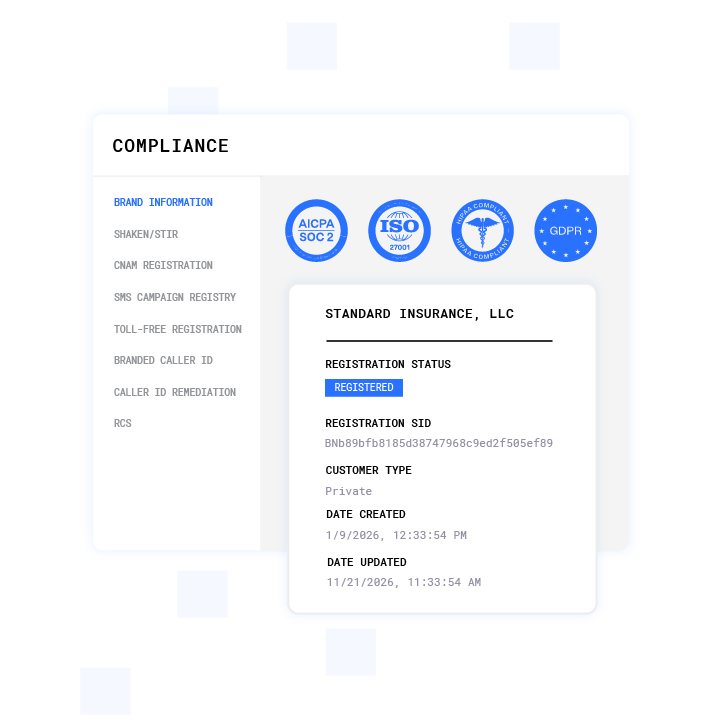
Operators using Plura’s AI voice agent on 100% U.S. infrastructure can document place-of-performance as domestic by architecture. Voice origination, model hosting, data storage, and call recording all sit on U.S. infrastructure, which simplifies the mapping exercise for those call volumes.
Agent Location Scripts and U.S. Transfer Workflows
S.2495 proposes that customer service representatives disclose their physical location at the start of interactions and, if located outside the United States, inform the consumer of their right to transfer to a U.S.-based human agent. The same disclosure obligation extends to AI and automated systems. Companies using automation must clearly disclose that automation is being used and offer a transfer to a human agent upon request.
Sample disclosure language for a U.S.-based agent opening:
“Thank you for calling [Company Name]. My name is [Agent Name] and I’m calling from [City, State]. How can I help you today?”
Sample disclosure language for an AI-handled interaction:
“Hi, this is [Company Name]’s automated assistant. You’re speaking with an AI. I can help you with [use case]. At any point, you can ask to speak with a U.S.-based representative and I’ll transfer you right away.”
Transfer workflow steps for a U.S. escalation path:
- Consumer requests transfer to a U.S.-based human agent, either verbally or via keypress.
- The system confirms the request and provides an estimated wait time.
- The call routes to a U.S.-staffed queue. If no agent is available, the consumer is offered a callback option with a U.S. agent.
- The receiving agent receives a warm handoff summary including the reason for the call and any prior interaction context.
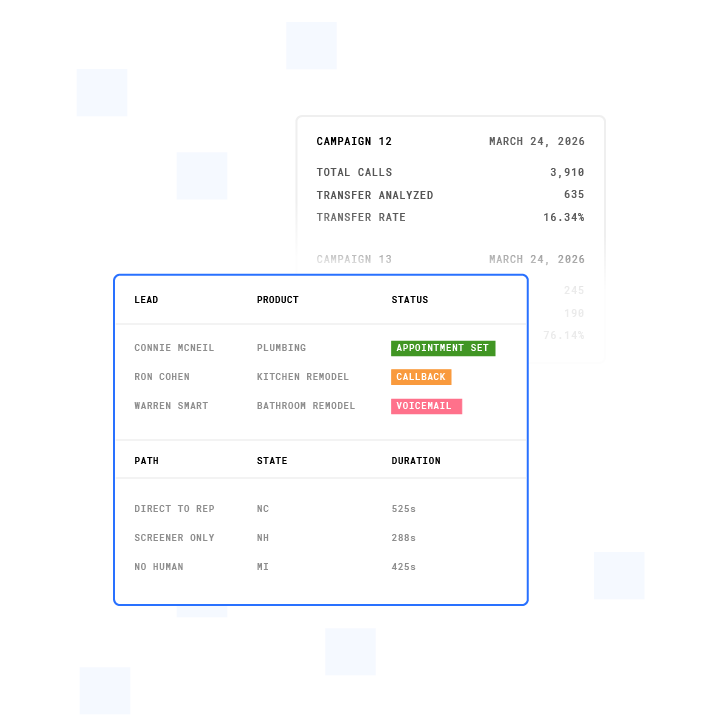
- The transfer event is logged with a timestamp for compliance documentation.
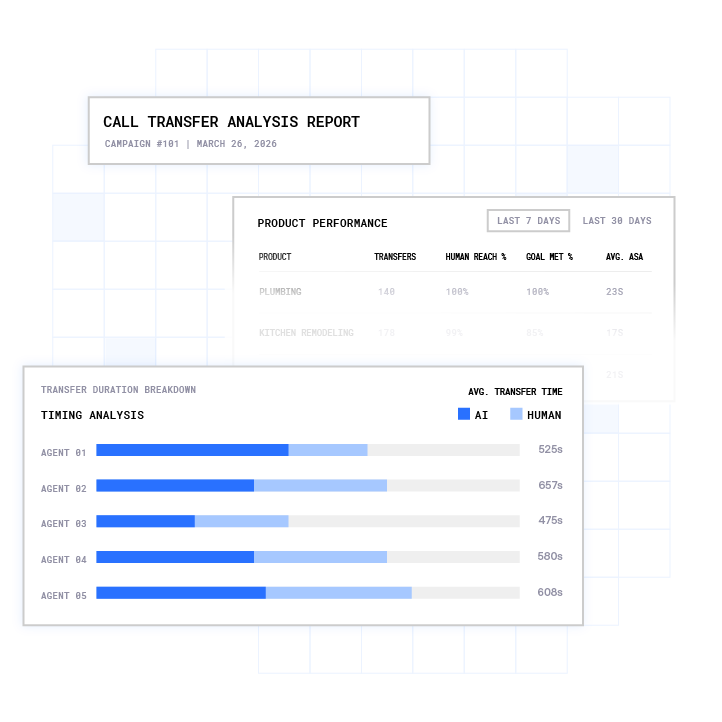
Plura’s AI voice agent supports warm-transfer workflows to U.S. agents with full conversation context passed at handoff, so the receiving agent does not require the consumer to repeat information already captured.
AI Disclosure and Human-Escalation Rules
S.2495 explicitly addresses AI-handled interactions. The proposed bill requires companies using AI or automated systems to clearly disclose that automation is being used and offer customers the option to transfer to a human agent upon request. This applies to both inbound and outbound interactions.
Operators deploying an AI voice agent or AI predictive dialer should work with qualified counsel to assess how the proposed disclosure requirements interact with existing FCC, FTC, and state-level AI disclosure rules. Several states have already enacted or proposed AI disclosure requirements independent of S.2495.
Operational steps to prepare AI disclosure and escalation procedures include the following.
- Audit every inbound and outbound flow where an AI or interactive voice response (IVR) system handles the first point of contact. Document whether each flow currently includes an AI disclosure.
- Identify “human-required” scenarios, including fraud claims, security events, disputes involving money or access, and any situation that could result in consumer harm, and ensure those flows route to a human agent by default.
- Make the human escalation path explicit and easy to access, not buried after multiple failed automated attempts.
- Apply the same disclosure and escalation standards to outbound AI-initiated calls and texts as to inbound flows.
- Log every escalation event with a timestamp and the reason for transfer. Feed complaint data about inability to reach a human back into workflow design.
Plura supports TCPA compliance and DNC compliance through its platform’s built-in compliance engine, which enforces real-time DNC scrubbing, immutable consent logging, and automated quiet-hours rules on every outbound contact.2 Customers are responsible for their own regulatory obligations and should consult qualified counsel on how proposed S.2495 requirements apply to their specific operations.
Seven-Step Legislative Readiness Checklist
The following seven-step checklist is designed for Contact Center Leaders, Compliance Officers, and C-Suite Executives preparing for potential S.2495 requirements. Each step includes a recommended owner, a target completion timeline, and the documentation output required.
- Map place-of-performance for all call-center functions. Owner: VP of Contact Center Operations or Chief Compliance Officer. Timeline: Complete within 30 days. Documentation: Agent roster with physical location by country and state. Use this roster to calculate call-volume percentage by location, then document your data sources through attestation so the calculation can be verified during an audit.
- Calculate offshore call-center share against the 30% threshold. Owner: Operations Analytics or Workforce Management. Timeline: Complete within 30 days, then refresh quarterly. Documentation: Call-volume report segmented by agent location for the prior 90-day period.
- Identify all federal contracts, grants, and guaranteed loans with potential nexus. Owner: Legal or Government Affairs. Timeline: Complete within 45 days. Documentation: Contract register with federal funding source, value, and renewal dates.
- Audit AI and IVR disclosure language across all inbound and outbound flows. Owner: Contact Center Operations and Legal. Timeline: Complete within 45 days. Documentation: Flow inventory with current disclosure language and gap analysis against proposed S.2495 requirements.
- Build or validate a U.S.-agent transfer path for every AI-handled flow. Owner: Contact Center Technology and Operations. Timeline: Complete within 60 days. Documentation: Transfer workflow diagrams, queue routing configuration, and test call logs.
- Establish a 120-day DOL notice procedure for any future offshore relocation decisions. Owner: Legal and HR. Timeline: Procedure documented within 60 days. Documentation: Notice template, recipient list (DOL, state dislocated worker unit, local government, affected employees), and sign-off log.
- Implement a recurring compliance monitoring cadence. Owner: Chief Compliance Officer. Timeline: First review within 90 days, then quarterly. Documentation: Compliance review report covering place-of-performance data, disclosure audit results, escalation log analysis, and any regulatory updates to S.2495 or the FCC NPRM.
Walk through your readiness checklist with a Plura specialist and see how the platform’s compliance engine maps to each step. Request your demo.
FAQ
Is the Keep Call Centers in America Act currently law?
No. As of August 2026, S.2495 and its House companion H.R.4954 remain in committee with no hearing, markup, or floor vote recorded since their introduction in July and August 2025, respectively. The 119th Congress ends in early January 2027, which is the hard deadline for the bills to pass or expire. Operators should monitor the Congress.gov record for S.2495 and consult qualified counsel before making operational changes based on the proposed requirements.
Which companies would be covered under S.2495 if it passes?
The proposed bill targets companies with more than 50 employees that move at least 30% of their customer support or call-center operations outside the United States. Coverage is limited to live, consumer-facing telephone interactions. Non-voice BPO functions such as data science, IT software development, digital marketing, AI training, and content moderation are not covered under the bill’s proposed scope. Federal contractors and organizations that receive federal grants or government-backed loans face the most direct financial consequences under the proposed funding restrictions.
What does the proposed 120-day DOL notice requirement involve?
S.2495 proposes that covered employers notify the Department of Labor at least 120 days before relocating call-center work offshore. The notice framework draws on existing WARN Act documentation standards, which require employers to provide advance written notice to affected employees or their representatives, the State dislocated worker unit, and the chief elected official of the relevant local government. Required documentation under existing WARN regulations includes the employment site name and address, a company contact, the permanent or temporary nature of the action, the expected first separation date, job titles and number of affected employees, and whether bumping rights exist. Operators should consult qualified counsel to determine how the proposed 120-day window interacts with existing WARN obligations and any applicable state-level notice requirements.
How does Plura AI’s infrastructure address S.2495 exposure?
Plura AI runs on 100% U.S. infrastructure by architecture. Voice origination, model hosting, data storage, and call recording all sit on domestic infrastructure. Plura is its own FCC-licensed audio bridging carrier, which means calls do not route through third-party overseas infrastructure. Operators using Plura’s AI voice agent and AI predictive dialer can document their AI-handled call volume as U.S.-handled in place-of-performance mapping exercises. Plura’s platform also supports TCPA compliance and DNC compliance through built-in real-time DNC scrubbing, immutable consent logging, and automated quiet-hours enforcement. Customers remain responsible for their own regulatory obligations and should consult qualified counsel on how S.2495 and the FCC NPRM apply to their specific operations.
What AI disclosure procedures should operators prepare now?
S.2495 proposes that companies using AI or automated systems clearly disclose that automation is being used at the start of the interaction and offer consumers the option to transfer to a U.S.-based human agent upon request. Operators should audit every inbound and outbound flow where an AI system handles the first point of contact, document current disclosure language, identify gaps against the proposed requirements, and build or validate a U.S.-agent transfer path for every AI-handled flow. The same disclosure and escalation standards should apply to both inbound and outbound AI-initiated interactions. Several states have enacted or proposed AI disclosure requirements independent of S.2495, so operators should consult qualified counsel on the full disclosure landscape applicable to their operations.
Conclusion: Turning Proposed Rules into Actionable Plans
The Keep Call Centers in America Act remains proposed legislation as of August 2026, with no committee action recorded since its July 2025 introduction. With the 119th Congress deadline approaching in early January 2027, the next several months represent the window for operators to complete place-of-performance mapping, audit AI disclosure procedures, and establish DOL notice workflows.
Federal contractors and high-volume operators with offshore call-center exposure face the sharpest risk under the proposed funding consequences. Operators running on 100% U.S. infrastructure, including those using Plura’s AI voice agent and AI predictive dialer, carry no offshore infrastructure exposure under the proposed onshoring rules and can document U.S.-handled status by architecture rather than by promise.
Run your numbers through Plura’s calculator to check your ROI in real time.3 Visit plura.ai/calculator.
Compare plans and rates side by side at Plura pricing. Visit plura.ai/pricing.
Watch Plura handle call volume, disclosure requirements, and transfer workflows in a single compliance-ready platform. Book your demo.
1 Plura AI maintains SOC 2, HIPAA, ISO, and GDPR posture as part of its platform infrastructure. References to compliance frameworks in this article describe Plura’s platform capabilities and do not constitute a guarantee that any customer using Plura will themselves be compliant with applicable laws or standards. Customers remain solely responsible for their own regulatory obligations, certifications, consent management, recordkeeping, and the claims they make to their own end users. Consult qualified legal counsel for guidance specific to your use case.
2 This article describes regulatory frameworks at a general level and does not constitute legal advice. Laws and regulations vary by jurisdiction, change over time, and apply differently depending on facts and circumstances. Readers should consult qualified legal counsel before making compliance decisions.
3 Performance figures, customer outcomes, and industry statistics referenced in this article are drawn from cited third-party sources or Plura customer case studies. Individual results vary based on implementation, use case, industry, audience, and execution. Past or aggregate performance is not a guarantee of future results.
This article is provided for informational purposes only and reflects Plura AI’s understanding at the time of publication. Product capabilities, integrations, and specifications are subject to change. For the most current information, visit plura.ai.
This article was produced with the assistance of AI tools and reviewed by Plura AI prior to publication.