

Written by: Matt Beucler, CEO, Plura AI | Last updated: August 27, 2026
Updated August 27, 2026
Key Takeaways for Contact Center and CX Leaders
- The Keep Call Centers in America Act (S.2495) adds 120-day notice, location disclosure, and AI-reporting mandates with penalties up to $10,000 per day and potential federal-funding blacklists.
- Plura AI runs on 100% U.S. infrastructure, so operators using Plura do not need to file offshore relocation notices or start the 120-day clock.
- Built-in conversation intelligence and configurable disclosure nodes log AI interactions and deliver required consumer-location and AI-use disclosures at the point of contact.
- Plura’s 6:15 agent ratio and roughly $700k TCO compared with traditional $7M contact-center economics create a cost structure that supports domestic operations while aligning with the Act’s job-preservation intent.
- Operators can book a live demo with Plura to map each statutory requirement to platform capabilities and review how the platform supports compliance before the Act’s mandates take effect.
The Problem: New Statutory Rules Reshape Offshoring Economics
The Keep Call Centers in America Act (S.2495) turns offshoring from a pure cost decision into a regulatory and funding risk.2 The statute’s core provisions create four distinct exposure categories for high-volume U.S. operators.
120-day notice requirement. If enacted, the Keep Call Centers in America Act (S.2495) would require employers to give the Secretary of Labor 120 days’ notice before relocating a call center or contracting call center work abroad.2 That window functions as a pre-move disclosure obligation, not a post-move grace period.
$10,000-per-day penalty exposure. Non-compliant operators face civil penalties that can reach $10,000 per day under the Act’s enforcement mechanism, mirroring the structure in New York’s Call Center Jobs Act. For a mid-size operator running offshore volume without proper notice, a 90-day exposure window represents $900,000 in potential liability before any federal-funding consequence applies.
Federal-funding blacklist risk. Companies that relocate a call center or contract call center work overseas become ineligible for federal grants or guaranteed loans under the introduced Keep Call Centers in America Act of 2025. For operators in healthcare, financial services, or government-adjacent verticals, that blacklist risk can touch every federal contract and funding stream in the pipeline.
Consumer location disclosure and AI displacement reporting. The Keep Call Centers in America Act of 2025, as introduced, requires disclosure of the physical location of business agents engaging in customer service communications. The Act also introduces an AI-disclosure mandate. Operators using AI-assisted or AI-handled interactions without a documented disclosure workflow face a separate compliance gap that exists regardless of offshore posture.
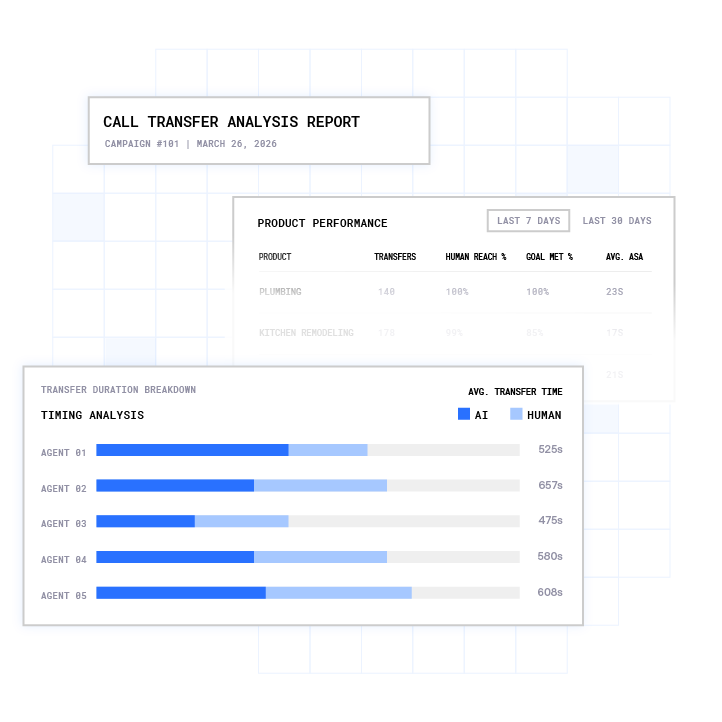
S.2495 does not operate in isolation. Parallel federal and state measures are tightening the regulatory perimeter around offshore operations. The Foreign Robocall Elimination Act (S.2666) and the FCC’s Notice of Proposed Rulemaking (CG Docket No. 26-52) propose capping offshore customer-service calls at 30% and limiting offshore handling of sensitive consumer data. State laws in New York, New Jersey, Connecticut, Missouri, and Florida already restrict offshore handling of medical, financial, and consumer data.
The workforce backdrop sharpens the decision math. The Bureau of Labor Statistics projects customer service representative employment to decline by 5.5% between 2024 and 2034, or about 153,700 fewer jobs over the decade, driven by AI adoption and productivity gains.5 This projected decline forms the workforce context for the Act’s job-preservation provisions, as Congress attempts to slow offshore job loss while AI-driven automation affects domestic roles. BLS Current Employment Statistics track telephone call center employment. Against that baseline, the Act’s job-preservation intent and the AI-displacement reporting mandate sit in direct tension for operators who want to automate while managing disclosure obligations.
Book a live demo with Plura to see how 100% U.S. infrastructure aligns with each statutory mandate.
How Plura Maps Statutory Requirements to Platform Capabilities
Plura AI runs on 100% U.S. infrastructure by architecture. Voice origination, model hosting, data storage, and call recording all sit on domestic infrastructure. That design anchors every statutory-to-feature mapping below.
| Statutory Requirement | Penalty / Risk | Plura Platform Feature | How It Maps |
|---|---|---|---|
| 120-day notice before offshore relocation (S.2495) | Up to $10,000/day civil penalty | 100% U.S. infrastructure; no offshore relocation required | Operators using Plura have no offshore volume to disclose, so the 120-day notice obligation does not start |
| Consumer location disclosure (S.2495) | Penalty exposure; right-to-transfer obligation | AI voice agent with U.S. agent handoff routing | Every interaction originates and resolves on U.S. infrastructure, and U.S. agent transfer is native to the workflow |
| AI displacement reporting (S.2495) | Disclosure obligation per interaction | Conversation intelligence logs; workflow disclosure nodes | Every AI-handled interaction is logged with a full transcript, and disclosure language is configurable at the workflow node level |
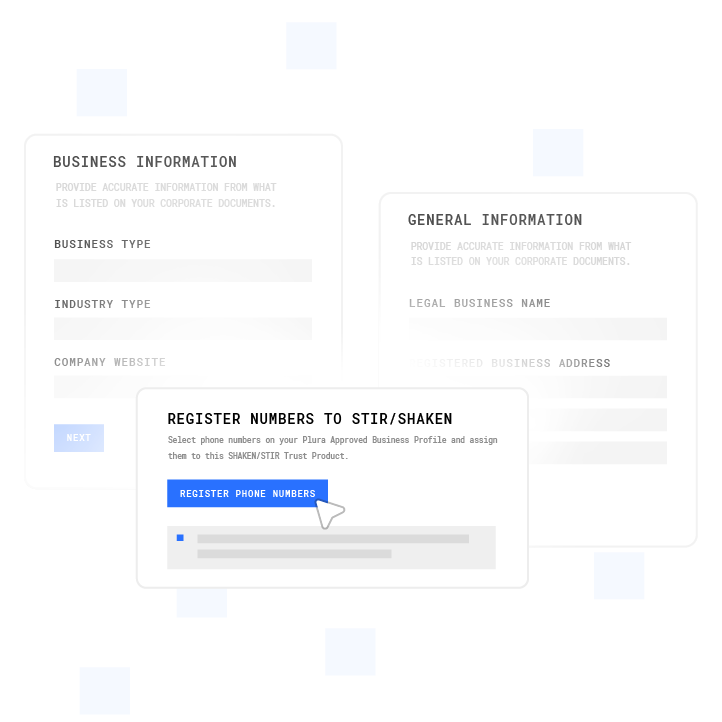
| Sensitive data handling limits (FCC CG Docket No. 26-52) | Federal-funding blacklist; carrier enforcement | HIPAA-aligned encryption; SOC 2; domestic data storage | Sensitive data does not transit offshore infrastructure, and HIPAA and SOC 2 controls apply at the platform layer |
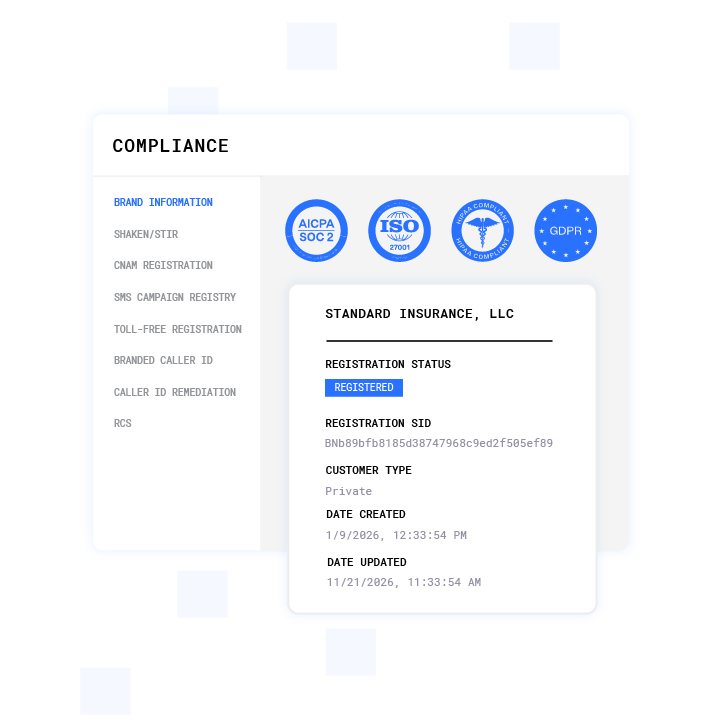
Plura’s compliance engine supports TCPA compliance, DNC compliance, HIPAA, SOC 2, ISO certification, GDPR, and SHAKEN/STIR caller ID verification as core platform layers.1 Real-time DNC scrubbing checks every number before dial. Consent records are timestamped and immutable. Quiet-hours rules apply automatically through time-zone detection. The compliance dashboard exports audit-ready reports in one click for legal review or regulatory inquiry. Customers remain responsible for their own compliance obligations, and Plura provides infrastructure that supports those obligations.
Job-Preservation Math: 6:15 Agent Ratio and Domestic Cost Structure
A Gartner survey released in April 2026 found that 31% of customer service and support leaders are implementing or planning frontline workforce reductions in response to AI through Q1 2027.3 The Act’s AI-displacement reporting mandate responds directly to that trend. For operators, the decision now centers on how to deploy AI in a way that satisfies disclosure requirements while still delivering domestic economics that work.
The math on Plura’s default scenario is specific. Plura’s ROI calculator estimates monthly human agent costs at $60,000 for 15 agents working 2,400 total hours at $20 per hour, including 25% for taxes, benefits, and commissions, at 40% talk utilization.3 The same 2,400 hours of talk time delivered by Plura costs $14,400 per month at 100% talk utilization using 6 agents3, which produces a 6:15 agent ratio and a 30-day ROI of $45,600, a 12-month ROI of $547,200, and a 60-month ROI of $2,736,000. That ratio reflects the job-preservation math the Act’s sponsors want to protect on the human side and the cost structure that makes domestic AI viable on the operator side.
For higher-volume operations, a 100-seat contact center running traditional operations can cost $4 million to $7 million annually, while AI-powered communications using platforms like Plura typically fall in the $300,000 to $700,000 range. Those direct labor savings form the first layer of the business case.
Indirect savings then build on that base. When operators reduce headcount from a large human team to a smaller AI-supported team, the management, QA, and training infrastructure required to support that workforce also shrinks. Each layer of supervision, quality assurance, and onboarding overhead scales with agent count. Agent turnover adds another cost layer: replacing a single contact center agent costs an average of $20,000 including recruitment, training, and lost productivity; at a 31% turnover rate, that can reach $6.2 million annually for a 1,000-agent center.
Plura’s AI Predictive Dialer and AI SMS channels run on the same stateful conversation database, so every interaction a human agent receives arrives with full context from prior AI-handled touchpoints. The human workforce focuses on escalations, complex negotiations, and relationship-sensitive conversations. The AI handles volume and routine workflows. That division reflects the operational model that aligns with the Act’s job-preservation intent.
Run your numbers through Plura’s calculator to see your projected ROI in real time.
Offshore BPO vs. Plura U.S. AI: Job Impact and Penalty Exposure
| Criteria | Offshore BPO | Plura U.S. AI | Source |
|---|---|---|---|
| Infrastructure ownership | Foreign-domiciled data centers; sensitive data travels offshore | 100% U.S. infrastructure; FCC-licensed audio bridging carrier | Plura compare page |
| S.2495 penalty exposure | Daily penalties if notice is not filed and potential multi-year federal-funding blacklist (Philstar, 2026) | No offshore volume, so the 120-day notice obligation tied to relocation does not apply | Caribbean National Weekly |
| AI displacement reporting capability | Disclosure depends on offshore vendor workflow with no standard logging model | Every AI-handled interaction logged with full transcript; disclosure node configurable per workflow | Plura Business Intelligence |
| Fully loaded cost per completed conversation | Typical range of $5 to $15 for offshore call centers | Typical range of $0.35 to $0.85 per completed conversation including intelligence | Plura compare page |
Generative AI is changing the economics of outsourcing by automating many routine, rules-based tasks in customer operations and BPO that companies historically sent offshore for labor savings, reversing the prior build-versus-buy logic based on labor arbitrage. The regulatory layer accelerates that shift. Operators who built their cost model on offshore wage arbitrage now face a compliance liability that those savings may not offset.
Frequently Asked Questions
AI Disclosure Requirements Under the Keep Call Centers in America Act
The Act requires that customers be informed when artificial intelligence is handling their interaction and that they be offered a transfer to a U.S.-based agent upon request. Operators using AI-handled interactions need a documented disclosure workflow at the point of contact, not only a policy document. Plura’s no-code workflow builder supports configurable disclosure nodes that teams can insert at any point in a conversation flow. Operators should consult qualified legal counsel to determine how the Act’s specific disclosure language applies to their operation.
Impact of the 120-Day Notice Rule on Existing Offshore BPO Use
The 120-day notice provision applies to covered employers that plan to relocate call center work overseas. Operators currently running offshore volume who shift to a domestic AI model do not trigger the notice requirement by moving work onshore. The notice obligation runs in the direction of offshoring, not reshoring. Operators evaluating a transition from offshore BPO to domestic AI infrastructure should document the timeline and consult counsel on how the Act defines “relocation” in their specific contractual context.
Domestic AI and the Act’s Job-Retention Intent
The Act’s job-preservation provisions focus on offshore relocation of call center work rather than domestic automation. Operators deploying AI on U.S. infrastructure are not moving work offshore and therefore do not trigger the notice, penalty, or federal-funding-blacklist provisions tied directly to offshoring. The AI-displacement reporting mandate operates as a separate obligation that applies to AI use regardless of infrastructure location. Plura’s conversation intelligence logs and workflow disclosure nodes support the documentation infrastructure operators can use to address that reporting requirement. Operators should consult counsel on how the Act’s definitions apply to their specific deployment model.
Federal-Funding Blacklist Exposure Under S.2495
The Act describes disqualification for companies that outsource more than a defined share of call-center operations outside the U.S. from certain federal grants and government-backed loans for a multi-year period. Operators in healthcare, financial services, legal, and government-adjacent verticals face heightened exposure because federal funding streams often sit inside their revenue models. The volume threshold means operators do not need to be fully offshore to face disqualification, since a significant minority of volume routed to an offshore BPO can cross that line. Operators should review their current offshore volume percentage against the statutory threshold and consult counsel on how the Act’s definitions apply to their specific vendor contracts.
How Plura Supports AI-Displacement Reporting Workflows
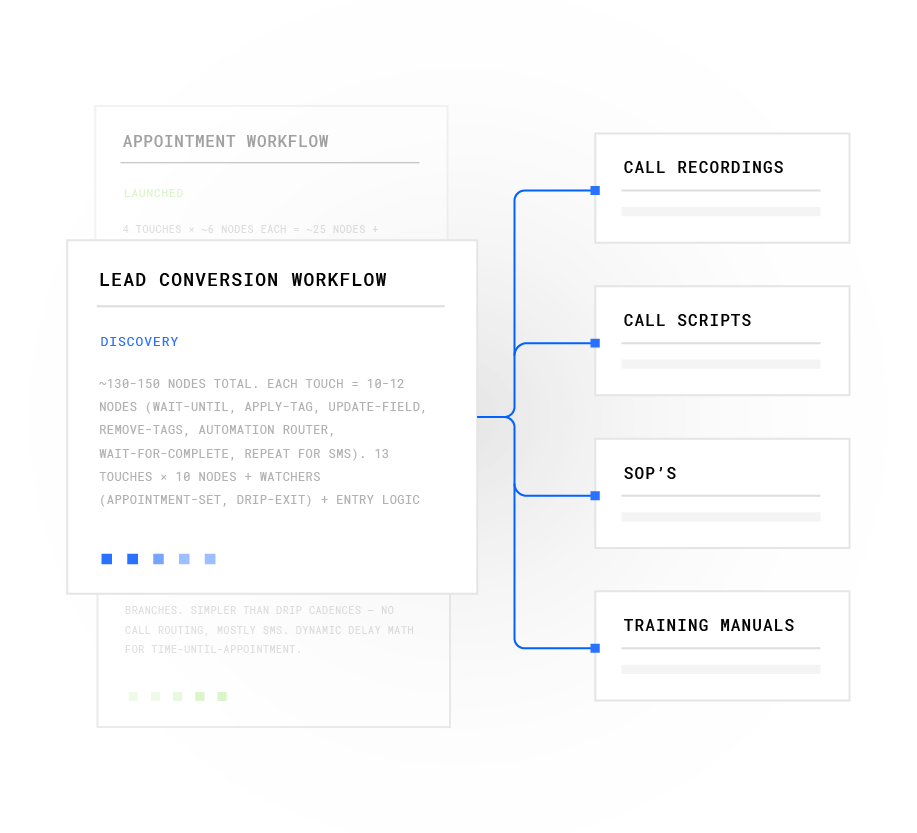
Plura’s conversation intelligence layer logs every interaction across voice, SMS, RCS, and webchat with full transcripts, timestamps, and channel metadata. Every AI-handled interaction is identifiable in the platform’s audit-ready exports. Workflow disclosure nodes can be configured to deliver AI-use disclosure language at the point of contact before the interaction proceeds. The compliance dashboard exports interaction logs in one click for legal review or regulatory inquiry. Plura provides the infrastructure that supports these documentation and disclosure workflows, and operators remain responsible for configuring disclosures to match the Act’s language and for meeting their own regulatory obligations.
Conclusion: Decision Framework for U.S. Contact Center Operators
The Keep Call Centers in America Act job impact now functions as an active planning variable, not a distant possibility. The 120-day notice clock, the daily penalty structure, the federal-funding blacklist, and the AI-displacement reporting mandate convert offshore call-center contracts into balance-sheet and funding risks. For high-volume U.S. operators, the decision math points toward domestic AI infrastructure that supports notice, disclosure, and reporting requirements while delivering a cost structure that keeps onshore operations viable.
Plura’s 6:15 agent ratio and the cost differential outlined above make the domestic financial case. The 100% U.S. infrastructure provides the architectural foundation that aligns with the statutory focus on onshore jobs. The compliance engine supporting TCPA compliance, DNC compliance, HIPAA, SOC 2, ISO certification, GDPR, and SHAKEN/STIR caller ID verification supplies the platform layer that supports documentation and disclosure workflows under the Act.
Operators evaluating their exposure under S.2495, the FCC NPRM (CG Docket No. 26-52), and state onshoring laws in New York, New Jersey, Connecticut, Missouri, and Florida can start with the numbers. The Plura ROI calculator models the cost differential between a current operation and a domestic AI deployment using actual agent count, hourly rate, and talk utilization. Teams can review statutory exposure and TCO savings in the same session.
Run your numbers through Plura’s calculator to see your projected ROI in real time.
Book a live demo with Plura to walk through statutory-to-feature mapping for your operation.
1 Plura AI maintains SOC 2, HIPAA, ISO, and GDPR posture as part of its platform infrastructure. References to compliance frameworks in this article describe Plura’s platform capabilities and do not constitute a guarantee that any customer using Plura will themselves be compliant with applicable laws or standards. Customers remain solely responsible for their own regulatory obligations, certifications, consent management, recordkeeping, and the claims they make to their own end users. Consult qualified legal counsel for guidance specific to your use case.
2 This article describes regulatory frameworks at a general level and does not constitute legal advice. Laws and regulations vary by jurisdiction, change over time, and apply differently depending on facts and circumstances. Readers should consult qualified legal counsel before making compliance decisions.
3 Performance figures, customer outcomes, and industry statistics referenced in this article are drawn from cited third-party sources or Plura customer case studies. Individual results vary based on implementation, use case, industry, audience, and execution. Past or aggregate performance is not a guarantee of future results.
4 References to third-party products, services, companies, or research are made for informational and comparative purposes only. Plura AI is not affiliated with, endorsed by, or sponsored by any third party named in this article unless explicitly stated. Trademarks and product names referenced remain the property of their respective owners.
5 This article contains forward-looking statements regarding industry trends, technology adoption, and future capabilities. These statements reflect current expectations and are subject to change. Plura AI undertakes no obligation to update forward-looking statements except as required.
This article is provided for informational purposes only and reflects Plura AI’s understanding at the time of publication. Product capabilities, integrations, and specifications are subject to change. For the most current information, visit plura.ai.
This article was produced with the assistance of AI tools and reviewed by Plura AI prior to publication.