
Written by: Matt Beucler, CEO, Plura AI
Key Takeaways
- Lead qualification protects agency margins by ensuring account managers spend time only on prospects that match your ideal client profile and budget.
- Unqualified leads cost agencies $150–$375 per discovery call and consume over 33% of sales rep time each week.1
- Combining an Ideal Customer Profile (ICP) with the BANT framework creates a fast, repeatable qualification gate that a trained rep can complete in about five minutes.
- AI agents automate top-of-funnel work by contacting leads within 60 seconds, scoring against ICP and BANT criteria, and routing only qualified opportunities to humans, which expands account-manager capacity from 5–8 to 15–20 clients.
- Agencies ready to automate lead qualification and scale without adding headcount can see how Plura AI handles live lead qualification in a demo.
What Lead Qualification Means for Agencies
Lead qualification for agencies is the process of vetting inbound leads against your ideal client profile and budget before committing sales or delivery time. It keeps your team focused on prospects likely to become profitable, long-term clients.
The economic stakes are concrete. 79% of marketing leads never convert into sales due to poor lead quality and ineffective nurturing.1 Between 50 and 80% of incoming leads are unqualified at the point of handoff to sales.1 For agencies, this creates a margin problem more than a simple pipeline hygiene issue. Every hour a senior account manager spends on a prospect who was never going to buy is an hour not spent on a paying client.
The True Cost of an Unqualified Lead
A 30 to 45 minute discovery call plus 20 to 30 minutes of pre-call research consumes roughly 1 to 1.5 hours of a resource billing at $150 to $250 per hour. That is $150 to $375 per bad call, before factoring in the opportunity cost of the client work that did not get done.
Unqualified leads waste 33% of a sales rep’s time, which equals more than one full day per week.1 That wasted time helps explain why 67% of lost sales opportunities stem directly from reps not properly qualifying leads before pursuit.1
The account manager capacity problem compounds this cost. Quality declines past 5 to 8 clients per account manager in manual operations. Agencies using Plura AI often handle 15 to 20 clients per account manager and achieve profit margins of 35 to 50%, compared to 15 to 25% with manual operations.1 The shift comes from a disciplined qualification system that protects the team’s time before a single discovery call is booked. Building that system starts with a framework you can apply consistently.
Agency Lead Qualification Framework: ICP Plus BANT
The most practical framework for agency lead qualification combines Ideal Customer Profile (ICP) definition with BANT (Budget, Authority, Need, Timeline) as the qualification gate.
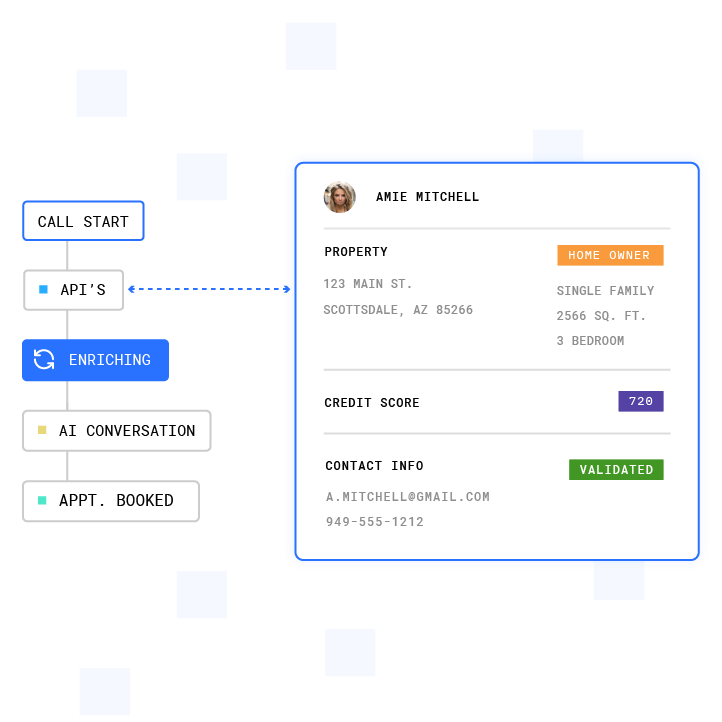
Step 1: Define Your ICP. Before any lead enters your pipeline, establish the minimum criteria a prospect must meet. Set thresholds for minimum retainer size, ideal industry verticals, required tech stack, and geographic fit. Any lead that does not clear these thresholds is disqualified before a human touches it.
Step 2: Apply BANT as Your Qualification Gate.
- Budget: Confirm that the prospect has the budget to engage at your minimum retainer.
- Authority: Confirm that you are speaking with the person who can sign the contract or directly influence it.
- Need: Confirm that they have a problem your agency solves.
- Timeline: Confirm when they need results and whether that aligns with your onboarding capacity.
The table below compares the three most common qualification frameworks against agency-specific fit criteria.
| Framework | Best For | Core Focus | Agency Fit |
|---|---|---|---|
| BANT | Short, transactional deals; fast inbound qualification | Budget, Authority, Need, Timeline | High, because it maps cleanly to agency retainers; an experienced operator can qualify a lead in about 5 minutes |
| CHAMP | Consultative selling; warm inbound leads | Challenges, Authority, Money, Prioritization | High for leads with clear buyer pain; useful for agencies selling outcomes rather than deliverables |
| MEDDIC | Complex enterprise deals; $50K+ ACV | Metrics, Economic Buyer, Decision Criteria, Decision Process, Identify Pain, Champion | Low for typical agency retainers; better suited to high-end professional services with multi-stakeholder buying committees |
BANT, created at IBM in the 1960s, fits short, transactional deals where the buyer already understands their problem.2 CHAMP reorders BANT to lead with the buyer’s pain points and works well for consultative, inbound selling. MEDDIC supports complex enterprise deals with multiple stakeholders and longer cycles. For most service businesses, a simple check on service fit, geographic fit, budget tier, and timing window often covers what BANT covers without formal framework branding.
Watch Plura AI qualify real inbound leads in a live walkthrough.
Seven Knockout Questions Before a Discovery Call
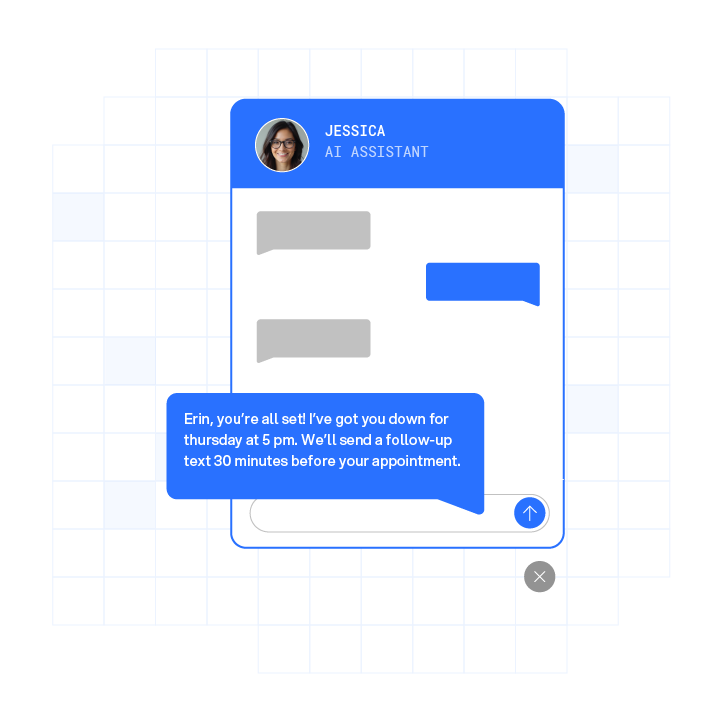
These questions function as disqualifiers. A prospect who cannot answer them is not ready for a discovery call.
- What is your current monthly marketing spend?
- Who is the decision-maker for this engagement?
- What is your timeline for implementation?
- Have you worked with an agency before?
- What is your biggest bottleneck right now?
- What does success look like in 90 days?
- What is your budget range for this project?
61% of initial leads lack either budget allocation or purchasing authority, which are the two most critical qualification factors in B2B.1 A modern buying committee has 6 to 10 people on average, so confirming decision-making authority early separates real opportunities from research conversations.
How to Disqualify a Lead Fast Without Burning Bridges
Clear disqualification criteria protect your team’s time and preserve the relationship for a future engagement. Disqualify a lead when any of the following apply:
- No budget allocation at or above your minimum retainer
- No decision-making authority, and the contact cannot sign or influence the contract
- Timeline beyond 6 months with no urgency signal
- Mismatch with your ICP on industry, size, or tech stack
- The prospect cannot articulate a problem your agency solves
A polite disqualification email preserves the relationship without wasting further time:
Subject: Re: [Their Company] – [Topic]
“Hi [Name], thanks again for your interest in [Agency]. After reviewing our conversation, it looks like we’re not the right fit for [specific reason, such as your current budget range, timeline, or scope]. We want to make sure any agency you work with can deliver the results you need. If your situation changes, feel free to reach out. We’d be happy to revisit. Wishing you the best with [their initiative].”
An early no protects your time budget. Disqualified leads should be logged with a reason and re-qualified on a 90 to 180 day cadence. Eight in ten B2B “no’s” relate to timing rather than value. A prospect who is not ready today may become a strong client in six months if you handle the disqualification professionally.
MQL vs. SQL for Agency Pipelines
The difference between a Marketing Qualified Lead (MQL) and a Sales Qualified Lead (SQL) is who makes the qualification call.
The core difference is simple. Marketing qualifies the MQL, while sales qualifies the SQL. Marketing owns the lead and the MQL stage. Sales owns the SQL, the opportunity, and the close.
For agencies, this distinction matters operationally. MQLs that skip SQL validation land on account managers’ calendars as unqualified discovery calls. The median MQL-to-SQL conversion fell from 13% in 2024 to 9.8% in 2026, a 24% decline in two years.1 The average company takes 47+ hours to respond to a new lead, and only 27% of B2B leads are ever contacted. Both figures increase the cost of a weak MQL-to-SQL handoff for agencies.
How AI Agents Automate Lead Qualification
AI agents handle the top-of-funnel qualification work that currently consumes about 40% of agency team time. They ask knockout questions, score leads against your ICP and BANT criteria, and book meetings automatically. AI agents can handle 10 leads or 10,000 leads simultaneously without capacity limits.
61% of B2B teams now use AI for lead scoring, up from 23% in 2024.1 The operational case is straightforward. AI follows the qualification script consistently, runs 24/7, and responds far faster than typical manual workflows.
Plura AI’s AI SMS contacts every lead within 60 seconds of form submission, compared to 1 to 4 hours in many manual operations. Industry research cited by Plura suggests that contacting a lead within 5 minutes makes them up to 100× more likely to connect. The evidence does not specify the comparison point or source. Lead conversion rates drop 10x after the first 5 minutes.
Plura’s AI voice agent provides 24/7 call answering across all client accounts, with live transfer to human reps when a lead qualifies. Account manager capacity often expands from 5 to 8 clients to 15 to 20 clients, and agency margins frequently move from the 15 to 25% range into the 35 to 50% range.
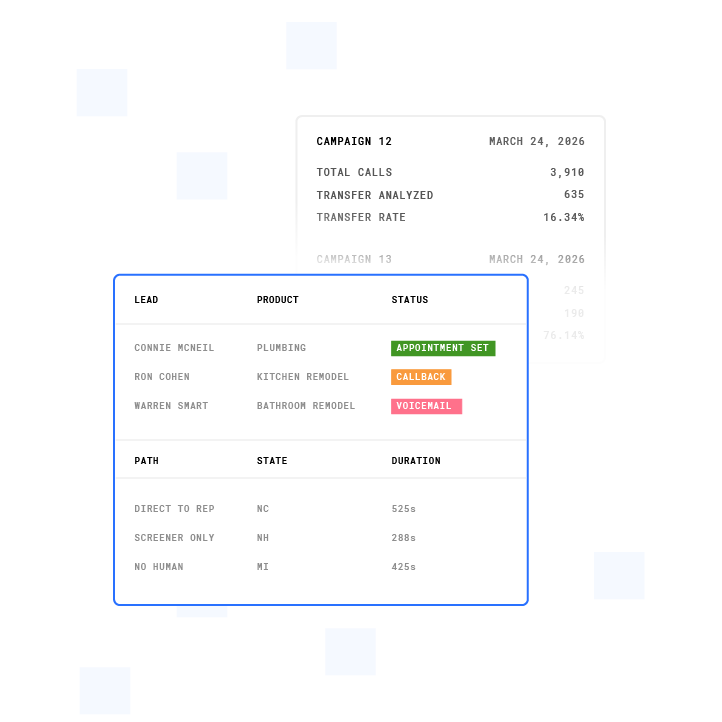
Explore how Plura AI’s agents plug into your current lead flow in a demo.
Measuring Whether Qualification Protects Margins
Once your qualification gate is in place, the metrics below show whether it is protecting your margins and expanding account-manager capacity.
- Median first-response time: Target under 5 minutes during business hours.
- Contact rate by source: Identify which lead sources produce reachable prospects.
- MQL-to-SQL conversion rate: Track whether marketing is sending qualified leads to sales.
- Cost per qualified lead: Measure the true cost of leads that advance past the qualification gate.
- Account manager capacity: Track how many clients each manager handles without quality decline.
Teams that execute lead qualification well see 7x higher conversion rates and close deals 30% faster than peers.1 Tracking median first-response time, response time by source, and connect or qualify rate bucketed by response time gives agency operators the diagnostic data to tune the system week over week.
Frequently Asked Questions
What Is a Qualified Lead for an Agency?
A qualified lead for an agency is a prospect who meets the agency’s Ideal Customer Profile, has a confirmed budget at or above the minimum retainer, has decision-making authority or direct access to the decision-maker, has a clear problem the agency solves, and has a realistic timeline for engagement. A lead that clears all four criteria is worth a discovery call. A lead that fails any one of them should be disqualified or placed in a nurture sequence until the situation changes.
How Much Does a Bad Lead Cost Your Agency?
A single unqualified discovery call costs between $150 and $375 in direct labor, based on a 30 to 45 minute call plus 20 to 30 minutes of pre-call research at a billing rate of $150 to $250 per hour. That figure does not include the opportunity cost of client work that was not completed during that time or the downstream impact on account manager capacity. As noted earlier, unqualified leads consume over a full day of each rep’s week, which compounds across the team.
What Is the Difference Between Lead Generation and Lead Qualification?
Lead generation is the process of attracting prospects to your agency through paid media, content, referrals, or outbound outreach. Lead qualification is the process of determining which of those prospects are worth pursuing. Generation fills the top of the funnel, while qualification protects the bottom. Agencies that invest heavily in lead generation without a qualification process burn account managers’ time on prospects who were never going to buy, which shrinks margins without growing revenue.
How Can AI Help With Lead Qualification?
AI agents automate the top-of-funnel qualification work that currently consumes a significant share of agency team time. They contact leads within seconds of form submission, ask knockout questions via SMS or voice, score responses against your ICP and BANT criteria, and route qualified leads to human account managers with full context. Unqualified leads are logged with a reason and placed in a nurture sequence. The result is a consistent, scalable qualification process that does not depend on a human being available at the moment a lead submits a form and does not degrade in quality when the pipeline is thin or the team is stretched.
What Is the Difference Between MQL and SQL?
An MQL (Marketing Qualified Lead) is a prospect who has shown enough engagement, such as downloading a resource, filling out a form, or requesting a demo, for marketing to pass to sales. It has not yet been validated as ready for direct sales pursuit. An SQL (Sales Qualified Lead) is a lead that sales has reviewed and confirmed as a real opportunity, with a fit, a clear need, and a buying moment. The core difference is who makes the qualification call. Marketing qualifies the MQL, and sales qualifies the SQL. For agencies, the practical implication is that MQLs should clear the SQL gate before landing on account managers’ calendars, so discovery calls stay focused on real opportunities.
How Quickly Should an Agency Respond to a New Lead?
The target is under 5 minutes for any inbound lead during business hours and under 60 seconds for the highest-intent leads. Industry research cited by Plura suggests that contacting a lead within 5 minutes makes them up to 100× more likely to connect. The evidence does not specify the comparison point or source. Lead conversion rates drop 10x after the first 5 minutes. The average company still takes 47+ hours to respond to a new lead, so agencies that respond within 60 seconds gain a structural advantage on every lead they receive.
Schedule a Plura AI demo to see this qualification workflow in action.
1 Performance figures, customer outcomes, and industry statistics referenced in this article are drawn from cited third-party sources or Plura customer case studies. Individual results vary based on implementation, use case, industry, audience, and execution. Past or aggregate performance is not a guarantee of future results.
2 References to third-party products, services, companies, or research are made for informational and comparative purposes only. Plura AI is not affiliated with, endorsed by, or sponsored by any third party named in this article unless explicitly stated. Trademarks and product names referenced remain the property of their respective owners.
This article is provided for informational purposes only and reflects Plura AI’s understanding at the time of publication. Product capabilities, integrations, and specifications are subject to change. For the most current information, visit plura.ai.
This article was produced with the assistance of AI tools and reviewed by Plura AI prior to publication.