The TCPA uses a two-tier consent framework that applies directly to missed call recovery programs.
Prior express consent covers transactional and informational calls and texts. This standard is met when a consumer voluntarily provides their number in a context that reasonably suggests they expect contact. Appointment reminders, callback confirmations, and case number texts typically fall into this category.
Prior express written consent applies to marketing and telemarketing messages under 47 C.F.R. § 64.1200(f)(9). This consent requires a signed agreement, including electronic signatures, that clearly authorizes a specific seller to deliver autodialed or prerecorded marketing messages. The agreement must identify that seller by name and disclose that consent is not a condition of purchase.
A compliant transactional text-back looks like this:
“Hi [Name], this is [Business Name]. We saw you called at [time]. Reply YES and we’ll schedule a callback during business hours. Reply STOP to opt out.”
A marketing text without prior express written consent would look like this:
“Hi [Name], thanks for calling [Business Name]! Text back for 20% off your first service. Reply STOP to opt out.”
Informational AI voice callbacks that acknowledge the missed call and offer a human callback operate under the prior express consent standard. Any promotional content raises the requirement to prior express written consent. Operators should consult qualified counsel to determine which standard applies to their callback scripts.
Plura’s AI voice agents can be configured with branded caller ID, STIR/SHAKEN authentication, and disclosure scripts that support compliance program requirements. Plura provides the infrastructure and tools to support compliance, and operators remain responsible for their own regulatory obligations.
Quiet Hours and DNC Scrubbing for Missed Call Programs
Both SMS and voice channels follow operational requirements that apply regardless of message classification.
Internal Do-Not-Call list: Beyond external registries, operators must maintain and honor internal suppression records, propagating opt-outs across all channels immediately.
Plura’s platform enforces real-time DNC scrubbing at dial-time, automated quiet-hours enforcement through time-zone detection, and internal suppression list synchronization. These platform features support compliance program operations and do not replace a qualified compliance program or legal counsel review.
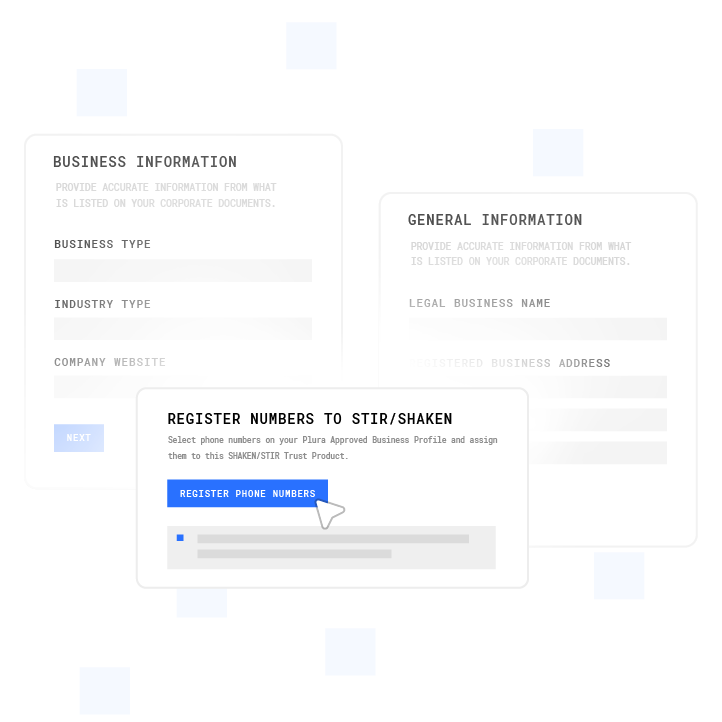
Plura’s FCC-licensed AI communications platform simplifies compliant business registration and phone number provisioning for AI Voice, SMS, RCS, and Webchat workflows.
Plura’s immutable consent ledger tracks consent and revocation with timestamped, audit-ready records. Operators can export reports in one click for legal review or regulatory inquiries.
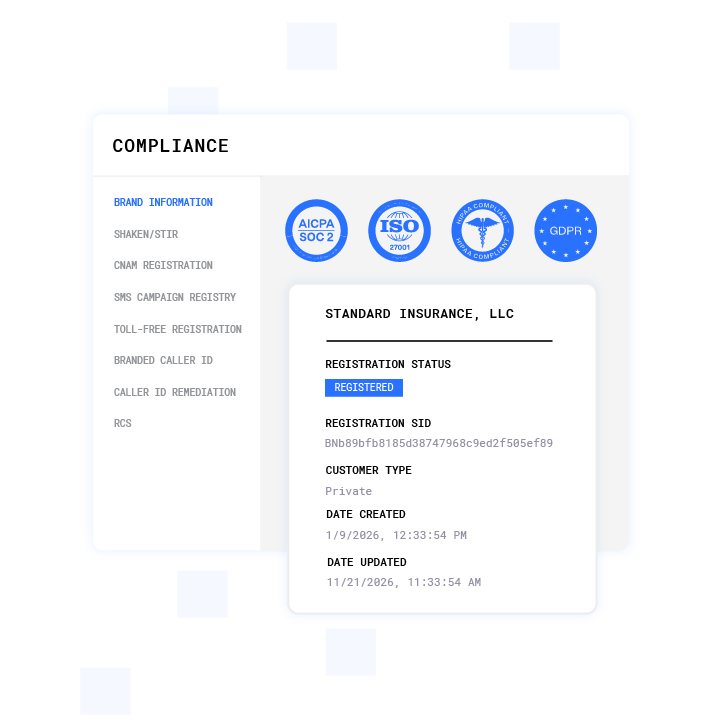
Plura Security & Compliance supports SOC 2, ISO, and GDPR standards with trust registration, verification management, and secure AI communications.
Penalties and Real-World Risks
The TCPA operates as a strict liability statute. Plaintiffs do not need to prove actual harm, only that a technical violation occurred. The penalty structure is $500 per violation for negligent violations and up to $1,500 per violation for willful or knowing violations, with no cap on aggregate liability. The FCC can also impose separate administrative forfeitures of up to $23,727 per violation under the Communications Act.
Book a live demo with Plura to understand how Plura’s carrier-grade infrastructure supports your compliance program at scale.
Compliance Checklist: 10 Steps to Put in Place Now
Classify every missed call recovery message as transactional or marketing before sending.
Obtain and document prior express written consent for any marketing message, naming the specific seller.
Scrub every number against federal and state DNC registries and the Reassigned Numbers Database before every send.
Enforce quiet hours at a minimum of 8:00 a.m. to 9:00 p.m. recipient local time, with state-specific overrides applied per contact.
Include opt-out instructions in every message, including the initial transactional reply.
Honor opt-outs immediately when operationally possible and propagate revocations across all channels, treating stop, quit, end, revoke, opt out, cancel, and unsubscribe as per se revocations.
Train staff on the distinction between transactional and marketing content and on the FCC’s AI voice disclosure requirements.
Audit workflows at least annually or whenever message flows change.
Consult qualified counsel to review your specific program before launch and after any regulatory update.
Plura’s platform supports each of these steps through real-time DNC scrubbing, automated quiet-hours enforcement, immutable consent logging, and audit-ready exports. These capabilities support compliance program operations, and operators remain responsible for their own regulatory obligations and program design.
What are the new TCPA rules for 2026 affecting AI voice callbacks?
The FCC’s Declaratory Ruling FCC 24-17 classifies AI-generated voices as “artificial or prerecorded voices” under the TCPA, which makes AI voice callbacks legally equivalent to robocalls. Under the FCC’s 2026 requirements, outbound AI voice calls must include immediate caller identification within the first five seconds, a mandatory AI disclosure at the start of the call, and an automated interactive opt-out mechanism. The FCC’s “Revoke-All” rule, which extends a single opt-out to every message type from the same sender, has been extended and now takes effect January 31, 2027. Operators should consult qualified counsel to evaluate how these rules apply to their specific programs.
What is a violation of TCPA compliance?
A TCPA violation occurs when a call or text is made using an automatic telephone dialing system or artificial or prerecorded voice to a wireless number without the required level of consent, or when a call is made to a number on the National Do Not Call Registry. Each call or text counts as a separate violation. The TCPA is a strict liability statute, so plaintiffs do not need to prove actual harm, only that a technical violation occurred. Willful or knowing violations can triple the per-violation damages from $500 to $1,500.
How does message content affect consent requirements for missed call text-back?
Content determines classification. A message that acknowledges the missed call and offers a scheduling link or callback is generally treated as transactional, requiring prior express consent. A message that includes a promotion, discount, or sales language is marketing, requiring prior express written consent under 47 C.F.R. § 64.1200(f)(9). Adding promotional language to an otherwise transactional message reclassifies the entire message as marketing. Courts read context and treat texts that re-engage a prospect for a seller as commercial messages. Operators should consult qualified counsel to classify their specific message flows.
Can I use an AI voice agent to call back missed calls?
AI voice callbacks are subject to TCPA requirements because the FCC treats AI-generated voices as “artificial or prerecorded voices” under the statute. An AI voice callback delivering a marketing message requires prior express written consent. An informational callback that acknowledges the missed call and offers a human callback operates under the prior express consent standard. The FCC’s 2026 rules also require immediate caller identification within the first five seconds, a mandatory AI disclosure, and an automated opt-out mechanism on every AI voice call. Operators should consult qualified counsel to evaluate their callback scripts and consent records before deployment.
Build Your Missed Call Recovery Program on a Compliant Foundation
Missed call recovery programs perform best when consent, content, and operations align with TCPA and FCC requirements. Message content drives the consent standard, AI voice callbacks follow the same core rules as other artificial or prerecorded calls, and DNC scrubbing, quiet hours, opt-out handling, and consent logging keep day-to-day execution within policy.
Plura provides the infrastructure and tools to support compliance: an FCC-licensed carrier, real-time DNC scrubbing, an immutable consent ledger, automated quiet-hours enforcement, and AI voice agents configurable with branded caller ID, STIR/SHAKEN authentication, and disclosure scripts. Plura’s compliance framework includes SOC 2, HIPAA, TCPA compliance, DNC compliance, and STIR/SHAKEN caller ID verification.1 These platform capabilities support your compliance program and do not substitute for qualified legal counsel or your organization’s own compliance obligations.
1 Plura AI maintains SOC 2, HIPAA, ISO, and GDPR posture as part of its platform infrastructure. References to compliance frameworks in this article describe Plura’s platform capabilities and do not constitute a guarantee that any customer using Plura will themselves be compliant with applicable laws or standards. Customers remain solely responsible for their own regulatory obligations, certifications, consent management, recordkeeping, and the claims they make to their own end users. Consult qualified legal counsel for guidance specific to your use case.
2 This article describes regulatory frameworks at a general level and does not constitute legal advice. Laws and regulations vary by jurisdiction, change over time, and apply differently depending on facts and circumstances. Readers should consult qualified legal counsel before making compliance decisions.
3 Performance figures, customer outcomes, and industry statistics referenced in this article are drawn from cited third-party sources or Plura customer case studies. Individual results vary based on implementation, use case, industry, audience, and execution. Past or aggregate performance is not a guarantee of future results.
4 References to third-party products, services, companies, or research are made for informational and comparative purposes only. Plura AI is not affiliated with, endorsed by, or sponsored by any third party named in this article unless explicitly stated. Trademarks and product names referenced remain the property of their respective owners.
5 This article contains forward-looking statements regarding industry trends, technology adoption, and future capabilities. These statements reflect current expectations and are subject to change. Plura AI undertakes no obligation to update forward-looking statements except as required.
This article is provided for informational purposes only and reflects Plura AI’s understanding at the time of publication. Product capabilities, integrations, and specifications are subject to change. For the most current information, visit plura.ai.
This article was produced with the assistance of AI tools and reviewed by Plura AI prior to publication.